Stories of Change


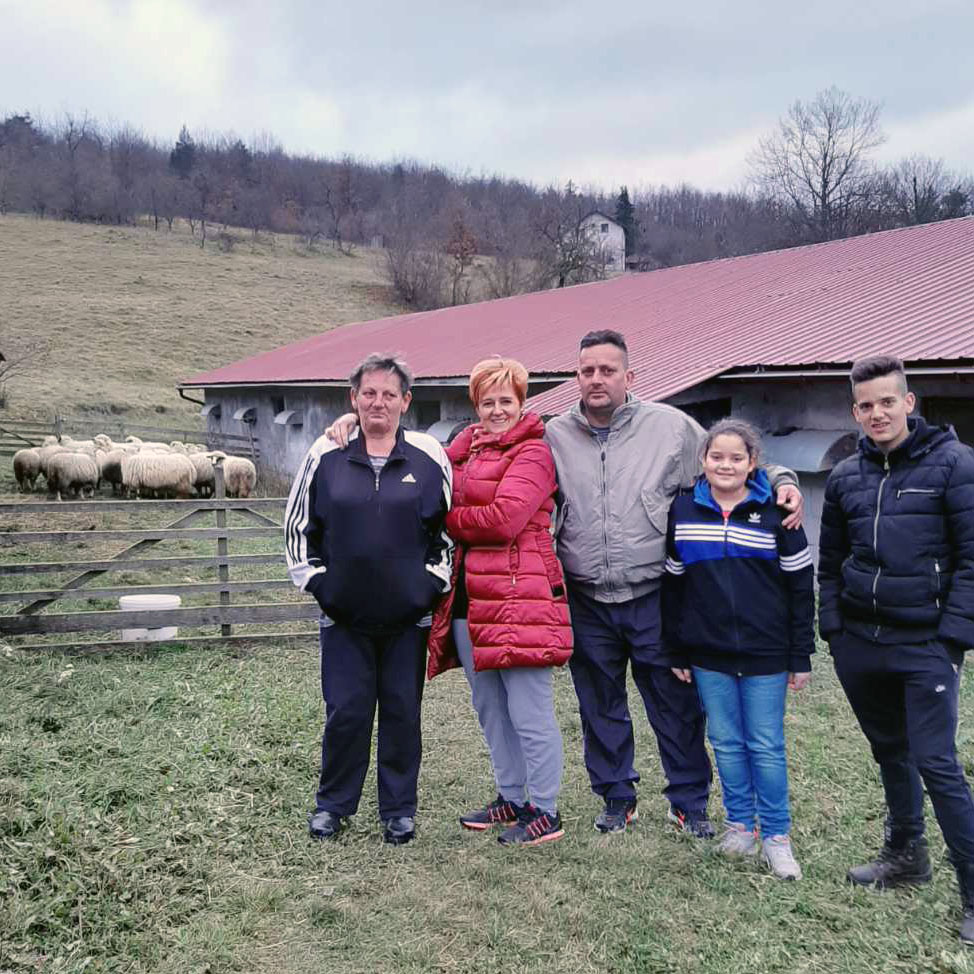
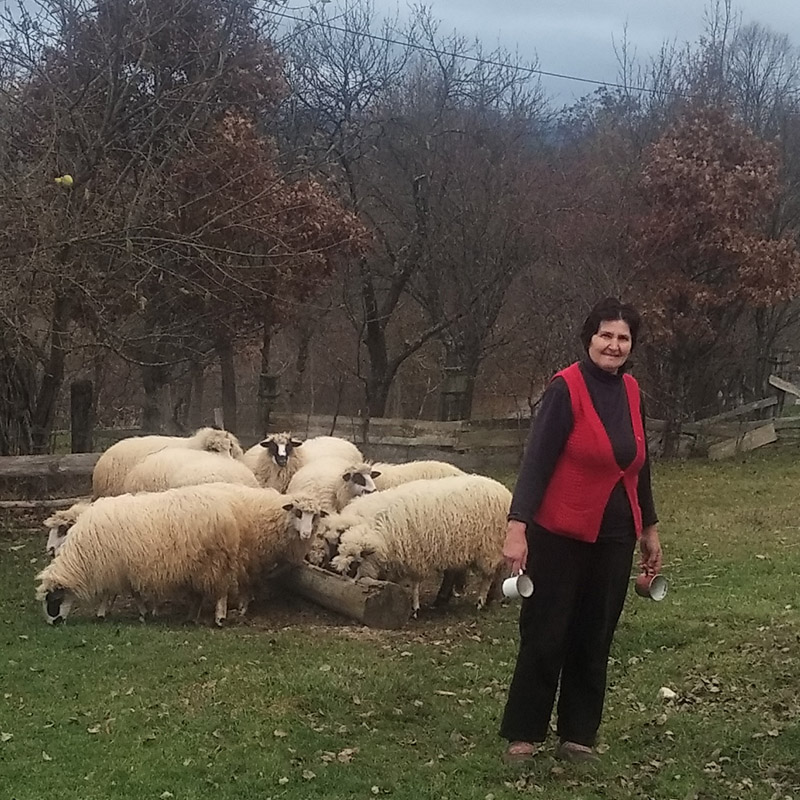
Sladjana and her family.

A business boost in Bosnia

Sladjana Latinovic, 40, wants to have a cheesemaking business. 

She lives with her family in rural, mountainous western Bosnia. Families in her community face deep poverty and few job opportunities, and they have few social services to help them. It’s a combination that can often feel hopeless. 

Sladjana’s family has had an especially tough time the last couple of years. One of their daughters had a difficult surgery in 2018, and her husband was severely injured last year in an accident in the woods while he was gathering firewood. Thankfully, his recovery is going well. But it will be a long road before he can do physical labor. And, of course, the COVID-19 pandemic made things harder. The bleak economic landscape somehow got worse because of lockdowns. 

Through it all, though, has been the goal of a cheesemaking business. Families in the area generally rely on agriculture and livestock to make a living, and the Latinovics are no exception. Their dream was to produce a well-known local type of sheep cheese called Petrovacki sirac. After years of sacrifice and savings, they bought some sheep of their own. But they didn’t have enough resources to manage the entire production process themselves. That took a big chunk out of their income.

This year, the family signed up for a CWS livestock program that helps families start or expand sheep businesses. It’s supported by Latter-day Saint Charities and implemented through our trusted partner in western Bosnia. Sladjana received 10 sheep through the program as well as help to improve the barns on their property where the sheep would live. She also received training about innovative sheep breeding techniques. 

Through the program, Sladjana now has the optimal number of sheep for her cheesemaking business to be competitive in the local market. Working with her family, she can now manage the entire cheesemaking process, improving her livelihood and her children’s futures at the same time. “The life of our family is changing radically, and it is becoming easier, because we now have hope for the future,” she says. “We will try to expand our family business, buy more sheep and be competitive in the local cheese market. And why not dream some even bigger dreams? Thank you from the bottom of my heart.” 

Sladjana’s neighbor, Zdravka Culibrk, also participated in the CWS program. She also makes Petrovacki sirac cheese. Like Sladjana, she received 10 sheep plus training on sheep breeding. “From today, I can count on starting to improve the production of cheese, but also meat,” she says. “Thank you from the bottom of my heart. I am happy to be able to continue the work I have been doing my whole life.”
Stories of Change


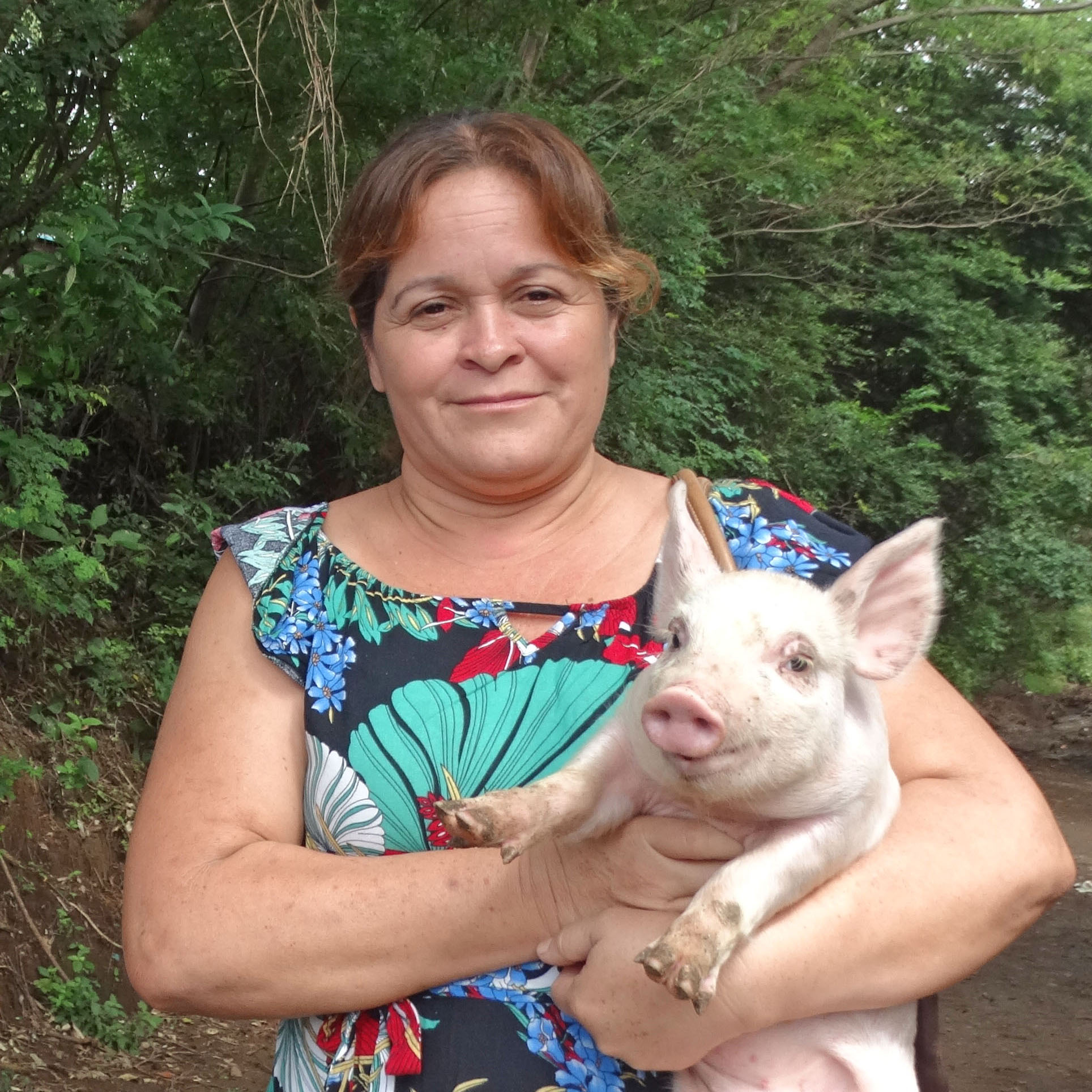
Magda with a new piglet.

For families devastated by pandemic and disaster, sheep and pigs are little bundles of hope

Families like Magda Rosa Vargas Gutiérrez’s in rural Nicaragua have had a tough 2020. First it was the COVID-19 pandemic, and then hurricanes Eta and Iota struck in the fall. 

“We were first affected by COVID-19, when we had practically no communication–only virtually–and no commerce with the outside world,” she says. “After the pandemic, the rains [hurricanes] have come to us and have ruined us. The roads are totally deteriorated, and our profits that we had planned are gone because I am a producer of chickens. My chickens and those of other friends have also died. We have been really badly affected by these rains–we had three acres of beans and they were damaged. Now we have nowhere to work, we do not have a salary and we do not work for companies. What we needed was to boost ourselves.”

Magda elaborated on the scope of the devastation: “We have nothing, not a single grain of beans because they were damaged–we lost everything. In my family alone we lost 50,000 Córdobas  [about $1,400] that were hard to earn. Now, overnight, we don’t even have 10 Córdobas.”

CWS and our partners had already been working on a program to get pigs and sheep to families like Magda’s in Nicaragua’s Carazo region, where we have a longstanding food security program with our local partner CIEETS. After the hurricanes, this program–which is funded by the generous support of Latter-day Saint Charities–has taken on new urgency and importance.

“I think that my community, my neighbors, my sisters–these animals are going to help us get started and will be of great use, since we have people who do not have an income.” Magda says that she trusts CIEETS to be there to help her community recover, since she and her neighbors have years of experience improving their livelihoods with help from the CIEETS team. 

The CIEETS team talked to some of Magda’s neighbors while they were delivering sheep and pigs. Here’s some of what they heard:

– Rosa Liliam Peña: “The situation that we are going through, first with COVID-19 that greatly affected the economy, and now the hurricanes that affected families’ economy a lot–these animals come as a little reward for what we have gone through.”

– Nohemí Del socorro Martínez Aguilar: “We have had quite a crisis, especially in agriculture. We have lost a lot; COVID-19 has also affected the families and many people. Well now, I feel happy and blessed. I thank the Lord especially because with this animal and with this I can get ahead for my children and for all that I thank God.”

– Carlos José Palacios López: “I am a recipient of pelibuey, or little sheep. I feel very grateful because this project its a blessing from God…I hope it is a stimulus for all the participants because we are in crisis because of this hurricane that happened. It affected us a lot, leaving large losses both in goods and in agriculture. For agriculture it was a true disaster–the crops are not going to be harvested, and the grains and the beans that we sow are at a total loss. This project is going to be a start, it is going to be a blessing, for this NGO to have taken us into account. The agreement is that the first generation will benefit another family, and so on. More than anything, in the community no person is left without this benefit. We are going to benefit, until the last families in the community.”


Stories of Change


Ivanka with the sheep that her family received through the CWS program.

After two decades, a return to the business that once was

Before the Bosnian War, Ivanka Kecman and her family earned a living by farming and raising livestock. Like so many other families, they fled during the conflict and returned years later. 

The Kecmans have been back in the village of Prnjavor in western Bosnia and Herzegovina for more than 20 years, but they are still waiting on support from the state to help them. When they returned to the village, they realized they should continue farming and raising livestock because of the experience and knowledge they already had. So that’s what they did. They decided to primarily pursue cattle and sheep breeding so that they could earn money by selling meat locally.

But without support to develop their livelihoods, or even to rebuild their house, they struggled. For many years, they haven’t had the resources to make their business sustainable. They couldn’t get past their basic needs. 

That’s when CWS and our partners stepped up to help. With support from Latter-day Saint Charities and through the work of our local partner in Bosnia, we provided 10 sheep for Ivanka’s family. We also invited them for training on new and innovative best practices for sheep raising. Because of the pandemic and the ban on group gatherings in the region, this training took place in their yard. It was a great opportunity for Ivanka and her family to ask experts any questions they had and build on their extensive knowledge of caring for sheep.

These 10 sheep are the jumpstart that Ivanka’s family needed to get their business back on track. We know it won’t be long before they are able to expand their flock and earn more income to help overcome the challenges that they have faced for decades.

“I hope that in the spring I will have a flock of sheep that is even bigger than now and that I will be able to organize the work so we can be present in our local market,” Ivanka says. “This opportunity is a big boost for us.”

And for everyone who made this program possible, Ivanka has a promise: “Thanks to everyone who provided us with this help. We will use it in the best way and improve the quality of our lives.” 


Stories of Change


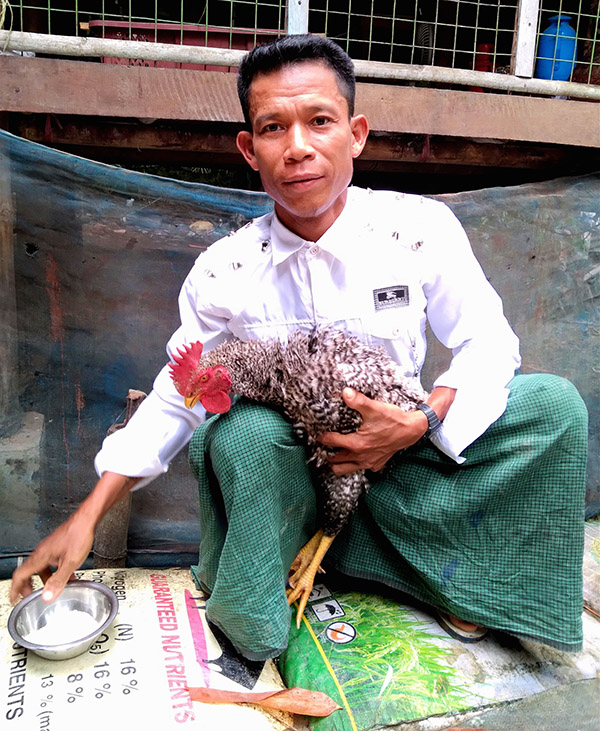
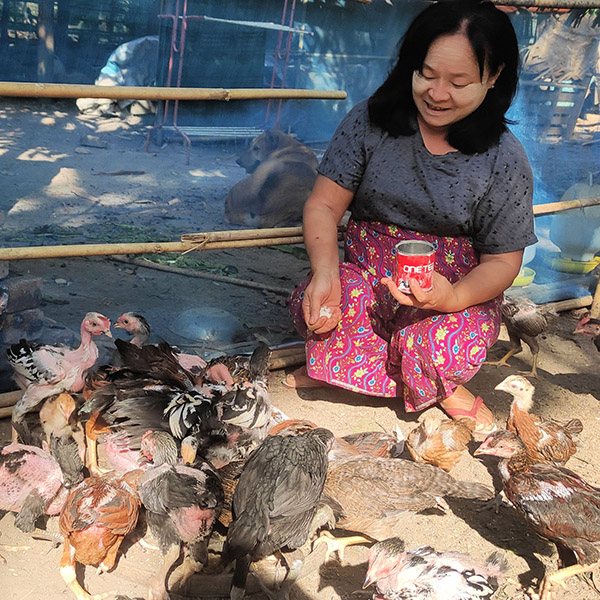
Daw Aye May and her chickens.

Hope for a new chicken farmer in Myanmar

Daw Aye May, a 56-year-old widow, used to make a living selling herbs in an open-air market. That was before COVID-19 public health restrictions curtailed public gatherings at large markets and travel beyond township borders. In the village of Sar Phyu Su, 40 miles north of Yangon, Myanmar, salaried job opportunities are limited. And when she lost her husband in 2019, Daw Aye May thought her future was gone too. Then along came the pandemic which disrupted an already limited economy by reducing the ability for farmers to sell products in more distant and larger markets.

Although Daw Aye May lives alone, she has emotional and limited financial support from a son and daughter, both married and in their thirties. When selling herbs was no longer a possibility, she started to consider how else she could earn money. Then in July, she heard that CWS was sharing chickens with families in greatest need. She learned that funding had come from vending machines set up by the Latter-day Saint Charities. She had never heard of CWS, nor of the Church of Latter-day Saints. Moreover, she had only seen vending machines in American movies, and those machines contained drinks and snacks.

Within weeks of picking up two hens and a rooster from a hatchery delivery truck, she had eggs. “I didn’t have any idea about how to raise chickens, but just wanted to try. I just fed the chickens and let all the eggs hatch,” she said. In fact, she let the first 12 eggs hatch into young chicks. Shortly afterwards, she collected another 13 eggs from the first two hens and sold 10 eggs in the village to earn $1.81. That’s more than half the official daily minimum wage of $3.53. “I was so happy as this was my first time to make money from chicken raising business,” she said proudly.

CWS sourced a local breed of hens and roosters for villagers because they are easier to raise free-range style. Daw Aye May now has 30 hens and five roosters in less than five months, and with no prior experience in raising poultry. “I learned that chicken meat from the local breed earns more money. For example, 3.5 pounds of my chicken sells for $5.06. Meat from foreign species sells for $2.89 for the same weight.”

She spends just 37 cents per day to feed the flock as they forage around a fenced yard area for scraps and insects. Daw May Aye expects to gather 30 eggs per day starting next month, earning up to $5.42/day in sales within a cluster of walkable villages.

The newly inspired chicken farmer gushed, “I thank CWS for sparking the light of a more hopeful future for me. Honestly, I wasn’t initially interested in chicken raising. Now, I want to be a poultry businesswoman. With a flock of 35 hens and roosters already, I will expand the flock further. My plan is to collect and sell more eggs in neighboring villages where I am allowed to travel. Also, I will use chicken manure in my home-gardening as organic fertilizer. Lastly, I say ‘Thank You’ to CWS and LDS, as these simple words express my sincerest gratitude.”


Stories of Change


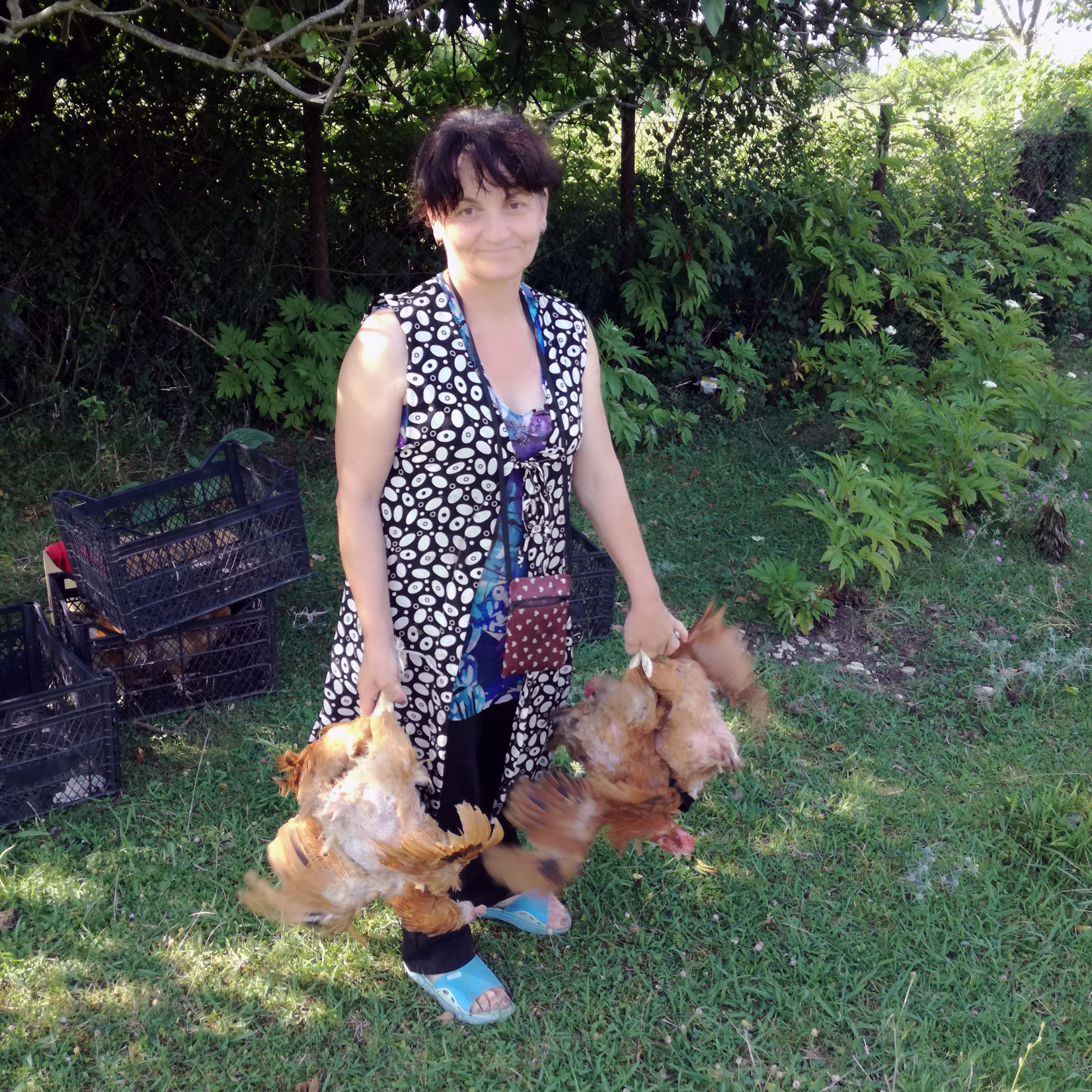
Nona with some of her chickens.

A nightmare turns to confidence for a single mom in Georgia

For years, Nona has focused all of her time and energy on feeding her three children. Her husband passed away four years ago, so Nona is the only breadwinner for her 6, 8 and 10-year old children in their community in Georgia. 

It has been an uphill battle. Nona owns a small plot of land where she grows cabbage, beans, corn, tomatoes and other vegetables to eat and sell. But environmental conditions like drought and wind have made it harder and harder, and she doesn’t have quality seeds or tools or money to buy them. Her agricultural yields weren’t enough to feed her children, so she took on extra jobs elsewhere. She worked as a cleaner at the local café in the evenings and would sell fruit in a local market during the day.

Then the COVID-19 pandemic happened. The café closed, and Nona lost that job. Pandemic restrictions meant that she couldn’t sell fruit in the market. “I tried to do my best to feed the children by asking for support from some relatives,” she says. “I was sometimes thinking of running away from this nightmare, as we faced endless problems of hunger and poverty. People tried to survive in any way possible, but it was twice as hard for me because I was the only breadwinner for my children.”

Then, hope arrived in the form of chickens and quails. “One fine day this spring, I was invited to a meeting where the activities of this program were discussed,” she recalls. The program was a CWS food security program made possible by support from Latter-day Saint Charities. We’re helping families start poultry raising businesses to add eggs and meat to their diet and have a new source of income. Nona says, “My children and I received 15 grownup hens and seven quails and a quail cage that was a really great support during this period of hardship.” 

Every day Nona and her children collect 8-10 chicken eggs and 2-3 quail eggs. They’ve started earning money from selling eggs, and they’ve hatched more than a dozen chickens to expand their flock. Mate, 10, already has dreams of becoming a quail breeder when he grows up. “The children have eggs for breakfast–I am happy that they are not hungry anymore,” says Nona. “We decided to grow more chickens and quails for sales. Very soon we won’t have to ask anyone for food or clothes. The program has made a big positive change in the lives of my children and me. We are confident in our strength to withstand the hardships.” 

“Sometimes I think about the people that helped us, and I’m sending them my blessings,” Nona says. 


Stories of Change


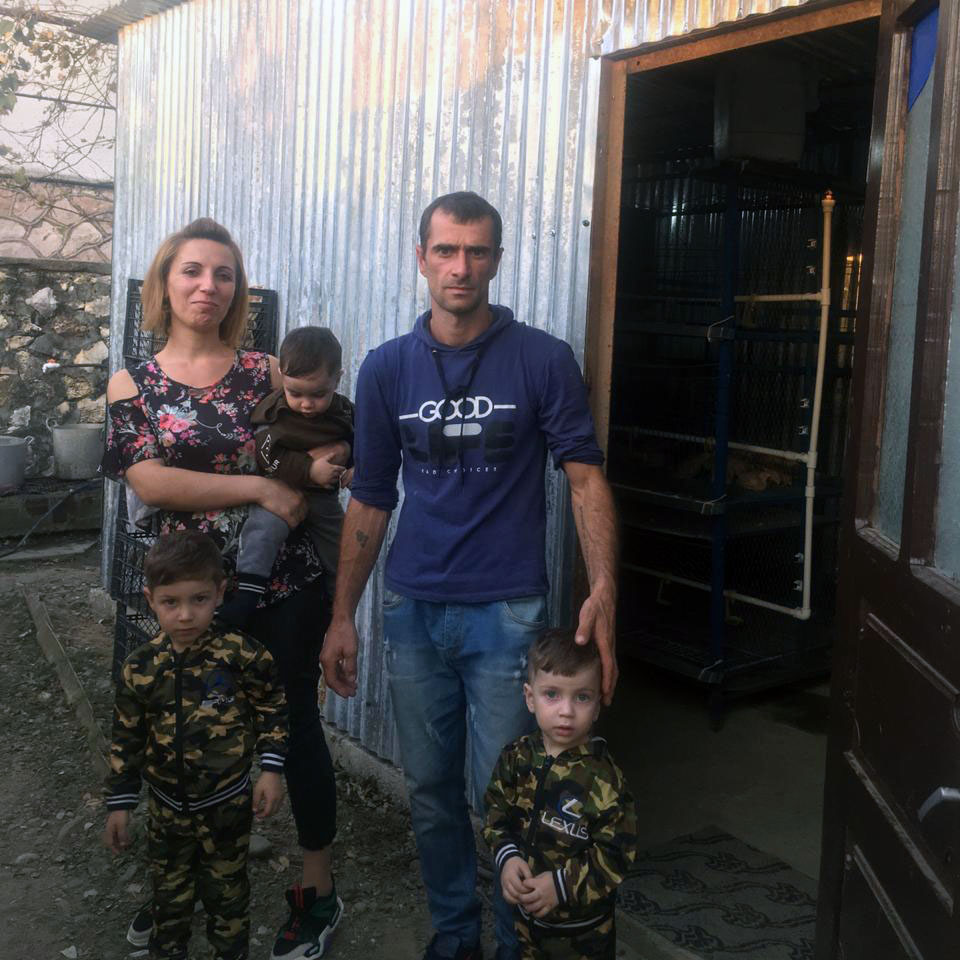
Alexander with his wife Rusiko and their three children outside the chicken incubator.

From desperation to hope for a family in rural Georgia

“I was in a desperate situation, not knowing how in the future to feed my children or what to do. The tension was growing in the family,” says Alexander Kobakhidze, 35. There are eight people living in Alexander’s small house in Georgia, including his wife, three children, parents and brother. 

Before the pandemic, the family was barely scraping by. They have a small plot of land that they used to grow produce to eat and sell. But it was never enough. Alexander would go to Turkey to work in a poultry farm, sending money home to make sure his children had enough to eat. Because of the COVID-19 pandemic, that’s no longer an option. His brother also lost his job, making things even worse. The family was relying on state social assistance and occasional money Alexander could make doing odd jobs in a nearby town. But they weren’t making ends meet. 

“I remember well the day at the community center when I was told about the program that included distributing chickens to vulnerable households and supporting poultry raising,” Alexander says. This is a CWS program supported by Latter-day Saint Charities. “Because of my background and experience of working at the poultry farm in Turkey, my family was offered a demo site for hatching and breeding the chickens. The program supplied us with an incubator and hatching area and helped organize the poultry shed to breed 300 chickens,” he says. “The program brought a new hope to our family and self-confidence, and it appeared to be a crucial point in changing our family’s life for the better.” 

Alexander joined workshops on hatching and breeding poultry, and he has regular consultations with a veterinary expert. They’ve already started earning money from selling chickens, and their optimism is growing. “A few weeks ago I couldn’t believe that my family, my children, would become the owners of such a nice small-scale poultry breeding area with an incubator,” he says. “Every morning after we wake up, my three children and I go to the poultry area and count the hatched chicken (the children are learning to count), and we feed them. It is a great joy to be an owner of such a facility.”

This program is providing a pathway out of hunger and poverty for families like Alexander’s in Georgia. It also supports sustainable, local food production. Or, in Alexander’s words, “Now I believe that despite the COVID-19 pandemic, thanks to this program, we can survive and feed the children.” 


Stories of Change


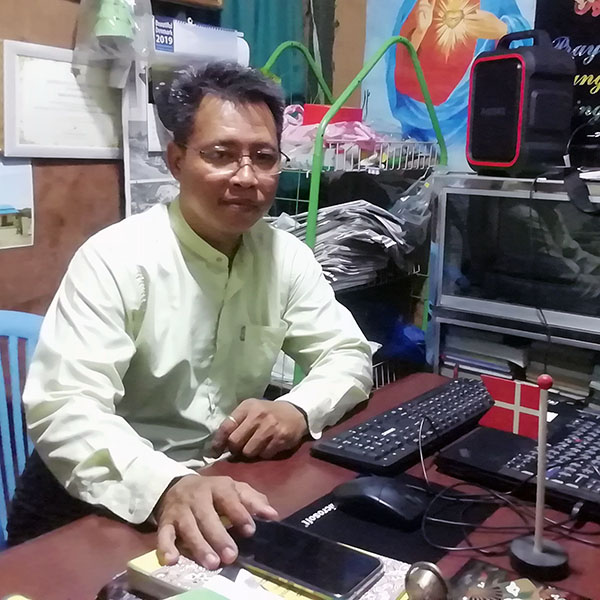
Secretary General Saw Kyaw in his office at the YMCA.

How do you share 30,000 chickens with families? By working together.

Vending machines are uncommon in Myanmar. And vending machines filled with practical items for vulnerable families are unique, even in the United States. But last Christmas, the Church of Latter-day Saints stocked vending machines in a few U.S. cities with gifts for families around the world instead of snacks. Among the gifts were two hens and a rooster per family.

Fast forward 9 months later and across the oceans to Myanmar. By the end of 2020, as a result of those vending machines, more than 10,000 rural families west of Yangon will raise chickens for eggs and meat. What an unexpected windfall for families facing food insecurity!

It takes disciplined and trusted partners to execute complex projects. The YMCA of Maubin is one such partner for CWS. In 2005, the YMCA opened its office in Maubin Township, sixty miles southwest of Yangon. Secretary General Saw Kyaw leads YMCA staff and volunteers in community development efforts. A biblical quote serves as inspiration for the office: “That they all may be one.” (John 17:21). Under the direction of the Secretary General, the YMCA offers vocational training like motorcycle repair, hair styling, sewing and basic computer training.

In 2015, YMCA partnered with CWS to assist people flooded out of their homes in Maubin Township. Then in early 2020, YMCA facilitated 45 days of sewing classes for 20 women from the villages that CWS works closely with. When the opportunity to share chickens with families arose, the YMCA jumped at the chance. They found families in 27 villages interested in raising a local species of chickens. Secretary General Saw Kyaw explains: “We provided 10,317 chicken to 3,439 families in 27 villages. Each family now has three Chittagong chickens which they like because they are easy to raise.”

Families hailed from among the poor and vulnerable who could not afford to pay the usual $5.42 per chicken. Parents lined up for chickens in anticipation of making egg dishes rich in protein for their children. Hens start laying one egg per day beginning at age 5 months old. Older children describe the chickens as “cute” and help their parents collect eggs.

Not only is chicken raising valuable for families, but it also helps CWS and YMCA staff hone work skills. For example, the YMCA identified vulnerable families and managed logistics delivery. After arrival from hatcheries, Village Leaders coordinated orderly pick-up and enforced social distancing. CWS Field Coordinators managed communications with hatcheries, drivers and Village Leaders. The Field Coordinators collected signatures and snapped pictures of delighted families beside delivery trucks.

Secretary General Saw Kyaw praises the collective effort. “Our team learned new procedures and documentation processes while working with CWS. We appreciate the support and collaboration which helps our confidence after each project. We always welcome CWS as our good partner,” he remarked. CWS intends to fulfill the intentions of donors by sharing over 30,000 chickens in Myanmar. Collaboration with partners, YMCA included, paves the road to better food security.


Stories of Change


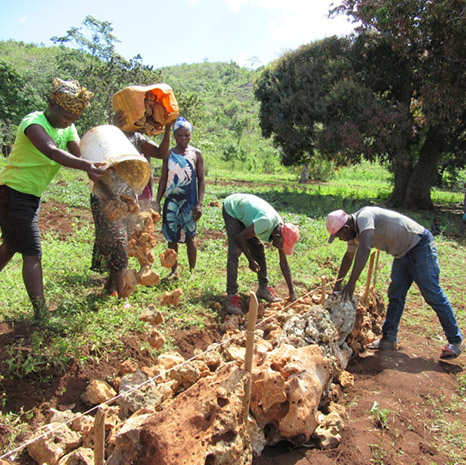
Families in Mole St Nicolas, Haiti, working on a soil conservation program.

Baseline studies set foundation for measuring success

This story comes from our partners at Growing Hope Globally. It is about a CWS program in Haiti. It is reposted with permission from its original posting here

Most of the stories that we share at Growing Hope Globally highlight the successes and progress made by the communities we support. However, you might be wondering what things are like before our partners start a new program.

Many of the programs we fund utilize baseline studies. They are typically conducted by program staff in the first few months of the program. Information is gathered by interviewing participants and making observations regarding things like housing quality or whether or not the family has livestock or gardens. As staff meet with each participant family they begin building trust, which is key to the long-term success of the program. They also get a sense of the challenges or barriers that must be overcome for the community to flourish, as well as the resources or skills that already exist in the community and might be leveraged.

A recent baseline study conducted for programs in the Northwest Department of Haiti provides some perspective. The Haiti Mole St Nicolas and Haiti Jean Rabel program staff conducted 600 interviews to gain insights into the communities where they work. They found:

– Families range in size from single individuals to ten members. The average was six people per household.

– About 30 families shared that they have children who are not living in their homes because they cannot afford to care for them. The children are either living with relatives or working as domestic servants. Unfortunately, many children that serve as domestic servants in Haiti suffer from physical and emotional abuse.

– The average family has access to three acres for farming and livestock. Primary crops are corn, black beans, and lima beans. Many families also farm plantains or yucca.

– 98% of program families are not familiar with composting, erosion control, or other soil conservation practices. 86% of families use slash and burn practices to prepare their fields.

– 80% of families do not use or have access to any type of fertilizer for their crops.

– Average income is 44 US Dollars per year. People that work as fishermen make considerably more, but also have more expenses.

– About half of the families do not have access to a clean water source and about 35% of families have suffered from diarrhea or typhoid in the last year as a result.

– 98% of families reported entire days where they had nothing to eat in the last year.

The baseline survey shows that participating families currently face high levels of food insecurity. While these initial statistics may be discouraging, this information will allow us to see the progress being made as the program is implemented. The results of the survey will be shared with the communities to encourage community reflection and can be used as a tool for advocacy. It will also allow staff to monitor the impact being made and adjust the program as needed to ensure that the funds contributed are making the intended positive impact.


Stories of Change


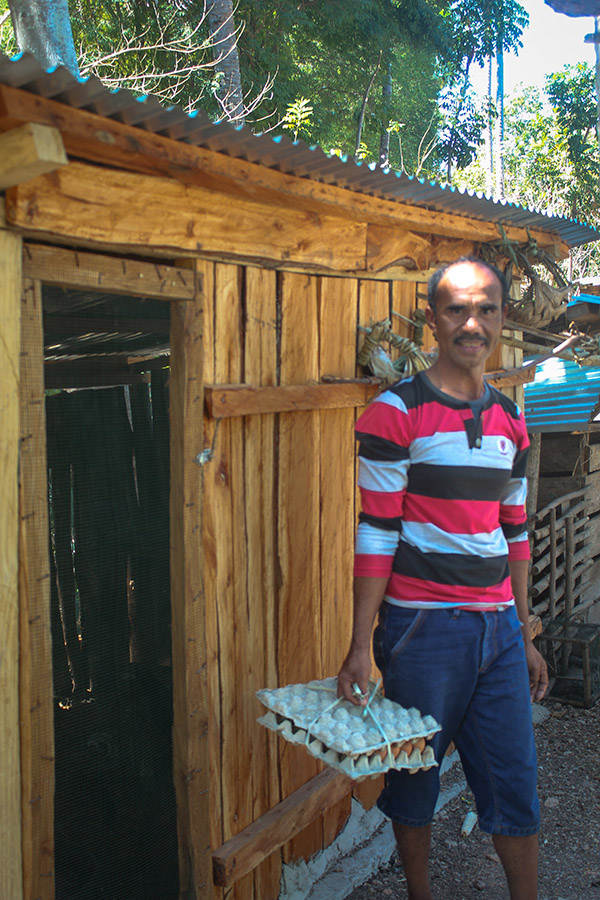
Afes holds the eggs his family received while standing in front of the chicken coop he built. Soon he will receive two hens and a rooster to start his chicken-raising business.

Eggs and chickens: emergency nutrition + long-term resilience

In response to the COVID-19 pandemic, the government of South Central Timor, Indonesia, closed public markets. And with all local markets closed, Afes worried. He wouldn’t be able to sell his cassava or banana harvests, and his family urgently needed the money. His recent corn crop had failed because there wasn’t enough rain, so his family’s resources were already stretched too thin. Once again, he and his wife wouldn’t be able to give their children nutritious meals. 

For Afes, the coronavirus pandemic was the peak of a crisis that had been building for years. He and his family make a living by planting corn, sweet potatoes, cassava, bananas and coconuts. But climate change has led to unpredictable weather patterns. Year after year, the rains have been coming later and have been lighter. There just isn’t enough water to support the family farm.

Afes used to make about $50/month, which means that his family falls in the Indonesian government’s categorization of “very poor.” But recently even that $50/month started slipping away. He still dreams of sending his younger children to school like his older ones, but that dream seemed less and less likely. Instead, his family faced food insecurity. 

Clearly, Afes was fighting an uphill battle to provide the life he wanted for his children. But the CWS family, thanks to support from Latter-day Saints Charities, came alongside him to help.

Afes joined the CWS Timor Zero Hunger program, which focuses on building food security and livelihoods for vulnerable families, especially ones with young children. As part of a life-saving nutrition initiative, our team has been buying eggs locally and providing them to families like Afes. It’s a short-term measure to ensure that his children are getting the nutrition they need. Eggs are an excellent nutritional supplement for kids, so we’re helping more families add them to their diets. “The eggs are very helpful to keep my children healthy, especially my young ones. Eggs are very important for our nutrition, and better nutrition means the children don’t get sick so easily,” Afes says.

And when you want to add eggs to your diet, what’s the most sustainable way to make sure you always have eggs on hand? Raising chickens! Through the CWS program, Afes got supplies to build a chicken coop. Soon he will fill it with two hens and a rooster. Then his family will have eggs and chicken meat that they can add to their meals. Plus, they can sell eggs and chicks to earn more income. 

CWS is also helping Afes learn about new strategies to adapt to the changing climates. He now knows more about terracing and plating climate-adaptive crops like sorghum, which CWS is helping him do. 

Little by little, Afes’s worry is being replaced with gratitude. His income is still down because of the pandemic, but he is receiving immediate support while also building long-term resilience. 

“So, thank you CWS, and the LDS Church, for your help to all of us in this village,” Afes says. 


Stories of Change


Ko Ye Naing with one of his chickens.

Local chickens mean a hopeful future in Myanmar

Farmer Ko Ye Naing is always looking for opportunities to improve his family’s livelihood. The 38-year-old father of two and his wife, Ma Nandar Win, live on a three-acre farm 55 miles west of Yangon, Myanmar. They grow about 700 pounds of chili peppers, which they sell for about $500 yearly. He also works as a broker: he buys chili peppers and corn from 20 other family farms and sells them to wholesalers in Yangon, Mandalay, and Kayin. He earns about $1,700 profit each year for his family through this work. 

Ko Ye Naing first got to know CWS when he volunteered on a committee in his village. The group focused on emergency preparedness and risk mitigation activities coordinated by CWS. He and his wife also participate in CWS nutrition programs for caregivers of young children, since they have a 4-year-old son named Mg Htet Naing Lin.

When the opportunity to raise local chickens came along, Ko Ye Naing and Ma Nandar Win were excited to be selected for the program.

“In the area where I live, local species of chicken are very hard to find and cost about $7 each. However, I prefer this species because they are easy to raise at home. They are strong and resilient, and the meat is healthy and nutritious,” Ko Ye Naing explained. “ I had planned to breed local chickens as a business at home, but I didn’t know where to buy young hens and roosters. Although commercial breeds are abundant, they are not good to eat because of chemicals in the feed and antibiotics used,” he continued.

Through the CWS program, which was made possible through the Light the World campaign of the Latter-day Saints Charities, Ko Ye Naing and his family are raising free-range local chickens. They told our team how grateful they are to have this opportunity. They told us how neighbors have dropped by to see the chickens, which they described as “beautiful.” The two hens and rooster each weighed about 2.2 pounds when the family received them. All have doubled in weight after nearly two months on a diet of broken rice, corn and foraged bugs. Ma Youn Lai Naing, the family’s seventh grade daughter, is responsible for feeding the chickens.

Soon, the hens will start producing eggs for the first time, and the family will have a regular source for a variety of egg-based dishes.

“As I have wanted to breed local chickens at my house for a long time, I’ve already decided to expand the flock. In fact, I bought four more hens. My goal is to sell local chickens to interested buyers. And, I will fence my yard as recommended for a larger flock. I thank CWS and the Church of Latter-day Saints for helping our family start this new business,” Ko Ye Naing said.