Stories of Change


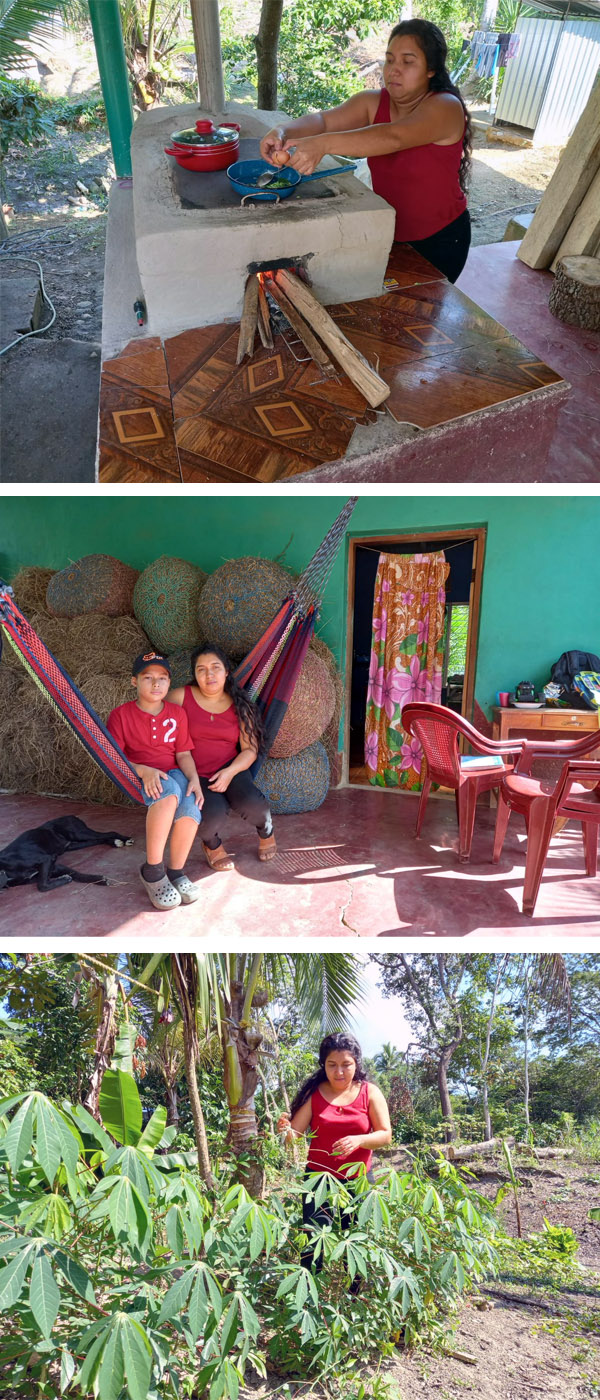
Top: Esmerelda cooking on her eco stove. Middle: Esmerelda and her 8-year-old son Diego in front of their house. Bottom: Esmerelda harvesting yucca.

From Stoves to Gardens to Water to Livestock, Esmerelda’s Family is Thriving

Preparing chicken soup with basil, oregano and green bananas or the fried fish that her son and husband like is now so much easier for 27-year-old Esmerelda Robles. Today she uses less firewood, cooks food faster and saves time preparing meals in her kitchen. 

Before, her house was covered in soot (hollín), a black, very fine and greasy substance that forms from smoke and sticks to surfaces. “Before, I had a permanent cough,” Esmerelda says. “Now, with just a load of firewood, you cook, you don’t need much (unlike the stove we had before), and it is very helpful for our lungs that there is no smoke.”

This is one of the advantages of the eco-stove that she and 58 other families have installed in their homes to prepare meals without increasing environmental pollution. The most important contribution of eco-stoves, however, is the significant reduction in the use of firewood. This is one part of a CWS program to improve food security and adapt to climate change. Our local partner who developed the program is CASM (or, in English, Mennonite Social Action Commission).

This program is unfolding in Macuelizo, Nueva Frontera and Azacualpa, all of which are in the department of Santa Bárbara, Honduras. In total, 500 families from rural areas with limited economic resources participate in different parts of the program. 

Esmeralda lives in Vainillas, in Macuelizo. The weather is warm, but the mornings are often chilly. In her community, there are about 50 houses located near a pine forest and large tamarind and mango trees. After traveling several highways and paths, you can see the green house where Esmeralda lives with her husband Rigoberto and her son Diego. Esmerelda calls Vainillas, “a beautiful place with friendly people, with good coexistence. We all know each other because we have always been there. I was born and raised here.”

Through a “pass chain” activity in the program, Esmeralda received several foster animals. This activity consists of a family receiving a pregnant pig, sheep or cow and feeding and caring for it. When the next piglet, lamb or calf is born, it is passed on to another family, which in turn will do the same. Today, Esmeralda has a pregnant sow, three sheep and 30 chickens.

Other CWS-supported initiatives in the community where Esmeralda lives include the installation of pipes for the drinking water (previously, families had limited access to water) cultivating tilapia and raising cows, sheep and chickens.

Esmeralda has participated in training sessions about planting crops and producing fertilizers, received seeds and nowadays produces most of the food that her family eats like ripe plantain, cushaw pumpkin (ayote), chili peppers and yucca. In addition to feeding her family, she sells her produce or exchanges it with neighbors. She and her family also learned about food and nutrition, hygiene, waste management and environmental protection.

When we talked to Esmerelda in late 2021, she was planning for Christmas. Her family was going to prepare tamales with meat (it is a traditional meal that has a corn base and a filling of vegetables, potatoes and pork, served wrapped in banana or plantain leaves). “Here, we always spend the holidays as a family,” she says. “We go to church–we are Catholic–so we go there and then we come together to share a dinner.”

The next project at Esmeralda’s house is to get a biodigester to make better use of decomposing organic matter waste (such as animal excrement) and produce methane gas. “A dream we have as a family is to have a micro-business or a sale and production of meat. The first thing we are going to do is buy the freezer,” says Esmeralda and adds that with the money they get, they plan to expand the house, which today has two rooms.

(Note: In this program in Macuelizo, everyone has already received two doses of the COVID-19 vaccine. Masking and common handwashing are standard. We would also like to thank Growing Hope Globally for their support of this program.)


Stories of Change


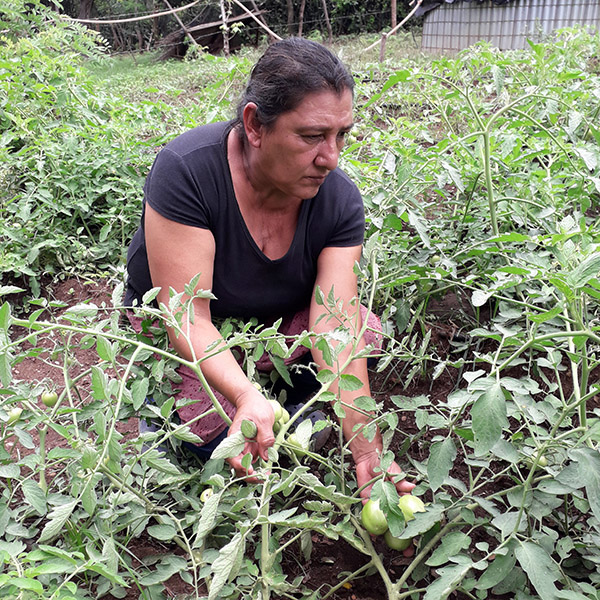
Maribel tends to her new vegetables.

Crop Diversity and Irrigation Mean Better Food Security for Maribel’s Family

When she first joined a CWS food security program through our local partner, CIEETS, the only crop that Maribel Espinoza Bermudez had was corn and occasionally beans. 

Maribel represented one of 292 families from the San Antonio community in the Carazo region of Nicaragua who are participating in this holistic food security program. She joined activities and training sessions and then received fruit plants and seeds to expand her production and eventually improve her family’s nutrition and food security. Diversity is a key component of this program; when families are growing lots of different crops, one bad harvest or failed planting season doesn’t have as much of a negative impact on their livelihoods. Plus, a diversified diet leads to better nutrition.

“Thank God we are part of the CIEETS project,” Maribel says. She lives with her husband Ines Mendieta, 54, and her children Anabel, 39, Orlando, 23, Josueska, 17, and Silvia, 12. “Thanks to the Pastor of the Nazarene Church, the CIEETS program came to my community and my family life. I praised and blessed His name.” 

In addition to crop diversification, Maribel and her family also focused on irrigation. They received a plastic water storage tank, which extends their growing season each year. They are no longer limited to only the rainy season. “We learned how to produce with irrigation. Anything we harvest is welcome, this is the basis of our livelihood,” she says. She also expresses gratitude that the project helped her replace a latrine that had reached the end of its useful life. Guaranteeing access to safe water, irrigation, sanitation and hygiene is another of the strategies to strengthen food security in the area. This is especially important in areas like her community, which has low levels of coverage in basic services. 

Maribel added that her husband often tries to find work in construction to earn extra money for the family. Unfortunately, opportunities are rare and low-paying, and both the COVID-19 pandemic and hurricanes Eta and Iota in 2020 only made it worse. This means that the skills that Maribel developed and the support her family has received have been even more critical. 

“May the Lord increase the blessings on the CIEETS project, and on each of the brothers and sisters and their families who dedicate resources to our support, we also tell them those good things come from above and hands that give, never they will come back empty,” Maribel says.

Thanks to Growing Hope Globally for their support of this program.


Stories of Change


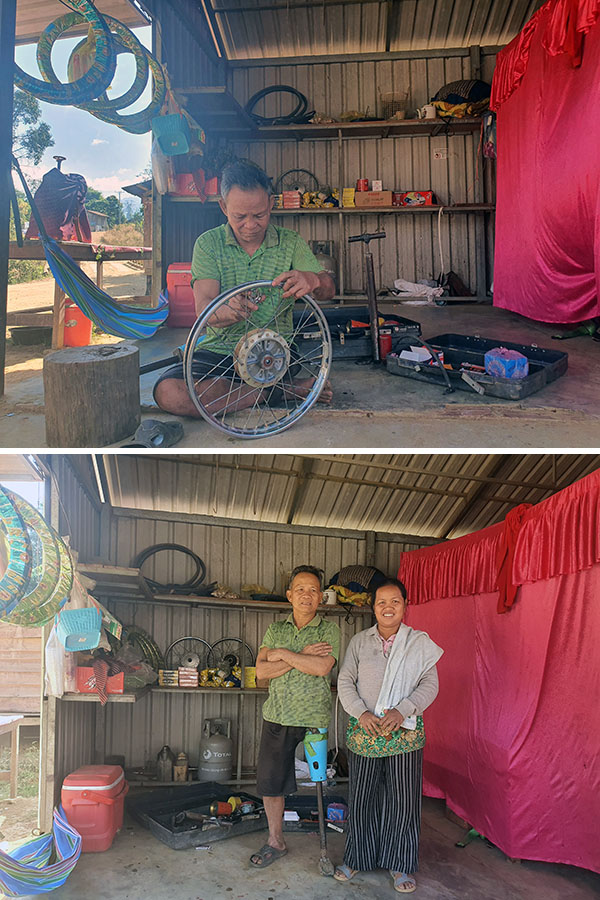
Top: Oy works on a motorbike repair job. Bottom: Oy and Kong in the shop.

A motorbike repair business means new hope for Oy

“Living in poverty was already hopeless, but life got harder when I lost my leg in a landmine accident,” Ouk Oy says. The 64-year-old father of four adult children lives with his wife, Sreng Kong, in western Cambodia. 

Oy and Kong rely on Kong’s income as a seasonal wage laborer in order to make ends meet. She could earn about $5 a day at a nearby corn farm. Oy told us, “before participating in a CWS program, my family didn’t have enough to eat. I borrowed rice or money to buy rice, and I worked as a wage laborer to repay the debt.” 

Oy had dreams and plans for a more stable income for his family. He and Kong live on the grounds of a Trauma Care Foundation property. The couple doesn’t own land, so the TCF allowed him to build a small home on their land. Oy also took a class on repairing motors through the TCF, but he could never afford the costs of starting a business. 

CWS works with the Khmer Community Development Association to reach families like Oy’s in this part of Cambodia. The goal of our Promoting Better Lives program is to help people with the information or resources to meet their basic needs, whether it’s a sanitary bathroom, a business start-up grant or something else. The KCDA team met with Oy and Kong to talk about their priorities and find out what the best way to support them was. Oy talked about his motor repair skills and his desire to start a business repairing motorbikes. CWS provided a $350 start-up grant so that he could buy tools and spare parts to get his shop going. 

Today, not only do Oy and Kong have a much more stable income, but Oy has a renewed confidence and sense of purpose. “I am so happy and proud of myself; I never ever thought that I could afford to have my own business. I never expected this opportunity in my life, to run a service shop with a better and stable income,” he says. Oy now makes $250-300 per month through the shop. 

“I can’t thank you enough for the support, as I now have a certain job to support my family. My wife doesn’t need to go out and sell her labor, we have enough to eat, and we can allocate some savings to expand my repair shop,” he added. 


Stories of Change


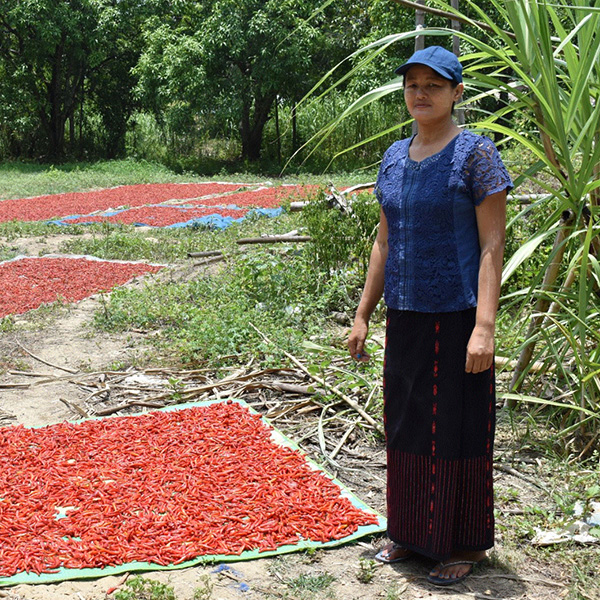
Daw Cho Mar Win with some of her chili harvests.

Two sisters in Myanmar team up with CWS to earn 50% higher profits

“For us, we have no choice except for agriculture,” says Daw Cho Mar Win. She lives in Myanmar’s Ayeyarwady river delta. Despite being less than 60 miles from Yangon, families in the Ayeyarwady delta rely mostly on farming, fishing or hourly wage jobs on small construction projects.

“In our community, we must work harder during the winter and summer to save money for living expenses in the rainy season,” Daw Cho Mar Oo explains. The rainy season is June to September, when the river often floods and earning a living can be a challenge.

Daw Cho Mar Win, in particular, earns a living alongside her sister, Daw Cho Mar Oo. They proudly own three acres of land, where they grow chili peppers. They sell to wholesale exporters, who buy from small family farms like theirs and export the produce to China. Eventually, the sisters’ chilis end up in sauces or seasoning packets for instant noodles.

The sisters prepare their land in August. They plant chili pepper seedlings in September for harvesting four months later. A hired crew of about nine laborers help during the harvest period, which lasts about 20 days. One acre of land produces about 5,400 pounds of peppers which earn the sisters 400,000 Kyats ($219) net profit. In the past, they planted two acres of chilis and earned $438 per year.

For a long time, the sisters have wanted to expand their chili production. They wanted to plant their third acre of land but didn’t have the savings to buy supplies. Thankfully, CWS was there to help them accomplish their goal.

CWS has worked with villages like Daw Cho Mar Win and Daw Cho Mar Oo’s for more than three years. A big part of our work together focuses on food security and livelihoods. One part of this work is to establish Village Savings and Loan Associations. These are community clubs where neighbors pool their money and borrowed from the group funds at a low interest rate. Each of the 15 members of the sisters’ group contributes 2,000 Kyat ($1.10) per month. Members can borrow loans of 150,000 Kyats ($82) and pay it back over three months at a 5% interest rate. By comparison, private moneylenders in the area often charge interest rates of 10% or more.

Daw Cho Mar Win used one of these loans to buy the supplies she and her sister needed to plant a third acre of chilis. “The VSLA program is very effective for people like us who can’t save big amounts of ash and can’t borrow from lenders who charge high rates,” Daw Cho Mar Win says.

After expanding to three acres of chili pepper fields, the sisters earned a total 1,200,000 Kyats ($658) net profit. With one loan, they were able to increase their profits by 50%!


Stories of Change


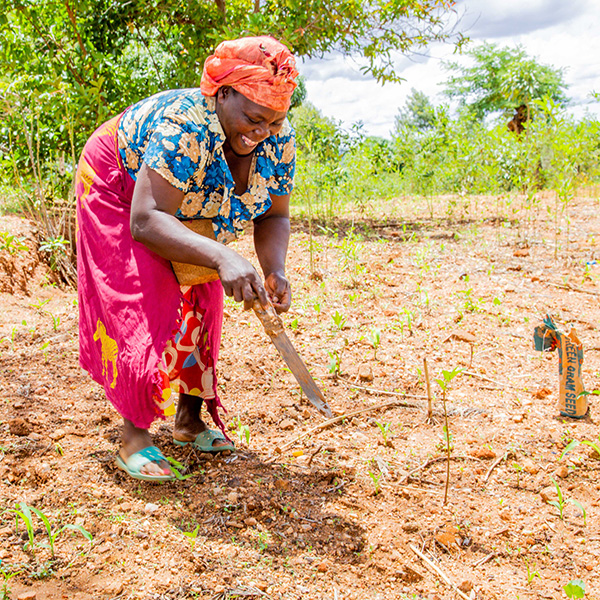
A program participant in Kitui County plants green gram seeds that she received through the CWS response.

Hope and recovery for 800 Kenyan families after the desert locust emergency

In 2020, swarms of desert locusts resembling dark storm clouds descended ravenously on the East and greater horn of Africa. They roved through the region and flattened farms and pasture lands posing an unprecedented threat to the food security of millions of people and their livestock in already vulnerable areas.

Farmers could do nothing but watch with dismay as the huge swarms of marauding insects ate their crops.

In Kenya, locusts infested more than 70,000 hectares (about 173,000 acres) of land, including crops, fodder and pasture. This put many families’ livelihoods at risk. 

The desert locust is considered the most destructive migratory pest in the world. It is highly mobile and feeds on large quantities of any kind of green vegetation, including crops, pasture, and fodder. According to experts, it was the worst desert locust invasion in over 25 years in Ethiopia and Somalia and the worst observed in over 70 years in Kenya.

The invasion came at a time when the government and humanitarian actors were battling the COVID-19 pandemic and the devastating economic and social disruption it caused. More time, energy and resources were diverted for COVID-19 preparedness, prevention and response.

CWS responded quickly through an ACT Alliance Desert Locust Regional appeal. Our team worked to prevent a significant decline in food security and to help farmers and families safeguard their livelihoods in affected areas affected. A total of 800 households received support in form of early recovery seeds and training of drought-tolerant crop production.

“When the locusts invaded our farms, they ate everything. CWS brought us seeds which we hope will help us recover from the loss,” said Kalii Mukumbu, a farmer in Kitui County.

This work was carried out in collaboration with the ACK Diocese of Kitui as well as the Kitui County Ministry of Agriculture, Water & Livestock. Following a rapid assessment in the affected area, our team distributed three varieties of crop seeds: green grams, beans and cowpea, which are well suited for the agro-ecological zone.

Thanks to Week of Compassion for their support of this response. 


Stories of Change


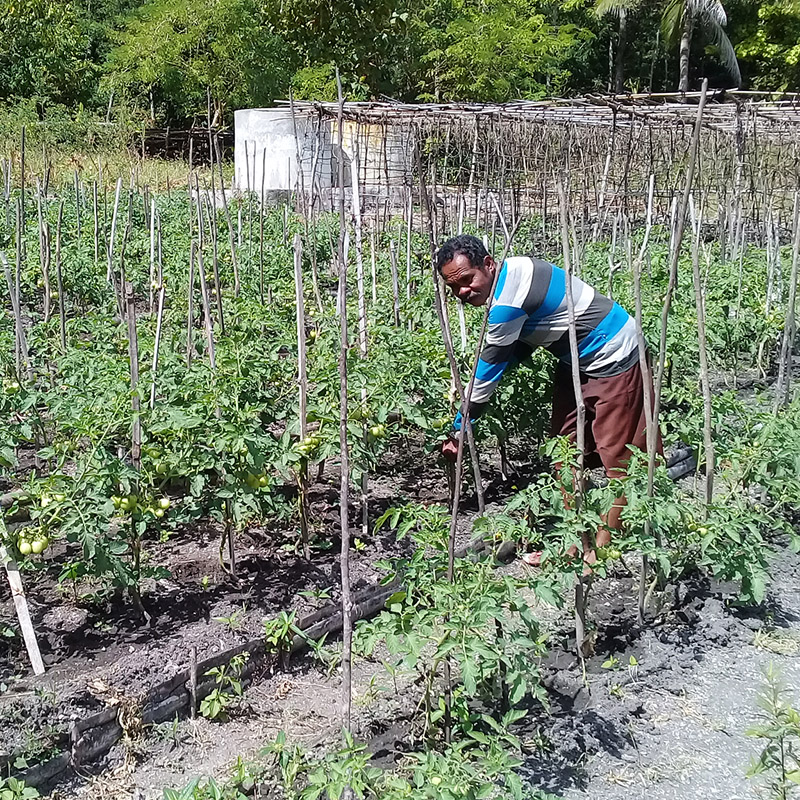
"Now we harvest white mustards, cabbage, kale, green beans, bitter melons, tomatoes, chilies, zucchinis, cucumbers and papayas," Dominggus says.

Poor Farming Families Change Their Lives in West Timor, Indonesia

“In the past, each family was only able to plant Chinese cabbage, tomatoes, and chili on about 100 square meters (2% of an acre) of land per family,” says Dominggus Liunokas. Dominggus is the leader of the Tosilo Toselo farmers group in Oe Ekam village in West Timor, Indonesia. 

“We could not eat vegetables year-round since there wasn’t enough water during the dry season. We could only plant vegetables during the short annual rainy season from December to March. During the dry season water was hard to come by, since water sources were located far from the village,” Dominggus says. “The vegetables that we managed to harvest we used to feed our families. Those who were able to generate a small surplus and sell it in the local market only earned about $3.50 – $7.00 each time they sold their produce.”

CWS has been working with Dominggus and his community since 2018. Through the Timor Zero Hunger program, residents of Oe Ekam have formed five farmers groups, including Tosilo Toselo with its 16 members.

The members of Tosilo Toselo have been actively participating in various learning activities. They have joined training on how to make organic liquid fertilizer and how to ward off pests and plant diseases. With support from CWS,the group member also built a cistern and installed a pipe that is over half a mile long to bring more water from a spring directly to their group’s land. Group members also learned about the benefits of drip irrigation and have built a drip irrigation system for themselves.

“The Timor Zero Hunger program has been a life changing experience for members,” says Dominggus. “We were able to expand our farmland to about 2.5 acres. We were also able to diversify: now we harvest white mustards, cabbage, kale, green beans, bitter melons, tomatoes, chilies, zucchinis, cucumbers and papayas. Over the past two years we have been able to harvest much more and eat vegetables every day. Once or twice in a week we sell our crops in the local market in the district capital. On average our members make $17.50 – $52.50 for each harvest. Now we can harvest 3 to 4 times in a year,” he added.

“Thank you, CWS. This program has changed the life of all our members.”


Stories of Change


Ruthelaine Destin. Photo courtesy AGEHPMDNG

Small Investments Lead to Big Joy

Throughout 2020, the COVID-19 pandemic took a catastrophic toll. Haiti’s Northwest department was no exception. Unemployment soared, and people lost their livelihoods. This meant that many people spent what little savings they had.

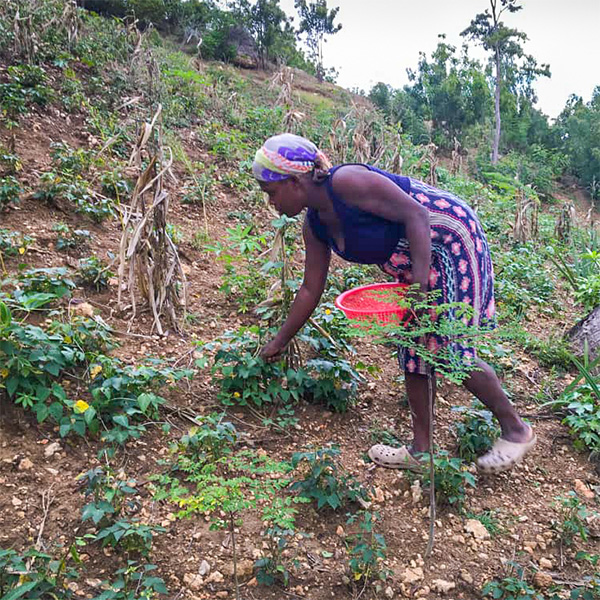
When planting season arrived in November, farmers had fields that they had prepared to plant. But many couldn’t afford to buy the seeds that would go in those fields. CWS and our partners knew that a small boost now would lead to a huge impact for families when harvest season rolled around. So we provided seeds to 100 farmers. These seeds were short-cycle, which means that they would be able to harvest sooner. Of the 100 farmers, 70 were women. The seeds they received to plant included corn, peanuts, black beans, white beans and lima beans. 

Now, five months later, farmers are reimbursing us with part of their harvests. These repayments will ensure that seeds are available for future planting seasons if farmers need the boost again. Each farmer pays back 1.5 times the number of cans of seeds they received. 

Gedeon Sidernier received peanuts and corn to plant.  When he came to reimburse corn, Gideon said: “With one can of corn received, I was able to harvest a yield of 80 cans.” 

Ruthelaine Destin is a single mother of three. When she came to our partner AGEHPMDNG to reimburse her seeds, she said:

“In November I received corn, black and white beans, and lima beans. It was a good moment for me to receive this, because my land was prepared, but I had no money to buy seeds. [AGEHPMDNG and CWS] gave us seeds to plant. I had nice crops, good crops. I have already harvested black and white beans and lima beans. Even though the harvest of black and white beans could have been better, it was still good.

They gave me one can of beans, with which I made a yield of 6 cans, without counting what I have eaten and donated to others. As for lima beans, I made 14 cans out of 1 can. I shared with others, I sold a part, I paid for school for my children, and I used part for our own consumption. On top of that, I have 14 cans saved.

They gave me one can and now I have come to reimburse 1.5 can, while the rest is mine to keep, so that I can take care of my family and our daily needs. That makes me really happy, because this season, even though I had finished preparing my land, it looked like I was not going to be able to plant.

With these seeds, I am doing well. Right now, I am harvesting the corn. If you go to my house now, you will see the bags of corn. Once I am done harvesting the corn, I will reimburse three cans, because they gave me two cans. This is my joy and this will help me advance, because I am progressing thanks to this group that gave us these seeds. My lima beans are already giving a second harvest. If you look at them, it seems they are beans that have just been planted, giving such a good yield, while I already harvested them once.”

With a small investment, a huge harvest of joy is underway right now. Thank you, CWS family, for making these stories possible!


Stories of Change


Nelson Valdez

Leadership During Hard Times in the Dominican Republic

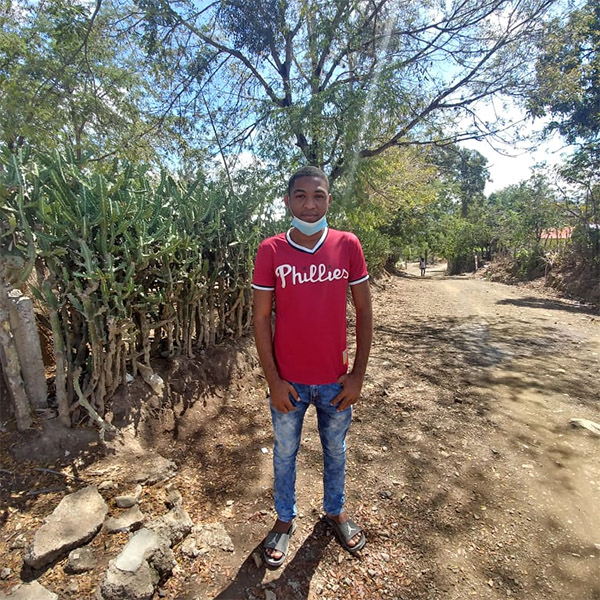
“My name is Nelson Valdez. I am the president of the youth group Jóvenes Unidos por el desarrollo de El Batey [youth united for the development of the community of El Batey in the Dominican Republic].

My family is my mother, my father, my grandmother and three sisters. One of the worst things I saw during COVID-19 was mass unemployment that left people and families totally unprotected. I saw sick people and also know of people who had to move from their community looking for jobs elsewhere. Fortunately, I did not lose any relatives to COVID, but it was a tough time for my family.

COVID-19 made me stop my education. When COVID-19 began, I was pursuing studies in mathematics at the university and attending a finance and accounting course at INFOTEP, the government´s vocational and professional education agency. The university closed down due to COVID, which also affected my finances because my monthly scholarship for excellent grades of $104 was suspended. This affected not only me personally, but also my family.

One of the main lessons I learned in the [CWS-supported] entrepreneurship training was that, if I do it right, I can begin a new business despite how big difficulties seem to be. Even though the pandemic has hit many people so badly, there are people that innovated and move forward. I learned that while many people want to do businesses in good times–we called these times “tiempo dulce”–a true entrepreneur shows leadership during hard times.

I learned from participants who in the middle of the pandemic began to produce and sell masks and gloves. After the training, I spoke to one of my cousins about an idea I had after I saw the tree nursery the community is building [through the CWS-supported program]: I want to plant fruit trees in a vacant lot of land in the community.

The tree nursery project is very important for the community and especially for youth because it will create jobs. The only job opportunities around here is to go the town of La Loma or to move to the capital city of Santo Domingo, where you can find jobs and education. If young people can make a decent living here, then at least we have the option to stay if we want.

I am part of the tree nursery project, and one of the aspects of the project I like is that we will travel to other communities to sell our plants and we will learn things from them. In the community of Juan de Herrera (pop.12,000), for instance, we can meet new people, share ideas and learn from them. So it won’t be just about selling our production and make a profit but new learning and making new friends. Of course, the tree nursery will help members to expand their income as well.”

Nelson participates in a CWS food security and livelihood program that engages rural communities in the Dominican Republic. Our local partner is Servicio Social De Iglesias Dominicanas, and Growing Hope Globally supports this work. 


“Today I have 11 eggs!”


Ngo Quoc Dung | March 5, 2021

”I was on my way to the market and met Vui, who is the head of the hen raising group in my village. She told me some visitors were waiting for me at home. I rushed back home and wondered who the guests were.” Cam Thi Thao is a Thai woman living in Phuc Than commune in Vietnam. Thao and …

Stories of Change

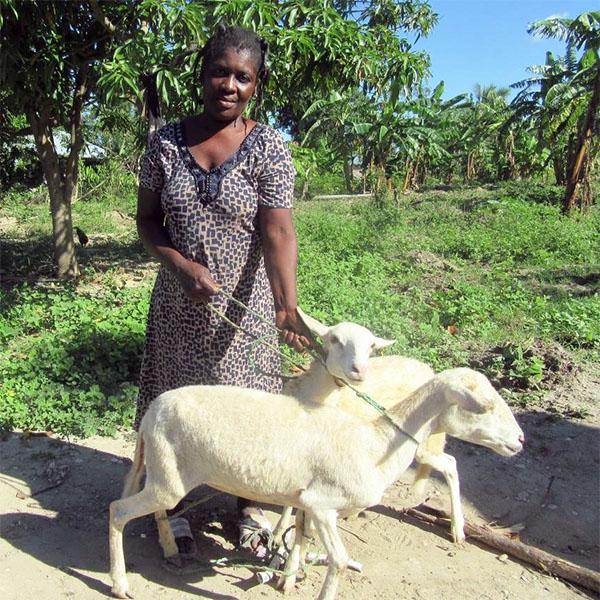
Rosalie François with her two new sheep.

“Thank you very much for this beautiful program.”

Many families in Haiti earn a living by raising livestock. People breed animals such as sheep, goats or pigs and then sell the offspring. In recent years, though, disasters have struck the nation and claimed the lives of many families’ animals. Families may also have to sell their livestock as a last resort to meet urgent needs, ending this sustainable income stream. 

In 2020, CWS distributed sheep to many Haitian families to help them start or restart raising livestock. Here’s what a few program participants had to say:

Rosalie François:

“My name is Rosalie François. I am married to Iliado and am a mother of three daughters and three sons. Two nephews and my father are also living with me. My father is blind. I am a merchant, a farmer and I do animal breeding. I used to have a cow, two sheep and three goats, which were very helpful for me, but due to circumstances I had to sell them so that I could solve some problems, purchase food and send my children to school.

During the [CWS-supported] training…I learned to build a shelter for the sheep, to regularly clean the shelter, and to collect excrements and leftover food to produce compost. That is what I do now and then I will use it for my crops. I know that I should not build the shelter on a steep hill, so that the animals are comfortable in the shelter. I apply what I learned at the training. My shelter was built well and water cannot cause the animals any problems.

I will respect the contract I signed and reimburse the firstborn lambs to the leaders so that they can distribute them to other people who haven’t received any yet. Thank you very much for this beautiful program.”

Pelita Decelouis:

“I am 43 years old and married to Junel. We have four daughters and one son. I am a farmer, I have a small business and also some animals. I used to have four goats, two donkeys and four sheep, but right now I do not have any animals at all. This animal breeding program of MOSODEL and CWS has a major importance in the community. Many people who had no sheep, now received two ewes. If they take good care of them, they will have lambs, they will reimburse some and the rest will be theirs to keep.

I already took my sheep for mating and now it is pregnant. Before I received the sheep, I gathered materials and built a shelter for the sheep, because I learned during the training that a shelter is a protection for animals. It protects them against wind, sun, rain, and other animals that can attack them.

When my sheep will have lambs, I will reimburse the firstborn lamb to the leaders of MOSODEL, so that they can pass them on to people who have not yet received any sheep. I give many thanks for these sheep that I received.”

Watnie Atilus:

“Watnie Atilus is my name. I am 26 years old, I have two daughters and I am married to Louis Jean Baptiste. I am a merchant and practice animal breeding. This program and AGEHPMDNG have a lot of importance for me. If I was not a part of this group, I would not receive any sheep.

I already received two female sheep and I benefited from many advices during a training that I attended for two days. At that training I learned to keep an eye on the sheep so that I can take them to mate when the time is right. I also know that I should not let the sheep roam around freely, because then they can get lost, thieves can catch them, or they can die. I tie them with a rope at a place where they can find fodder to eat. In the afternoon, I put them in a shelter that I built for them before I received the sheep.

I feel proud when I look at my sheep, I am very happy. I hope that everyone keeps their promise to reimburse the firstborn lambs so that the program can continue to advance. I give thanks to all those who have contributed to this program in one way or another.”

Alène Desir: 
“My name is Alène Desir. I am 51 years old and have one daughter. I am not married. I live with my mother and take care of her. I am a merchant, a farmer and I do animal breeding. I have three goats, one pig and 21 chickens.

During the training I learned there are three ways people look after animals in Haiti. There are people who choose free roaming of animals, others tie them with a rope, and others put them in a shelter. I learned about the importance each method has and also the disadvantages. Now, I have chosen to apply the rope method, because during the day I tie my animals close to grasses and in the afternoon I go get them to put them in a shelter and feed them again for the night.

Often it is a problem to find fodder for animals in the community because of drought. I learned at the training that when it rains a lot of grasses grow and I can cut them to dry them in the sun and tie them together to make hay. Then when I feed the hay to the animals, I can water it with some water with salt. I have already started to produce hay to give to the animals when the next dry season arrives.

I built the shelter before I received the sheep. I feel comfortable when I look after the sheep and I also believe that the sheep themselves are comfortable when they can be in the shelter without any problems. That makes me happy.

This program helps me a lot, especially when the sheep will start tot have lambs. They reproduce quickly so I can sell them to solve any problems I have, for example with my house or to feed the children. I hope that the program will continue so that people who haven’t received any animals can also have them, while I will give my own contribution when I reimburse the firstborn lambs. Thank you very much.”

Ifanie Daté:
“These sheep that I received are my future.”

Thanks to Latter-day Saint Charities for their support of this program.