Stories of Change


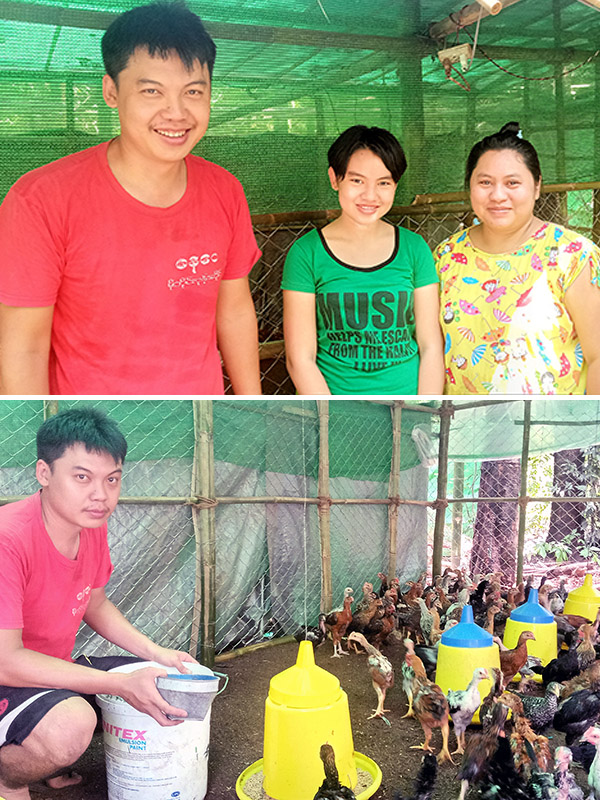
Top: Saw Edmond, Eint Phoo Myat and Mi Mi. Bottom: Saw Edmond feeds some of the chickens.

A chicken hatchery’s largest order ever in Myanmar

Chicken farm owner Saw Edmond lives in Ywar Thit Pine Village on the outskirts of Yangon, Myanmar. He and his wife, Mi Mi, have owned and operated their hatchery business for the past twelve years.

After years of struggle, the couple now have a profitable business. When they first started, they didn’t know the first thing about running a hatchery. They could neither identify chickens by breed, nor how to guard against livestock diseases. Now, they raise and sell Chittagong breed chickens. Saw Edmond and Mi Mi grew and improved their business through years of study and mentoring from other, more experienced hatchery owners. Their sixth-grade daughter, Eint Phoo Myat, helps with some chores around the hatchery when she’s not in school.

In 2019, Myanmar’s Livestock Breeding and Veterinary Department reported that chickens were the most common farm animal for families in Myanmar, with more than 70 million in the country. The next most common was cows at 9.5 million, which shows that chickens are clearly the top choice for families. The Chittagong hens that Saw Edmond and Mi Mi raise start laying eggs when they are six months old. They continue to lay eggs until they are about four years old, and one hen can lay upwards of 100 eggs. Farmers and hatchery owners usually keep Chittagong hens for about five years before they humanely slaughter them. 

Mi Mi and Eint Phoo Myat collect eggs daily to put them in a cool and dry place before moving them in an incubator. Chicks hatch 21 days later and are moved with their age cohort to designated areas on the farm. The family feeds and vaccinates the chickens for the first four months, and then the baby hens are mature enough to sell to a family as egg-laying hens.

“At first, I sold each mature chicken for 3,500 Kyats ($2.49) each. We saved our money and invested in incubators with capacity for up to 1,000 eggs. And now I have 230 hens laying eggs daily. After paying farm hands daily wages for manual work, and then subtracting feed and vaccine costs, I make about 60,000 Kyats ($42.70) profit per day. COVID-19 didn’t affect my business as I already had feed and vaccine reserves for 3 months,” Saw Edmond explained.

Most customers come from neighboring villages. The average order is approximately 100 chicks. Recently, though, Saw Edmond received his largest order ever. It was for more than 3,000 chickens. 

CWS was the customer.

As part of our program to help families overcome hunger and poverty in Myanmar, we are distributing chickens to thousands of families. Each family receives a small starter flock as well as information and workshops on raising chickens, building chicken coops, making chicken feed and keeping their flock healthy. When possible, we purchase supplies from local vendors to support the local economy. Saw Edmond is one of those vendors.

Saw Edmond was grateful to receive this historic order from his hatchery. “I appreciate CWS for these large orders, since the revenue is helpful for our general operations and livelihood. I also want to invite CWS and interested people to visit my hatchery; I will explain you everything you want to know, ” Saw Edmond said with joy.


Beekeeping: an unexpected lifeline in Paraguay


July 8, 2020

Indigenous communities have lived in the Gran Chaco region of Paraguay for centuries. And for most of that time, families had lots of ways to earn a living. They hunted, fished, ate local fruits, consumed local honey and made crafts. This lifestyle was largely possible because they could move freely across the vast region. It wasn’t an easy way of …

Stories of Change

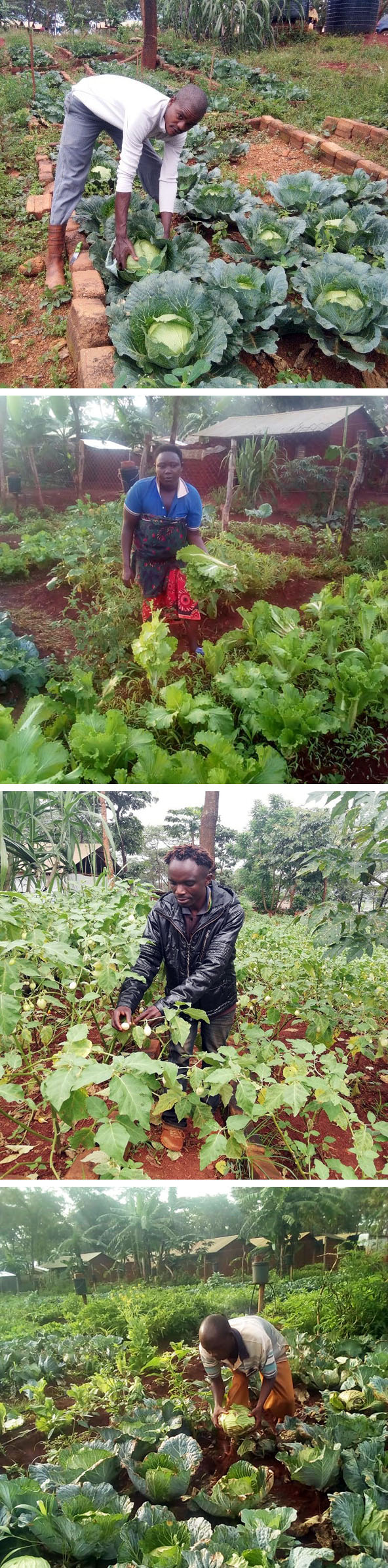
From top to bottom: Irakoze, Nibizi, Ndayizeye and Kabura in their garden plots in Nyarugusu refugee camp.

Vegetable harvests and new skills for refugees in Tanzania

Tanzania’s Nyarugusu Refugee Camp is home to tens of thousands of Congolese and Burundian refugees. CWS has been working in the camp for years, and most recently our focus has been on helping residents build businesses and earn a living.

The previous phase of this program was called REFLECT. Then, starting in April 2019, we launched a pilot program focused on agricultural productivity. Thirty refugees from Nyarugusu participated alongside 120 people who live near the camp in the Kasulu District. The program’s goal was to support participants as they increased their vegetable harvests and earned additional income.

In Nyarugusu, we have started a community garden area. Part of the space is used as a demonstration plot, where experts help program participants learn about different types of crops and how to grow them most effectively. The rest of the space is made up of plots belonging to individual participants. They are free to sell or eat what they grow. The 30 farmers, most of which had participated in the REFLECT program in the past, focused on growing amaranths, cabbage, onion, green pepper and eggplant.

Nibizi Jeanette Nsabiyunva and Irakoze Eric Bilahila have both been participating in Agricultural Productivity Project and REFLECT activities for a few years, and they each received sewing machines and tailoring lessons in an earlier phase of the program. Now, they are cultivating spots in the garden, too. “I’m doing tailoring activities to earn some money and sustain my family’s needs,” Nibizi, a mother of six, says. She also expects to earn about $37 this year from selling amaranth and green pepper.

Irakoze, 29, has embraced vegetable farming and is now a lead farmer who helps encourage his fellow participants. “I’m grateful that I have different skills obtained from CWS programs. I can now make organic pesticides and compost, and I know how to sew different clothes and earn some income for my family,” he says. “Last year, I planted different vegetables and sold out. I earned about $55. This year I have planted more vegetables and I hope to earn more than last year. On top of that, I have started selling some of the vegetables now and I earn up to $3 a day.”

Kabura Eliakim Bandyatuyaga lives in Nyarugusu with his wife and seven children. Like most of his neighbors, he struggled to make ends meet. He opened up a small retail shop in order to provide for his family. Through REFLECT, he secured startup capital of about 220 pounds of rice. “I did not end up just selling rice in my shop, but instead I was able to add other products including sugar, soap and many other small items. This was made possible by the profits I earned from selling rice,” he says.

When the agriculture phase of the program started, Kabura jumped at the opportunity to participate. Now he’s growing vegetables like eggplants and cabbages. In 2019, he earned $44 from selling his harvest, and he had plenty to share with his family and neighbors. He expects to earn at least that much again this year. “I’m really grateful for the Tanzanian government for allowing us in their country, and to Church World Service for the support in the vegetable farming project,” he says. “Our families are also grateful for this support. May the good Lord bless you.”

Finally, let us introduce you to 31-year-old Ndayizeye Johnson Nzobarinda. He has been participating in REFLECT programs for years, and credits this work for teaching him to read and write and develop skills like mushroom farming and vegetable production. “Vegetable farming helps my family, and we are now living a good life, earning some income from selling the vegetables,” he says.

Nibizi, Irakoze, Kabura and Ndayizeye are all from Burundi. In 2015, more than 100,000 people fled Burundi following a failed coup, protests and a humanitarian emergency. We are proud to support our Burundian neighbors as they build new lives in safety in Tanzania, and we look forward to the continued success of the participants in the REFLECT program.


Stories of Change


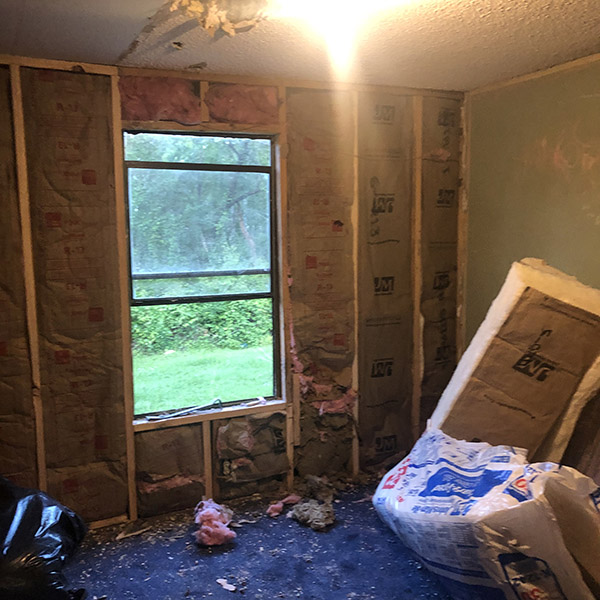
Damage from Hurricane Michael in the Canteros' house. The hurricane broke windows, doors and siding and caused extensive water damage.

After Hurricane Michael, speeding up the long-term recovery process

Hurricane Michael slammed in to the panhandle of Florida in October 2018. It was a Category 5, the strongest level of hurricane. A year and a half later, families are still recovering from the damage and destruction that the storm brought. CWS teamed up with the Panhandle Area Educational Consortium to help families with long-term recovery. We provided a grant for PAEC to use to support their clients who are also farm workers. They reached more than a dozen families, including the Cantero family. This is their story:

My name is G. Evelyn Cantero, and my husband is Jaír. We have three beautiful children: Analise just turned 10, Jonathan is 9 and Aizlynn is 8. My 79-year-old mom lives with us as well.

Jaír and I work in agriculture, and our home base is in Florida. We harvest anything from squash to eggplant to tomatoes. In July we migrate to the mountains of Asheville, NC to harvest tomatoes.

Being in agriculture, the weather is very important to us. That’s why I started paying very close attention to the cluster of storms that later would become Hurricane Michael. We knew that if it came our way, it would not only affect our lives but our work. As the hurricane approached, we put our evacuation plan in action and took whatever precaution we could to protect our home and ourselves. We rode out the hurricane in a hotel in Marianna and we saw firsthand what a storm of this magnitude could do.

The next day we drove home to scope out the damage. As we arrived at home, the first thing we noticed was the major damage to the siding. Once we stepped out of our vehicle, we assessed the outside damage. We had damage to the front porch and major damage to the back porch and siding. Upon entering the house, we found a broken living room window and a hole in the roof over the kitchen sink with lots of water damage to the wall and sink base. In the dining room was another hole in the roof, another broken window, water damage to the wall, a broken and damaged outside side door, and damage to the steps leading out the side door. In my mom’s room was another broken window and water damage to her back wall. The main bathroom had the worst damage; it had a huge hole in the roof and lots of water damage. In my children’s room was more damage to the roof and water damage from the bathroom that went into their room. In the master bedroom was another broken window and a leaking skylight in the master bath.

We thanked God that our home was still standing even though it suffered lots of damage.

Due to our home being an older mobile home we were not able to have insurance on it. Our only resource at that time was to apply for FEMA. When the FEMA adjuster came, he told us that our home had the most damaged he had seen thus far. The money they gave us was almost enough to fix our roof, but not all of it.

After we had the roof fixed, we decided that we would save up and fix the rest as soon as we could. Most of the fields we worked in were in Marianna, Florida. We knew that after the hurricane passed, we would be without work since our new season would not start until mid-April. Once April rolled around, we went back to work and slowly started to buy the outside siding. We were able to buy more than half, but then the weather and another major problem affected our family.

In May of 2019 my husband came home after work and did not look very well. He was complaining of a headache and feeling weak. I rushed him to the hospital, where he was quickly pumped with four liters of IV. He had had a heat stroke.

In the next few months, he would have six more ER visits for the same thing. I kept seeing a decline in his health. Finally we were able to qualify for Medicaid and he was finally able to see a doctor. His doctor quickly put him on several medications and sent him to a few specialists to rule out any long turn damage from the heat stroke. She also only allowed him to work until noon.

All of this caused major changes for us especially financially. We are so far behind on bills, but I prayed to one day catch up. My sister Lori sent me to Dr. Pouncey’s office [at the Panhandle Area Educational Consortium] one day to pick up Farm Share for her crew and our family. Just as I was about to leave, Dr. Pouncey asked if I knew of anyone who had hurricane damage and was not able to get it fixed.

I hesitated at first, but I told her we did. She told me to get her a list. The next steps happened so fast, but we were blessed with huge help to fix our home. Dr. Pouncey told me it was through the generosity of CWS.

With your help, we have been able to fix our kids’ room and our kitchen sink. We will also be able to fix our entire main restroom, two of the broken windows, the hole in the ceiling in the dining room and the dining room wall. We will also be able to fix the broken window in my mom’s room as well as the damaged wall. The side outside door is being replaced, and the steps will be fixed.

We are so grateful for all the help you have given our family. With this help you have put us closer to our goal of getting our home repaired. My children are so excited to be able to sleep in their repaired bedroom. They couldn’t stop smiling when they saw their room! We still have several other projects to do, but we will get them done in due time. Thank you so much we are truly grateful for all the help we have received. You have blessed us!

Thank you to everyone who supports our disaster response programs in the United States and around the world. You are walking alongside families like the Canteros on their road to recovery. 


Stories of Change


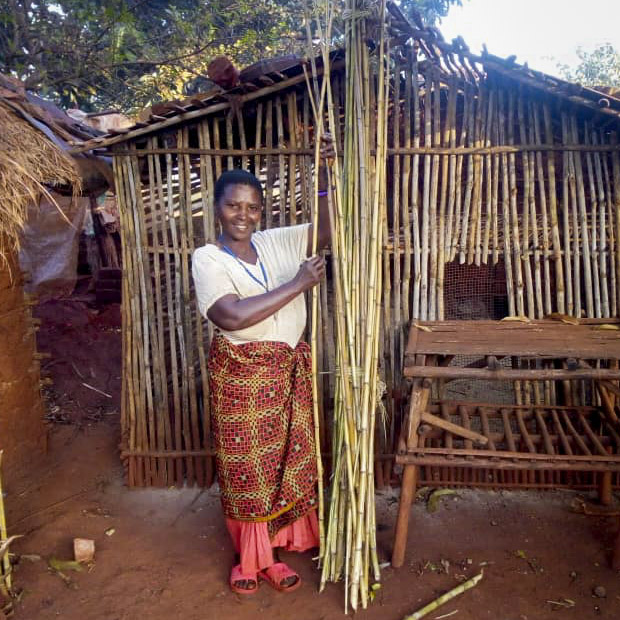
Losina stands in front of her new chicken coop, which will soon be home to her new chicken-raising business.

Replacing Losina’s discouragement with hope

At the beginning of this year, Losina Evarist Elias was discouraged. Her family was struggling to afford three meals a day. They didn’t have enough money to meet their basic needs, and didn’t even have enough clothing for all nine people in her household.

Their plot of land wasn’t yielding enough, and the wages that they earned from seasonal labor couldn’t cover all of their needs. Losina had tried to raise chickens before as a way to earn an income for her family, but her flocks kept dying in large numbers. She had a feeling that raising chickens just wasn’t a way that anyone could make enough money to care for a family. 

We’re thrilled to say that Losina has changed her mind. In March, she joined a CWS program that is helping more than 1,000 farmers in Kasulu district, Tanzania, raise either chickens or pigs. She went to classes and attended workshops on a range of topics relating to raising chickens. Little by little, her discouragement was replaced with hope. 

“I always believed that building a chicken shelter was expensive and would consume a lot of my money,” Losina says. During the program, though, she learned how to construct a chicken coop using locally-available resources. Then she put what she learned into action. “I collected bamboo not far from here to build the shelter, and used old, rusty metal sheets for the roof,” she explains. Now she has a chicken coop to protect her flock.

The larger issue, of course, was the diseases that had wiped out her flocks before. Newcastle, fowl pox, botulism and others kill chickens quickly and in large numbers. Losina and her husband had felt helpless to stop outbreaks before when they started. “Chickens were dying in large numbers because of diseases, and I didn’t know what to do,” she explains. “Now I learned how to vaccinate chickens and prevent chicken diseases.” 

Armed with this new information, and about to receive three chickens to get her started, Losina is willing to try again. And this time she expects a much different result.  “I am grateful to CWS for bringing this project to us as we had the opportunity to learn. Through the training, I will be able to produce in surplus and that will help us to solve several challenges facing my family,” she says.


Stories of Change


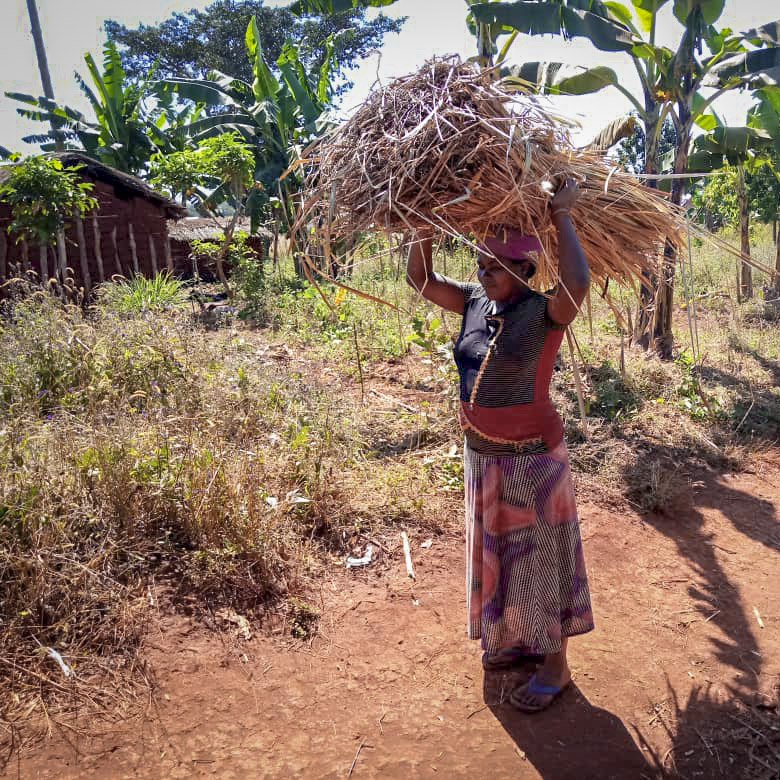
Sylvia carries roofing for her new pig shelter. Soon, she will receive a pig and start her business.

With your help, Sylvia is about to launch her business

Sylvia Salvatory knows that for rural families, a pig is a lot more than just a pet. It’s an investment in a brighter future. 

Pigs are a good source of meat, and they produce a relatively high number of offspring. Piglets can be sold in local markets for good prices, which is valuable income that families can use to meet other household needs. 

Sylvia knew all of this, and she wanted to raise pigs to help earn money for her family. She lives with her husband and five children in Tanzania’s Kasulu district. Like most families in the area, Sylvia’s relies on farming to put food on the table. Unfortunately, they didn’t earn enough through farming to afford to buy a pig. A three-month-old piglet costs about 60,000 Tanzanian Shillings ($22 US), which is money that they just don’t have.

Now, though, Sylvia’s dream is happening. She joined a CWS program in the area that is helping more than 1,000 farmers raise either pigs or chickens. She is focusing on pig production. She has participated in workshops about building a shelter for her pig and keeping it healthy. Her shelter is nearly finished, and soon she will receive her pig and officially start her business. 

“I am grateful to CWS for allowing me to join the program,” she says. “I am now ready to receive the pig. I sincerely request that CWS continues to support us and our community so that we can eliminate the poverty level in our family and community as well.”

Sylvia is a great example of something we see so often in our programs: the families and communities we work with know how to address the challenges that they are facing, but they don’t have the resources or information that they need to do it. Sylvia knew about how a pig would help her move her family out of poverty, but she didn’t have the resources for the initial purchase. Thank you to everyone who supported farmers like Sylvia through Giving Machines last Christmas, since you are investing in Sylvia’s business and hundreds like it. 


Stories of Change


Melania, left, participates in a socially-distanced workshop about raising chickens.

A stronger start for Melania to raise chickens

Melania Marko Majoro has raised chickens for years, but she has never been successful in doing it. She lives with her husband and six children in Tanzania’s Kasulu district. Her family are farmers, producing only enough food for them to eat. 

When done correctly, raising chickens is a valuable extra livelihood for families. They can add eggs and meat to their diets. If they have enough, they can also sell eggs or baby chicks in local markets to earn income. So for three years, Melania has tried to raise chickens to supplement her family’s farming. Unfortunately, she never succeeded. Her flock would be killed by predators or disease, and she was never able to successfully take even a single bird to market. “I have been keeping chickens for three years, but disease kills them all,” she said. “I didn’t know what to do to prevent them from death.”

Now Melania is getting another chance. But this time is different: she is finally getting the information and training she needs to keep her flock healthy. She’s one of over 1,000 farmers in the area participating in a CWS livestock program. She has joined workshops about making chicken coops out of locally-available materials. This structure will keep her chickens safe from predators. She has also learned about preventing disease transmission and keeping her flock healthy. Soon she will receive  three chickens, which for her are a fresh start. 

“I am now improving my ability to raise chickens, I understand how to build a better chicken shelter and prevent them from diseases through vaccines and local methods,” Melania says. “I expect success though this improvement, and now I will start with three chickens that will be provided by CWS to establish a poultry farm to support my family.” She and her husband will work together to make their new endeavor a success.


Stories of Change


Keleni.

Chickens mean a brighter new chapter for Keleni and her children

Feeding her family is a big job for Keleni Ruseba Samwel. At just 32 years old, she’s a widow and a mother of seven. Like most of her neighbors in rural Tanzania, Keleni is a farmer. She relies on her land and harvests to put food on the table and earn an income.

Recently, though, Keleni’s harvests have been worse than usual. They aren’t enough to cover her family’s needs, so she and her children end up going hungry. “The biggest challenge that my family and I are facing is not having a reliable income to meet our essential needs, since I am a widow with seven children to raise,” she says. 

Recently, however, Keleni joined a new CWS program in this part of Tanzania. More than 1,000 farmers from seven wards are now participating in this program, which is focused on sweet potato farming and raising livestock. Every farmer received information and support for growing sweet potatoes, plus support to raise one type of livestock. Most of the farmers, including Keleni, are focusing on raising chickens. Chickens are a great source of both nutrition and income, since families can eat eggs and meat and sell eggs and chicks in local markets.

Keleni joined workshops about how to keep chickens safe and healthy. She learned about building chicken coops that protect her flock from predators. She also learned how to prevent disease transmission among her chickens. Then she received three chickens of her own to start her flock. “The biggest challenge I was facing is a lack of knowledge and skills on how to raise chickens, but now I’ve certainly learned the best ways of keeping them,” she says. 

Soon, Keleni expects to establish a poultry production business that will earn enough income for her to cover her family’s essential needs. “After the CWS training, I believe poultry can help me increase my income and solve the income challenges that I am facing,” she reflects. 


Stories of Change


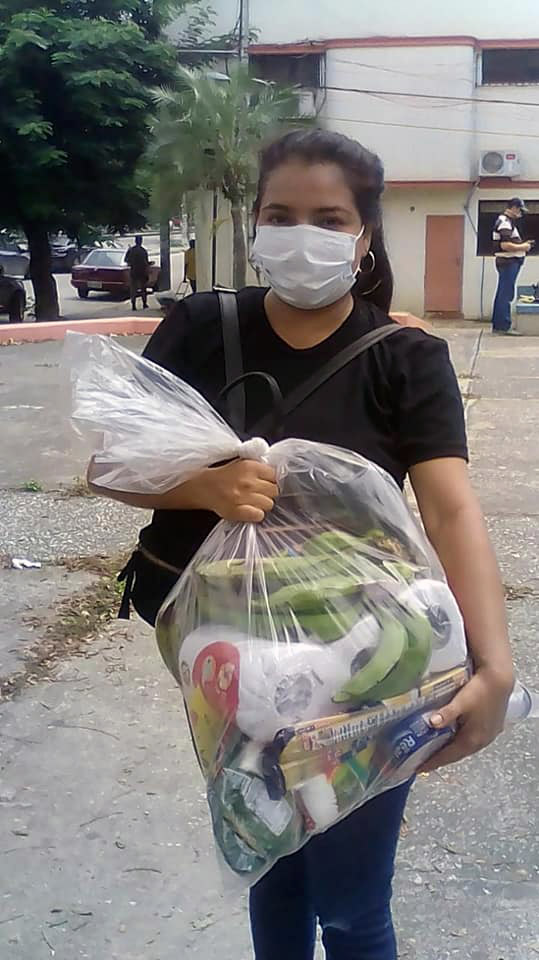
A woman receives a package of supplies during the May distribution in Guayaquil. Photo courtesy Fundacion Paz y Esperanza Ecuador

Food & Hygiene Supplies for 200 Families in Ecuador

Ecuador is among the hardest hit nations in Latin America during this pandemic. Its largest city, Guayaquil, has been particularly affected.

As of May 8, the Ecuadoran government reported over 30,000 cases of coronavirus, nearly 9,000 of which were in Guayaquil. Official statistics vary, but one estimate says that 1,654 people have died. On May 7, the mayor of Guayaquil reported that one third of the city’s 2.7 million residents has or has had the coronavirus.

The virus, and the resulting lockdowns and protective measures, are taking a toll. The prices of essential food and hygiene items are rising, especially for poorer families in cities. Food shortages are now being reported.

On top of everything else, Ecuador hosts roughly 360,000 Venezuelan refugees and migrants. Venezuelans have been fleeing the crisis in their country in huge numbers since 2014. Most of the Venezuelans living in Ecuador rely on the informal economy to survive, feed their families and pay rent. They work as street vendors, domestic workers and unregistered workers. Before coronavirus, they were starting to experience rising levels of stigma and discrimination. The pandemic has aggravated the situation.

Our team in the region continues to look for ways to support Venezuelans who have fled to other countries. In response to the growing needs in Guayaquil, we’ve teamed up with a local organization called Fundacion Paz y Esperanza Ecuador to distribute food and supplies to particularly vulnerable families.

Between now and July, we’re going to provide food and hygiene supplies to 200 families. Most will be Venezuelan migrant families living in slums or low-income neighborhoods in Guayaquil. The remaining families will be other particularly vulnerable households in the most affected neighborhoods, including single mothers. Government aid to these families either hasn’t been enough to help them through the challenges they have faced or hasn’t been able to reach them.

Once a month, families will receive a food assistance basket and a package of hygiene supplies. Local volunteers are assembling the hygiene packages in Guayaquil. Each monthly delivery costs $20.

To learn more about the CWS Coronavirus Response Fund, which includes this program in Ecuador, visit cwsglobal.org/coronavirus.


Looking ahead: the long-term cost of COVID-19


Silvana Faillace, MSc MPH | May 5, 2020

It feels like we’ve been staying at home for years. Americans are itching to get outside, return to work and try to find some sense of normalcy after this pandemic. And for too many in U.S. and around the world, there won’t be a normal to return to. Governments and communities worldwide are scrambling to stay ahead of this pandemic. …