Stories of Change


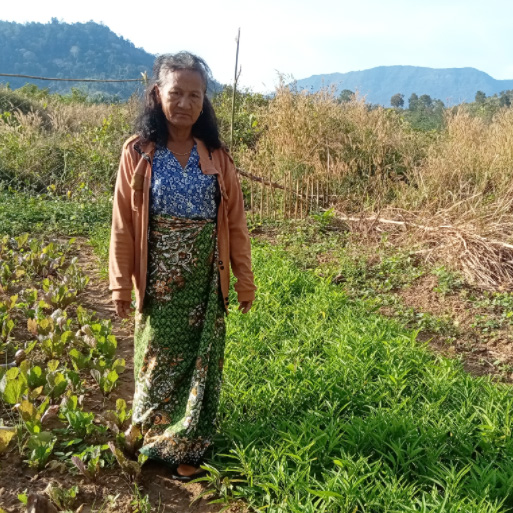
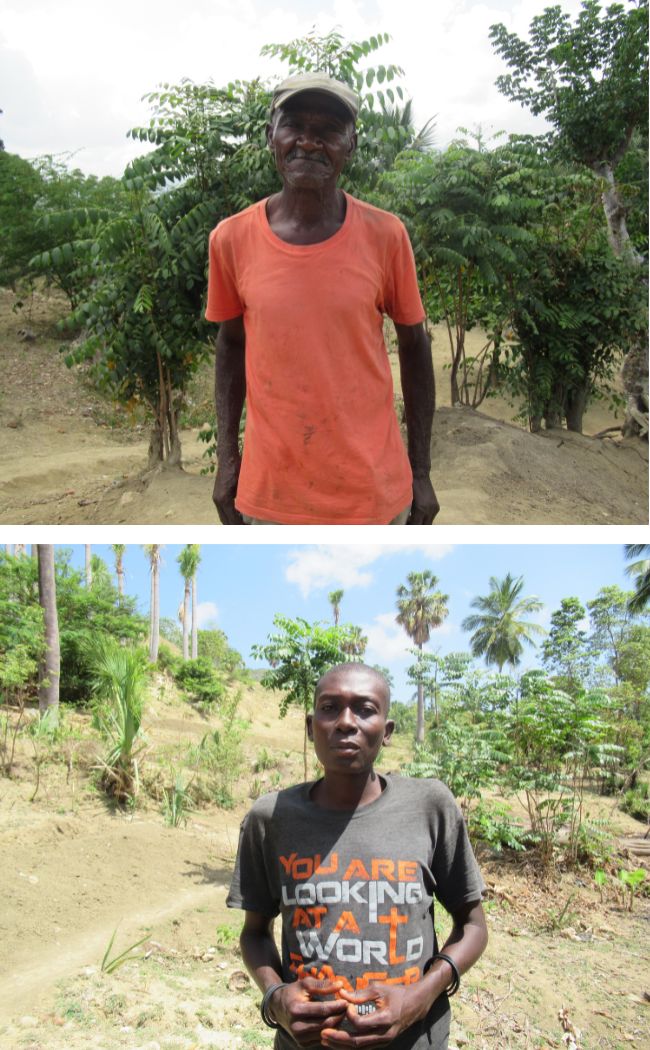
Top: Sadira Jeanty. Bottom: Sader Saint Juste

Farmers in Haiti Adapt to Climate Change

If you have ever owned a plant, you’ll know that one of the most important factors in ensuring that your plant survives is the health of its soil. Too much water and your plant might turn yellow. Too little and your plant might slouch over. As temperatures and CO2 levels increase due to climate change, farmers around the world know this challenge well as they struggle to create the necessary soil conditions for their crops to thrive. 

In Haiti, we are working to withstand these effects by teaching local farmers soil conservation techniques. These workshops teach members of the community how to build contour canals and rock walls that protect the soil, reduce the risk of erosion and increase the fertility and productivity of crops. 

Sadira Jeanty, 76, lives in Nabou with his wife and five daughters. Sadira, who has been struggling with financial instability, joined our training sessions to learn a new way to generate income and care for crops. He shared, “at that training, I learned how to build rock walls and contour canals to diminish the force of the water descending onto our fields so that the soil can remain in place.” By participating in our program, Sadira was also able to earn an income that he can use to pay off existing debts and focus on his crops.  He shared, “the money I earned was very useful for me because I owed money, so I paid the debt I had.” Sadira has now built contour canals and is preparing to start growing crops that he knows will be well protected. 

Sader Saint Juste is another program participant who lives in nearby Diondion. When he was just 12 years old, he began growing crops on his family’s land. As a young boy, he would collect rocks found on his land and place them in small piles to make space for his crops. Sader, who is now 39, continues to grow crops. He recently attended one of our training sessions on soil conservation and learned how to use rock walls to protect soil. He told us, “I now build rock walls with the rocks, instead of making small piles in the middle of the land.” Sader also used the money he earned while working in our program to buy new seeds to grow crops. 

As our planet undergoes extreme changes due to climate change, we are working to equip farmers like Sader and Sadira with the tools they need to withstand these effects. Their resilience and ability to adapt have given them the capacity to continue growing despite the challenges our changing environment brings.

We are thankful for the support of our partners Growing Hope Globally, the Evangelical Lutheran Church in America, and Association des Groupes Évangéliques d’Haïti pour la Prédication du Monde et le Développement d’une Nouvelle Génération for making these stories possible. 

Stories of Change


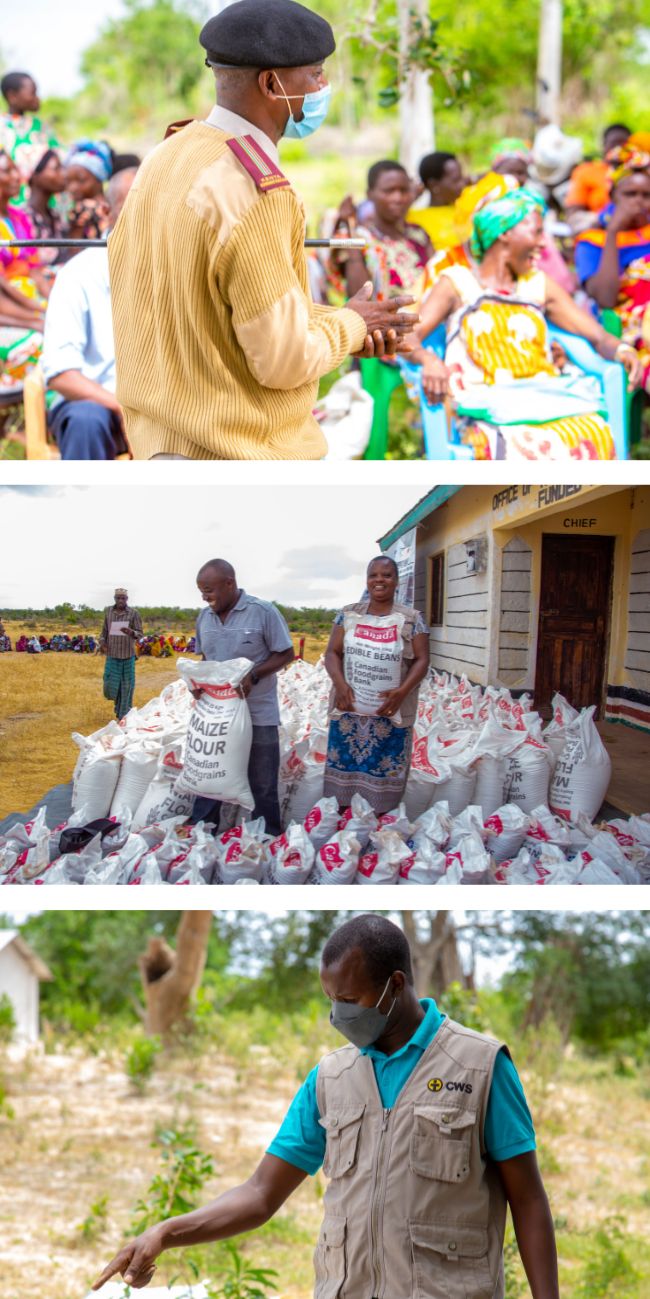
Top: local official assists in food distribution. Middle: CWS Staff distribute food. Bottom: CWS staff leads food distribution

A Closer Look into Our Tana River Drought Response

In Tana River County, Kenya, when drought spread and crops and livestock died, immediate action was needed. We partnered with Canadian Foodgrains Bank and Primate’s World Relief and Development Fund to provide emergency food rations to 3,000 families (15,000 individuals). To understand the severity of the droughts and the impact of our program, we spoke with the members of the community.

The effects of the drought were clearly visible in the Tana River County community where livestock perished and crops dried out. Khadija Haula, one of our program participants, explained, “we experienced severe drought and if it were not for Church World Service and their humanitarian aid, we perhaps would be dead. We are suffering a lot as a result of the drought.” Zainab Wamboi is from one of the fortunate families who received emergency food rations just in time. She told us, “during the drought, we never felt [hunger]. We heard people talk about it but we had enough to eat.”

Beyond hunger, the effects of the drought carried into the normal day-to-day activities of the community. Dhidha Komora works as a Chief in Tana River County. He shared, “I have noticed some major changes. [Prior to assistance] many young people were stuck at home due to a lack of food. When families started receiving this food aid, they were able to go back to school. Now the youth are in school and thanks to CWS my people received plenty of food.”

Along with our CWS staff in Kenya, this project was led in large by the leaders in the community. Amina Omar, Project Officer at CWS Kenya, elaborated. “The program participant selection was done by the community leadership. They lead the process to ensure that all participants were part of a vulnerable group in the community,” she said.

Another step that was taken was the creation of a community-led advisory committee. Members of the committee were trained on humanitarian principles and led the food distribution. One of the members, Kushusho Galgalo, shared, “part of what was taught during the training was to consider those most in need.” Another committee member, Halima Omar, said, “I was one of the committee members who participated in the food distribution for four months. We want to thank this organization for this great work.”

We are thankful for our community and global partners who allow us to support communities during the times in which they need it most.


Stories of Change


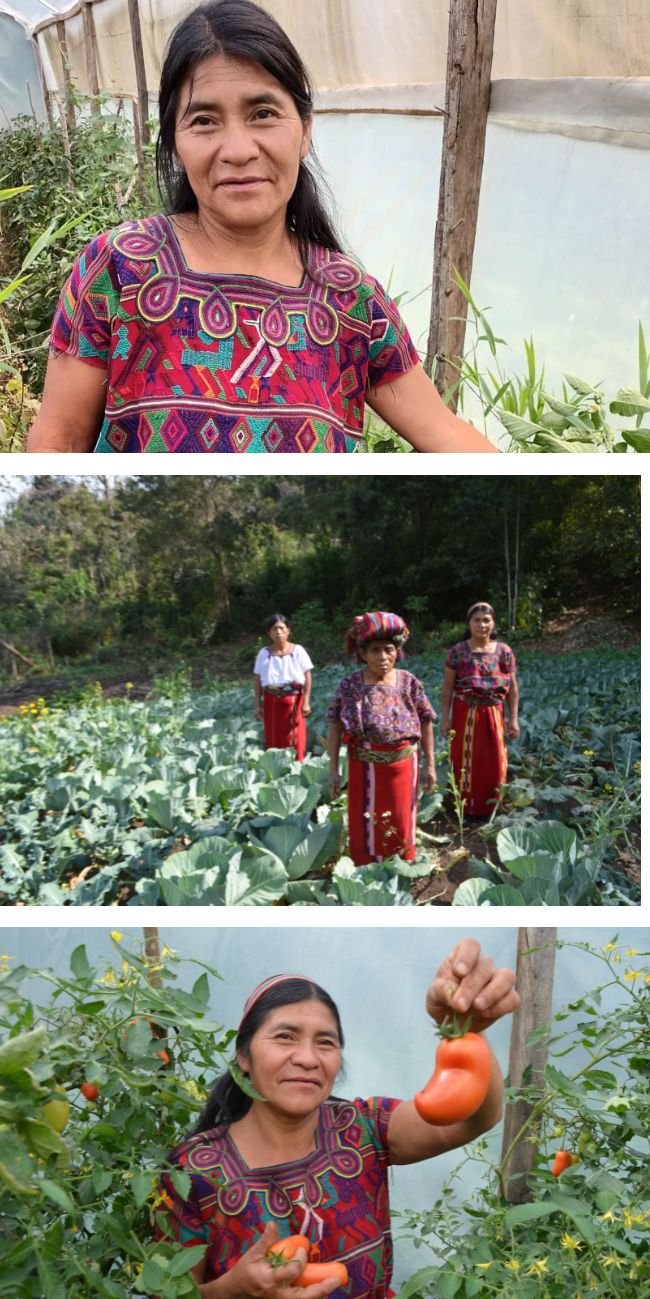
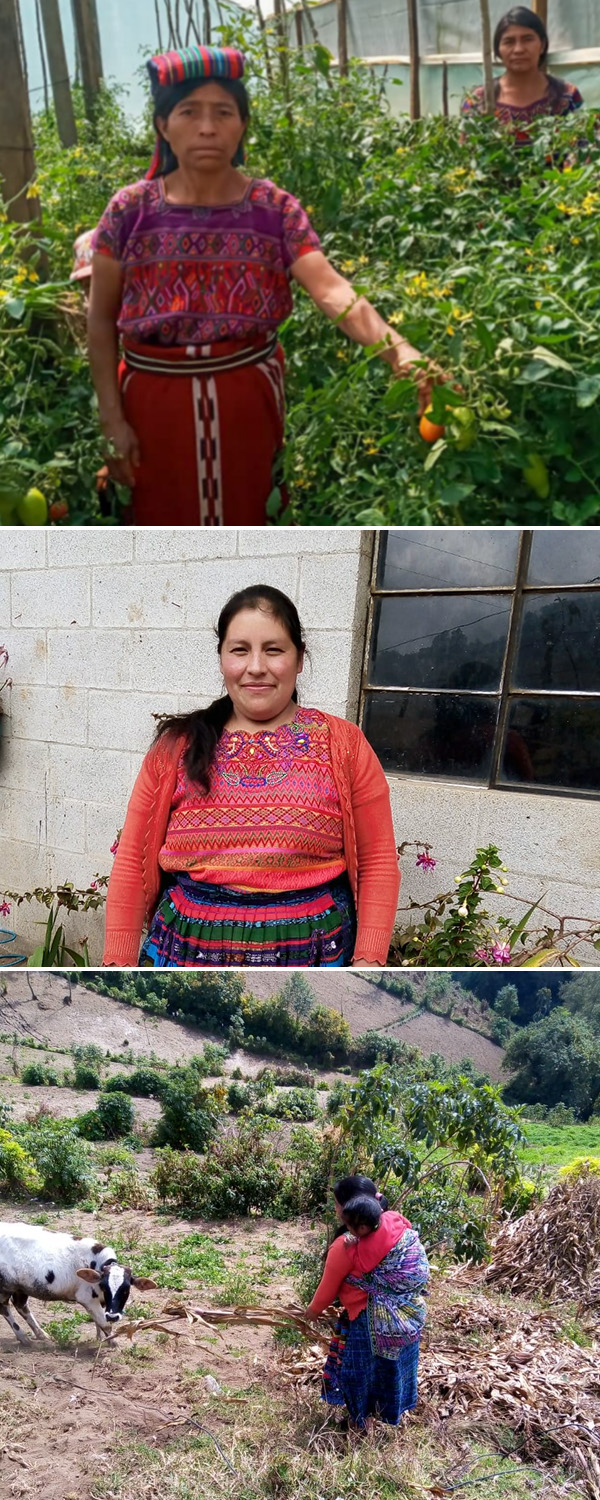
Top: Josefa in her greenhouse Middle: Josefa (right) with other program participants. Bottom: Josefa shows hold up vegetation grown in her garden

Guatemalan Communities Are Flourishing Together

Josefa Pérez and her husband, who live in a rural town in Guatemala, have been farming the land near their home for more than a decade. While they have worked tirelessly to care for their crops and land, they hadn’t seen any major improvements until about a year ago when they participated in our Seeds of Hope for Nutritional Food Security Program. 

Along with members of 917 other families, Josefa attended classes through this program. She learned to plant in more sustainable ways, reduce toxins and increase production so that she maximizes her crop production and increases her income. Through the program, Josefa learned about the benefits of using greenhouses and was invited to receive one for her own garden. She shared, “now we harvest the tomatoes inside the greenhouse, which gives us better results. It’s not the same as planting them outdoors. We had no idea, but CWS and Guatemala Conference of Evangelical Churches (also known as CIEDEG) came to teach us. We also learned to care for the land and fertilize it. We feel satisfied because we saw a change.”

Josefa lives every day with the intention of caring for her family. She wakes up at sunrise at 6 a.m to make breakfast for her six children, clean the house and feed her chickens. She then walks over to see her blooming garden in which she is growing broccoli, cabbage, celery and escarole. These crops allow Josefa to not only improve her income but the quality of life she can provide for her family. 

For Josefa, one of the biggest benefits of her blooming garden is that she no longer needs to worry about food insecurity. She explains, “the most important thing about working the land is that you don’t have to buy food in the market. My family has food. And if there is any surplus, we sell it.”  Now that Josefa has improved the quality of life for her family, she is encouraging her children to dream big and pursue the goals she wasn’t able to pursue. She told us, “I tell them that education is what is going to serve them the most. I would like to be able to read but I can’t, I don’t know how.” Despite the challenges she has faced in her life, Josefa is now paving a path for her children to dream of a better future. 

Along with our partners, we are helping other families in the Departments of Quiché and Quetzaltenango, where Josefa and her family live, to grow their own gardens. So far we have helped 590 families build gardens and 30 to build greenhouses. We have also delivered a variety of vegetable seeds which include coriander, radish, beets, chard, spinach and more. Since the implementation of the program, we saw gardens flourish so we decided to develop a community market. The market is an opportunity for neighbors to support one another by buying and selling their products to each other. With seeds of hope, we are seeing a community grow and flourish together. 

This program was implemented by CWS and our local partner Guatemala Conference of Evangelical Churches. We thank Growing Hope Globally for their generous support. 


Stories of Change


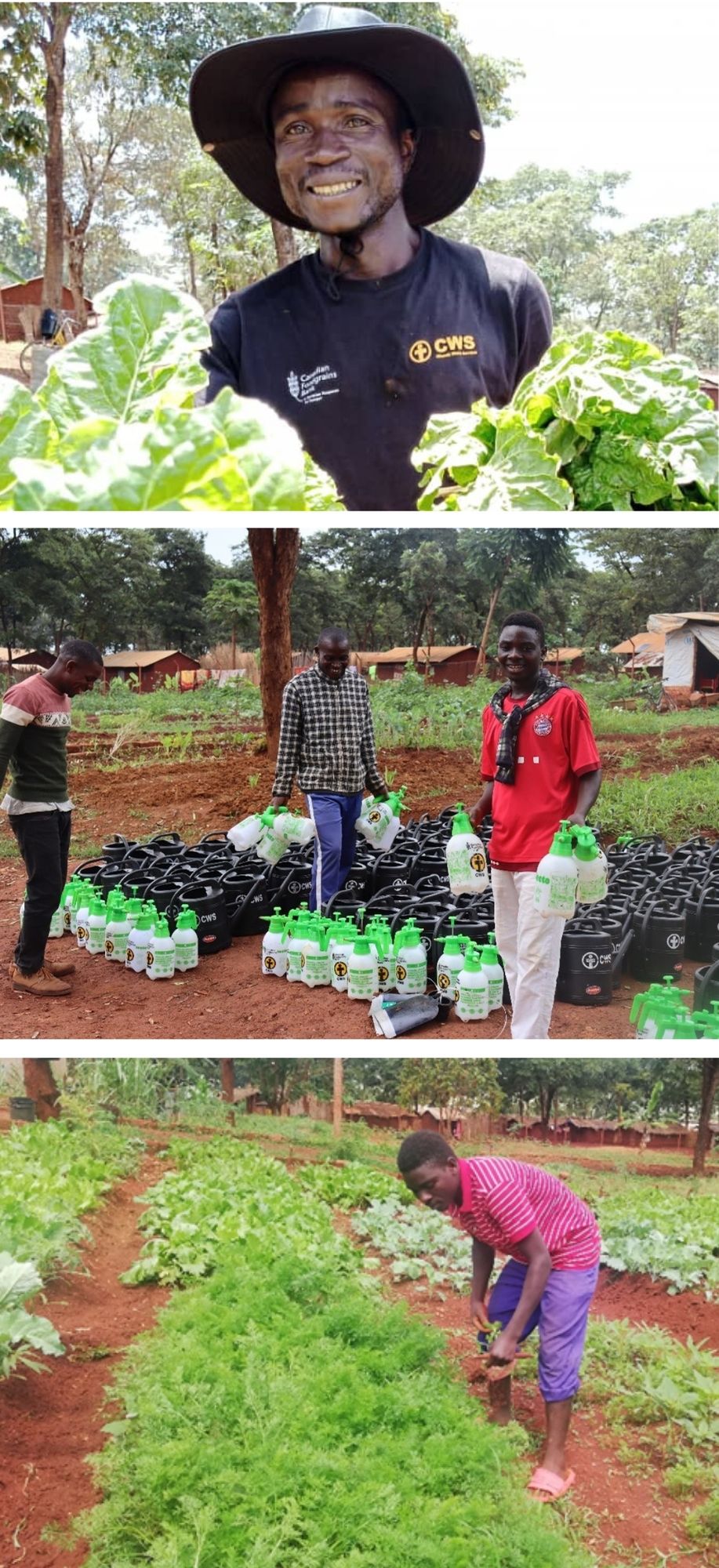
Top: Joseph holds cabbage he grew on the Vegetable farm. Middle: Joseph (right), and fellow program participants Wilondja and Simon. Bottom: Joseph removing grasses/weeds on his plot

Joseph Grows Alongside His Vegetables

When we give nature care and help it grow, we often end up growing with it. This philosophy can be seen at the vegetable farm at a refugee camp in Tanzania. In this vegetable garden, refugees learn about sustainable organic vegetable farming and combat food shortages in the camp. As the program participants grow with knowledge, the plants and vegetables they care for grow with them.

With the support of our partner, Canadian Food Grains Bank, our vegetable farming program provides training on vegetable production, nutrition and marketing techniques of farm products for refugees living at Nyarugusu Refugee Camp. So far we have reached 810 refugees and their households, totaling about 4,050 individuals.

Moize Munenwa Joseph, 22, spends most of his day under the sun, tending to the vegetable garden. Joseph, who came from Congo as a refugee, had little knowledge about sustainable farming before coming to Tanzania. He told us, “I never looked at agriculture as a very important activity. After I joined the CWS agricultural project, I came to realize that agriculture can be more useful and more helpful in supporting my family than the other work that I have been engaged in before. Through farming, I managed to harvest amaranths, Chinese cabbage and onions, some of which we have used at home and the rest we sold to my neighbors. I recently earned almost $6.50 from the sale of vegetables, which I used to buy stationery for my younger brother who is in school.”

Since joining the program, Joseph has participated in various agriculture training courses which have allowed him to discover better vegetable farming methods. He shares, “at home, we used to grow some vegetables but the insects were destroying the plants so we could not earn enough for the family. Thanks to CWS, however, soon after I joined this project, I was trained on Integrated Pest Management and other local methods, including farm cleanliness, to overcome pests and seed selection to improve the yield. This has greatly improved the yield on my farm.”

As an active and dedicated program participant, Joseph was selected as one of the program’s lead farmers and helps train and educate the other program participants. He stated, “I’m very happy that people trusted and selected me to be their lead farmer. Through this role, I get to know/understand people and address their needs whenever they arise. CWS has imparted me with different skills not only in leadership but also in group dynamics, gender-related issues and nutritional knowledge about how to prepare a balanced meal.”

Before joining the program, Joseph relied on intense and laborious jobs such as carrying luggage to help feed his family of eight. Now he is able to partake in an enjoyable activity that yields both food and a stable income. “With CWS I have found agricultural work to be very simple and does not require much energy. Through this activity, I can still take care of my family and ensure we consume healthy food,” he says. Joseph is an inspiration and a true leader in the community and continues to help others learn and grow through the Vegetable Farming Project.


Stories of Change


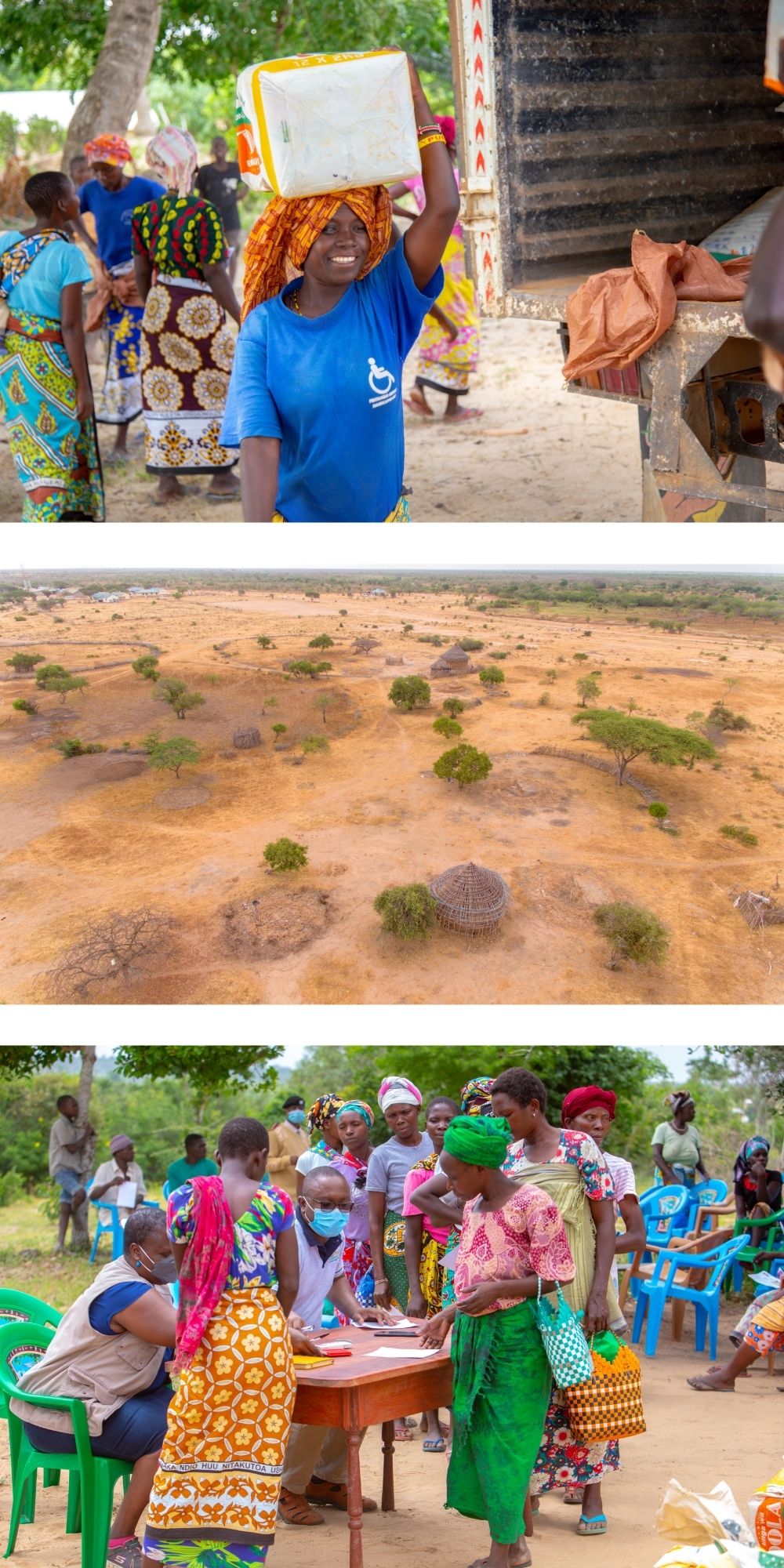
Top: Program participant with food rations, Middle: Dried lands in Tana River County, Bottom: Women in line to receive food rations

Food Rations Provide Thousands Hunger Relief in Drought

When we consider the effects of climate change, we might imagine wildfires, hurricanes and massive droughts. What we might forget, however, is that these consequences are already a reality for thousands of people worldwide.

In Tana River County in Kenya, thousands of people have been severely affected by the droughts that have been occurring for the past two decades. “The drought in Tana River caught the attention of CWS in 2016 when a major drought occurred and we mobilized resources in response,” says Mary Obiero, CWS’ Director of Relief Development and Protection in Kenya. “Tana River is known for cyclical disasters including severe droughts, floods, tribal conflicts, and more recently locust invasions that are now more frequent due to climate change,” she explains.

The lack of rainfall has devastated the people of this region who are primarily farmers. “The drought has really affected us. Our livestock died. If someone had about 100 cows, only two are left. If they had 300 goats, only five are left,” explains Mohamed Kunyo, a CWS program participant in the county. Inter-tribal conflicts have also worsened in the area as “resources (water and pasture) shrink,” Mary explains. Along with the burdens of the pandemic, these challenges have made it difficult for people to find the means to survive.

In response, CWS has partnered with the Canadian Food Grains Bank. Together, we are working to provide 3,000 households (15,000 individuals) with four months of emergency food rations.

Through this project, thousands of vulnerable families can breathe a sigh of relief in knowing that they will have food for the next coming months. Program participant Hussein Shure Guyo told us, “we thank the organizations for the food they have brought. May God bless them.”

To ensure a lasting effect, this project has been led by advisory groups made up of leaders in the community. These leaders will be important in eventually implementing disaster risk reduction projects like the ones implemented by CWS in nearby areas. These projects include activities such as beekeeping and loan saving groups and have “so far witnessed significant impacts and successes,” says Mary.

CWS’ emergency response and long term projects help communities endure the effects of climate change and ensure there is enough for all.


Stories of Change


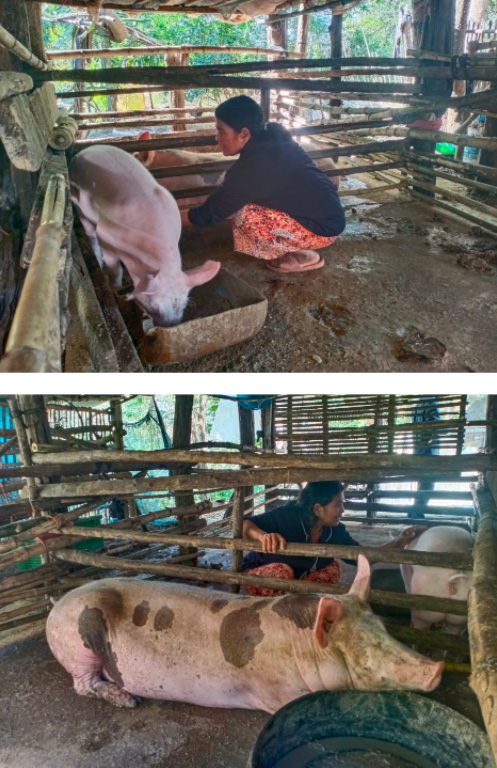
Sok cares for her pigs.

Chan Sok’s Pig Business Brings her Hope and a New Life

When the COVID-19 pandemic hit, many Cambodians who relied on wage labor to earn an income were left with few options. Chan Sok and her family were one of the families who faced this challenge. Since the family did not own any farmland, Sok’s children worked as wage laborers in Thailand while her husband worked hard to sell his labor in the village, earning about $7 a day. The pandemic and border closures prevented Sok’s children from earning an income and made it increasingly difficult for her family to get by on her husband’s income.

Sok and her family’s hardships were significant, but the solution was a clear one. After speaking with Sok and learning about her economic challenges, CWS and local partner RDA helped Sok enroll in our pig program.

Along with her neighbors, Sok was taught how to best raise, feed and care for pigs. When she was ready, she was given a pig of her own to raise and care for.

Sok’s pig and newfound knowledge have allowed her to establish a stable income and make a reasonable profit. “I am so very grateful for the piglet, if CWS had not provided it, I would have never been able to buy one. I raised the piglet with the knowledge I was given, and I took good care of it. Within 10 months the pig gave me 7 piglets. I gave one piglet to my widowed daughter so that she could raise it and sold the other 6 piglets, earning $325. I used the money to buy rice and other necessities for my family. I also put some of the money into my family’s savings,” Sok shared.

In addition to establishing a stable income, Sok’s new pig farm has allowed her to dream and work towards a better future. Sok told CWS “I kept my pig so that I could keep breeding more piglets. I plan to use the money from selling the next piglets to expand my pig business and to aquaculture business (fish and eel raising). My hope is that in the future my husband who is getting older and my children will no longer need to work as a wage laborer. I can’t thank you enough for this support”.

Sok is one of the many women and villagers in Cambodia who have become foundational in helping their families maintain stability throughout the pandemic. Her pig business and motivation to support her family, have given her a new life.


Stories of Change


Nhy in one of her fields.

Growing and Adapting: Nhy Expands Her Vegetable Production

In the Ta Taok village of Western Cambodia, Hak Nhy and her husband Kim Dorn devote their time to their farm where they harvest corn and rice. The couple is in their late sixties and lives off of the crops they yield from their farm. Unfortunately, due to challenges ranging from climate change to the pandemic, the couple has struggled to get by and rarely has enough to eat.  

In 2020, CWS met the couple and learned of their day-to-day struggles. In response, CWS invited Nhy to vegetable classes where she was given the opportunity to learn the best methods to grow vegetables, compost fertilizer and adapt to the changes in the environment caused by climate change. Nhy also received seeds and other materials needed to build her own garden and help it flourish. 

Since enrolling in CWS’ classes, Nhy has been able to establish a better diet and earn a stable income by selling the surplus vegetables she grows from her garden. “My family’s situation is getting better. I have [gained] skills and knowledge on vegetable gardening, adapting to the changing weather conditions and compost making,” Nhy tells CWS. 

The couple has transitioned from struggling to thriving. They now earn a decent salary of about $70/month which is enough to buy necessities and have enough left over to put into savings. Through this new income, Nhy says they “have enough to eat and “are now no longer worried about food shortages.” Nhy has continued to use her new knowledge to help her garden grow by using the money she earns to buy more seeds and materials and grow her livelihood.  

Through education, Nhy has been empowered to give herself and her husband a new and better life. She tells CWS “I am so grateful and thank you for such great support.” Nhy’s story shows her admirable resiliency and capacity to adapt and thrive when given new knowledge and skills.  

To empower other individuals like Nhy, and help them improve their livelihood opportunities, donate here


Stories of Change


Top: Josefa in her group's greenhouse. Middle: Rosa. Bottom: Rosa in her field with Alexa on her back.

Josefa and Rosa’s Initiative Helps 490 Families

Before the sun has shown its first rays of the day in la Pista village, Josefa Pérez is already awake praying. “I ask for the harvest to increase, that this year we have more crops,” says Josefa. That’s why the first thing she does after preparing breakfast and cleaning the house is see her crops of peas, cabbage, broccoli and potatoes.

Like other women from her village in Guatemala, Josefa works hard and spends most of her time in the garden taking care of the vegetable production. This feeds her family and allows them to sell their produce at the local farmers market, where other small producers like her sell.

The CWS program called Seeds of Hope for Food Security and Nutrition Project, implemented by our local partner CIEDEG, includes 490 families like Josefa’s. Families also receive various other materials used to care for their crops.

The program is also developed in San Martín Sacatepéquez and San Juan Ostuncalco, in the department of Quetzaltenango. The participants receive seeds to plant in their gardens and greenhouses. Some of them also accessed training on issues such as human rights, women’s rights, food safety and hygiene.

Mountains surround la Pista village, and although usually it’s cold, these first days of the year have been warm, with little rain. Despite the weather, Josefa and four other women go to work in their typical outfits of the Maya Ixil ethnic group. They wear long skirts called ‘cortes‘ and wide blouses called ‘huipiles‘. These are made of cotton, covered with flowers, animals, and symbols that reflect their communities in bright colors. “We are happy. It has been a good harvest. In the greenhouse, we have tomatoes, jalapeño peppers, bell peppers and cucumbers,” Josefa says.

About 80 miles from Nebaj, CIEDEG is also implementing the project in six villages. These villages include: Toj Mech, El Rincón, La Estancia and Toj Alik, and Nueva Concepción and Agua Blanca.

In Nueva Concepción, we talked to Rosa Elvira Vásquez, who cares for her animals and crops while carrying her 18-month-old daughter Alexa on her back. She is the youngest of their four daughters. Rosa’s family received a pig two years ago, and thanks to the support of CWS and LDS Charities, now they have three. She also received seeds and planted corn, potatoes, cilantro, beets, radishes and carrots.

The pass production chain is another initiative in San Martín Sacatepéquez and San Juan Ostuncalco. It consists of several families receiving animals such as pigs, chickens and sheep. When the animals reproduce, they are distributed to more families to start their breeding and sale process.

The resources from this activity help them buy other food, medicine, clothes, and school supplies for their children. “I have learned a lot, what we collect in the orchards is used to prepare lunch and meals,” Rosa says. Despite not having the opportunity to study, Rosa’s daughters have already entered school.

In the next stage, the project will offer workshops on food safety and agricultural techniques. There will also be height and weight measurements of children under five to determine their nutritional states.


Stories of Change


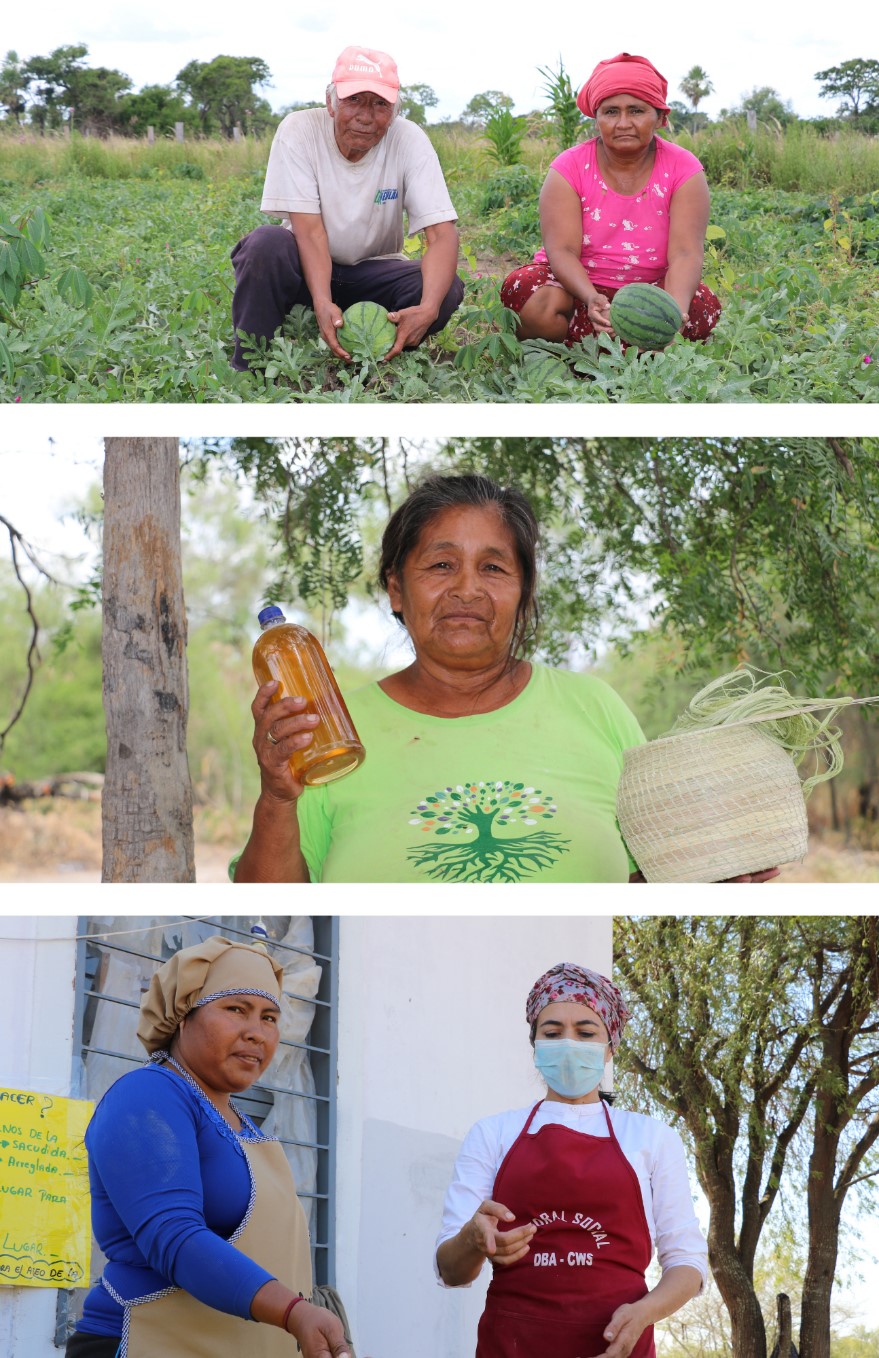
Top: Alodia and Cristobal in their garden where they have grown their own watermelons. Middle: Estelvina, producer of honey and handcrafts. Bottom: Women in training on planting seeds and food production

Paraguayan Indigenous Communities are Seeding Knowledge

Studying is opening a door of possibilities for people in the Lower Chaco region (Paraguay). The indigenous women of this region tell us about their achievements.

One of the greatest wishes of Teresa Benítez, a resident of El Espinillo, Paraguay, is “to study, to know the letters A, B, and the other letters as well.” She is 76 years old, plants vegetables, produces honey and lives with her husband and two children in El Espinillo.

Jorgelina Flores and a group of women from the Yakye Acá community have expressed the same need: “We want to read and write, and not die doing our signature with fingerprints.” And in the Sawhoyamaxa community, Mariana Ayala comments that “it is time to wake up and assert our rights for the education of our children.”

These women are all part of the project called “Comprehensive Rural Development in Indigenous Communities of the Lower Chaco region, in Paraguay.” The program is implemented by CWS through our local partner, Pastoral Social Diocesana de Benjamín Aceval, with the support of Growing Hope Globally.

The program includes planting trees, digging wells in low water areas, indigenous health and other vital aspects for the communities of the region. There is also training in human, civil and political rights, agriculture and beekeeping production.

Before participating in the training on planting seeds and food production, Alodia González did not know how to create income for her family. With knowledge on agriculture and beekeeping, she led the production process of the community garden and began to make honey.

The honey production process began in September 2021 and ended with the last harvest in February 2022.

“With a good production of honey, we are generating significant economic income to support our families. We harvest the honey from the bee boxes and sell it here in the community, or we manage to sell it at fairs in Asunción [Paraguay’s capital],” Alodia said. She added that “with the garden, we are able to eat lettuce, parsley and other vegetables produced by us.”

In 2021 the hot season damaged the orchards and delayed the growth of the planted vegetables. Despite this, the planting of fruit trees (390) such as lemon, orange, tangerine, grapefruit and mango was able to start again shortly after.

Alodia’s community also received wire mesh to fence the community garden. They also got tools, seeds, and technical assistance for the preparation of food from cultivated products. In total, 11 orchards were activated with the participation of 75 families.

These activities take place in six indigenous communities: San Fernando, Laguna Pato, Monte Alto, Espinillo, Yakye Axa and Sawhoyamaxa.

“We save our seeds, and now all the seeds that we planted and collected last year are growing,” Herminia González says. She is an agricultural producer from the Lolaico Guasu village, in Laguna Pato community.

One of the biggest challenges continues to be the lack of water for human consumption and production during long periods of drought. Thus, to increase the number of water sources in 15 villages, 24 shallow wells were dug. Ten of these shallow wells will supply the most affected communities in drought and scarcity of rainwater. A total of 301 families benefited.

“For education to improve in all communities, we must all unite,” Leonardo Martínez said. He is one of the leaders of the village 26 de Junio, Espinillo.

As part of the project, 520 families also receive support and donations, given the necessities for the pandemic. 12 kg non-perishable food items have been donated in places where access is most difficult because there are no roads.

This year, one of the goals of Pastoral Diocesana de Benjamín Aceval is to continue empowering community members so that they can self-manage their productions and crops.


Stories of Change


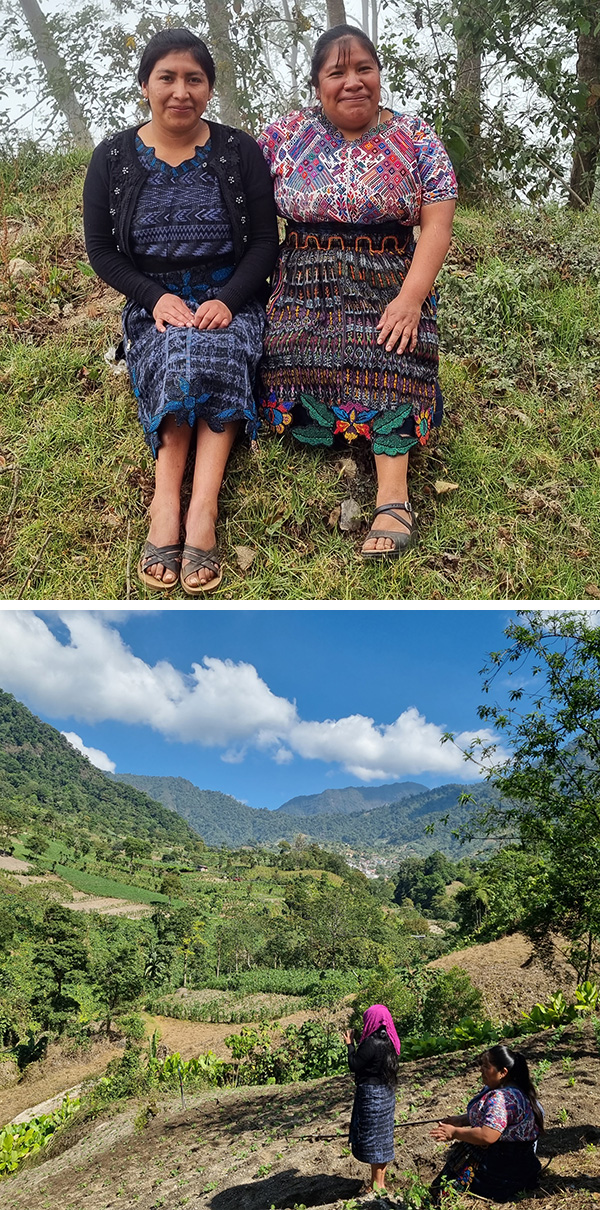
Top: Juana (left) and Catarina. Bottom: Both women in El Rincon.

Catarina and Juana: Two women Committed to Their Families and Their Community

Catarina Juarez De Leon and Juana Lopez Garcia are local promoters in a CWS-supported food security and nutrition project in Maya Mam communities in Quetzaltenango, Guatemala. A total of 490 families participate.

Catarina is a brave single mother who struggles to raise her daughters Luci and Imelda. She completed her primary studies and has been working as a promoter for the project for more than two years. Juana is a young single woman who supports her parents and siblings. She is also a kindergarten teacher who due to the lack of employment launched a small cafeteria as an entrepreneur which had to close due to the impact of the pandemic. Juana has been a promoter in the project for more than a year.

The project provides families with access to agricultural resources such as seeds, fertilizers, sheep and pigs as well as technical guidance for the production and use of food and the improvement of nutrition. Income generation is also boosted through the sale of some of the agricultural products. Likewise, the rights and empowerment of women, who are more than 90% of the direct participants in the program as heads of their families, are promoted.

Due to the pandemic and the limitations of mobilization and in person meetings, Catarina and Juana have become our local partner CIEDEG’s eyes, ears and hands for this project at local level on a daily basis. They buy and distribute seeds and other agricultural inputs, facilitate training on women’s rights, conduct monitoring by visiting families at their gardens, and report to CIEDEG the difficulties and progress encountered. Most recently, they administered a survey for a participatory diagnosis of availability, access, use and consumption of food, and height-weight in girls and boys under five years of age.

When asked what they have learned through the project, they said that “living with other women and with the communities has given us new lessons.” They share that they have learned about agriculture, food security and women’s rights. They do not seem to realize the great importance of their contribution as they discuss their commitment to their community and the gratitude they feel for being able to work on the project. It is no coincidence that the first word they taught me in their language, Maya Mam, was ‘thank you’: Chjonte.

Regarding the rights and participation of women, they said that it is important to value oneself as a woman and know and defend one’s own rights. Juana said, “in San Martín and San Juan, and even in my family, women did not allow themselves a place to participate in the community or were prohibited participation by their husbands. Women were discriminated against.” This underlines that only men had the right to work and participate in community activities, and women were prohibited to do so. Catarina says, “that’s why it’s important to take advantage of opportunities and participate.” And although they now see more participation of women and the possibility for many women to continue their studies, the changes are still insufficient. “We have to encourage other women to know their rights and value themselves, that is why it is important to educate and train women,” says Juana.

And in the context of the International Women’s Day, Juana says, “I would like to tell all girls, young ladies and women that we must know our rights, value ourselves and participate in all spaces to learn and put equality into practice. It is necessary that we participate in order to combat discrimination and that we value girls and women”. Catarina adds “it is important to celebrate this March 8th the International Women’s Day, because it talks about equality for all. All women have the right to work, grandmothers, mothers, daughters, we all have rights. I salute all women on this very day.”

This story was written by Erwin Garzona, CWS Regional Representative for Central America and Mexico.