One Year After the Noto Peninsula Earthquake: Supporting the Most Vulnerable in Disasters


Yukiko Maki | March 12, 2025

One year after the Noto Peninsula earthquake, CWS Japan reflects on its efforts to support disaster-affected communities. By fostering local partnerships, CWS Japan continues to address the long-term challenges of disaster recovery while working to build a more resilient and inclusive emergency response system. The CWS Japan team spent the New Year praying that no large-scale disasters would occur—in fact, …

Learning, Playing and Growing Together: A Multicultural Exchange in Okubo


Nozomi Igarashi |

In November, CWS Japan hosted several events, including a disaster risk reduction walk to inform Japanese language school students about local disaster preparedness resources and storytelling sessions. Through events like these, the cafe fosters deeper connections, promotes cross-cultural understanding and creates a welcoming space where the community can engage and learn from one another. CWS Japan recently opened a café—the …

Building Resilience: Strengthening Disaster Risk Reduction in Afghanistan


Takeshi Komino |

CWS Japan works alongside communities in Afghanistan who are most impacted and at risk for disasters. Below, Takeshi Komino, CWS Country Representative for Japan, shares information about the project and future efforts for the CWS Japan team. Afghanistan is a country that has been hit by disasters such as floods and earthquakes many times. As political instability continues, protecting lives …

Stories of Change


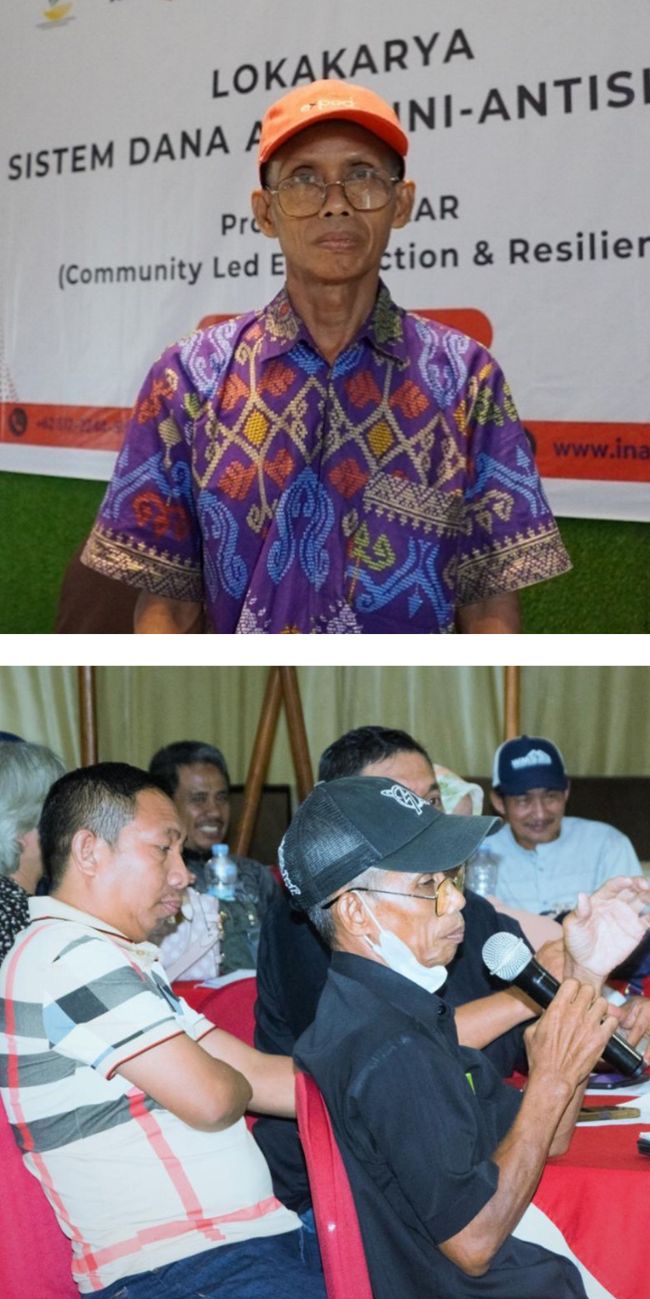
Top: Pak Sampara in a CLEAR workshop Bottom: Pak Sampara actively involved in workshop discussion

Rising Above the Floods: Pak Sampara’s Journey of Resilience and Community Support

Pak Sampara, a flood-affected resident of Makassar City, found resilience and purpose through the CLEAR project, a CWS initiative that empowers communities to mitigate flood risks. Embracing hydroponic farming and disaster preparedness training, he now supports his neighbors, proving that perseverance and community spirit can turn challenges into opportunities for growth.

Facing the Rising Waters: A Community in Crisis

Nearly every year, floods hit Makassar City in Indonesia, disrupting the lives and livelihoods of those who call it home. 

For 56-year-old Pak Sampara, each flood brings a new wave of uncertainty. The rising water damages crops, making them impossible to sell, and in 2020, the situation became even more devastating when he lost his cleaning job in a local hotel due to COVID-19 layoffs.  

In 2023, he learned about the CLEAR project, implemented by CWS in partnership with INANTA and Yayasan Cita Wadah Swadaya (YCWS), to help communities in flood-prone Makassar, South Sulawesi, create a community-led early warning system and preparedness plan to reduce flood risks and protect vulnerable families.

Building Resilience Through Community Action

Determined to support his community despite the hardships, Pak Sampara embraced the opportunity to make a difference. As a neighborhood leader, he turned to hydroponic farming, growing chilies and tomatoes in his home garden and sharing his harvest with neighbors in need. 

“CWS, YCWS and INANTA, through the CLEAR Project, have helped us develop our abilities to help others in devastating situations. Now I hope I can help more people, especially within my communities,” Pak Sampara shared. 

In the face of disasters, preparation is key—not only in protecting ourselves but for strengthening entire communities. Through the CLEAR project and disaster risk reduction training, Pak Sampara has gained the tools to stay resilient in the face of future floods. His story is a powerful reminder that perseverance and community spirit can turn even the toughest challenges into opportunities for growth and support. 

 You can learn more about our work in Indonesia here. 


Fathiya’s Transformation: From Observer to Animator


February 19, 2025

Fathiya, a Palestinian refugee in Indonesia, discovered a life-changing passion for animation after joining her brother in a workshop led by a local CWS partner. Despite initial struggles with the technical and language barriers, her perseverance paid off, enabling her to contribute to real projects and opening new doors for her future. When Fathiya joined her brother in an animation …

Stories of Change


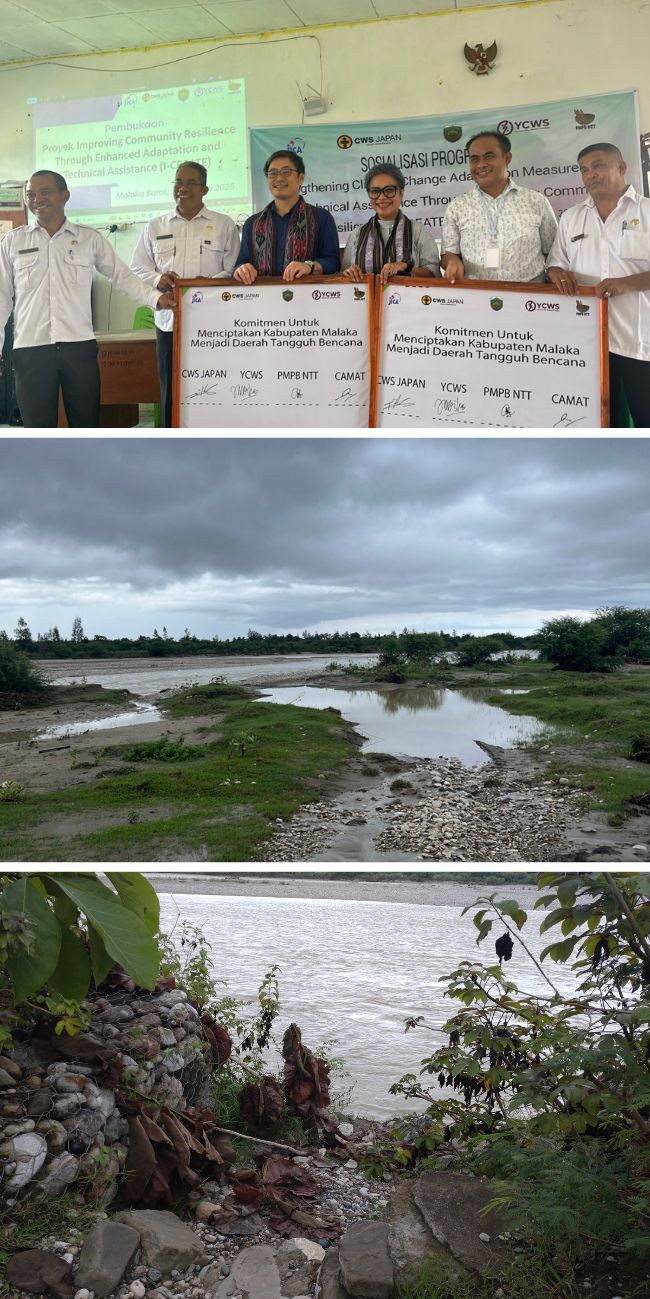
Top: Subdistrict launch event with government and partners in Malaka Middle: Benanine River overflow Bottom: Overflow point along the riverbank

New CWS Program Builds Flood Resilience Through Community Engagement

CWS Japan, alongside local partners, has launched the I-CREATE program in Indonesia’s Malaka District to help communities along the Benanain River strengthen their resilience against recurring floods. By improving early warning systems, enhancing flood mitigation infrastructure and fostering inclusive, community-led solutions, the program aims to ensure long-term sustainability and disaster preparedness.

For communities along the Benanain River in Indonesia, annual flooding is a persistent challenge, threatening access to clean water and disrupting agricultural livelihoods. To help local residents adapt and build long-term resilience, CWS Japan, in collaboration with YCWS and Perkumpulan Masyarakat Penanganan Bencana (PMPB-NTT), has launched the Improving Community Resilience through Enhanced Adaptation and Technical Assistance (I-CREATE) program in Malaka District, East Nusa Tenggara.

A Multi-Level Approach to Community Resilience  

At recent community launch events, discussions with local leaders and residents revealed several pressing challenges, including recurring flooding that contaminates water sources, gaps in early warning systems for community members and localized vulnerabilities with high-risk areas along the river.

Many communities depend on the Benanain River for daily needs, but frequent floods contaminate water sources and threaten food security. However, the region’s fertile soil presents an opportunity—when properly managed, it supports thriving agriculture. Despite this, the lack of river water level monitoring means residents often respond only when floodwaters are already rising. Enhancing early warning mechanisms is critical, and certain high-risk areas along the riverbank require targeted interventions to prevent overflow, necessitating both technical solutions and community-driven initiatives.

Community-Led Adaptation and Inclusive Solutions

Despite these challenges, local communities have shown resilience by adjusting their planting seasons to align with changing weather patterns, and the region’s river basin forum, though currently inactive, presents an opportunity to foster collaboration between upstream and downstream villages.

A key priority of I-CREATE is inclusivity—ensuring that disaster preparedness and response strategies consider the needs of all community members, including people with disabilities. By involving diverse voices in planning and training, the program seeks to create sustainable, community-driven solutions that support all community members.

Over the next several years, the program will continue to assess potential risks from dam management, support community participation in improving flood mitigation infrastructure, engage early warning systems and information dissemination, digitally map hazards, risks and evacuation routes and provide technical recommendations for river basin management. 

By integrating technical expertise, community knowledge and government collaboration, I-CREATE aims to build long-lasting resilience against flooding, ensuring a safer and more sustainable future for Malaka District.

To learn more about CWS’ work in Asia, click here.

Stories of Change


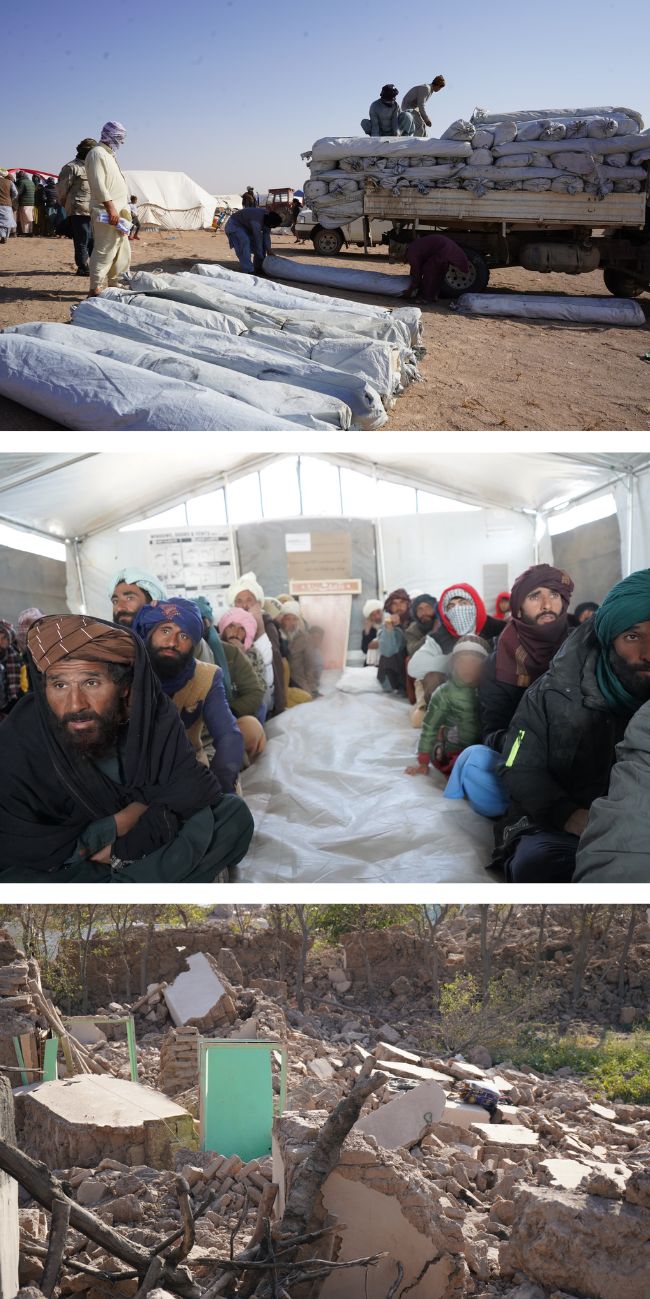
Top and Middle: Winterization tent delivery, Bottom: Aftermath of earthquake in Afghanistan (Photos courtesy of CWSA and ANDMA)

Tragedy and Resilience in Afghanistan

For the past few months, Gull, who is a mother of five, had been working tirelessly to support her family. Her husband had been suffering from debilitating leg pain, making it impossible for him to work. Despite this adversity, Gull, however, persevered. She tended to her family’s 11 sheep, using the wool to make rugs, the dairy for food and at times selling some of the sheep. She also took some laundry jobs in her village to make extra cash. Her sons also helped by selling animal manure at local markets. What the family didn’t know was that their future would hold unimaginable hardship.

On Sunday, October 7th, while in the city seeking medical care for her daughter, Gull overheard news of an earthquake in the Zindajan district where she lived. Anxious and distressed, she hurried back to her village, where she was met with scenes of utter devastation. The once familiar landscape had transformed into a jumble of debris and desperation. With intense fear, Gull rushed to see what was left of their own home. Tragically, the earthquake had claimed the lives of her husband and youngest son, who had both been trapped inside the house during the disaster. Her daughter and pregnant daughter-in-law had been baking in a tent at the time of the earthquake and managed to survive. Her 13-year-old sustained severe injuries to his hand as a result of the disaster.

Amidst the chaos, Gull and her children had no time to grieve. Gull’s oldest son took his younger brother to the city for medical care, which they paid for with money borrowed from their neighbors. Just like she did when her husband was sick and unable to work, Gull became a leader and began caring for her remaining family members.

Unfortunately, Gull’s status as a woman and widow often left her excluded from aid and the ability to voice her concerns within the community. Among these was the fact that the tent the family received from the government was destroyed almost immediately by storms that followed the disaster. This concern became more pressing each day as winter approached, road conditions began to worsen and her daughter in law’s due date got closer.Thankfully, within the chaos came a sign of relief.

Church World Service’s partner, Community World Service Asia, identified Gull as a qualifying program participant and provided her with a winterized tent. A total of 100 of Gull’s neighbors also received a tent. Gull shared, “In a timely intervention, Community World Service Asia came to our aid, providing my family with a new tent, which we promptly set up. Currently, all the affected families in the village are reliant on tents as their living quarters, with everyday necessities destroyed by the disaster. Relief organizations have stepped in to provide cooked meals and clean drinking water as the usual water sources were also rendered unusable.”

Gull and her family’s lives have been forever changed following the earthquake. Gull herself has been grappling with hearing loss, which resulted from the trauma of losing her entire home, belongings and loved ones to the earthquake. The pervasive sense of trauma within the household is palpable, and even the sound of the wind evokes fear among its members.

Even within this catastrophe, however, Gull has not given up hope. She is focused on her living family members and the well-being of her grandchild who will be born in a few months. Community World Service Asia is listening closely to all the concerns Gull shares and is committed to being the support that Gull herself has been for all of her loved ones.

To learn about the work done by our partner, Community World Service Asia, click here.


Stories of Change


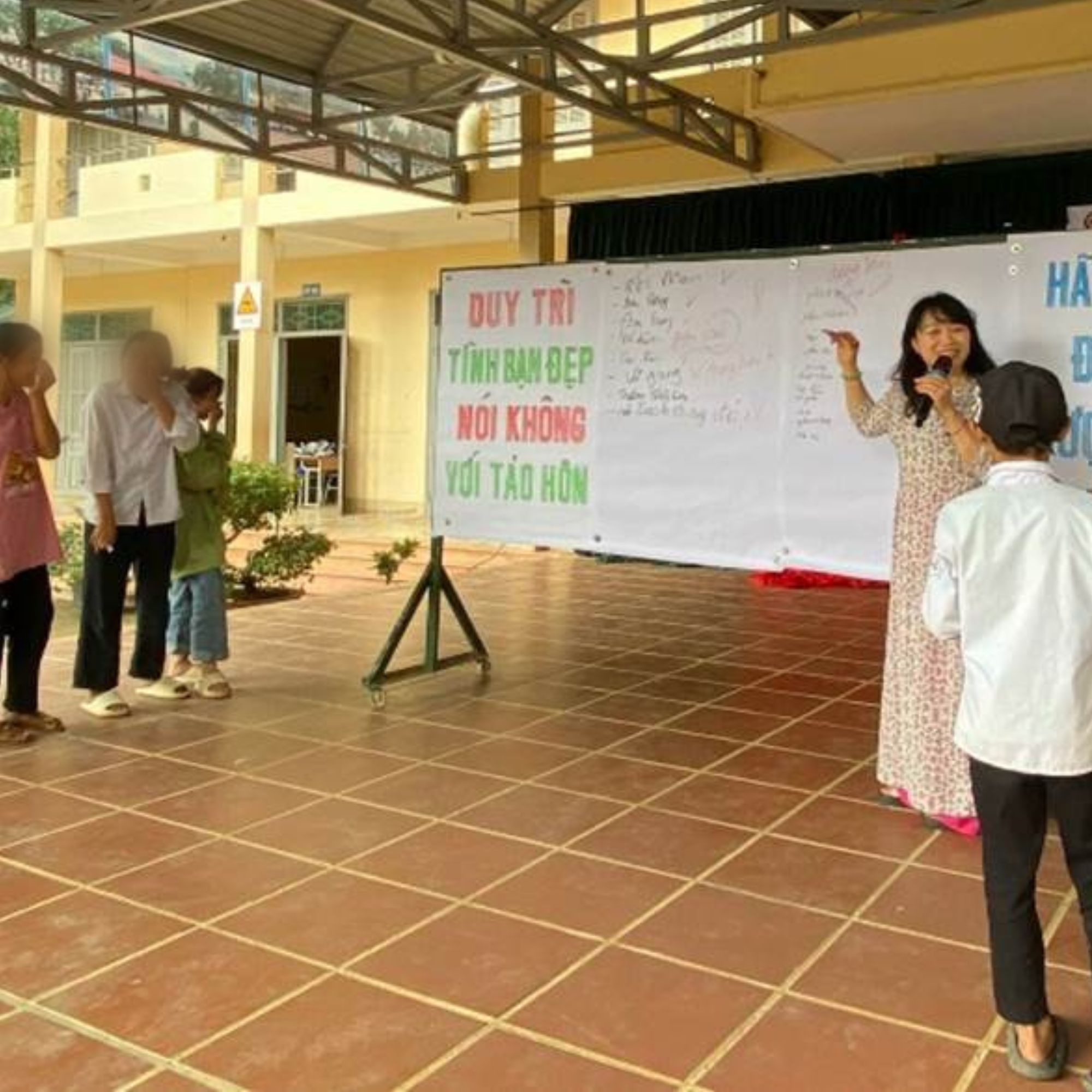
Students at CWS event

Ngoc Steps on the Stage of Knowledge

Sometimes, not having the answers can lead you to an important learning experience. This is what 14-year-old Lo Thanh Ngoc learned recently when she attended a CWS educational event on reproductive health and child marriage prevention at her school in Vietnam.

Like many of her peers, Ngoc was shy and had never set foot on a stage. However, during a warm-up game, she and some of her friends accidentally broke the rules, leading them to an unexpected opportunity. According to the game’s protocol, rule-breakers were invited to join the lead teacher on stage. Ngoc and her friends were hesitant but summoned up the courage to participate in a game called “Mysterious Gift Box,” designed to challenge their knowledge.

The first question was, “What is child marriage and what are its consequences?” Ngoc shook her head and said, “I don’t know.” Her whole group of friends tried to help but no one had the right answer.

The question that followed was simple but offered Ngoc some clarity. “How old is your mother this year?” the teacher asked. After a moment of thought, Ngoc responded, “My mother is turning 30 this year.” As she calculated her mother’s age, Ngoc had an enlightening realization: her mother had given birth to her when she was just 16 years old. This realization brought tears to Ngoc’s eyes and those of her friends, but it also brought a gentle smile to Ngoc’s face. She whispered softly, “Now I understand; in my village, people still marry so early.”

After the game, Ngoc’s shyness turned into excitement as she shared, “I’ve never been on stage because I’m afraid I won’t be able to answer questions. Thank you to the teacher for helping me with the answers. I hope to have more games like this, so we can gain more knowledge for ourselves.”

The teacher who had been leading the event, Ms. Nguyen Thi Thuong, shared her own reflections: “I have realized one thing which is not to be greedy for knowledge and instead understand students’ abilities and ask appropriate questions that students can answer and will help them feel confident and bold.”

By seeking knowledge with humility and honest questions, the teachers and children of this school are working together to ensure young generations make the best decisions possible for a safe and happy life.

To learn more about CWS’ work in Vietnam, visit our website.


Understanding Disaster Risk Reduction and Resilience


Shino Nishizawa | August 15, 2023

In 2021, tropical cyclone Seroja struck various communities in Indonesia and Timor-Leste. CWS Indonesia and CWS Japan carried out a response to the disaster by providing supplies and shelter kits, assisting in the cleaning of wells contaminated by the disaster and engaging communities in educational sessions about maintaining hygiene post-disaster in Nusa Tenggara Timur (NTT), Indonesia. The CWS team also …

A Mentor and Sister


Nimo Adam | March 6, 2023

My Name is Nimo Adam. I was born and raised in Somalia. My childhood was full of chaos since my family and I lived in a war zone area. I spent all of my childhood attending boarding school and lived at an orphanage until I finished high school. Growing up was very challenging. During my childhood, I was interested in …