
Trigger warning: This story contains references of depression and suicidal ideation. Along the Thailand–Myanmar border, democracy activists and displaced families are finding safety, mental health support and essential resources through CWS’s partnership with the New Myanmar Foundation. Stories from Aye* and Aung* show how this assistance and access to safe shelter restores dignity, stability and hope for people facing trauma …
Stories of Change
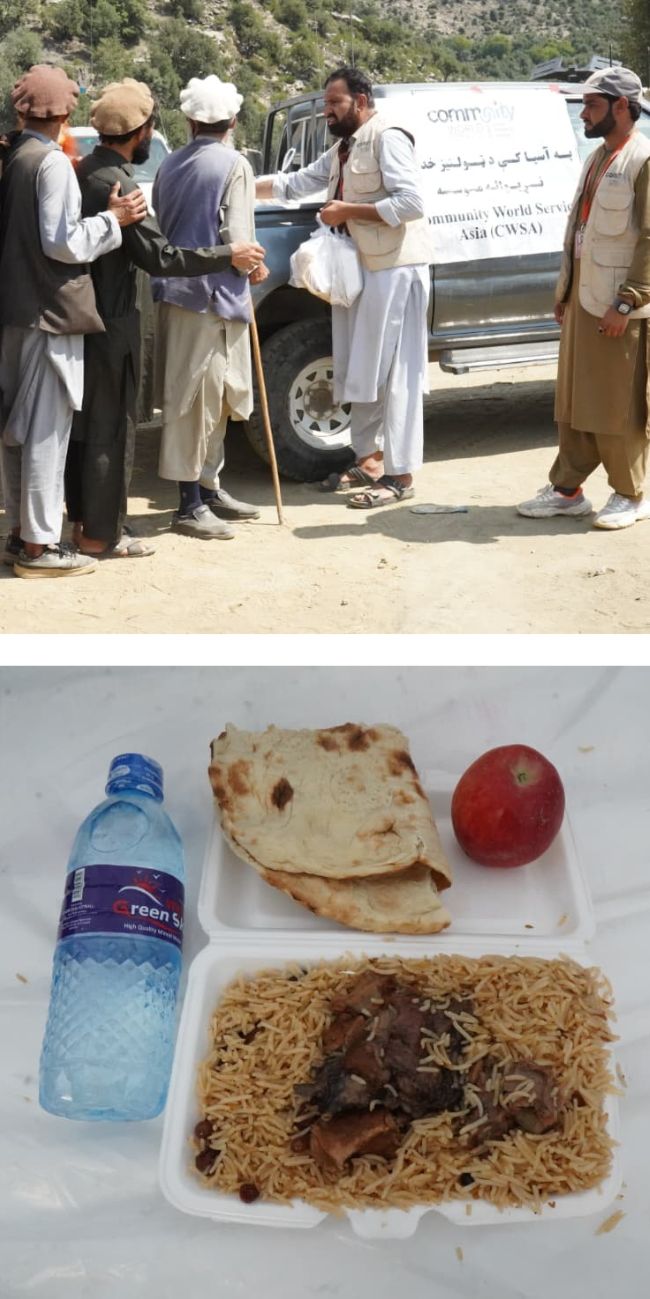
Top: Members from Community World Service Asia (CWSA) distribute emergency supplies. Bottom: Prepared meals distributed to survivors of the earthquake. Photos courtesy of CWSA.
Surviving the Kunar Earthquake: An Afghan Father’s Story of Loss and Hope
A young father from Afghanistan’s Kunar Province reflects on a life once shaped by peace and nature and how a single night of disaster changed everything. His story reveals both devastating loss and the fragile hope made possible through timely humanitarian support.
Ahmad Wali*, 27, lives in the Masood Ghazi Abad village of Mazar Dara in the Nurgal District of Kunar Province, Afghanistan. The valley is known for its natural beauty, framed by high mountains, green fields, flowing streams and fresh air that bring a sense of calm and comfort. Life there was simple yet deeply peaceful. Before disaster struck, Wali and his wife lived with their two children, working together as a family each day farming, caring for their animals and supporting each other in regular household tasks.
Their mornings began early, and evenings ended with rest at home. The children played freely outdoors, surrounded by nature, and the strong sense of unity in Mazara Dara brought happiness and hope. Like many in the valley, Wali believed this peaceful life would continue and that his family’s future would unfold in this beautiful place.
A Night That Changed Everything
Everything changed the evening of August 31, 2025, when a powerful earthquake struck the entire Mazar Dara valley. Homes were damaged, people panicked and the sense of safety that defined valley life vanished.
For Wali, the impacts were devastating. “During the earthquake, my family suffered very serious losses,” he says. His eight year old daughter and mother were both killed. His son was injured and needed medical treatment. Along with the loss of loved ones, the family’s livelihood vanished. Goats, cows and sheep that had provided food and income did not survive, and their house was completely destroyed.
Across the valley, families were left shocked and uncertain. Aftershocks continued to shake the ground, forcing people to live in constant fear. With homes destroyed and exposure to rain, wind and harsh weather, daily life became a struggle. Food, clean water, medicine and safe shelter were suddenly scarce, leaving children, women and elderly individuals especially vulnerable.
Help, Hunger and a Fragile Hope
In the aftermath, a team member from CWS’s local partner, Community World Service Asia, visited the area to assess urgent needs. They found families surviving on maize leaves and raw maize due to extreme food shortages. Shelter, clean drinking water and medical care were critically lacking.
With support from CWS Japan, emergency food assistance began reaching affected communities. Every day, Wali’s family and around 1,500 others received cooked rice, cooked meat, fresh bread, clean water and fruit. For many, it was the first proper nourishment since the earthquake. Wali describes the relief vividly. After days of hunger, receiving cooked food brought visible joy. The assistance met immediate needs and restored something just as important: the feeling that they had not been abandoned.
Today, Wali and his family still live under extremely difficult conditions without proper shelter, sufficient food or full medical care. Yet he remains grateful and hopeful. While the support received has eased some hardship, he says continued help is essential so families can rebuild their lives and ensure safety and dignity for their children.
In a valley once defined by peace and now marked by loss, even small acts of support shine as a vital light for the future.
* For the protection of the individuals in this story, a pseudonym has been used.
Learn more about our disaster response work here. Consider making a donation to our Emergency Response Fund, which enables CWS to remain prepared in the face of emerging disasters like these.
Rapid Support for Displaced Families Along the Cambodia–Thailand Border
January 26, 2026
In response to late‑December 2025 fighting along the Cambodia–Thailand border, HEKS/EPER Cambodia and CWS rapidly delivered emergency shelter and protection supplies to 1,550 newly displaced households sheltering in overcrowded pagodas and schools, helping reduce exposure and public‑health risks while restoring safety and dignity. In late December 2025, fighting along the Cambodia–Thailand border again forced thousands of families from their homes in search of safety in nearby pagodas, schools and temporary shelters. …
When the Earth Shook: A Family’s Story of Survival and Compassion in Afghanistan
January 20, 2026
When a devastating earthquake struck Afghanistan’s Kunar Province on August 21, 2025, families lost homes livelihoods and loved ones within minutes. With no food or shelter, survivors like Nizamuddin relied on rapid support from Community World Service Asia, a local partner of CWS, to make it through the first critical days. A Peaceful Life Shattered in Seconds Kunar Province is …
Clean Water, New Beginnings: How Community Wells Are Changing Lives in Cambodia
January 12, 2026
Two new community wells in Battambang Province, Cambodia, are providing safe, reliable water to 23 households—transforming daily life by reducing health risks, saving time and improving opportunities for women and children. Across rural communities, the lack of safe water is more than an inconvenience—it is a barrier to health, education and opportunity. When water sources dry up or become unsafe, …
Growing Hope in Timor-Leste: Santina’s Journey to a Healthier, Stronger Future
August 19, 2025
The below testimonial is written by Santina, a participant of the Growing Hope Project*, supported by CWS. Improving Food Security and Income My name is Santina*, and I live in Lisadila village [in Timor-Leste] with my husband and our four children. We have always relied on farming and raising livestock to support ourselves. However, with an income of about $50 …
Safe Spaces and Shared Stories: Honoring Pride and World Refugee Day in Japan
July 3, 2025
Igarashi Nozomi, CWS Japan Project Officer, shared about recent events hosted at the Community Cafe @ Okubo in celebration of World Refugee Day and Pride Month, where LGBTQ+ individuals and refugee community members could share stories, build understanding, and celebrate diversity through dialogue and collaborative art. CWS Japan operates the Community Cafe @ Okubo with ecumenical partners to aid the …
Stories of Change
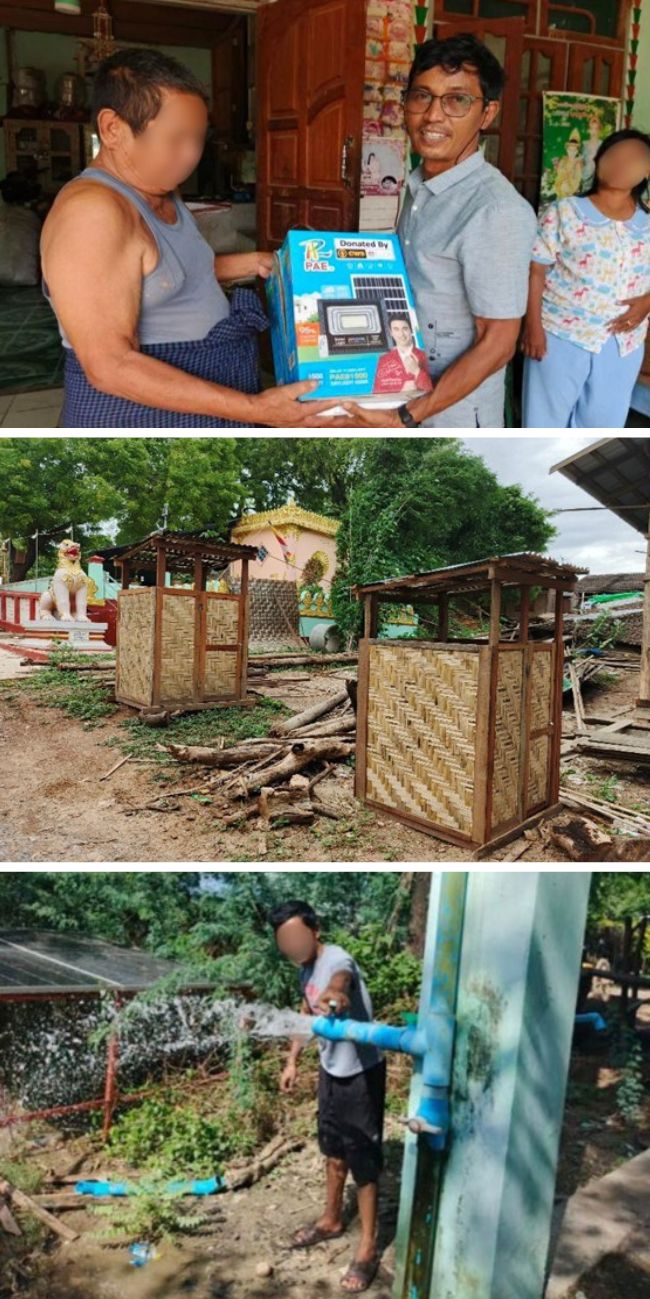
Top: Solar Lamp Distribution Middle: Newly constructed public toilets Bottom: Water tap installation
Rebuilding with Dignity: How CWS is Supporting Earthquake Survivors in Myanmar
Following the devastating April 2025 earthquake in Myanmar, CWS partnered with local organizations to deliver emergency relief to the most affected communities. These efforts have supported hundreds of families rebuilding their lives with dignity, safety and renewed hope.
When a powerful earthquake struck central Myanmar in early April 2025, thousands of families were left without access to clean water, food or safe shelter. In the weeks that followed, Church World Service, in partnership with local organization New Myanmar Foundation (NMF) and with additional support from World Renew, launched a targeted emergency response across the hardest-hit areas to support communities with clean water access, food security, sanitation, safety and community-led recovery.
Clean Water: A Lifeline Restored
The earthquake had destroyed or damaged wells in dozens of villages, leaving many families without safe water. To address this, CWS and its partners prioritized restoring access through the installation of six new water taps in three communities: Sagaingsu, Zaycho and Moehnanchone. These taps, placed near the sites of previously damaged wells, were installed with the full cooperation of local residents, who committed to maintaining them.
At the same time, a water truck was hired to deliver clean drinking water to the affected villages while the tap systems were being restored. Over 30 days, water deliveries were made three times daily, reaching many—but not yet all—of the 65 village tracts in need. The response team is continuing to assess the need for additional water trucks and tap installations.
Emergency Food Support: Reaching the Most Vulnerable
As livelihoods were disrupted and transportation networks damaged, many families found themselves without income or access to basic necessities. In response, food packages were distributed to 224 of the most affected households in three villages: Atwinsanyar, Thettharpanlaung and Wetoekan. Each household received staples like rice, cooking oil, dried fish, legumes, salt, and onions—enough to help families make it through the most critical weeks.
Selection was conducted with care and community input, involving local administrators, Buddhist monks and field teams who verified each household’s needs through direct discussions with affected families.
Sanitation: Restoring Dignity
With sanitation facilities also heavily damaged, the team prioritized building 10 community toilets across five villages, including Kyaukmyaung, Kinghsu, Hlaygyidan, Thettharpanlaung and Mibar. These toilets were installed only when a local resident agreed to maintain them, ensuring sustainable, community-driven impact.
Access to safe and hygienic toilets is a cornerstone of public health, especially in post-disaster settings—and this effort played a key role in helping communities begin to recover with dignity.
Solar Lighting: Safety Through the Dark
In the weeks after the earthquake, safety emerged as a critical concern—particularly for women living alone, families near rivers and households in remote areas. In response, CWS and partners distributed 100 solar lamps to vulnerable households, and installed 45 solar-powered streetlights in high-risk communities.
These simple yet powerful tools transformed nighttime safety, and reports of violence and theft dropped significantly after the lights were installed. From selecting where to place water taps and toilets to identifying the most food-insecure families, every step involved consultation from local communities. Photos, receipts, and documentation were collected to ensure transparency and accountability.
While the response has made a significant difference, many needs remain. As of June 2025, it’s estimated that more than 200 additional water taps are still required, and water delivery must expand to reach every community still recovering from the disaster.
Thanks to the compassionate support of CWS donors and partners, hundreds of families in Myanmar are no longer facing this crisis alone. With every water tap installed, every meal delivered and every light turned on at night, CWS and its partners are helping communities recover not just with relief—but with resilience, dignity and hope.
To learn more, read CWS’s situation report in the initial aftermath of the Myanmar earthquake and make a donation to support communities impacted by disasters like these.
Measuring Impact: How Disaster Prevention Projects Are Changing Afghan Communities
Murakami Kotomi | March 12, 2025
Murakami Kotomi, a CWS Japan intern, recently interviewed participants in the “Enhancing Resilience of Afghanistan through Integrated Risk Reduction” project. This blog features her interviews with local community members about the impacts that the project has had in supporting disaster risk reduction efforts in Afghanistan. Impacts of Disaster Risk Reduction Projects Disasters can upend lives in an instant, but proactive …
Bringing Cultures Together: A Hands-On Tunisian Cooking Experience in Okubo
Nozomi Igarashi |
In January, CWS Japan hosted a hands-on Tunisian chapati cooking class, bringing together newcomers and local residents for a shared cultural experience. Through events like these, the cafe fosters deeper connections, promotes cross-cultural understanding and creates a welcoming space where the community can engage and learn from one another. The new year has arrived, and a month has flown by …