
Global displacement has reached historic levels, with millions of people forced from their homes each year. These ten key facts highlight essential information about refugees, the challenges they face and the valuable contributions they make—along with ways you can support them. More than 117 million people around the world have been forced to flee their homes in search of safety and the chance to rebuild their …
“I Stand with Survivors”: How Lived Experience Can Help Others Rise Above Trauma
Vanessa Velarde | June 2, 2026
A CWS Senior Anti-Trafficking Caseworker shares how she transformed her personal experience with trafficking into a life of purpose.
How CWS Supports Mental Health for Communities in Crisis: Healing Hidden Wounds
May 29, 2026
People around the world experiencing conflict, crisis and trauma need mental health support to prevent severe, lifelong effects. CWS’s locally led, trauma-informed mental health programs help people affected by crisis cope, recover and begin to rebuild their lives. Mental health is as essential to well-being as physical health. For people around the world who have been exposed to displacement, disaster, …
Stories of Change
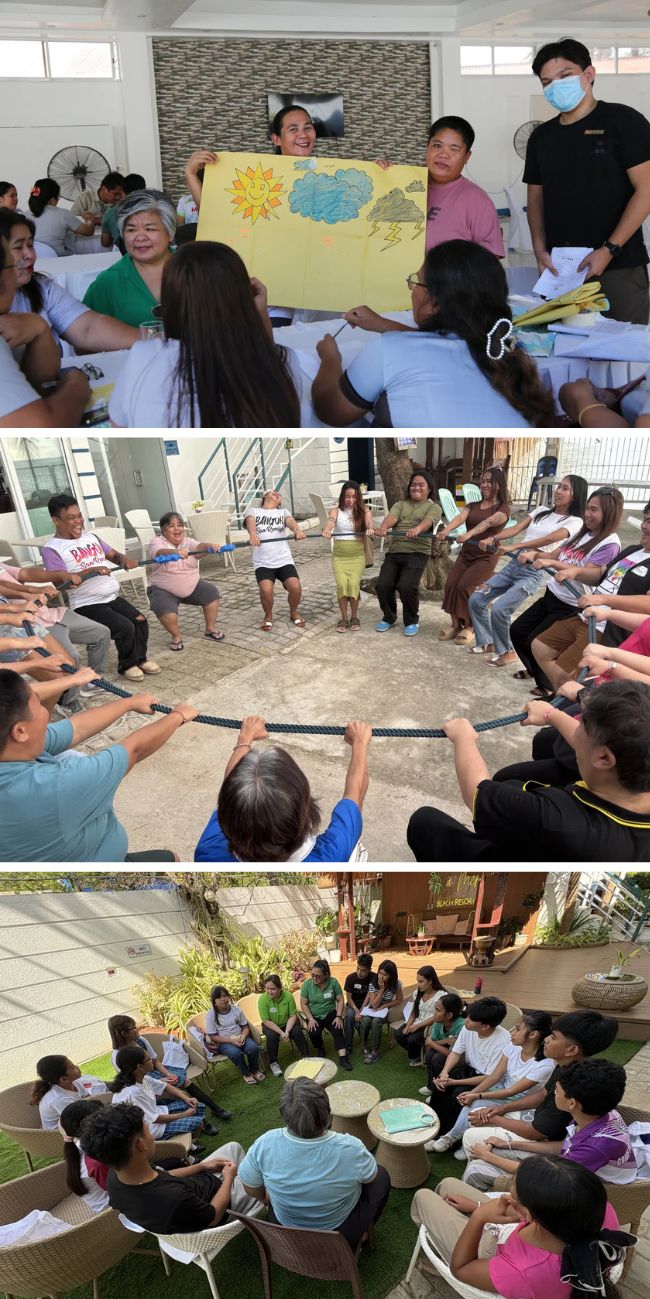
The CWS Japan team conduct activities for participants to share their feelings, establish trust and build connection.
“After the Rain, There Will be a Rainbow”: Supporting Mental Recovery and Safe Housing in the Philippines
This Mental Health Awareness Month, CWS Japan is supporting earthquake-affected communities in the Philippines by addressing both visible and invisible recovery needs—helping families rebuild safer homes while creating spaces for healing, connection and hope.
Providing Initial Support for Earthquake Survivors
On September 30, 2025, a powerful 6.9-magnitude earthquake struck the northern coast of Cebu Island in the Philippines. Because the epicenter was very shallow, homes and public facilities across the region sustained significant damage or were destroyed.
In the immediate aftermath, CWS Japan and its local partner, the Center for Disaster Preparedness (CDP), collected information from affected communities and closely monitored evolving needs. Recovery efforts were further complicated when a typhoon struck the area in late October, damaging roads and disrupting distribution networks.
In response, CWS Japan distributed emergency support packs to approximately 3,500 affected households. Each pack included durable tarps to withstand wind and rain, solar-powered lights to improve safety and quality of life at night and water containers to support safe collection and storage at community water points.
Building Safe Homes and Disaster Preparedness
In the Philippines, most homes are built by local carpenters rather than large construction firms. Many residents also gather materials and carry out repairs on their own. With rebuilding underway, CWS Japan conducted earthquake-resistant construction training for 46 local carpenters and community members.
Led by a licensed architect, the training combined hands-on instruction with classroom learning. Participants gained practical skills and technical knowledge for constructing safer homes, strengthening their ability to rebuild for themselves and their neighbors.
The sessions also addressed the region’s multiple disaster risks, including earthquakes and typhoons. Participants learned how different hazards affect buildings and how design choices, such as raised structures, can reduce certain risks while potentially increasing others.
CWS Japan Director Go Igarashi explained the Build Back Better (BBB) concept, which emphasizes rebuilding stronger and more resilient structures rather than simply restoring what was lost. “It was impressive to see the training participants, filled with a strong desire to build a resilient community, earnestly taking notes and learning, even in classroom lectures that they are not used to,” he shared.
Providing Mental Health Support for Survivors
As reconstruction began, CWS Japan moved beyond immediate relief to support longer-term recovery. In January 2026, the organization conducted a human resource development program focused on earthquake-resistant construction, alongside workshops on mental health and psychosocial support (MHPSS). These efforts aimed not only to help communities rebuild physically, but also to strengthen emotional well-being and resilience—critical foundations for recovery after a disaster.
Following the earthquake, many families experienced anxiety, stress and uncertainty about the future. To address these needs, CWS Japan conducted facilitator training for 16 local volunteers in psychological first aid (PFA). The following day, these volunteers led a workshop for 45 local elementary and junior high school students and teachers. By building local capacity, CWS Japan is helping establish a sustainable system of community-based mental health support.
Creating Safe Spaces for Healing and Connection
Recognizing that both adults and children can feel uneasy in unfamiliar settings, CWS Japan worked closely with local volunteers to design welcoming spaces and gentle icebreaker activities. Using the metaphor of “weather,” participants reflected on complex emotions ranging from relief and gratitude to grief, guilt and anxiety about the future.
In PFA sessions, participants were encouraged to share only what felt comfortable. Many experienced relief simply by being heard and acknowledged, and the workshops reinforced the importance of trust, mutual support and community bonds. While recovery looks different for everyone, one participant’s words captured a shared sense of hope: “After the rain, there will be a rainbow.”
CWS Japan will continue working alongside local partners to provide comprehensive support, addressing both material needs and emotional recovery, while empowering communities to rebuild safer, stronger and more resilient lives.
To learn more about the work of CWS Japan, visit their website (in Japanese) or click here.
From Activism to Agriculture: One Mother’s Path to Safety and Self‑Reliance
May 1, 2026
Along the Thailand–Myanmar border, democracy activists and displaced families are finding safety, mental health support and essential resources. Stories like Ei Ei Khin’s show how local partnership and access to safe shelter restores dignity, stability and hope for people facing trauma and conflict. Finding Safety Through Shelter and Community Support In the shadow of conflict and forced displacement, the path …
Keeping Children Safe: Helping Three Siblings Move From Fear to Relief
April 27, 2026
When three siblings fled violence, legal support helped them find safety, stability and protection together.
Stories of Change
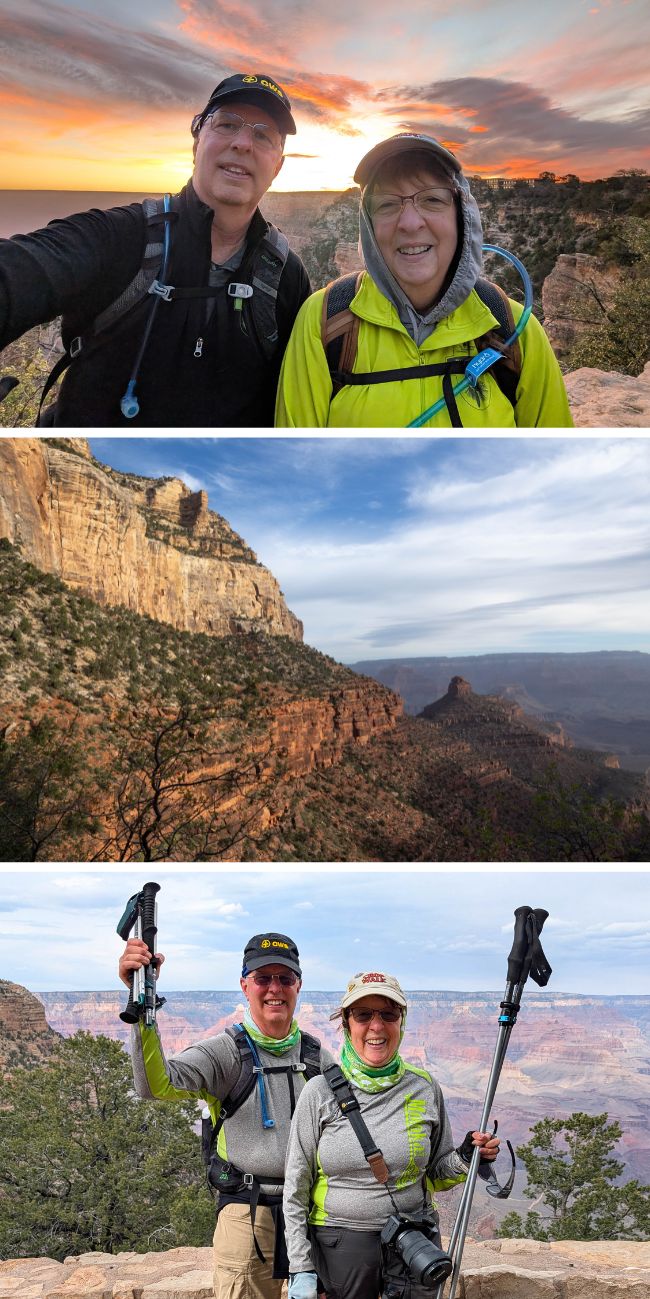
Carlene and David participate in the CROP Hunger Trek at the Grand Canyon in January 2026
From Strollers to the Grand Canyon: Carlene’s CROP Hunger Walk Journey
From local food pantries to global hunger‑fighting programs, Carlene’s 34‑year journey with the CROP Hunger Walk shows how walking together can create lasting change—and inspire new adventures along the way.
CROP Hunger Walk: A Family Tradition Rooted in Community
For Carlene Smith, the CROP Hunger Walk has always been about the things she values most: family, community and adventure. Now retired, Carlene has participated in South DuPage CROP Hunger Walk for 34 years, walking to help fight hunger both in her own community and around the world.
“I hadn’t even heard of CROP Hunger Walk until our local pastor encouraged us to join,” Carlene shared. “The first time we walked, my youngest daughter was still in a stroller, and our oldest was only four or five. Our team captain took our oldest under her wing, while my husband David and I went out and walked with our youngest.”
From the very beginning, community has been at the heart of Carlene’s experience. That sense of connection has only deepened over the decades—both through the Walk and through her broader volunteer work supporting local food pantries. As a longtime team captain, Carlene has also had opportunities to tour pantry facilities and witness their impact firsthand.
“Many of the organizations connected to CROP Hunger Walk are food pantries,” Carlene said. “Staff would talk with us and show us around, explaining the impact they’re making. Seeing that work up close had a big impact on me.”
Taking the Next Step Forward with the CROP Hunger Trek
This year, Carlene and David took their biggest adventure yet: hiking around the Grand Canyon as part of CWS’s CROP Hunger Trek!
“At first, we thought, ‘This is crazy,’” Carlene laughed. “But the more we talked about it, the more it made sense. We started fundraising and training, and before we knew it, we were part of a group of ten people ready to make the hike.”
Just as Carlene was once introduced to CROP Hunger Walk by her pastor, she now helps spread the word to friends who—like she and David once did—had never heard of it. She helps them find Walks in their own communities, inviting them into the same spirit of connection and purpose that has sustained her for decades.
Along the way, Carlene continues learning more about the global impact of the Walk. “Recently, I took a deeper dive into how CROP Hunger Walk funds support communities around the world,” she said. “I learned about families who now have eggs to feed their children and income to start a small business. In Kenya, I saw photos of sand dams being built to provide clean drinking water. Seeing those stories really brought the impact to life.”
Walking Into the Future With Hope and Purpose
For Carlene and David, the adventure isn’t over yet. “Now that we’re retired, we like to find adventure wherever we can,” Carlene said. “Part of it is simply saying we’re not ready for the nursing home just yet!”
More than 34 years after her first CROP Hunger Walk, Carlene’s journey is still unfolding. Whether she’s inviting friends to join a Walk, learning about hunger‑fighting work around the world or lacing up her boots for a new adventure, Carlene continues to walk with purpose. Her story is a reminder that every step helps build a world where hope is stronger than hunger.
We’re grateful to supporters like Carlene and David, who are walking to fight hunger—one step at a time. Learn more and sign up for a CROP Hunger Walk near you.
Rooted in Resilience: How Communities Are Rising to Meet the Climate Crisis
April 22, 2026
Rooted in resilience, communities are confronting the climate crisis through local leadership, adaptation and partnerships that protect livelihoods and build a more hopeful future.
Field Perspective from Haiti: Interview with CWS Director of International Programs Joel Malebranche
April 15, 2026
CWS Director of International Programs Joel Malebranche highlights the resilience, local partnership and community-led solutions driving hope through programs in Haiti.
From Hunger to Hope: How Cash Transfers Helped Esther Rebuild Her Family’s Future
April 9, 2026
From hunger to hope, cash transfers empowered Esther to meet immediate needs, restore stability and rebuild her family’s future with dignity.