Your generosity helped communities across the United States recover from hurricanes, wildfires and winter storms in 2025. From emergency supplies to long‑term support, you ensured families had the help they needed to regain safety, stability and hope. Across the United States, disasters continue to strike with little warning—destroying homes, disrupting daily life and leaving families unsure of how they’ll recover. But when crisis hits, your compassion ensures that neighbors across …
A Year of Impact: How Compassion Became a Lifeline for Families in Crisis
February 11, 2026
When disasters struck communities across the United States this past year—from wildfires to flooding—CWS was there to help families navigate every phase of recovery. Thanks to supporters like you, people like Sarah found safety, stability and hope when they needed it most. From wildfires and historic floodings to winter storms and hurricanes, communities across the United States were left reeling …
From Devastation to Recovery: How Your Support is Changing Lives
February 28, 2025
When flash floods destroyed Maria’s home in Kentucky, her family was left with nothing—no food, heat, or shelter. But thanks to generous supporters, CWS is providing safe housing, warm meals and critical aid to help families like hers rebuild and find hope after disaster. When Disaster Strikes: Families Left with Nowhere to Turn Last week, flash floods tore through Maria’s* …
Hope Amid Destruction: How the Wildfire Resource Hub Supports Displaced Families
February 4, 2025
CWS continues to play a crucial role in California’s wildfire recovery by helping establish the Wildfire Resource Hub, which provides a wide array of services, from emergency aid to long-term recovery support. With a focus on both immediate relief and emotional care, the Hub serves as a vital resource for those affected by the fires. A Vital Support Hub for …
Stories of Change
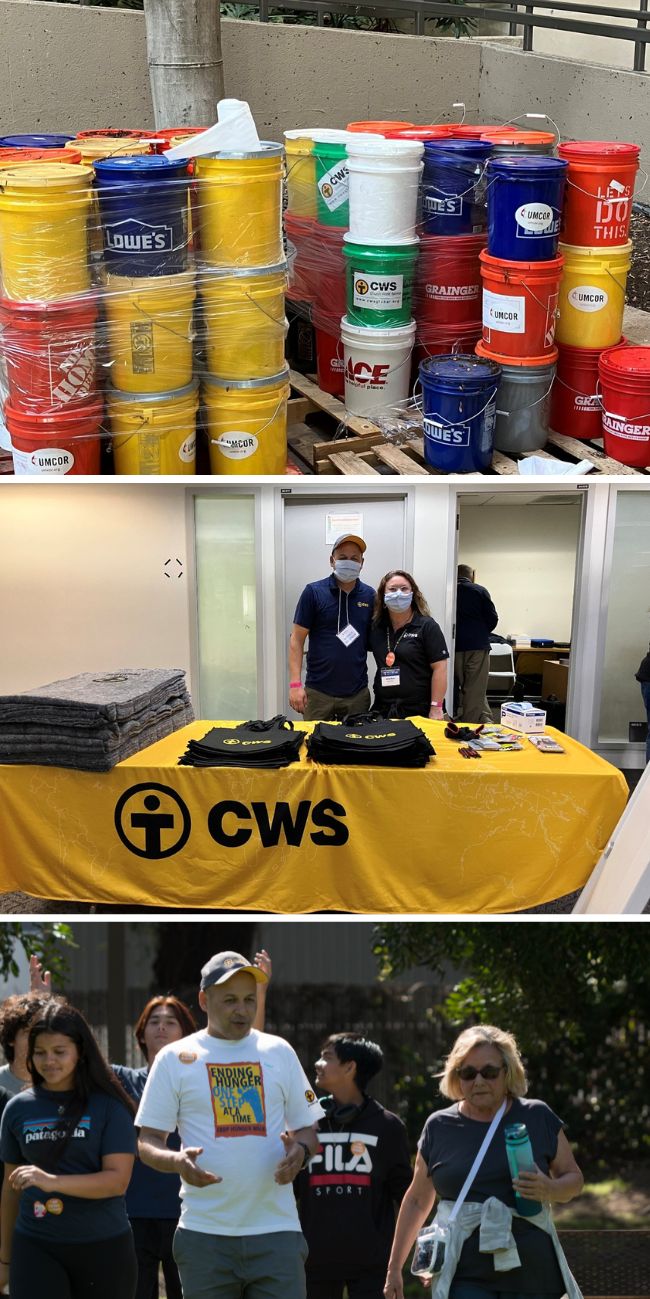
Top and Bottom: Amir Khan and Melissa Reece, EPRR Senior Officer at recent resource hub for California wildfires; Bottom: Amir at the Camarillo CROP walk
Creating Refuge Amidst the California Wildfires
Amir Khan, CWS’ Community Engagement Specialist, shares his experience of helping two young Afghan women navigate a harrowing night during the Los Angeles wildfires. This story highlights the challenges refugees face in disaster preparedness and underscores the importance of culturally competent support, as demonstrated by CWS’ inclusive disaster response initiatives.
“You’re safe now.” These are the words that Community Engagement Specialist, Amir Khan, told the two young Afghan women when he picked them up from the airport in Los Angeles. As a former refugee himself, Amir understood the weight of these words, especially for these two women who had just fled a Taliban-controlled Afghanistan where their rights and safety were at stake. Amir didn’t expect that shortly after, he would repeat these same words to these two women but in very different circumstances.
Amir Shares His Story from This Harrowing Day
“It was close to midnight on January 7, 2025, at 11:55 PM, when I received a call that would set the tone for the rest of my night. The voice on the other end of the line was shaky, filled with fear and uncertainty. Two young Afghan girls, who currently reside in my previous apartment in Lincoln Heights, Los Angeles, were calling for help. They had just heard news of evacuations and strong winds amidst the fire devastation. Though they were far from the flames, the situation—coupled with the language barrier and their inability to drive—left them panicked and in tears.
As I sat there, shaking, memories of my own past flashed before me. I remember how helpless I felt when our home in Afghanistan was burned by the Taliban in late 1998, the ashes of everything we had left behind. I couldn’t think of anything else except that I needed to help them.
‘Get ready,’ I told them. ‘I’ll come to pick you up and bring you to Victorville. You can stay at our home for as long as you need.’ My wife and I have always felt a sense of responsibility for these girls. Their older sister is a close friend of my wife, and we first met them in late 2023. Back then, they had just arrived in the U.S., having worked for the Afghan government. The trauma of their abrupt displacement was evident. They were hesitant, even afraid, to live on their own.
In those early days, we offered them our bedroom, while my wife, kids and I slept in the living room. We wanted to provide them with a sense of safety and comfort in a new, unfamiliar country. Over time, they began adjusting, but the scars of their journey lingered. This latest crisis brought all those fears rushing back. It also reminded me of the importance of being prepared for disasters, whether fires, earthquakes or other emergencies.
Driving through the night to pick them up, I thought about their journey and the challenges they’d faced. As refugees and newcomers, they’ve had to navigate not only a new language and culture but also the emotional weight of leaving everything behind. My wife and I have tried to ease their transition, understanding firsthand the struggles of starting anew in a foreign land.
When I arrived at their apartment, their relief was palpable. They hurriedly packed their belongings, and I reassured them that they would be safe with us. By the time we reached Victorville, it was well into the early hours of the morning. We prepared our home to accommodate them, just as we had done before. Their gratitude was heartfelt, but I couldn’t help but feel that it was simply the right thing to do.”
CWS’ Inclusive Approach to Disaster Response
While recalling this story, Amir explained how resettlement in the U.S. is like arriving in “a new world” where so many things are still unknown. He recalled that in 2019 he experienced an earthquake near his home in Los Angeles which caught him and his family by complete surprise. He added, “Most refugees, especially with the new administration, feel like they are not part of the community. They always feel like they are second-class citizens.” This results in a disconnect between newcomers and the resources and information they need to be safe in their new homes.
CWS’ Emergency Preparedness Response and Recovery (EPRR) team works to bridge this gap by taking on a culturally competent and inclusive approach to disaster response work. This can look like creating translated educational materials, partnering with local organizations to identify needs and sharing knowledge about refugee communities to bridge gaps throughout the disaster preparedness and response period. Amir shared that through the support of the EPRR team, he was able to share materials with the California Afghan community following the recent wildfires.
Amir Reflects on the Power of Community
Reflecting on wildfires and the support he was able to provide Amir concluded, “This experience reminded me of the importance of community and support. For refugees and new immigrants, even small acts of kindness can mean the difference between despair and hope. These young women are still learning English and adapting to life here, but with every challenge, they show incredible resilience. My wife and I are committed to being there for them, offering not just a place to stay but also a sense of belonging.
As the fires continued to rage and the winds howled outside, our home became a sanctuary for these girls. In times of crisis, we all need someone to lean on. For me, it’s a privilege to be that person for them, to offer a helping hand when it’s most needed. It’s a reminder that, even amidst uncertainty, compassion and solidarity can light the way forward.”
To support individuals affected by recent wildfires, please consider donating to our California Wildfires Relief Fund. You can learn more about CWS’ Emergency Preparedness, Response and Recovery work here. You can also support the Pasadena CROP Walk which will contribute 50% of its funds back to the Pasadena community by donating here.
Stories of Change
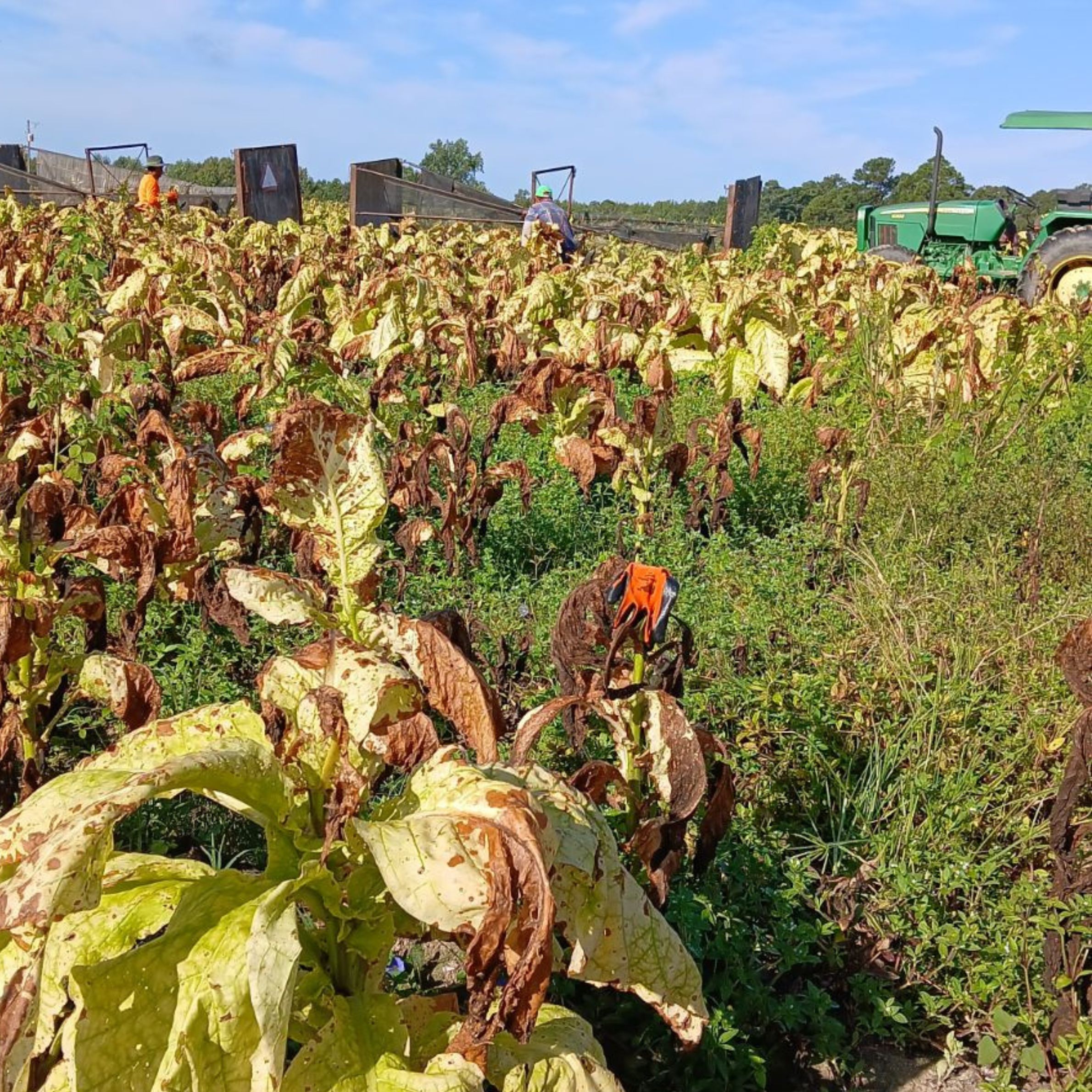
Photo taken by Vicente of the crops damaged by hurricane Debby
Harvesting Through the Storm
As natural disasters grow in frequency and intensity, the devastating effects of climate change are becoming impossible to overlook. While some may still manage to turn a blind eye, the most vulnerable among us often face the brunt of these impacts. This is certainly true for migrant workers who nurture the land and are also on the frontline when witnessing the harsh consequences of irreversible environmental damage.
We recently spoke with Vicente, a migrant farmworker in North Carolina, to learn how Hurricane Debby impacted him.
Vicente is originally from Mexico and comes to North Carolina for months at a time to harvest a variety of seasonal crops, including peppers and sweet potatoes. The months he spends in the U.S. are time away from his family who are Vicente’s biggest motivator to do this physically demanding type of labor. He explained that he was also a farmworker in Mexico but made barely enough to feed his family. When his oldest son decided to go to university to pursue an engineering degree, Vicente realized the only way to sustain his child’s dream was to become a seasonal farm worker in the United States.
Most days, Vicente works about 12-13 hours on the field. He shared, “It’s heavy work. It’s pretty hot out and we often work in 90-100-degree heat.” Despite these long hours, as he talked about his work, Vicente’s tone was completely devoid of any type of negativity. Instead, he expressed gratitude for his coworkers, his caring boss and the opportunity to have a job that allows him to take care of his loved ones back home.
When Hurricane Debby hit this past summer, Vicente’s opportunity to work was suddenly stunted. The fields were flooded and many of the crops Vicente and his fellow workers had worked tirelessly to grow were destroyed. “I’ve been a farmworker for 12 seasons but this was the first time we really felt the hurricane. It really affected us,” Vicente said. Due to the flooding, the workers were unable to work for 15 days straight, totaling about 195 hours of lost work and income. Without this income, Vicente was unable to meet his basic needs and struggled to even have enough food.
It was during this time that CWS connected with El Futuro es Nuestro, a local organization that fights to ensure that migrant farmworkers are protected and taken care of. Our Emergency Preparedness, Response and Recovery team works with local organizations after disasters like Hurricane Debby to analyze and respond to the needs of migrant communities who are often left behind in the aftermath. Through this collaboration, CWS was able to grant El Futuro es Nuestro $25,000 for the farmworkers affected by the hurricane. “Thank you so much for this help,” said Vicente, adding that the financial assistance came as a surprise and allowed him to be able to buy food for himself.
In partnership with devoted local organizations, CWS is committed to ensuring that in times of crisis, everyone is protected and has food on their table. Especially those who work tirelessly to make sure there is enough food for all to eat.
To support individuals affected by recent hurricanes, please consider donating to our disaster response fund. You can learn more about CWS’ Emergency Preparedness, Response and Recovery work by clicking here.
Situation Report: Hurricane Helene
October 2, 2024
Update: CWS’ response has expanded to include communities impacted by Hurricane Milton. Learn more about our most up-to-date response efforts here. Situation: On September 26, 2024, Hurricane Helene made landfall as a Category 4 storm and carved a devastating path from Florida’s Gulf Coast to Tennessee. Since then, the massive surge has resulted in power outages for millions of individuals …
Hope After Helene: CWS Emergency Response
October 1, 2024
In the wake of Hurricane Helene, the full extent of the devastation is still being uncovered. With over 130 confirmed fatalities, widespread flooding and millions without power, communities across the Southeast are facing long-term recovery efforts. Thousands of homes have sustained major structural damage or been destroyed, and federal disaster declarations have been issued in several states, including Florida and …
Reflections on the NVOAD Conference
May 30, 2024
This May, CWS’ Emergency Preparedness Response and Recovery (EPRR) team participated in the annual National Voluntary Organizations Active in Disaster (NVOAD) conference. Below are reflections from each of the EPRR team members: Zach Wolgemuth, EPRR Program Director: Though I’ve attended over a dozen National VOAD Conferences throughout my career this specific conference was special because it was my first conference …
Situation Report: U.S. Tornadoes
May 1, 2024
Situation: Over the weekend, extreme widespread storms, including more than 100 tornadoes, were reported across multiple states, including Nebraska, Oklahoma and Iowa. The storms caused widespread damage and power outages, and initial estimates indicate over 200 homes have been destroyed across these three states, with an additional 180 homes sustaining damage. Dozens of injuries and several deaths have also been …