
Houston is home to the second-largest Vietnamese population in the United States. Jannette Diep is the Executive Director of the Houston branch of Boat People SOS. She and her team provide a wealth of services to the Vietnamese community, as well as other refugees and immigrants. Most BPSOS clients are from underserved and low-income families, many of whom have just …
Stories of Change
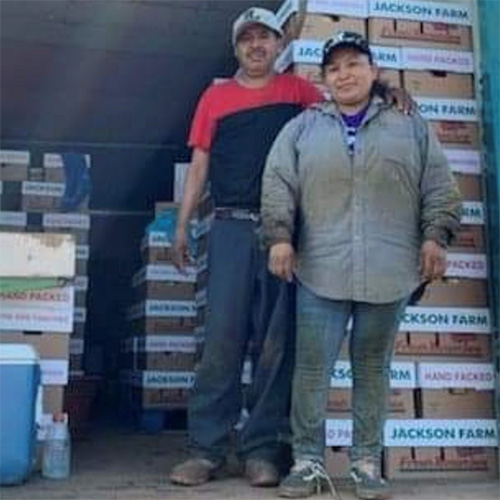
Meliton and Margarita Cruz have been migrant farmworkers for 25 years. In 2018 they returned to their small trailer home only to find it ruined by Hurricane Michael. With help from CWS partner Panhandle Area Education Consortium they were able to cope with the long-term recovery needs!
Long-term Recovery from Hurricane Michael in 2018
Yes – it has been almost 2½ years since Hurricane Michael, but we continue to see the long-term effects, especially on our most vulnerable populations.
The following is one such account:
The last 25 years have been met head-on with hard work, providing for family and determination to overcome the daily obstacles encountered by the very people who provide the food on our tables. This family is La Familia Cruz.
Meliton and Margarita made their way from Mexico, saving every penny they could and finally becoming legal permanent residents – a dream come true for them and their three children. Since then, they travel yearly from their home in Quincy, Florida to Immokalee, Collier County, Florida, to Tennessee, back to Immokalee and finally returning to Quincy – and all along the way picking the beautiful tomatoes we look forward to in our burgers, salads, sauces and much more! This has been their yearly routine for years.
This is not an easy life, and Hurricane Michael proved disheartening to them when it eventually affected the only home they have ever owned in Quincy, FL. They call it their “trailita” (“little trailer”), and they are very proud of this place they call home.
During their many journeys, they have experienced many other disheartening situations such as: being robbed at gunpoint of all their money and immigration papers just a block from the U.S. border, simply because they wanted to see their parents in Mexico; losing work due to crops devastated by weather, and now, facing the uncertainties and restrictions of COVID. Regardless, they have never given up and continue to work every day as much as they can.
Margarita said, “Every time we felt we were making it and getting ahead, something new happened.”
When Hurricane Michael hit their trailita, it was a water pipe that was one of the many needed repairs from this disaster that hit the Florida Panhandle area in 2018. Unfortunately when repairs were being assessed, the water pipe damage was missed and when they received a water bill for a little over $300 they were unable to pay due to an extremely limited income, even working every day of the week. They did not have the money, and Margarita came to share about her family’s dilemma with CWS local partner Panhandle Area Educational Consortium, which includes a Migrant Education Program among many of it’s outreach services in the north Florida area.
Thanks to the funds provided by CWS, PAEC was able to help the Cruz family pay their water bill and resume their access to this basic need: water! Running water, a critical factor in our daily lives.
Through the PAEC/CWS partnership and generosity, the Cruz family was given a “hand-up” towards improving their quality of life. The one thing I can assure you is that their faith continues to fuel their energy. Without a doubt they are grateful for your support!
There are ongoing long-term recovery needs among families affected by Hurricane Michael. Sadly, among immigrants like the Cruz family, the needs very often go unnoticed or unaddressed due to barriers to access services normally available to other Michael survivors. [With help from CWS,] organizations like PAEC help to bring their unmet needs to the table.
This story was written by Dr. Maria Pouncey, Administrator for Instructional Services with the Panhandle Area Education Consortium.
Stories of Change
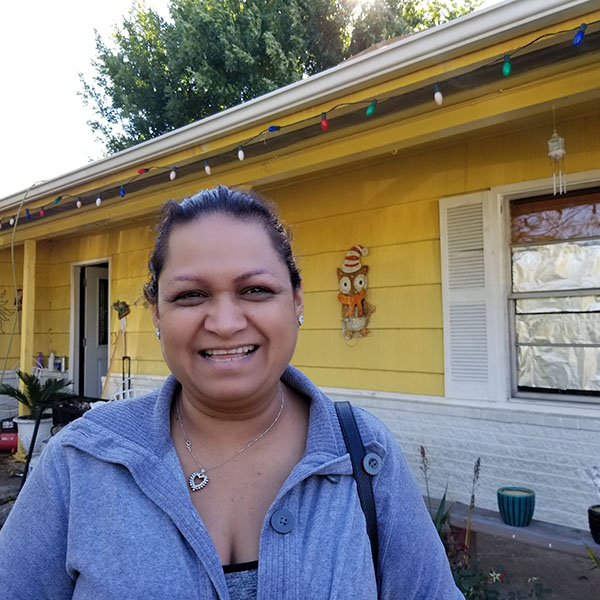
Veronica stands in front of her home while her roof was being repaired. CWS provided a grant to West Street Recovery that was used for the roof repair. Photo courtesy West Street Recovery.
A year after Tropical Storm Imelda, a new roof means peace of mind in Houston
I felt scared that I was going to lose everything. And when water started to come into one of my daughters’ rooms from both the roof and the floor, she started to cry.
I then began to fear for my family’s life. I had to run to other parts of the house to check other areas where the water was coming in. I felt like I was fighting for my life.
The saddest part was that I couldn’t do anything about the water coming in.
When Tropical Storm Imelda hit Houston in September 2019, every room of Veronica Medina’s house got 18-24 inches of water damage. Just two years after surviving the destruction of Hurricane Harvey, she was facing new devastation. “The living room carpet was all soaked and had to be changed,” she says. “In my kitchen the cabinets had to be changed, and the oven is still broken. The roof was damaged as well and was leaking consistently from one room every time a strong rain would come. There was also an emotional toll that will forever live with me.”
School had started a couple of weeks earlier, but Veronica’s children found themselves skipping school to help repair the damage. “I didn’t have a dry spot in the house to keep my family,” she recalls. She couldn’t cook. Some of the family’s mattresses were soaked and could no longer be used. “Imelda also destroyed the business where my husband was working,” Veronica notes. The business closed as a result of the damage it sustained in the storm.
Veronica is a member of West Street Recovery, which she joined after a meeting at her children’s school regarding the rights of undocumented community members following Hurricane Harvey. West Street Recovery works with low income families who are living with the aftermath of Hurricane Harvey, Tropical Storm Imelda and now COVID-19. They’ve teamed up with 300 families like Veronica’s since 2017. They are also a local partner in the CWS disaster response program in the United States.
CWS provided a grant to West Street Recovery that they are using to help Veronica finally repair her roof. It’s the latest component of the support that they’ve provided since Imelda hit. “West Street helped me with repairs directly after Imelda, with donations of rebuilding materials for my bathroom and [during] COVID-19. They included us when they were giving direct aid to undocumented citizens and they have helped me with materials. Most importantly, they have provided me with a sense of family that has been very hard for me to find in this country,” Veronica says.
“Through CWS, WSR is able to provide help to immigrant families struggling to recover from Imelda,” says Ben Hirsch, Co-Director of Organizing, Research and Development at West Street Recovery. “This helps us create dignified housing for families that have, due to legal and cultural barriers, been unable to access assistance from FEMA or major charities.”
Veronica’s new roof means more peace of mind for her family. “Now I am no longer worried about water entering my house through the roof. I am content and very grateful for this,” she says.
And that’s good news for the CWS family, which just got a little bigger. When we asked Veronica what she would say to the people who support West Street–that’s you!–she said, “that they are angels and it makes me believe that there are a lot of good people in the world still. West Street Recovery feels like family, and I have never found support like I find from West Street. So anyone that supports West Street Recovery I consider family as well.”
The feeling is mutual, Veronica. Welcome to the CWS family!
UPDATED Emergency Appeal: Hurricanes Eta and Iota in Central America
November 25, 2020
Appeal Code: 628M This Appeal is an update to our Emergency Appeal, issued on November 9. Situation Two weeks after Hurricane Eta’s destruction, Hurricane Iota hit many of the same communities across Central America. Both storms made landfall as Category 4 major hurricanes, and Iota slammed into Nicaragua’s Atlantic Coast just 15 miles south of where Eta struck. It brought …
Emergency Appeal: Hurricane Eta in Central America
November 9, 2020
Appeal Code: 628M This Appeal is an update to our Situation Report, issued on November 6. Situation Hurricane Eta hit Nicaragua as a Category 4 major hurricane on Tuesday, November 3. The storm went on to pound Honduras and Guatemala with torrential rain, causing landslides and widespread flooding. Rain continued for several days, stalling rescue operations and exacerbating the situation …
Situation Report: Hurricane Eta in Central America
November 6, 2020
Appeal Code: 628M Situation Hurricane Eta hit Nicaragua on Tuesday, November 3, as a Category 4 storm. The Washington Post reports, “Hurricane Eta slammed into Nicaragua with maximum sustained winds of 140 mph on Tuesday, but the monstrous hurricane was even stronger Monday evening, when satellite data suggested that the storm contained 190 mph winds near its core. If this …
Stories of Change
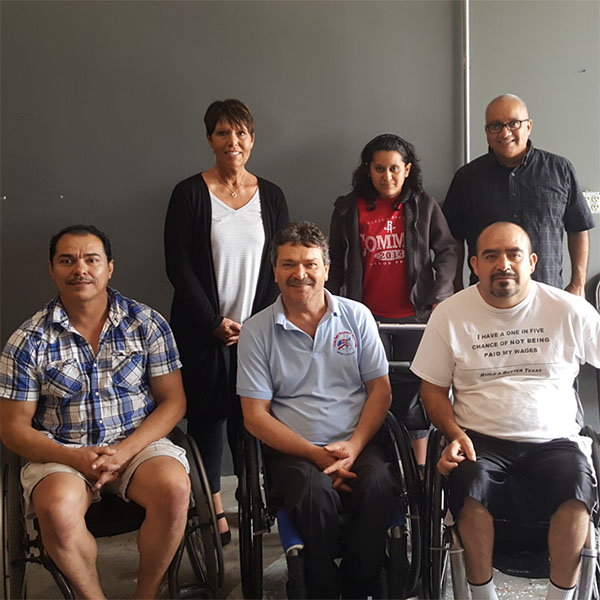
CWS Emergency Response Specialist Susanne Gilmore (back row, left) with staff from Living Hope Wheelchair Association in Houston.
Relief in the Face of a “Tsunami of Need”
Imagine being an undocumented worker in Texas. One day, a nightmare happens: you’re injured at work, and you end up relying on a wheelchair. Your body was your tool. It’s what made you a good worker in that sector, and it’s how you provided for your family. In just a few seconds, your ability to use that tool changes dramatically.
Now, it seems like no one wants to hire you. Because you’re undocumented, you don’t quality for unemployment or other benefits. It feels like no one wants to help you. Bills are piling up, and you start facing tough decisions about whether to pay your rent or buy food.
This is a dark story. It’s one of isolation, loneliness and despair. But it can also be a story of hope–one of neighbors standing together in the face of adversity.
And it’s one that the team at Living Hope Wheelchair Association in Houston knows very well.
Living Hope works with undocumented people with disabilities and their families. Much of their work focuses on helping people access durable medical equipment, essential supplies and medical care. Their team distributes adult diapers and catheters, and they help members access paratransit or other transportation to get to dialysis or other appointments. In addition to these material needs, Living Hope advocates for fairer, more equitable policies in healthcare and transportation. They also reach out to help break the isolation that many of their members face. They do regular calls to check in about their needs, including emotional and spiritual ones. Since Living Hope leaders themselves have faced the isolation and abandonment from society, they know that this accompaniment is a crucial part of their work. They leave no one behind.
Most of Living Hope’s clients are undocumented. Without a safety net, these families are especially vulnerable when something unexpected happens.
We first got to know Living Hope after Hurricane Harvey hit Houston in 2017. As you can imagine, disasters are even tougher to navigate for people with disabilities. With Harvey’s widespread flooding, some of Living Hope’s members were physically stuck in their damaged homes. CWS provided funds to help them build wheelchair ramps.
From there, a partnership was born. Tomás Aguilar, the Disaster Recovery Coordinator at Living Hope, has worked closely with CWS for the last three years. “CWS has amazing work happening, and amazing support. I take advantage of that,” he says. “By the time COVID-19 hit, we knew how to shift gears and do more with less. The discussions, emails and materials that CWS shares really made an impact on our ability to provide the same level of service.”
Still, the team at Living Hope has paid a price. Leaders within the organization contracted COVID-19. The team has been working above and beyond their usual hours and job descriptions. “We are proud we are serving our community and we will be even prouder when we can do it in a way that doesn’t overwhelm us,” Tomás says. “There will come a day, thanks to our planning and improvement in capacity, where we will not only keep our mission going no matter what but we will do it without overworking ourselves!”
It was after one of the CWS-convened group discussions with partners that the CWS team reached out to Tomás this spring. We asked what new needs Tomás was seeing in his community and how we could help.
Sadly, Tomás had a lot to share. Because of their immigration status, Living Hope’s members weren’t eligible for stimulus payments or the expanded unemployment benefits. In this political culture, people are afraid. They aren’t sure how to get through losing family members to COVID-19, losing jobs and facing mounting bills. Even the informal economy has dried up. The pandemic shut down paratransit services for a while; when they started up again, people were scared to leave home. “If families were hurting before, it has gotten worse,” Tomás says. Families are rationing insulin, medicine and food. Tomás called it a “tsunami of need.”
CWS issued a $15,000 grant to help. It’s part of a fund that Living Hope is using to provide cash help to at least 200 families. Each family has their own list of needs, and they know what is most urgent for them. It may be rent or a utility bill that is overdue. It might be food for families on the brink of starvation. And in some heartbreaking cases, it’s funeral expenses for a loved one who has died of COVID-19. Living Hope talks to each family, and those with extraordinary needs may receive a little extra help. The team’s goal is to eventually be able to provide at least $500 to each family to help during these dark times.
Every single one of us has been impacted by the coronavirus pandemic. But for our neighbors who have no support to fall back on, it has been catastrophic. Our team is proud to support Living Hope as they provide relief and hope to hundreds of people who are facing some of their darkest days. Because when it really comes down to it, that’s what neighbors do.
Updated Situation Report: Hurricane Season 2020
September 3, 2020
Appeal Code: 628M September 16 update: Hurricane Sally made landfall in Alabama last night, bringing two feet of rain to some areas. We are working with our local partners to determine our response plan. We will respond to requests for CWS Kits, Emergency Cleanup Buckets and Blankets, and we anticipate focusing on long-term recovery needs as well. More information will …
Situation Report: Hurricane Season 2020
July 28, 2020
Appeal Code: 628M August 27 update: Last night, Hurricane Laura slammed into the U.S. Gulf Coast as a Category 4 storm with 150 mile-per-hour winds. We are working with our local partners in Texas and Louisiana to determine our response plan. CWS Hygiene Kits and Emergency Cleanup Buckets are already on their way to Texas for the relief effort, and …
Stories of Change
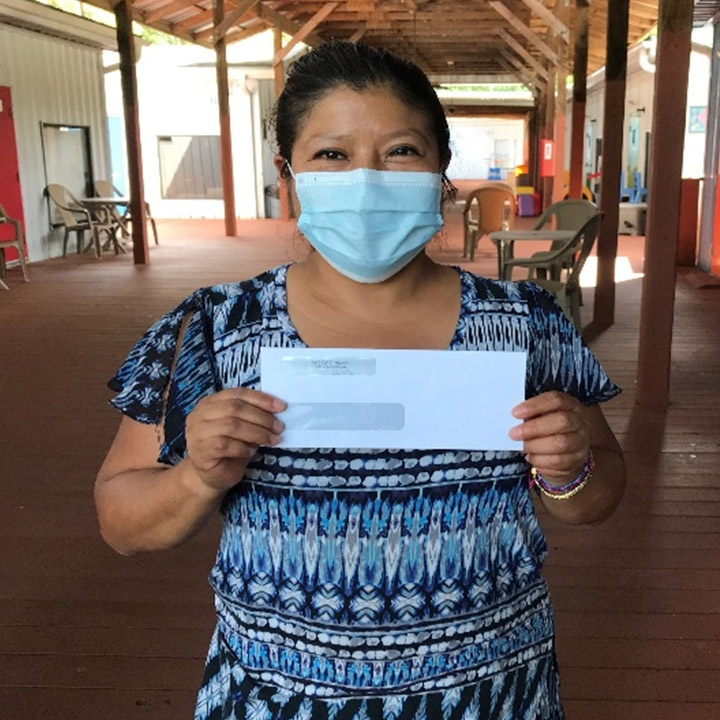
An ECMHSP client shows off her family's $200 check, which came through a grant from CWS.
Rent and utility help for agricultural farm workers and their families in North Carolina
Heartache. Grief. Worry. Uncertainty. Fear.
The coronavirus pandemic continues to take a devastating toll on families in the United States and around the world. That’s why our emergency response team in the United States has been reaching out to our local partners in communities across the country. We’ve been focusing on ways to help families overcome some of the challenges that this health emergency has put in their path.
One of these partners is East Coast Migrant Head Start Project in North Carolina. “East Coast Migrant Head Start Project is committed to preparing the children of migrant and seasonal farm workers for success. We do this by providing holistic, high quality early childhood education services for children and families in a nurturing, culturally sensitive environment and by providing services and advocating for children and families in their other areas of need,” reads their mission statement. Their team adds, “We truly are here to serve and meet the needs of our families and their children.”
Unfortunately, these families’ needs have grown significantly during this pandemic. Agriculture farm work has been categorized as essential, so many families have members who continue to work in our fields. However, not everyone has been able to keep their job, and unemployment has risen. Some employers have adapted schedules during the pandemic, so their employees are facing reduced hours and smaller incomes. An increasing number of ECMHSP’s clients are reporting financial struggles. Money is scarce, and families are falling behind on rent and bills.
In situations like this, cash assistance is often the most effective way to help a family get through a period of stress or crisis. ECMHSP took into account what they were hearing from their clients, as well as the types of support that they were receiving from other sources. Their analysis showed that the most effective way that families could use support from CWS would be through cash grants to help pay rent and utility bills. This would help keep families in their homes during the crisis and ease some of that financial pressure.
With your help, 75 families each received a $200 check. That’s 400 people who can breathe a little easier in the midst of this crisis.
In their report to CWS after making sure that the families received the funds, the team at ECMHSP wrote: “Thank YOU! CWS GOD Bless YOU all and continue to Bless You in supporting families in our communities with your Emergency Response Program.”