Along the Thailand–Myanmar border, democracy activists and displaced families are finding safety, mental health support and essential resources. Stories like Ei Ei Khin’s show how local partnership and access to safe shelter restores dignity, stability and hope for people facing trauma and conflict. Finding Safety Through Shelter and Community Support In the shadow of conflict and forced displacement, the path …
Finding Safety and Hope Along the Thailand–Myanmar Border
January 30, 2026
Trigger warning: This story contains references of depression and suicidal ideation. Along the Thailand–Myanmar border, democracy activists and displaced families are finding safety, mental health support and essential resources through CWS’s partnership with the New Myanmar Foundation. Stories from Aye* and Aung* show how this assistance and access to safe shelter restores dignity, stability and hope for people facing trauma …
Stories of Change
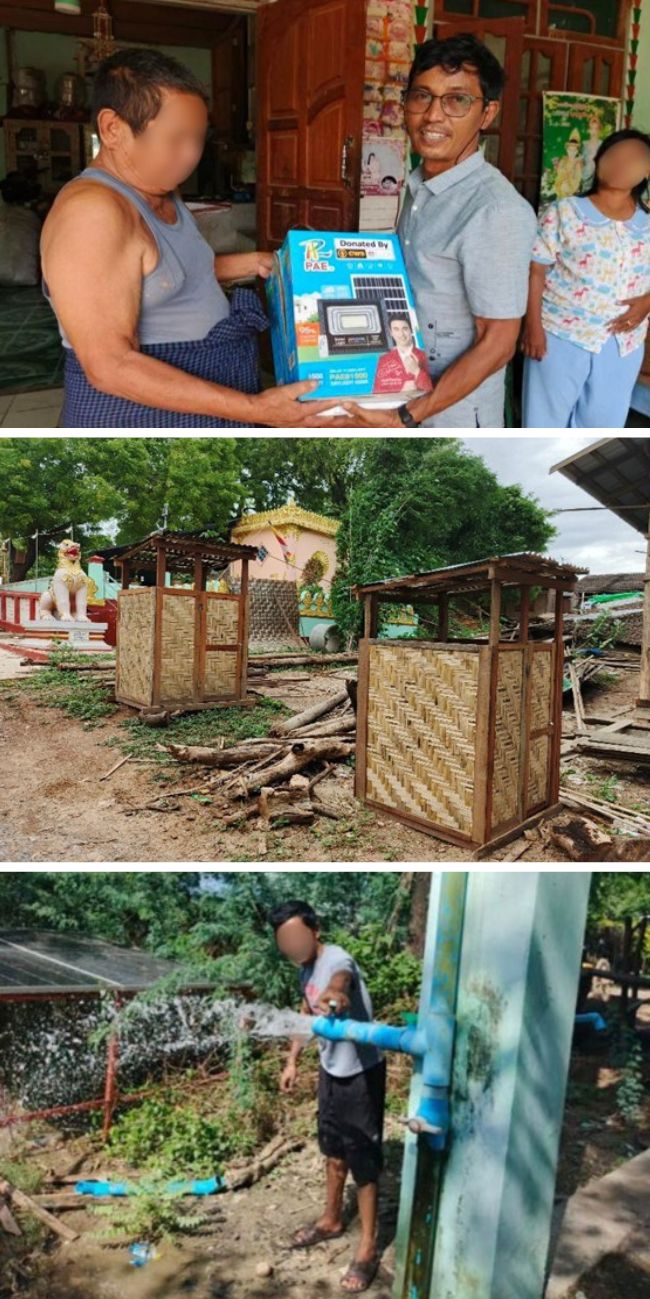
Top: Solar Lamp Distribution Middle: Newly constructed public toilets Bottom: Water tap installation
Rebuilding with Dignity: How CWS is Supporting Earthquake Survivors in Myanmar
Following the devastating April 2025 earthquake in Myanmar, CWS partnered with local organizations to deliver emergency relief to the most affected communities. These efforts have supported hundreds of families rebuilding their lives with dignity, safety and renewed hope.
When a powerful earthquake struck central Myanmar in early April 2025, thousands of families were left without access to clean water, food or safe shelter. In the weeks that followed, Church World Service, in partnership with local organization New Myanmar Foundation (NMF) and with additional support from World Renew, launched a targeted emergency response across the hardest-hit areas to support communities with clean water access, food security, sanitation, safety and community-led recovery.
Clean Water: A Lifeline Restored
The earthquake had destroyed or damaged wells in dozens of villages, leaving many families without safe water. To address this, CWS and its partners prioritized restoring access through the installation of six new water taps in three communities: Sagaingsu, Zaycho and Moehnanchone. These taps, placed near the sites of previously damaged wells, were installed with the full cooperation of local residents, who committed to maintaining them.
At the same time, a water truck was hired to deliver clean drinking water to the affected villages while the tap systems were being restored. Over 30 days, water deliveries were made three times daily, reaching many—but not yet all—of the 65 village tracts in need. The response team is continuing to assess the need for additional water trucks and tap installations.
Emergency Food Support: Reaching the Most Vulnerable
As livelihoods were disrupted and transportation networks damaged, many families found themselves without income or access to basic necessities. In response, food packages were distributed to 224 of the most affected households in three villages: Atwinsanyar, Thettharpanlaung and Wetoekan. Each household received staples like rice, cooking oil, dried fish, legumes, salt, and onions—enough to help families make it through the most critical weeks.
Selection was conducted with care and community input, involving local administrators, Buddhist monks and field teams who verified each household’s needs through direct discussions with affected families.
Sanitation: Restoring Dignity
With sanitation facilities also heavily damaged, the team prioritized building 10 community toilets across five villages, including Kyaukmyaung, Kinghsu, Hlaygyidan, Thettharpanlaung and Mibar. These toilets were installed only when a local resident agreed to maintain them, ensuring sustainable, community-driven impact.
Access to safe and hygienic toilets is a cornerstone of public health, especially in post-disaster settings—and this effort played a key role in helping communities begin to recover with dignity.
Solar Lighting: Safety Through the Dark
In the weeks after the earthquake, safety emerged as a critical concern—particularly for women living alone, families near rivers and households in remote areas. In response, CWS and partners distributed 100 solar lamps to vulnerable households, and installed 45 solar-powered streetlights in high-risk communities.
These simple yet powerful tools transformed nighttime safety, and reports of violence and theft dropped significantly after the lights were installed. From selecting where to place water taps and toilets to identifying the most food-insecure families, every step involved consultation from local communities. Photos, receipts, and documentation were collected to ensure transparency and accountability.
While the response has made a significant difference, many needs remain. As of June 2025, it’s estimated that more than 200 additional water taps are still required, and water delivery must expand to reach every community still recovering from the disaster.
Thanks to the compassionate support of CWS donors and partners, hundreds of families in Myanmar are no longer facing this crisis alone. With every water tap installed, every meal delivered and every light turned on at night, CWS and its partners are helping communities recover not just with relief—but with resilience, dignity and hope.
To learn more, read CWS’s situation report in the initial aftermath of the Myanmar earthquake and make a donation to support communities impacted by disasters like these.
Situation Report: Myanmar and Thailand Earthquake
April 1, 2025
Updated: Tuesday, April 8, 2025 Situation: On Friday, March 28, a powerful 7.7-magnitude earthquake struck Myanmar and neighboring Thailand, followed minutes later by a 6.4-magnitude aftershock. In total, more than 3,800 people were killed (with estimates rising to 10,000) and more than 3,400 have been injured. Widespread damage has left 143,630 buildings beyond repair, including 1,600 houses, 670 monasteries and …
Stories of Change
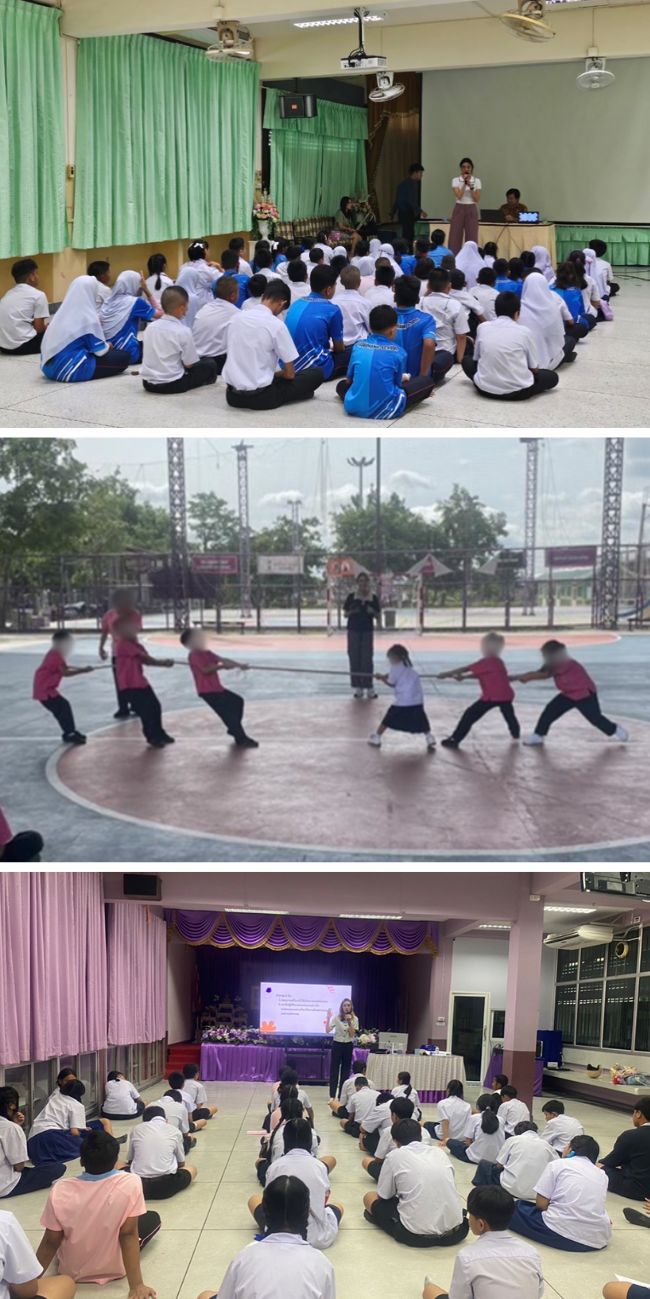
Top: Glow and Grown project; Middle: Colorful Minds project; Bottom: RISE project
Nurturing Safe and Inclusive Schools: The Impact of CWS Child Protection Programs
For years, CWS Thailand has been at the forefront of child protection, implementing programs designed to foster inclusive, safe and supportive learning environments. Through initiatives at three schools—Wat Sao Thonghin School, Radburana School and Chumchonmoobanpattana School—CWS has empowered students with essential life skills, emotional resilience and social awareness. Each program is uniquely tailored to address the needs of children from diverse backgrounds, supporting their overall well-being and long-term development.
Colorful Minds: Encouraging Self-Esteem and Empathy
The 10-week Colorful Minds program at Wat Sao Thonghin School empowered 174 primary students by boosting self-esteem, reducing bullying and fostering an inclusive environment. Through engaging activities like icebreakers, emotional regulation exercises, teamwork challenges and cultural appreciation lessons, students developed stronger social and emotional skills.
Creative outlets such as drawing and role-playing helped them express emotions, build empathy, and collaborate more effectively. While younger students initially found some concepts like diversity challenging, program adjustments ensured their engagement and learning. Many participants expressed a keen interest in continuing, with feedback highlighting improved emotional awareness and stronger peer relationships.
Glow and Grown: Fostering Inclusivity and Cultural Understanding
In partnership with the Bangkok Refugee Center, 60 primary school students took part in a four-day Glow and Grown project focused on fostering a safe and inclusive learning environment.
Through team-based games, group discussions and interactive exercises, students developed empathy, cultural awareness and positive social skills. Their active participation led to meaningful connections and improved interpersonal interactions. By the end of the program, bullying incidents had decreased and many students expressed enthusiasm for future sessions.
RISE: Supporting At-Risk Youth for a Brighter Future
Currently underway at Chumchonmoobanpattana School, the RISE initiative supports approximately 240 junior school students facing socio-economic challenges, including poverty and disengagement from education, which often contribute to long-term challenges, making early intervention essential to their well-being and future success.
Through a structured curriculum focused on emotional regulation, self-awareness and social responsibility, RISE provides a safe and supportive environment where students can build resilience and leadership skills. While working with vulnerable youth presents challenges, fostering a positive school culture creates a ripple effect that benefits not just the students, but also their families and communities.
A Commitment to Child Protection and Youth Development
CWS remains dedicated to enhancing child protection and youth development through targeted educational programs. By equipping students with essential life skills, fostering resilience and creating inclusive learning environments, these initiatives lay the foundation for brighter futures. Looking ahead, CWS aims to expand these programs to reach more at-risk youth, further strengthening community support systems and ensuring that every child has the opportunity to thrive.
Learn more about CWS Thailand here.
Empowering Migrant Youth: Perspectives from the Thai-Myanmar Border
February 14, 2025
For more than 20 years, hundreds of thousands of asylum seekers from Myanmar have lived inside Thailand along the Thai-Myanmar border—next to their country yet far from their homes. Below are first-hand testimonials of participants in our youth empowerment project along the border. Htet Lin Thu: Educating and Empowering Migrant Youth My name is Htet Lin Thu, and I am …
Stories of Change
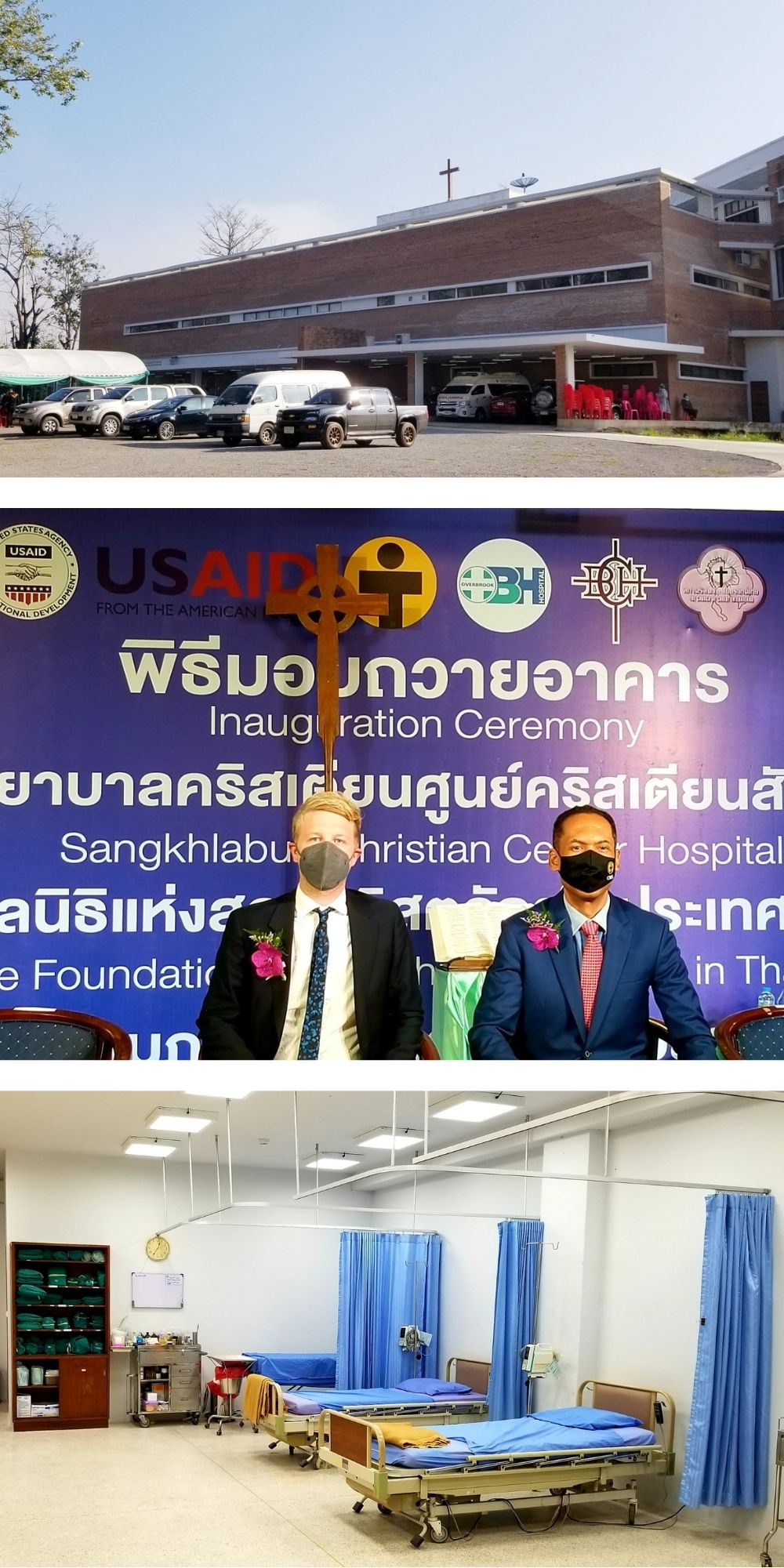
Top: outside of Kwai River Hospital, Middle: Adam Michael Royston and Marvin Pannel on stage at inauguration, Bottom: New patient rooms
“A Place of Comfort and Healing”
For over 60 years, the Kwai River Christian Hospital has been a place of hope and healing for many in the town of Sangklaburi, Thailand near the border with Myanmar. Throughout the years, people from all walks of life have come through the doors of the hospital, including refugees from Myanmar who live in nearby camps. Here, they could always trust that regardless of cost or who they were, they would be welcomed and given high-quality care.
In late February of this year, the hospital reached a new milestone: it completed its latest project to remodel and expand. Along with its partner, USAID, CWS was a proud supporter of this recent project.
Marvin Pannell, CWS’ Myanmar Country Representative, attended the event to express gratitude and congratulations for the hospital’s inauguration.
As he stood in front of the excited crowd that had come to celebrate, Marvin stated “wow, congratulations and amazing are the words that come to mind upon seeing this impressive hospital completed and officially open to serve a community of 150,000.” The hospital will now be able to serve more people and provide an even higher quality of care with the addition of modern medical equipment.
In his speech, Marvin discussed three of the project’s most remarkable achievements:
“1. Women comprise about 75% of the staff, in a facility that can now provide even higher quality care to a patient base including pregnant women and new mothers. The design of the hospital fully considers the needs of women, girls, men, and boys.
2. The hospital is accessible to an estimated 150,000 people. 25% are Thai citizens and 75% are people from Myanmar, including a mix of asylum seekers, refugees, and people without refugee status. The hospital continues to treat marginalized people under the noble ideal of quality health care as a right, and that all people are equal.
3. The hospital is welcoming and inspiring – a place of comfort and healing. Upon walking around the grounds and throughout the building, it is apparent that the architectural design approach takes advantage of the geographic setting. More importantly, the hospital models an environmentally friendly design approach. From cooling to heating to drainage, landscape, lighting, materials, and more!”
Our whole team joins Marvin in cheering on these achievements and expressing thanks “to all hospital partners and donors for this miraculous gift of accessible, quality health care.” We are also thankful for the American people, whose support through USAID has helped build an inclusive health care center.
With the new expansion and remodeling, the Kwai River Christian Hospital will continue its legacy as a sanctuary and welcoming space for all in need of medical assistance. Marvin said it best: “with this hospital, we have yet another blessing, a cause for daily celebration, and yet another reason to hope and dream.”
Stories of Change
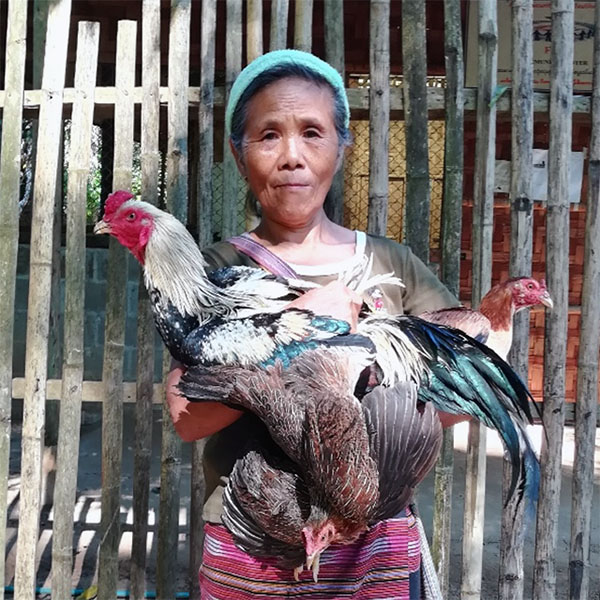
A program participant in Ban Mae Surin with her new poultry. Photo courtesy TBC.
Over 500 refugee families in Thailand now have poultry raising businesses
For families all over the world, raising chickens is a great way to eat better and earn extra money.
More than 500 refugee families in Thailand are now raising chickens. They can add eggs and meat to their diets or sell eggs and chickens to earn money. This program is implemented by our longtime partner, The Border Consortium.
The refugee families living in Mae Hong Son province are originally from Myanmar. They now live just across the border in Thailand in a series of refugee camps. Among other support, The Border Consortium focuses on helping families with young children eat healthy and improve nutrition. CWS supports the “Healthy Babies, Bright Futures” program, which specifically focuses on improving mothers’ diets during pregnancy and breastfeeding, and on ensuring nutritious complementary foods for young children.
Thanks to Latter-day Saint Charities, we were able to expand the program in 2020 to include providing chickens to 515 refugee families. Now that they are raising poultry, these households can add eggs and protein to their diets. They are also earning money that they can spend on buying household supplies and meeting other basic needs. This was even more important during this time of COVID-19 restrictions which reduced refugees’ prospects for livelihood activities due to restricted movement. For many, this program is truly life-saving.
The ‘gai baan’, or local free range chickens, were sourced from a hatchery in the province and from Thai villagers who raise chickens.
Stories of Change
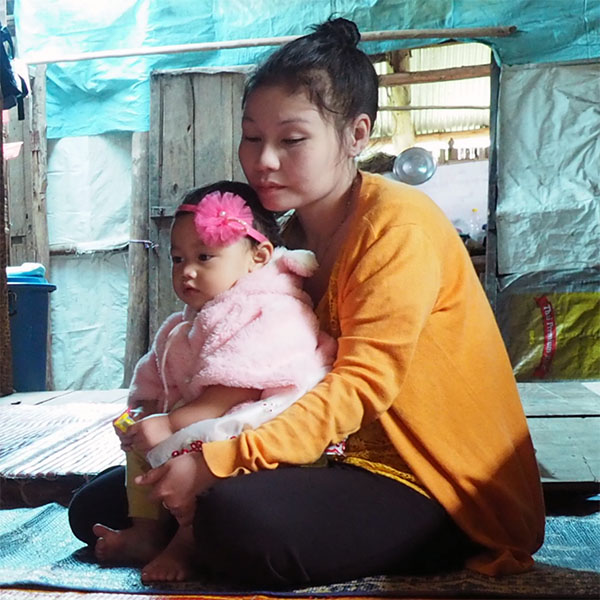
Naw Paw Lue Lu and her daughter.
A Focus on Early Nutrition For Refugees in Thailand
Naw Paw Lue Lu and her husband are raising two children in Umpiem Mai camp in Thailand, which is home to refugee families from Myanmar. Their son is 6 years old, and their daughter is 18 months old. Naw Paw Lue Lu hasn’t had access to information or parenting classes, so she mostly followed the example of her older relatives and neighbors. Unfortunately, that meant that her son didn’t have a nutritious diet. She didn’t know about exclusive breastfeeding, when to start supplementing her breastfeeding or how to diversify his diet. As a result, she only fed her son rice, oil and salt.
During her pregnancy with her daughter, Naw Paw Lue Lu learned more from the health and nutrition staff in the camp. She got the information she need to develop healthy habits during her pregnancy. She understood how to keep herself and her baby healthy. When her daughter was born, Naw Paw Lue Lu knew the benefits of breastfeeding her exclusively for the first six months, and how breastfeeding benefits both moms and babies. Then when her daughter was six months old, Naw Paw Lue Lu joined the “Healthy Babies, Bright Futures” program. It’s implemented by The Border Consortium with support from CWS.
In addition to continued nutrition education support, Naw Paw Lue Lu began to attend cooking demonstrations. She learned about BabyBRIGHT, which is a complementary baby food. She saw how to cook with it and understood its benefits.
Naw Paw Lue Lu recalls worrying about her daughter in her first few months, wondering if her little one was growing as much as other children the same age. But as she began to implement more and more of what she was learning in the infant and young child feeding program, her worries eased. She could see her daughter growing well. She could clearly see the difference between her two children as infants. This was due, in part, to adding BabyBRIGHT to their routine. It’s also, she admits, because she was able to spend more time with her new baby (she had been a teacher when her son was very young).
Naw Paw Lue Lu says that she better understands how to feed both her children a nutritious and diverse diet. She spends time creating new menus for her daughter that include BabyBRIGHT and vegetables from her garden. And she sees how having the nutrition program is helpful for her whole community, especially families with young children.
Stories of Change
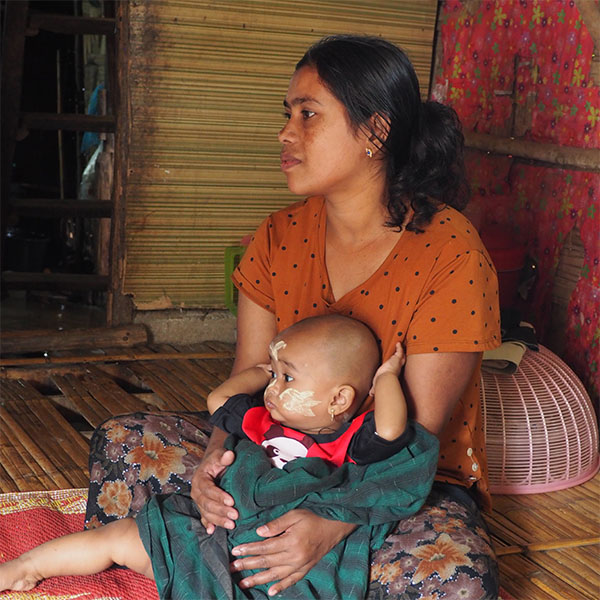
Ramazabee and her daughter.
Nutrition Education for Refugees in Thailand
Thirteen people live in Ramazabee’s household in Umpiem Mai, a camp in Thailand for refugees from Myanmar. Among the 13 are her three children–two sons and her 8-month-old daughter.
Remazabee says that she used to not fully understand how to care for her young children properly. She watched what others around her were doing and tried to do the same, but she didn’t have experts to talk to. When she was pregnant with her daughter, however, she joined the “Healthy Babies, Bright Futures” offered through CWS partner The Border Consortium.
Through this program, Ramazabee joined nutrition education sessions led by health and nutrition specialists. When her daughter turned six months old, Ramazabee joined an infant and young child feeding program. She accessed extra nutrition information and education from other refugees who now serve as Food Security and Nutrition Specialists in the camp. From them, Ramazabee learned the importance of eating nutritious foods and how to feed her children well according to their age. She learned how to use BabyBRIGHT, a complementary baby food. Then she received a monthly portion as incentive to stay engaged. During group cooking demonstrations, Ramazabee better understood the important nutrients in it that can be found in other foods in the camp. So, with BabyBRIGHT and locally sourced nutritious food, her daughter and is healthy and growing well — as confirmed during monthly Growth Monitoring appointments.
During a visit with staff from The Border Consortium, Ramazabee’s brother joined the conversation and said he recognized that his niece is quite happy and seems healthier than her older brother had been as a young child. He especially noted that she is not often sick.
Ramazabee expressed her happiness with young child feeding program activities, which inspire her to take care of her daughter every day.
- Page 1 of 2
- 1
- 2