
Stories of Change


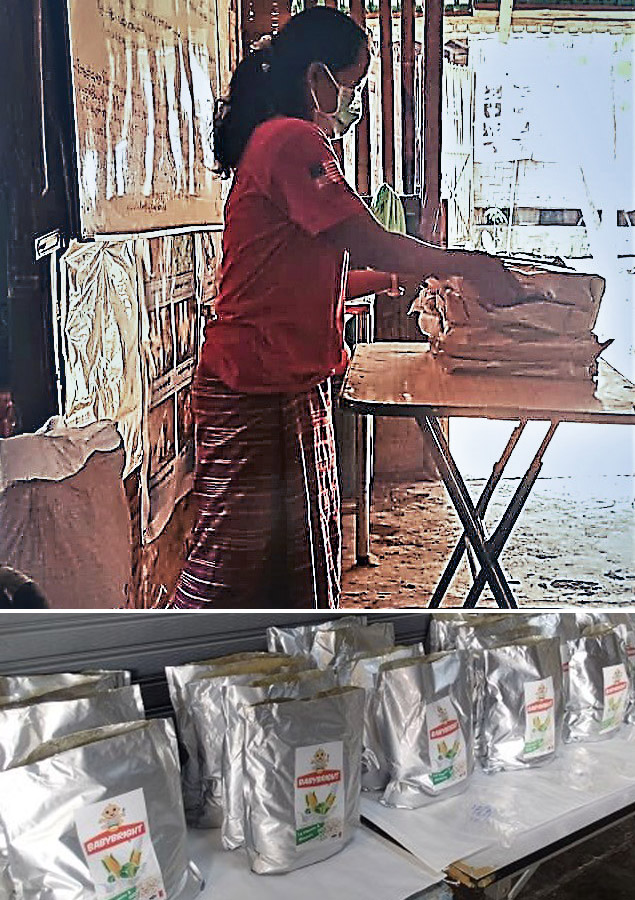
Top: a woman stacks bags of BabyBRIGHT for distribution in Ban Mai Nai Soi. Bottom: bags of BabyBRIGHT.

An extra nutrition boost for young refugee children in Thailand

About 90,000 refugees from Myanmar live in nine camps in western Thailand, near the Thailand-Myanmar border. Our long-time partner, The Border Consortium, reaches these refugees with food, shelter and other support.

A few months ago, as the threat of COVID-19 emerged, The Border Consortium was in the process of introducing a nutritious food called BabyBRIGHT to the children in Ban Mai Nai Soi Refugee Camp. BabyBRIGHT is a fortified complementary food that is formulated to ensure that the refugee children who eat it will have the best possible health in their early years. 

BabyBRIGHT was created to fight chronic malnutrition, which is all too common in situations like this one. It has proven effective over the years, so it’s an important part of the Healthy Babies, Bright Futures campaign for families with children between six months and 2 years old. The program focuses on a variety of ways that parents can feed their young children better; BabyBRIGHT is one component of a larger program. CWS provided the funding to expand the use of BabyBRIGHT into Ban Mai Nai Soi. 

The inaugural BabyBRIGHT distribution in Ban Mai Nai Soi in April went smoothly. While following COVID-19 prevention measures, the TBC team reached nearly 200 children and their families over a three-day period. Each family received BabyBRIGHT as well as information about nutrition for the whole family. That’s 200 children who now have a significantly better opportunity for longer, healthier and more productive lives. 

As the COVID-19 pandemic spread worldwide, the Thai government put travel restrictions in place that affected the refugee camps. That could have made it difficult to continue to purchase and distribute BabyBRIGHT, but TBC continued to coordinate with the Thai authorities, and the supply of BabyBRIGHT flowed without interruption. The camp’s health care partner is also helping to distribute BabyBRIGHT within the camp in a way that ensures COVID-19 protection measures while reinforcing best nutrition practices. 

We’re so grateful for everyone who is working hard to ensure that these refugee children will have the chance to grow up healthy and strong. That includes TBC, Thai authorities and partners in the camps who are putting supplies in families’ hands. It includes The Church of Jesus Christ of Latter-Day Saints, whose Light the World campaign provided the funds that CWS used to support this work. And, most importantly, it includes the parents and family members who are working day in and day out to feed children healthy food–including BabyBRIGHT!

Stories of Change


Sher Ka Myee in her shop.

Rethinking rations for refugees along the Thailand-Myanmar border

Sher Ka Myee’s shop looks like many grocery shops or convenience stores around the world. She sells lots of different foods, including eggs, oil, chicken, pork, fish, vegetables and several types of rice. She sells bottled water and other drinks, as well household items like shampoo and soap.

She has owned this shop for a decade now, but recently there have been some big changes in how she does business.

Sher Ka Myee’s shop is inside Ban Don Yang Refugee Camp in Thailand. Ban Don Yang is home to about 2,000 refugees from Myanmar, most of whom fled their homes in Myanmar in the late 1990s amidst violence and internal conflict. It is the smallest of the nine camps along the Thailand-Myanmar border, where more than 85,000 refugees live.

The big change for Sher Ka Myee’s shop has to do with the way that the people in the camp get their food. Until recently, Ban Don Yang had a physical ration system. Each person waited in line each month to receive a set amount of basic foodstuffs – rice, cooking oil and pulses – from a large warehouse.

Now, more and more refugee camps around the world are switching to a debit system that uses shops like Sher Ka Myee’s to replace the warehouse ration system. Ban Don Yang made the switch a couple of months ago, and the other camps along the border are also transitioning.

Since the change, rather than receiving food rations each month, people now get a debit card with a certain amount of credit on it to use in a couple of shops in the camp. The credit covers as many as 30 food items in the shop, so it gives people something they haven’t had in a long time: choice about what THEY want to eat. Maybe they want to eat chicken this week, and pork next week. Everyone can do that now – not just the people who could previously afford to buy meat in addition to their rations. Or they can switch between different types of rice, or have more vegetables one week than the next.

Sher Ka Myee had her shop long before the debit card system took effect, but now she’s one of a couple of official ration retailers in Ban Don Yang. She says that people are buying more meat now, including chicken, pork and fish. Another of the shop owners said that when the debit card system took effect, she sold out in one day. People were used to getting all of their rations at once, so they did the same thing in her shop – they stocked up on the first day that they had their credit. Over time, people realized that they could come back to the shop whenever they want, so they didn’t have to buy everything in a day. That’s another way that the new debit card system gives people more choice; in addition of a choice of what to buy, they can also choose when to shop.

The refugees living in Ban Don Yang have lost so much: their homes, the land where they lived and farmed, and, in many ways, their freedom. This debit card system is one way to help restore some of that lost freedom and allow people to take control of an important part of their lives: what they eat.

We are proud to support The Border Consortium, which is the main provider of food, cooking fuel, shelter and many other forms of support to refugees in all nine camps along the Thailand-Myanmar border.


Stories of Change


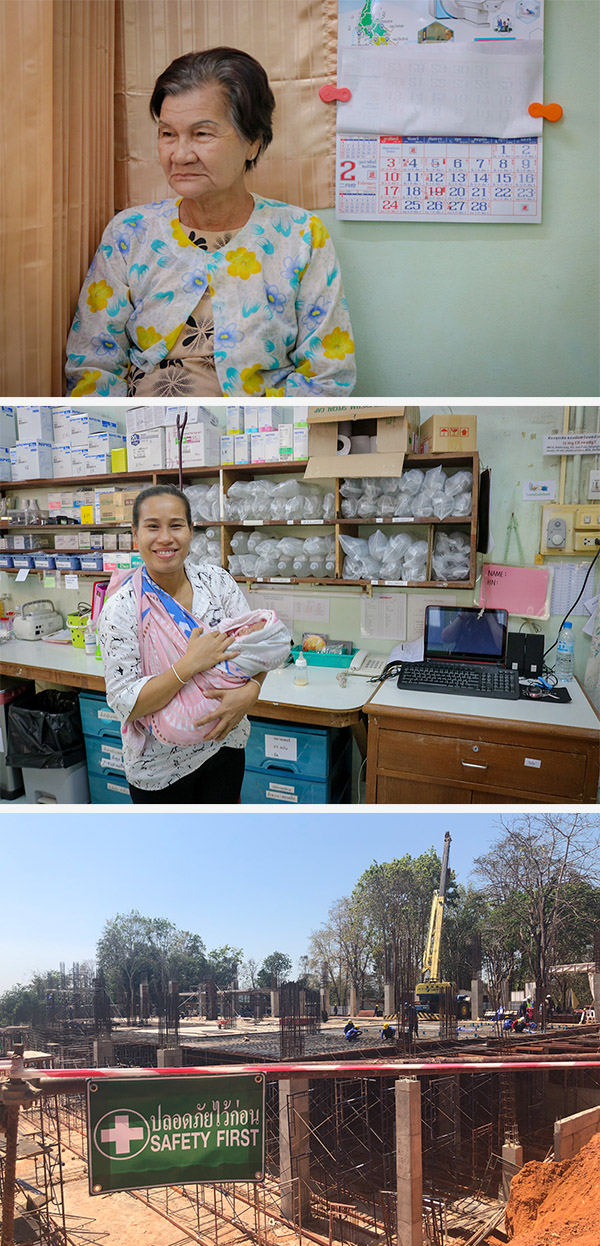
Top: Saw Myint says her whole family has come to Kwai River Christian Hospital for decades. Middle: a new mom and her 3-week-old daughter in one of the hospital's exam rooms. Bottom: Construction is underway of the new Kwai River Christian Hospital location.

A Day at Kwai River Christian Hospital

It’s another busy day at the rural Kwai River Christian Hospital in Thailand, near the border with Myanmar. It’s a small facility with a big job: taking care of people with lots of different needs.

The hospital receives about 20,000 visits each year, which is more than 50 a day. Some of the patients are Thai and live in the community around the hospital. Others are refugees from Myanmar who live in a nearby camp; when someone from the camp needs advanced care, they come to KRCH. About 20 miles away KRCH staff are working in a border clinic, screening new arrivals from Myanmar and sending them on to the main hospital if they need more care.

Saw Myint came to the hospital today because she is experiencing bad back pain. Originally from Myanmar, she moved to this part of Thailand more than 50 years ago. She comes to KRCH often, and so does her whole family. Saw Myint says she especially appreciates KRCH because the staff prioritize taking care of their patients, and everyone working here is kind.

Down the hall, a new mother beams while talking about her 3-week-old daughter. They live a couple of miles from the hospital, and their whole family comes to KRCH when they need care. The team here really cares about their patients, she says. If you miss an appointment, they will follow up with you to make sure you can still get the care you need.

Sirikanlaya Prakunwiset is a pharmacist on the hospital staff. She remembers an older patient who had a number of medical conditions. One day she came in with a new problem: her leg was swelling and was very painful. The problem was that the usual medication that would normally be prescribed was too strong due to her other conditions. The doctor was able to find her a different medicine, and she got better. For the team at KRCH, finding the right care for each patient is a top priority. In fact, Dr. Yotsapat Kwonkerd says that it’s his favorite part of his job. He says he enjoys monitoring each patient to make sure their treatment is working.

A few miles away, in the larger town of Sangkhlaburi, there’s another flurry of activity happening for the Kwai River Christian Hospital team.

A larger, more modern hospital is under construction here with support from CWS.

Patients and the hospital team are eagerly anticipating the day when the new hospital opens. It will enable this hardworking team to deliver even better care for patients. Sirikanlaya is looking forward to new and expanded technologies. Yotsapat anticipates having larger stocks of medications, more beds and a larger team. Plus, he expects to have new instruments for monitoring patients, enabling him to be even better at the job he loves.

“We will develop our capacity very much,” says hospital director and manager Pranote Buskornreungrat. Right now, KRCH is the only hospital in more than 150 miles on either side of the border to have a full-time surgeon. When the new location opens, it will have the first Intensive Care Unit in that same range. It will also have equipment for minimally-invasive surgery, which isn’t possible in the current location. Because of its proximity to the border, KRCH has a higher birth rate than most rural hospitals in Thailand. In the new location, the maternity ward will have a nursery for the newborns.

In their current location, the Kwai River Christian Hospital team is delivering loving and high-quality care to thousands of their neighbors from all walks of life. We’re excited to help launch the next chapter of their story, in which this capable team has even more resources at their disposal.