Stories of Change


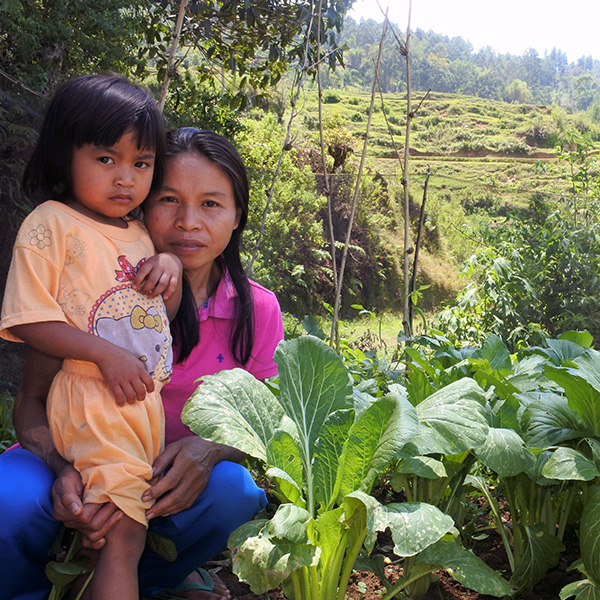
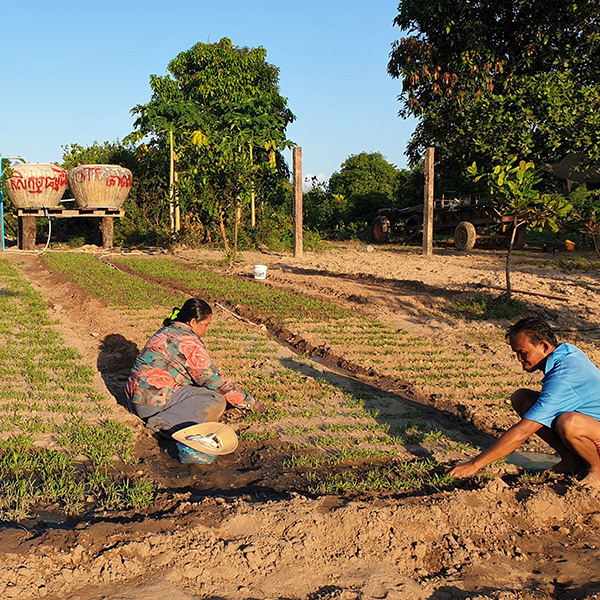
Kimsour and Samnang working on their farm.

Planting the (climate adaptive) seeds to success in Cambodia!

Em Kimsour, 38, lives in northern Cambodia. She has four children between 4 and 13 years old with her husband, Ros Samnang, 41. When we first met Kimsour and her family in 2017, they were struggling to make ends meet. They relied on subsistence farming and Kimsour’s earnings of less than $6 a day from selling rice porridge.

Kimsour and Samnang didn’t know how to manage their plot of land productively. They were only growing rice, and they didn’t have enough water or fertilizer. Even with the income from the porridge sales, they didn’t have enough to feed their family. So they had to buy or borrow even the basics. 

One thing that impressed us from the beginning, though, was how dedicated Kimsour and Samnang were to their children’s future. Families who are in similar situations often withdraw their children from school as uniform and other fees mount. But not Kimsour and Samnang. Even though they struggled to keep up with the fees, they prioritized keeping their older children in school.

We knew that we could help Kimsour and Samnang give their children the future that they were determined to make a reality. Kimsour joined some of her neighbors to learn about cost-effective vegetable gardening, and how to adapt it for situations with limited water or drought triggered by climate change. She received new information and training, and then materials to improve her irrigation as well as vegetable seeds. She applied what she learned, including how to make natural fertilizer, to her gardening.

And it has paid off in a big way in the last couple of years.

With the vegetables from their garden, Kimsour’s family has been able to make and eat nutritious meals with a variety of fresh vegetables. They have started selling surplus vegetables, and they use the income to buy high quality rice and other foods. Now the family’s net income is about 1,215,000 Riel per harvest, which adds up to about $900 per year on average.

Meanwhile, they have continued the porridge business. They have also saved money to expand their vegetable garden and are planning to start raising fish, too. “My family’s situation is getting better,” Kimsour says. “I have added knowledge about better vegetable growing and compost making, and as a result I have added income from selling them! Now my husband has learned to raise fish; we hope that we will have fish to sell soon to increase our income even more.” As our team was wrapping up a recent visit in her home, she told us, “I am proud of this work, and thank you to CWS for such great support.” 


Stories of Change


Teng no longer worries about a lack of water.

Cambodian families attain their right to water!

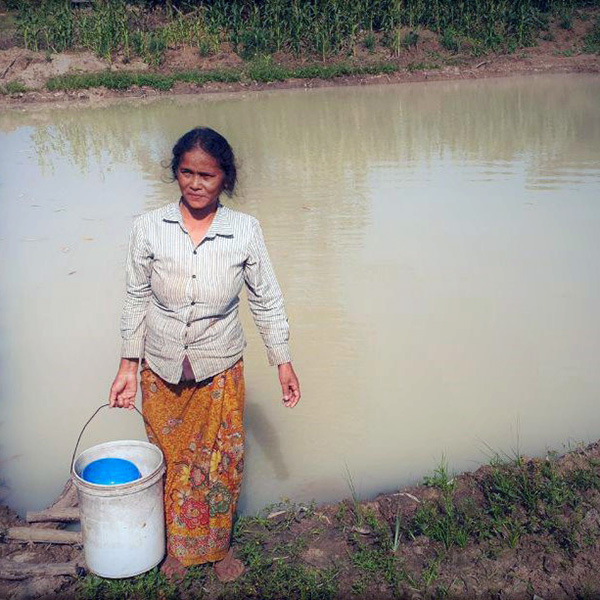
Water access is a huge challenge for the 244 families who live in Boeung Snul village in Cambodia. In the dry season, families are often forced to buy bottled water in order to make it through the driest months. They can’t afford the bottled water, so they use as little as they can. It still means a financial burden, just to survive.

Unfortunately, this is a pervasive problem in rural Cambodia. CWS and our partner, the Association for Development and Our Village’s Rights, are working with villages like Boeung Snul to dig ponds. Families provide the labor and small cash investments, and CWS provides the rest of the funds as well as technical support. Together, we dig ponds as needed.

Once the immediate challenge of just having enough water has been met, we also provide information about the importance of using clean water. We talk about boiling water for safety or using filters, especially for cooking and drinking. Families also learn about proper sanitation and good hygiene, which are now possible because of the water access. They can now better prevent water-related illnesses. 

Poeun Teng lives in Boeung Snul. Her family teamed up with 18 others in her neighborhood to dig a pond that’s about 5,400 square feet. Thanks to support from CWS, Teng says, “We are most grateful that we are no longer burdened with the expense of buying water.” 

Helping families attain their basic rights to water and sanitation is a core part of our work in Cambodia, and worldwide. Digging ponds like the ones in Boeung Snul is one of several ways to make this a reality.


Stories of Change


Marciana harvesting in her home garden.

A big first step towards self-reliance in Timor-Leste

At only 20 years old, Marciana has faced a lot of challenges. She got pregnant when she was in high school and had to drop out. She married her son’s father, but he left her after a short marriage.

As a single mom, Marciana took her son and moved back in with her parents. And her 11 siblings. 

Unfortunately, the family is very poor and no one has been able to get a full-time job. They rely on subsistence farming; they grow corn, cassava and pumpkins. But they didn’t have the information or training to farm effectively. They usually just scattered seeds on the side of a mountain near their home and hoped for the best.

Because of the family’s extreme poverty and vulnerability, our team in Timor-Leste invited them to participate in our Timor Zero Hunger program. It was an offer of a hand up, but not a handout. 

In early 2019, Marciana joined a CWS information session about better, more modern farming practices. She listened attentively and joined other participants to practice making organic pesticides, fertilizer and compost in a community demonstration plot. She told us that she enjoyed working on the demonstration plot so much that she decided to team up with some of her neighbors who maintain another community plot closer to her home. She could borrow tools from that community plot to build her own garden near her house. 

Now, with access to better tools and the knowledge of better planting and caring techniques, Marciana has a large garden. “I planted the vegetables the way I learned in the information session, and was surprised to see that a few seeds could go such a long way,” she says. 

Her hard work is already paying off. Her garden had enough vegetables for her family to eat every day during the harvest season, and she even had some left over to sell to her neighbors. She earned $10 from these sales, which she used to buy milk and other nutritious foods. She bought fish and other vegetables for her 2-year-old son. 

While she still has a long way to go to achieve true economic stability, Marciana is the kind of person who we’re proud to work with. She’s hard at work building a better future for her son, her family and her neighbors. She’s already using her new knowledge about how to save seeds to plan her next planting season. We’re excited to continue to work with her, and likely other members of her family, as they reach a new level of self-reliance.


Stories of Change


Emiliani and her daughter in their garden.

Flourishing vegetables, even in the dry season, in Indonesia

Emiliani, 44, lives with her family in Balombong village, Indonesia. Like most of her neighbors, Emiliani’s family relies on farming to earn a living. Increasingly, though, changing climates are affecting their harvests, and families like hers need to adapt.

CWS has a program called DREAM in this part of Indonesia. It stands for Disaster Risk Reduction through Enhanced Adaptive Measures, and it focuses on helping farming families build their resilience. The program is grounded on the idea that families who have economic stability are less vulnerable to bad harvests or other unforeseen challenges. 

Our team supports community savings groups, including the one that Emiliani joined in 2018. It’s called KSPP Anggrek, and it’s run by women in Balombong. These farmers each contribute to the group and then can take out loans to meet basic needs, expand businesses or otherwise work towards economic stability. CWS primarily works with these groups by providing workshops about group organizational and bookkeeping skills.

“I never miss a group meeting because the opportunity to learn new things is so great,” Emiliani says. “Not to mention the friendships that bloomed within our group. With each passing month we continue motivating each other to grow our incomes.”

Keeping in mind that most of the members of KSPP Anggrek make a living through family farming, our team also shares climate-adapted farming practices with the group. Emiliani learned how to make organic compost, fertilizers and pesticides, and she watched the vegetables in her garden flourish as a result. She was so encouraged by this that she decided to also plant during the dry season, which most families don’t do. Now, Emiliani can sell her vegetables in the market or share with neighbors year-round. She made $54 from her first dry season harvest, and the other members of KSPP Anggrek took note. Others are starting to follow her lead as they seek stability for their own families.


Stories of Change


Doeun and many of her neighbors rely on the rice bank to help get through lean months when they may otherwise face food shortages.

Taking the first step in the journey to food security

Bou Doeun and her husband have eight young children. Theirs is an exceptionally large family in the rural village where they live in Cambodia’s Battambang province. 

Unfortunately, their family isn’t just exceptionally large. They are also exceptionally vulnerable. Doeun and her husband don’t own and land. With help from the local government and others, they built a small hut on some relatives’ land to live on. Like many of the poorest people worldwide, they don’t have an opportunity for regular employment, either. They make their living a seasonal daily wage laborers. While they can make $12 – $15 per day, their work is unreliable and seasonal. 

All this means that Doeun’s family never has enough to eat, and her children have no chance to attend school. 

In early 2019, our local partner and the village development committee noticed how much was standing between Doeun’s family and any chance at prosperity. They sat down with Doeun to talk about how to help her family and to figure out where to start. Because her family faces food shortages all year round, rice was a top priority. The first thing that we helped her do was join the community rice bank. 

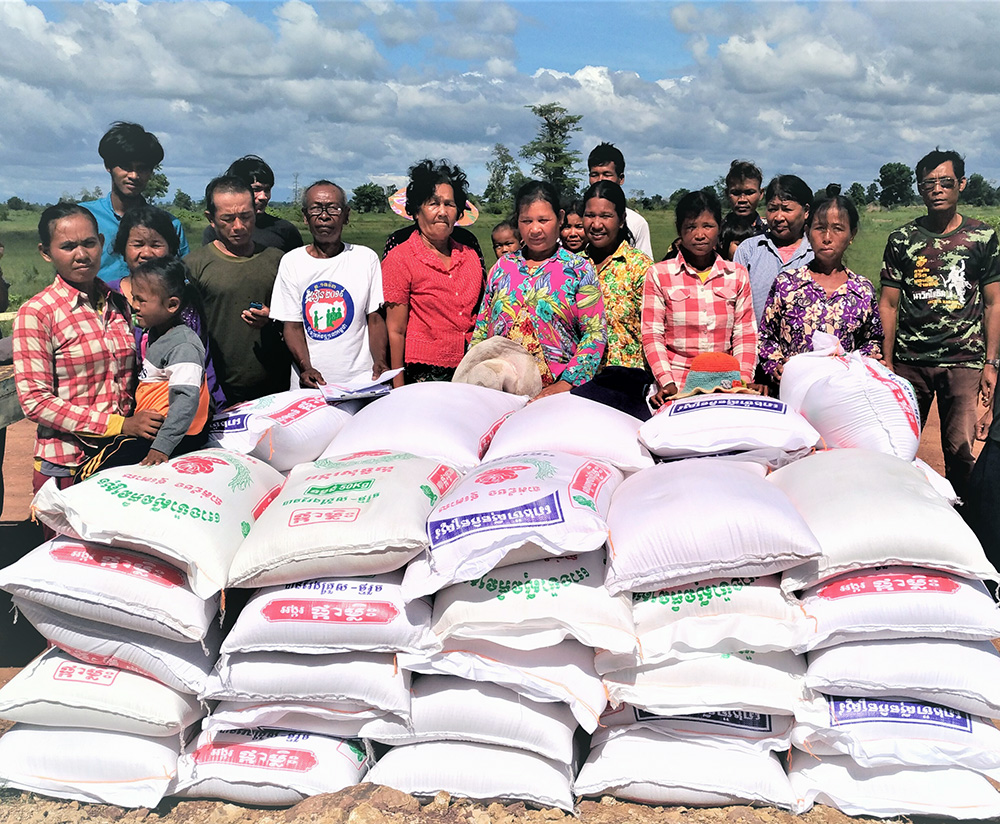
CWS and our partners support rice banks in many Cambodian communities. Rice banks are a key way for families to make it through lean times without having to rely on loan sharks – learn more in this blog. Doeun was able to immediately borrow about 220 pounds of rice for her family. She will repay the loan as her situation improves. In the meantime, though, she didn’t have to turn to a private money lender and steep interest rates to feed her family. Even better, she can spend the little money that she has to buy vegetables, cooking oil and other food basics. 

It’s just a first step, but it’s a significant one. With the immediate challenge of hunger in check, Doeun is looking forward to 2020. CWS and our partners are going to continue to team up with her family to find ways to help them become more secure. Doeun says she’s grateful for the help already received and feels hopeful for what 2020 will bring. 


Stories of Change


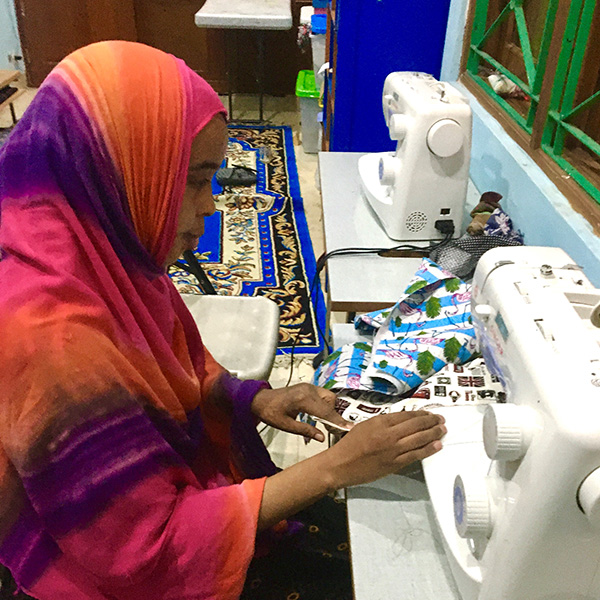
Farah sews in the common room of the group home where she lives.

Safety, medical care and classes for a young refugee in Jakarta

Ten years ago, 17-year-old Farah’s home in Mogadishu, Somalia, was burned down. Farah and her family were still inside.

Farah was the only survivor. 

She was severely burned and spent a long time in the hospital. And when she felt well enough to leave the hospital, her journey was just beginning. She knew that in order to be safe, she would need to make the long journey that many before her have made (and many since). Farah made the long air, sea and land journey to Jakarta, Indonesia–as hundreds of children, teens and families have done in the past decades.

Once she made it to Jakarta, Farah lived in a Somalian community and felt a sense of peace. Unfortunately, the lingering effects of her burns and the stress of being in a new place on her own made her sick. With no money to afford a hospital visit, Farah’s only option was to bear the pain. Then another Somali refugee told her that she could register with the United Nations refugee agency, UNHCR, and explain her health situation. Farah was optimistic about getting help. 

Soon after she registered, the UNHCR referred Farah to CWS to live in a group home that we host for single women and girls who are seeking asylum or who are refugees. The house is call ASPIRASI, or Aspiration. At first, living in a home with so many women and girls from all different backgrounds was a challenge. Her housemates were trying to be nice and ask her about herself, but Farah remembers, “I had to keep reliving my past, and everyone kept asking me about my burns.”

So at first, Farah was just glad to be safe. But as CWS social workers helped her adjust and receive the medical treatment she needed, she began to feel more at home. Eventually, a social worker suggested that Farah may want to take some classes. She signed up for quite a few of them: English, Indonesian, math, science, computers and sewing! 

Today, Farah says she enjoys the classes. What she’s most grateful for, though, is to have a safe place to live and access to medical care and counseling. “I finally feel like I have a chance to improve myself,” she says. “While I still get anxious, I can better handle the questions and stares when I meet new people.”

Like all the asylum seekers and refugees living in CWS-supported group homes in Jakarta, Farah left her home country under duress and out of fear. And like her housemates, Farah hopes for a better life. The resilience and passion for a new life inspire our team in Jakarta every day. Through the Protecting Urban Refugees through Empowerment program, CWS supports activities and services, including counseling and basic health care, to help hundreds of people live lives of basic dignity and safety as they seek to sort out more positive and productive futures.


Stories of Change


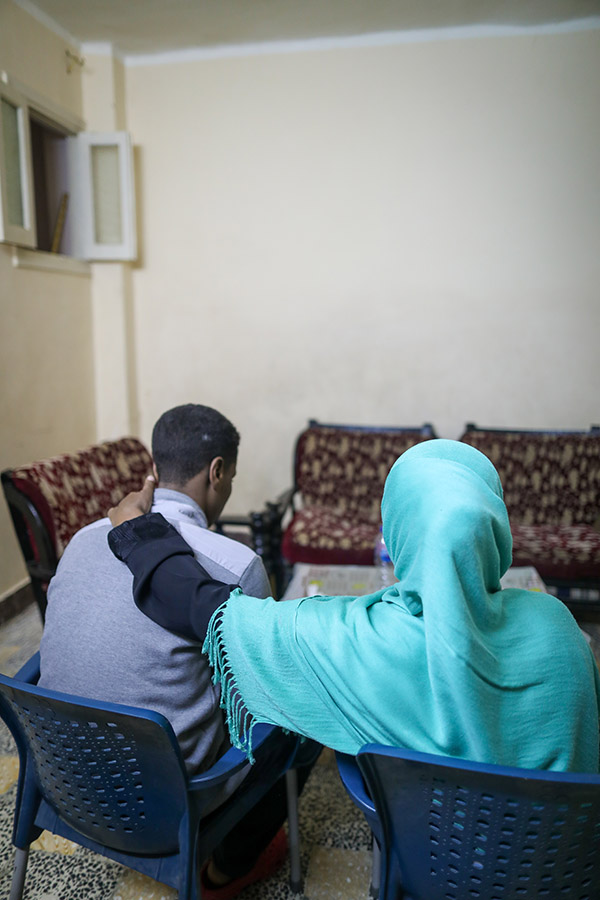
Fatima and her son in their home.

A Mother’s Resilience in the Face of Mounting Odds

It’s dark inside Fatima’s apartment in Cairo. She always keeps the shutters and doors closed, and everything is always locked. It’s for security that her apartment resembles a fortress. But it’s not to keep anyone out.   

Sadly, it’s to keep someone in.  

Fatima’s 21-year-old son, Anwar, has autism and other health challenges. He loves to look out the window at the world around him. But he doesn’t understand how to manage the window safely, so he tries to climb out of it when he has the chance. Day and night, he wants to get out the window and into the world. For his mother, it’s exhausting. “I haven’t slept comfortably in two years,” Fatima says. Fatima must watch him constantly for his safety.  

Fatima is from Eritrea, where she was married to a soldier when their son was born. When Anwar was three months old, his father was killed. The pension his family received after his death wasn’t enough to live on. And when Anwar was 5 years old, he was diagnosed with autism. In Eritrea, both men and women are expected to serve in the military. Eventually the government demanded that Fatima take her husband’s place. She wouldn’t serve in combat, they said, but she needed to learn how to use a gun and have one to defend her family and work as a guard. They suggested that she leave Anwar with relatives while she worked. She couldn’t leave her son that much, so she took Anwar and fled the country. 

For two years, the duo lived in a United Nations refugee camp in Sudan. Then they joined a group of people who were heading to Egypt with smugglers. When they made it to Cairo, she lived with the same people she had traveled with. But after a week or so, she no longer felt comfortable. She knew that she and Anwar were becoming less and less welcome because of his autism. She went to the UNHCR office, and they expedited her registration process. Soon, she was able to get cash assistance and a connection to another organization that helped her get her first apartment in Cairo.  

Unfortunately, it was just the beginning of the instances where Fatima and Anwar would be unwelcomed because of his autism. Anwar claps frequently and regularly, which has led to complaints from neighbors. In their second apartment, Fatima paid a security deposit when they moved in. Soon, though, Anwar tried to grab the ceiling fan. When their landlord and neighbors heard, they asked Fatima and Anwar to leave despite the deposit. Once when Fatima opened the windows, Anwar fixated on a woman nearby. She complained, labeling him as creepy. Often, when landlords hear about Anwar’s autism, they suddenly don’t have any space available for rent.  

Some people in Cairo are understanding about Anwar’s special needs, but many more are not. It has led to some violent and scary situations. Once when they were riding the metro, Anwar got tired. He pulled a girl out a seat and sat down to rest. The girl’s brother beat him. Another time, Anwar was tired and rested his head on the shoulder of an Egyptian man standing next to him. The man slapped him. One day, Anwar had a seizure in the middle of the street. Now that he’s an adult, Fatima couldn’t move or carry him on her own, so it was harder for her to help him.  

In talking to Fatima, it’s clear that her desperation is growing. One bright spot in her weekly routine, though, is the support group she attends for refugee mothers of children with special needs. This group takes place at St. Andrew’s Refugee Services, or StARS—CWS’s partner in Cairo. She says the group is useful. It’s better than staying at home and overthinking all of the challenges she’s facing, she says. It’s a safe place to vent with other people who understand what it’s like to have a child with special needs. The information and materials that the StARS team provides in the sessions are helpful, too. Fatima’s only complaint? She wishes the group would go on even longer each time.  

Ultimately, Fatima’s story is one of a mother’s resilience in the face of mounting odds. Many of the mothers in the support group have the same stories of being unwelcome or unable to give their children the care that they need. They are everything to their children; caregivers, providers, advocates. We are proud to support StARS as they give these weary parents a bit of respite to feel both seen and heard.  


Stories of Change


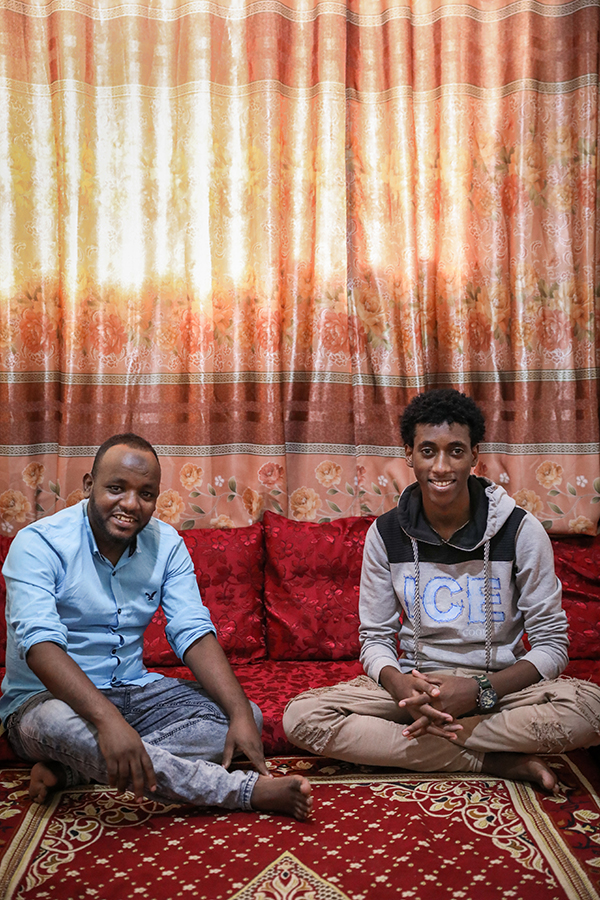
Abdulaziz (right) and Mumed in their home.

After years of hell, hope for a young refugee in Cairo

Abdulaziz Ibrahim has been through hell.

You wouldn’t know it by talking to this gentle 18-year-old. When members of our team visited him at his home in Cairo a few weeks ago, he was quick to offer a smile and to share his meal.

It was heartbreaking, then, when he told us about the horrors he has lived through to get to this point.

Abdulaziz fled his home country of Ethiopia during unrest in 2016. Like too many children and teenagers in violent areas around the world, he was alone—desperately seeking safety with limited resources and help.

It was four grueling months between when Abdulaziz left his home in Ethiopia and when he arrived in Cairo. The smuggler who was “helping” him extorted him near the Ethiopia-Sudan border, demanding huge amounts of money, taking some of his few possessions and locking him in a house even though Abdulaziz was hungry and dehydrated. Abdulaziz escaped, but he was found, sent back to that house and tortured.

When the smugglers finally let him go, Abdulaziz was on his own with no food or water. He walked until he found sympathetic people who gave him food and tea even though they didn’t speak his language. “There were some Oromo working in the area, so I approached them,” Abdulaziz says. They helped him get a haircut and new clothes. If he stayed in Sudan and was caught, they told him, he would be deported back to Ethiopia. So they helped him find a new smuggler to get out of Sudan. Abdulaziz made his way to Egypt and eventually found a community of people who spoke Oromo. They helped him register with the United Nations Refugee Agency.

But things didn’t get much easier in Cairo; he didn’t have enough money to get by. When he was approached in a café and offered a job in an area far from Cairo, he took it even though it meant going with another smuggler in a group with more than 100 people. They left in the middle of the night. He was told not to talk, not to breathe, not to make a sound. Then security forces found them. The smugglers fled, leaving Abdulaziz and the others to be captured. The group was rounded up and asked for identification. Abdulaziz was sent to prison. “It was a difficult situation,” he says. “They only fed us once a day, and there was nothing to sleep on.” When the officials realized that Abdulaziz was still 17, they released him. He begged one of the first people he saw for money and got enough to get a ticket back to Cairo.

Back in Cairo, Abdulaziz learned about CWS’s local partner, St. Andrew’s Refugee Services (known as StARS). “I came to StARS and asked for an education,” he says. “I got it, and they helped me. I started to study, and then they helped me with a distribution [of supplies]. Then they told me they could help me find someone to live with. They gave me a caseworker, and I can ask her for help if I have a problem. I started to live my life, and to take an English course.”

There aren’t formal foster programs for unaccompanied refugee children in Cairo, and the number of refugee children living on their own in the city is growing. That’s why StARS has set up a community hosting program that matches unaccompanied refugee children with adult refugees who are willing to give them a safe and welcoming place to live. Hosts are screened and vetted. They do not get paid, but StARS helps them make improvements in their homes to make them more comfortable for both the host family and the refugee child moving in.

Abdulaziz was matched with Mumed Yusuf Ali, who is also an Oromo refugee from Ethiopia. They have been living together, along with Mumed’s wife, since July 2018. Finally, Abdulaziz had a constant support in his life. “I told him that I’m his brother, and we can stay together forever. I will share with you whatever I have,” Mumed says. “We have become family.”

Once Mumed had signed up to be a host, a team from StARS came and checked out his home. They bought a fridge, washing machine and fan to make it more comfortable, and they even paid for the maintenance when the fridge broke. They conduct a monthly follow up to make sure everyone is happy with the arrangement, and Mumed and Abdulaziz each have caseworkers at StARS who they can talk to if they are uncomfortable.

After the trauma that he suffered, it wasn’t always easy for Abdulaziz to get used to having a stable home environment again. “I always remember what happened on the journey and how I faced a lot of problems in my country and on the journey. Since I was 14, things have been hard and I haven’t had anyone to support me. I haven’t been given a good life,” he says. “I had psychological problems. I couldn’t sleep. I couldn’t eat because I would remember. I left home for three days and sat in cafés. Mumed called StARS and then found me and brought me home. He supported me and gave me emotional support.”

Today, Abdulaziz is doing much better. He is happily living with Mumed, and they continue to be a family even now that Abdulaziz is now 18. He also has a psychological caseworker through StARS to help him to continue to make progress. “StARS supported me in a lot of ways. Without StARS, I’m sure that I would be homeless and would have lost my mind,” he says. “They have supported me more than my family could, and they took me away from my problems.”

Young people like Abdulaziz arrive in Cairo every day, scared and far from home. Many do not speak Arabic and have a hard time making a life in Cairo. Most have had difficult or traumatizing journeys. That’s why StARS has a new center that specializes in support for these young people, with counseling, classes, support groups and more loving care. We’re proud to support them as they ease some of the burdens that are weighing heavily on thousands of young shoulders.

Stories of Change


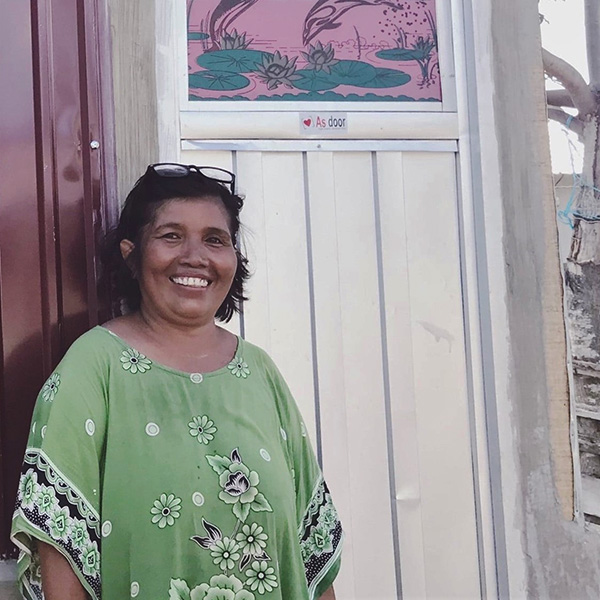
Nurila stands in front of her family's new bathroom.

The finishing touch on a transitional shelter: a new latrine

Nearly 25 million people in Indonesia do not have toilets to use. Instead, forests, fields, rivers, streams, ditches, canals and even streets become makeshift bathrooms. Not only is this an affront to dignity, but it also poses health risks

Since the deadly earthquake in September 2018, many families in Central Sulawesi have joined this statistic. The disasters there left many families without access to proper toilets. 

Since early 2019, the CWS team in Central Sulawesi has worked with hundreds of families to build transitional shelters. Nurila’s family was one of 228 that built transitional shelters early in this phase of our response. Of course Nurila was relieved to have a roof over her family’s heads. But something was missing. Her family didn’t have a latrine. She worried because there was a danger of snakes and animals in some areas. Instead, she would walk to the riverbank or oceanside because it was easy to wash up afterwards and there were bushes to hide behind. This made it a bit less humiliating, she told us.

Our team knew that Nurila’s concerns were common ones. We met with community members and determined that increasing access to toilets was an important priority. We teamed up with a local organization called INANTA to work with 97 families to build household latrines. These families, which includes Nurila’s, live in two communities. 

Nurila’s family has completed construction on their latrine. She says, “We are glad to have our own toilet, so we no longer need to walk far to feel safe, especially at night.”

CWS continues supporting recovery work with families around Palu with a growing focus on cash transfers to families to they can build their own transitional shelters and toilets with CWS technical assistance, but with the dignity of a hand up and no more hand-outs. These are, of course, vital in early response action after a disaster. But sooner rather than later, families are always grateful for the chance to return to lives of self-directed recovery.

Watch a video about latrine building in Central Sulawesi here. 


Stories of Change


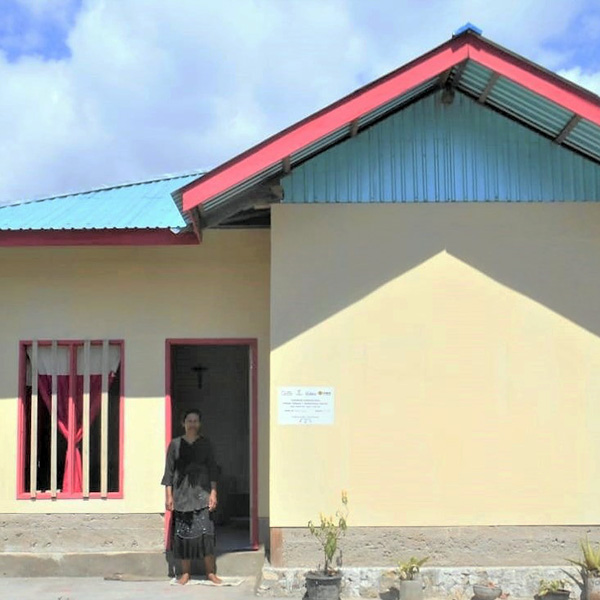
Delti stands in the doorway of her new home, which is considered a transitional shelter.

From rubble and a tarp to a transitional home

Delti watched as her house crumbled to the ground on September 28th, 2018, as a 7.8 magnitude earthquake hit Palu, Indonesia.

While she was running to find safety, all Delti thought about was how her life would change completely – if she even survived the disaster. Delti was one of about 212,000 people displaced immediately following the disaster.

She and her neighbors lived in makeshift tents until late November 2018, when they could finally return safely to their homes. Since Delti’s home was mostly debris, she lived under a tarp that was attached to one safe wall from her old house. She thought she would never have a proper home again.

However, the new year brought good news. In January 2019, CWS staff were able to tell Delti and 48 of her neighbors that they would be supported in building transitional shelters – small steel or wood framed, two-room houses – to get them out from under tarps and away from the ruins of destroyed houses.

Since January, when immediate, lifesaving response activities started to slow down and transition to recovery, CWS has focused on upholding the dignity of women and vulnerable people displaced by the earthquake and land liquefaction by prioritizing them for transitional shelter support. For months now, CWS has supported more than 320 families to build their own transitional shelters with CWS and partner technical support, starting with construction training so families could be active in construction. “I am happy to have learned how to help my own family,” said Delti.

Of course, CWS, our donors and partners are grateful for the thousands of Indonesian families like Delti’s with whom we have worked during the past year. Everyone who was able to do so has joined in their own recovery and rebuilding. This makes everyone hopeful for the likely success of our continuing shared work toward future resilience.

Watch a video about transitional shelters in Central Sulawesi here.