Stories of Change


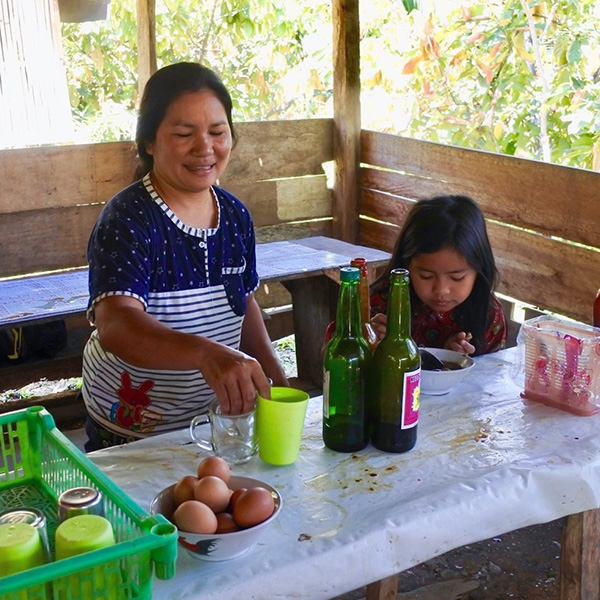
Surianti talks to her daughter about running a business...some day!

Building a business and building resilience in Indonesia

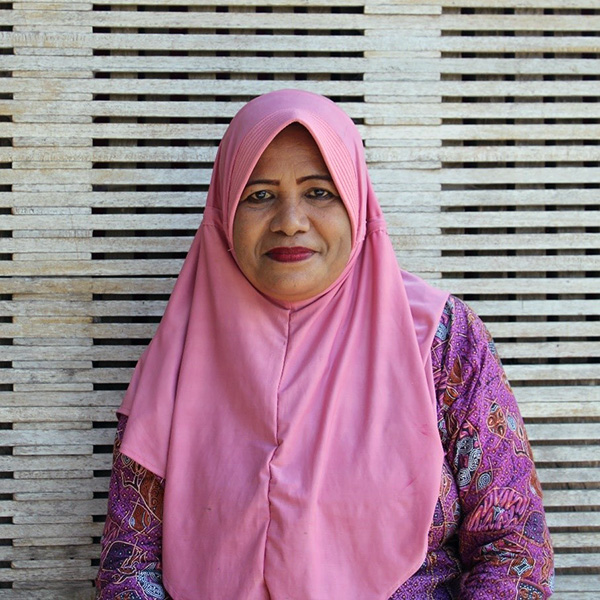
Surianti Makamban is an entrepreneur in a rural mountain village in South Sulawesi, Indonesia. In the past, Surianti and her family relied on produce from small rice and cocoa fields to support themselves. But their harvests were never enough to meet their basic needs.

Ibu Sari, a community leader, noticed how Surianti’s family was struggling and invited her to join the CWS DREAM initiative. DREAM, or Disaster Risk Reduction through Enhanced Adaptive Measures, helps families strengthen their resilience against natural disasters and climate change. One way that families can become more resilient is by diversifying their income. To this end, DREAM supports women in creating savings and loan groups where women support each other in building small businesses.

In January 2019, only three months after she joined a DREAM group, Surianti took out her first loan. “I had been talking to my husband about starting a noodle stand, but he never encouraged me by saying that we didn’t have money for such a business investment,” Surianti said. But with the Riwang women’s savings and loan group, she was finally able to buy what she needed with a small, affordable loan to start her business.

With a 1,000,000 Ruphia ($70) loan, Surianti bought noodles, spices, bowls, utensils and other supplies to open her noodle stand in the local market. By the third month, she was making more than $40 each month: “I was easily able to repay my loan, and put savings into the group,” she said. In addition to being able to save a little bit more money, Surianti is so proud that she can now buy her children’s school textbooks.

Recently Surianti borrowed an additional 2,000,000 Ruphia to expand her menu to sell meatballs with her noodles, and to buy a larger stove and pots. She also plans to move her stand to the middle school during the week. “By moving to the school, I can sell noodles every day for sure, and not just occasionally at the market,” Surianti said.

CWS staff have enjoyed watching Surianti’s dreams become reality and they look forward to watching her family’s resilience grow more as her business does.
Stories of Change


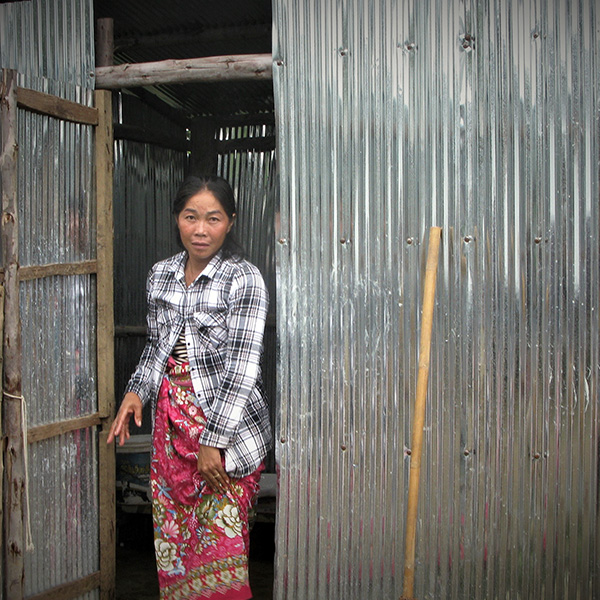
Sokny stands in the doorway of her family's new, private latrine.

“My family is poor so we could never afford to have our own latrine.”

Yos Sokny and her family don’t own land. Instead, they live on public land alongside railroad tracks in their western Cambodian village. It’s a very vulnerable situation for anyone, let alone a family with three children ranging from 4 to 17 years old. They primarily rely on the income that Sokny’s husband, Phan Daoy, earns as a duck egg incubator in another person’s business. He got this job just last year.

The $1,500 he earned in his first year is a significant improvement over what he earned as a casual laborer before, but it still wasn’t enough to meet his family’s needs. Sokny works as a casual laborer during rice sowing and harvest seasons, but she only earns income for a few months each year and only adds about $150 to her family’s income. 

Like countless other Cambodian families who face the challenges of being landless and poor, Sokny and Daoy took on debt just to get by. Eventually, they reached sad milestone of needing their oldest child, their 17-year-old daughter, to drop out of school and work alongside her mother as a casual laborer to contribute to the family’s income. Luckily, their middle child, a son, still attends school…for now. 

Our partner, Rural Development Association, recognized the family’s vulnerable situation. They scheduled a meeting with the family to talk about the types of work that they offer with CWS support and to understand how they could best work with the family. Because Sokny’s family doesn’t own land, they weren’t a good fit for the home gardening and livelihood programs yet. But as they talked, Sokny realized that her family could benefit from knowing more about improving their health and hygiene. She joined water, sanitation and hygiene activities and learned about water treatment options, personal hygiene and environmental sanitation. She learned about the health hazards of using fields or streams as bathrooms, which her family had been doing. With this new information, Sokny also received support to build her own sanitary latrine.

“My family is poor so we could never afford to have our own latrine. I am happy for the support so we can stop defecating in the open,” Sokny says. Not only is the family relieved of the embarrassment of such a humiliating situation, but, “We now see how the latrine and good hygiene have helped us improve our health.” She noted that her family members rarely get sick now, so they don’t spend as much money as before on clinic visits and medicines. These savings alone have also helped the family improve their situation. Now that the family has small savings and Daoy has a better job, CWS will continue working with them to see if there are other ways to help them improve their lives.


Stories of Change


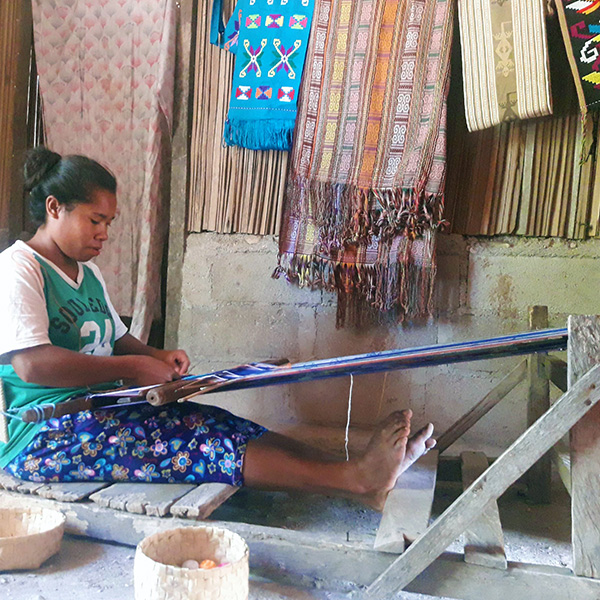
Mama Adela at work.

Weaving a brighter future for Adela and her family

Adela Missa, a 26-year-old mother of one, lives in a small village in West Timor, Indonesia. About five years ago, Adela decided weave shawls and blankets to sell and add to her family’s income. Unfortunately, she was not as successful as she hoped.

This was mostly because she did not understand pricing for value. If she couldn’t sell her textiles, she would discount them on slower days just to make a sale – even at a loss. With increasing yarn prices and the amount of time it took to make just one item, Adela admitted, “I was having a hard time making enough money to feel like the work was worth it.”

In November 2017, Adela and a few women farmers in her village, joined the CWS Berdaya – empowerment – initiative. One of the program’s focuses is supporting women to build their businesses wisely so then can increase their earnings. Earlier this year, Adela heard about the support Berdaya offers to develop businesses, so she joined skill-building sessions. She learned to dye yarn naturally and add text into her weaving, so that she had higher-quality, higher-value goods to sell. To improve her bottom line, she learned basic business management, including finances and marketing.

With her new knowledge, Adela went home and straight to producing naturally died yarn. When she finished her first scarf, she was nervous as she took it to the market to sell. To her surprise, she sold the scarf for double what she made on her old synthetic yarn weaving. While at the market, Adela was able to compare her work to others. “I am the only one in my village who knows how to naturally dye yarn. People see the difference in quality and prefer to spend more for my quality work,” she told CWS staff.

Berdaya was designed to empower women economically, and CWS is pleased to see that it has done just that. By diversifying her product, Adela shares that she is able to bring in, on average, an additional $21 each month. She shows us that knowledge and skills are empowering women throughout West Timor.


Stories of Change


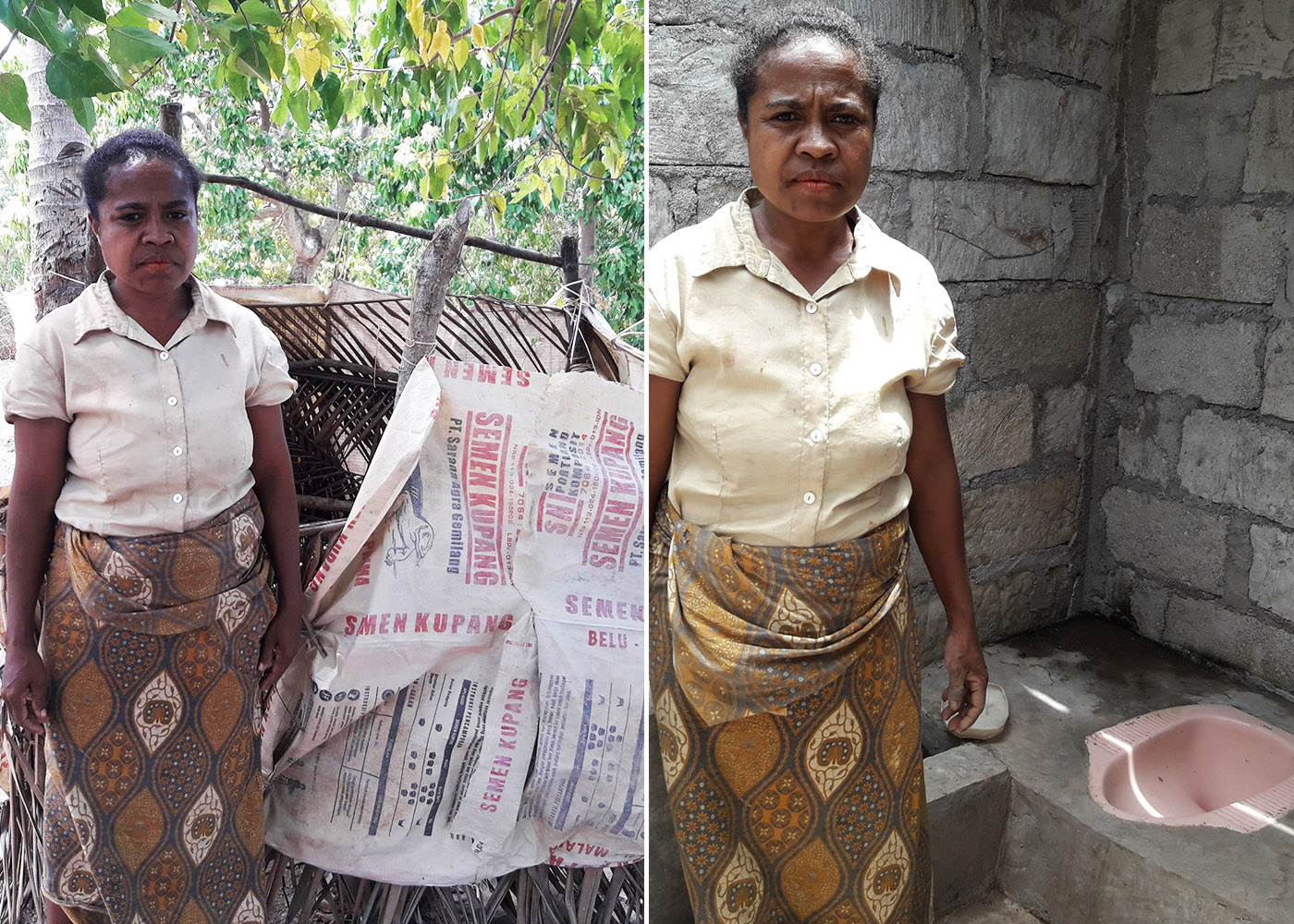
Mama Rosalina from Nitutoli with the bathroom her family used to use (left) and the new, sanitary bathroom they built with CWS support (right).

Water: check. Food: check. Next step: toilets!

Nitutoli is a small community in rural West Timor, Indonesia. We first started working with Nitutoli in mid-2017. Before then, the community’s only water source had been an unprotected spring about a mile from the village. It only produced a minimal amount of water; people would line up for an hour or two in order to get water, and it was only enough for drinking and cooking. It wasn’t enough for bathing or gardening. 

CWS team members were able to leverage $700 from a government-supported village budget in order to address this challenge. With technical advice from CWS, the community members used this budget to protect two springs. Now they have a lot more water–enough for bathing and gardening. These gardens are going a long way towards fighting hunger and poverty as families add homegrown, fresh produce to their diets. 

In the struggle to overcome hunger and poverty, access to nutritious food and plentiful water are key. But there’s another aspect, too, that underpins the health and prosperity of the village: sanitation.

Having better water access, along with encouragement from CWS, inspired families to improve their sanitation. Families have started building sanitary toilets to use; already nine of the 19 families we work with have made the switch. This is due, at least in part, to the community information sessions that our team has held alongside health volunteers. Families have a better understanding of the health and household environment value of sanitary toilets. 

Our team is so proud, once again, to see how an engaged community can mobilize to change their lives. 


Stories of Change


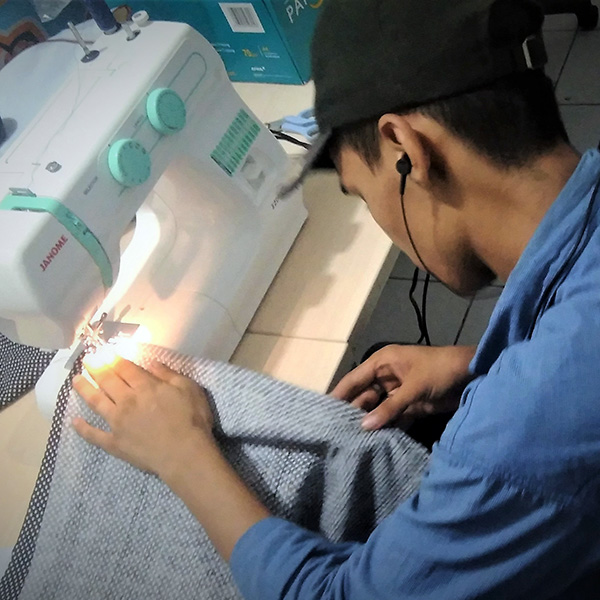
Ten boys joined a sewing class to prepare for independent living once they turn 18.

Skill building for independent living

CWS hosts unaccompanied refugee boys in five group homes in Jakarta, Indonesia. This is part of program named PURE, which stands for Protecting Urban Refugees through Empowerment. Many of the boys are teenagers who will soon leave the safety and support of the group homes as they turn 18. 

As the name of our program indicates, the PURE team works hard to support these young men to be prepared for independence. We provide lots of classes and opportunities for the boys to gain skills and training that they will need, including language and vocational classes such as hair cutting and sewing. We also offer courses on becoming interpreters for fellow refugees and asylum seekers who do not speak Indonesian or becoming teachers for their communities’ children and teens. 

Recently, 10 boys participated in a 13-class sewing course. They learned to make purses, wallets and shoulder bags. Bile, an 18-year-old from Somalia, was very excited about the opportunity, since it was one that he wouldn’t have had a chance to do in his home country. “Boys don’t sew [in Somalia] because it is seen as a ‘girly’ thing to do. But I really enjoy it,” he told our team. He says it’s a passion that keeps him motivated and positive, even as he grapples with the reality of living in a city thousands of miles from a home he will likely never return to. Bile says that he has always loved fashion, and the sewing class inspired him to create. He trades fashion ideas with some of the girls who are also in the class, and even has his own budding fashion line!

In addition to vocational classes, the residents of the CWS group homes join information sessions where they learn about topics as diverse as Indonesian culture, refugee rights, Indonesian law, healthy lifestyles, and drug abuse/misuse. As group home residents leave for independent living, these info-sharing sessions help a lot. But just case they need extra help transitioning, all the boys are given a CWS hotline number to call and are encouraged to stay in contact with CWS staff, who make sure that these young men know that they can rely on CWS if needed.


Stories of Change


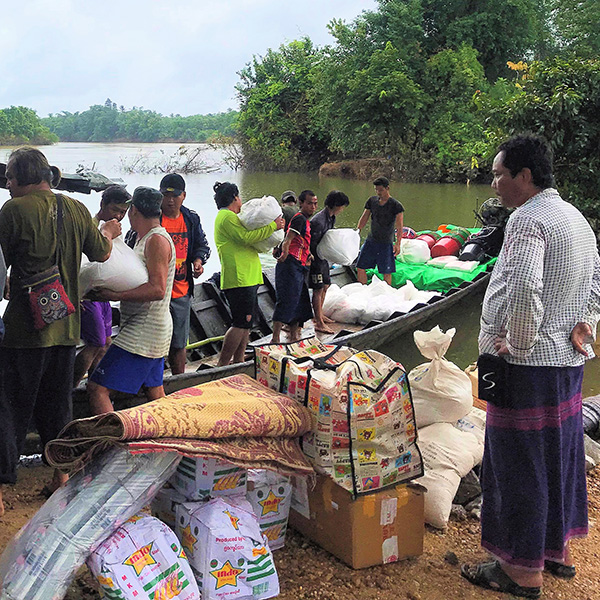
Community members unload relief supplies that arrived by boat.

Partnership for flood response in Myanmar

Our team in Myanmar partners with communities near the town of Maubin in the Ayeyarwady River delta. When disaster struck in a different part of the country, though, we joined the relief effort led by our ACT Alliance partners. 

During a two-week period in August, eight feet of floodwaters wreaked havoc in towns along the Zami River in Myanmar’s Karen state. Our ACT Alliance partner, Karen Baptist Convention, responded by coordinating a relief effort for 400 families. CWS joined the response, focusing on 187 people living in Htee Pa Htaw Hto village. In all villages where the KBC-coordinated response took place, families received a month’s supply of staples, including rice, oil, beans, salt and toiletries. This made it easier to cope with the disaster–this time.

Having relocated from another area of the country about 20 years ago, residents of Htee Pa Htaw Hto and nearby villages experience floods yearly. However, 2019 has been particularly challenging as extreme flooding destroyed farmland. August floodwaters damaged rice storage containers that held a year’s supply of rice. Paddy seeds for transplanting next season died as well. Lime tree orchards, rubber plants and sesame fields sustained heavy damage. As a result, there is much agricultural work needed to rebuild the area. But rebuilding is no unknown to families here.

During the last major flood in 2012, A Phoo Saw (grandfather) Oh Khu led recovery efforts. After a long career as a health assistant, he had retired. Then neighbors elected him as their village leader. So, in reflecting on the past, while appreciating CWS and KBC help, he expressed restrained happiness. “At present, we do not worry for our current basic needs because we received aid. I appreciate the support especially during a crisis like this.” He noted his happiness would be absolute once neighboring families received help, too.

Luckily, the rainy season began to taper off in September and there hasn’t been more flooding in the area. Replanting and agriculture activities can begin in earnest. And while the challenge of replacing the rice for replanting looms large, there is good news in the interim; thanks to the coalition who responded to KBC’s call for support, there have been enough supplies to support 245 people total in Htee Pa Htaw Hto.

Southeast Myanmar is far from Maubin. However, the appeal to help KBC in partnership with other members of the ACT Myanmar Forum for Action by Churches Together was one the CWS Myanmar team could not ignore. As we’ve seen time and again around the world, we stand stronger when we stand together.


Stories of Change


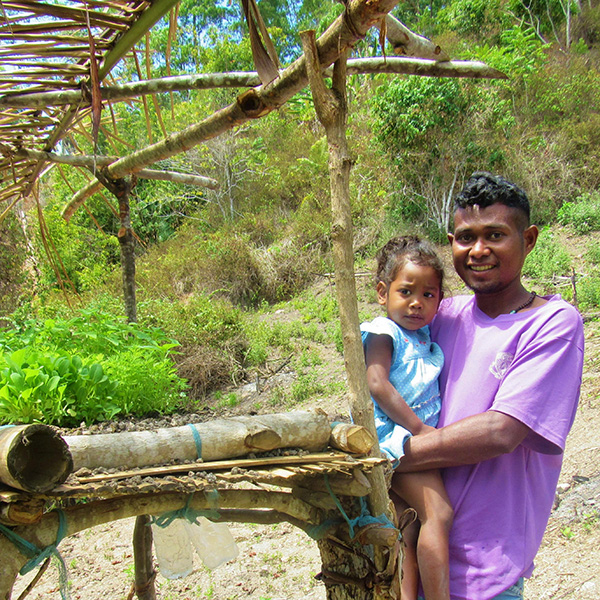
Afanso and his daughter near their raised seedling bed, which keeps the plants from animals and pests.

A resolute role model for his neighbors

Afanso de Jesus is a Village Delegate in a small mountain community in Liquisa, Timor-Leste. As such, he is a go-between for his fellow villagers and their leaders. He shares information, moderates and facilitates conversations and troubleshoots problems. Afanso receives about $60 semi-annually for his efforts. This is not enough income for his family to live on. So, he also has sold coffee, cassava, chili and other produce from his garden.

When Afanso heard that CWS would be working with his community, he saw another opportunity to support his family. The CWS Timor Zero Hunger program empowers families to improve the nutritional status of young children, and increase their incomes, by sharing information and material support alongside education and training.

As a Delegate, Afanso not only joined Timor Zero Hunger activities himself; he tried to get 15 of his neighbors to join him. For different reasons, they decided not to do so. Afonso was sad, but not discouraged: “Those who decided not to participate are my motivation,” he said. He wanted his success, which he was sure would come, to show his neighbors the benefits of joining with CWS to better their lives.

Afanso was always the first to show up to technical sessions and most active in using what he had learned. Access to water was difficult near Afanso’s garden, so he bought a hose and built a simple system to bring water to his garden. “I wanted to start planting as soon as I could, and I just knew that the investment would pay off,” he said. Now, only two months after planting, his land has turned from dry and barren to a lush garden. His neighbors are noticing, and Afanso has started sharing the new information and techniques he has learned with his friends and neighbors – taking his job as a Delegate to a whole new level.


Stories of Change


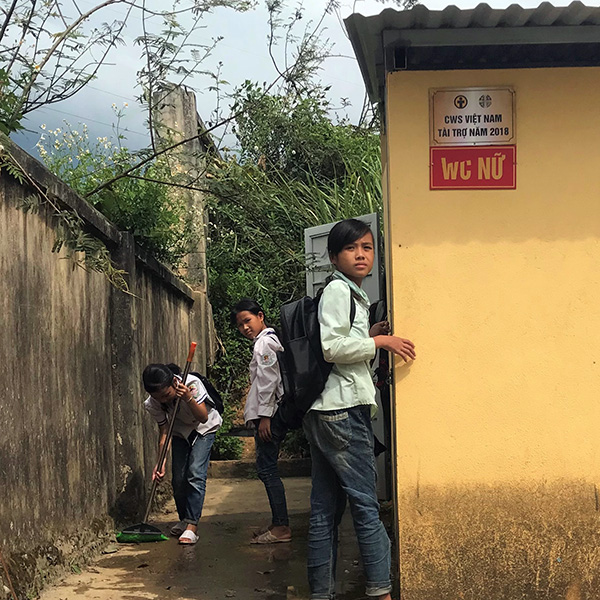
Students keep the area in and around the new bathrooms at Phuc Than Secondary School clean.

New toilets for 800 students in Vietnam

Van Thi Tan is a 15-year-old ninth grader at Phuc Than Secondary School in Vietnam. This is her fourth year at the school, but the first time that she and her fellow students have had clean, sanitary bathrooms to use. For years, Tan and the 800 other students shared a single toilet room. It was old, it was dirty, and it smelled awful. Girls would squeeze into the old stalls while holding their noses. Boys didn’t go into the bathroom unless they had to–they opted to go outside instead.

The contrast between the school’s high quality classrooms and the awful bathroom was stark. Sadly, this is a common situation for schools in remote or rural areas across Vietnam. The education department prioritizes classrooms and learning spaces. Schools follow the budget priorities that the government sets. So unless CWS or another organization helps build bathrooms, many poor schools simply don’t have them. 

To help address this situation, our team in Vietnam has helped renovate or build new bathrooms at three kindergartens and secondary schools in Phuc Than communes. “The old toilet is repaired and improved,” Tan says. “Now, every day we take turns cleaning our 24 new toilets to keep them clean and fresh. We thank CWS for giving us this change.” 

Our aim is to help more students, especially girls, to have safe and clean toilets. Thanks to generous CWS donors, many more Vietnamese students now have this improvement in their lives.

Story submitted by Mai Thi Quynh Giao, CWS Vietnam Finance & Administration Manager.


Stories of Change


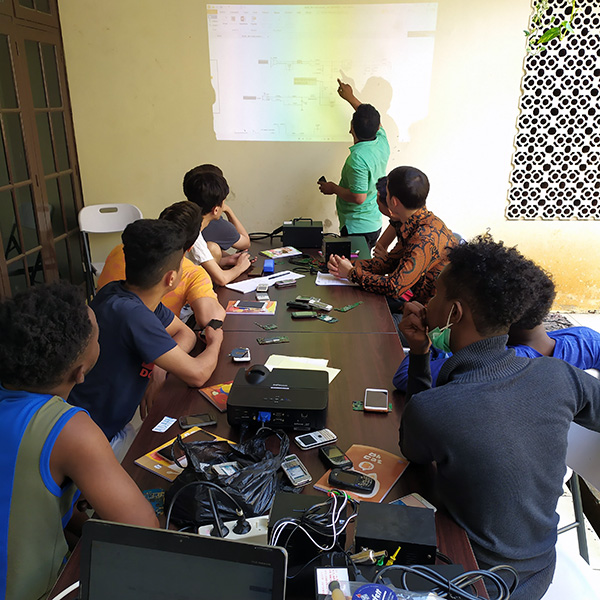
Roble and his classmates at a mobile phone repair class.

Settling in and getting to work for his future

Roble* was born in a small town about 15 miles from Mogadishu, the capital of Somalia. His family was part of a minority clan in a country where clan is an important part of your identity. His clan faced discrimination…and worse. Men from the area’s majority clan attacked Roble’s family and killed his father in front of the family. Roble’s cousin was afraid that Roble would be killed next, so he arranged for Roble’s escape. 

After a bus ride to Mogadishu, a flight to Malaysia and a boat trip to Jakarta, Roble–like hundreds of other asylum seekers before him–found his way to the United Nations High Commissioner for Refugees office. He registered for asylum and, because he was still a child, was taken to a CWS-hosted group home for refugee boys and teenagers. He was grateful for his safety and a welcoming place to sleep. More than that, though, he was grateful to see other Somali boys his own age in his new home. “I feel safer and more comfortable here than when I was back in Somalia,” he says.

Now that he has settled into his new home, Roble has enrolled in classes and is learning English and the Indonesian language. He also recently started taking a mobile phone repair class, which he excels at. It’s a tough class because there are small differences in all the different types of phones, but Roble is working hard to learn. “Mastering this skill will change my future for the better,” he says. He knows that having a relevant vocational skill will give him a way to earn a living and provide for himself, especially once he turns 18 and ages out of the group home. 

By offering Roble and the other boys in our care relevant vocational training, we are helping to ensure that they are prepared for their independent lives once they turn 18.

*Name changed to protect the identity of a refugee child.


Stories of Change


Volunteer health promoter Andi Tuo.

Encouraging habits for healthy living after a disaster

In September 2018, the area around Palu, Indonesia was struck by an earthquake, which triggered tsunamis and land liquefaction. It was a massive chain of disasters that families are still struggling to recover from. 

Andi Tuo lived in one of the dozens of villages that was devastated by the chain of disasters. For the last decade, she worked part-time in her village’s health clinic, where she shared health-related information at clinic events. So, when Indonesia’s Ministry of Health hosted a sanitation workshop in the area with support from CWS in August, Andi joined. “It’s part of our culture in Palu to help each other,” she said. “So being a part of this program feels natural to me.”

In her health clinic work, Andi saw the impacts of not having good sanitation systems or hygienic habits. “The most common illness I saw was diarrhea, especially in children and babies, which has long-term consequences,” she says. The prevalence of diarrhea was mostly related to sanitation issues like open defecation, and there is no waste management either. To add to this, many people forget to wash their hands on a regular basis.

Disaster survivors are facing many of the same challenges–only the challenges have grown as families have been displaced and are still recovering. Not unlike her work in her village, Andi’s new role is to share information at monthly community gatherings. The gatherings are open to all, but mothers are especially encouraged to bring their children who are 5 years old or younger. Some get immunizations, if needed, and all who join get weight-for-height and upper arm circumference measurements to track their well-being.

“One continuing problem is that not all mothers join us each month, and behavior change is not an easy task to accomplish even if everyone does join monthly,” Andi admits. Still, she persists and invites mothers to cook together to learn more about good nutrition and, importantly, to talk about their children’s health. Andi uses these gatherings to reinforce healthy hygiene practices; “At the last gathering, before we ate, I jokingly said, ‘Wash your hands first, or you will not get corn.’ The mothers all laughed, but it worked! They all washed their hands,” she says. 

Realizing that monthly gatherings are not enough, CWS staff, Andi, and the other Community Health Promoters are now forming weekly “Clean and Healthy” groups to increase the frequency of information-sharing, learning and changing daily hygiene habits. Together, CWS staff and community volunteers are hopeful that changes
will come, and families will be healthier as they continue their recovery from last year’s disasters.