Stories of Change


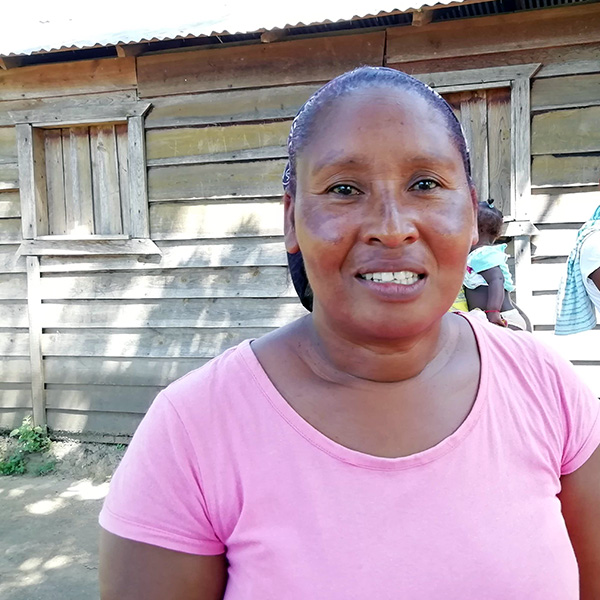
Sofia, president of the women's association Rancho Pedro Arriba. Photo: Adele Williams / CWS

“Now the women of Rancho Pedro Arriba have a plan.”

There are 27 families in the village of Rancho Pedro Arriba in the Dominican Republic, near the border with Haiti. For better or worse, these families have to work together to overcome the challenges with living in an extremely isolated community.

Even getting in and out of Rancho Pedro Arriba is tough. Public transportation stops once a day at a crossroad nearly four miles from the community. Four people here own motorcycles. When they are not working away from the village as security guards, they can give you a ride to the nearest town, but it will cost 500 Dominican pesos (about $9). When those four people are out of town, you’ve got to rely on either a mule or your own two feet to get where you need to go. And when it rains, cars and motorcycles can’t use the steep, muddy track. 

Working together to survive is a fact of life here. The women’s association has 16 members who team up to work for the benefit of the community and grow vegetables improve their diets. Sofia Ogando is its president. She remembers one time when the group of women had a good harvest of tomatoes; they walked to neighboring communities and sold their surplus. “Neighbors also came to buy in our community. We made some money that year,” she remembers. 

Now, that association is adding three new groups to their team. CWS, along with our partners Servicio Social de Iglesias Dominicanas and Growing Hope Globally, is planning to help the women make that tomato harvest the rule rather than the exception.

Together, we’ll be supporting the association’s members as they plant vegetables together. The program team includes experts who will spend time in Rancho Pedro Arriba, leading workshops and offering advice. Over the next three years, we’ll be there to help the community become more food secure. Hopefully, by the end of the program, the association members will be confident enough and will have the skills to start self-sustaining, income generating activities. 

We’ve got big dreams with Sofia and her association. And she believes that the program will strengthen the unity among the group so that they can achieve more together.

“Now the women of Rancho Pedro Arriba have a plan.”


Stories of Change


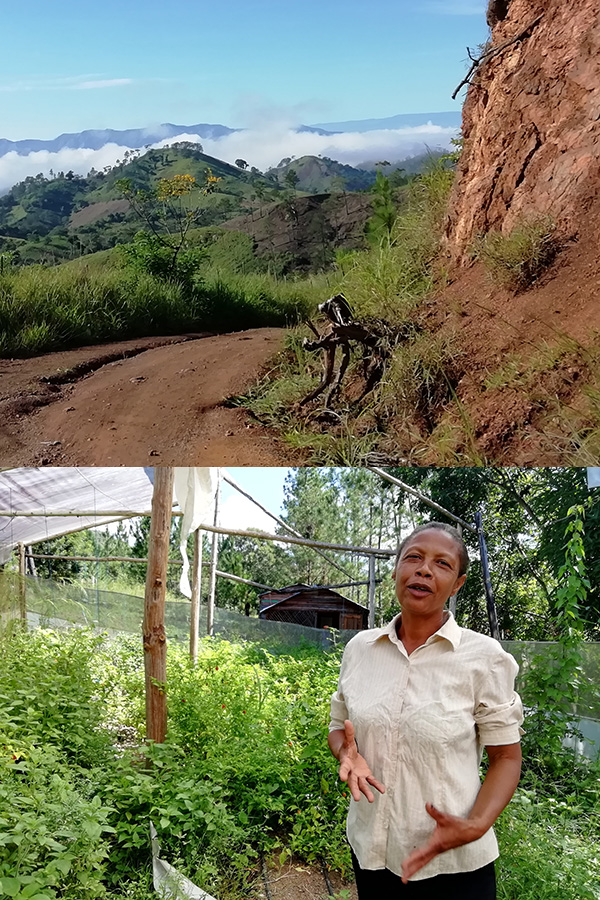
Top: the road to the village. Bottom: Francia in the Association's vegetable garden. Photo: Adele Williams / CWS

Fighting for forgotten communities in the Dominican Republic

The village of Cruz de Cabrera Abajo, near the Dominican Republic’s border with Haiti, is…forgotten. 

There’s no electricity here. Or phone signal. It’s 12 miles to the nearest town, and the access road is in bad shape. Most young people who grow up in Cruz de Cabrera Abajo leave in search of opportunities in the Dominican capital of Santo Domingo or other cities. That means that most families here rely on remittances and are managed by elderly family members who feel abandoned. 

While some community members make the journey to work as security guards, cleaners or domestic workers, most rely on agriculture to provide for their families. 

A local women’s association, named Asociacion de Madres Lorenza Rodriguez after a highly respected leader in the community, was founded in 1984. More than three decades later, they have never been able to complete all of the paperwork needed to legally register with the government for support.

Francia Morales Jimenez is the Association’s president. Years ago, her family donated land so that the association could build a modest meeting room. More recently, they donated more land to build a Casa Malla, which is a simple, mesh covered greenhouse that helps intensive vegetable production. This construction was funded by another international development agency. A couple of years ago, a tropical storm damaged the greenhouse’s roof and water system. It was never repaired. 

Francia grew up in Cruz de Cabrera Abajo, just like her parents and grandparents before her. She raised seven children here, four of whom have already left for larger cities. But Francia is determined to keep fighting for her home and her community. “Despite the difficulties, we move on,” she says. “Women must always find something to put on our children’s plates. A group of members of the Association just cleared land in the greenhouse and planted lettuce. The eggplant are almost ready to harvest.” At home, Francia is also doing her best to succeed through agriculture. “We are planting peanuts because they do better than beans,” she notes.

Alongside her neighbors, Francia isn’t giving up. And we’re going to help them out.

A new CWS program, launching in partnership with Servicio Social de Iglesias Dominicanas and Growing Hope Globally, is going to help this forgotten village on the path out of poverty. Over the next three years, we’ll be teaming up with Francia and her Association to help families improve their harvests and become more food secure. We’ll help them repair the greenhouse and bring it back to being fully operational. The experts on our program team, including two agricultural experts from the Ministry of Agriculture, will provide technical help and will lead classes and information sessions. We will also provide micro loans to families to help them get started. 

Cruz de Cabrera Abajo is one of 12 community organizations in seven villages in the Dominican Republic that will be participating in this new program. Roughly 250 members of community organizations, most of whom are women, will focus on financial literacy, business skills and learning about specific agricultural techniques that they can use to better provide for their families. Our goal is to help them become more food secure and to build their confidence to embark on self-sustaining income generating activities. 


Stories of Change


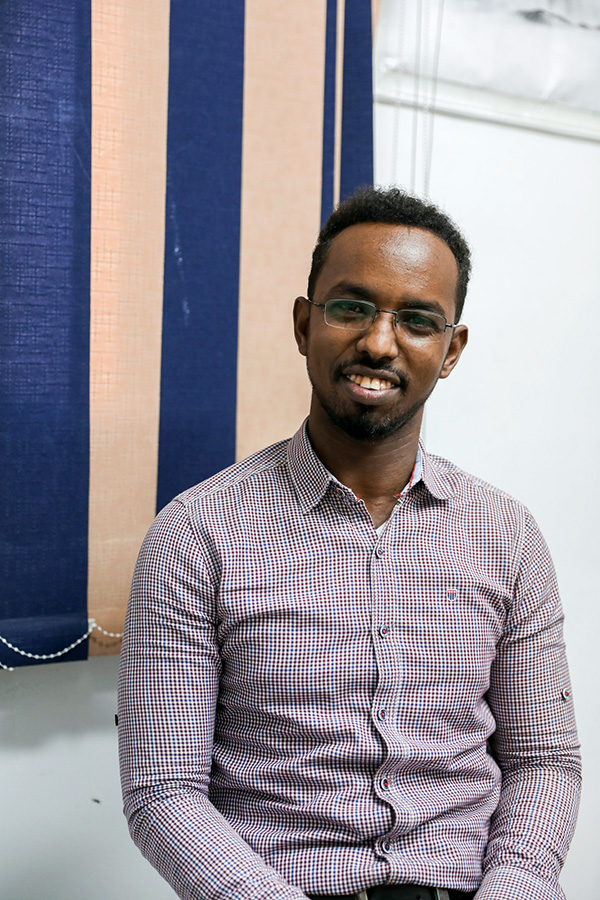
Abadir.

Refugees leading the way in Cairo

There are 25.9 million refugees in our world, according to the United Nations. That’s more than the population of Florida or New York, and nearly as large as Texas. All who have been forced to leave their home country. All hoping for a better, safer life.

They are doctors, accountants and entrepreneurs. Husbands and wives, parents and children. Millions and millions—more than half of all refugees—are children.

Refugees aren’t numbers. They’re people. And they’re people who have a passion for improving not only their lives, but the lives of everyone around them.

That’s the driving principle behind the Community Outreach Program at St. Andrew’s Refugee Services. St. Andrew’s, or StARS, is our partner in Cairo. They reach tens of thousands of refugees each year with education, medical, legal, counseling and housing programs. They can’t reach everyone on their own, though, which is why the Community Outreach Program focuses on strengthening local organizations in refugee communities.

Cairo is a massive, sprawling city. Within it are pockets of people from different backgrounds; for example, people from Somalia. These communities often establish grassroots organizations to build a school, establish a community center, or otherwise bridge gaps in the services available to their population. They are already delivering services when they begin to partner with StARS, but the team at StARS helps them be more effective and efficient. StARS offers organizational management training for leaders within these organizations, focusing on topics including data collection, project management, evaluating project success and proposal writing.

Refugees are leading these community-based organizations, and they’re leading StARS. Most StARS staff, including many members of senior leadership, are refugees. They understand the refugee experience in Cairo, because it’s the same reality that they face day in and day out.

Abadir is one of the StARS team members who focuses on supporting community-based organizations. He’s a refugee from Somalia who arrived in Cairo in 2012 when he was just 16 years old. His journey from Somalia to Cairo took two months that he describes as living in a horror movie. He was alone, having fled from his home and his family because the militant group al-Shabaab was hunting him. On his journey, he learned that you must trust strangers in order to survive, but you have to guard your trust and use it sparingly.

When he arrived in Cairo, Abadir turned to the Somali community for support. He spent a month living with other refugees who had been smuggled with him. He gathered as much information as he could about which organizations would help him. “Try to lift yourself up, and seek the right information, and you will get served by someone who can assist you,” he says. Eventually he got a caseworker in a refugee service provider. That caseworker noticed that Abadir spoke English well, and recommended that he take English classes at StARS. He enrolled, and thus his connection to StARS was born.

A handful of years later, StARS feels like home. He says, “Refugees can be the voice for refugees. That’s the thing that StARS is doing, when it comes to their hiring system or decision making – there are refugees. We as StARS are seeking more ways to enhance that for the future. That’s the thing that I really love, and I’m really encouraged to continue that. I would really love to be part of that, so that’s why I’m in.”

As Christopher Eades, the Executive Director of StARS, will tell you, refugees don’t just deserve a seat at the table. It is their table. They have the brilliance, the drive and the passion to address the challenges that they are facing. StARS and its community partners are simply giving them the space to be brilliant. And here at CWS, we’re proud to be part of that.

(On a related note, check out this blog about how the same principles are woven into our regional advocacy work in Latin America.)


Stories of Change


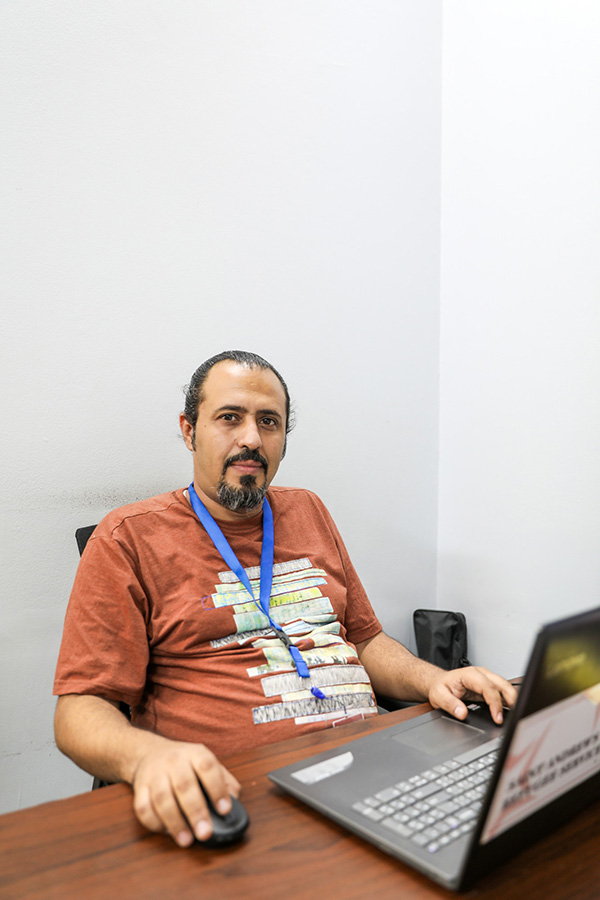
Wajdi in his office at StARS.

I fled war and corruption in Yemen. Here’s how CWS’s partner in Cairo has helped my family and me build a new life.

Told by Wajdi Mansour Al Mowafak, the Director of Finance at St. Andrew’s Refugee Services (or StARS) in Cairo. CWS supports StARS as they reach tens of thousands of refugees in Cairo each year with education, medical, legal, housing, vocational and other assistance.

Before the war, I was the audit manager for the Central Organization for Control and Auditing in Yemen’s capital city, Sana’a. I also had my own auditing firm where I had 10 people working with me.

Life was good. It was peaceful. I had my own home and my own car. Everything was very good.

Then the war started. My house was bombed by tanks in 2014. The government in the north couldn’t afford to pay salaries for government employees, so they stopped our salaries. We worked for a year without pay. Because of the war, many companies stopped requesting audit reports. I had to close my auditing firm, and life began to be really difficult without the firm or my government salary.

Then I was expected to audit the largest oil and gas company in Yemen. Oil companies are the most difficult to audit because most of the corruption is in this field. I discovered some corruption, and they requested that I not submit my report about it. When I thought about submitting this report, I thought about my co-workers. Two were killed because of auditing reports they submitted, and another had acid thrown on his face.

I was scared to submit the report, and I knew that I needed to leave the country. So I submitted it on a Friday evening and left at dawn the next day. I went to Aden, which is a city in the south of Yemen that still had an airport. There are only two countries that receive Yemeni refugees: Egypt and Jordan. It’s difficult to move to Jordan, so I chose Egypt.

In order to enter Egypt, I needed to have a medical reason. My father has Parkinson’s, so I brought him with me, along with my mother and sister. This also gave me a plausible reason for leaving that I could tell my employer. I left my family behind in Sana’a.

We took a bus from Sana’a to Aden, which took about 16 hours. We went through more than 100 checkpoints. At one of them, the guards told me to get off the bus when they learned that I worked for the Central Organization for Control and Auditing. They told me it meant that I was working for the regime in the south, and they told me, ‘Come down from the bus.’ But the other people on the bus, they said, ‘No, his father is sick. He can’t leave his father alone.’ Then the officer said, ‘Okay, but if your father wasn’t with you, I would take you to jail.’ All because I was working with the government.

We made it to Egypt in December 2016. It’s very difficult for non-Egyptians to find work here, especially for refugees. At first, I lived off my savings. Then I found a job with a company, but soon that company moved from Egypt to Dubai.

One day, I came across a Facebook post that said that StARS was hiring a finance officer. It was the first I had heard of StARS. I submitted my CV and cover letter, but I was surprised when they called me because I am a refugee. But they called me to come in and interview, and I got the job.

Meanwhile, my family was still in Yemen. They weren’t safe. When my office received my report, they tried to contact me about it. They threatened me, and they used my family to threaten me. I told them that I couldn’t come back. I said that my father was sick and that I needed to stay with him in Cairo while he got his medication.

After two years apart, my family came to join me in Cairo. Tickets from Yemen cost $1,200 each, and I have three children. I told my wife to sell some of our things to pay for the tickets. I told them that now that I had a job, we could all live here together.

I have been working for StARS for 15 months. Now I’m the Director of Finance and lead a team of six people. My son Mohammed is 15 years old now, and my daughters Alaa and Maria are 11 and 6. All three are students in the StARS school. They study science, math, Arabic, English…a whole variety of subjects.

StARS is a safe place. And when I want to see my children, I can just go down to the courtyard and see them. Sometimes they come into my office to get water or papers or something. And as students at the StARS school, they study with children from many nationalities and many religions. When you see the children here, they are all studying and playing together. It makes you wonder why as adults, as governments, we can’t act like these children do. They don’t think of religions between them. They don’t think of a variety of nationalities. They don’t think of discrimination. All of them play together. All of them laugh together.

StARS is a unique place here in Egypt. Most staff are refugees. So whenever someone supports or donates to StARS, they are directly supporting refugees. Even the funds that go towards paying staff salaries, they are going to refugees like me to help us live in this host country.

I miss Yemen a lot. I miss the weather, which is very beautiful. Yemen is very beautiful in general. My close family are all here in Cairo, but I miss my neighbors, my cousins and everyone back in Yemen. They are still suffering. I wish everyone knew how tough things have been there. The conflict has caused more than 300,000 people to die. Now disease is spreading. We have cholera. People are starving. Government workers don’t have salaries. The worst humanitarian crisis in the world is now in Yemen. People die from disease, from starvation and from war.

For a year after I came to Cairo, I was scared whenever I heard airplanes. In Yemen, every time we heard airplanes, we would hear and feel the bombs. When my children arrived in Cairo, it was the same thing. Every time they hear airplanes, they say, ‘Dad, they are bombing now.’

I am grateful, though, that my family is here now. My wife and children are safe. My salary from StARS meant that they could leave Yemen and be here with me, where I can see them every day. And StARS is an amazing place. It’s my first time working with so many nationalities and religions. No one asks you about it here. We just work together. We are one family, and it’s difficult to find that anywhere.

Watch a video about Wajdi here.

Stories of Change


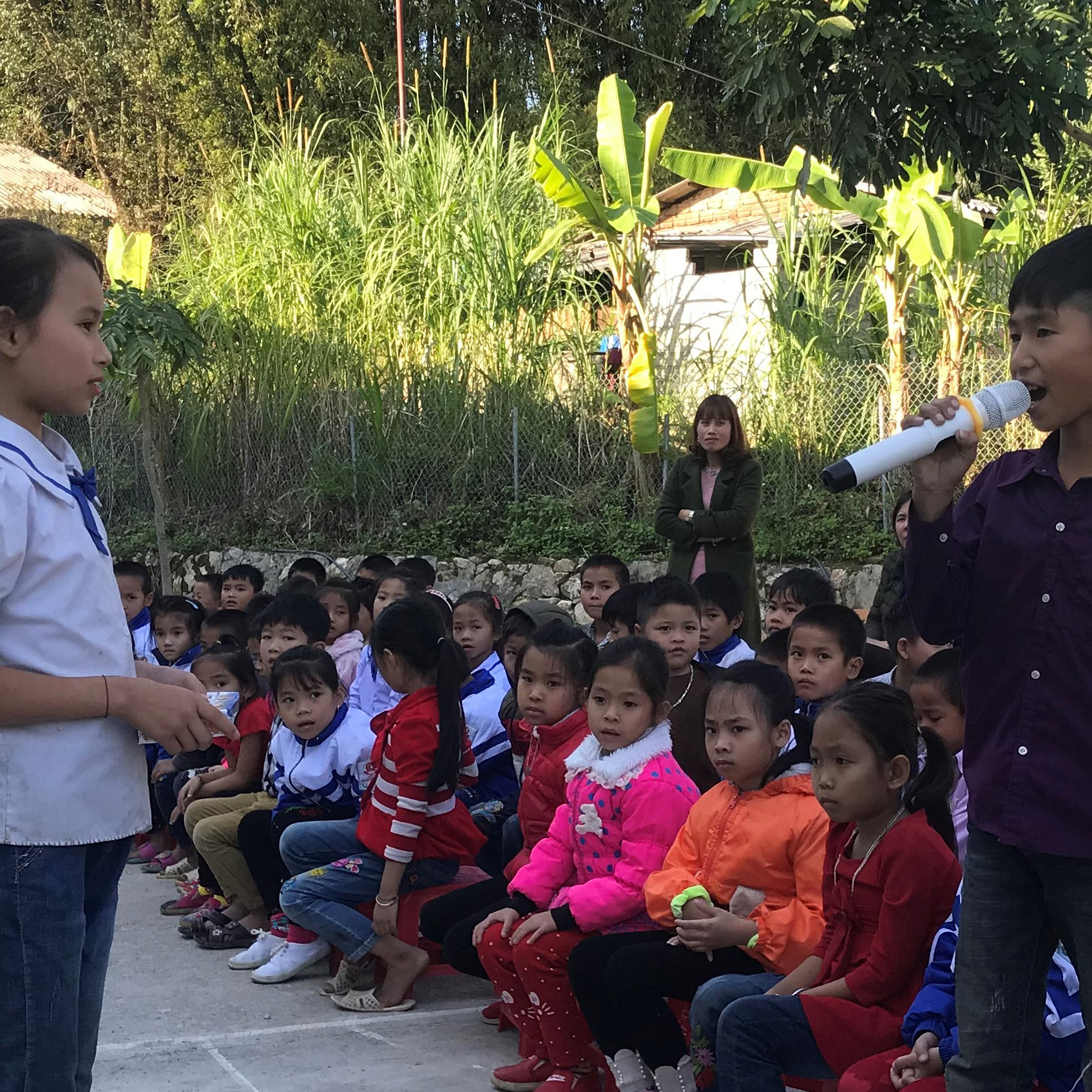
The student-led awareness-raising event about preventing human trafficking.

Students are taking the lead on sharing information to prevent human trafficking in Vietnam

Human trafficking is a risk in rural Vietnam, just like it is in many parts of southeast Asia. Criminal networks are strong and pervasive, as are poverty and vulnerability.

With support from the Evangelical Lutheran Church in America, our team in Vietnam partners with ethnic minority communities in northern Vietnam. We focus on a myriad of challenges, especially ones that affect children. Human trafficking is one of these challenges. 

Our team has helped students learn to talk to one another about the risks and warning signs of human trafficking. “In the past, only teachers gave lectures and presentations. Since you, ‘Teacher Thang’ [as she called our CWS colleague], came and taught us, we learned how to share information among ourselves and our friends. This is a very important topic for us, so we want other students to know. When we first started to learn how to communicate with confidence, all of us were afraid or shy to stand and talk to our school mates,” says Ha Ngoc Linh, a 5th grader at Muong Kim commune Primary School. 

Linh is a member of a group called the Communications Interest Group, which focuses on leading conversations with other students. “When you came to teach us, we learned how to lead awareness-raising discussions with other students,” she says. 

Linh, who is the oldest of three sisters in an ethnic Thai family, worked with the other students in the after-school communications interest group to organize an information session about human trafficking risks and prevention. The students organized the session themselves, from the beginning to end. Their knowledge of the topic, and their confidence in sharing information with their peers, was impressive.

Because peer education is a new concept at her school, Linh says that some students “were laughing and trying to embarrass us.” But it was only the listeners who were uneasy. “Now that we are more confident, we look forward to leading more activities like this,” Linh says. 


Stories of Change


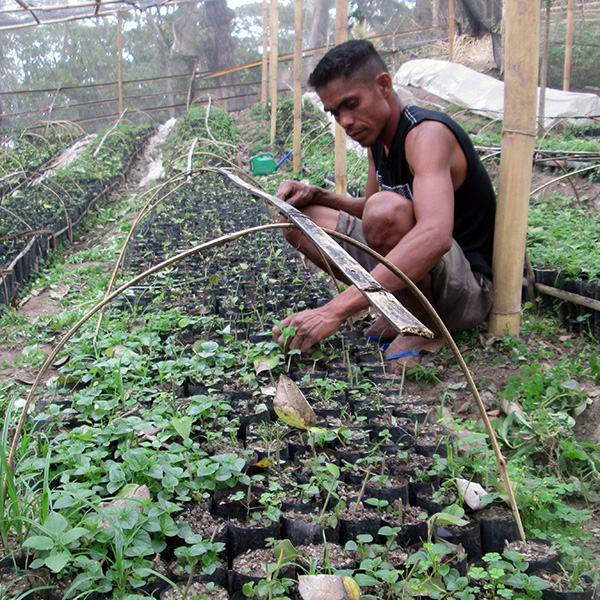
Hemen tends the pepper plant seedlings from the Ministry of Agriculture. Soon, families will raise them for a profit.

Water access opened the door for other opportunities in Timor-Leste

In September, we celebrated alongside the small, rural community of Maumetalao in Timor-Leste as they inaugurated a new water system. The celebration was about easier access to water, yes. But it was about so much more than that. It was about all of the new opportunities that water access opens up. We’ve also supported the community with information sharing and advice and support from experts as families cultivated 25 farm plots and two communal gardens. 

With all of this new infrastructure in place, the community was ready to explore new opportunities for earning an income. And it wasn’t long before one came along.

Representatives from the Ministry of Agriculture were also at the inauguration of the new irrigation system, joining the celebration for water access. They have partnered with CWS and Maumetalao for nearly two years. And they decided during the inauguration that Maumetalao would be an ideal spot to grow black pepper seedlings. These seedlings produce a valuable cash crop.

Now that people here have water access, they were willing to volunteer their own trees to support black pepper vines. And just like that, a new partnership formed.

The Ministry chose Hemen Gildo Gonsalves de Fatima to manage the new initiative. Hemen is a father of five who already works with CWS through our ongoing partnership. “We just added 14,300 plants to our greenhouse,” he said in October. Soon, the plants would be transferred to individual families. As Hemen noted, “This is a long-term investment that, along with water from the new tank, will help make the future a little brighter.”


Stories of Change


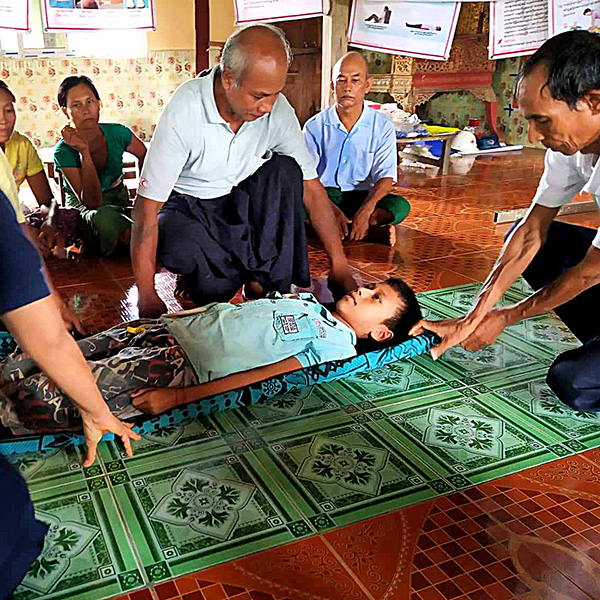
U Myint Swe shares first aid basics at a recent training session.

First Aid training has the potential to save lives in rural Myanmar

U Myint Swe has been helping drowning and bike accident victims since 1979 as a Red Cross volunteer. The 54-year-old retired police sergeant first earned a First Aid Trainer certificate in 1986, and then he went through a refresher course in 2000. Since then, he has led or co-led at least 30 basic First Aid courses with the Myanmar Red Cross Society. 

U Myint recently led a five-day, 35-hour First Aid training for three villages in Myanmar’s Ayeyarwady River delta region, where CWS partners with families and village leaders to promote community-based resilience and development. In all, 36 volunteers from Auk Htone, Bar Ma Nee and Ma Yan Kone villages joined the training event. Through instructor demonstrations, directing and coaching, everyone learned to dress wounds and treat burns/scalding and insect bites. The key topics of head injuries and CPR were also covered. Trainees completed a written, verbal and practical test at the end of the course. Four co-trainers led the course, and all participants were greatly appreciative for the chance to learn new, and reinforce known, information and skills.

Because many accidents and injuries happen around the house, U Myint believes First Aid skills are essential for every family, not just health care workers, firemen and emergency responders. And yet, it takes time and resources to reach every village family. Luckily, the Myanmar Red Cross–CWS partnership has made First Aid classes affordable and accessible to more villages, where certified trainers like U Myint thrive with engaged and enthusiastic trainees. Active participants fuel his motivation to make sure topics are easy to understand and practical to use because, most of all, skills must be memorable – and second nature – to use as needed.

U Myint knows from experience using CPR to save three drowning villagers that First Aid is a valuable life skill. He is thankful to CWS for ongoing support and collaboration with the Red Cross. “The most recent training was a success because trainees participated with enthusiasm, and we trainers were very motivated, So, it was worthwhile to feel tired,” he concluded.


Stories of Change


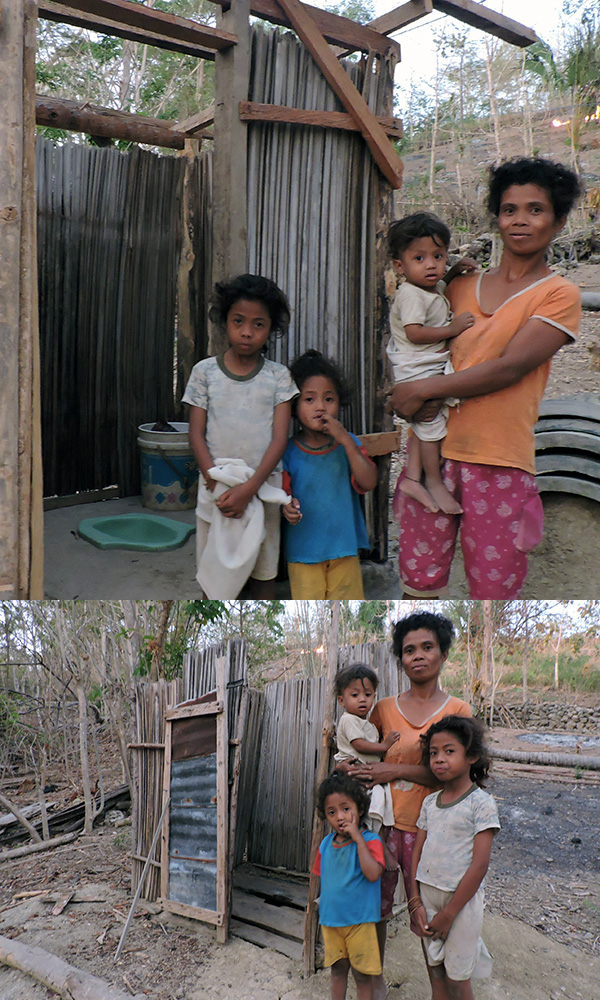
Top: Ercy and her family outside their new, sanitary toilet. Bottom: The family outside their old toilet.

A savings group means a sanitary toilet for Ercy’s family

Ercy and her family are struggling to overcome poverty. She’s a 33-year-old mother of three. Like most of their neighbors, her family relies on subsistence farming to earn a living, and she and her husband do seasonal construction work to supplement. Their income barely covers their basic expenses. 

In March 2019, Ercy had the chance to join a CWS information session about water, sanitation and hygiene. She learned about how having sanitary toilets would help reduce preventable health risks like diarrhea. Diseases stemming from poor sanitation and hygiene mean time away from work and more money and time spent on medicine and health center visits, all of which make hunger and poverty worse. 

Inspired by what she had learned, Ercy and her husband built their first toilet. But they didn’t have what they needed to succeed, and the toilet failed. “There was no cover on the pit, and the walls were not strong,” Ercy explains. The open pit, awful smell and falling-down bamboo walls all deterred her children from using the latrine. They continued to use fields and streams as bathrooms instead.

But Ercy knew that having a toilet was important for her family, and she was determined to find a way to build one that her children would comfortably use. They didn’t have enough money to buy one…until Ercy joined a CWS-supported savings and loan group. Suddenly, her hope for a sanitary toilet was within reach. Ercy and her husband began saving a little bit of their income each month, pooling it with the group’s savings. She also joined the group’s weaving class and began to make a small additional income with her new skills.

She was eligible for a loan from the group, which she could afford to pay back through her new source of income. Ercy and her husband used the loan to buy materials to build a quality toilet, which they finished in October. “My whole family now uses the toilet,” Ercy says. “My children no longer defecate in the open.” 

We’re proud to work with families like Ercy’s as they take the steps they need towards healthier futures. 


Stories of Change


Refugee and asylum seeking children take part in a cultural sensitivity information session in Jakarta.

Protection through information and vocational training in Jakarta

Our team in Jakarta, Indonesia, is on a mission to protect urban refugees through empowerment (which is why our program is named PURE). Protection often starts with making sure that refugees and asylum seekers have the information and skills they need to navigate life in an urban center thousands of miles from home, in a different culture. CWS hosts several group homes for young refugees and asylum seekers, but once they turn 18 they are no longer eligible to live in the homes. 

That’s why we focus on making sure that refugees are equipped to live on their own once they leave the group homes.

We provide a range of information sessions on topics ranging from healthy living (nutritious foods, exercise, avoiding drug abuse, basic sexual and reproductive health) to personal budgeting, cultural sensitivity, knowing their rights as refugees, Indonesian law, and understanding their neighbors’ culture and expectations. 

We also offer a range of vocational and skill building classes. A few of our most popular classes focus on the Indonesian language, sewing and tailoring, and professional interpreting. Indonesian language classes help everyone gain and essential skill for daily living in Indonesia, which most refugees will do for a long time. The sewing and tailoring classes are hands-on and experiential and can help develop an income-generating skill for a young adult.

The interpreting classes provide an opportunity for young refugees to serve as skilled interpreters for other refugees. Most refugees who arrive in Indonesia do not speak English or Indonesian, so they need help navigating many parts of daily life. In particular, interpreters are often called in to help newly-arrived refugees during hospital and health clinic visits. 

Afshin, who is from Afghanistan, is a great example of a young man using the interpreting course as the first step towards a hopeful future. “My English is good, and I can understand some Indonesian as well,” he says. “Since I will most likely stay in Indonesia for some time to come, I want to become an interpreter so I can help my community, especially when people need health care in clinics.” Often, clinic staff speak English like Afshin does.

The “How to Become an Interpreter” class that Afshin took at the group home was facilitated by our colleagues from UNHCR, the UN Refugee Agency. It covered the role of an interpreter, the different types of interpreting, interpreting demeanor and protocols. This information will help students behave professionally and respectfully, ensuring positive interactions and clear understanding. The final exam entailed each student playing the role of an interpreter for one of their role-playing peers. All 10 students passed and earned a Certificate of Completion. Although it doesn’t guarantee a job, it is a good first start for those who decide to apply for the official UNHCR interpreter training course.


Stories of Change


Taufiq sits outside of his school, where he participated in disaster risk reduction simulations.

Emergency preparedness in disaster-prone Indonesia

Taufiq and his family know all too well how devastating an earthquake can be. A series of earthquakes struck his village in Central Sulawesi, Indonesia, last year. “I was inside the house with my mother when the quake struck,” the 11-year-old remembers. 

Taufiq’s family and neighbors knew that an earthquake would likely lead to other disasters like aftershocks or tsunamis, so they fled to nearby mountains. When they returned home, it was to a scene of devastation. Thousands of people camped out in tents for months. “Before our village was destroyed by the earthquake, we had not received information on what to do when disasters strike,” Taufiq says. 

Indonesia is prone to disasters, so emergency preparedness is critical. That’s why CWS and our national partner, INANTA, have a program to help communities be more prepared. We recently held information sessions and disaster response simulations in Central Sulawesi, the site of the earthquake that Taufiq survived. One of these simulations happened at his school.

In a disaster, even basic information and protective actions can be life saving. During the simulation, Taufiq and other students practiced protecting their heads as a first measure, and then practiced evacuating. Now, Taufiq says that he feels more prepared because he knows what to do if his village experiences another earthquake. And the sad fact is that for his community, it’s likely more a question of when the next disaster will strike, not if.

CWS is proud to support at-risk communities, especially schools, in preparing to act quickly and wisely when disaster strikes.