Stories of Change


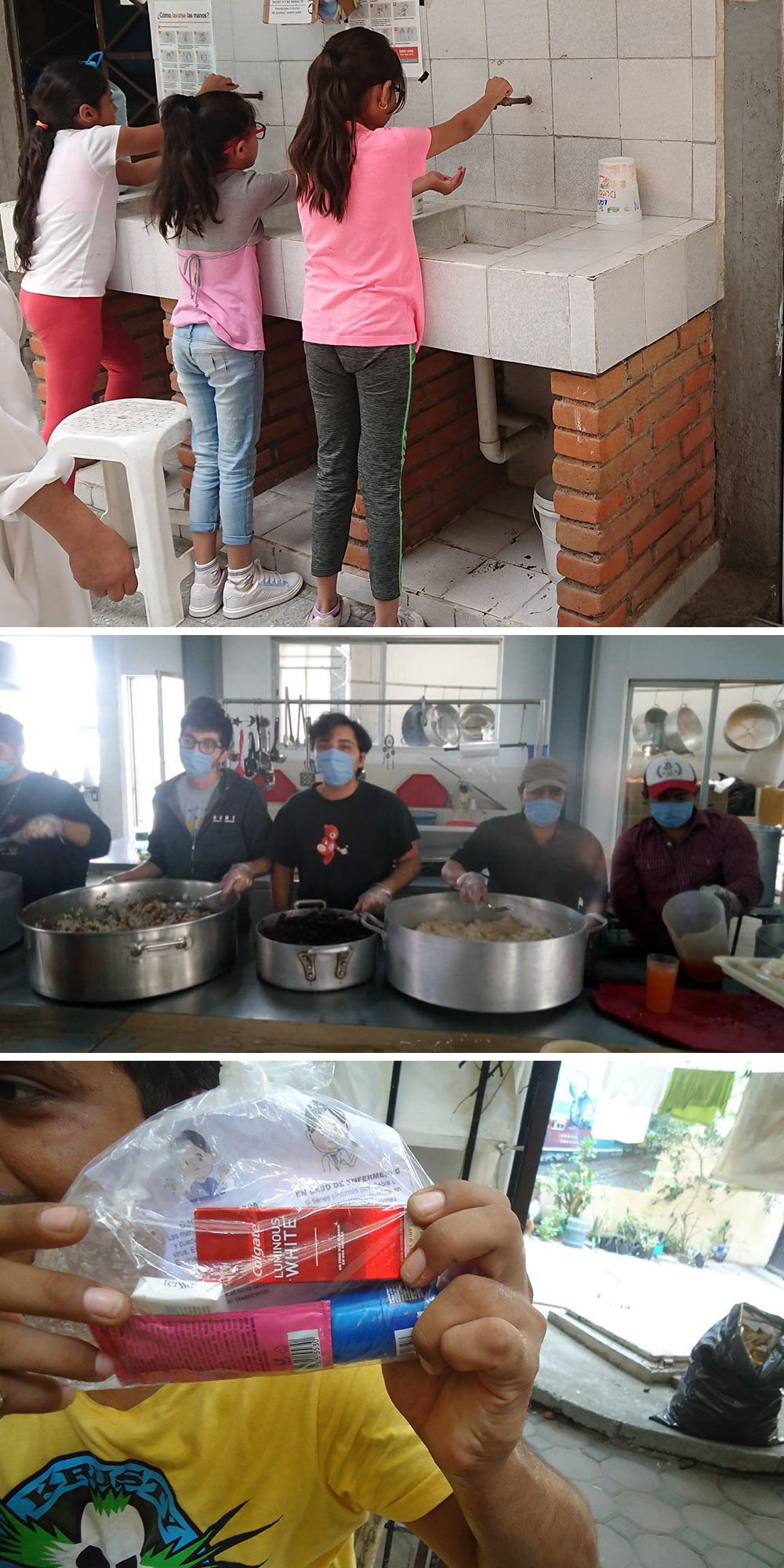
With support from CWS, 14 migrant shelters in Mexico have purchased hygiene supplies and food, and put up informational posters about how to properly wash your hands. Photos courtesy REDODEM.

Protecting Migrants, Asylum Seekers and Others Across Mexico in the Face of Coronavirus

During this time of pandemic, people worldwide are doing what they can to prevent the spread of coronavirus. They are washing their hands thoroughly and often. They are practicing social distancing. They are staying home when they can and are avoiding large groups.

For Central American migrants in Mexico, however, these steps aren’t easy. That’s why CWS made a grant to a network of migrant shelters to help. Through this grant, 14 of the 23 shelters in a network called REDODEM were able to upgrade their facilities and services to protect the health of staff and clients alike.

The shelters, which are located across Mexico, serve several different types of people. Some are migrants who are in transit across Mexico. Others are families who will be seeing asylum. Some are refugees or deportees. A few are Mexicans who are facing homelessness or other situations of extreme vulnerability. All of them need help with their basic needs, especially during these challenging times.

Here are some of the ways that the shelters used the grant funds:

– Purchasing cleaning supplies, including soap, hand sanitizer, toilet paper, towels and chlorine. One shelter in Chiapas reported using the supplies to clean their main shelter space as well as the bedrooms that 18 families are using right now.

– Purchasing food. This is a basic service that most of the shelters provide, and most of the shelters who received the grant used at least some of the money to continue to provide food to clients. Shelters in Veracruz and Hidalgo used the grant to provide meals to migrants in transit across Mexico. One program in Mexico City made food packages to deliver to families who were applying for asylum, many of whom had faced layoffs during this crisis.

– Purchasing medical items. Shelters have stocked up on supplies to prevent the spread of the coronavirus, including masks, thermometers, alcohol and gloves.

– Sharing information with clients to protect their health. Some shelters have printed informational posters on topics like proper hand washing; disinfecting products and clothing; correctly using face masks; and the entry/exit procedures for the space to keep people safe.

– Transferring clients to hospitals when needed. One shelter in Hidalgo helped a migrant who was showing COVID-19 symptoms get to a health center. Because of this action, the migrant received medical attention and was diagnosed as not having the virus.

Everyone deserves to live a healthy life in safety. We’re proud to be able to support organizations across Mexico who are working hard every day to make sure that more people have that chance.
Stories of Change


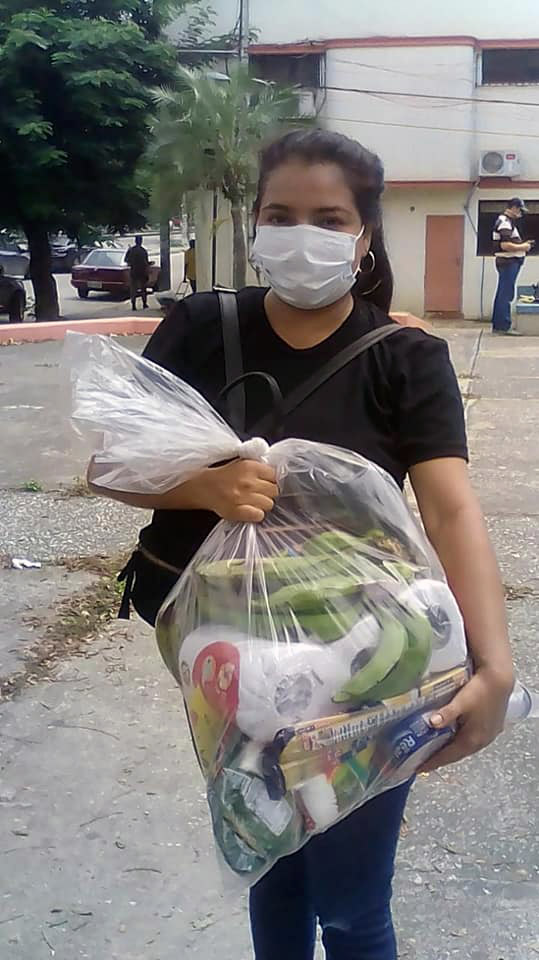
A woman receives a package of supplies during the May distribution in Guayaquil. Photo courtesy Fundacion Paz y Esperanza Ecuador

Food & Hygiene Supplies for 200 Families in Ecuador

Ecuador is among the hardest hit nations in Latin America during this pandemic. Its largest city, Guayaquil, has been particularly affected.

As of May 8, the Ecuadoran government reported over 30,000 cases of coronavirus, nearly 9,000 of which were in Guayaquil. Official statistics vary, but one estimate says that 1,654 people have died. On May 7, the mayor of Guayaquil reported that one third of the city’s 2.7 million residents has or has had the coronavirus.

The virus, and the resulting lockdowns and protective measures, are taking a toll. The prices of essential food and hygiene items are rising, especially for poorer families in cities. Food shortages are now being reported.

On top of everything else, Ecuador hosts roughly 360,000 Venezuelan refugees and migrants. Venezuelans have been fleeing the crisis in their country in huge numbers since 2014. Most of the Venezuelans living in Ecuador rely on the informal economy to survive, feed their families and pay rent. They work as street vendors, domestic workers and unregistered workers. Before coronavirus, they were starting to experience rising levels of stigma and discrimination. The pandemic has aggravated the situation.

Our team in the region continues to look for ways to support Venezuelans who have fled to other countries. In response to the growing needs in Guayaquil, we’ve teamed up with a local organization called Fundacion Paz y Esperanza Ecuador to distribute food and supplies to particularly vulnerable families.

Between now and July, we’re going to provide food and hygiene supplies to 200 families. Most will be Venezuelan migrant families living in slums or low-income neighborhoods in Guayaquil. The remaining families will be other particularly vulnerable households in the most affected neighborhoods, including single mothers. Government aid to these families either hasn’t been enough to help them through the challenges they have faced or hasn’t been able to reach them.

Once a month, families will receive a food assistance basket and a package of hygiene supplies. Local volunteers are assembling the hygiene packages in Guayaquil. Each monthly delivery costs $20.

To learn more about the CWS Coronavirus Response Fund, which includes this program in Ecuador, visit cwsglobal.org/coronavirus.


Stories of Change


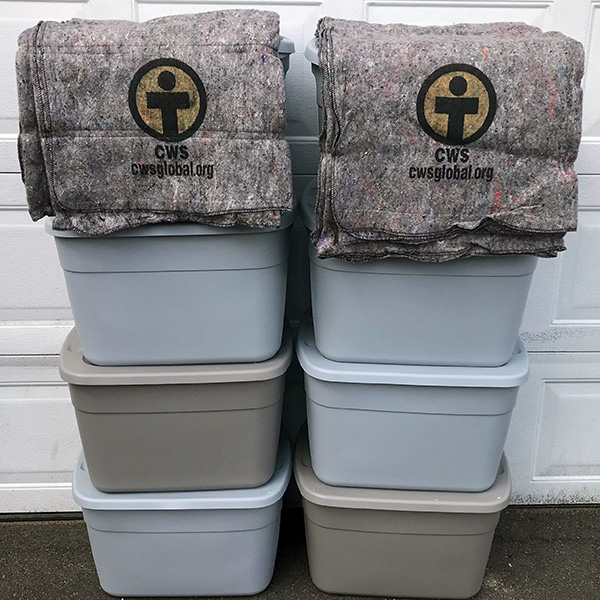
50 CWS Blankets, ready to go to Rhode Island

CWS Blankets shipped to temporary shelters in Rhode Island

Communities across the United States are scrambling to stop the spread of coronavirus. Churches, businesses, individuals and local governments are teaming up to care for their neighbors.

Rhode Island is no exception. The Rhode Island Emergency Management Agency has opened temporary shelters for people experiencing homelessness. As Pamela Leary from RIEMA explains:

“The Governors’ office, the RI Emergency Management Agency, countless other state agencies. private industry and organizations such as Church World Service, have been working tirelessly to meet the Governors’ objective: to keep all of the residents of RI, especially its most vulnerable populations, safe during this unprecedented crisis.

“Part of this initiative included the setup of many exterior shelters outside of our existing homeless shelters, to allow for more social distancing, and also to assure that no person in need is turned away. These shelters were outfitted with heat, power, bathrooms with the ability to sanitize, and cots. The shelters soon realized that this extension exceeded the resources that they had on hand during ‘normal’ operations, such as additional blankets.”

REIMA contacted Newman Congregational Church, a longtime supporter of the CWS Blankets program. They were looking for blankets for these temporary shelters.

Rev. Timoth Sylvia from Newman contacted CWS to see how we could help. And of course, we were glad to answer the call. Within a couple of days, 50 warm wool blankets were on their way.

“The blankets that were received were immediately distributed to three local homeless shelters, occupied by some of our most vulnerable residents. Thank you for answering this urgent and immediate call to action. Please stay safe and know that your efforts were truly appreciated,” Pamela said.

CWS Community Engagement Specialist Adam Smedberg helped organize the blanket delivery. “The resources we held were needed by our neighbors and we are thrilled to be able to share them,” he said.

When requests like this come in, it isn’t just Church World Service that answers the call. It’s a huge network of churches and supporters nationwide. And we couldn’t respond without them. Thank you to everyone who makes these programs possible.


Stories of Change


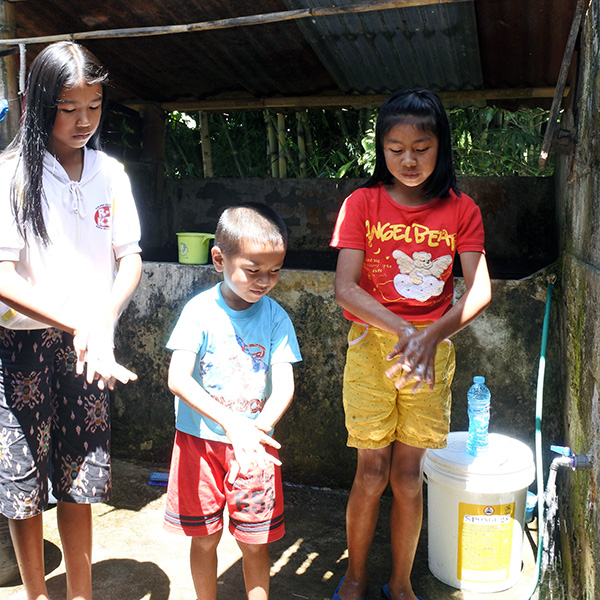
Arceia (right) and her siblings wash their hands at home.

Past learning about handwashing is keeping families safe in the face of COVID-19

Arceia is a student living in the Tana Toraja district of Indonesia. Her community is called Se’seng, and it’s in the mountains. It’s an area that is prone to landslides, so CWS has teamed up with families here for years. 

Back in 2015, we worked with students, teachers, parents and community leaders for a program called Safe Schools and Safe Communities. We shared information about emergency preparedness with students in 16 schools, including Arceia’s. Students learned about handling some of the risks they faced at school, including where to seek safety in the event of a landslide or how to avoid illness by washing their hands properly. It was a wide range of topics, but valuable information that is still helpful today.

Fortunately, students have not had to use what they learned about landslides. But the information about washing their hands has been helpful every day for the last five years. “Now, five years later, our teachers and students still wash their hands often with running water and soap,” the headmaster of Arceia’s school said recently. “Hand washing is a habit for students in our school. They learn the correct six steps for proper hand washing with soap from Grade One. We could not have done this without our CWS friends, who helped us install water tanks and sinks.”

Fast forward to March 2020, when Tana Toraja decided to close its schools to slow the spread of COVID-19. Because of our past work together, hundreds of students in the area–and their whole families–already knew the key prevention strategy: frequent hand washing with soap. 

Arceia recently told our team, “Our family feels grateful that CWS helped us learn how to properly wash our hands.” And one of her parents added, “This is so important now with the spread of COVID-19.” Their family, like millions of others worldwide, has heard about how important washing their hands in recent weeks. But just many of their neighbors, they were already prepared because of longstanding CWS programs. 


Stories of Change


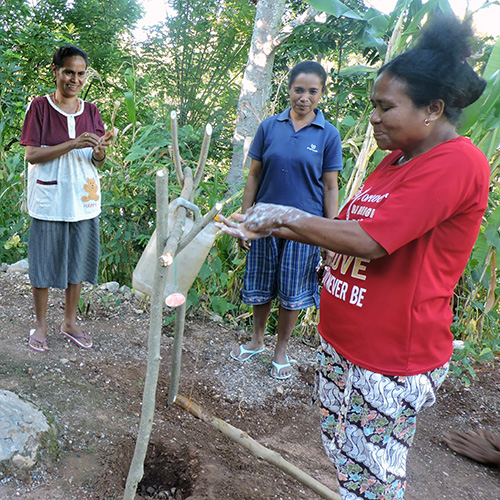
Refreshing our knowledge on thorough handwashing with soap!

Access to clean water makes all the difference in preparing to fight coronavirus in Indonesia

Timor island’s Soe District is one of the poorest in all of Indonesia. For some years now, CWS (and CROP Hunger Walkers!) have been working with some of the most vulnerable communities there through our Timor Zero Hunger program. Families needed some help to work themselves out of extreme poverty, and we were there for them.

Recently, because of our close ties, CWS staff visited Fetomone village to update families about ways to protect themselves from the coronavirus, which has yet to reach them. But, if it does, our past partnership will help make it possible for all families to protect themselves.

Here’s why.

Five years ago, not one Fetomone family had clean water. But, with our help, the village reclaimed a nearby natural spring. Then, they built a sizable tank for the clean water. Since then, with families committed to its upkeep, everyone has enough clean water for drinking, cooking, gardening and bathing. And now, frequent hand washing. This is so important now because of COVID-19.

During the CWS team’s visit, families learned about COVID-19 and how to prepare for it. And, while gathered to meet their CWS visitors, some people took the time to set up special no-cost hand washing ‘stations’ at some homes. Now, with these places – and refreshed knowledge of how to thoroughly to wash their hands using soap as well as water – community leaders are ready to make sure all their neighbors knew the basics to protect themselves, too.


Stories of Change


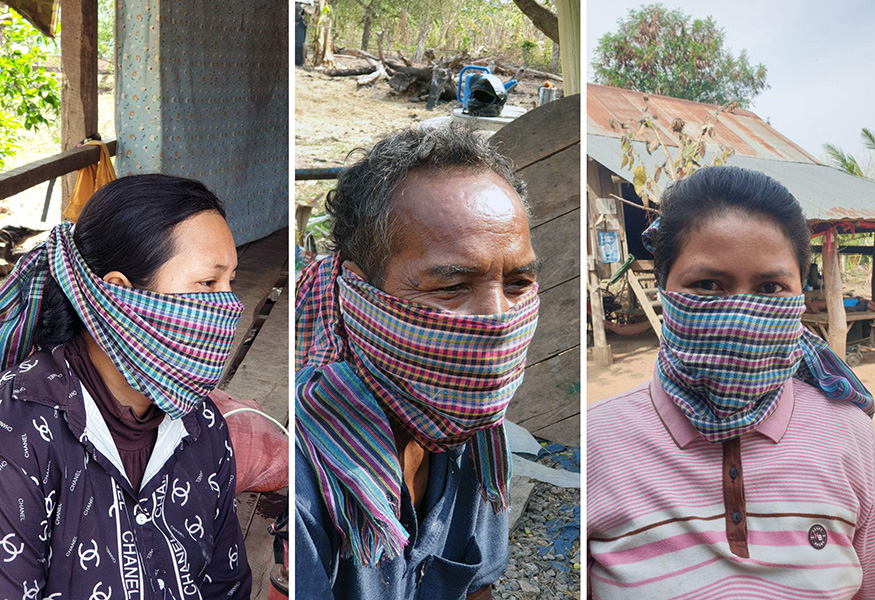
People are wearing the Khmer scarves that were distributed through a CWS program as face masks.

Adapting and Expanding our work in Cambodia in response to Coronavirus

Like all countries, Cambodia is battling social and economic challenges in addition to public health issues in this time of pandemic. Of course, the new rules that the Cambodian government has put in place to try to contain the coronavirus are necessary and can help prevent further harmful health impacts. We fully support these measures, and we’re focusing on how we can help the families we work with keep themselves safe and healthy.

Of course, we have paused the community information sessions that are a staple of our work with vulnerable families and communities. However, the need to share information about water, sanitation and hygiene is more important now than ever. So we have included information specifically about COVID-19 now and are focused on sharing information in socially distant ways directly with families. We are making sure they know how proper handwashing can prevent the transmission of the virus. We are also explaining why social distancing is important, and trying to lead by example.

Luckily, the Ministry of Health has information, education and communications materials ready for us to use. Our local partner in Battambang province, ADOVIR, is using their posters and videos to facilitate talks. And, because commercially-made face masks are not affordably available in the villages where the CWS program takes place, we’re supporting ADOVIR to distribute clean, new traditional Khmer scarves. These come with a demonstration of how to use the scarf effectively for COVID-19 protection. We are providing soap to the poorest of families, too. So far, we have directly reached 456 people in about 100 families in six villages where the virus has yet to have an impact. We hope changed behavior among all families will help keep them, and others with whom they share information, safe.

Besides expanded public information-sharing, we are continuing our work with individual families to build latrines. This work raises the overall standard of hygiene and sanitation in these communities.

Vath Sarorn, who is a Commune leader in one area where our program continues, commented, “It is really tough for my people now. This virus is a risk to health .. and to livelihoods. Most people are daily wage laborers. Now, travel restrictions and closure of the Cambodia-Thailand border [has put them] out of work.” Still, Mr. Sarorn continued, we “thank organizations [like yours for] support during these critical times.”

Despite his gratitude, we know that Mr. Sarorn is very worried. Our team and partners are worried, too. The impact COVID-19 is having in the villages where we have been working to help families better themselves will continue – even if the virus itself does not reach them. And so, we recommit ourselves to continue all livelihoods support work as we can now and when it is safe to do more in the future.


Stories of Change


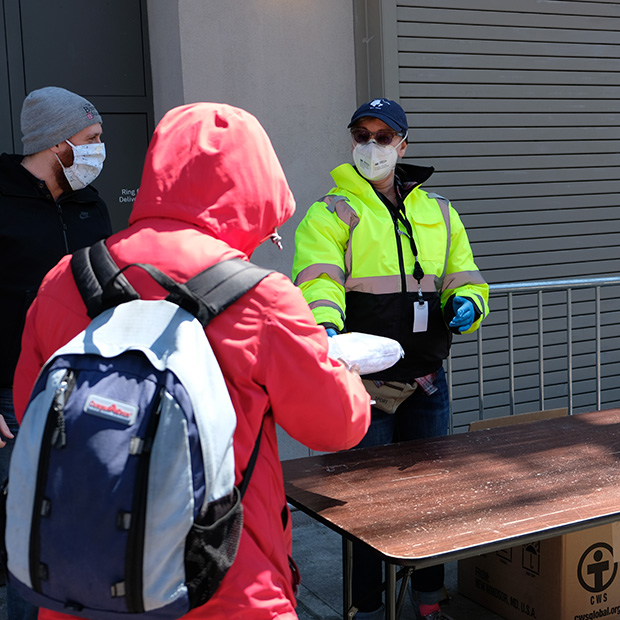
Photo courtesy The Bowery Mission.

CWS Kits and Blankets provide hope to New York City amidst coronavirus pandemic

The world has been turned upside down due to the COVID-19 pandemic – many organizations are having to change their entire programs while maintaining their purpose: trying to help those in need. One example is The Bowery Mission in New York City.

The Bowery Mission has been around for 140 years, staying open during the Spanish Flu, the Great Depression and Hurricane Sandy. They knew what the challenges could look like when COVID-19 became prevalent.

The Bowery Mission has been working with their neighbors, churches and partners to provide compassionate care and essential resources for the homeless community in NYC. They have eight locations spanning from New Jersey to NYC to the Poconos. They were the first rescue mission in the country. The Bowery Mission is “called to minister in the New York metro area to men, women, and children caught in the cycles of poverty, hopelessness and dependencies of many kinds, and to see their lives transformed to hope, joy, lasting productivity and eternal life through the power of Jesus Christ.”

They offer many programs to help the community. There are long term and short term programs offered, ranging from three to 18 months. There are opportunities everywhere for individuals to get in touch with a team to create an individualized action plan – “We believe that each plan needs to be contextualized – there could be people struggling with PTSD, domestic violence, substance abuse, any trauma. With our shower program or meal program, there are opportunities for a person to touch base with our team whether that’s an ambassador, a social worker, or another staff member to begin that journey with us,” Karl Chan, Associate Director of Partnerships at The Bowery Mission, states.

“We want people to feel safe, trusted, and cared for. We offer meal programs, shower programs, shelters, day centers. Day centers are safe spaces where everybody and anybody is welcome. People can just be – they can rest and be part of a community. We try to break down the barriers,” Karl expresses. “We serve a population that is experiencing trauma and it is imperative for them to know the love of Christ through us. Our main goal is for everyone to obtain independence and make progress.”

The Bowery Mission also offers child programs – “We have had kid programs for 124 years now. We offer summer camp out in the Poconos and after school enrichment programs in the city. We want to break the cycle of poverty by encouraging kids to dream beyond their current circumstances. We offer mentoring, tutoring, socio-emotional learning and leadership development opportunities which also helps these kids want to stay in school,” Karl shares.

Since COVID-19 has hit the United States, there have been many challenges that many organizations face. Karl explains, “Our biggest challenge right now is the weekly increase of costs. Since COVID-19, our meal lines have grown, the food we would have received from local restaurants has gone down so our food purchasing has gone up, and we have switched to a take away or to go model. New faces who had a job a couple weeks ago are showing up in our meal lines. We usually have 17,000 volunteers a year – we have had to repurpose our programming since the numbers have dropped. We need to screen the volunteers for any illness. We have started to move to more of an online presence and additional solutions. We need necessary PPE and cleaning supplies. But through all of this we receive outpouring encouragement from our partners, donors, and churches – which we are so thankful for. We couldn’t do it without the support system.”

Church World Service sent The Bowery Mission 500 CWS Blankets and 1,020 CWS Hygiene Kits in response to COVID-19. Karl shares that, “the hygiene kits and blankets have been so helpful here. The hygiene kits help with the shower program and every person who receives a meal is offered a hygiene kit. The blankets are very helpful in rotating out blankets at the shelter to ensure that everything is clean and sanitized. Old sheets and blankets are also being replaced with the new blankets.”

Every story has a meaning and a purpose. Karl shares, “I do what I do because I have experienced such a tangible sense of the love of Christ. I want everyone to feel and know that love. I am blessed beyond imagination and am so grateful, and there is a huge biblical mandate on us to steward what we have been entrusted with. So many are experiencing homelessness and trauma – we must recognize that we must do something to help them. God commands us to take care of others. If you recall the parable of the talents, many of us often think that we only have one talent to give but I think we each have closer to five to share.”

“I think what other people should know about us is that we will always be open. We stayed open through the Spanish Flu, the Great Depression and Hurricane Sandy. We will always be there for people. We can’t do it without the donors and organizations who support us. We will continue to be a place of refuge and hope so others may come to know about the love of Christ as we help to meet their immediate needs.”

“Church World Service is only able to provide CWS Hygiene Kits and CWS Blankets because of the dedicated congregations and donors that support this mission,” said Matthew Stevens, Director of Congregational Giving at Church World Service. “Every person who buys a blanket or assembles a hygiene kit is helping someone. During the COVID-19 pandemic, these donations can be life-saving. Thank you for serving others.”

To support and learn more about CWS Blankets and CWS Kits, please visit cwsblankets.org and cwskits.org. To support and learn more about The Bowery Mission, please visit bowery.org.


Stories of Change


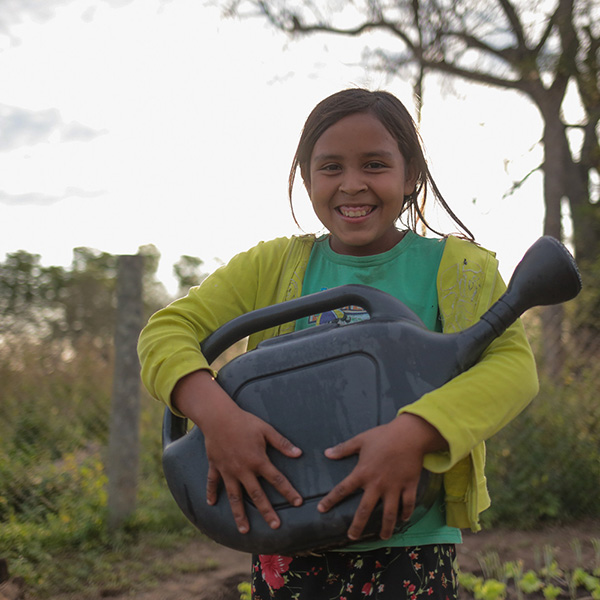
Mercedes Benitez, 10, stands in the community garden in her Sanapaná community in Paraguay. Photo: Sean Hawkey

A more hopeful new chapter in Paraguay

The average farm in the United States is about 443 acres. In rural Paraguay, a 2,500-acre farm is considered to be small to medium scale.

This vast area is known as the Gran Chaco. For most of its history, this land has been home to indigenous communities. The Sanapaná and other indigenous groups were nomadic, hunting, gathering and fishing in the largely untouched natural areas.

In recent years, however, these wide-open spaces have become home to giant commercial farms. Massive corporations have bought hundreds of millions of acres that they are using to farm genetically modified soya and corn, which is then exported. Many of those harvests end up as livestock feed in China, for example.

Meanwhile, the Sanapaná have had their movement severely restricted. As the area has increasingly been divided into parcels of private land, less and less is left for its original inhabitants. They end up living, quite literally, on the fringes of society. Some have tried to make a home on bits of land on the side of the road. Others have had their communities surrounded by private farms and end up cut off from the rest of the world.

And with their freedom of movement goes their ability to provide for themselves the way that they have for generations. They can no longer travel to their traditional hunting and fishing grounds. The precious natural environment is also suffering or being destroyed by the commercial giants.

Sanapaná families have struggled to adapt. Some have found occasional work as laborers on nearby farms. For the most part, though, they are still trying to survive by hunting and fishing, but nutrition and food security have suffered. Many families rely on traveling food salesmen to feed their families, but the food is overpriced, especially compared to their low incomes.

We recognize that the Sanapaná are in an unfair and difficult situation. So, alongside our partners, we joined these indigenous families in 2018 to help overcome food insecurity and the other challenges that come with isolation and marginalization. Now, we’re working with the Ministry of Health to make sure doctors can visit these communities. Also, a water consultant is helping indigenous communities create custom proposals so that they can advocate to the local or national government for more support for water and agriculture.

And then there are the gardens.

We’re connecting the Sanapaná people to agricultural experts and the tools they need to set up public gardens. These gardens provide a space for indigenous families to learn about and experiment with growing different types of vegetables in their local climate. Despite setbacks from flooding and droughts, families have enthusiastically taken to the gardens. They represent a new way for families to put food on the table despite having such relatively restricted land access.

The Sanapaná story is a sad one, filled with destruction, vulnerability and marginalization. By working together, however, we’re helping them turn the page into a new, more hopeful chapter.

Thanks to Growing Hope Globally for their support of the next few years of this program.


Stories of Change


Holly (right) and Kris (left) distributing CWS Blankets.

What CWS Blankets mean to our neighbors in Washington State

This story was written by Holly Buchanan, a volunteer at a food bank in Snohomish County, Washington.

This was a good day at the food bank! The Pacific Northwest trifecta of cold, dark and rainy gave us a chilly drizzle today, and yesterday I heard on the news that we haven’t had an officially sunny day in nearly two months. Argh. But the clients still showed up at the food bank early this morning, ready to load up their grocery carts for the week. We had an especially good supply of fresh eggs and milk today, and something very special to distribute: beautiful, clean, new CWS blankets!

Our food bank is one of twenty in the food bank coalition of Snohomish County. We are in a suburban area. Some of our clients are between permanent addresses; others are in stable housing but struggle to pay their bills. Some work low-wage jobs, others are looking for work or unable to work. The coalition ordered nearly a thousand blankets, as well as some CWS Kits, to distribute to families all over the county through the local food banks.

I was really surprised at the need for blankets among our clients. I thought we might give out four or five and that it might take several weeks to distribute the two bales of blankets CWS sent us. But we gave away 60 in an hour or so and ran out before we got to the end of the client line. I couldn’t believe it!

As clients waited with their grocery carts to get their food, I approached each one with a blanket on my arm so they could see and feel it. I asked if anyone at home needed a blanket. Several exclaimed, “YEAH!” or “Sure do! Thanks!” Some just nodded their thanks. A few people said they had no need at the moment, but most were grateful for the offer and said it was nice that people who need blankets can get them.

The blankets are soft and thick, but not heavy. “The few blankets that I’ve had in the past are worn down and shredded, mainly because of use and age and being run through the laundry. These blankets are actually much more sturdy, and they feel really comfortable. I like them,” one client observed.

I offered a blanket to a couple with two young children. They said that they are now living in stable housing, but they needed a clean blanket for their baby. The mom teared up when I handed her a blanket, and the dad looked relieved.

The eyes of an older man lit up when he saw the blankets, and he hurried over to ask for two. A mom and her three adult children exchanged looks of relief when I approached with a blanket. They politely asked for three. One man who usually doesn’t take much at the food bank took one–I understand he has many grandchildren and they need a lot of support. A woman came over to see the stack of blankets but said she didn’t need one. A minute later she was back with a family with a new baby daughter–they were eager for a blanket for their little one.

One shy woman who doesn’t speak much English almost always turns down any unexpected items we have available. Not surprisingly, she refused a blanket when I first offered it to her. But she kept an eye on the other clients who were accepting them. Finally she signaled to ask if she could have one, and there was a big smile on her face when I handed it to her.

Another client who took a blanket said that his place loses power pretty often, and that he’d think of us during the next big storm.

One of our volunteers, Kris, is also a food bank client and now a blanket recipient. She has a message to share with everyone who supports the CWS Blankets program: “I have just received a blanket for my grandson, who is autistic, and he absolutely loves it. Thank you for all that you have done!”

I understand that churches across the country support the CWS Blankets program so that more moments like this can happen each year. And if the reaction from each blanket recipient is like the ones I saw today, CWS is lighting up tens of thousands of faces each year. Thank you so much for your generosity!


Stories of Change


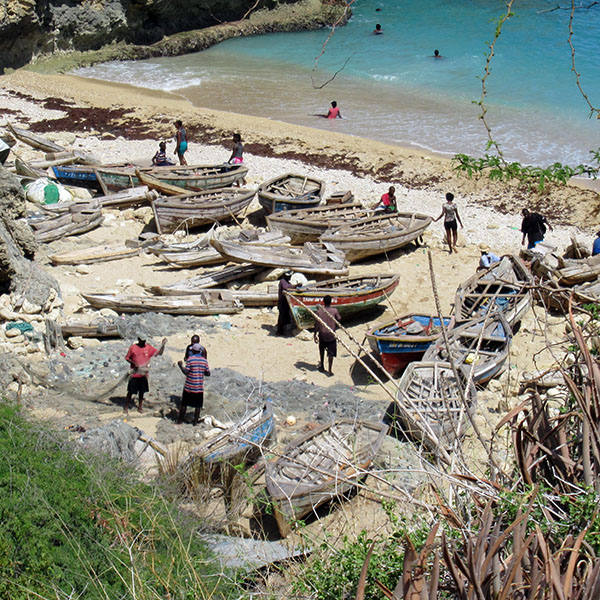
Members of APKF at the port of Rivière Côtes de Fer, returning from a morning of fishing before meeting with the CWS team.

Focusing on fishing families in Haiti

Despite being an island nation, Haiti has a neglected fishing sector.

The Ministry of Agriculture reports that more than 52,000 Haitian families rely on fishing to make a living. For the most part, though, these families are going at it alone in the face of mounting odds and stiff competition.

The Haitian government doesn’t regulate who can fish where, what size fish can be or how to protect coastal ecosystems. This entices fishers from the Dominican Republic, Jamaica and Cuba to fish in Haitian waters. These fishers usually have access to bigger boats than their Haitian counterparts, leading to a faster depletion of fish populations and heavier environmental tolls.

Because of the deep poverty in many parts of rural Haiti, fishing families usually only have canoes or small paddle boats. That means that they can only fish close to shore. With everyone fishing in the same stretch of ocean, coastal areas are overfished, and young fish do not have a chance to develop before being caught. Coastal resources are overexploited, but the open ocean is underused.

Some nonprofit organizations have attempted to help Haitian fishers in the past by providing boats or installing a system to attract fish. For the most part, though, the fishing sector isn’t one that most organizations have gotten involved in supporting, and no one seems to be focusing on community associations of fishing families.

We’re changing that through our new Fishing & Farming program in the Northwest Department, the region of Haiti with the highest rates of hunger and food security. 

Our team has a longstanding partner in the Northwest Department called GRADAID, or the Group of Research and Support for Agroecological, Innovative, Durable Development. We’ve worked with GRADAID for years to help support farmers and rebuild homes destroyed in Hurricane Matthew. Now, we’re teaming up with them again for the Fishing & Farming program.

We’ve identified an association of fishers in the town of Côtes de Fer. It has 58 members, who rely on fishing to provide for their families. The association is known as APKF.

The members of APKF already look out for each other. They start fishing before dawn each morning and wait for the last fisher to return at the end of the day before they leave the port. If someone doesn’t show up, they go to look for them before they go home. They also follow the news together and share information about weather advisories and warnings. Most importantly, they are excited to learn and improve their fishing practices together.

With support from CWS and Growing Hope Globally, GRADAID is going to provide materials and training to APKF and its members. A critical component of this program is the direct involvement of all members; too often in Haiti donated supplies end up in the hands of the local leadership and do not make it to the families who need it most. The idea and request for this support came from the community members themselves, and they already have the association in place to keep things organized and accountable. Training and information sessions will be open to all 58 families. And when supplies like boats, engines, freezers and fish aggregating devices are distributed, it will be in front of the whole association.

We’re also teaming up with APKF to improve their structure and capacity. We’ll be supporting training sessions for their members on administrative basics, and we’re helping them set up a couple of committees so that more members are directly engaged. One committee will oversee sales, and another will oversee storage, inventory and maintenance of materials. The first year of the program will focus on training and getting the committees and systems in place. Then we will begin providing materials and equipment.

Meanwhile, GRADAID will be launching advocacy efforts to encourage government officials to consider regulations that will protect both the Haitian people and their environment.

There’s a lot of work to be done alongside Haitian families who rely on fishing. We’re excited to be taking these first steps with your support.