Stories of Change


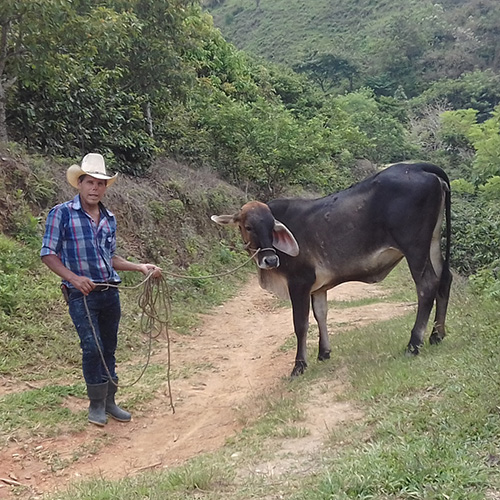
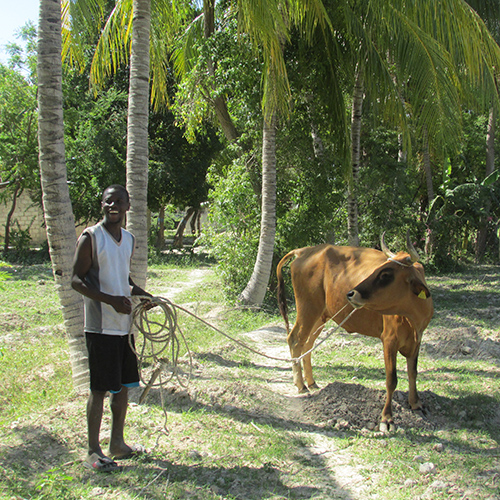
Don Chepe with his cow. Photo: CASM


In an eight-month period in 2015 and 2016, CWS's work in Honduras included helping to organize 15 water management committees, helping 10 families begin using drip-irrigation systems, food and nutrition training for 45 families and peer exchanges for 29 farmers.

“Sharing with a neighbor is the best!”

At the beginning of 2015, José María Melgar – a small coffee-grower known as Don Chepe in his community of Buena Vista, Honduras – received a calf through a CWS- and Foods Resource Bank-supported program implemented by partner CASM. The cost of that cow was about $490 US.

Don Chepe was a natural choice to receive the calf. He had been an active participant in all trainings and workshops offered in his community through the program, including those on nutrition, soil management and livelihood diversification. He was ready.

Time passed, and eventually Don Chepe’s calf grew into an adult cow. Then she gave birth to a calf. Don Chepe was able to pay it forward, and he gave that calf to his neighbor, Enrique Peña. Enrique is the father of five children, including a daughter with a disability, and had been preparing his family and his land to receive the calf for a year.

Don Chepe says that the mother cow, which remains his, is incredibly productive and gives lots of milk. The cow is now valued at $1,280. He will not sell his precious gift, because he says he has a moral responsibility to take care of her.

He says, “Before I had my cow, my family used to buy one gallon of milk per month. Now we have four gallons each day. Thanks to this cow, we drink all the milk we want, we produce milk derivatives and we even sell milk to purchase other products we need.”

Don Chepe says he is looking forward to the day when Enrique’s calf is grown and has a calf of her own that Enrique will be able to give to yet another family to change their lives. He says, “I want my cow to keep having calves. I am so thankful to CASM for being part of this project.”


Stories of Change


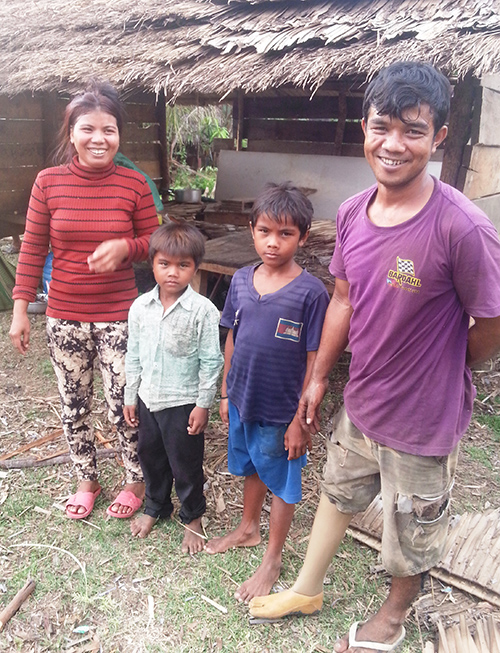
Choeun and his family. Photo: CWS


CWS efforts in Cambodia positively impacted 33,169 people in 64 communities this year.

“I mean to have skills and my own choice”

Choeun Seam and his wife Ra Aei are both in their thirties, and their sons are three and eight years old. Now the family lives in Rung village in central Cambodia but, before, when Choeun worked as a daily wage laborer they moved around to different communities to find work to earn a subsistence living. In addition to the hardship of an itinerant life, one impact for the older son was that he could not go regularly to pre-school, which is customary in rural Cambodia, or then to grade school. But this was a small concern compared to the results of an on-the-job accident when Choeun lost one of his legs.

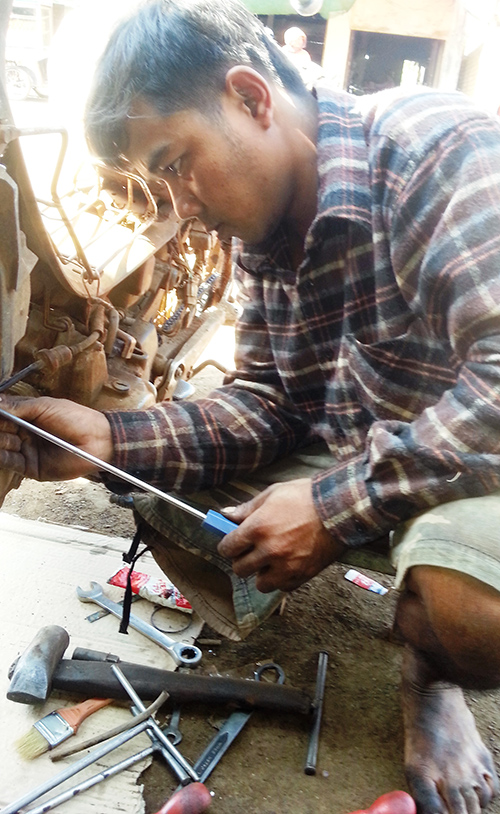
Through regular outreach work among some of Cambodia’s poorest rural families, CWS staff met Choeun in late 2016 and, recognizing his work limitations, encouraged him to consider vocational training for motorbike repairing. He happily agreed, especially because CWS could support him financially to join the course. Choeun is a quick learner and even while he is still in the course, he has already earned about $35 from his first motorbike repair job! Reflecting on his success so far, Choeun said this: “Before knowing CWS, my family didn’t have enough to eat. I borrowed rice or money to buy rice and worked as a wage laborer to repay the debt, which meant I didn’t have any money in hand. Living in poverty was already hopeless, and life got harder when I lost my leg at work.”

Now, more than his earnings, Choeun has a sense of confidence about his potential and a new ownership over his own future. “I am so happy and proud of myself; I never ever though that I can be a motorbike mechanic, and I never expected this opportunity in my life – I mean to have skills and my own choice to run a service shop or to work for another’s shop,” Choeun told us. “Whatever choice I make, I know I will have a certain job to support my family and, besides, my children are now able to attend school properly,” he added.


Stories of Change


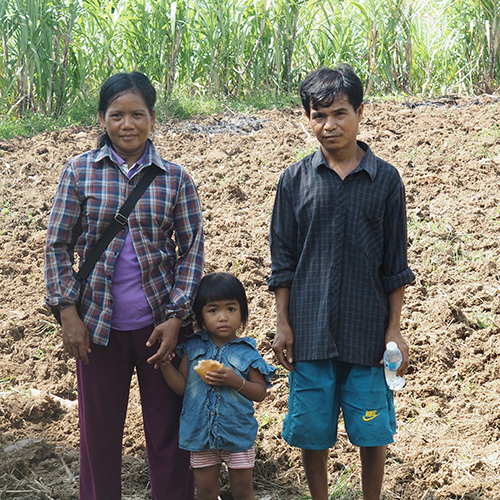
Touch and members of his family in front of their plot of land.


CWS efforts in Cambodia positively impacted 33,169 people in 64 communities this year.

Promoting Better Lives in Rural Cambodia: Better Lives Indeed for Touch and His Family

Touch Oeun, 41, lives with his wife Kun Pich, 37, and their nine-year-old son in Rung Chrey village in western Cambodia. Also staying with the family are the three- and seven-year-old daughters of Touch’s niece because she has migrated to the Thai border for work. The two older children go to the local school. The family have lived in Rung Chrey their whole lives, and Touch inherited about a fifth of an acre of land near their home, which he uses for vegetable farming to support his family.

Before getting to know CWS partner Rural Development Association, Touch and his family planted and harvested vegetables twice a year. That wasn’t enough for food security, though – the family often did not have enough to eat. Also, they did not have access to a safe drinking water, so they boiled rain water to drink. That system isn’t bad, but it isn’t ideal, either.

This year through Promoting Better Lives project activities, RDA began working with Touch and supported him to irrigate his garden and also to expand his vegetable varieties with new seeds. He also learned how to make natural compost, which has meant that Touch can reduce his costs by not buying expensive chemical fertilizer and pesticides. Touch has manged to double his semi-annual income from $125 to $250 for each planting, which is just enough to support his family. And, because safe water is such a high priority for CWS, RDA and all families, they received a water filter for the house, for which the family was also grateful as it has helped them lessen the children’s risk of becoming sick from unclean, unsafe water.


Stories of Change


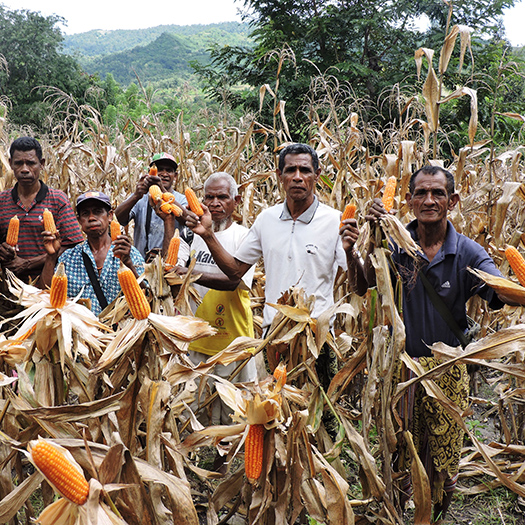
Members of the Fetomone group among their corn. Photo: CWS


In May 2017, CWS was able to expand its home gardening and chicken raising support to an additional two villages in West Timor.

Seeds, chickens and credit: a recipe for success in West Timor

Daniel Liunokas leads the Fetomone group of farmers in Enonabuasa village in West Timor, Indonesia. [You may remember Enonabuasa from this story about covered wells.] For the last year, the 14-member Fetomone group has been a way for farmers to work together to achieve prosperity. The group formed itself last year as part of CWS’ Timor Zero Hunger program in West Timor, through which CWS supports subsistence farm families to have more – and more nutritious – food and better lives in general.

“With support from CWS, we grow more and different vegetables than in the past, and we eat most of the harvest ourselves; but we also sell some in the market for cash,” Daniel explains.

He continued, “We are also growing corn seedlings for next season, and we are raising chickens, too. Thanks to CWS, we are sharing an incubator to help hasten hatching, and now we have 133 chickens, which we hope will improve our children’s health because we now have eggs and chicken meat for them.”

The group has also expanded its activities into finance and credit. Daniel explains, “Recently we started a savings group, to which we each contribute Rupiah 5,000 (0.37 USD) each month; so far, we’ve saved Rupiah 500,000 ($37) which we plan to use for more seeds and tools.” For this innovation within the Timor Zero Hunger program, CWS staff and the local government agricultural extension worker have supported the Fetomone members with technical advice and support for group management. They can now be officially recognized by the District Agriculture and Food Security Agency, which will allow them to access government help with specialized training as well as seeds and fertilizer.

In Daniel’s words, “We are very proud and happy to be the first farmers group in Enonabuasa to be recognized by the government!”


Stories of Change


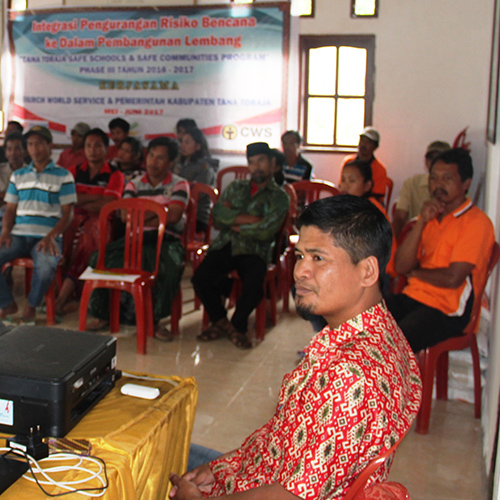
Yohanis Tangibali (front) with others from Kayuosing village. Photo: CWS


CWS partners with communities in Tana Toraja to help them prepare to respond to emergencies, including landslides.

In Indonesia, community mobilization for a safer future

Kayuosing village lies at the foot of Mount Sado’ko’ in Tana Toraja District on Indonesia’s Sulawesi island in the country’s southeast. The district is very mountainous and has frequent landslides. As one community leader put it, “Not a day goes by here without a landslide somewhere.”

In 2007 a landslide hit Kayuosing’s elementary school; luckily there were no fatalities but six classrooms were damaged as was the bridge connecting the school to the village. And, while these have been repaired, materially, no further action – like community mobilization for disaster preparedness or risk reduction – has been taken.

To change this, since late 2014 CWS has supported Safe Schools and Safe Communities in villages to help school children, their teachers and the whole community prepare for and mitigate similar, and other, disasters. “The project gave us a hope that we can lessen the harm and damage from disasters, and be safe,” said Yohanis Tangibali. Yohanis is the father of five children and the village Secretary; he has stepped up to lead the Village Disaster Preparedness Team, which was started by CWS and the District Disaster Management Agency support.

“So far the village hasn’t allocated funds for disaster risk management; but we do have funds for village development. So, in May we had a community discussion and agreed that we would allocate some of those funds to several activities that support disaster risk reduction such as reforestation and improved drainage,” Yohanis said, and then added, “As Village Secretary I will make sure that the 2018 government work plan and Kayuosing budget include disaster risk management activities!”


Stories of Change


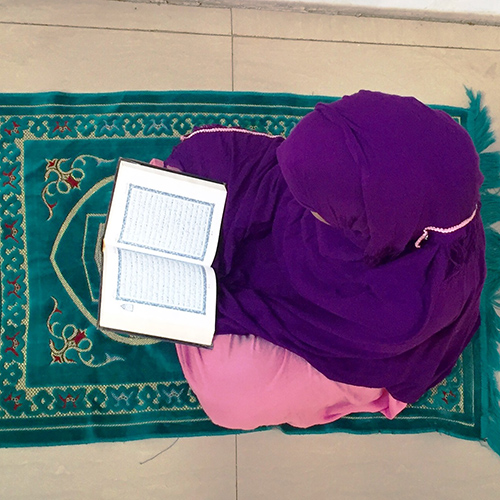
Zaenab. Photo: CWS


CWS helps to support hundreds of refugees and asylum seekers in Jakarta, including nearly 100 unaccompanied and separated children.

This Ramadan, two refugee sisters aren’t alone

When the Muslim month of fasting, Ramadan, began in May, Zaenab* joined the fast. A 19-year-old Somali refugee living in a CWS-managed group home in Jakarta, Zaenab was excited to mark Ramadan with a large group this year.

Zaenab and her younger sister are now refugees in Jakarta, Indonesia. They had originally fled Somalia to Yemen, where they had lived in relative safety. They have been in Indonesia since 2015, though, after fleeing the violence in Yemen.

Zaenab and her sister now live in the group home with 38 other girls and young women. Anyone who wanted to observe the holy month of Ramadan was able to do so. “Ramadan is a good month; I love it. And celebrating it in this group home is just amazing! When we first came to Indonesia, my sister and I lived alone, even though we were both children, and we had only each other during Ramadan. But here in the shelter there are many other girls and young women from Somalia, and we cook together and break our fast together and then go  to the neighborhood mosque for evening prayers. I hope Allah will accept all of my prayers, good deeds and fasting this month,” says Zaenab.

For these sisters, their new life in safety and security is really something in light of their difficult past journey.

*name changed to protect identity


Stories of Change


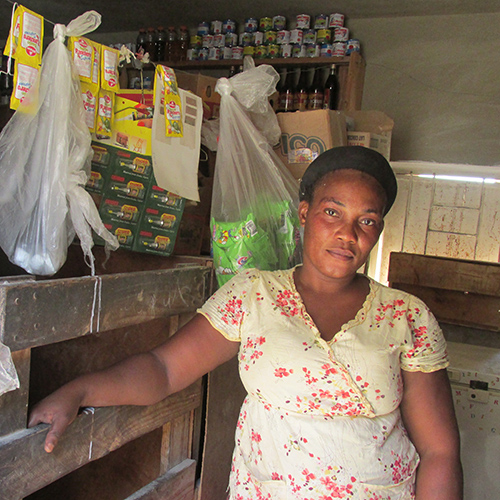
Marie Andre in her store. Photo: CWS


The community development implemented by CWS and partner SSID includes microloans, seed distribution, livestock distribution and house construction.

The Jackpot

When you visit her store in Haiti, it’s clear that Marie Andre Bonheur is a successful businesswoman. But there was a time when her only business was selling cold drinks from a freezer. She used microcredit to incrementally grow her business. This microcredit was made possible through a program implemented by CWS and partner SSID, and Marie Andre says that she has relied on the microcredit three or four times. She has been part of her microcredit group from the very beginning. She makes sure she can always pay her loan back on time.

As a mother of two daughters, Marie Andre uses the profits from her business to provide food for her children and for herself. But that’s not all that the income does. She enjoys looking after pigs, and she has been able to purchase pigs. She received a cow through the CWS / SSID program, but has used her profits to purchase these additional animals.

In describing the impact that the CWS-supported program has had in her life, Marie Andre says, “Because they lent me money, I increased my business, I also bought some animals. I manage the business. For me, the project is going well. Because it helps us a lot, a lot, a lot. And I benefited a cow within the project. They give us inputs for our gardens in the project. For me, the project is really going well and I congratulate the project as well and I give thanks.”

Whenever the program ends, Marie Andre says that it will leave a lasting impact. “Well, when the project ends, what will remain – the project gave us houses. The houses won’t get destroyed; they will always stay here. And the microcredit I have – even if they were to stop the microcredit, if we manage the business well, we will always have this source here. That helps us a lot. And they gave us animals in the project, gardens. Soon I will harvest beets,” she says. To Marie Andre, the project feels like she has won “the jackpot.”

Watch Marie Andre tell her story:


Stories of Change


Murat with the cow. Photo: CWS


The community development implemented by CWS and partner SSID includes microloans, seed distribution, livestock distribution and house construction.

“Even if I were to talk all day it wouldn’t be enough, because I benefited a house.”

Murat Fladymir and his wife have eagerly taken advantage of each opportunity presented to them through the community development partnership of CWS and SSID. The family has made the most of microcredit, seed distributions, house construction and livestock distribution. Murat now has beets in his garden, and his wife has a microcredit business loan. Murat even went above and beyond and participated in Disaster Risk Reduction training. He is now a DRR agent for his community, complete with a diploma from his training. In April of 2012 the family received a house through the program, and in January of 2017 he received his cow.

SSID gifted Murat with a mother cow. The way the program works is that the mother cow is given to a family to care for her until she has a calf. Once a calf is born, the family keeps the calf and the mother cow is given to the next family. Murat’s cow has not yet had a calf – pregnancy lasts nine months – but he is taking good care of the mother.

Cows are a major economic advantage in Haiti. They can be used for milk or sold for around 300 USD. But caring for a cow requires dedication. Murat knows that even when it’s hot, “you have to go and move the cow. You see? Because you have to give it water, take care of it, bring it food. Sometimes I go to cut [sugar]cane, whatever time it is, I go very far to cut cane to bring it to the cow [to eat].” Every night the cow is brought into the family’s yard, which Murat fenced.

For Murat, the cow is definitely worth the extra effort. He says, “It is a big advantage because when you have an animal, in the future it can help you progress.”

And for Murat and his family, progress is a way of life. Each new component of the CWS and SSID program means a new opportunity to expand their income and to be able to provide better for their child. Their progress goes beyond just their family of three, too – there are five people living in the house that CWS helped build. When our staff mentioned that it is common for more than the immediate family to live in a single house in Haiti, Murat’s generosity showed clearly. His response? “That’s how it is. You have to live and work together. If someone doesn’t have a place yet, he sleeps outside. You can’t leave him outside, especially if he’s your brother or sister or family. You see what I mean?”

For participants like Murat, the program provides multiple channels through which people in Boen and Ganthier can build a better future. That means so much to Murat, who says, “I benefitted so much in this project. Even if I were to talk all day it wouldn’t be enough, because I benefitted a house.”

He also had this message for everyone who donates to the program: “Obviously, God should give these people what they deserve. Because for me, what I got … I can’t tell how long I would need to work in Haiti to build this house. And I always pray when I pray [to] God, I pray for this organization because they help me and many other people advance because I have a house, I have a cow to look after, I have seeds for agriculture, so God will give them back their satisfaction.”

Watch Murat and others from this program talk about what they would say to program donors:


Stories of Change


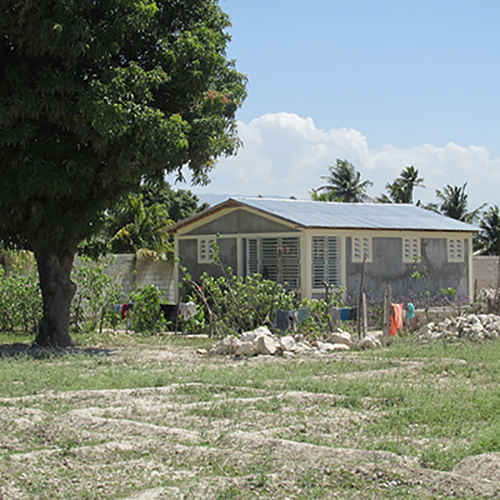
Fedeline's house and vegetable garden, which she planted with seeds from CWS. Photo: CWS


The community development implemented by CWS and partner SSID includes microloans, seed distribution, livestock distribution and house construction.

Houses, gardens and more in Haiti

Fedeline Fleurestal is a natural agricultural entrepreneur. She participated in training on kitchen gardens with another organization, but since she was also participating in the SSID and CWS program that supports families affected by the January 12, 2010 Haiti Earthquake and Hurricane Matthew in Boen and Ganthier, she also received seeds from SSID to implement her garden.

An experienced gardener, Fedeline explains, “Before you make this garden, there are different preparations to do. The first preparation to do to make the garden is to find a space. When you have found a space, you need to fence it, because the garden is not done without being fenced…After you have fenced the space, you look for a pickaxe to plow the land. After you have plowed the land, you take compost and mix it with the soil. After you have mixed it, you mark the land in parcels. When you have marked the parcels, you make a seed bed. After you have made a seed bed you will plant these plants…A seed bed can take 4 crops or 3, that you can put there. But every plant you plant has its distance to plant. There is also a way to plant them so that they don’t cause any problems because [of the] roots. All plants that grow underground – you don’t put them together with others that also grow underground. You should put one with leaves and then one that grows underground.”

Fedeline has planted a variety of vegetables in her garden using the seeds from SSID, including cauliflower, spinach, cabbage, beets, parsley, onions, leeks, peppers, broccoli and radish. She says, “The project has brought a source [of income and food] for me, something I had never found here, but the project brought it to me and I am very happy. And it helps me with my whole family.”

When asked what she would say to the people who donated to this project – which also gave her family of six a new home – Fedeline replied, “Moreover, for those who are responsible for the project, I hope that they continue the work. Even if it is not on earth, but in heaven you will find reward. Because after January 12 for us in Haiti the situation was not good at all. After January 12 I had to rent a house to stay with my children and I couldn’t go anywhere, but now thanks to the organization I have a house to sleep in with my children and with my husband. And I feel comfortable. I am very happy. I believe you can continue the process with others who haven’t found yet. A big thanks.”

Watch Fedeline and others from this program talk about what they would say to program donors:


Stories of Change


Orance with her family's chickens. Photo: CWS


In fiscal year 2016, CWS supported more than 1,000 people through chicken raising and home gardening.

Source: CWS Annual Report 2016

Chickens and vegetable seeds improve nutrition and health in West Timor

Orance Nenoliu lives in Saenam village in West Timor, Indonesia, with her husband Yakobus Tualaka and their two children. With support from CWS, 33-year-old Orance is learning about home gardening and raising chickens so she and her family can have more food and a more diverse diet, which leads to improved health. CWS has partnered with Orance and others in her village to distribute vegetable seeds to families along with information about organic fertilizers to ensure that vegetables can thrive once they are planted.

Orance has also learned about the benefits of keeping her chickens in a coop, which her husband built with advice and help from CWS team members. “We used to let the chickens roam free,” explains Orance, “and sometimes they were stolen or contracted diseases that killed them. Some were eaten by wild animals. I really like the idea of putting the chickens in their coop at night to keep them safe.”

“I also am glad we know more about how to keep our chickens healthy so they grow better. When my husband built the coop in March, he also learned about vaccinations and how to properly feed the chickens,” Orance told us. “Now I hope that growing vegetables and raising more, healthier chickens will also help improve our children’s health because we can feed them more nutritious foods.”