From invisible to speaking publicly


August 17, 2017

“My life…my life at the beginning was chaos.” That’s the sentiment from Maria Felicia Encarnacion Ozuna, an 18-year-old in the Dominican Republic. Felicia, as she is known, is the child of an incarcerated parent. There are about two million children like Felicia across Latin America and the Caribbean. In order to make sure that the unique and acute needs of …

Stories of Change

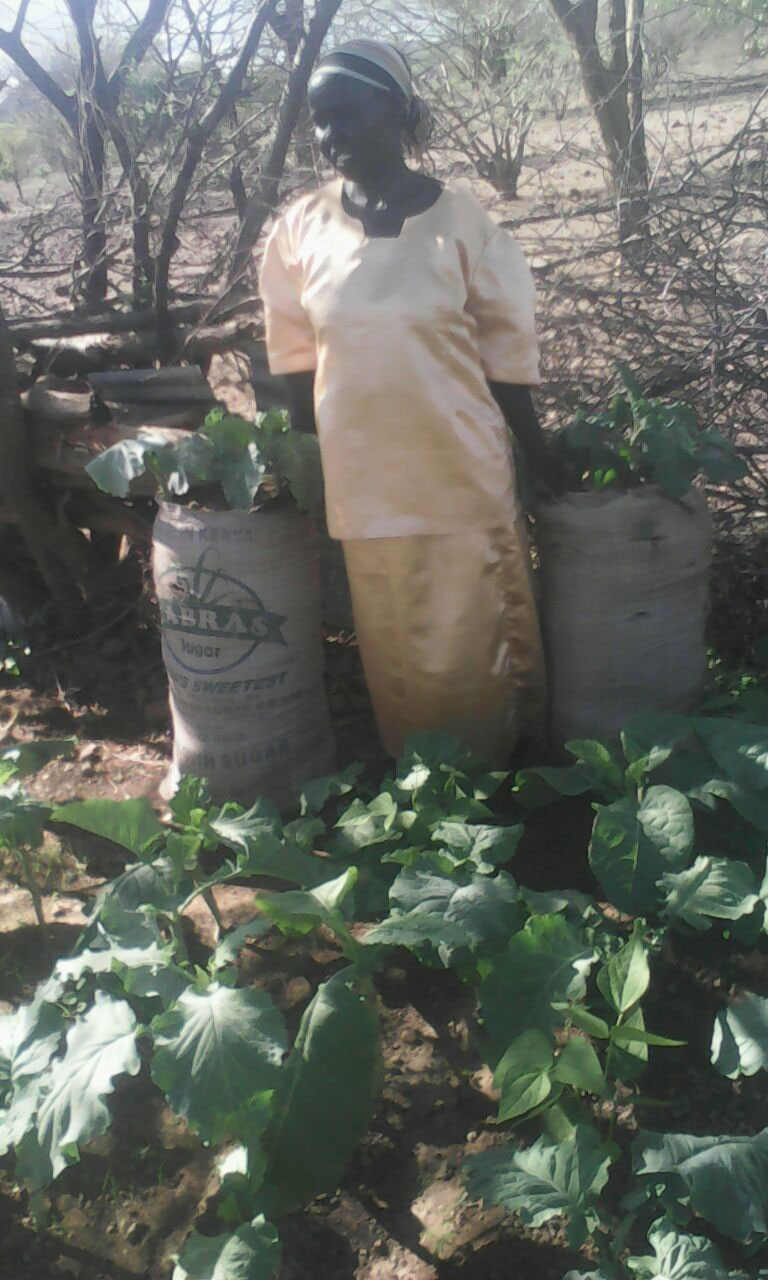
Cheptakar stands in her vegetable garden.


The human right to water was officially recognized by the United Nations in 2010.

Source: United Nations

Ripples from a sand dam

For Cheptakar Merkamar, education has been little more than a dream. She dropped out of school during early pregnancy. Her family was constantly on the move, migrating in search of pasture lands and access to water. When she tried to return to the classroom, she wasn’t able to stay in one place for long enough to succeed in her education. At one point, Cheptakar insisted on returning to school. Unfortunately, her parents refused to allow her to, instead arranging for her to be married. 

Today, Cheptakar is a married mother of five children. Her oldest is in seventh grade at a nearby boarding school. Cehptakar and her husband both have big plans for their children, and they hope that the next generation will receive the cherished education that they did not have the opportunity to complete.  

When Cheptakar learned that CWS was planning to construct a sand dam near her community, she joined with her neighbors to gather gravel and sand to use for construction. The sand dam is now complete, and it has a huge impact on daily life in this part of Kenya’s Baringo County. Cheptakar and her neighbors used to have to walk for over six miles every day to fetch water. Even worse were the periods of drought, when her animals perished and water became scarce. 

Thanks to the sand dam and recent rains, Cheptakar and the rest of Cheposaniak village can draw water from the sand dam and can use the water in it for farming. She says, “We thank God for the sand dam project. It is full of water and now I don’t have to walk 10 kilometers like before. I have time to attend to my kitchen garden and am not worried that my family will not have something to eat.” 

Cheptakar has established a kitchen garden near her home and has planted kale in it. She says, “My kitchen garden is giving me enough kale, while I sell the surplus and am able to get 100 Kenyan shillings [about $1 US] every day to help me meet other family needs.” 

Thanks to the CWS-supported sand dam, the dream that Cheptakar and her husband have for their children is much closer to becoming reality. 


Stories of Change


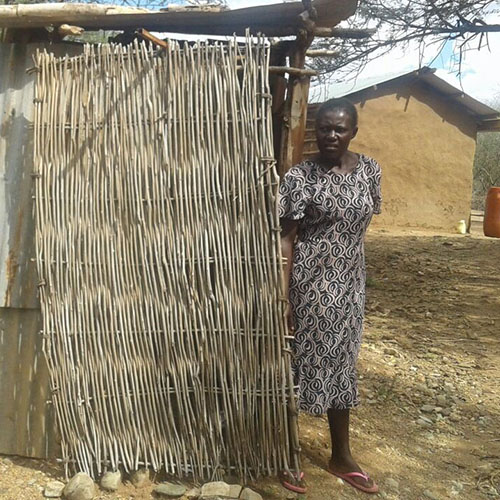
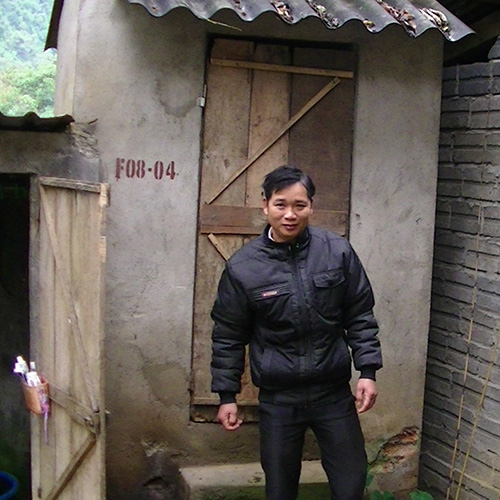
Everlyn stands near her newly constructed latrine.


More than a third of the world's population - an estimated 2.5 million people - don't have access to improved sanitation like latrines.

Source: Centers for Disease Control and Prevention

Leading by example in Kenya

Everlyn Kemei lives in the Kimnyan community in Baringo County, Kenya. The population in Kimnyan has increased rapidly recently because water is conveniently available here. A CWS-supported sand dam in the area means that community members no longer have to walk long distances for clean water. Not only that, but Everlyn has set up a posho mill near the sand dam that has enabled community members to mill their flour as they draw water. They no longer have to walk 5.5 miles to a market to get maize flour. 

After clean, safe water is available in a region, the next priority often becomes hygiene and sanitation. A big part of sanitation is ending the practice of open defecation – which leads to disease and thus lost wages and medical expenses – and instead promoting the use of sanitary latrines.  

Everlyn is on the water management committee in Kimnyan, and she was elected by the rest of her community to attend a CWS Training of Trainers workshop for community health providers. Everlyn and the rest of the trainers learned how to construct simple latrines using locally-available materials. As a community-elected trainer, it was Everlyn’s task to spread the information she had learned to her friends and neighbors so that they could replicate the same latrine construction. She started with her husband; she explained the importance of sanitation and hygiene and brought him on board with the idea of constructing a latrine at their house. With the help of their extended family, they built a pit latrine. 

Following her example and because of her efforts to engage her community, four of Everlyn’s neighbors have also constructed and are using pit latrines. Everlyn remains committed to working with more of her neighbors to spread the word on the importance of sanitation and hygiene. She believes that over time, the whole community will learn to construct their own pit latrines and will implement better hygiene practices.  

In Everlyn’s words, “I thank CWS for the training, which was my first time to be trained on hygiene and sanitation. With the water in place, I will soon establish a kitchen garden to plant vegetables for my family, while the surplus I intend to sell to customers at a nearby market.” 


Stories of Change


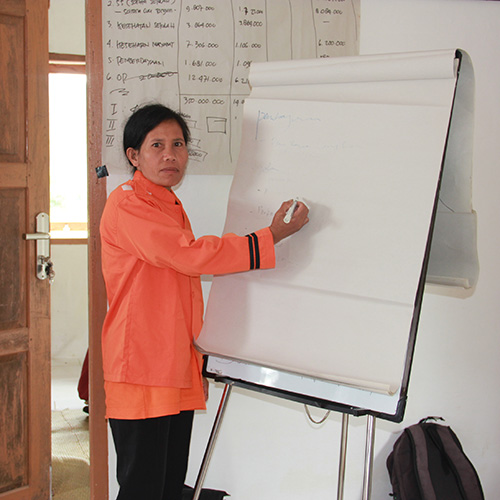
As Treasurer of her community's Disaster Preparedness Team, Elisabeth is helping her village to be able to better mitigate the effects of emergencies like landslides. Photo: CWS


CWS efforts in Indonesia positively impacted 21,212 people in 2016.

Preparing for the Unpredictable

Elisabeth is a farmer from Bo’ne Buntusisong village in South Sulawesi, Indonesia. Her village, like many others in Indonesia, is prone to disasters and especially landslides.

Following a particularly damaging 2016 landslide that destroyed farm land and road access – effectively cutting the village off for a number of weeks – CWS worked to further mobilize Bo’ne Buntusisong’s residents through a Safe Schools, Safe Communities initiative that had begun the year before – with Elisabeth as a keen participant from the start.

Since then, Elisabeth has been elected Treasurer of the Disaster Preparedness Team and was chosen to represent Bo’ne Buntusisong in a recent CWS Disaster Emergency Response Training facilitated. “We learned important details about the different types of disasters that we already know from experience; we also learned about early warning systems and what an effective emergency response involves. We practiced evacuations in simulations, and we learned First Aid,” Elisabeth remembers. “In my opinion, the training was really important because community members and village officials alike don’t really know much about what to do in the event a disaster. I am very grateful for the opportunity to have participated in this learning and sharing event, and I will share my new knowledge and skills with others on the Disaster Preparedness Team in our village so we can share it forward with the whole community.”

NOTE: Community-based disaster risk reduction and basic response readiness are a key focus for CWS in all of Southeast Asia, where there are some of the most natural disaster-prone countries in the world. Currently, there are initiatives underway in Myanmar as well as Indonesia, and planning is under way with a Japanese technical partner for similar work in northern Vietnam.


Stories of Change


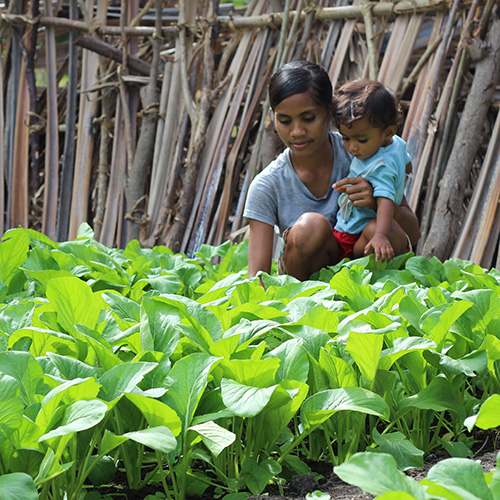
Marselina, Sisilia and their vegetable garden. Photo: CWS


CWS efforts in Indonesia positively impacted 21,212 people in 2016.

Vegetable Variety means Food Security in West Timor

Marselina Toa Uran and Paulus Baifeto are farmers in Noemuke in West Timor. Like countless villages across the region, Noemuke is prone to drought and, as a result, high has levels of food insecurity – meaning that there are extended periods of time when families don’t have enough food to eat, let alone nutritious food. This is particularly worrisome for Marselina and Paulus because their daughter Sisilia is a toddler who needs plentiful, nutritious food to be healthy and grow strong.

Marselina used to grow just a few vegetables, mostly pumpkin and cassava. Both require a lot of water to flourish and both have long growing seasons. “We had our vegetable garden near the river so we could use that water; but, even in the rainy season, the vegetables we harvested were not even enough for our small family. We didn’t have any to sell in the market and earn money for other nutritious food for Sisilia. In the dry season, the river decreases to almost no water, and so we seldom had even enough vegetables for many months,” Marselina remembers as she talks about her good luck to now be part of the Timor Zero Hunger initiative that CWS supports in their village.

After joining the Timor Zero Hunger effort, Marselina is now able to grow a variety of nutritious vegetables: green mustard, spinach, eggplant, tomatoes and water spinach. “I know now how to grow vegetables that need less water and that can be harvested more quickly. I have also made a fence around our vegetable plot to protect our crop from animals. Thank God, since March we have harvested five times! Now we can sell some vegetables at the market and, with the money earned so far, I bought some other necessities such as rice, sugar and milk for my baby. I even managed to save around Rupiah 250,000 [about $19 US]”, Marselina says. She joyfully adds, “I am happy to be able to plant more varieties of vegetables so I can feed my family well and, of course, I am also very happy that I can save some money!”


Stories of Change


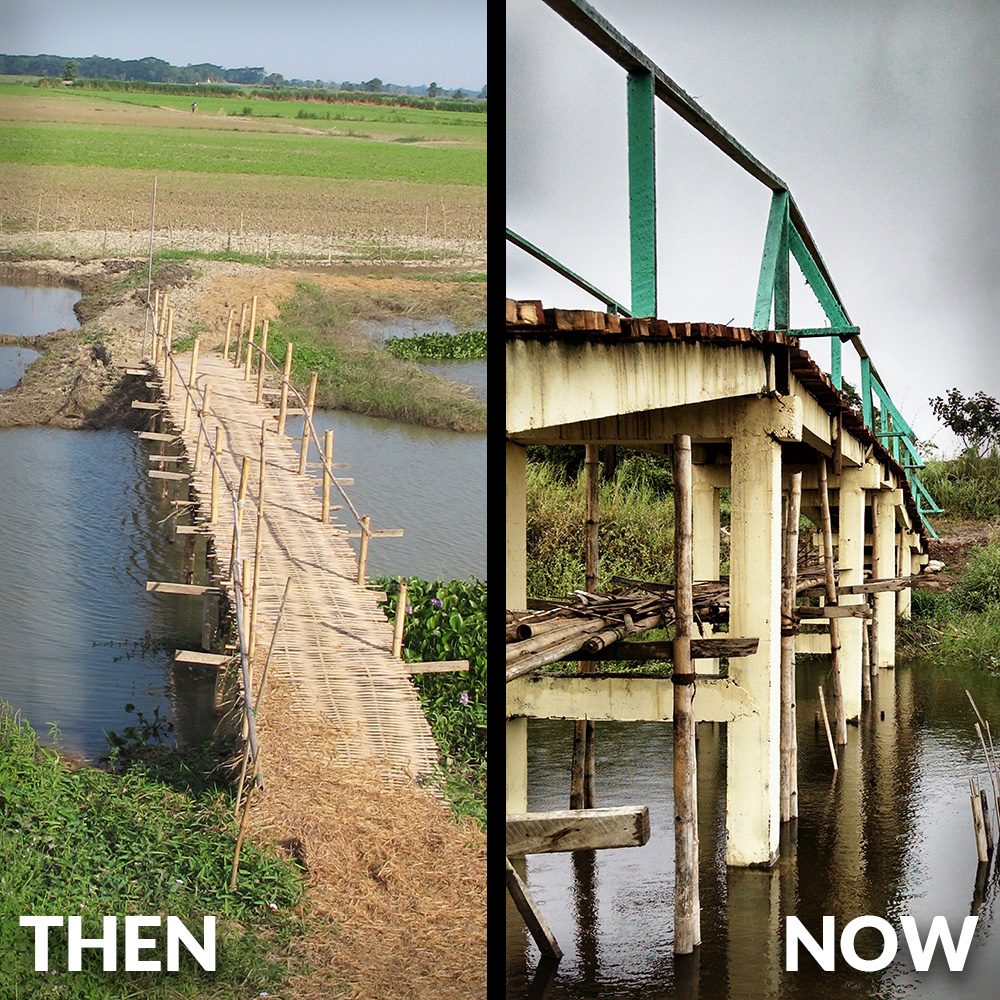
The old and new bridges. The new bridge is built over the old one (you can see the bamboo under the new bridge).


CWS efforts in Myanmar positively impact 28,685 people last year.

A Bridge to the Future in Myanmar

It’s a two-hour drive from Yangon, the largest city in Myanmar (Burma) out to Maubin Township. From the town of Maubin it’s another hour’s drive to Inn Ma Su village. You can make that drive in the dry season. During the rainy season between July and September, the roads between Maubin and Inn Ma Su flood, and your only option is a 90-minute boat ride. About 1,400 people live in Inn Ma Su and the nearby villages of Kyone Cha, Ywar Ma and Sint Ku.

The rainy season presents challenges and risks for everyone, including children. During the dry season, it takes the children from Inn Ma Su about 40 minutes each way to walk to and from school. Not only does it take much longer in the rainy season, but it is also dangerous because of muddy paths and both standing and moving water. During the height of the rainy season children can’t walk to school at all – they have to be taken by boat. That is a time consuming solution for both the children and their family members, and it is is also dangerous.

Something needed to change to help students get to school. In early 2017, with support from Week of Compassion, work began to plan and construct a new, 90-foot concrete bridge so that school children could access the main road more safely and easily. Our CWS team in Myanmar worked with village leadership and the community’s Water and Sanitation Committee to choose a bridge design – one that included hand rails and a safe surface – and draw up construction plans and a budget. The community committed to share the cost of the bridge by donating labor.

Work on the new bridge began in March. A CWS engineer worked with skilled masons and community volunteers to ensure quality work for safety and sustainability. The bridge was completed in April, in time for a mid-May inauguration and celebration.

While the bridge was designed with students in mind, it’s benefits are far reaching for the people of Inn Ma Su. Ma Kaythi, a mother of three, told us, “I feel so happy that we have the bridge because I do not worry any more about my kids walking through the creek when they go to and from school. Now, they can go safely within a shorter time. The bridge also encourages women like me to go to the Health Center for medical care and treatment because it is now much less difficult and time-saving.”


Stories of Change


Teachers attend information sessions about the La Hu language. Photo: CWS


CWS efforts in Vietnam positively impacted 37,967 people in 62 communities this year.

Shared language, new connections in Vietnam

When CWS staff visited the Pa U #2 satellite kindergarten in Mu Chi village in Vietnam in June, they were greeted by song.

It wasn’t just the song that was so important, though. It was the fact that the song was sung in the La Hu language by the teachers at the school. Pa U is a commune high in the mountains in the far northwest of Vietnam where La Hu families live. The La Hu are an ethnic minority in Vietnam who have a tradition of nomadic cultivation. Their livelihoods are tied to the forest and remote living. Most teachers who work in the region are from the Kinh majority ethnic group. They do not speak the same language as the La Hu, so it is difficult for them to approach families and convince parents to send their children to school.

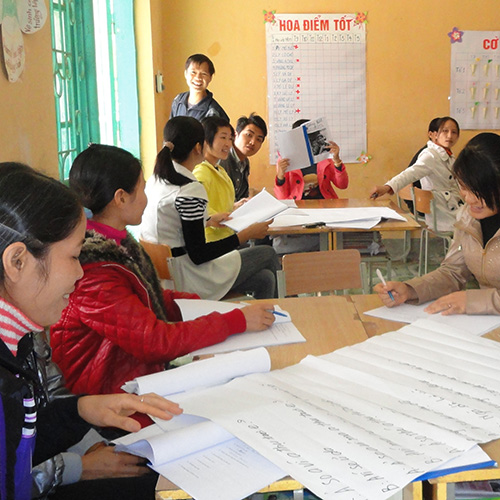
Our team in Vietnam helped lead La Hu language sessions for teachers so that they could learn to communicate with the families in their communities. Bui Thi Tien, Deputy Headmistress, told us, “CWS has helped our school so much with a training course for our teachers to learn the La Hu language on weekends. This is a meaningful activity!”

Bui Thi Thap, a teacher standing nearby, added, “At the beginning, our knowledge of the La Hu vocabulary was so limited! Almost none, I would say. So, we were very eager to join the training course, even though it lasted several months and was taught on the weekends. The curriculum was good, as it was based on our stated needs. We are now much more confident in communicating with people in the village.”

For CWS Vietnam, there’s nothing more valuable than when our team’s efforts are reciprocated with teachers’ and children’s appreciation in this out-of-the-way village!


Stories of Change


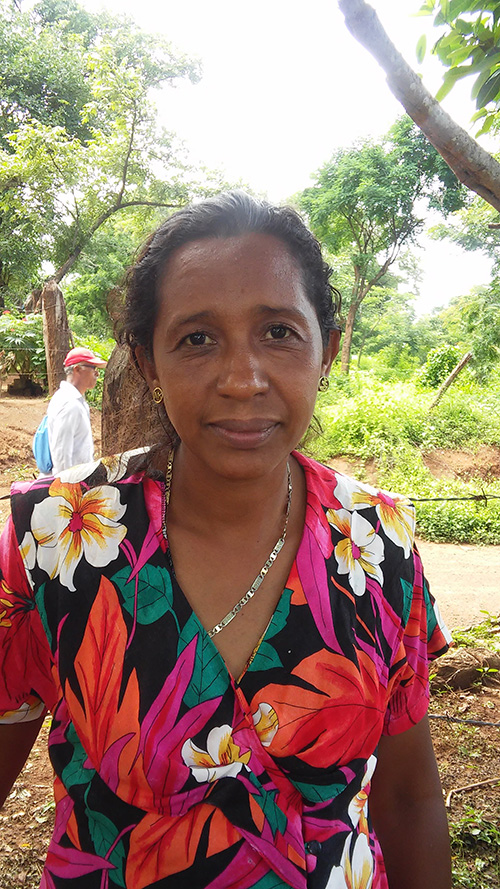
Eligia, a community leader in the village of Tecomapita. Photo: CIEETS


In a 1.5-year period, 221 community promoters accompanied 884 farmers as part of the CWS-supported program in Nicaragua.

Learning from neighbors for better agricultural practices in Nicaragua 

Eligia Traña is a community leader in the village of Tecomapita in Nicaragua’s Carazo region. Tecomapita is one of eight communities in a CWS food security and nutrition program that is implemented by CWS Partner CIEETS with support from Foods Resource Bank. It is the poorest of the participating communities and has the least access to safe water and worst soil quality.

But it hasn’t always been this way.

When Eligia moved here 30 years ago, there were good climate conditions and thus good crop yields. She says, “We have always relied on agriculture, and the historical yields were not formidable but were enough to meet our needs. Nowadays, we farm because it is part of our culture and identity rather than for profit.”

There is real need here – four years of drought has taken its toll on the community. However, there is also hope through the CWS-supported program. There is now a Farmer Field School that is off to a strong start. CIEETS will continue to build on the success of the FFS by introducing new topics relevant to the new planting season. Farmer-to-farmer exchanges are a key part of the FFS, offering farmers an opportunity to learn from one another that they may not have had otherwise.

Eligia says, “I like the project because it has helped us a lot in how to move forward improving our soils. The community Farmer Field School has helped us to know and communicate better among the members of the community, which is important because we motivate each other for better participation. One concrete action to integrate everyone in the community is to make a garden with everyone participating. If we produce pipianes, we all get to eat them.”

Her family has also benefitted as part of the project in the area of access to clean water. Their water source is the family well and a nearby stream when rains come through. They purify the water using ceramic filters that were provided as part of the program.

In addition to her engagement with the CWS-supported program, Eligia is also an active member of her community’s seed bank and is diversifying her plot with fruit trees.

In her words, “This project is a blessing for each of the communities that benefit … it has come at the right moment.”


Stories of Change


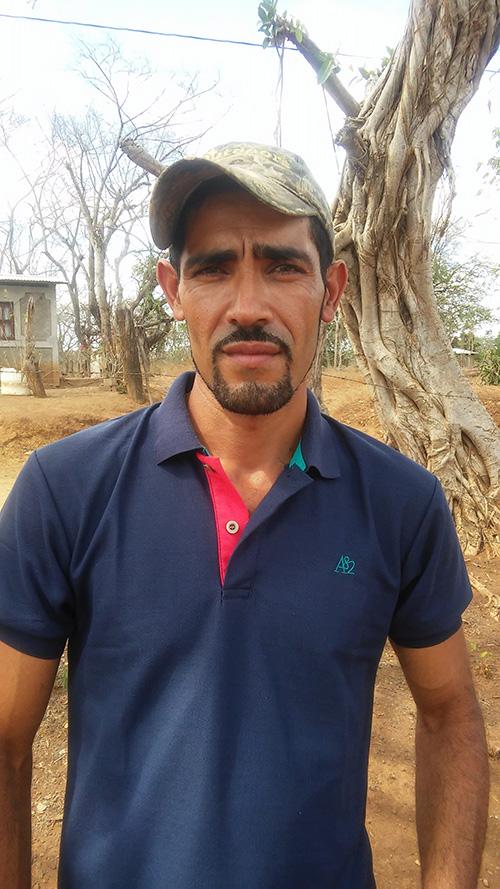
Rene. Photo: CIEETS


In a 1.5-year period, 221 community promoters accompanied 884 farmers as part of the CWS-supported program in Nicaragua.

Working together in times of crisis

Rene Bermúdez lives in the community of El Mojón, one of eight participating in a CWS food security and nutrition program that is implemented by CWS Partner CIEETS with support from Foods Resource Bank.

Rene is a relative newcomer to the area, having only lived in El Mojón for five years. He has heard about the past success of the region – he says that his neighbors have told him about how three decades ago there was plenty of food despite the poverty of the region.

Now, Rene says that the food that members of his community are able to grow is not enough. He says, “Continued drought limits our ability to grow our food. Harvests are modest and force us to migrate as seasonal laborers elsewhere. To make things worse, this year torrential rains are destroying our small bean crop.”

And yet, “despite this all, we remain hopeful that things will improve even a little bit.”

The CWS program is helping to break the mold of traditional farming practices in favor of alternatives that are more resistant to climate change. Rene says, “The project is a blessing for many families. It has helped us learn many things that are necessary to cope with and mitigate this crisis – how to survive with our own resources.” Traditionally, farmers in the region stuck to corn, beans and sorghum. They are now beginning to diversify their plots to increase resilience.

Rene tell us that the Farmer Field School, which is run by CIEETS to provide lessons on different techniques and allow a space for farmer-to-farmer exchanges, is making a big difference. From his perspective, this is a moment of crisis for his community, and all hands are needed to get through it. Because farmers can attend the FFS for a mix of theory and practice and learn new techniques, everyone is benefitting.

Rene says, “I want to thank God for this blessing to our families and other communities. Also to those who contribute – you do not know how much that contribution, even if it’s small, helps us.”


Stories of Change


Ramona. Photo: Amber Blake / CWS


In a 1.5-year period, 221 community promoters accompanied 884 farmers as part of the CWS-supported program in Nicaragua.

Hope, despite the challenges of climate change 

“Doña Ramona has been a natural and positive leader from the beginning. She is constantly encouraging others to take initiative and take advantage of learning opportunities despite the challenges posed by poverty and water scarcity,” says Maryan Guzman. Maryan is a member of local ecumenical NGO CIEETS, which is CWS’s implementing partner in La Conquista, Carazo department, Nicaragua. The area is part of Central America´s dry corridor, an area devastated by droughts in 2014 and 2015 and by a plague that destroyed part of the crops in 2016. In 2017,  excess rainfall is taking a toll on crops.

Ramona Cruz tell us, “I have lived in the community of El Nance for 40 years now. My husband and I have worked a lot to make a living, and thanks to God we have overcame several crises. Unfortunately, the drought in recent years has been the worst. Since 2014, we haven’t had enough rainfall – not to harvest or even to recover the seeds we used. In order to survive, our family of eight  – like most of our neighbors – had to sell almost all our chickens, pigs and ducks. Later, during the first planting season in 2016, a little rain came in but was late (mid-June). Despite this, there was little sowing – since the first sowings are made in the third week of May – but when some of the corn, beans and sorghum began to mature a plague killed the crops in this area. We produced enough to survive but not enough to sell. These years have weakened us greatly. Our oldest son who studied for a technical career had to drop vocational school for lack of financial aid.

“Our son is our right hand. He is always trying something new on our land with the CIEETS technician. He has created an irrigation system to harvest water in the summer; he found a way to transport water from the river to a height of 15 meters without an electric pump. People are amazed with it.

“My husband, son and I are volunteer promoters of the project and we like it! I am responsible for managing the community rain gauge. I measure and record rainfall, and when it is too heavy I alert neighbors so they do not cross the nearby river because it is too dangerous. The rains we are seeing so far in 2017 are stronger than previous years, it has rained a lot and some crops – especially maize and beans – are being lost because we used a variety of seed resistant to drought and now there is too much moisture in the soil.”

Ramona is proud to share that, “My husband is in charge of the management committee of the local seed bank, and my son supports us with training at the local Farmer Field School in El Nance.”

Agromomist Maryan explains that, “Each Community Seed Bank is key to ensure families access the seeds they need each planting season. Last year we strengthened them with drought-resistant maize and bean seeds”.

Maryan firmly believes that the project promotes initiatives that will improve the situation of families in El Nance in the medium and long run: groundwater recharge through community-led reforestation, rainwater catchment and storage systems, stronger community-based organizations and solidarity among neighbors through Farmer Field Schools and local faith leaders that participate more effectively in community awareness-raising and community mobilization efforts.

Ramona believes, “there are reasons to be hopeful.” Her family and the other 75 families living in the two nearby communities have seen positive change taking place in their own backyards and kitchens.

In the last two years 76 households have access to fresh and safe water in their homes thanks to an ambitious water project that takes and stores underground water in a community cistern and distributes it along 5.6 miles of pipes. Communities donated the land for the cistern, and the local water committee administers the system. The local government funded the digging of the 100 ft. well and the construction of the water cistern. With support from CWS and Foods Resource Bank, CIEETS provided the pipes and technical assistance needed to create and train the water committee members according to Nicaragua´s water legislation.

“Today, communities have access to safe water 12 months a year,” summarizes Maryan.  “Before the water system, Ramona had a family well with contaminated water and had to fetch water from the nearby river, which also had contaminated water”.

Maryan ends by saying why he thinks Ramona is a role model: “She is always encouraging others, caring for the community and being thankful for what she has.”