Stories of Change


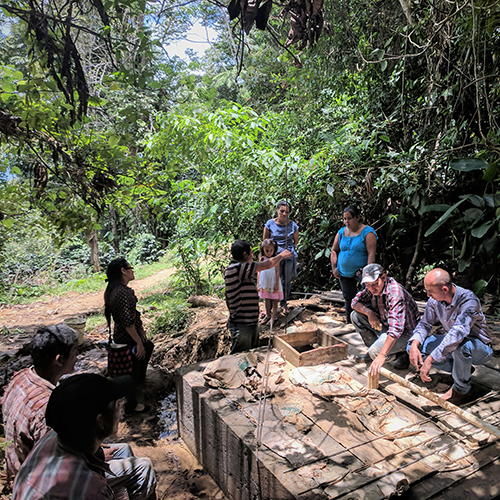
The water management committee works on the new system. Photo: Bethany Beachum


In Honduras, 600 families participate in CWS-supported food security activities.

Clean water for Nueva Libertad

“The kids would arrive to class and say, ‘Teacher, I want water!’ but I would say, ‘There isn’t any here, go home and ask your mom for some.’ But they would say there wasn’t any there either. So, our community really has suffered a terrible water scarcity problem. Water is life, so we have suffered too much from this – the crops, the poor men carrying water from way downhill in order to water the crops.“

For residents of the town of Nueva Libertad in Honduras, water uncertainty was a way of life. Young couples were waiting to build homes and start their lives together because they didn’t know what would happen. Children arrived to school with no water, and the school didn’t have any to give them, either.

Access to water is complicated here. The usual water systems, which use gravity to bring water down from higher elevations and into communities, don’t work here because of the town’s high elevation. Getting water to the residents requires a more significant investment in a system that will bring water uphill instead of downhill.

Through our partner CASM, CWS and Foods Resource Bank teamed up with the water management of Nueva Libertad to install a system that uses an electric pump to get water to all of the homes. CASM is working with the local government to help cover some of the extra costs of the system, and the water management committee will work to ensure that each household helps pay for a share of the electric bill moving forward.

Construction is now underway to get Nueva Libertad access to water and begin to lift the pause on life here.


Stories of Change


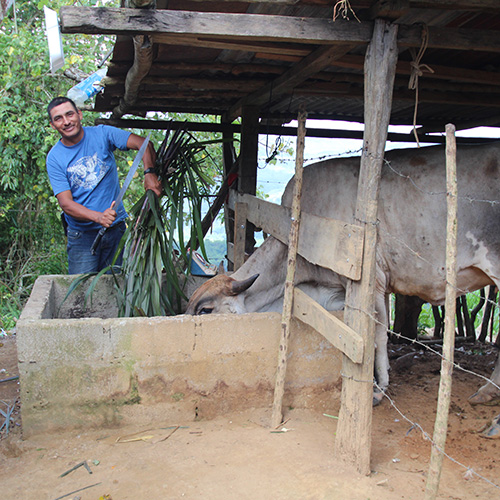
Rafael with his cow. He will give her firstborn calf to a neighbor. Photo: Bethany Beachum


In Honduras, 600 families participate in CWS-supported food security activities.

A wealth of new opportunities in Honduras

Rafael Alvarado has lived in Buena Vista, Honduras, for his whole life. Buena Vista, which means “good view” in English, is a small community located high up in the mountains. In 2013, Rafael joined a CWS-supported program aimed at improving food security for families in the area that is implemented by partner CASM and supported by Growing Hope Globally.

Since starting to partner with CASM, Rafael and his family have been able to make a number of improvements to their home and livelihood. They have a new cement floor, an eco-stove that uses less wood and prevents respiratory illness, a new water storage tank, a vermiculture bin and fencing for their chicken pens.

They have also begun to diversify the crops that they grow thanks to new seeds provided by the program. Before 2013, their income was mostly dependent on coffee production and harvesting. Now, Rafael reports that he now has more than 50 varieties of fruits, vegetables and other crops. They also have beehives for honey production. Rafael says, “Now that we grow all of these things here, we don’t have to buy our food. In fact, we can now share what we have with our neighbors.”

The family also received a calf. They raised her, and they will pay for her by giving away the calf that she is about to give birth to. After they give the first calf to a neighbor, they will be free to keep or sell the cow and any more calves she gives birth to. She is also a great source of both milk and fertilizer for the family.

In reflecting on the program, Rafael says, “Before, other institutions would arrive and collect our signatures, but after that, we didn’t see anything. Now, this one [CASM] has brought real things, positive things. Such as the cow we have over there, that comes with a commitment. The calf [she will give birth to] already has an owner. I don’t think you will hear anyone in any one of these communities say something negative about this project because we are all thankful for it.”

Rafael sees another advantage to partnering with CWS and CASM: he doesn’t feel a need to migrate. He says that he has seen a lot of people migrate to the United States to get rich, but they come back looking no better off than they did when they left. “That’s what I try to tell people – let’s think about Honduras. Here in Honduras, there are riches. Look at that guy right there – he has several bags full of produce that he grew. We didn’t go buy this stuff in the market; we produced it ourselves. That is being rich,” he says.


Stories of Change


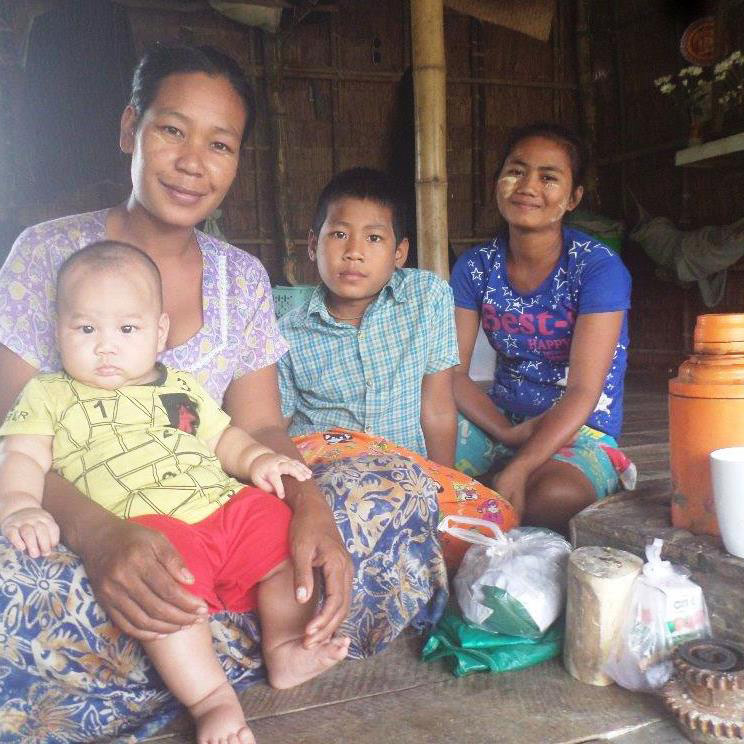
Ma Aye Htay (left) with some of her children. Ma The Phyu, 14, is on the right.


During this year, 18,867 people benefited from CWS and partner initiatives in Myanmar.

A precious gift for Ma The Phyu’s family

U Tun Naing and Ma Aye Htay have a big family by Myanmar’s standards. The parents, who are 40 and 37 respectively, have seven children ranging from three to 20 years old. The children who are of school age are enrolled in the local school. Their toddler stays at home during the day with father U Tun Naing, who cannot work because he has suffered two strokes. The oldest three siblings join their mom, Ma Aye Htay, as day laborers.

Despite having four paid workers, the family is very poor. On top of that, they are facing a lot of medical bills. Consequently, they were prioritized by their community to partner with CWS for assistance in building a new, sanitary latrine.

The whole family benefits from this improvement in their lives, but 14-year-old Ma The Phyu is especially grateful. “I am so happy to have a clean latrine. Before, we had an unsafe latrine with falling-down walls and I did not feel good going to toilet because I was afraid someone would see me. I especially did not want to use toilet when I had my menstrual period, so I always waited until it was dark to use the latrine – which was really dangerous. So, this safe and secure latrine is a precious gift to me. I really want all my girlfriends to have hygienic latrines, too. My whole family feels so proud to have a good latrine – even though we are a poor family.”

The family’s house.


Stories of Change


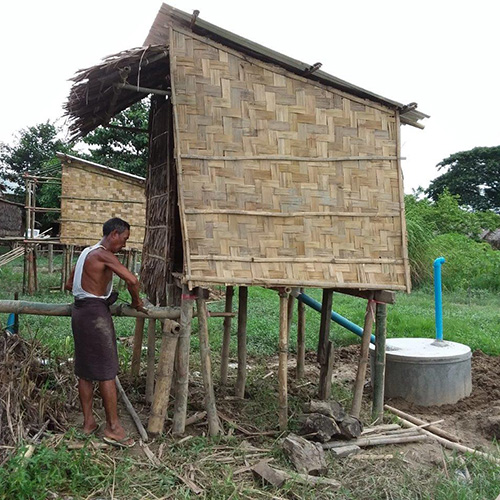
A man builds one of the sanitary latrines constructed in this program.


During this year, 18,867 people benefited from CWS and partner initiatives in Myanmar.

Flood Recovery Brings Lasting Improvements for 85 Myanmar Families

Some basic rebuilding in communities that were flooded last July in Myanmar’s Ayeyarwady region has improved the lives of 85 families in two villages of Maubin township, which is due west of Yangon.

Support from Japan’s Felissimo company enabled CWS to provide basic tin roofing materials to 10 families so that they could better protect themselves during inevitable future rainstorms. These families and 75 others also now have basic, hygienic, elevated latrines, which they can use all year round – even when their villages are flooded.

Before these latrines, families used to have to go to the forest to use the bathroom, including at night and in the rainy season. Snakes and insect bites were an all-too-real possibility. Equally important, people – especially the girls and women – no longer feel ashamed about the bad smell of their waste from open defecation and menstruation.

Our team in Myanmar is really proud to help people have their dignity, so the results from our partnership with Felissimo are important to them. Another significant benefit of this program? It helped provide a context for awareness-raising; many families learned important lessons about personal hygiene and disease prevention, which has caused them to change their behaviors to protect their health. For example, handwashing before meals and after toilet use, and keeping latrines themselves cleaner, was seen more often as the project progressed.

Now, with a more hygienic home and behavior, families can focus on other things, like work and education, without worrying about sickness due to diarrhea or other diseases and conditions related to poor hygiene.


Teamwork, in business and marriage


September 13, 2017

Hong Khoeun, 55, and her husband Sim Kheang, 60, live in Kam Prak village in northern Cambodia. Their daughter, Chrang, is in seventh grade at a secondary school in a village about 12 miles from their home. She lives in a dormitory during the school week. In 2012, CWS began working with vulnerable families in Kam Prak to better understand …

Stories of Change

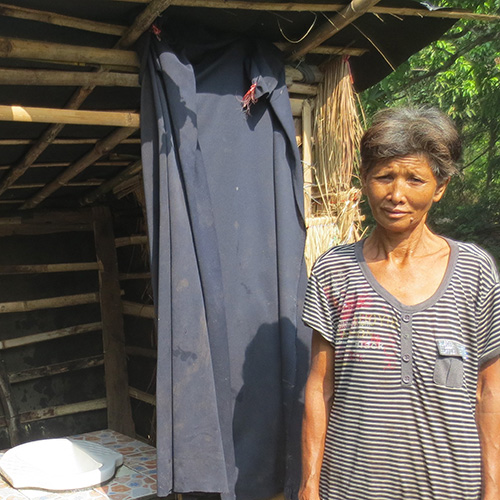
Heang next to her new, sanitary latrine.


This year, CWS programs in Cambodia reached 21,373 individuals in 83 communities.

Information, education and a sanitary latrine in Cambodia

Chab Heang, 61, lives in Ballangk Kroam village in central Cambodia. She and her 30-year-old son Kriya work as wage laborers on their neighbor’s farms. They plant and then harvest corn and potatoes for up to $10 US each day. Heang and her husband got divorced some years ago, and he was the family’s primary wage earner. Now, Heang and Kriya are trying to earn enough to get by.

They can only work as wage laborers during planting and harvesting months, which are few. To add to their earnings, Heang sells vegetables from her home garden to earn $5 or $6 US in a day. These earnings, of course, are seasonal. There are still significant gaps in the family’s income.

Needless to say, this situation makes it really hard for Heang and Kriya to save any money or to make improvements on their small wooden house. The home has no running water or toilet – not even an outside latrine.

That’s where the Rural Development Association, a CWS partner, comes into the picture. Thanks to some outreach work among some of Cambodia’s poorest families, the RDA met Heang. She became a CWS Household Partner, which means that she took part in a program focused on giving her the information and supplies she needed to make improvements. She worked with the RDA and the local government to build a safe, sanitary latrine. She also had access to information and education about better personal hygiene and water safety. She also joined a saving group, which has helped her as she continues to improve life for herself and her son.


Stories of Change


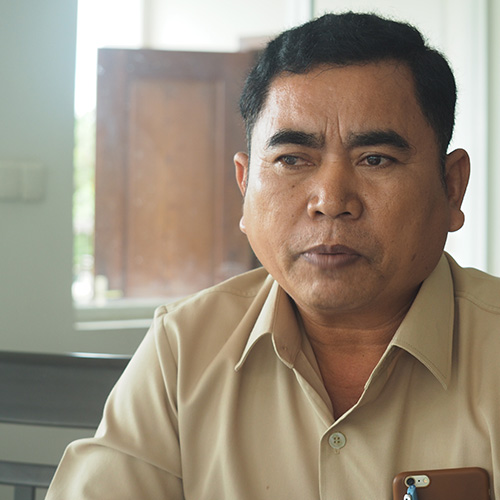
Chhay You, Commune Chief in Ti Pou commune in central Cambodia.


This year, CWS programs in Cambodia reached 21,373 individuals in 83 communities.

A sustainable legacy in Cambodia

It has been more than five years since CWS was actively engaged in community development programs in Ti Pou commune in central Cambodia. Chhay You, the Commune Chief, is now 59. He is proud to continue helping his neighbors and friends as the work each day to secure better lives for themselves and their children.

You was Commune Chief when, starting in 2007, CWS partnered with families from four villages in the commune. In line with our enduring mission in Cambodia, our focus was to foster economic development through support for dignified livelihoods which, in turn, helped families address their food insecurity, including poor nutrition and issues of safe water access, sanitation and hygiene – all of which affected the well-being of all villagers, especially young children.

Several years after our active engagement in Ti Pou ended in 2011, You and the communities where CWS worked are going strong with key positive changes evident daily, including an increase in personal and family sanitation, as villagers now know to use filtered or boiled water drinking wash and, especially before cooking and serving food, to wash their hands with soap.

Recently, as part of our retrospective look at CWS accomplishments in Cambodia, we spoke to You and he told us about the effect of his partnership with CWS, both for him personally and for the community. Through CWS, You was able to join a number of educational workshops. He particularly recalled the one focused on conflict resolution when he said, “From CWS I learned a lot about peaceable conflict resolution. As the Commune Chief, I often know when there is a problem somewhere because people bring their quarrels to me and I can mediate differences and find resolutions. Because of this the people in my community believe in my me and continue to trust and select me to be their leader.”

The commune’s partnership with CWS, especially the teaching and learning, but also the material resources shared, has meant that many families have better lives. Not only are the families themselves more resourced and resourceful because of CWS support, but local government authorities, together with You and other active citizens, now routinely check and repair wells, public latrines and community buildings as well as local roads to sustain the partnership’s good results.


Stories of Change


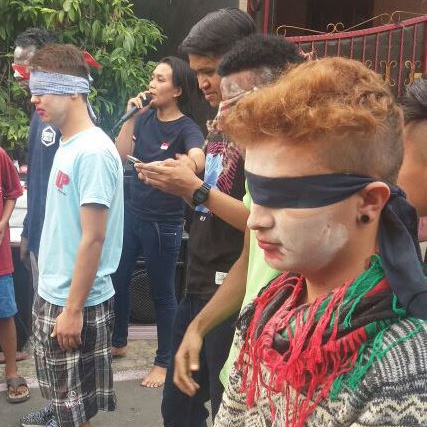
Participants join a game involving blindfolds as part of Jakarta's celebration of Independence Day.


The CWS Protecting Urban Refugees through Empowerment program continues to support almost 500 especially vulnerable refugees and asylum seekers in Jakarta, including 200 unaccompanied and separated children.

Somali refugees join their Jakarta neighbors to celebrate Independence Day in Indonesia

Across their vast and diverse nation, Indonesians gathered recently to celebrate their Independence Day (August 17) with parades, sports competitions, games and, of course, celebratory speeches. In Jakarta this year, there were some unfamiliar faces in the celebrating crowds as many refugee children joined their neighborhood Independence Day parades.

Among the refugees were 16-year-old Said, who is from Somalia, and his friends. Like so many others, Said has fled his country’s endless sectarian violence when some of his family were murdered. A year ago, he began an all too familiar and dangerous journey to Indonesia by way of Malaysia. And, after reaching Jakarta, he joined many other asylums seekers who were camping out near the United Nation High Commission for Refugees office until he had the chance to join about 200 other unaccompanied children, mostly boys, who live in CWS-hosted group homes around the city.

Wearing traditional Somali clothes, Said and his house mates joined the parade around their adopted neighborhood and then the games that followed. “I’m happy today. I can make new friends, I can laugh, I feel welcomed and part of a community,” said Said.

With 66 million people worldwide on the move seeking safety and security outside their homelands today – and with more than 10 million of them being younger than 18 years of age – it was certainly a bright spot in the day to hear from Said and to know that CWS efforts to protect and support vulnerable children worldwide have an impact.


Stories of Change


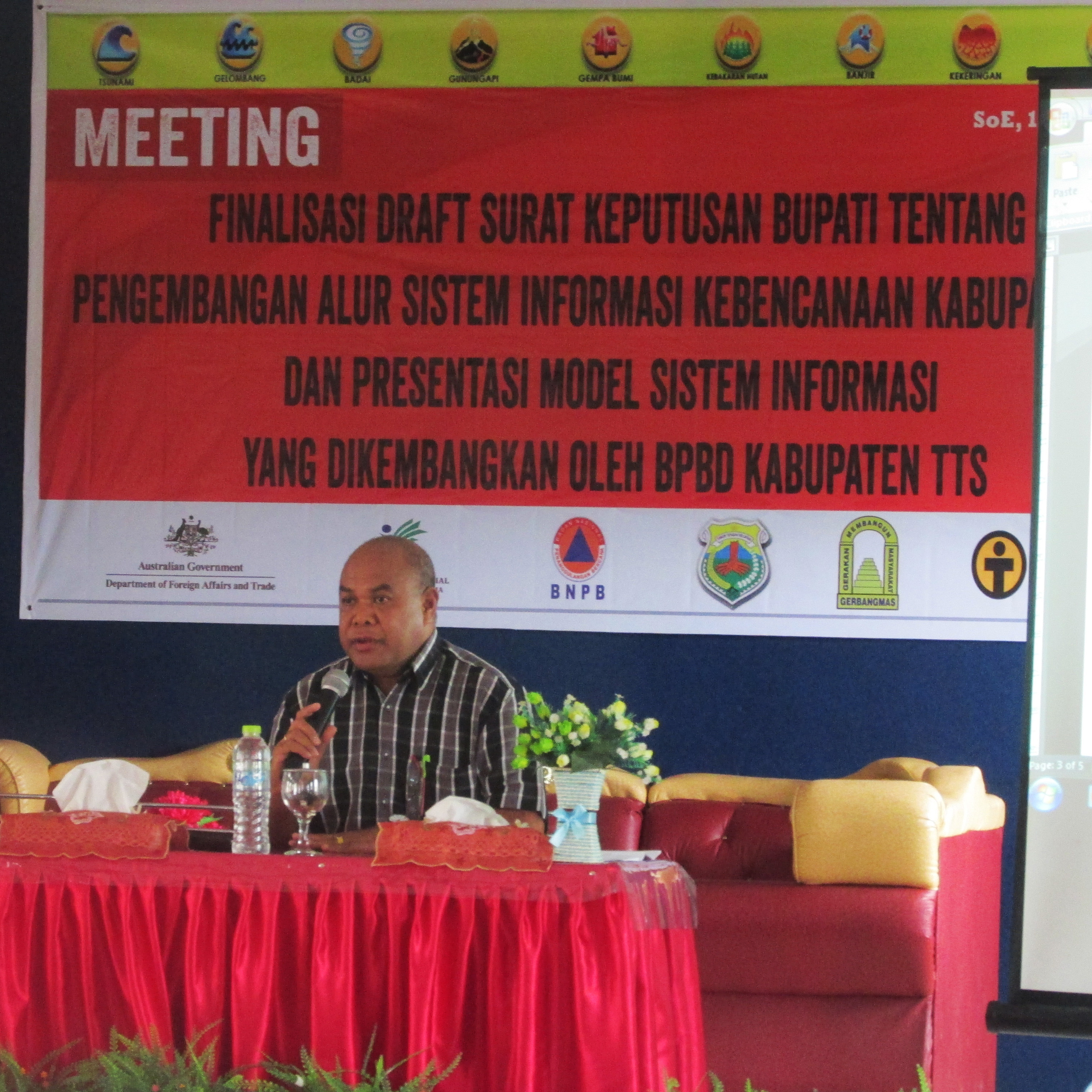
Oky Juser Laisnima leads a meeting of the Disaster Risk Reduction forum in Timor Tengah Selatan District of South Sulawesi, Indonesia.


CWS efforts in Indonesia positively impacted more than 17,000 people in 16 communities this year.

Solidarity increases community awareness and action about disasters

“Our district is often hit by natural disasters like floods, landslides and drought. In the past, there were no resources from the district government or anybody else to deal with disasters, so we worked together as volunteers in our community when a disaster struck. In the past, we didn’t know anything about disaster risk reduction or preparedness,” remembers Oky Juser Laisnima, who leads the Disaster Risk Reduction Forum that was formed in his district in the north of Indonesia’s South Sulawesi island as part of the CWS-supported SOLIDARITAS initiative.

In solidarity with government disaster management agencies, CWS staff have helped improve their awareness, knowledge and, importantly, their ability to take action for disaster risk reduction, response preparedness and mitigation. This includes support to District DRR Forum, which convenes key stakeholders and duty bearers around the increasingly complex dynamic of acknowledging and addressing weather-related risks and disasters.

“SOLIDARITAS has helped us further the DRR Forum’s mission and reach important milestones in our district, such as setting up a Disaster Information System. The Forum has also been instrumental in getting important regulations and standard operating procedures finalized and signed by the Head of the District,” Oky added. “Recently we did a community awareness campaign in two villages where CWS helping us pilot the government’s Disaster Resilient Village concept, and we used our local radio station to broadcast public service announcements about disaster preparedness and response.”

Nearby, in another village, the SOLIDARITAS team has supported community leaders to add disaster risk reduction and management into their village development plan. One local leader, Harun Lembang, had a number of points to share in talking about the project. “Now there is a process to integrate DRR activities into our development plan, and we can start budgeting for {government support for] DRR work in the future. I am happy and I feel encouraged, and for 2018 we will propose an emergency response fund and also funds for reforestation,” he said; then added, “The biggest benefit in the community is that we have improved knowledge about disasters, especially how to identify hazards, and how to reduce risks. I hope that all the action plans and activities that have been prepared with the support from the CWS SOLIDARITAS team can be realized to reduce the effects of natural disasters, especially landslides and fires that often occur in our area.”


Stories of Change


Yabes Tefa, right, with her daughter in Eonfetnai village in West Timor. Photo: Shanley Studio


Our team in West Timor expanded the Timor Zero Hunger program this year in partnership with families, community leaders and government colleagues.

Water Matters in West Timor

Like many other villagers in the area, the 30 families in Eonfetnai hamlet in West Timor, Indonesia live in a drought-prone area. Before 2013, the hamlet had only one water source – an unprotected spring that, when it filled up, was contaminated by dirt, falling leaves and animal droppings. In the dry season, there was little or no water at all, and families spent a lot of time collecting water from distant and scarce source.

In recent years, thanks to CROP Hunger Walks and other donors, CWS has been able to reach hamlets like Eonfetnai through our Timor Zero Hunger program, which is an integrated community development project to help some of Indonesia’s poorest families improve their lives.

In Eonfetnai, like in hamlets across West Timor and around the world, the lack of clean water – or any water at all – has many negative consequences. These are especially significant for young children, who are most affected by the conditions like diarrhea and severe skin rashes that come from dirty water. The consequences for entire communities are complex and hard to address – especially when people are very poor and uninformed about possible ways to improve their sanitation, hygiene and overall well-being.

Now, with CWS support, Eonfetnai families have been able to protect their spring with a cover and build a cement tank to collect the water. Since the spring shelter and water tank were build several years ago, there has been no water shortage. And, once water was flowing and accessible for all families, the Timor Zero Hunger activities to help families learn about proper hygiene, sanitation, nutrition and environmental health, were meaningful – because they all rely on having clean water.

Remembering the times before they had their safe and plentiful water, a young farmer named Yabes Tefa recalls that her then 4-year-old daughter, Sifralili, “was often sick with diarrhea because I had no water and could not keep our home in a hygienic way. Also, because we had no water, we rarely ate vegetables because we couldn’t plant a garden and, back then, we could not afford to buy them in the market, either.” For Yabes, having enough safe, nearby water has meant less time spent collecting water and more time for other things like planting vegetables and making organic fertilizer – both of which she was able to do with additional CWS support.

To increase their own successes, Yabes and other women in Eonfetnai created a farmer’s group and divided a shared garden into two sections: one for vegetables to be used for family meals and one for vegetables to be sold in the market. “Now, we can make 200,000 Rupiah ($15) every week from selling vegetables in the market,” said Yabes. And, with diversified CWS support, in April 2017 the group expanded to raising chickens to help ensure more diverse diets, especially for their children. The group members learned how to build chicken coops, make chicken feed and hatch chickens in a simple incubator. “Now I have more than 50 chickens!” says Yabes proudly. “At the moment, I don’t have any plans to sell the chickens, only the eggs – for 2,500 Rupiah (18¢) each – and, so far, I have used some of my profit to renovate our latrine so it is sanitary, which I learned how to do with help from the CWS team.”