Stories of Change


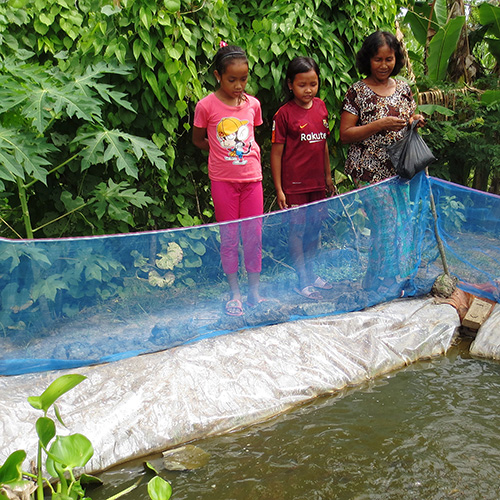
Pring feeds the catfish in her new fish pond.


This year, CWS programs in Cambodia reached 21,373 individuals in 83 communities.

Source: CWS Annual Report 2017

Promoting Better Lives: Pring takes us up on an opportunity to change her family’s life

Duk Pring, 55, lives in a very small and simple home in Rung Chrey village in western Cambodia with her husband, 80, and her three primary school-age grandchildren.  Pring and her husband do not work for pay – their daughter, who works in Thailand, supports the family. The family’s home lacks the basic amenities that many people are able to take for granted: running water, a toilet and electricity.

During regular staff outreach to some of Cambodia’s poorest families, CWS partner Rural Development Association met Pring in November 2016. Because of their clear vulnerability – especially with three young children and an elderly family member – they became CWS household partners. Like many family partners, Pring said she mostly wanted access to information and opportunity about how she could improve her family’s living standard.

When she heard some of the options about ways that she could partner with RDA to improve her family’s situation, Pring said she would likely try raising fish as a way of improving both her family’s income and nutrition.

To get her started, community leaders helped Pring dig her pond for fish raising. Through the CWS-supported program, Pring was also able to access information sessions about personal and household hygiene, water safety, additional ways to earn money (like growing mushrooms) and  how to join a savings group to start to protect herself and her family for emergencies.

Speaking with CWS staff recently, Pring offered her thanks to RDA and CWS say, “I’m very happy for the support to my family, and I thank CWS for helping me take good care of my family by giving me opportunity and support.”

—–

About the program:

More than 80 percent of Cambodians live in rural areas, and among these rural populations many families do not have access to basic necessities like improved sanitation or clean water. The CWS Promoting Better Lives program is designed to optimize our impact in rural communities by building local knowledge and capacity as well as providing material assistance to help communities:

– increase safe water access
– improve water use and hygiene practices
– intensify and diversify agriculture
– enhance income opportunities for the poor, poorest and other vulnerable groups

Promoting Better Lives builds on successful experience and extensive partnership with government-supported Commune Councils and Village Development Committees and Cambodian non-government organizations as well as technical support from government departments. Together with national and local government partners, Promoting Better Lives is now supporting especially poor and vulnerable families in 67 Battambang and Preah Vihear provinces to improve their water supply and hygiene-related behaviors, to intensify and diversify their agriculture and to enhance employment and earning opportunities.
Stories of Change


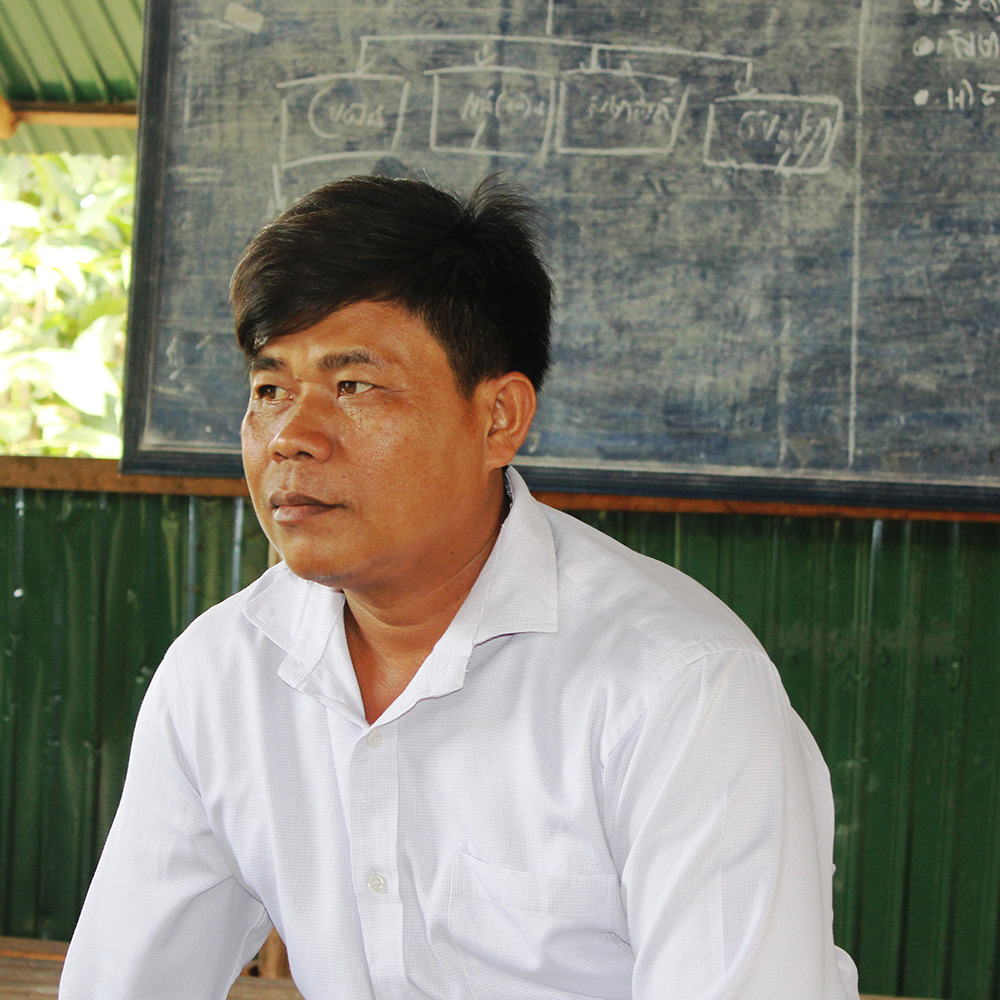
Hean Chan, Village Development Committee member in Anlong Thmar village in Cambodia.


This year, CWS programs in Cambodia reached 21,373 individuals in 83 communities.

Source: CWS Annual Report 2017

Promoting Better Lives: Paying it Forward

Hean Chan, 43, lives in Anlong Thmar village in Central Cambodia with his wife and teenage three boys. Chan has been working with CWS since 2011 to help bring development and opportunity to his own family and to his village. In Anlong Thmar, as in the hundreds of villages across Cambodia where CWS has invested for decades, a key part of helping people help themselves is to help create a Village Development Committee. Chan is now an active member of the committe in Anlong Thmar and is working with CWS staff to help identify which families are most in need of support. This prioritization is based on his in-depth conversations with them about their hopes and plans, as well as their basic needs.

When CWS and our partners help communities form Village Development Committees, interested people have a chance to learn about self-governance and how to be an effective group working for others, plus coaching and ongoing support for things like planning, community project design and even funding proposal writing to attract outside help for their development. Other practical education and training workshops range from bookkeeping to First Aid; from reducing the impact of future disasters to understanding and promoting human rights; from communications and leadership skills to understanding women’s rightful roles in village governance.

The beauty of the Village Development Committee lies in its sustainability. The committee is formed by the community, and the CWS role is sharing information and – importantly – awareness of where more information can be accessed. There is also knowledge and skills development and not just material support. (Although  supplies are often part of our support, especially for most vulnerable families, and for collective community improvement, too.) CWS funds often combine with people’s own contributions to build community wells or household ceramic water filters or other materials to support improved hygiene and water access.

There are a lot of obvious benefits to supporting Village Development Committees. One that may be a little less obvious – but that is still critically important – is that communities become better organized and unified. They have a more independent view and sense of themselves and know they are able to address their own challenges and work together to fulfill their rights by drawing on their own knowledge, skills and community assets as well as outside information.

When asked about changes he has seen in Anlong Thmar since CWS first partnered with him and his neighbors, he said, “I have seen a lot of positive change and improvement. Now we have knowledge and skills. For example, like my wife, many families are better prepared, and equipped, to grow vegetables or raise chickens. This has meant that more families have enough to eat and the possibility to support themselves – by selling surplus produce. Families now understand the importance and practice of good hygiene, and almost all of us have a latrine and use a filter for our drinking water.”

Chan has also felt the positive effects of the partnership with CWS in himself. “Before joining up with CWS, I was very hot tempered. I did not take criticism and would get angry if my work was questioned. In working CWS team members, I’ve broadened outlook and my improved my abilities; I now reflect on my behavior and can see constructive criticism as useful. When we work with others, together we need to be flexible and that’s how we learn and change.” For sure, through CWS interest and investment, Chan’s village, his family and he have all done this.

—–

About the program:

More than 80 percent of Cambodians live in rural areas, and among these rural populations many families do not have access to basic necessities like improved sanitation or clean water. The CWS Promoting Better Lives program is designed to optimize our impact in rural communities by building local knowledge and capacity as well as providing material assistance to help communities:

– increase safe water access
– improve water use and hygiene practices
– intensify and diversify agriculture
– enhance income opportunities for the poor, poorest and other vulnerable groups

Promoting Better Lives builds on successful experience and extensive partnership with government-supported Commune Councils and Village Development Committees and Cambodian non-government organizations as well as technical support from government departments. Together with national and local government partners, Promoting Better Lives is now supporting especially poor and vulnerable families in 67 Battambang and Preah Vihear provinces to improve their water supply and hygiene-related behaviors, to intensify and diversify their agriculture and to enhance employment and earning opportunities.

Stories of Change


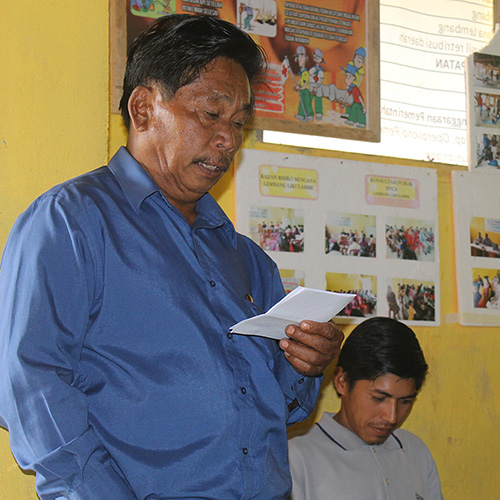
Yohanis Sampe Tola leads the Disaster Risk Reduction Forum in Lembang.


CWS worked with partners and local government to reach more than 7,000 people in four villages through our SOLIDARITAS program last year.

Source: CWS Annual Report 2017

Getting early warning systems into place in Indonesia

Natural disasters are sadly too common in Lembang on Indonesia’s Sulawesi island, as they are in countless villages across the nation. Over the years, landslides and fires have repeatedly claimed lives and destroyed village infrastructure in Lembang.

Now, with CWS support through the SOLIDARITAS program, community members and local government here are taking steps together to make Lembang a disaster-resilient village.

Yohanis Sampe Tola leads the local Disaster Risk Reduction Forum, and a recent decision made by government officials and volunteer Disaster Preparedness Team members is laying the groundwork to make that vision a reality. The Forum agreed on a new early warning system for Lembang that can be understood and used quickly by the whole community to make sure everyone is reached with warnings.

The system’s premise is simple and effective. If a landslide is imminent or happening, the church bell will sound continuously for five minutes. In case of fire, a traditional drum will sound continuously for five minutes.

“This is all part of the community’s collective efforts: identifying hazards and agreeing on simple early warning signals plus deciding on and marking evacuation routes and gathering points,” said Yohanis. “The faster and more accurate early warning is, the faster people will respond in case of a disaster. For the future, we hope our government will assist us with more sophisticated systems, too, like ground motion detectors for landslides.” And, for now, the steps the Lembang Forum members have taken are a key accomplishment in SOLIDARITAS, for which Yohanis and others are rightly proud.


Stories of Change


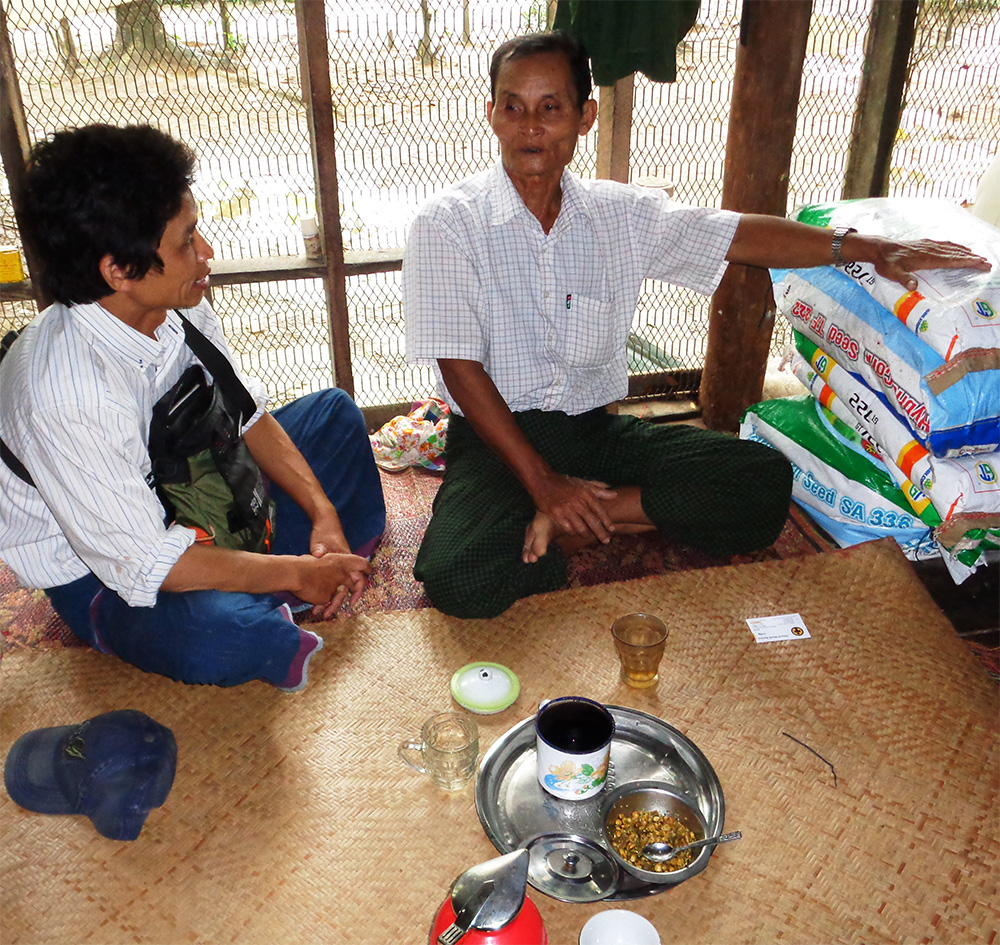
U Maw (right) talks to a CWS team member.


During this year, 18,876 people benefited from CWS and partner initiatives in Myanmar.

Source: CWS Annual Report 2017

A special nutrition champion in Myanmar

U Maw, his wife Daw Tin and their three children live in Let Pan Tan village in Myanmar, where U Maw farms winter crops on nine acres of land that he owns. He is well-respected and engaged in their community, and he is often asked to serve on village committees for social and economic development and community governance.

U Maw wants to see all of the children and adults in his community healthy and well-nourished. Not surprisingly, he has been a great support in encouraging his friends and neighbors to engage in CWS-led nutrition activities in the village. He knows that having nutritious food, drinking safe water, using a sanitary latrine and having other hygienic habits will help make this goal a reality.

Speaking to CWS staff recently, U Maw said, “Most villagers here have limited knowledge about health and nutrition. They do not know exactly how to prepare and share nutritious food for children at different ages, especially very young children.  So, it is good that CWS has given mothers and caretakers some opportunities to learn more about nutrition, hygiene and sanitation, which are very useful for them to take proper care of their children so they grow up healthy and happy. This is very important because today’s children are future leaders of our village.”

U Maw also said that, at first, most mothers were not enthusiastic to join the project’s information sessions. But now, after a lot of CWS outreach, they better realize the importance of good nutrition and proper hygiene for their children’s futures, and they are more and more eager to participate in project activities – even though they are busy with their daily household work. Knowing the importance of having support from influential community members – especially men, since these topics are often regarded as “women’s work” alone – the CWS team is especially grateful for U Maw’s engagement and encouragement.


Stories of Change


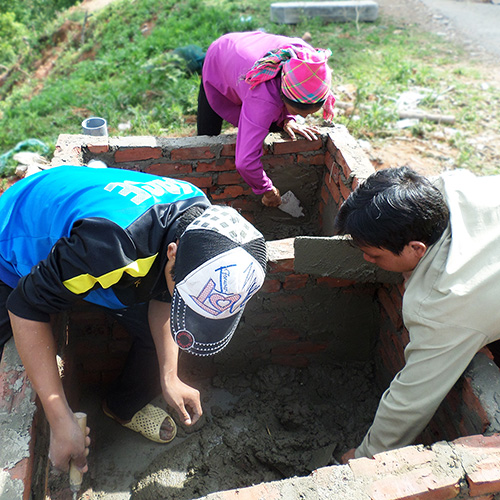
The latrine under construction.


CWS efforts in Vietnam positively impacted 40,036 people in 69 communities this year.

Source: CWS Annual Report 2017

New knowledge inspires a young family in Vietnam

Po A Hu is a young La Hu man living in northern Vietnam. After he got married, he moved from his own village to his wife’s, where they now live with their young son and Hu’s elderly mother in law. Their small house was just built about three years ago, but there is no latrine because they family has neither the right land nor enough money to build one – they thought.

That all changed when CWS team members held a village information session as part of our Community-Led Total Sanitation approach. During these sessions, our technicians explain the importance of building and using sanitary latrines and provide information on how to do so. After the session, Hu understood more about different sanitary latrine models and wanted to build one for his family to improve both their well-being and that of his village.

Hu was happy when his wife also liked the idea and urged him to  build their latrine as soon as possible. She urgently wanted to stop being uncomfortable and embarrassed when having to use the forest as her toilet, since it came with perils such as mosquitoes and heavy rains.

The young couple had already stockpiled four sacks of cement and some bricks to build a pigsty. They decided to use the supplies to build a latrine first. Po A Hu went to the nearest town and bought some iron, metal sheets and plastic pipe, and then he started to build the latrine himself. He explained to one CWS team member, “If you make something yourself, you will appreciate the time and effort it cost you; you will feel its value and keep it in good condition.”

This is certainly proving true for this family. When our team checked out the latrine, they said that it is indeed clean and very well maintained. We are so happy that this young family was inspired with new knowledge to use their precious resources to improve their lives, especially for their elderly parent and their growing child.


Stories of Change


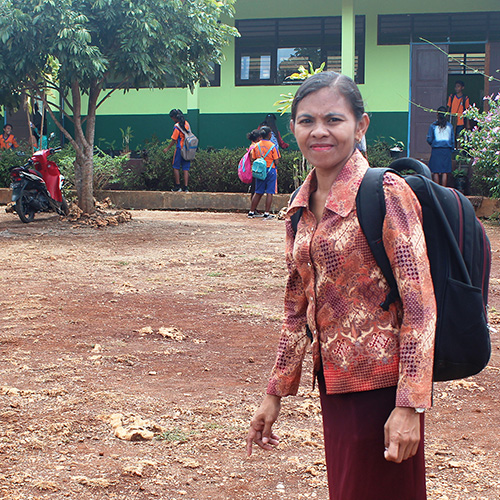
Ms. Selan in front of her school.


CWS efforts in Indonesia positively impacted more than 17,000 people in 16 communities this year.

Source: CWS Annual Report 2017

Addressing early marriage and pregnancy in West Timor

Nuryadin Selan is the headmaster of the junior high school in Oebaki village in remote West Timor, where teenage pregnancies and early marriage are a serious concern. “At one point, I had only 30 girl students in my three classes because so many had dropped out,” noted Ms. Selan during a recent workshop about adolescent sexual and reproductive health education and training session for peer educators.

In response to a long-recognized issue of too-early marriage and pregnancy in West Timor, CWS is partnering with the Disciples of Christ through their Week of Compassion initiative to pioneer Berdaya (Empowerment) as a key element of Timor Zero Hunger initiative.

While the idea of a sexual and reproductive health initiative might seem like an obvious part of addressing issues of hunger, it actually is. For too-young mothers in food-insecure communities like Oebaki – where many people are malnourished – the risk of perpetuating the cycle of malnourishment and hunger is high. This is especially true for babies who are in their first thousand days of life.

So, Ms. Selan said, “I really support the CWS project for sexual and reproductive health for youth. It’s important for them to know so many things about these topics. I’m concerned that too many girls marry young and don’t continue their studies,” and so the lack of information and knowledge about the dangers of early pregnancy persist. “It’s important to involve schools and teachers like me; and you also need to involve the parents and religious and community leaders,” she added, so girls – and boys – get the same message from many angles.

At the end of the workshop everyone affirmed that the Berdaya project is important for their village, especially their girls, and promised to work together to ensure its success.


Stories of Change


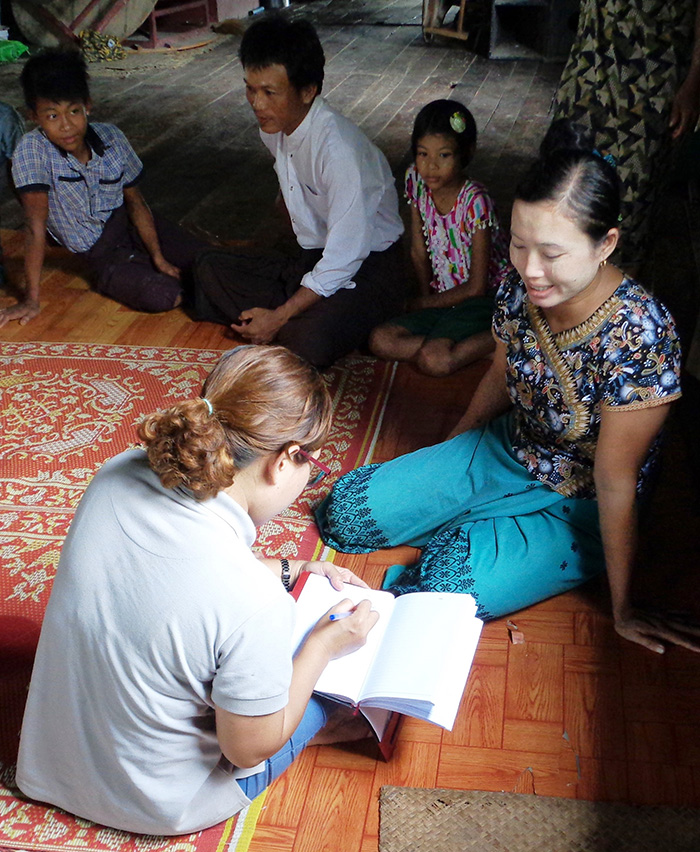
Ma Sint (right) talks to a member of the CWS Myanmar team (left, with notebook).


During this year, 18,876 people benefited from CWS and partner initiatives in Myanmar.

Source: CWS Annual Report 2017

Malnutrition may not always be obvious, but it can be addressed

Ko Kyaw Zaw Hein earns a monthly salary of about $110 – above the average for the region – working at a beach hotel on the Bay of Bengal in Myanmar, so he provides well for his wife, Ma Theint Theint Sint, and their two daughters. Imagine the surprise  the parents felt, then, when they learned that their three-year-old daughter is malnourished!

Fortunately, though, help was available immediately. CWS was there to support them as they changed this situation; Ma Sint has already joined four learning group sessions and proved herself to be one of the most motivated mothers of all.

In reflecting on her experience so far, Ma Sint said this: “Before, I did not know so much about balanced diets and their importance for young children, especially. Now I understand more, so I prepare at least three different kinds of food for my girls each day to support their development. Also, instead of buying packaged snacks from a shop, I choose local snacks of natural ingredients like sticky rice and sweet potato. I am also more careful to prepare our meat, fish and vegetables in a way that stops vitamin and mineral loss; and I boil our water for drinking to avoid diarrhea and water borne diseases. I am careful about hand washing before meals and after toileting, too.”

Ma Sint went on to say, “All these things I am doing now are because the community nutrition support team from CWS helped me understand these simple things. Now I want other mothers to take good care of their children, too, so I always share my new knowledge with them when I get the chance. And, I hope their children will join my daughters in feeling well and being healthier, too.”


Stories of Change


Su and Ve with their son.


CWS efforts in Vietnam positively impacted 40,036 people in 69 communities this year.

Source: CWS Annual Report 2017

Young parents in Vietnam learn how to better care for their infant’s health

Like many other Mong men, Khang A Su, married quite early. He is just 20 years old, and his wife, Vu Thi Ve, is only 18. They live in the village of Noong Thang, Vietnam, which is a little more than four miles along the pathway from their commune center.

Su and Ve have an eight-month-old son. Unfortunately, they did not know the best ways to nurse and ween him. They relied on traditional experience from Su’s mother instead.

Somehow, though, the couple knew that their son was too tiny and that they needed help. So, when Lo Thi Anh, the village nurse, told them about a CWS-sponsored community event about nutrition, they decided to join. Su and Ve both found the meeting interesting and informative. They learned about proper breastfeeding, weaning and – importantly – signs of malnutrition.

The nutrition event included a cooking demonstration, so the couple now knows about how to make nutritious (and delicious!) soups from local foods.

After the education session, Su told our team, “My son is already old enough to have additional food! This information is so useful, and we will make use of new knowledge, and give him the right foods, immediately.”


Stories of Change


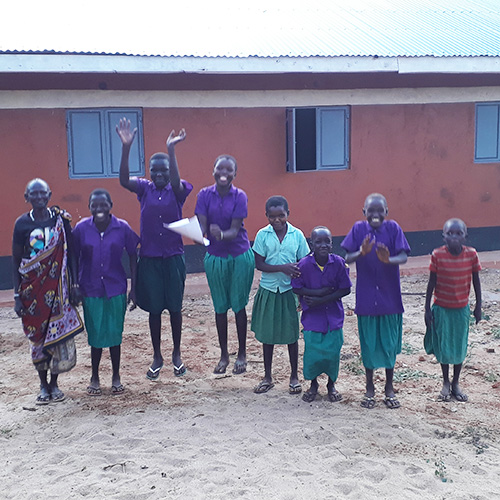
Hellen and Elizabeth - third and fourth from the left, respectively - outside the new dormitory at Kotulpough Primary School.


Thanks to the School Safe Zones program, there has been a marked increase in student enrollment in West Pokot and Turkana counties in the last year, by 27 percent and 74 percent respectively.

Source: CWS Annual Report 2017

Chasing dreams of success

Everyone has a dream … and everyone deserves the chance to chase it. Meet Elizabeth Cherotich and Hellen Ngoris, both class six students at Kotulpough Primary School in West Pokot, Kenya. Supporters of the CWS School Safe Zones program are giving Elizabeth and Hellen that chance.

Elizabeth, who is the fourth sibling in a family of eight children, says, “When I grow up, I would like to be a teacher!” She continued, “I want to be a teacher so that I can teach children how to read and write.”

For Hellen, the second oldest in a family of six children, her dream is to become a doctor. Being a doctor for her means fewer cases of malaria in her village.

Despite being only 15 and 14 years old, respectively, the two girls are all too familiar with the barriers they have to overcome in this largely pastoral and patriarchal context where girls face the most vulnerability. Here, girls are trapped in a protracted cycle of disadvantage including Female Genital Mutilation, unwanted pregnancies and early/forced marriage. This situation is exacerbated by climatic extremes such as drought, which endanger their futures and the future of their community.

“Some of our friends didn’t report back to school at the start of this year,” Hellen quipped, while trying to justify the reason for the empty desks in her classroom. Their teacher vividly describes both Elizabeth and Hellen as very smart and responsible girls, who are poised to take up student leadership positions in the school in the year. “Elizabeth will make a good head girl for the school,” she remarked.

The two girls usually help their mothers to fetch water and firewood in the evening after school. Hellen says she does a few more chores early in the morning, like washing utensils and preparing her siblings for school. In line with the norms of the community, the girls will begin taking on more responsibilities at home like cooking and milking the goats.

Through the School Safe Zones program, CWS and implementing partner Yangat are supporting Elizabeth, Hellen and the rest of the girls attending Kotulpough Primary School to realize their dreams. As part of the broader initiative to enhance access to quality education in the vast and marginalized areas of Kenya, the program has helped construct a dormitory for 70 girls, classrooms, latrines and fencing. These developments have created an environment for girls to thrive and prosper.


Stories of Change


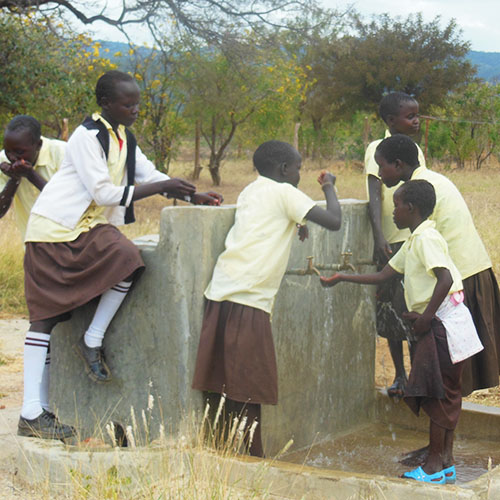
Female students at Chepkram quench their thirst at a water facility built with CWS support.


Thanks to the School Safe Zones program, there has been a marked increase in student enrollment in West Pokot and Turkana counties in the last year, by 27 percent and 74 percent respectively.

Source: CWS Annual Report 2017

Beyond Shelter: Dormitory Providing Safe Haven for School Girls in West Pokot, Kenya

The atmosphere at Chepkram School is welcoming. A group of excited parents are conversing in low tones, perhaps in anticipation of the opportunities brought by the newly built girls’ dormitory.  It’s September 2016, and CWS staff are making a routine visit to Chepkram to mark the opening of a new dormitory for girls that has been built with CWS support.

Chepkram is a public school and is one of six schools that CWS supports in Kenya’s West Pokot County.  In partnership with the Ministry of Education, our team operates the School Safe Zones program by working with parents and local communities to build their skills and confidence and thus enable them to mobilize local assets and resources for their educational needs.

A dormitory for girls is not just a shelter in this rural and vast dryland region. The  access and retention of students in this school still remains a challenge, with girls having a higher dropout rate than boys. This is mainly attributed to cultural practices and the long distances that students have to cover to get to school. Further, heavy household chores after school – such as the search for scarce water and firewood – discourages girls in particular from attending school regularly. Widespread teenage pregnancy also remains a barrier to girl’s education.

“Marriage is a survival strategy for most families to make ends meet,” says Chepkram School’s head teacher, Mr. Benson. He says that most adolescent girls drop out of school following Female Genital Mutilation, a practice that remains rampant and is traditionally meant to prepare girls for  early marriage.

The CWS program has been successful in helping the girls of West Pokot overcome the odds and stay in school. In the words of the school Chairperson, “The dormitory will help address specific needs of girls. This is because many students live five to eight kilometers [three to five miles] from school, and with an ordinary school day starting at 7:30 a.m., they must leave home well before sunrise, winding through vast and lonely spaces in the dark.” Most parents here feel that girls who commute daily to school perform poorly compared to those in boarding school because there is usually no electricity at home.

For Rhoda, a student in fifth grade, the availability of water on the school campus has completely changed her life and the lives of her fellow students. “Before the project, we would go for days without school lunch as there wasn’t enough water for cooking. Today, thanks to CWS, we have enough water and we can wash our hands after visiting the latrine.”

Mama Cynthia is 27 and has a daughter in the fourth grade. She says, “The new dormitory brings hope to our community. We are far behind in education. Once our daughters are able to board they will have more quality education and their health will improve as they shall have nutritious meals at school.”

Mama Cynthia shares similar sentiments with Selinah Chepkrop, also a mother at the school who says the dormitory has caused parents to think differently about their children.

——

Fast forward a year from that hopeful day in September 2016. The successes of the past year are significant. Parents and the adults of the community participated in CWS capacity building sessions, where they learned to advocate for their children and the school. They successfully approached the county government to donate 40 bunk beds so that 80 girls can stay in the dormitory. Plus, they approached the relevant government education officials and had the school registered as a low-cost boarding school. This status will guarantee the school a small, supplementary budget from the government that will help sustain the school for years to come.

And the girls of Chepkram? They’re thriving! For starters, there are more of them now. There were 19 girls boarding at Chepkram in the first term of 2017. Now there are 36, and more students are expected in the new year as the community continues to rally for the school. They girls have more pride and dignity now. It’s hard not to, now that they have clean uniforms, socks and shoes! Plus, they are a much more tight-knit group now. By staying together in the dormitory, they have formed new friendships and look out for one another.

Parents and teachers continue their support of the school. They contribute financially towards food and security each month. Next year, they will hire a matron to oversee the dormitory (right now, a female teacher volunteers as a matron). And CWS continues to be right there with them through more community sessions about education and protecting girls.