Stories of Change


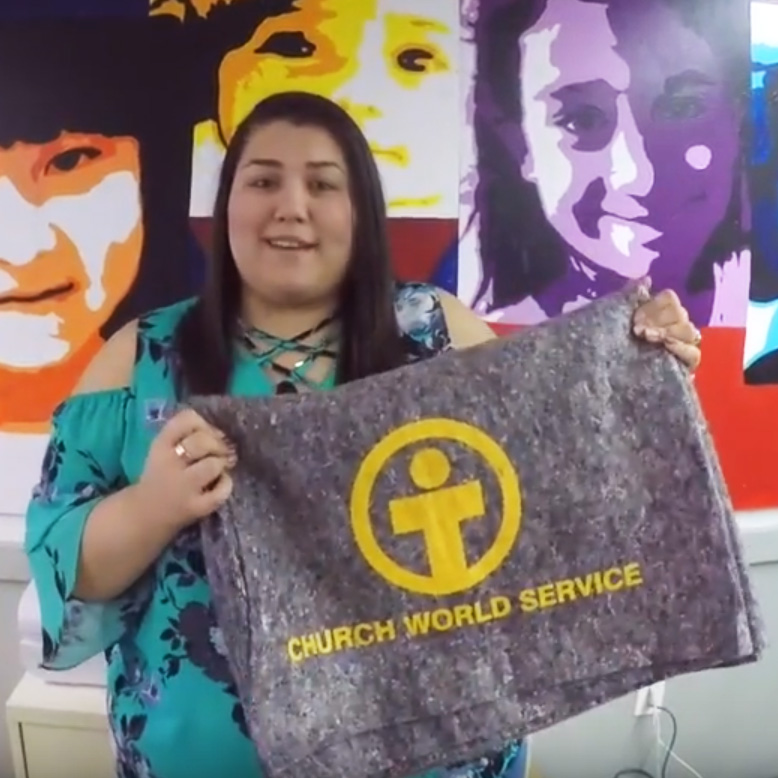
Michael, one of Uplift's clients, with his CWS Blanket.


CWS distributed nearly 6,500 blankets in 2017 to organizations in the United States, Guyana, Syria, Georgia and Armenia.

Source: 2017 CWS Kits and Blankets shipping report

CWS Blankets help Kansas City residents brave the cold

Huddled by a small fire under an overpass, Dawn ate her warm meal and confessed, “I’d never camped a day in my life before being out here.” She is new to homelessness and credits her friend Matthew for helping her acclimate to her new situation. She told us that she once served in Operation Desert Storm, raised a family and worked as a nurse.

Dawn and Matthew are among our neighbors in Kansas City who receive support from Uplift Organization, which serves people facing homelessness. And on the night we met her, she and Matthew both received CWS Blankets. She told us that her new blanket “means more to [me] than anything.” Matthew added, “we are always needing more blankets because our neighbors aren’t always very nice and take our things.”

For a city where negative temperatures are common on winter nights, Uplift Organization is a critical support system for individuals without proper shelter. Church World Service chose to support Uplift with funding from the Heart of America CROP Hunger Walk in Kansas City Missouri in the fall of 2017. A few months later, CWS got word that some of Uplift’s clients had passed away over the holidays in below zero temperatures. We shipped 75 thick, wool CWS Blankets to Uplift for distribution to their clients.

On this particular night – when weather advisories threatened freezing rain – Uplift provided warm meals, hot chocolate and CWS Blankets before the weather hit. Volunteers told CWS staff about how people struggling with homelessness have lost toes, fingers or their lives in freezing temperatures. Kansas City has a population of just under half a million people, and most of those residents can turn on the local news or use their cell phone weather app to know when a storm is coming. For the residents of Kansas City who don’t have a home with a tv or a cell phone, Uplift is the weather service, warning of the weather to come and giving necessary provisions.

The president of Uplift, Kathy Dean, believes “every life is valuable; they are great people, just in a bad situation.” For Kathy, the friendship and fellowship she can extend through Uplift is why she has driven the truck every Monday for 15 years. For 27 years, Uplift has loaded up supplies and driven out to where people congregate who don’t have a place to call home. The fleet of vans go out every Monday, Wednesday and Saturday, no matter the weather, serving hundreds of people.

Shouting “Uplift” into the dark on a freezing night, Ross Dessert, one of the van drivers, exemplifies how far the volunteers will go to avoid missing anyone who could use their help. On the coldest nights, people tend to stay hunkered down and will often choose to go hungry rather than come out and brave the cold. Ross and the other volunteers won’t hesitate to venture down into camps underneath bridges. On one occasion, CWS staff witnessed Ross helping a woman who was in shorts and whose leg was injured. Ross took off his weatherproof second layer of pants and gave them to her along with gloves, a hat, blankets, a hot meal, water and hot chocolate. Ross knows most of the folks at each stop, sharing that he is a school teacher and father of six kids. He says, “[I] can’t fix everything, but I can help for a few hours.”

Some volunteers like Susan started after being referred by existing volunteers, inspired by the mercy of the mission. Others like Trinidad have been serving for many years. He started volunteering at Uplift as youth and is now a driver. Trinidad says his work with Uplift helps him to deal with Post-Traumatic Stress Disorder by sharing hope through tangible things.

Uplift’s warehouse is lined with labeled bins full of clothing, nonperishables and other supplies. Uplift takes orders if there are specific sizes of clothing items or needs. One staple that is always needed, besides the warm meal, are blankets.

Uplift exists because of the generosity of supporters who contribute time and donations. It is also bolstered by partnerships like the one with CWS. Kathy and the volunteers give their time without pay. And yet each meal is made with love, and each care package and blanket spread hope when life has been tough. We are so grateful to congregations across the United States that support the CWS Blankets program and help keep our neighbors warm.


Stories of Change


A staff member holds a CWS Blanket at ECHOS.


In the wake of hurricanes Harvey, Irma and Maria, CWS provided more than 150,000 CWS Blankets, Hygiene Kits, Emergency Cleanup Buckets, School Kits, tarps, stoves, propane tanks, bungee cords and water filters to affected communities.

You Know it When you See it

Everyone – staff and clients — at Episcopal Community Health Services, known as ECHOS, in southwest Houston know it when they see it.

Cathy Moore, ECHOS Director, and her staff know that people who come to ECHOS are trying to stabilize and improve their lives in the aftermath of Hurricane Harvey. Even now, months after the storm, folks are rebuilding lives, homes and communities.

“Yesterday a client – very pregnant – came in. I noticed she picked up a business card from our domestic abuse prevention partner,” Cathy said. After speaking to her, Cathy and the staff decided to give her a $100 Walmart gift card. “We call the cards our ‘you know it when you see it’ gift cards because you know it when you see someone in need,” Cathy continued, “The cards are another gift from Church World Service.”

CWS “found us,” said Cathy, in the aftermath of Hurricane Harvey. Thanks to the generosity of the CWS family who supported emergency response efforts, our team provided CWS Cleanup Buckets, a cash grant and CWS Blankets (which were distributed when I visited ECHOS on February 7). CWS also provided disaster response plan training for ECHOS staff, church leaders and other interested community leaders.

The people who look to ECHOS for assistance know it when they see it, too: clients like Ana and her mother. “I am thankful for the health care my mother receives at ECHOS,” said Ana.  “When someone walks through the door they know that they will be received with kindness.”

Traveling to Houston from Austin on a cold, rain-soaked day, my energy level was low when I arrived at ECHOS. But during the visit, I realized the new ECHOS-CWS partnership matches the best of local care-giving with the resources that CWS can offer. The staff invited me to their 7:30 meeting that morning. From that point and throughout the day, it was obvious that each ECHOS staffer and volunteer was filled with enthusiasm, compassion and a willingness to work hard. One staffer said that it was like CWS “had dropped from heaven” to help ECHOS in the overwhelming days and months after Hurricane Harvey.

Returning to Austin, Cathy Moore’s words rang true. You do know it when you see it.

This story was written by Kevin Murphy, a CWS Community Engagement Specialist based in Austin, Texas.

(ECHOS is an outreach ministry of the Episcopal Church of the Epiphany)


Stories of Change


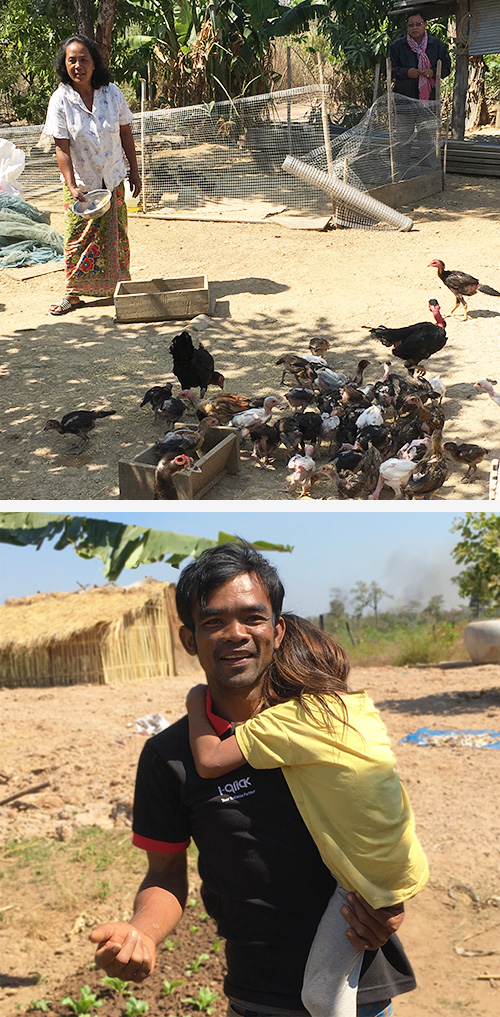
Top: Nen Aem feeds her chickens. Bottom: Ry Sarath holds his daughter near his home.


CWS programs in Cambodia reached 21,373 individuals in 83 communities last year.

Source: CWS Annual Report 2017

Put yourself in their shoes

In 2014, as part of CWS work to help poor rural families in Cambodia improve their lives and livelihoods, Nen Aem received a rooster and four hens from CWS, which she kept healthy and productive. The next year she received vegetable seeds too, and with her hard work, ingenuity and perseverance – and thanks to information, education and continuing support  from our Cambodia team – Nen Aem now has over 100 chickens. She sell vegetables for extra income as well.

Like so many participants in CWS programs worldwide, Nen Aem turned the initial support from CWS into a whole host of improvements to her daily life.

In 2016, Nen Aem and her family built a pond. They paid for it with the income from selling vegetables and chickens. The pond cost $500, which represents an incredible number of sales. The catfish raised in the pond is for their family to eat.  They also pump water from the pond to help irrigate their crops and have a water pump and filter for good, clean water.

Imagine the positive impact on the family’s health and nutrition.

It doesn’t stop there.

Nen Aem and her family purchased a cow, and now they have a baby cow. This was possible from selling vegetables, bananas and agati (hummingbird) flowers. The agati flowers are edible and very good sellers, Nen Aem tells us. She can easily earn $5 a day from these flowers alone.

Nen Aem and her family now have their own land and house.

Imagine what a wonderful day it was when they were able to make those life-changing purchases.

The CWS Cambodia program reaches out to the most vulnerable members of society – the ones facing the deepest poverty – to help them better their lives and their communities. CWS began working in Kamprak Village in northern Cambodia, where Nen Aem lives, in 2011. Today, it is truly inspiring to see the improved livelihoods and to hear the impact that has made in villager’s lives.

Nen Aem isn’t the only success story in the community.

Her neighbor, Ry Sarath, has many hopes for his family and was grateful for the support of Church World Service too.  He shared that CWS assisted his family with vegetable seeds, drip irrigation, chickens, a water filter and latrine.

Imagine the difference this family’s daily life.

The vegetable sales have helped Sarath purchase four cows. The cost was $700, made possible in part by a loan from the savings group started in the CWS-led program. He is repaying $15 per month in principal and interest.  Sarath put a pond in, too. He has fish and irrigates the crops with water from the pond.  The fish raised feeds his family for two-three months.

Imagine the possibilities now.

What is next for Ry Sarath?  Owning his own land is his goal.  He is still using others’ land and dreams of the day that his family lives on and works their own land.

Imagine what it will be like to finally realize his dream.

Ry Sarath said that because of the CWS Cambodia team and so many others he and his family have built a better life – “thank you to CWS for the support and materials.”


Stories of Change


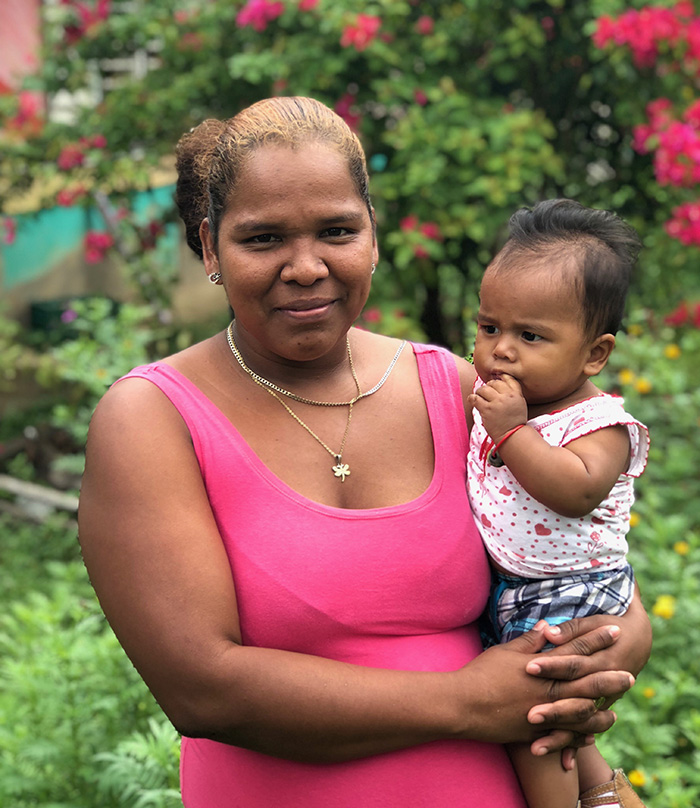
Evaly and her daughter, Kati.


In this phase of our Rio Coco program, 1,370 people will benefit directly from program activities. More than 10,000 people will benefit indirectly.

Supporting the next generation in Nicaragua

CWS has been working to end hunger along the Rio Coco on Nicaragua’s border with Honduras for years. This program unfolds in phases, as our team and partners recalibrate our efforts every couple of years to make sure we continue to implement activities that are effective and in line with community needs.

The most recent phase of our work – titled “Children Flourishing in Safe and Food Secure Communities” began in May and focuses on nutrition for young children and their mothers. More than 1,300 people live in the indigenous Miskito and Mayagna communities that are participating in the program.

The first 1,000 days of a child’s life – from conception until her second birthday – are a critical time for nutrition. With your support, we’re hard at work supporting moms here along the Rio Coco to help them nourish their children.

The most vital component of many CWS programs is information sharing aimed at behavior change, and this one is no exception. One of the first community information sessions that was held in the town of San Carlos after this phase of the program began focused on the importance of breastfeeding. As one of the moms, Evaly, told us, breastfeeding is logistically challenging for working moms in the region. She told our team that moms here often begin to introduce solid food at about three to six months. “The reason why we do that is because a lot of us have to leave our children with our neighbors while we go to work in our fields, which are often far away from where the community is. That means that our neighbors aren’t able to give them breast milk, so they will give them things like a mashed potato or a little suet or something like that. We’re learning through this program that that doesn’t have all the same benefits,” she said.

Armed with information on the importance of breastfeeding, Evaly and other moms have begun to make changes. Another woman from San Carlos shared that she stopped giving her daughter solid food and is now breastfeeding. Several moms told our team that they feel that they can better nourish their children given what they have learned about nutrition. A community health agent who received training through the program shared that an attitude shift is underway here. Families with young children and expectant mothers are more excited to hear the information she has to share, and they even actively seek out her advice.

The program, though, goes well beyond information sharing. The other community session that has been hosted in San Carlos so far was on vegetable production. It included information on techniques for planting gardens, marketing strategies for surplus produce and recipes to cook using the vegetables. Moms now report that their children now have a more nutritious diet. Plus, they can sell their surplus for extra income to help meet other needs.

Evaly says that the program has helped her have a better understanding of what to do when your child is malnourished, what food to give them and at what month to start introducing other foods besides breastmilk. She says that she is better able to cook for her daughter, Kati.

You are partnering with moms in Nicaragua to make sure their children have the nutrition they need to grow up healthy and strong. And together we’re just getting started.


Stories of Change


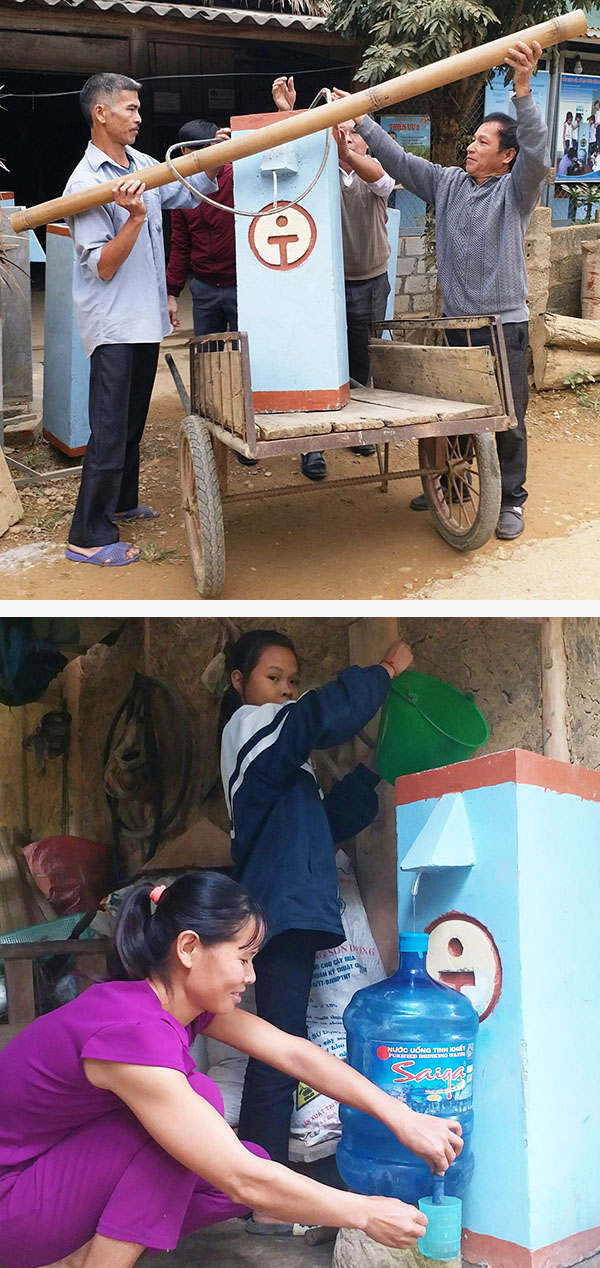
Top: the biosand team carrying the filter into Minh's home. Bottom: Minh and her daughter demonstrate how to use the filter.


CWS efforts in Vietnam positively impacted 40,036 people in 69 communities this year.

Source: CWS Annual Report 2017

Biosand filters: affordable clean water for Minh’s family

Chu Thi Minh, who is of the Dao ethnicity, lives in a very remote mountain district of northern Vietnam with her husband and two children. The family earns a living by growing rice, corn and cassava on a hillside near their home, but the yield is low. This means that the family has no surplus to sell for cash to meet even basic living standards – like having safe water to drink – and thus is quite poor.

In fact, the family drinks and cooks with water from a shallow well that Minh’s parents dug 15 years ago. The well’s upper part is brick, but below ground there is no brick or cement lining. That means that for most of the year, the family pulls up buckets of muddy water and lets them sit until the dirt and other debris settle to the bottom. Then, they carefully use the water on top that is at least somewhat clear – but it is not necessarily clean. And when heavy rains come – heavy rains are prevalent for many months of each year – the well water cannot be used at all. During these times, Minh carries buckets of water home from her neighbors, who are kind enough to share their water, for drinking and cooking.

Tired of her family’s situation, Minh was happy to hear about biosand water filters from the village head and the community health worker, who had both learned about biosand water filtration from a CWS-hosted training course. Learning that the filter was low-cost, efficient and natural – no chemicals or electric pump needed! – Minh decided to register to buy one even though the cost was quite steep for her impoverished family. So, she was especially happy to learn that the filter would be made locally by a CWS-trained biosand filter-making team in the commune, which would help keep the cost down at about $27.

Minh’s family got their filter in October along with in-person training on how to use and maintain it properly. Minh proudly maintains her filter so that she and her family can have water all  the time – water that isn’t borrowed from a neighbor with great effort and that isn’t full of sediment or foul smelling.  Besides Minh’s, nine other families in her village are now using biosand water filters, and they all appreciate the low-tech, cost-efficient solution to improving water quality in their village.


Building community, building better lives in Cambodia


December 27, 2017

Charn Suor, 42, knows firsthand how socially isolating poverty can be. Suor and her husband, Chey Cham, 53, live in Ang Tboung village in western Cambodia. They have six children; her youngest sons attend primary school while her older sons work in two hours away from home. Suor’s two daughters are married with families of their own. Suor and Cham …

Stories of Change
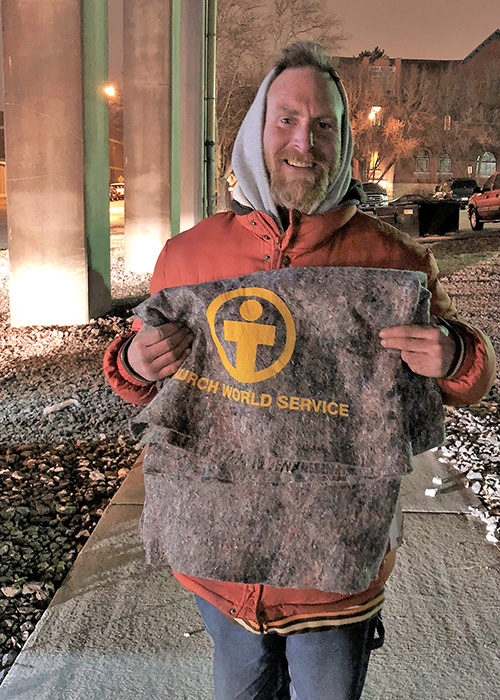

Photo: Ryan Shanley


Our team in West Timor expanded the Timor Zero Hunger program this year in partnership with families, community leaders and government colleagues.

Source: CWS Annual Report 2017

Small changes change lives in West Timor!

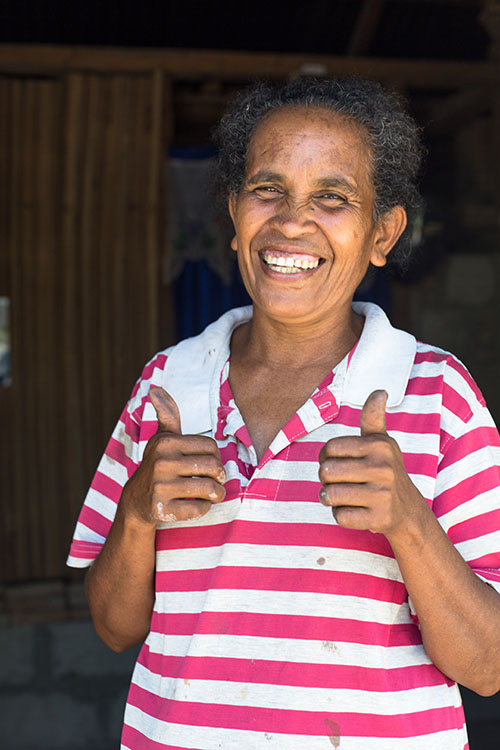
Selfiana Seu is a farmer and a Village Health Post volunteer from Nekmese hamlet in West Timor, Indonesia. She lives with her husband, Philipus Boimau, and their three children. Selfiana sells her vegetable harvest weekly in a nearby market, and she also has a small business selling about 20 liters of bottled gasoline each day from her home. “I can earn between $20 and $40 each month from both activities together, but that’s just enough cover our daily expenses,” she explains.

As an active community member in Nekmese, Selfiana is also a Village Health Post volunteer. This has given her the opportunity to join CWS-supported Timor Zero Hunger activities for some time. In September, when a new opportunity was introduced in Nekmese, she and other mothers formed a savings and loan group through a new Berdaya (empowerment) initiative made possible by an investment from CWS global partner, Week of Compassion. “We have 28 members and we agreed that each of us would commit $4 as an initial savings amount, and that we would start lending
to members right away,” Selfiana explained one day.

Seeing an opportunity to expand her home-based selling from just gasoline, Selfiana was among the first to borrow from the group; and with just $15 she added inventory: snacks, coffee and cooking oil to start. “I made $4 in profit and paid back my loan at the agreed two percent interest, within a month!” A second $15 loan in November allowed Selfiana to add pumpkin, onion, Chinese cabbage and eggplant seeds to her growing inventory, and then Selfiana and other savings group members decided to start a communal garden where they will plant more vegetables, both to sell and eat with their families.

“Although our group has only been together for a few months, I and others have been able to expand business and save too. I hope we will continue to grow and eventually get support from the local government for additional capital, or at least tools for our communal garden,” Selfiana opined.


Stories of Change


Photos: FUNDAPAZ


CWS and partners have helped build 25 rooftop rainwater catchment systems in local schools, increasing the rainwater harvest and storage capacity by 160,000 gallons.

Source: CWS Annual Report 2017

“We do not want to die carrying water”

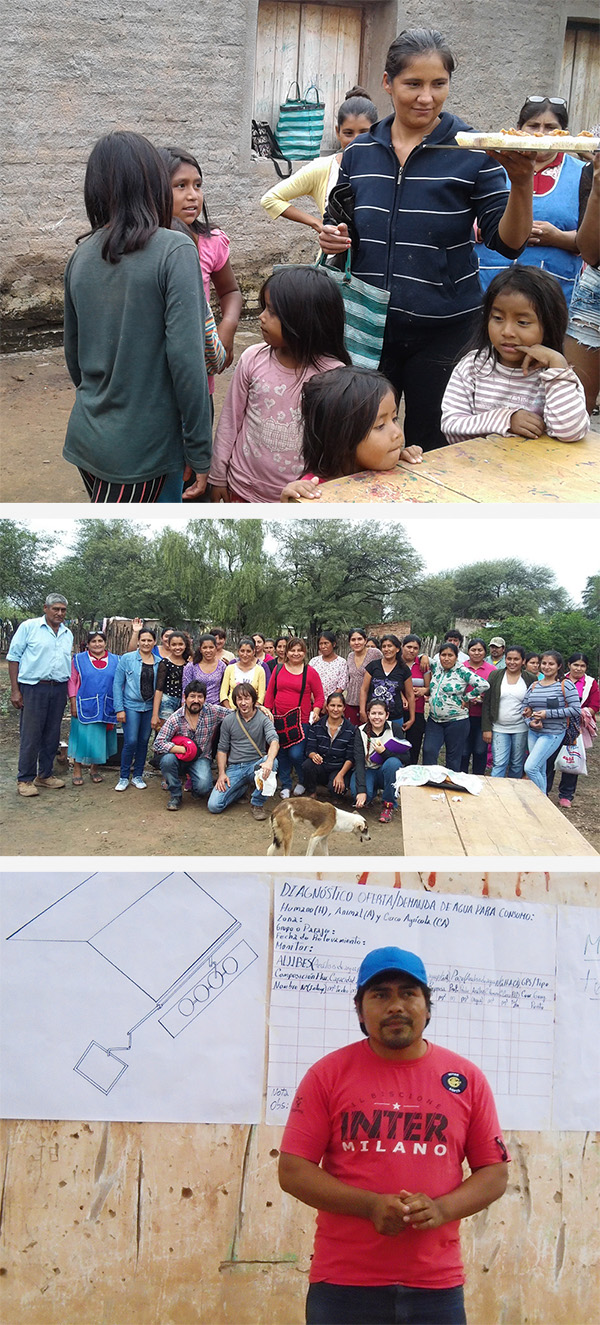
With their low-key but hardworking attitudes, listening skills, respect for the wisdom and experience of the elderly and a smile, Rebeca Soraire and Nestor Montes are transforming rural South America and inspiring many others to follow. Both under 30, they play key roles in a major collaborative effort supported in part by faith-based organizations Food Resources Bank and Church World Service aimed at promoting rain water harvesting from rooftop catchments in communities on the Bolivia-Argentina border. This is possibly the hottest place in South America, where more than 2,000 indigenous and campesino (impoverished farmer) families living in remote locations face chronic water deficits.

Between 100 and 80 years ago, campesino settlers called criollos moved to the area, creating tension and conflicts – sometimes violent – over land use between these cattle ranchers and the indigenous, semi-nomadic hunting and gathering Wichi people. Rebeca Soraire is the granddaughter of one of those criollo settlers, who today are poor as their indigenous neighbors.

In addition to being active in the local Catholic parish and in a computer literacy class opened to criollo and Wichi students, Rebeca serves on the board of the regional criollo association of Los Blancos, Argentina. She is also one of the few women on a local inter-ethnic team that surveys families, calculates their water deficit and helps to create maps using modern technology like GPS equipment and Geographic Information Systems. Those maps – that today include information of more than 2,000 families – are critical tools to support water-related advocacy. “We do not want to die carrying water,” says a very determined Rebeca.

“At first, I didn´t really like to use a GPS, cameras and household questionnaire surveys. This changed when we realized that they were really going to help us. Community mapping helped us to show the rest of the community and authorities not only the extent of how serious the water problem is in the area but also who are the families that need to be prioritized. For instance, out of 130 families in one community, 120 had land titling problems and all of them lack access to safe water.” In this region, drought commonly lasts six months, and the water deficit is so serious that harvested rainwater is used exclusively for human consumption.

Meanwhile, skilled construction worker Nestor builds rooftop rainwater catchment systems. He and other members of the community learned to build the type of cement cistern that CWS and FRB’s local NGO partner Fundapaz brought from Brazil´s Northeast region. In addition to building cisterns in the area of Los Blancos, where he lives, Nestor now travels to train others in places as distant as Santiago del Estero or even across the border in Bolivia. It takes Nestor and his teammate between five and seven days to build a 4,226 gallon cistern, which includes time for him to train a group of local interested people in how to build cisterns themselves. “It is great feeling when you build the first rainwater harvesting system in a community, but many more are needed. Water is our number one problem,” he says. The last two cisterns Nestor built in two criollo communities benefited 34 families (some 190 people).

Nestor is also a rising community leader of the Wichi people, who are now transitioning to permanent settlements as a result of internal migration and the resulting  land-grabbing and land disputes in the region. In his role as regional representative of the Wichi people, Nestor frequently meets with federal, provincial and municipal public officials and government agencies to discuss community development initiatives in the areas of water, education and health. His participation is also needed when is necessary to solve or prevent community conflicts including inter-ethnic conflicts between indigenous and non-indigenous members of the community. In Nestor’s words, “There are conflicts that separate the Wichi from the criollos but we are not enemies. And when it comes to water, for instance, there is no difference between us.” Nestor builds, teaches, advocates and is also a peacemaker.

Recently, Rebeca and Nestor traveled to a regional conference organized by Fundapaz and IFAD, the United Nations agency for agricultural development, on community mapping as a tool to promote access to water, land and conflict resolution. After their presentations, a journalist from a national newspaper asked Rebeca how she manages to be so peaceful and the community manages to remain united when the water situation is so desperate, and the needs and injustice are so serious. She paused for a few seconds and answered: “It is not easy, but we will never use violence because we are poor and as the weakest members of community we are sure we will get the worst part.”

Nestor, Rebeca and the community organizations they represent are vital players in the local water working group that Fundapaz helped to create. Other working group members include the provincial government of Salta and local NGOs and community-based groups. CWS is one of the two international observers invited to accompany the working group. If successful, the landscape of this semi-arid part of South America known as the Gran Chaco will change forever with hundreds if not thousands of rooftop rainwater harvesting systems become a familiar feature in towns and rural houses.

And with people like Rebeca and Nestor hard at work, change has already begun.


Stories of Change


A recipient of a CWS Blanket sits outside CCSA.


CWS distributed more than 160,000 kits and blankets in the first half of 2017.

CWS Blankets provide warmth on cool San Diego nights

California may look like a picture-perfect place in television and movies, but skyrocketing rents and lack of affordable housing has resulted in a housing crisis in many urban areas. In San Diego, Community Christian Services Agency provides services for needy families and individuals experiencing homelessness who take refuge in the canyons of Pacific Beach. Though small, CCSA provides a variety of important services to families and individuals in need through two San Diego locations. They provide food, clothing and referral to service they might need.

During a recent visit to CCSA, CWS staff found it filled with warm, welcoming volunteers who were eager to support those the agency is serving. They had a storage facility full of donated food from local grocery stores with fresh vegetables that volunteers were bagging for distribution. There was such an abundance of clothing donations that volunteers hadn’t even had the chance to sort through them all. And there was a pile of CWS Blankets ready to be given to people facing homelessness and families in need.

While San Diego may boast plenty of warm, sunny days, winter nights can be cold, especially for those forced to sleep on the ground. CWS Blankets are just one way that CCSA can provide services and comfort to this at-risk population. “It’s a blessing for us. We can provide these blankets to homeless people as well as to families sleeping in their car,” Connie Villarreal, Operations Manager of CCSA, told us. And the blankets they receive from CWS are more than just covering. “This may be sunny San Diego, but at night it’s cool. These blankets are being used as padding to keep the cold away from their bodies. All these blankets are used several ways.”

As a small, donations-support ecumenical Christian services agency, CCSA relies on the generosity of others to provide these services. Connie told us that CWS makes it easy for a small organization like hers to receive important support through CWS Blankets. “The process is very easy. The people that work CWS are great. They guide you through the process. It’s a one-page application.”

Because of your generosity in participating in the CWS Blankets program, this kind of work is possible. Before leaving, our staff asked Connie what she would like to say to you, our partners in giving. “Thank you!” she said enthusiastically. “The community is so grateful that we receive these blankets. We as an agency are extremely grateful that we receive them every year. Without you, they would not be able to receive the blankets that they need. We would not be able to purchase these blankets; for us, it’s very expensive.”


Stories of Change


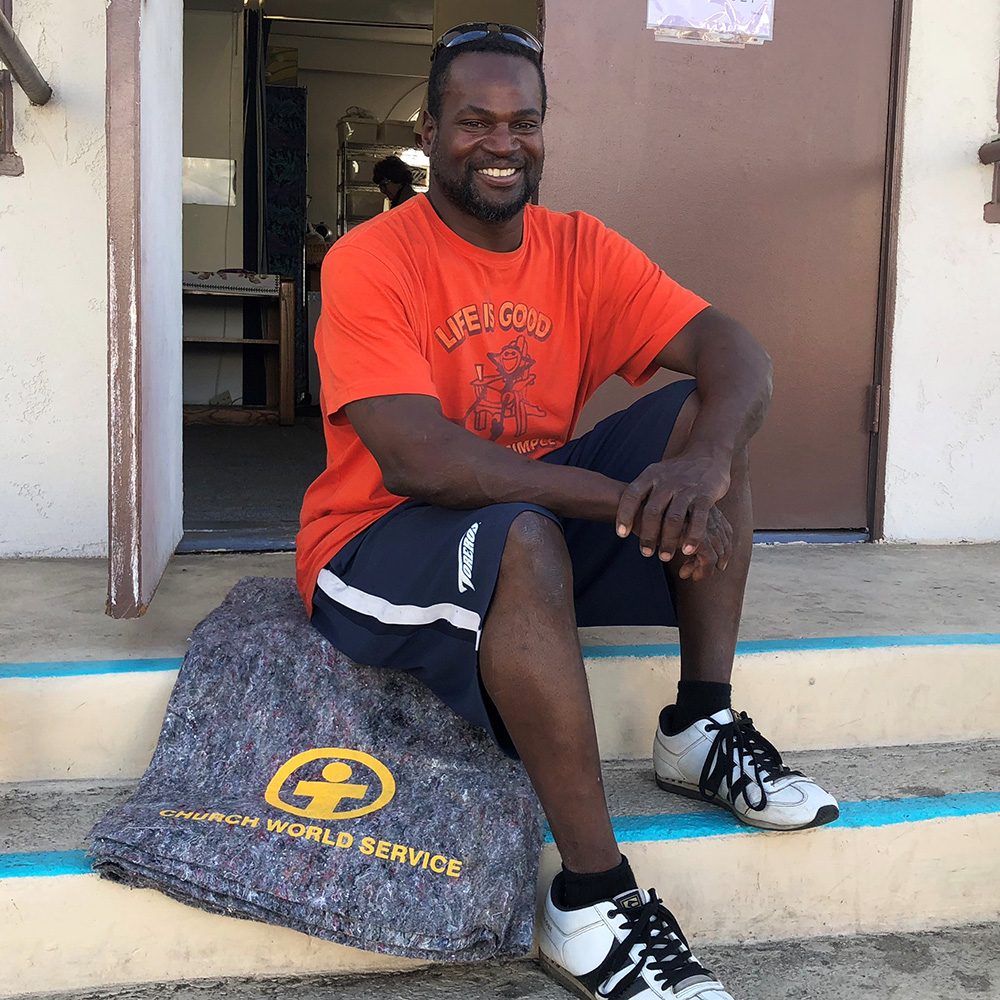
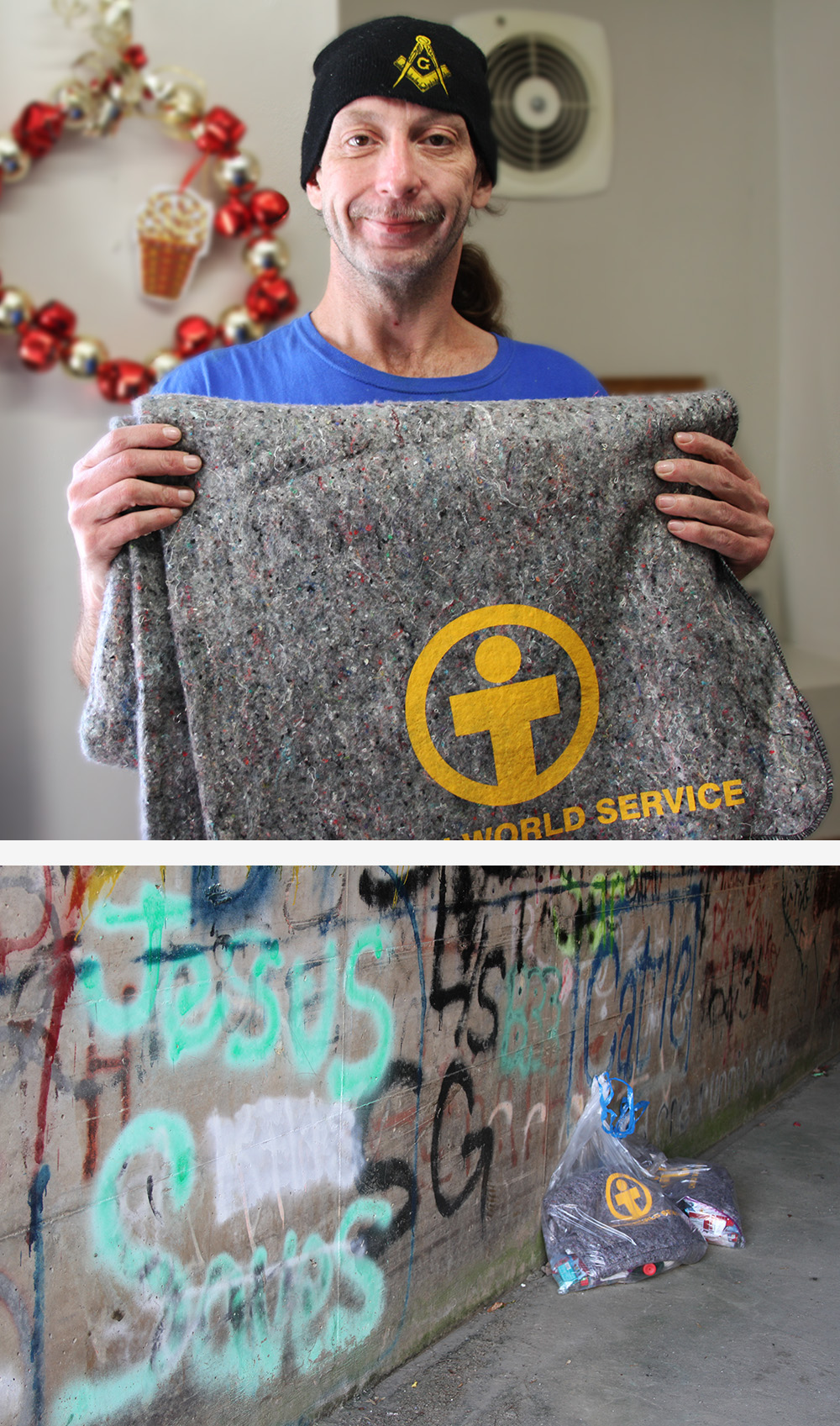
CWS Blankets are distributed in eastern Kentucky.


CWS distributed more than 160,000 kits and blankets in the first half of 2017.

Bringing hope through blankets in eastern Kentucky

Kentucky may be in the south, but that doesn’t prevent the state from experiencing extreme bouts of cold in the winter, particularly in the evenings when it frequently drops below freezing. This is particularly difficult for those who are experiencing homelessness.

WestCare Kentucky Emergency Shelter in Pikeville is described by director Anna Coleman as Pikeville’s “…best kept secret” since many times people don’t even know it’s there. WestCare provides housing, substance abuse services and independent living skills for those experiencing homelessness. They receive CWS Blankets through Sisters of Hope, a local nonprofit and Church World Service Blanket and Kit partner in Eastern Kentucky. The Blankets are consistently used within the shelter, but Anna has come up with a wonderful way of helping the homeless in eastern Kentucky while also spreading the word about WestCare.

“We use [Church World Service’s] Blankets on a daily basis. We actually use them on our beds and we also use them out at the Bridge Project,” said Coleman.

But what is this Bridge Project? Coleman describes the project saying, “We use [Church World Service’s wool] Blankets because they’re in a plastic coating… we stick down a note in there telling them they can come here to the shelter to bathe, eat a meal and wash their clothes. We also give them some nonperishable [food], some heater meals, and some hygiene items.” Sandy Gunnell, director of Sisters of Hope, mentioned that often the hygiene items are CWS Hygiene Kits when those are available for distribution.

These packs are then taken to two different bridges and tunnels in the Pikeville area that are known gathering sites for individuals facing homelessness during cold winter nights. Coleman and Gunnell mentioned that word travels fast when these CWS Blanket & Hygiene Kit packs are left and they normally all get collected by the next morning.

“I’ve approached many congregations throughout the eastern Midwest and beyond to host a CWS Blanket Sunday during my time with Church World Service, but there’s something different about seeing this Bridge Project firsthand. To meet people at WestCare and around eastern Kentucky who are truly grateful for the CWS Blankets they received, whose lives were so positively impacted by them, puts a whole new perspective on these offerings and makes me so grateful for those churches that give to the CWS Blanket program year to year,” said Andrew Gifford, Community Engagement Specialist for Church World Service.

As Anna Coleman so simply said, “We want them to come here and be warm.”