Stories of Change


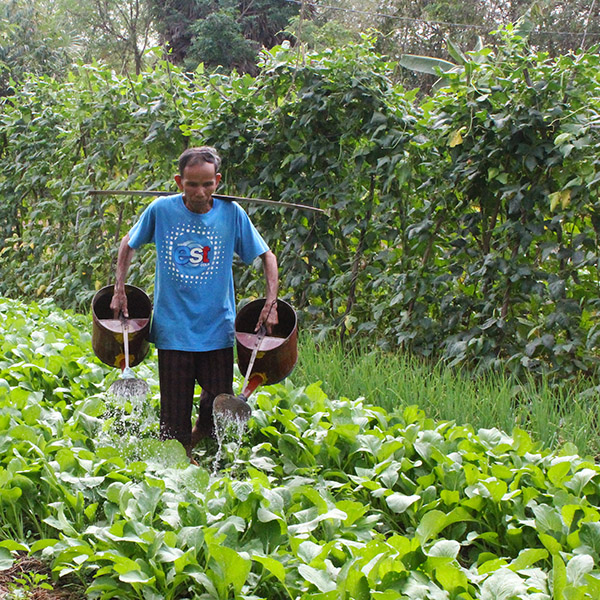
Touch in his garden.


CWS programs in Cambodia reached more than 21,000 people in 83 communities last year.

Source: CWS Annual Report 2017

Planting the seeds of a brighter future

Preoung Touch is a 61-year-old father of four. He wife, Vann Chhorvy, is much younger at 45 years old, but because of a long-term illness she is not able to work outside the house. Their children range in age from eight to 21, and the older two work as daily wage laborers in the part of northwest Cambodia where the family lives.

The family was struggling when the CWS team first met them. An unskilled worker laborer going from village to village to work can earn about $5 a day – when he can find work at all. Touch and his two oldest children were doing their best to earn an income for the family, but our team learned that they sometimes didn’t have enough food to eat. What they earned wasn’t enough to send the younger two children to school, especially in the face of Chhorvy’s medical treatment costs.

Because of their tough situation, the family was prioritized by CWS local partner Rural Development Association to join the Promoting Better Lives program. Touch joined information and training sessions where he and his neighbors learned new and better techniques for vegetable production, especially in the face of climate change.

Touch also happened to own a plot of land that was about a third of an acre and was given to him by his parents. He had never been able to afford seeds or had the time to plant it, though, so it went unused. Touch received seeds through the CWS program, though, and was able to plant them immediately!

Just 18 months later, life is different for Touch and his family. He now has the opportunity to stop migrating to find work as a day laborer, although his children do continue to do so. Instead, Touch can earn about $17 from selling his vegetables. When he talked to our staff recently, Touch said, “I thank CWS and RDA for all the support that enabled me to have my home-based work to support my family. I now have a plan to garden all year round and I am going to stop working as a wage laborer as it is not easy for me as an old man like me.”


Stories of Change


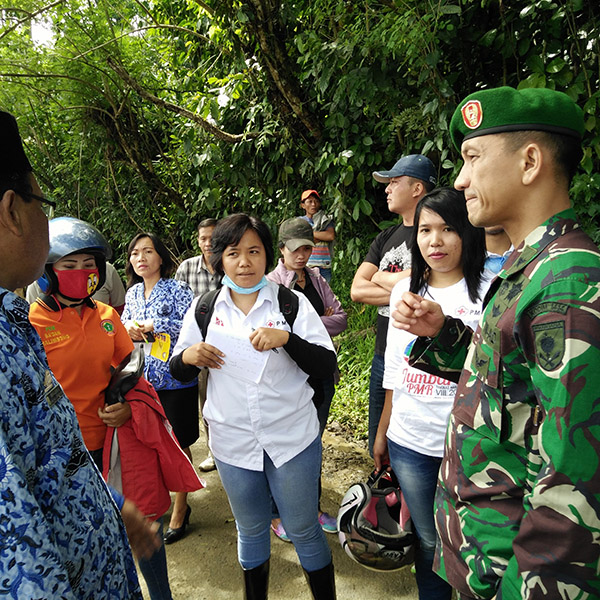
Surianti (center) during a recent response training.


With local NGO partners Gerbang Mas and Inanta, CWS joined Disaster Management Agency staff to reach more than 7,000 people in four villages through SOLIDARITAS with innovative approaches last year.

Source: CWS Annual Report 2017

Mobilizing experts to prepare for disasters in Indonesia

Surianti Todingbua is an experienced nurse in a sub-district health center on Sulawesi island in eastern Indonesia. She is also a member of the Indonesian Red Cross North Toraja District Branch, and for the last two years she has been active in the SOLIDARITAS initiative, which is led by CWS partner Inanta.

You can see why Surianti is a natural fit to work on disaster preparedness and response management in the region. Unfortunately, this part of Indonesia is highly susceptible to disasters, especially landslides and flooding. CWS has been helping communities here to organize teams and committees to prepare for and mitigate the inevitable emergencies when they happen.

Surianti decided to join the Disaster Risk Reduction Forum in her area, and she is working with other community members to use the information they have on hand as they draft a Disaster Risk Analysis and Disaster Management Plan.

“I decided to join the Forum because I think it’s essential that all the different government agencies and other groups join with communities to ensure effective and well-coordinated disaster response,” Surianti said recently to some CWS staff. And then she continued, “I participated in various disaster
preparedness training sessions as well as simulation exercise, which gave me a great opportunity to practice what I had learned. Already, I can see a change in the way the community and the government view disasters and disaster risk management. Before SOLIDARITAS,” Surianti continued, “focus was only on recovery and reconstruction after a disaster. Now [we] pay more attention to analyzing hazards and on knowing about and mapping disaster risks.”

A focus in SOLIDARITAS, in addition to civil society and community engagement, is on improving knowledge, information access and human resources (capacity) among government workers, who are key duty bearers and responders, before a disaster even strikes. Also, the focus for disaster response is on improving cross-sectoral coordination among government agencies as well as the Indonesian Red Cross, the military and the police. The goal of course is to prevent small scale disasters, and mitigate their damage when possible. Equally important, too, is for everyone to be more informed about ways to respond, and then to respond quickly and efficiently, when larger disasters occur.


Stories of Change


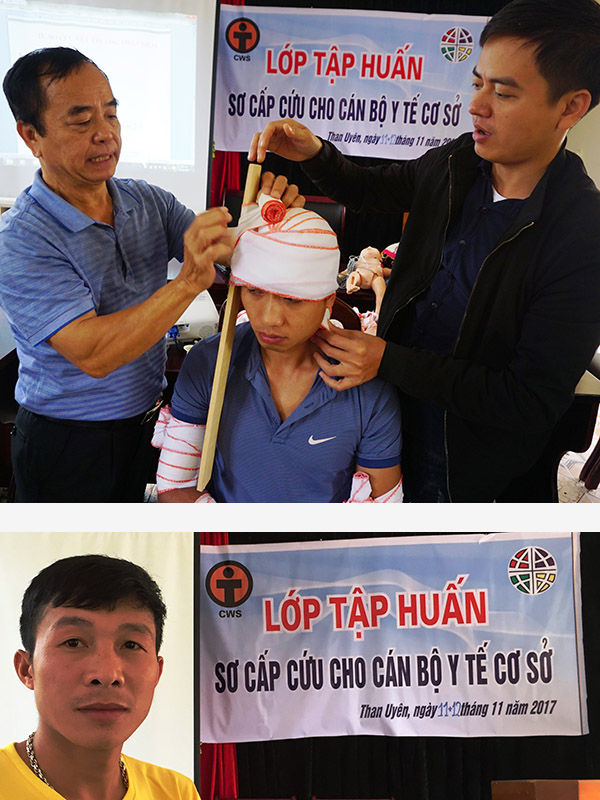
Top: participants practice during the First Aid training. Bottom: Lap at the training.


CWS efforts in Vietnam positively impacted 40,036 people in 69 communities last year.

Source: CWS Annual Report 2017

Valuable training and sharing for health workers in Vietnam

Me Van Lap is a 30-year-old health worker at a small clinic in the remote Than Uyen district of Vietnam. CWS partners with the local government workers here to help people improve their personal health and that of their family and environment. Though he is young, Lap is a seasoned health worker.

Unfortunately, Lap and his colleagues don’t have many chances to continue their education or join training courses to improve their knowledge and skills. He was very enthusiastic, then, when given the opportunity to join a First Aid refresher course hosted by CWS as part of our ELCA partnership, NEW IDEA 2, for ethnic minorities in Vietnam.

One of the most important parts of the training was that Lap and other health workers had time to sit together and share challenges, obstacles to providing good care and other concerns at work as well as to clarify best practices, gain updated knowledge and develop professional skills to better serve the people from the villages that use Ta Gia clinic.

For example, Lap shared a story from his own experience for peer feedback. Some time ago a young woman came into his clinic for treatment of a head wound that she had received in an accident. It was a deep cut that was dirty. Lap cleaned the wound with antiseptic liquid and then bandaged it. He did not cut her long hair, which is very important to ethnic minority women like the injured woman. He wanted to hear from the group whether he had done the right thing in not cutting her hair.

After a good discussion, everyone agreed that in all cases proper First Aid principles must be strictly followed. He should have cut her hair before cleaning and bandaging the wound to avoid potential infection. When he talked to our staff, Lap did not feel like he had “lost face” in the class. On the contrary, he found the training useful and said it was a very good opportunity for him to get peer feedback.

Dedicated health workers like Lap are making a huge difference in rural communities, and we are proud to support them as they improve their skills and work together to further treat and heal their communities.


Stories of Change


The volunteer teacher training.


200 unaccompanied refugee youth live in CWS-supported shelters in Jakarta.

Source: CWS Annual Report 2017

Volunteer teachers make learning fun for refugee youth in Indonesia

Education is one way to inspire hope among displaced and at-risk children, including those who are separated from their families as refugees and asylum seekers in foreign countries far from their homelands.

Nowhere is this more evident than in Jakarta, Indonesia, where CWS staff see that there is a thirst for education among the multicultural unaccompanied and separated refugee children in the group homes supported there in partnership with the UNHCR, the U.S. State Department Bureau of Population, Refugees, and Migration and Australia’s Department of Home Affairs.

Since effective education happens largely because of dedicated, inspired – and inspiring – teachers, CWS has worked over the years to develop and support such a group, all of whom are volunteers and refugees themselves. In the spirit of creating positive learning environments, CWS recently organized a continuing education workshop for volunteer teachers that focused on innovation in how subject matter can be more effectively taught to a multicultural “student body,” many of whom have had little or no formal education.

With a focus on optimizing creativity in teaching, and on using all available resources, the workshop considered using “old-fashioned” chalk boards and paper as well as modern media – videos, audio recordings, computers and mobile phones – as well as playful teaching aids like board games and experiments. For example, the science-teaching volunteers learned how to make ‘slime’ and to share the science behind it.

The workshop gave 12 volunteers, most of whom were not educated to be teachers, a chance to discuss the challenges, and opportunities, in becoming positive, engaging teachers. Now, energized by coming together to share ideas on being better teachers through innovative and engaging classrooms, the group will focus next on reviewing curricula content so they can keep providing the best education possible – despite many limitations. “The training had a good effect. We’re learning more modern methods that show us how learning can be fun [no matter what the subject]. As teachers we need to be up-to-date,” said Tayiba, a former dentistry student from Yemen who has become a science teacher now and is happy for the chance to be positively engaged in supporting the large refugee and asylum seeker community in Jakarta, where she has lived for two years now.

With partner and donor support, which includes Indonesian non-government organizations and charities as well as a few American individuals, CWS continues engaging, and being grateful for, the many adult refugees who come forward to teach, voluntarily, so the young people and children among them do not lose hope nor their dreams.


Stories of Change


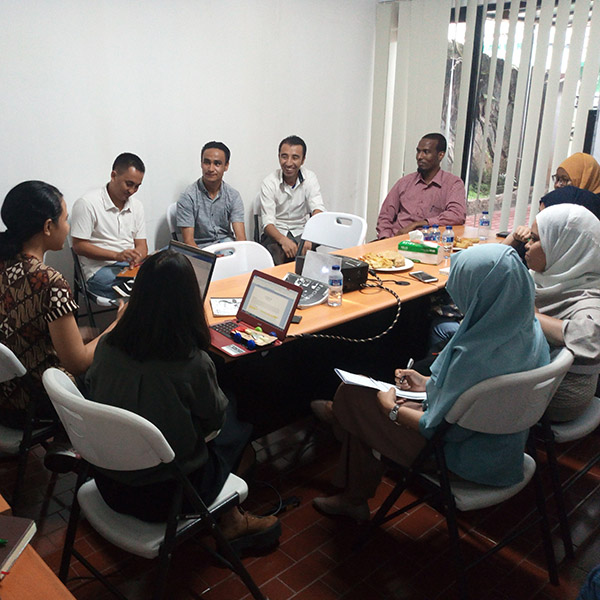
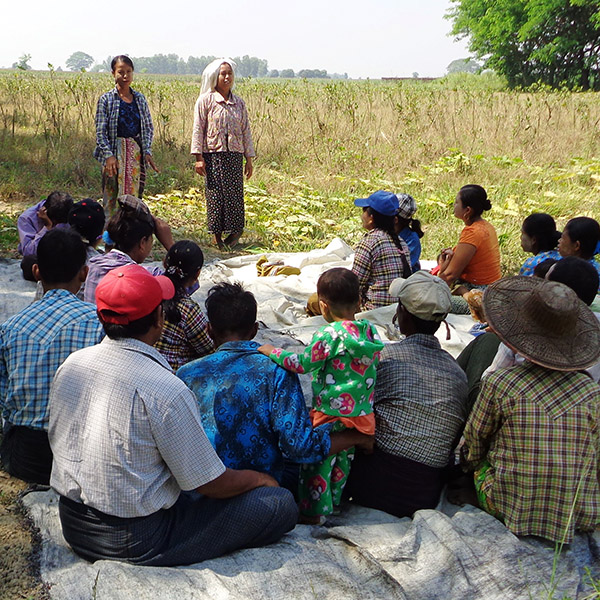
An exchange day visit and presentation.


Through nutrition education, disaster risk reduction and water, sanitation and hygiene programs in 20 villages in two Ayeyarwady region townships, CWS helped 2,431 families – nearly 12,000 people –take steps towards improved well being last year.

Source: CWS Annual Report 2017

A community garden changes lives in Myanmar

Ma Khin San and her husband, U Kyaw Naing Myint, are daily wage farm workers in their community in Myanmar’s Ayeyarwady River region. Together, they are able to earn about $5 per day for about 15 days of work each month during the six-month dry season.

The couple has one daughter, three-year-old Ei Kay Kay Kyaw. She is underweight and too small for her age. To help both the little girl and her parents, a local midwife and CWS staff chose Ma Khin San to join a CWS-led nutrition initiative that helps malnourished young children in very poor villages. This occurs in Maubin Township, where CWS has partnered with local government and communities for several years to address basic community development issues.

When she heard about her daughter’s poor health – and this opportunity to take action to reverse the situation – Ma Khin San stepped up. She joined all eight education sessions led by CWS staff, including ones about home gardening and cultivating a shared village plot with donated seeds and information about gardening best practices. “I was eager to learn, and then I was nominated by friends to be one of the three main keepers of our shared demonstration plot,” says Ma Khin San. “The other two women and I took our new jobs to heart, and we planted watercress, roselle, pumpkin, okra, white radish, cucumber, spinach, salad and coriander. Then we took turns watering and weeding after tilling and plating. So far, we have sold the harvested vegetables to other poor mothers in our Self-Help Group at a low price, which is one aim of our shared work.”

Ma Khin San also cooks come of these vegetables for her own family, since she has learned more about their nutritional value, particularly for little Ei Kay Kay Kyaw. Much of this information was new for her.

Besides bringing more, and better cultivated, vegetables to the village, the demonstration plot keepers also earned $90 from selling vegetables in January through March. They have saved some of the money and seeds for next season. Furthermore, Ma Khin San is now in a position to share her expertise about how organic fertilizer helped improve the demonstration plot’s quality and output. She presented this information to four women’s groups from other villages during a series of learning exchange visits recently.

“This is my first time doing something like this,” says Ma Khin San, “so I am really excited and happy to share my learning and about our achievements, [which we hope to increase] next season when we grow our vegetables with experience and will yield more food and earn more money for our families.”


Stories of Change


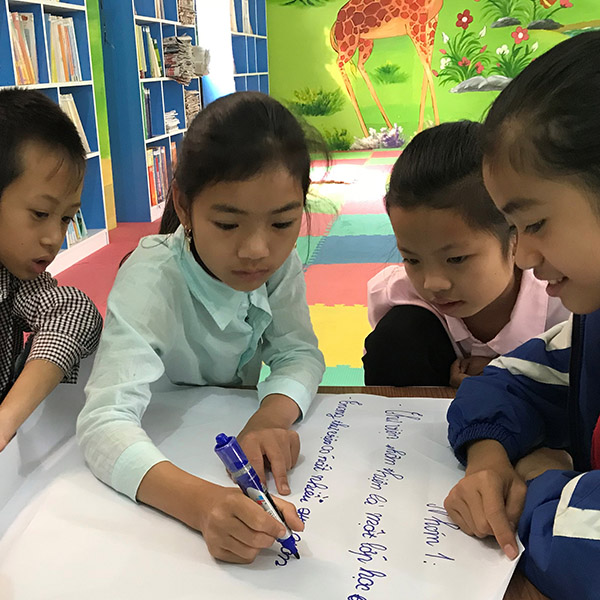
Students work in groups during a library training.


CWS efforts in Vietnam positively impacted 40,036 people in 69 communities last year.

Source: CWS Annual Report 2017

Students in Vietnam help make their library more child-friendly

Hoang Thi Nu is in fifth grade, which is the last grade of primary school in Vietnam. She is from the Thai ethnic group living in Moung Kim commune, where CWS partners with schools to improve learning environments for students.

Our team was introduced to Nu because she is an active member of the core student team helping to improve her school’s library. When we asked about the team, Nu told us that the head teacher and librarian of her school assembled the team last semester after they returned from a CWS-hosted child-friendly library training workshop. Nu and the other students received training from the librarian, with support from a CWS staff member.

“In fact, our school has an outdoor library for student reading,” Nu said, “And when our team was set up, a few team members and I were assigned to be in charge of this outdoor reading place. Honestly, at that time, my friends and I did not know about child-friendly libraries at all. All we could do was bring books to the outdoor space in the morning, and bring them back to the library in the afternoon. We repeated this every day.

However, things changed after the training! Now we know from teacher Phan, our librarian, how to make our efforts more useful and friendlier for other students to use our reading space. We classified the books by theme as well as difficulty to match student reading abilities from Grade 1 to Grade 5. Together with teacher Phan we also defined and color-coded book categories, and we guided our fellow students to understand the codes so it became very easy to use our library! Besides, we also know now how to record students’ time in the library and their book use.

I feel very happy that through our work with Ms. Phan, our library is now more child-friendly! It’s great that the use of our books is increasing. As I’m now almost finished with primary and will move on to junior secondary school in September, and I hope my next school has an outdoor reading space like this and I can continue serving my new friends in the new school.”


Stories of Change


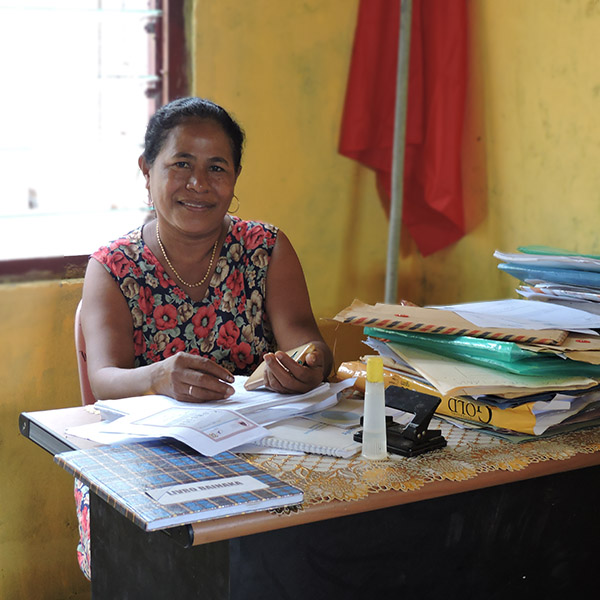
Ms. da Costa in her office.


Through partnership with the local government health and agriculture workers, 348 families with children under five in West Timor have improved caring and feeding practices for these children through the Timor Zero Hunger program.

Source: CWS Annual Report 2017

“CWS is the first outside organization to ever work here”

Lebucaility and Gariana are hamlets located 20 miles west of Timor-Leste’s capital city of Dili. Sometimes, though, it can feel like they are decades apart. Our team has recently begun to make the arduous journey along dirt roads to these tiny enclaves where several hundred subsistence farming families live.

Life here can be hard. Many families use traditional agricultural practices and speak a traditional language unique to Liquiçá District, which is administratively responsible for them. Many people here do not speak Tetum, the official language of Timor-Leste. Illiteracy is common here. Most families live in poverty without electricity. Water and health care services are limited. Everyone faces food insecurity.

Gabriela da Costa is the head of Vatuvou village, which includes Lebucaility and Gariana along with two other hamlets. “CWS is the first outside organization to ever work here,” she says, “and of course as village leader, I really appreciate that our national Ministry of Health has thought to suggest that our families join the Timor Zero Hunger initiative.”

The Timor Zero Hunger program started in West Timor, Indonesia (which shares an island with Timor-Leste) in 2014. Through the years, our team has helped hundreds of families change their lives for the better through sustainable responses to hunger and poverty. Conditions in the region remain quite difficult for poor families, especially since the effects of climate change – especially drought – make life here ever-perilous. Recognizing that socioeconomic and natural conditions like poverty and drought do not end at national borders, CWS is now expanding the Timor Zero Hunger program into Timor-Leste.

“I believe that the project will really help our people change their lives for the better over time – with food, better nutrition for the children, clean water and better sanitation. Right now, to get going, families will start raising chickens with support from CWS. And then another activity we are planning in line with the project is better home gardening. I think these activities will be helpful; and I understand they will be particularly good for pregnant women and young children, so I’m happy about this initiative in my community,” says Ms. da Costa.

“As we start to work together, I want to thank the CWS team for their good collaboration so far with us, community leaders, who also community members with shared hopes for all our neighbors.”


Stories of Change


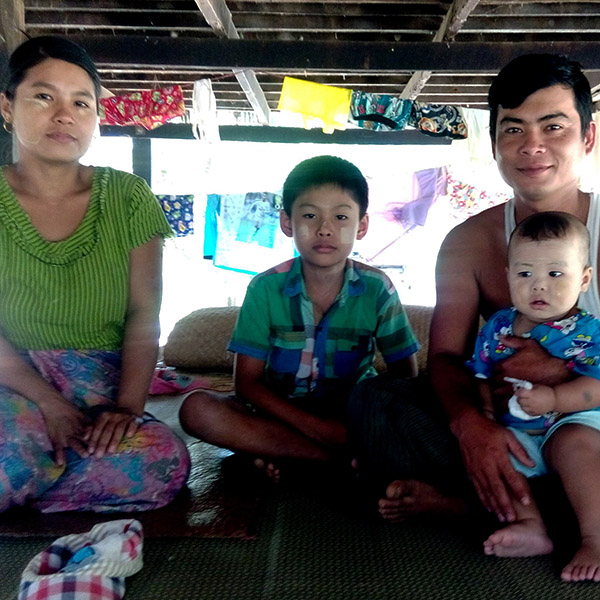
Ma Swe with her family.


Through nutrition education, disaster risk reduction and water, sanitation and hygiene programs in 20 villages in two Ayeyarwady region townships, CWS helped 2,431 families – nearly 12,000 people –take steps towards improved well being last year.

Source: CWS Annual Report 2017

New information, healthier children in Myanmar

“My name is Khaing Win Swe, and I am happy to have a chance to tell you my story.”

So begins the story of a 30-year-old woman who CWS is proud to work with in Myanmar. Ma Swe and her husband, Ko Aung Win, have two sons, 10-year-old student Kaung Khant Aung and 14-month-old Aung Phone Khant.

“During the dry season from October to April our family grows chili on land we are fortunate to own, and my husband works as a boat engine repair mechanic during the rainy season, which lasts for the rest of the year. My full-time job is to take care of my two sons and look after the house, which is a lot of work, really. I think I am a good mother, and I thought I was feeding my sons well. So, when I learned from the village midwife that my younger son was malnourished, I could not believe it,” says Ma Swe. She continues, “I wanted to understand how this was possible, and to help Aung Phone Khant grow up healthy.”

Ma Swe says that when she heard there was a chance to know more about young child health and nutrition, “I joined the nutrition and sanitation education sessions CWS was offering to mothers and other child caregivers in our village. For the first session, I had a really hard time understanding what the CWS education team members were talking about. But gradually I understood more about basic nutrition, different aspects of hygiene and the essentials of good sanitation. We heard talks, saw demonstrations, could ask questions and get answers and we also had time together to practice what we were learning about safe food preparation.”

Now, says Ma Swe, “I have changed the ways I prepare food for my sons and how I feed my younger son. One main difference is that now I always wash my hands before cooking and before I help Aung Phone Khant eat. I have changed our diet, too; I cook vegetables and meats for my family at least once each day. Since I have added new foods to complement my breastfeeding for my younger son, his weight has gradually increased and he is a healthier child.”

In ending her story, Ma Swe said, “At first my husband thought it was a waste of time for me to join in education sessions, but after a few months, he noticed the growth of our younger son. He has realized the benefit of education and new information, too, and so volunteered to be water, sanitation and hygiene committee member. He then learned about having and using safe water, with details about household water treatment and safe storage, how to properly maintain wells with hand-pumps and about group management so the committee could work well. Both of us see the power of new knowledge and having correct information that has helped us change our attitudes and behavior, which has had positive impacts not only on our family well being but also our community’s development.”


Stories of Change


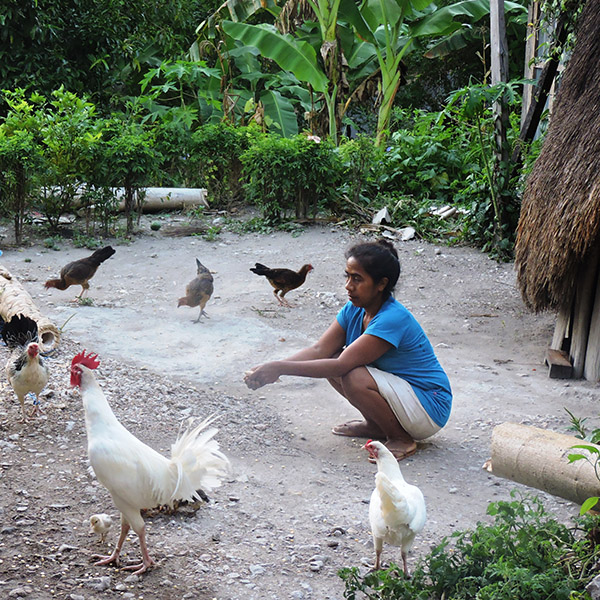
Esther feeds some of her chickens.


CWS efforts in Indonesia positively impacted more than 17,000 people in 16 communities this year.

Source: CWS Annual Report 2017

A second chance at a brighter future

Yosber Sae and Esther Kikhau have raised animals for years in the remote village of southeastern Indonesia where they live with their three children. They used to have pigs and chickens, but they didn’t have any formal training in animal husbandry. Their animals weren’t vaccinated and wandered freely, so most had died by the point that our team met the family.

When Yosber and Esther joined the CWS Timor Zero Hunger program, they had only four chickens left. Our team gave them a second chance – after the couple had learned about how to properly care for the animals, we gave them additional chickens.

Yosber says, “When CWS offered us chickens we were happy to accept them because we had a chance to learn how to raise them in a coop, which we made ourselves but with CWS staff guidance. Before, we let our chickens roam around unvaccinated – and maybe that’s why they died. But, along with coop-building, we learned about immunization and how to make sure the flock stays healthy. Slowly but surely our flock grew. Now, we have more than 70 chickens – and a lot has happened since we started with our own four chickens and the ones CWS gave us.”

In May 2016, Yosber and Esther sold four mature roosters and use the money to buy a pig. Once she had her first litter, the family sold three piglets for $64. They used the money to pay for their vocational high school for their oldest child, 18-year-old Riski.

With the support of donors like you, Yosber, Esther, their family and many others in Enonabuasa village have measurably better lives. Among other things, they have access to safe water. That means they can grow more (and more nutritious) vegetables – some to eat and some to sell. More people here now know more about the nutritional value of vegetables, chicken meat and eggs. Families have large enough flocks of chickens that they can afford to keep and eat some, rather than selling all of them. Families here eat eggs two or three times a week and are eating chicken meat with increasing regularity.

Esther says that the most important change she has seen is a newfound hope and a focus on planning ahead. “We are determined to raise more animals: chickens, pigs and cows. We have learned about vegetable gardening, organic fertilizer and pesticides, and how to make healthy snacks making local ingredients,” she says. “I also joined a CWS-supported women’s savings group; and I just feel more hopeful now. We have more food, the children are rarely sick and sooner our oldest daughter will attend college in the provincial capital. We’re also happy and proud that Riski, who is back home and working, is also active as a Peer Educator for health and wellness among the girls here. She helps them talk about early marriage and teen pregnancy, which are issues in our community that we need to address,” she added.

With support from the Disciples of Christ and Week of Compassion, CWS has expanded the Timor Zero Hunger program to focus primarily on women and girls for their wellbeing and empowerment – especially for their health and their families’ livelihoods and hope.


Stories of Change


Despite the fact that he has to walk with crutches, Mohammad aspires to be a professional bodybuilder.


CWS supports 200 unaccompanied and separated refugee and asylum-seeking children in Jakarta.

Source: CWS Annual Report 2017

“I feel very safe here.”

Mohammad* is an avid sports enthusiast with a passion for weight training, and he works out regularly at a gym near his home in Jakarta. He lives with 39 other young men, all of whom are refugees and asylum seekers like Mohammad. He invited some of his housemates to join him at the gym, where he teaches them how to use the equipment properly and coaches them on their weight training.

Mohammad’s enthusiasm is infectious, and he seems to have boundless energy. He has a disability that requires him to walk with crutches, but that hasn’t slowed him down.

He is also a young man with a tragic past. He grew up in Afghanistan, but he fled the country alone at the age of 15 after his father was killed for converting to Christianity. His father’s killer threatened Mohammad’s life, too. He made his way to Jakarta through a difficult air and land journey that is familiar to hundreds of young asylum seekers. Staff from the United Nations High Commissioner for Refugees then referred him to the CWS-supported group home for unaccompanied and separated children, where he lives now. Many of the boys are Afghan, but Mohammad is the only resident with a disability.

The fact that Mohammad needs help walking never got him down, and our team didn’t let it get them down, either. They modified a bathroom so that it was easier for Mohammad to use. Social workers encouraged him to join activities in the home, and not just go to the gym alone. “It feels good to live with people I know,” says Mohammad, “They are friends and like family to me. I feel very safe here.”

While Mohammad enjoys all of the classes and daily activities that he and his housemates participate in, his favorite past time is still exercise. He aspires to be a professional bodybuilder. Whether or not he reaches that goal, he is still a role model for the other boys to be positive in the face of whatever adversity comes their way.

In Mohammad’s words, “I love sports and exercise; they make me feel healthy and happy. I’m also glad to see my friends doing positive activities. And I’m grateful that CWS supports us all for this.”

*Name changed to protect identity