Stories of Change


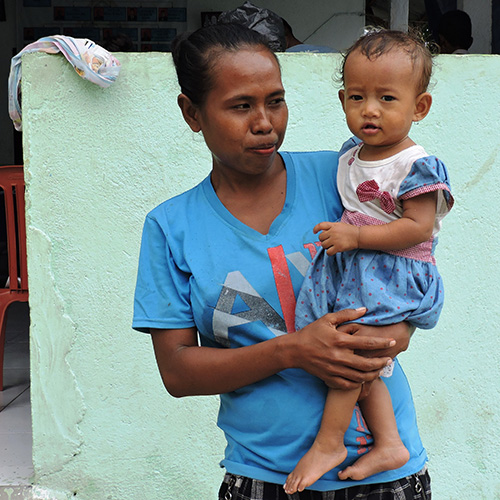
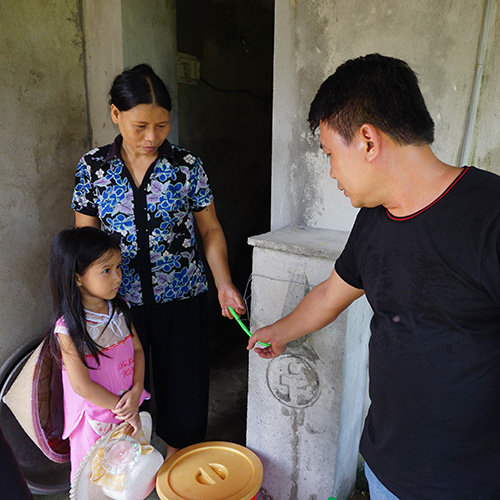
Clementina and her daughter.


CWS is expanding our Timor Zero Hunger program from West Timor, Indonesia, into neighboring Timor-Leste.

“I’m happy CWS is here”

In a remote village high in the mountains of Timor-Leste live Clementina Pintu dos Santosher, Bernadus Lalus and their two young children. Their village isn’t too far from Timor-Leste’s capital city of Dili, but their life is anything but cosmopolitan.

Life is hard for this young family. Bernadus works odd jobs for a few dollars at a time. Clementina has no income. The family is too poor to afford a motorbike, so it takes them five hours by foot to reach the larger town closest to their home – there is no public transportation.

Earlier this year, Clementina was invited to join the CWS Timor Zero Hunger program, which is expanding into Timor-Leste from neighboring West Timor, which is part of Indonesia. Clementina immediately took the opportunity to improve her family’s situation. She was one of 100 people who learned how to raise chickens well – how to vaccinate them, cage them to keep them from being preyed on by wild animals and feed them well so that they produce healthy eggs and hatch healthy chicks. She and Bernadus then built a coop for the hens and rooster that CWS provided as part of the project.

When we talked to Clementina recently, she told us, ““I don’t speak Indonesian or Tetumome, I just speak our local dialect, but some neighbors translated for me and others, so we could understand everything. For me, this was the first opportunity I have ever had to join a learning group like this, and I’m happy CWS is here because no other outside organization or government agency is helping us improve our lives. The whole community here is very poor, especially the families who have no regular paid work.”

Clementina has made a promise to herself: she will grow her flock so that she can sell eggs and chicks and earn money to support her family. More importantly, she will grow her flock so that she can have more nutritious food for her two-year-old and four-year-old children. (This also happens to be one of they key aims of the Timor Zero Hunger program, through which we partner with parents to support the wellness and well-being of young children.)


Stories of Change


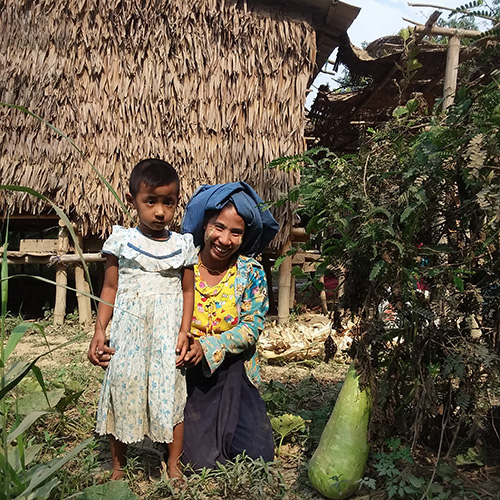
Hnin Nanda Aung with her mom, Ma Yee.


Last year, nearly 19,000 people benefited from CWS and partner initiatives in Myanmar.

Source: CWS Annual Report 2017

Twice lucky: a young girl grows strong with CWS support

Hnin Nanda Aung is a happy and healthy child, living in a small village in the Ayeyarwaddy River delta region of Myanmar. Our team got to know her during CWS-organized weight monitoring sessions that are part of nutrition education activities for mothers and other caregivers. We noticed how much she laughs and smiles while talking and playing with the other children.

Hnin Nanda Aung is the only daughter of Ma Tin Tin Yee and U Twin Min Than, who are daily wage farm workers. Together, the earn about 5,500 Kyat ($4) per day for the 15 days they can find work each month.

When CWS talked to her most recently, Ma Yee said, “I feel blessed that my girl is a normal happy child now. When she was two she had meningitis, and we were not sure she would survive. Luckily, with good medical treatment she recovered, but her weight was lower than it should have been.” Hnin Nanda Aung was lucky a second time after her recovery. Because of her low weight, she was prioritized to join a CWS-supported nutrition program in her community. And, Ma Yee continued, “Even though I was busy with farm work, I was very excited to attend all education sessions.” Ma Yee was also happy to receive a rooster and three hens to raise at the end of the nutrition course, and she said that she had gladly learned from talks, discussions and cooking demonstrations that helped her understand better how to prepare balanced meals. To put her new knowledge to use, Ma Yee said, “I got different vegetables from relatives and neighbors and for protein, I cooked fish and eggs from the market for three or four meals each week. Soon we will have eggs and chicken meat from our own back yard, and this will help us save our scarce money for even more diverse foods, and for emergencies like another illness.”

At the end of her visit with CWS team members, Ma Yee noted, “I can see that my daughter has grown stronger, and this is confirmed by her monthly weight and height measurements. She is now in good health. I thank CWS and their donors from bottom of my heart for their kind support to help us improve our children’s nutrition and health, and for encouraging young mother like me to change for the better.”


Stories of Change


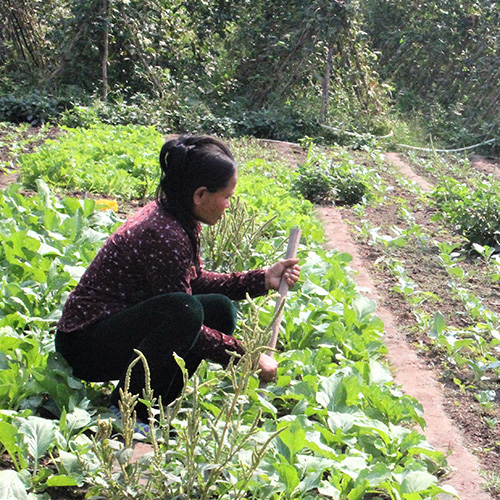
Oeun in her garden.


CWS programs in Cambodia reached more than 21,000 people in 83 communities last year.

Source: CWS Annual Report 2017

Ending hunger doing what she does best

Phan Oeun has been a CWS partner for more than a decade from her home in northern Cambodia. Things were very different for Oeun and her family when they first got involved in a CWS development activities in 2007. Oeun and her husband, You Ron, had two middle school-age children. The family was in a tough financial situation.

Their hunger and poverty led Oeun to join other women in learning how to improve her family’s wellbeing. She did this by improving her skills in realm she already knew well: home gardening.

Now 46, Oeun says that she was very active in putting into practice the skills and knowledge she developed through CWS activities. She has been very successful in her vegetable business since then, to say the least. Additionally, Ron and their children, who are now 20 and 23, are farmers, and Ron is a Village Livestock Agent.

During a recent visit, Oeun told our team, “I am so successful in my business now –  I started with a small vegetable garden surrounding my home and with the hope to have enough for my family to eat.” Now, Oeun continues, “With support from my husband and my two children I expanded to a 1,000 square meter [about a quarter acre] garden and grow a variety of vegetable all year round. I have vegetables to sell every day and I make about 350,000 Khmer riel [$87] each week!”

In sharing her success, Oeun also reminded some Cambodia team members of this fact, “Before becoming a CWS partner family, we relied on rice farming for our living and often we did not have enough to eat [and certainly no surplus to sell for other food]. My family now has enough food year-round, and I even saved money to renovated and expand my house and to buy four hectares [10 acres] of land to grow rice and cassava, which I can sell for 10 million Riel [$2,500] per year!” In ending her story, Oeun added, “I could not be successful like I am today without support from my husband and children … and CWS. I am very grateful and thank CWS so much for their start-up and ongoing
technical support and guidance.”


Stories of Change


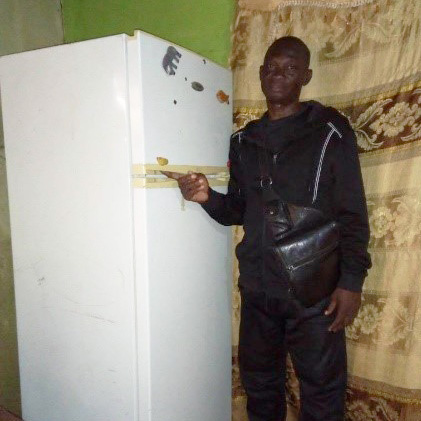
Amani stands next to his soft drink refrigerator.


The CWS Urban Refugee Self-Reliance Program has supported 35 refugees and vulnerable host community members in Tanzania and 800 in South Africa as they become more economically self-reliant.

Goodbye, debts!

“I didn’t meet my family’s basic needs on a daily basis until I started this business. Now I earn an average income of $9 per day!” 

These are the words of 56-year-old Amani Twaibu Mwanayumba, a father of two teenage daughters and a refugee from Democratic Republic of Congo living in Tanzania. Before joining the CWS-supported Urban Refugee Self-Reliance Program in Dar es Salaam, Amani didn’t know about income diversification. His livelihood came exclusively from collecting antiques from across Tanzania to sell to larger antique stores in Dar es Salaam, Zanzibar and Arusha. 

In his words, “The antiques business environment is so challenging. You have to wait a long time to get customers – sometimes I have to wait for three months or more to get a customer and make a meaningful sale of say $220.”  

When Amani did make a sale, the money went right to paying off the debts he owed to his friends. “I was flat broke and had to routinely borrow from friends. Sometimes I even asked my wife to borrow from her friends so we could make ends meet,” he says. 

In March, Amani joined a two-day CWS interactive training workshop. He learned about the fundamentals of starting and managing a small business and the basics of marketing for small and micro-enterprises. CWS provides this training for refugees and asylum seekers in Tanzania so that they can move towards economic self-reliance. The effect that it has already had on Amani’s life is undeniable.  

Through the workshop and one-on-one meetings with CWS staff, Amani learned about diversifying his household income. Amani invested the money that he had in a refrigerator so that he could enter the business of soft drink vending.  

Just a few months later, this steady income has made a huge difference for Amani and his family. “Now I live a happy life,” says Amani. “I kissed my debts goodbye, and now I can afford to support my girls in school and meet our basic needs like food, shelter and clothing.” 


Stories of Change


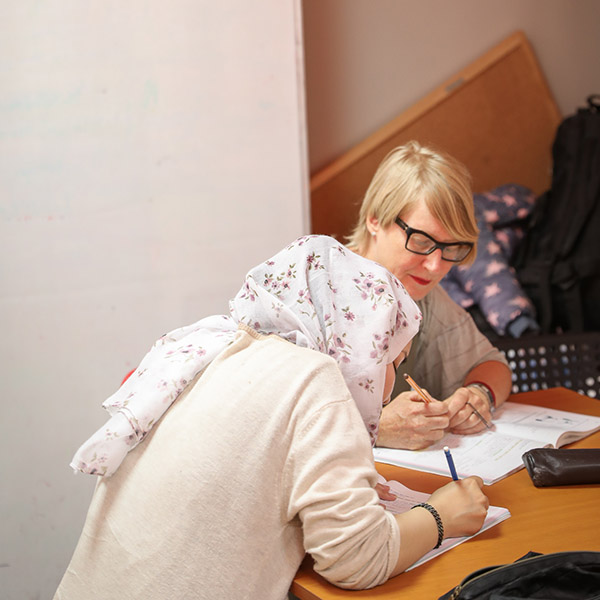
Class time at Info Park.


Since July 2016, nearly 170 women and girls have attended German classes at Info Park. Of those, 140 successfully graduated and received a language certificate.

When German is more than a language for a young migrant

Z’s* first day in Serbia was also her first day of a two-month long German language course, and she sensed that it was the first day of a new life.

Twelve-year-old Z’s family was passing through Serbia, bound for Germany. Her family was originally from Ghazni province in southeastern Afghanistan. Like in many Afghan provinces, life in Ghazni was precarious; Taliban insurgents operated in rural areas and attacked schools and government infrastructure.

The family fled to Iran, where Z was born in exile. She was never accepted by her peers in Iran because of her Afghan roots. Z’s father was a stonecutter, and her mother was a housewife. Her mother always wanted to study, but the family couldn’t afford her education. This made Z want to study even more. Unfortunately, her education was put on hold when her family began the long journey to Europe in 2015.

They arrived in Belgrade in the midst of summer in 2016. Staff from Info Park, CWS’s local partner in assisting refugees and migrants, spotted a family roaming through a central refugee park, trying to find someone to help them. They were taken to Info Park’s safe space, where they could rest. Z recalls the taste of the noodles that she was given at Info Park as, “the sweetest food she had tasted in years.”

While her family lived in a camp for asylum seekers in Belgrade, Z took a bus every day to Info Park to attend German and English language courses. It was more than learning a language; each new lesson brought her one step closer to her dream of living in Germany and becoming a gynecologist to help other women. She was one of the most devoted students in the class.

Z eventually left Serbia to go to Hungary and then Germany. Before she left, she told the Info Park team that she was worried she would remain uneducated. But then she smiled as she said how grateful she was for the support she had received and for the opportunity to learn again.

Info Park’s center was often the only safe haven for her and for her friends. It was a place to learn and a safe place to relax, away from the threats of the camp. She explored German and English books in peace at the center, often staying all day. During the final language test for German, Z scored the second highest score ever recorded at Info Park, a 96.5 out of 100.

Earlier this month, we heard great news from Germany, where Z now lives. She won the Hamburg regional competition for best writing skills among newcomers to Germany. Twenty months ago, she didn’t know a word of the language. She only joined a German school in Hamburg a month ago. And yet, here she was with her prize.

We congratulate Z and her whole family, who are starting to make a new life for themselves in Germany, and we wish them every success in the years to come. With determination like Z’s, she has the potential to achieve great things.

Since July 2016, nearly 170 women and girls have attended German classes at Info Park. Of those, 140 successfully graduated and received a language certificate. Teachers from Germany, Austria and Switzerland inspire students to gain confidence, knowing that if they work hard they will have more opportunities. Funding from CWS is helping to ensure that the class continues to be offered at Info Park.

*We are only using her first initial to protect her identity.


Stories of Change


This is StARS’ Medical Access Team which is led by a Syrian doctor. The team advocates for refugees and vulnerable migrants to receive medical assistance and builds and maintains relationships with doctors and medical institutions to provide medical services for free or at a reduced price. The team also assesses all requests for medical grants.


At the end of 2017, the UNHCR had registered 219,413 individuals in Egypt, representing an approximate increase of 17 percent in comparison to 2016. Of the total, 57 percent are from Syria.

A small grant meant life-saving medical treatment for a refugee in Cairo

When 22-year-old Luwam came to Cairo, she did not know her way around the city or where to live. But that wasn’t her biggest challenge. She was suffering from renal failure and needed dialysis three times a week in order to maintain stable health.

Luwam had fled Eritrea, and she connected with the Eritrean community in Cairo. They did what they could to help – initially, community members put together enough money to pay for her treatments. But as community members faced their own struggles to get by, they could help less and less. They recommended that Luwam connect with St. Andrews Refugee Services, known as StARS.

StARS provides an array of services for the growing refugee population of Cairo, even against a backdrop of service providers being more and more limited in their ability to help. For example, UNHCR’s implementing partner for providing medical care has suffered from such severe cuts in funding that it is no longer able to cover all life-saving treatments, let alone other interventions that are not life-saving. This is just one example of many in which organizations face a continually diminishing capacity to service clients as a result of reduction in funding. Thanks to financial support from CWS, StARS is able to provide medical grants – grants that can life-saving – to refugees.

When Luwam came to StARS, she talked to a Medical Officer, who looked through her medical documents and learned that even though she had already applied for refugee status with the UNHCR, her appointment was still months away.

Without that status, she couldn’t get assistance from UNHCR’s implementing partner in the health sector. And without treatment, her medical condition could get much worse. Fast. She could even die.

After exploring other options, the StARS team decided to provide Luwam with a $280 grant to cover a month of dialysis, further tests and treatment. The team also reached out to UNHCR to advocate that her case be fast-tracked. As a result, Luwam was officially recognized as a refugee by the UNCHR and is now receiving the free treatment she needed.

The financial support that StARS receives from CWS means that they can provide these critically-important grants. And it isn’t just Luwam.

A 16-year-old refugee girl had a baby as a result of rape. She couldn’t provide enough breast milk for the baby, but she also couldn’t afford formula. StARS provided her with a grant to pay for formula.

A single mother of four was unable to work because of a cataract in her left eye. She was sent away from the UNHCR implementing partner on medical treatment, but StARS was able to provide her with the grant to cover the $209 cost of the operation. After the operation, she was able to find a part-time job and says she is more capable of going about her daily activities and looking after her children.

A 20-year-old Somali woman came in to the drop-in and emergency service at StARS. She had been recently raped, and she urgently needed a blood test in relation to the rape. She hadn’t been in Egypt long, and no one else was able to help her. StARS provided the $6 grant to get the blood test done.

The Medical Access Program team is made up of refugee doctors, nurses, midwives and pharmacists from Syria, Ethiopia, Yemen and Eritrea. They make recommendations about medical grants, and they provide medical advice or accompany those in need as they go to hospitals or a doctor to help facilitate the process. They have also created a network of Egyptian doctors and medical institutions willing to provide low-cost or pro bono medical services.

We are hard at work to ensure that refugees in Cairo can access the care and treatment that they need.


Stories of Change


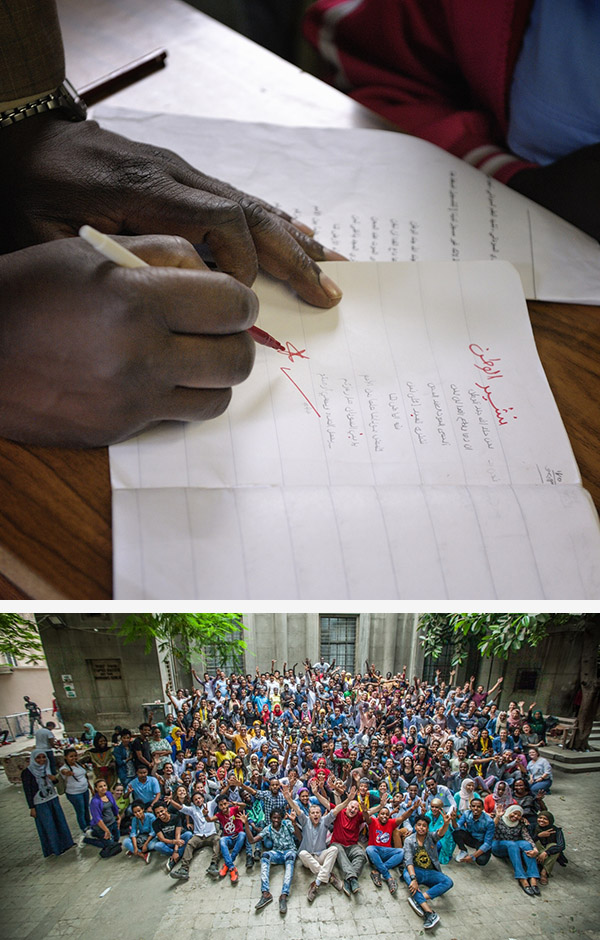
Top: a teacher at StARS corrects a student's paper. Photo by Paul Jeffrey. Bottom: the staff at StARS, 85 percent of whom are refugees themselves. Photo courtesy StARS.


At the end of 2017, the UNHCR had registered 219,413 individuals in Egypt, representing an approximate increase of 17 percent in comparison to 2016. Of the total, 57 percent are from Syria.

Helping refugee children in Cairo to stay in school

Imagine, for a moment, that you are a Syrian refugee family. You have fled from the atrocities of the Syrian Civil War to the relative safety of Cairo, in Egypt. Your children, like so many other refugee children, have had an extended period away from school and you want to get them back in the classroom and caught up. You know that an education can mean hope and a brighter future for your children, but there are too many expenses. You’re up against school fees, examination fees and even the costs of transportation to get your children to school and back each day.

You are particularly concerned about your daughters. Syrian refugee girls are often married off to older men for financial reasons. You want your daughters to be able to go to school instead, but again, the costs are daunting and there are very few places where you can go for assistance.

For too many families in Cairo, this isn’t a hypothetical. This is reality.

As the number of refugees in Cairo continues to grow – there was a 17 percent increase in Cairo’s population from 2016 to 2017, available services for refugees continues to shrink. In this environment of limited assistance, St. Andrew’s Refugee Services – known as StARS – is continuing to serve refugees with education and medical support, thanks to funding provided by CWS.

The team at StARS is well connected to the refugee community in Cairo, especially considering the vast majority of the staff (about 85 percent) are refugees themselves. They can help families like the ones in the scenario above.

StARS provides grants to children, young adults and adults who would otherwise be unable to afford school, college or university. When there is no other support, StARS is there for families.

Recent education grants have been provided to Syrian children whose fathers were either killed in or facing severe medical conditions and are unable to work as a result of the conflict in Syria. Some of these children’s mothers were able to provide small incomes for their families, but it was barely enough to survive on, let alone pay for school.

Other recipients are children of South Sudanese single mothers, whose refugee statuses are in limbo as UNHCR suffers from a lack of available staff to help. The families are currently living in Cairo without support, but they cannot return home because of ongoing conflict.

At one point, the StARS Community Outreach Team became aware of a Syrian student in first grade who was about to drop out of school. His parents have six children, and they couldn’t afford to keep him in school and weren’t able to raise money from their community for school fees. StARS provided an education grant to the family to keep him in school and ensure that he continued his education.

An 18-year-old Ethiopian refugee is caring for her two younger brothers, who are 12 and 15. The three siblings live in Egypt without any family. They receive financial assistance that covers one brother’s school fees and part of the other’s. It wasn’t enough, though, to guarantee that the second brother could stay in school, so StARS stepped in to help. She received an education grant to cover the rest of the fees, and now both brothers are in school. This guarantees that the brothers are able to get an education, but it also means that their sister has the time and opportunity to work to support the family.

Every child deserves an education, no matter where he or she is from or what he or she has been through. For many refugees in Cairo, when options are limited and hope is waning, we are there to help.


Stories of Change


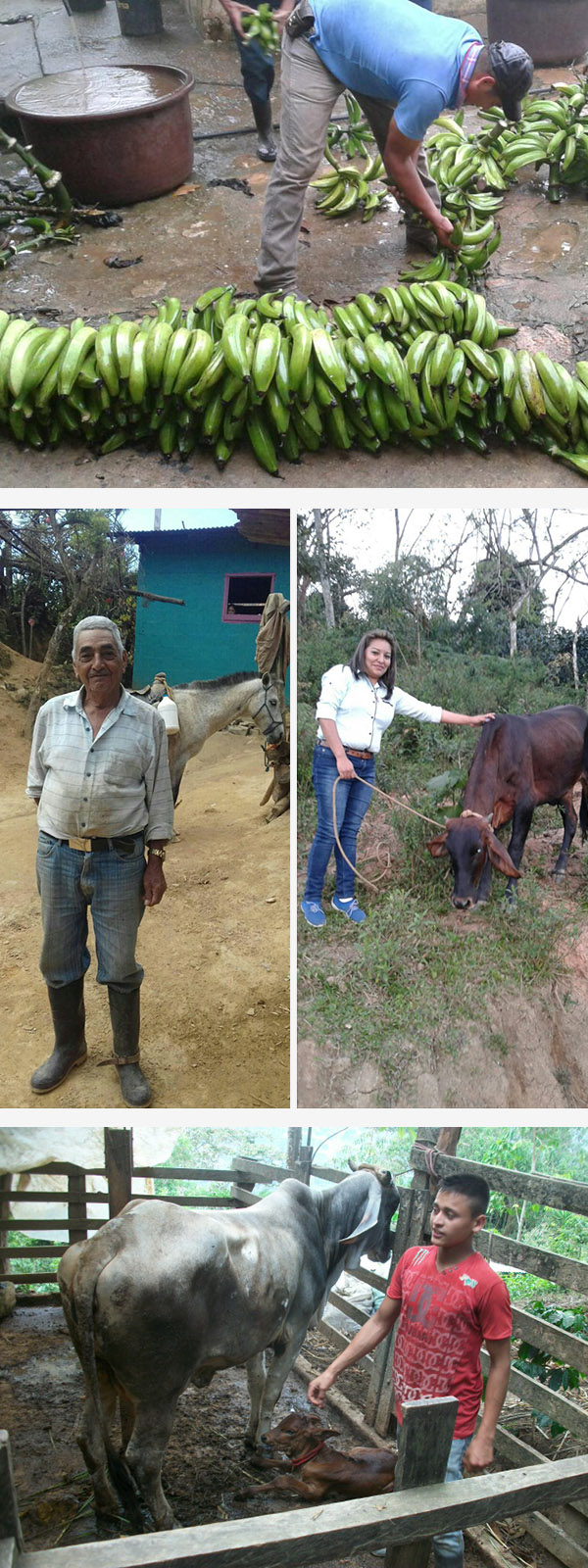
Top: families preparing plantains to donate to the school system. Middle: Cándido Rivera (left) and a woman from the family who received the calf he contributed (right). Bottom: Bairon Cantarero and the cow his family has raised as part of the program.


In Honduras, 600 families participate in CWS-supported food security activities.

Source: CWS Annual Report 2017

A comprehensive approach to food security in Honduras

“I have appreciated how they pay attention to rural families, and I have learned a lot.”

These are the words of Cándido Rivera, from the community of La Cumbre in Nueva Frontera municipality, Honduras. CWS and partner CASM have a food security and nutrition program here to support families as they improve their diets and achieve food security.

Part of this effort means better nutrition for children. In the last year, two food fairs have been held in Nueva Frontera with more than 200 adults and children participating. These events are a learning exchange where participants can try new recipes and discuss the nutritional values of the foods they are eating. In the last five years, 10 communities have hosted fairs.

A woman from the community of San Miguel told us, “As mother ‘guides’ [participants in nutrition trainings], we feel happy with this fair, as it has brought us joy to have learned how to improve our children’s diets. This is the first time we have had an event such as this in our community, and we hope to work together to continue to organize fairs like this in the future.”

In the spirit of helping children have better nutrition, CASM worked out a deal with the local school system and some families that participate in the CWS-supported program. When the school system received government funds to provide snacks to primary school students, CASM helped negotiate a contract with four families in Nueva Frontera to provide some of the needed products. During a 10-week contract, families are providing plantains, tomatoes, eggs and bananas to the school system and earning an income by doing so. As a result, 1,800 children are eating a more diverse diet at school. The families are now registered vendors (a status that CASM helped them get), so they can charge more for their produce moving forward, too!

Another aspect of food security for these family is livestock. In the last year, the CWS-supported program gave cows to 17 families. Six of these were calves that were donated by other program participants; when they receive a cow, they commit to giving a calf to another family in the future. Not only do families consume more milk when they have a cow, but they can also sell milk to their neighbors for extra income and have the possibility to earn even more income by selling the cow or calves in the future.

“I am making a ‘payment’ for the cow by benefiting another family with the calf. I wish them the same success that my family had with our cow, whom we continue caring for so that we can produce milk and more calves in the future. I am happy with all that we have achieved,” says Cándido.

Bairon Cantarero lives in Nueva Frontera, and his family has participated in the project in the past, including receiving a cow. He was studying agriculture, but his family didn’t have the money for him to continue his studies. CASM advocated on his behalf and secured funding so that Bairon could continue his studies and attend an agricultural school. This education means opportunities for him that he would not otherwise have had.

The challenges standing between families and food security are often multi-faceted, and so is our response to them. From snacks in school to milk for families, we are creating tailored, effective strategies to helping families have more nutritious and plentiful diets in Honduras.


Stories of Change


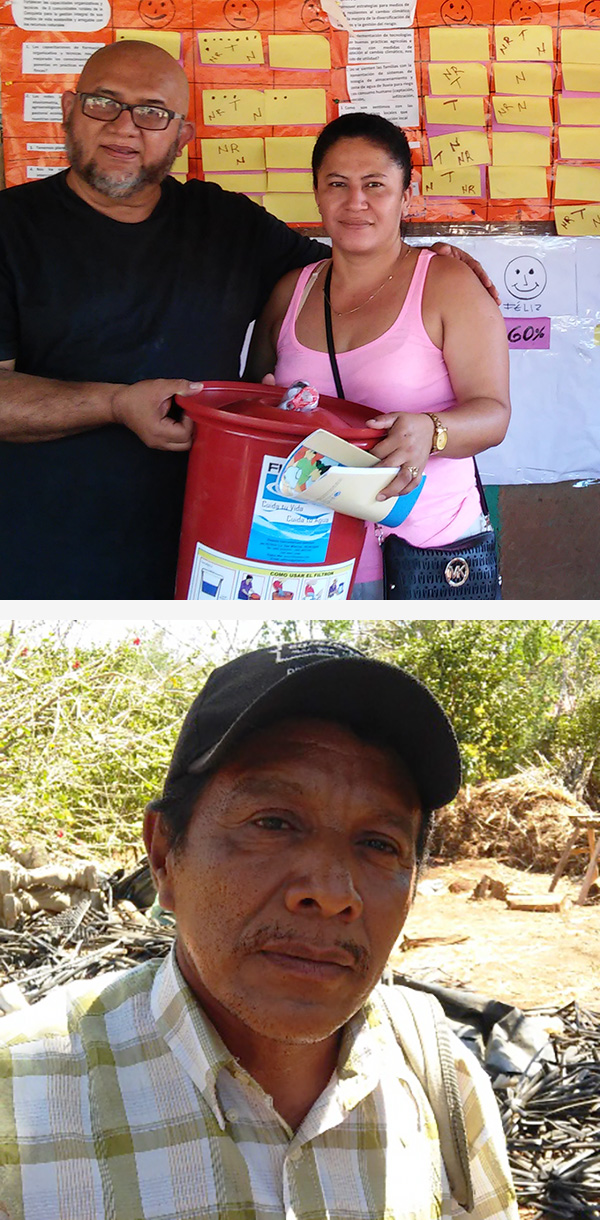
Top: Tomasa receives the water filter on behalf of her church. Bottom: Iván. Photos courtesy CIEETS.


Working with partner CIEETS, CWS is supporting 220 families in 8 communities in this food security and nutrition program.

“They looked for us to help us” in Nicaragua

“Mi iglesia, mi comunidad está bien agradecida con este proyecto, ha llegado en un momento oportuno, tenemos que aprovechar para salir adelante.”

“My church, my community is very grateful for this project, which came at a very opportune moment, and we have to take advantage of it to get ahead.”

These are the words of Iván Aburto, a promoter of a CWS-supported food security and nutrition program in Nicaragua. Iván’s church joined the program in 2017, but he was aware of CWS’s local partner, CIEETS, for years. They felt confident joining a program that CIEETS was leading. Iván says, “We planted fruit trees at our church, and each member of the church also received and takes care of a fruit tree.”

Lissett Palacios grew up in Santa Elena, the same community where Iván lives. Her family had financial challenges when she was growing up, so she joined the CIEETS program as a way to generate additional income.

Lissett has a diversified vegetable garden with citrus, fruit, quiquisque, banana, guava yucca, chiltoma and papaya. She also have chickens. In her words, “I feel stronger to cope with a crisis like the drought we had two years ago, which affected us a lot. Drought made us poorer, but it also made us stronger and more intentional about looking for alternative livelihoods. It is for this reason that today I have my diversified plot, which assures me the food of my family and also some surplus to sell at the market.”

She added, “I have also worked in my water reservoir to irrigate the plants. I also did soil conservation works.”

In regards to the usefulness of the program, Lissette says, “The trainings have been necessary to help us understand better how plants, soil and water work as part of one system.”

Speaking of water usage, in the nearby community of La Vainilla, Tomasa Acuña’s church has just received a water filter so that the member families will have clean water to drink. Tomasa is the pastoral leader of the Church of the Nazarene here, and she has observed many impacts of the CWS-supported program among the community.

“The results of the project can be seen in the participant families… some have several crops, have more food, and new knowledge that will help them overcome all that poverty that they have suffered for so many years. Children, the elderly and pregnant mothers can eat three meals each day,” she says.

“We thank all the people who collaborate with us to improve our situation … Rest assured that we are taking advantage of these resources that come to us through the CIEETS,” says Lisette.

And in Iván’s words, “Nos han busando para ayudamos.” They looked for us to help us.


Stories of Change


Magdalena (top) and Juana (bottom) are among the women who participate in a CWS-supported greenhouse program in Guatemala. Photos: Bethany Beachum


In Guatemala, our team works with the Conference of Evangelical Churches of Guatemala - known as CIEDEG - to strengthen the food security and income-generating activities of 700 members of local indigenous associations.

Source: CWS Annual Report 2017

Planting better futures in Guatemala

Magdalena Perez Gallego is the coordinator of a greenhouse in her community of Pulay, Nebaj, Guatemala. She and her husband live on the same land they inherited from her in-laws 40 years ago. Their community was heavily affected by Guatemala’s deadly civil war, which raged for 36 years. Most families fled from the armed conflict into the mountains, only returning after the peace accords were signed in 1996.

Outside of her home, Magdalena tends a flourishing garden, with cabbage, greens, medicinal herbs and ornamental flowers. She also works in a CWS-supported greenhouse, where she and other women can apply knowledge and skills that they learned in CWS-supported trainings. Magdalena says that the greenhouse is of great use for growing more delicate vegetables like green pepper, which needs the warmth to survive.

Magdalena and her husband have seven children, three of whom have migrated to the U.S. One of her sons left for the U.S. only three months ago, and they just received word that he arrived and has found work. Magdalena expresses that they have been deeply concerned for him and are now in financial difficulty after paying for his migration. They are grateful for his safe arrival, however, and for good production in the greenhouse and garden that are helping to ease the financial burden.

Meanwhile, in nearby Flores de Turanza, Juana Remundo Velasco is part of a women’s collective greenhouse. Even before she joined, however, she was watching and learning as greenhouses were being built and women were beginning to expand their vegetable production through the project with CWS local partner CIEDEG.

Juana carefully observed how the greenhouses were constructed, and then she and her husband used their own savings to purchase a sheet of plastic in Guatemala City and build a smaller version next to their house. She bought some tomato seedlings and started other vegetables from seed in a small nursery. Now, she cultivates an array of vegetables on her land, including carrots, broccoli, onion and celery.

Eventually, Juana was invited to join a greenhouse through CIEDEG as well, and she continues to cultivate vegetables both collectively and individually in her own greenhouse. Juana’s innovation and enthusiasm are key to the sustainability of expanding healthy food access in Nebaj!

More than 700 women are partnering with CWS and CIEDEG in Guatemala to improve their families’ food security and earn extra income. We are proud to support them as they plant better futures.