Stories of Change


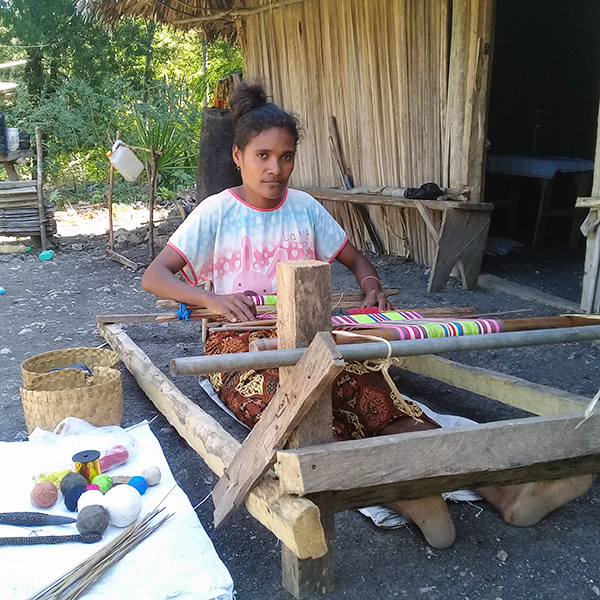
Mama Deni at her loom.

Keeping tradition alive…and building women’s businesses in the process

Deni Seteria Saufeto is a jack-of-all-trades in her village in West Timor, Indonesia.Besides taking care of her children and home, Mama Deni earns money weaving textiles like her mother taught her. For years, she had successfully sold shawls and blankets to family or friends. But weaving is a common way to make a living in the area, so competition for paying customers was tough.

Things changed for Mama Deni when she joined the CWS Berdaya (empowerment) initiative, which is part of a our Timor Zero Hunger program. Berdaya is designed to help women expand their earning options and potential. As you can tell from the name, Timor Zero Hunger is designed to end hunger and malnutrition in the area, especially for young children. When women are better able to provide for their families, they can feed their children better, too.

The island of Timor, where West Timor is located, is famous for its high-quality weaving, just like Mama Deni was doing. Traditional Timor weaving was done with naturally dyed threads. Recently, though, the widespread importing of cheaper, lower quality but more colorful threads was causing a move away from the natural dyeing process. The shift has been so dramatic that the skills to naturally dye the thread were nearly lost. 

The local Office of Trade and Industry near where Mama Deni lives has tried to revive the practice of naturally dyeing thread. CWS recently joined our trade office colleagues to host a dyeing workshop as part of the Berdaya initiative. It was a chance for women to refresh their skills and revive their mothers’ and grandmothers’ way of weaving. They also explored new natural color combinations and weaving motifs. This helped increase the value of the scarves and blankets that participants were weaving.

Mama Deni attended the workshop and has returned to naturally dyeing her thread. She says she started seeing the benefits almost immediately. “Not only do I get new orders from outside of my village, but I see that my neighbors who used to order from other weavers have started coming to me. They have noticed my new [higher quality] work and now prefer to buy from me.”
Stories of Change


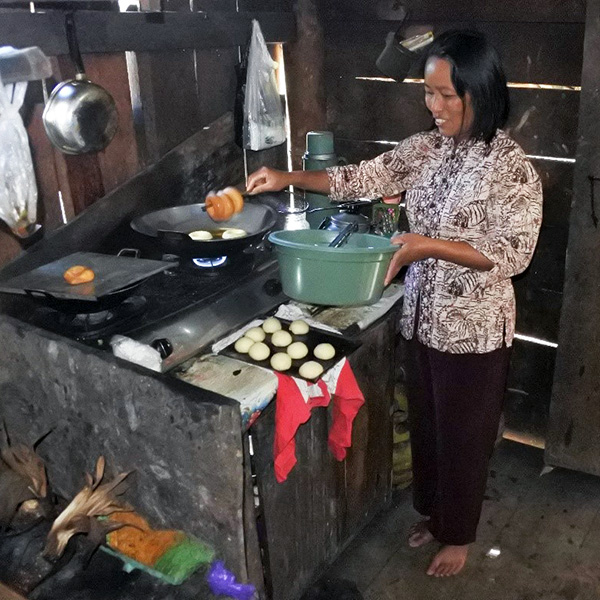
Reni fries doughnuts every morning to sell in her cafe.

Realizing a DREAM in Indonesia

Reni Sattu and her family live in a remote, rural village in Indonesia. It’s about 25 miles from the nearest town. 

When your home is that remote, there are a lot of services that you don’t have easy access to. One of the services on the list? Banking.

Years ago, Reni approached a bank in a bigger city. Her husband’s income was barely paying the family’s daily bills, and she knew they needed more. She wanted to start her own business, a cafe based out of her home. That’s when she found out that her family’s meager income prevented her from being eligible for a bank loan. Her only other option was to borrow from an informal lender…a loan shark. She knew loan sharks would bring trouble, but it seemed like she didn’t have another way to get the loan she would need to start her cafe. 

For five years, Reni borrowed money at high interest rates to build and run her cafe. Despite all her hard work, and having plenty of customers, the high interest rates made Reni feel like she was just going in circles. She kept paying the interest on her loans and never turned much of a profit. “There was a time when I had to pay back about 100,000 Rupiah [$7] a day in interest whether I made any money that day, or not. It felt like torture,” she says.

After struggling for years, Reni decided to close her cafe.

Fast forward to October 2018, when Reni joined an aptly-named CWS program. It’s called DREAM, which stands for Disaster Risk Reduction through Enhanced Adaptive Measures. As part of DREAM, our team helps women farmers and small business owners organize savings and loans groups so they can support each other. It’s a critical part of adapting to changes in rural farm life in Indonesia–changes that are primary brought about by climate change. Reni joined one of the savings groups, and she was soon able to apply for a loan to realize her dream of restarting her cafe.

She says, “I never knew getting a fair loan was possible. With our interest rates, I can make the loan payments, add to our income and save, too!” With her newfound sense of security, Reni says she feels ready and able to invest in the well-being and education of her family.


Stories of Change


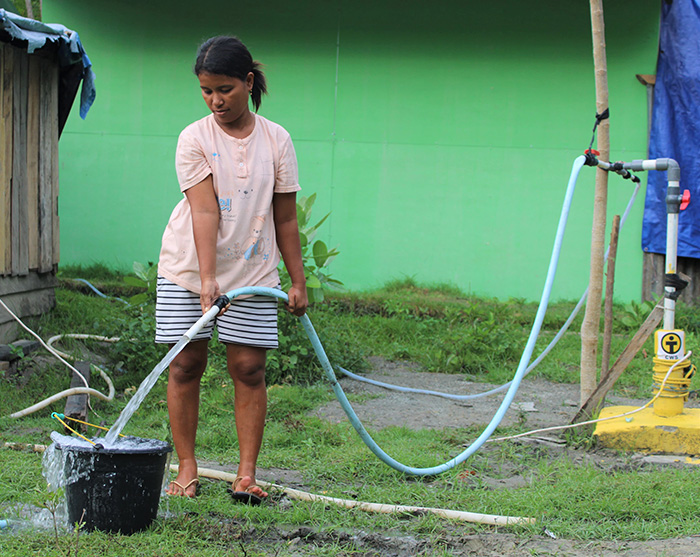
Diana fills a bucket from the CWS-constructed borehole.

Lesson learned: don’t take water for granted!

Like many people in the world, Diana used to take water for granted. Then disaster struck.

Diana lived in a coastal village near Palu in Central Sulawesi, Indonesia. But when an earthquake and resulting tsunami washed her home away on September 30th, 2018, she had to move to a temporary camp. Thousands of her neighbors faced the same harsh new reality. In Diana’s camp, called Lumbuna, there was no central water system. This made safe drinking water a rarity, and it made cooking, bathing and washing clothes difficult. And, for the first time in her life, Diana realized the privilege she had in having had ample water just days before.

Thankfully, Diana now recalls, CWS began trucking safe water to Lumbuna within days of the mass movements. Soon, soon, each person was receiving at least four gallons of water every day. In time, the ration approached eight gallons per person each day. Still, Diana had to stretch this water to cover drinking (after boiling) as well as cooking, bathing and doing laundry.

In July 2019, 10 months after the disaster, CWS remained committed to providing clean water for Diana and thousands of other people still displaced from their homes. However, our response was shifting into longer-term recovery efforts. CWS teams drilled boreholes to find more water, which gave Diana and others more immediate and sustainable access to water. Now she can spend less time worrying, and start moving forward with her life. “I am really stressed about starting my life over after the earthquake. But with CWS’s help in sharing clean water, I have one less obstacle and I can start focusing on getting my life back on track,” Diana says.

CWS, along with community members, is now drilling multiple borehole to increase water access for about 1,000 families still coping with the earthquake and tsunami’s impact. Much remains to be done. But, as Diana said, there’s one less thing families need to worry about for now.


Stories of Change


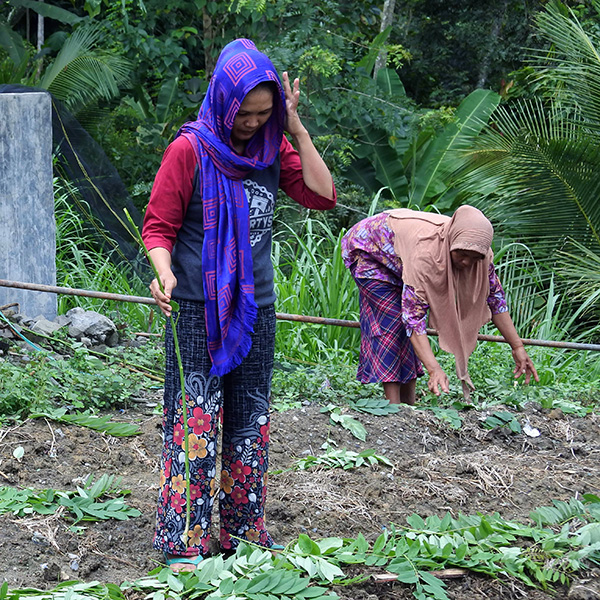
Henrita (left) and another from her women's group in their community garden.

Linking gardens, savings and disaster resilience in Indonesia

In October 2016, a landslide destroyed houses and farmland in Lembang Rano, a small mountainous village in southern Tana Toraja, Indonesia. CWS was already working with communities there, so we teamed up with the district Disaster Management Agency to support disaster response. Once the community had recovered, our team and government colleagues saw an opportunity to share disaster preparedness and response information. This is a landslide-prone area, so we wanted to help the community be better prepared for future landslides. 

We already had an established program in other nearby villages called Safe Schools, Safe Communities. In this program, we worked with village schools to distribute information to students’ families. Schools are often a great starting point because children are eager to share what they learn with family and friends. We expanded the program into Lembang Rano. 

Henrita is the mother of two children who attended a Safe Schools, Safe Communities participating school. “I was interested in this information [which I heard from children], and I hoped that CWS would begin sharing it with everyone,” she said. “So, when the village leader told me that CWS would come back to Lembang Rano, I was excited.”

The Safe Schools, Safe Communities program wrapped up. Its successor is a program called DREAM, which stands for Disaster Risk Reduction through Enhanced Adaptive Measures. DREAM is designed to help families strengthen their resilience against natural disasters like the landslide that damaged the village school a few years ago. Unlike its predecessor, though, DREAM is exploring ways for whole communities to build resilience to disaster. Through this program, individual families can strengthen themselves in ways that will help the whole community, including schools, be stronger and safer.

One way families can be stronger and more resilient to disasters is by having more resources, especially economic stability. And one way to achieve this is to diversify crops and livestock … and to empower women in the bargain. This is what DREAM does. Our program team supported Henrita and other women in Lembang Rano to form a Savings and Loan Group through which members could save their own earnings from individual work; and, with group agreement, take small loans.

Just as she immediately saw how people could benefit from knowing more about disaster risk reduction, Henrita quickly saw that her group’s capital grew slowly, and outstanding loans kept the capital at a minimal level. Wanting to help build capital faster so larger loans could be made, and so member dividends could be realized, she called a meeting. After a lot of discussion, members agreed to start a group garden and to sell the vegetables for the collective good of the savings and loan fund.
While wanting mostly to improve her own life, and help others do the same, Henrita noted “a lot of change in our group’s members, many of who used to stay home and take care of their families only.” But, with the group effort, and profit motive, they became gardening enthusiasts. And, in managing a community garden together, they learned more about running their savings and loans group better. All in all, the DREAM keeps growing.


Stories of Change


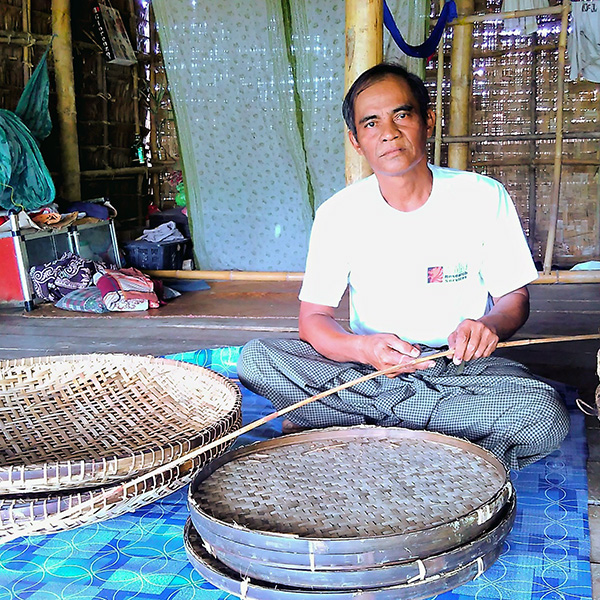
U Aung Myint working at home for his family's weaving business.

Building a better village by changing mindsets and habits

We first met U Aung Myint in 2015. Auk Htone, his village near the Ayeyarwady River in Myanmar, had flooded. CWS had brought supplies for families who needed help. In the years since he first came to know CWS, U Aung has become an active community member and has served ash the Village Development Committee for about a year now. 

U Aung and his family earn a living by producing bamboo baskets, mats and trays. When he isn’t working in the family business, he has volunteered to organize mothers and children for a CWS-led nutrition program. As a father of four children, he was interested and invested in the program and offered to support the participating mothers. 

As he was chatting with some of our team members recently, U Aung shared a powerful insight:

Development, he noted, is not just about having things like blankets, water pumps, seeds and road paving equipment. Yes, he’s grateful for all of these supplies that have been part of CWS emergency relief activities in Auk Htone. But, he says, the larger benefit was something else. “Last year, CWS introduced us to an opportunity to learn about consultative leadership, participatory community development and shared project management. I realized then that community development is largely about changing mindsets and organizing as a group to solve problems. This was a revelation; in  the past, I thought of development being about roads, bridges and building.” 

As he reflects on the nutrition program, U Aung says he sees that mothers have changed their behavior. They have changed the foods that they are preparing for their young children as well as how they cook them. As they participate in cooking demonstrations and learn about the importance of clean cooking spaces and balanced meals, they have changed their habits to incorporate their knew knowledge. Yes, they received hens, roosters and seeds from CWS to support their efforts. But the changes in cooking and food choice are the long-lasting backbone of the program. 

CWS is the only international organization working in Auk Htone, and U Aung mentioned to our staff how meaningful our impact has been. He credits his leadership role and CWS partnership for expanding his thinking about what it takes to build a better village.


Stories of Change


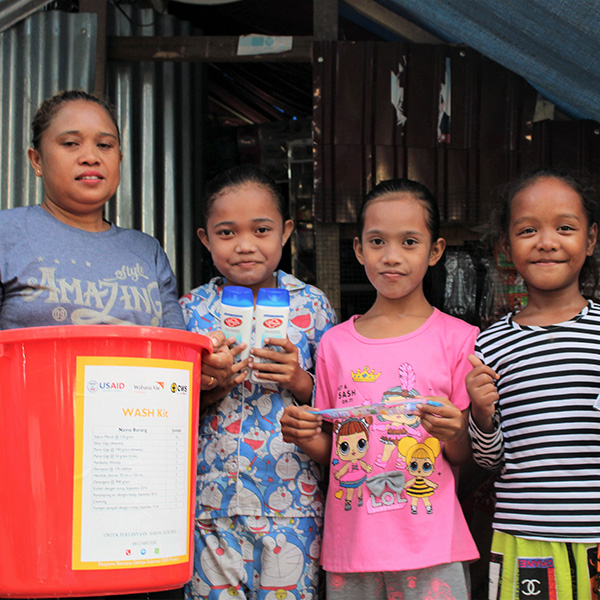
Sarini and her daughters with their new WASH kit.

In emergency response, don’t forget the basics.

When disaster strikes, struggles follow. Some of these struggles are massive; for example, replacing a destroyed house or lost wages. But there’s also the consistent and grating struggles of meeting basic needs day in and day out.

This was certainly the case when a chain of disasters–an earthquake and then tsunamis and soil liquefaction–struck Central Sulawesi, Indonesia, in September 2018. The Indonesian government and many organizations like CWS immediately sprang into action to help families who lost homes and livelihoods. Estimates were that more than 200,000 people needed essential aid. Shelter and clean water were top priorities, and CWS helped deliver both. 

Another huge need was for hygiene supplies to protect people’s health. Things like soap, shampoo, toothbrushes, toothpaste, detergent, towels and lidded water storage buckets were in high demand. Women and older girls also needed sanitary pads. Our team worked hard to ensure and early and continuing supply of these essentials to hundreds of families.

Sarini’s family was one that teamed up with CWS. Months after the disasters, they still haven’t been able to make up for their lost earnings or find new ways to earn a sufficient income. They aren’t able to buy their own hygiene supplies yet. In response to the needs of many families like Sarini’s, CWS distributed 1,500 more packages of hygiene supplies to families in June and July 2019. Sarini says that she has a whole new appreciation for soap after what her family has been through. Now she can wash her children, and their clothes. Her children have new toothbrushes and more toothpaste, which is actually quite expensive in the market. Even though months have passed, families are still struggling day-to-day. Unfortunately, there is less outside help. Noting this, Sarini said, “I am most grateful that my family and I are still alive. I am grateful, too, for CWS’s help.”


Stories of Change


Deborah with her children when they arrived in the United States.

“If I did not have the opportunity of getting into the United States, maybe I wouldn’t be alive today.”

“My name is Deborah Baliraine Jane, a mother of four children and an acid survivor. Prior to an attack that happened to me in January 2014, while I was still in my country of origin, Uganda, I was a successful businesswoman. I owned a restaurant and a bakery, which hired around 15 people. I also worked with women who were victims of domestic violence to empower [them], and I guided them on how to be financially independent.

The idea of supporting these women was greatly opposed by the men from my community, being a patriarchal society where men do not want women to lead. They connived to silence me, which resulted in the attack, leaving me vulnerable and hospitalized for a year.

My once-booming business was ruined, and on top of that the perpetrators of the crime continued to threaten me if I did not drop charges, which I had filed against them. This forced me to leave my country for safety.

It was through the refugee resettlement program that today I am able to raise my children in a safe place. America has become my new home. Each day I work very hard to contribute to this country that saved my life, my children and my future. When I learned of the devastating news of the refugee resettlement program [being] on the verge of getting closed, it broke my heart. There are many people out there who have similar stories like mine, or maybe different, but [they] are unable to go back to their home countries for various reasons.  America closing its doors on the most vulnerable refugees would be like pushing them to die. If I did not the opportunity of getting into the United States, maybe I wouldn’t be alive today. No one chooses to flee home – we all flee for safety.”


Stories of Change


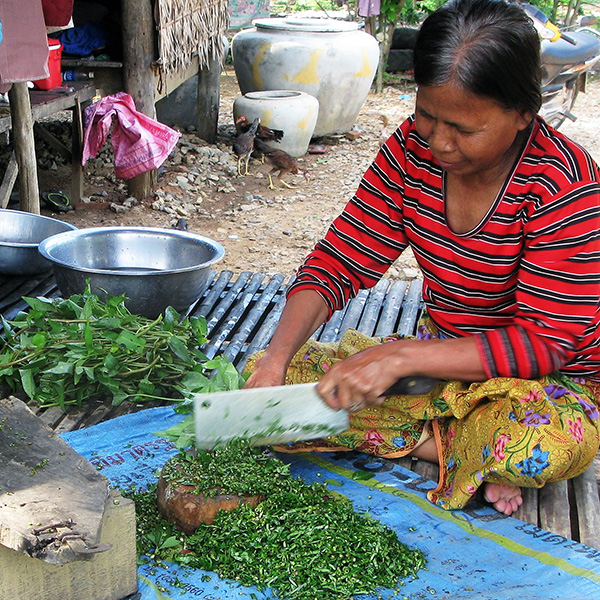
Hon makes chicken feed for her flock.

“We are no longer worried about not having enough food to eat.”

Bouy Hon and her husband, Loem Choeum, live in western Cambodia. They do not own their land, so Choeum works as a wage laborer on other people’s farms. He can earn about $10 when it is time to plant or harvest rice. 

Unfortunately for the couple, age is not on their side. Hon and Choeum have two grown daughters with families of their own. Their daughters cannot help their aging parents financially, so Choeum continues to be a day laborer despite being nearly 70. 

Across several countries in Asia, CWS has a signature way of working families like Hon and Choeum’s: chickens! Because of her family’s particularly vulnerable situation, we invited Hon to join our program through our partner Rural Development Association. First, Hon learned about raising chickens, including how to prepare a cage, make healthy chicken feed and vaccinate her chickens to keep them healthy. When she was ready to raise her own brood, we gave Hon five hens and 20 chicks so that she could expand the small duck-raising business that she was already running in her backyard. She put what she learned to good use, and had quickly doubled her earnings and brought the family income up to about $1 per day. This added a bit of security to the seasonal wage that Choeum earns and allowed them to improve their diets a bit. 

When our team checked in with Hon last month, she thanked us for the support that made it possible for her to work at home to earn money to complement her husband’s income. Hon told us that even though they have been very poor all their lives, our recent support is the first time in their lives that they have been helped by anyone. She added, “I am so happy with this support. Finally, our lives are improving, and we are no longer worried about not having enough food to eat. Thank you.”


Stories of Change


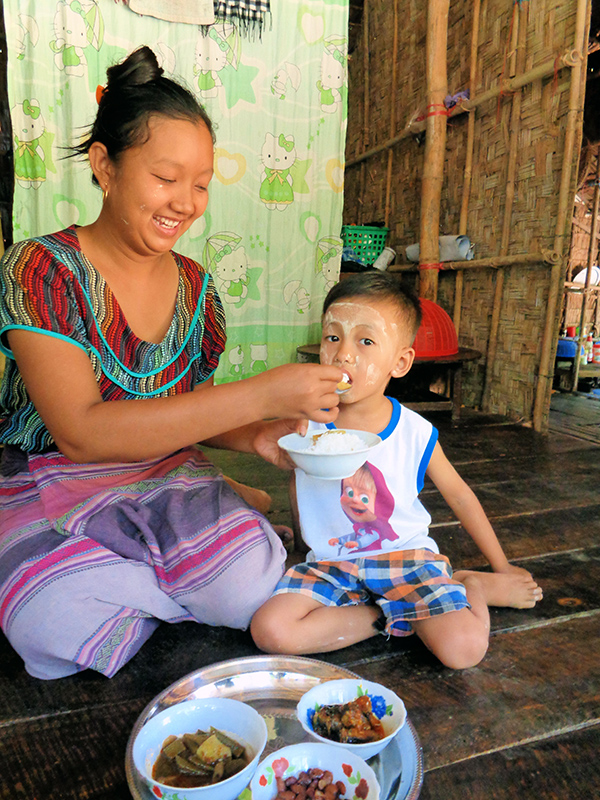
Ma Bo Ma and Mg Htet Oo at lunch time.

Better Nutrition can be Better than Medicine

Ma Bo Ma, 25, works as a day laborer for six or seven months of the year–the dry season in her community in southwest Myanmar. For the remaining five or six months, though, she is jobless. Her 27-year-old husband, Ko Oo, earns a living as a carpenter during the dry season and a ferry boat operator in the rainy season. They earn less than $4/day on average, which is not that low by rural Myanmar standards. 

The problem, though, was that they were spending too much money on their son’s healthcare. Mg Htet Oo is four years old. As a toddler, he was often ill and weak. Ma Bo Ma and Ko Oo found themselves at the local clinic with him too often, confused and frustrated when no one could quite understand why he was sick so much. With all the money going to his health care, the family’s income was spent quickly. They didn’t have much left over for other needs including, ironically, good food. 

When no one could diagnose Mg Htet Oo, his parents thought that maybe his health issues were related to his diet. But they didn’t really understand how to make sure he had a balanced and nutritious diet. Luckily, CWS was already working with some families in their village to help share information about the very things that Ma Bo Ma and Ko Oo were wondering.

Our team sat down with Ma Bo Ma recently as she prepared okra and potatoes, fish curry and beans for her son’s lunch, and she told us more about her experience. “One day, after hearing about CWS information-sharing from another mother in the village, I joined a nutrition education session,” she said. In this session, and the others that followed, Ma Bo Ma learned the importance of protein – fish and meat – in building a young child’s body. She came to understand that natural sugar – corn and sticky snacks – give energy. And, she learned the many ways that vegetables, especially green ones, protect children from diseases by providing key vitamins, minerals and nutrients. “In the past, we didn’t eat vegetables simply because they were not our favorite food,” Ma Bo Ma explained.

They also didn’t eat protein because they could not afford meat or fish when they were spending so much on clinic fees and medicines. The Mother-Leader–the community volunteer who led the education session that Ma Bo Ma attended–nominated the family to join a program focused on raising poultry. She thought it would jump start their ability to improve their diets, since chickens are a great source of protein and extra income for families. She was right–Ma Bo Ma joined the education and training workshops about raising her new poultry, and she has succeeded!

Now, Ma Bo Ma includes protein from eggs and chicken meat, as well as vegetables, in family meals. Mg Htet Oo particularly likes carrots and watercress, Ma Bo Ma says. She added, “I make our meals with all three food groups now; I cook them properly by keeping a cleaner cooking area, too.” She made this last point because, while learning about the link between diet and health, Ma Bo Ma also learned about personal hygiene and it’s link to food value.

As we ended our visit with Ma Bo Ma, our team was happy to realize what a difference our information sharing means to people like Ma Bo Ma. “We are so happy since we no longer visit the clinic so often. Our son has become such a healthy boy,” she concluded. “I thank CWS for the awareness and education, and for the material things, provided to us. Now I am ready to learn more” for better health, and a better life.


Stories of Change


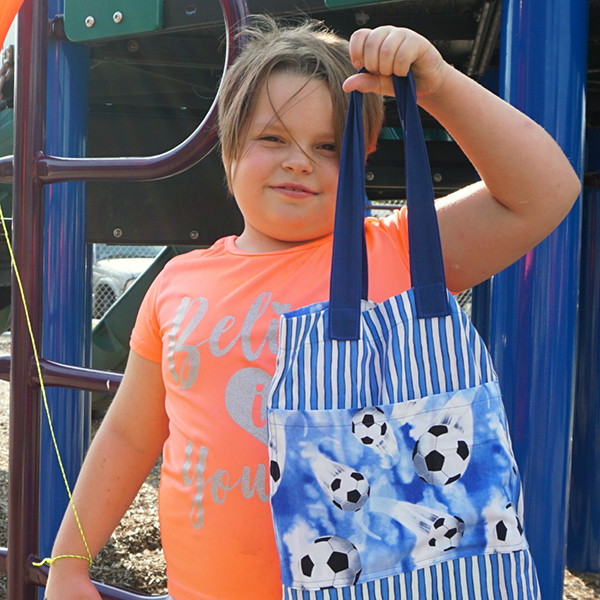
A student with a CWS School Kit during Franklinton National Night Out.

CWS School Kits make back to school season brighter in Ohio

On the first day of school each year, lots of parents post photos of their children wearing new clothes, sporting a new backpack and smiling for the camera. For some families living in poverty, though, buying school supplies for the first day of school can be a challenge. 

Franklinton is an urban neighborhood west of downtown Columbus, Ohio. According to the Buckeye Civic Engagement Connection at The Ohio State University, 56% of Franklinton residents lack a high school diploma, over 60% of residents live below the poverty line and 93% of students at the school’s public elementary school are eligible for free or reduced lunch. 

National Night Out is a national event that aims to bring community members together and help connect them to agencies that can provide free resources to people in need. Last year during the event, the committee members organizing it realized how extensive the need for school supplies was for Franklinton families. 

“One of my favorite parts of National Night Out is to see all of the people who have access to resources that they might not be able to afford.  School supplies are absolutely huge for this event. In 2018, the school kit give-away was one of our raffle items at National Night Out. What we realized was parents were putting all of their raffle tickets in the drawing for the school kits, so they could hopefully win the school supplies. That really told us [the committee] that there was a huge need for school supplies. That was heartbreaking for me. The kids were telling us that they didn’t have the school supplies they needed to start the school year. That’s when we realized that as a committee, we needed to do something,” said Casey Slive-Traster, a member of the National Night Out committee.   

Ashley Montana, who serves on the Franklinton NNO Committee and is also the coordinator of the Columbus CROP Hunger Walk had an idea: she would contact Church World Service to ask for school supplies for the 2019 event.

This August, Church World Service provided 240 CWS School Kits for the Franklinton National Night Out.  The kits were distributed with backpacks, so the children would have some of the essentials they need to start the year out right.

Ashley said, “Church World Service was really awesome to donate 240 school kit for our school supply give away. Hopefully, we will give away a backpack to every kid that comes to National Night Out that needs school supplies.” Most of the children who receive the school supplies are residents of Franklinton, and they ranged in ages from small children to older kids in high school.  

One parent at the Franklinton National Night out said, “Every year the list of school supplies gets longer and longer and more expensive.  It is so nice to have these school supplies for my children, especially the two different bags. My youngest daughter loves her school bags.”

Ashley was also grateful for the school bags. “First, a big thank you!  We have already received so many compliments. We love that the school bags are hand-sewn, and it’s really great there are such a variety of them. I love this bag with the cheetah print. It’s a high-quality bag. So, thank you to all of the people that make this possible by sewing the bags. And thank you to all of the congregations that stuff the school kits with the school supplies.” 

Because of the dedication of many congregations who support the CWS Kit program, many children will have the school supplies they need to start the school year off right. 

“We are so incredibly grateful to all of the churches and all of the donors who provide these items for the school kits.  We know that it will go such a long way and there are many kids who can’t afford their school supplies this year, and your support is huge for them, so thank you,” said Casey.