Stories of Change


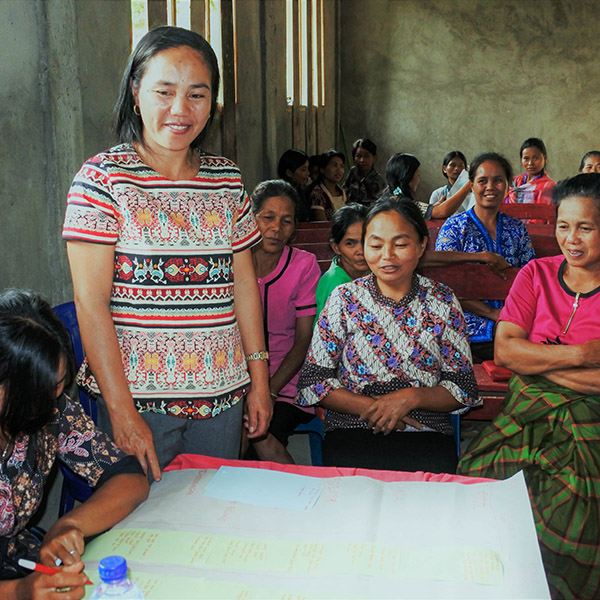
Yuliana leads her group's monthly meeting.

A bit of a dream come true: affordable loans for women farmers in Indonesia

Yuliana La’lai, like many of her neighbors in South Sulawesi, Indonesia, has always relied farming for her family’s income. Slowly but surely, though, climate change is making the region’s harvests less fruitful. Gradually, Yuliana notes, “unpredictable rainfall leaves us not knowing when to plant rice; our cacao pods and coffee plants are affected, too.”

These crop failures often force farmers to borrow money to survive. And, too often, they borrow from loan sharks because they cannot use formal banks.

In 2015, Yuliana and her husband borrowed about $55 with a 10 percent monthly interest rate. By harvest time, they owed twice the amount of the loan! That season it did not rain at all and the family’s crops failed. Unable to repay the loan, Yuliana’s husband had to take a wage labor job in a town quite far away from their village. Eventually, the family was able pay the loan back in full.

“After that experience, I vowed that I would never borrow from a loan shark again,” said Yuliana, who CWS came to know when she joined the Disaster Risk Reduction through Enhanced Adaptive Measures (DREAM) initiative in 2018.

DREAM supports farm families to diversify and grow their income in two ways. First, the project team organizes and leads information and training sessions about improved farming practices – like crop diversification and better irrigation. This helps families address and adapt to the all the changes in their weather so they can keep farming. Second, DREAM supports women farmers to organize savings and loans groups so they can support each other as, together, they adapt to their changing farm lives.

“Our area is now prone to floods and landslides that lead to crop failure and loss like I talked about earlier. So, the savings and loan group helps,” says Yuliana. She is the president of her group, which set a three percent interest rate for their loans. “We can borrow to restart our gardens or larger crops plots after disasters. We can also invest in building our farms. And with reasonable interest rates, we feel comfortable taking loans.” And, annually, their collective interest income is divided among them. “Now we can stand on our own feet and not rely on loan sharks,” concludes Yuliana. It’s a small dream come true.


Stories of Change


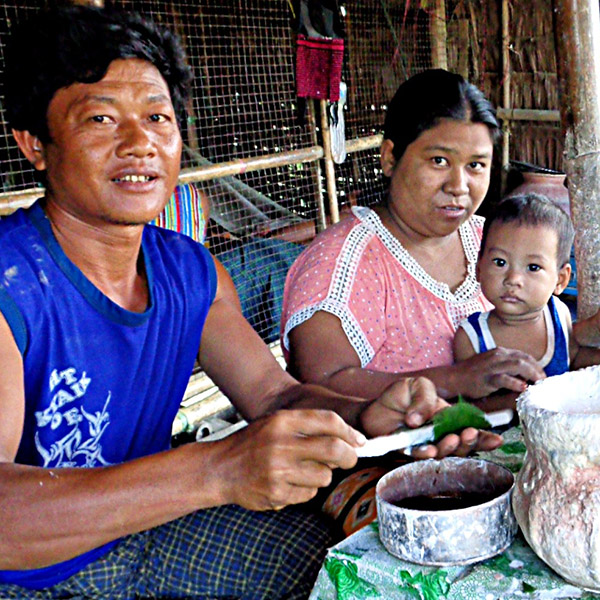
Tun Tun Win, Tin Tin Htay and one of their children at home in Myanmar.

A savings group tripled a family’s income in Myanmar

Ko Tun Tun Win and his wife Ma Tin Tin Htay work hard to make ends meet for their five children who are between 4 and 16 years old. Ko Tun Tun owns a small boat that he uses to ferry up to three people at a time around his community’s waterways. Ma Tin Tin sells betel nut, a seed from a tropical palm that is popular in southeast Asia. They used to make about a dollar a day between their two incomes. 

Like so many parents worldwide, Ko Tun Tun and Ma Tin Tin spend most or all of their income to pay for their basic needs. Expenses for food, transportation, education for the children and healthcare for the family piled up, and then there wasn’t much left. They were eager to expand their livelihoods to earn larger incomes, but they didn’t have the resources to get started. “We wanted to buy more items to sell at the betel nut shop, and I wanted to dry dock my boat for minor repairs,” Ko Tun Tun says. “But I did not have the money.”

Traditionally, getting a loan to expand the business or repair the boat would have required going to a private moneylender. And going to a private moneylender meant steep interest rates that likely would have put the family in debt. They didn’t see it as a viable option.

That’s where a CWS program came in. Ko Tun Tun and Ma Tin Tin were invited to join a community meeting to learn about a Village Savings and Loan Association that CWS was supporting in their community. They learned that if they joined the group, they would be expected to contribute about $1.25 each month into a combined fund. As the fund grew, its managers–who are their neighbors and friends–could approve loans of up to $65 at only five percent interest that would be paid back in three months. 

Ko Tun Tun saw his opportunity, and joined the group. As quickly as his savings allowed, he took out a $40 loan to repair his boat and a $25 loan to expand Ma Tin Tin’s betel nut business. Now, the couple regularly earns about $3.25 each day–more than triple what they were earning before the loans! They have already set aside $46 to pay back the original loan. Then they will start dreaming and planning for how they can further expand their livelihoods and make even more improvements. 

As Ko Tun Tun says, “The most important lesson we learned from the savings group is that we now have good savings habits that we didn’t have in the past. We all appreciate CWS for such a helpful idea that we never knew we could realize.” 


Stories of Change


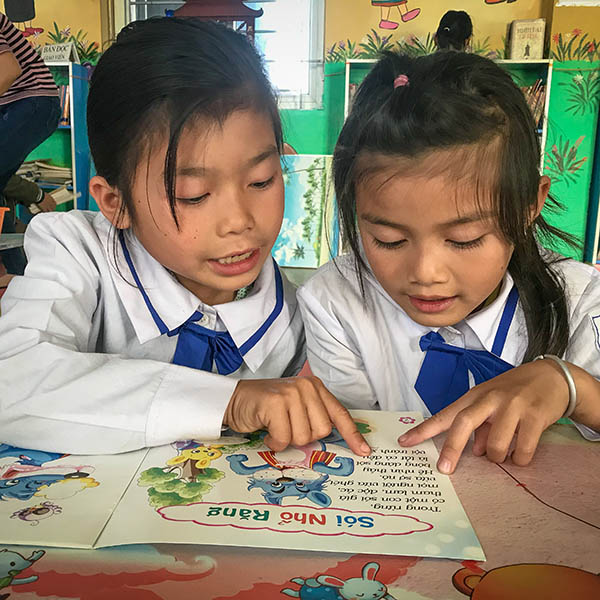
Vi (left) and a friend during "pair reading" at their school.

Exploring the world of books in Vietnam

Lo Thi Minh Vi is a young student at the satellite primary school in Phuc Than commune in northern Vietnam. Like many of her classmates, Vi is from the Thai ethnic group. Her teacher, Ngo Thi Voa, is participating in a CWS program to encourage reading and improve school libraries. 

“I started using this special teaching practice after joining a CWS-organized workshop. It’s completely different from our traditional teaching,” Ms. Hoa says. In Vietnam, like in many countries, students usually follow a rote lesson plan that their teacher prepares. Ms. Hoa, though, embraces change and decided to give her class reading periods after that CWS workshop. “So far, our school has each class go weekly for a library period, after which students are invited to talk about the characters in the stories with the whole class. Students enjoy it very much, so every time I tell them they can go to the library, off they go!” she says. 

“Before, my classmates and I found library books and read them only during short school breaks, not during school days,” Vi says. More often than not, they didn’t get to the end of their books. They left bookmarks so that they would know where to continue next time, but it wasn’t a satisfying way to enjoy a good book. Now, thanks to their teachers’ partnership with CWS, they have a whole class period to read, and learn how to read better. “This is the seventh time our class has had a reading period in here,” Vi told our team recently. 

We asked Vi whether she liked having a reading time. She said yes and, “it’s because we can choose the books we want to read, and we can decide where we want to sit and who to read with. Then, after reading, we are invited to share what we read with our schoolmates. Once a friend talked about a book she had read, and I liked it so much I checked out the book and read it for myself!”


Stories of Change


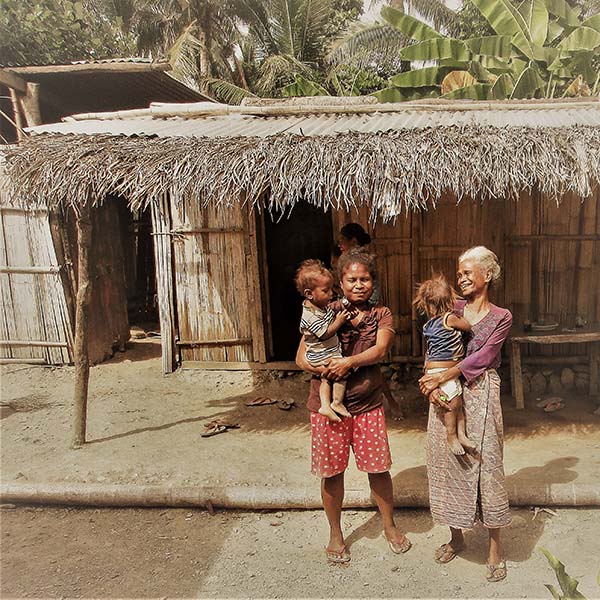
Lucia, her mom and other family members outside their home.

Right now, dry season is a season of hunger. It doesn’t have to be this way.

Lucia Martins lives with her mother, husband, two children and 10 siblings in a modest bamboo house in rural Timor-Leste. Although her community, Liquisa, isn’t too far from the capital of Dili in miles, it is light years away in terms of economic development.

This is why we’re expanding our Timor Zero Hunger initiative to Lucia’s community. The project has several aims, one of which is to work with families to improve young children’s nutrition. There is a focus on pregnant women and nursing mothers, too, so their newborns will benefit directly from their mom’s improved eating habits.

Lucia and her family are farmers like most of their neighbors. They plant seeds and seedlings found in Liquisa: cassava, corn, pumpkin and potatoes. Since dry season began in May, just like dozens of dry seasons before, the family has had a hard time making ends meet. So, as he does year in and year out, Lucia’s husband commuted to the district capital six days a week for work. He makes $15 a week shoveling sand from the riverbeds for construction projects. It’s back breaking work, and he barely earns enough for his family to buy rice, soap and other household essentials. 

Dry season in Timor-Leste is a season of hunger.

No families plant seeds or seedlings because there is no water to nurture them to harvest. Food shortages between May and December affect everyone. But the people who are at the highest risk of nutritional losses and sickness are young children. CWS staff are teaming up with mothers and government health workers to change this. One way is to help farmers like Lucia learn to plant wisely and well when the rainy season begins each mid-December. For example, Lucia was recently in a hands-on training where she and her neighbors practiced making raised garden beds, natural fertilizer and compost. “We learned that if we plant close to our house, and use drip watering and homemade treatments, we can continue planting through dry season. This means we can eat more and better food year-round, which will be very good for my children.”

Armed with this new information, Lucia and her family will be more food secure in the future. With more food coming from their garden, they can spend her husband’s income to meet other needs and ultimately will become more resilient. 


Stories of Change


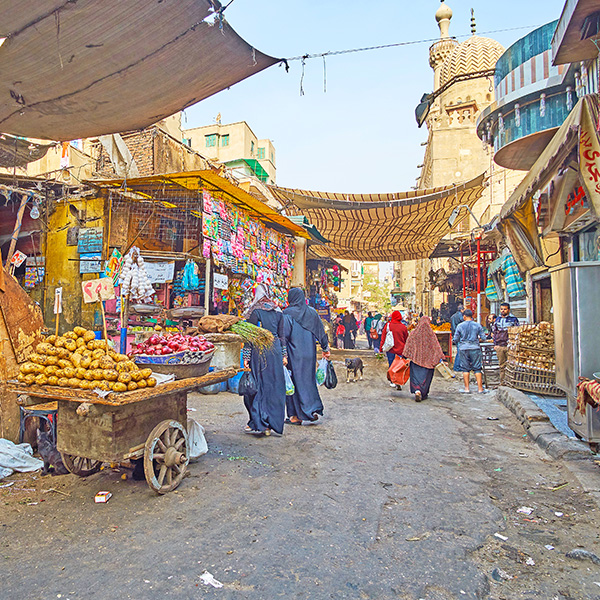
A farmers market in Cairo. Photo used for illustrative purposes only.

A brighter future for a young refugee in Cairo 

**TRIGGER WARNING: This story is about someone who survived torture as a child. 

Helen* fled her home country when she was 15 to avoid the mandatory national military service. As she was leaving the country, the group she was traveling with was attacked by traffickers. She was captured and held for two months until her family could pay her ransom of more than $6,600. During that time, she lived in unsanitary conditions and was physically and sexually assaulted. 

Once she was released, she made it to Cairo. She was still facing physical and psychological scars from her captivity, and she didn’t feel safe in the new city. A neighbor recommended that she contact St. Andrew’s Refugee Services, or StARS. CWS financially supports many StARS programs, such as legal aid, education programs and support for unaccompanied refugee children like Helen.  

Helen went to the drop-in clinic for unaccompanied refugee children. The StARS team quickly realized that she needed care urgently because of her ongoing trauma. She started talking to a counselor regularly for emotional support. Her caseworker worked with the United Nations team to make sure Helen could be registered with the UNHCR ahead of her scheduled interview time and be officially recognized as a refugee. Once she had that legal recognition, the team helped her with her initial interview to be considered for resettlement to a third country where she would feel, and be, safer. Her resettlement interview was recently granted. 

The team from the StARS Direct Assistance Program stepped in to help make sure Helen had food and hygiene products, and she joined an education program. When she dropped out of the education program due to a health condition, her caseworker helped her get the care she needed. Helen also joined other classes and youth activities so that she could meet other young people from her home country and build a sense of community.  

Today, Helen is doing better. She isn’t as withdrawn as she used to be. She is working towards the day when she can support herself and feel emotionally healthy. While she waits for resettlement, the StARS team will be there to help make sure that she knows she’s not waiting alone. 

*This is a pseudonym, used to protect the identity of a refugee child. 


Stories of Change


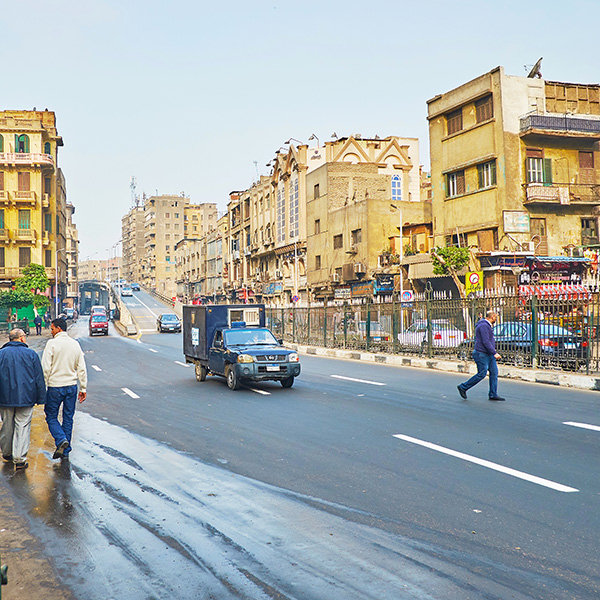
A street scene in Cairo. Photo used for illustrative purposes only.

A loving, supportive ally for a young refugee in Cairo

**TRIGGER WARNING: This story is about someone who survived torture as a child. 

Yonas* was arrested twice when he was 13, swept up in official roundups at his school. After his second arrest, he was detained for two months. He was beaten and interrogated in prison. When he finally managed to escape, he fled the country.  

He finally made it to Cairo, Egypt, where he approached St. Andrew’s Refugee Services for help. The organization, known as StARS, has lots of programs that support tens of thousands of refugees like Yonas. CWS funds much of their work. 

When we first met Yonas, he was still only 15. He had physical and mental scars from his torture, including a diagnosis of PTSD and long-term memory defects.  

A caseworker from our program that specifically cares for unaccompanied refugee children initially met with Yonas. Together, they made a plan for how Yonas could get the legal assistance and other care he needed.  

In the last year, Yonas has made great progress. Our team helped make sure he had safe and stable housing, access to health services and information about his options for continuing his education. We made sure that Yonas knew his rights and had the information he needed to make decisions every step of the way. Plus, the legal aid that the StARS team provided helped Yonas to file a stronger claim for refugee status. As a child, he wasn’t ready to articulate his refugee claim in a legal setting, so the StARS team went with him to his first interview and helped him with his paperwork. This increases the likelihood that he will be recognized as a refugee and eligible for more help and potentially even resettlement.  

Yonas will continue to get the counseling and care that StARS can provide until he’s old enough to join the programs for adults or until he chooses not to continue. Despite his dark past, his future looks bright. 

*This is a pseudonym, used to protect the identity of a refugee child. 


Stories of Change


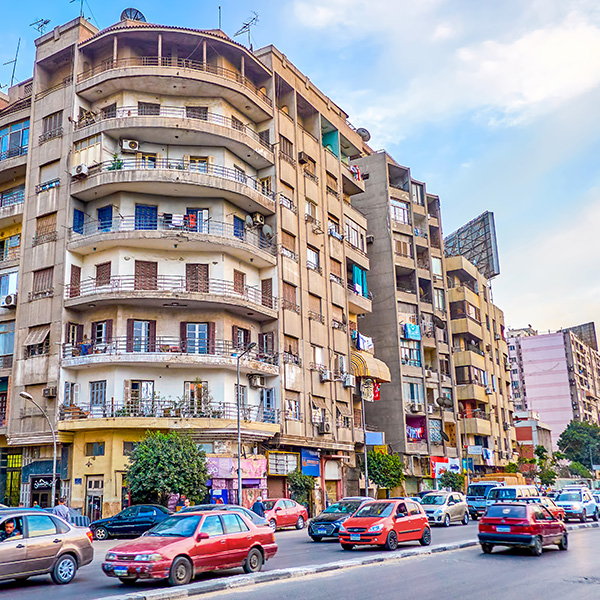
A typical street scene in Cairo. Photo used for illustrative purposes only.

Rebuilding trust and finding independence for a young refugee in Cairo

**TRIGGER WARNING: This story is about someone who survived torture as a child. 

Hakim* was 13 years old when he was arrested. Government groups raided homes in the part of the country where he lived, and he was arrested alongside his friends. The troops were looking for members of a local resistance group. For three months, Hakim was subjected to repeated interrogations as well as physical and sexual torture at the hands of government officials and prison guards.  

Finally, he escaped and fled the country 

He ended up in Cairo, where, a few months later, he walked through the gates of St. Andrew’s Refugee Services. Known as StARS, St. Andrew’s is one of the largest providers of services to refugees in Cairo. They are also our local partner; CWS funds many programs that StARS offers. 

As a torture survivor, Hakim was still facing brutal psychological effects. He was anxious and isolated himself socially. He experienced extreme fear, which threatened to overwhelm his ability to function in everyday life. Plus, he was terrified for his siblings who were still in his home country; he had already lost his father and several siblings at the hands of the government. On top of everything else, a local gang had attacked him a few times on the streets of Cairo. 

Other refugees encouraged Hakim to get help, and they recommended he go to StARSSo on that spring day, he went to a drop-in clinic for unaccompanied refugee children. He talked to a caseworker, but he didn’t feel comfortable sharing his story yet.  

It wasn’t long before he enrolled in some StARS programs, though, including one where he got regular counseling. His counselor explained his rights to him and helped him access other available services. Together, they made an action plan for how Hakim could stay safe and rebuild his confidence. Because of the immediate threats, the StARS team helped Hakim get cash grants to cover food and transportation. His caseworker talked to him about his health, and they decided that he should get medical treatment. 

Beyond his physical safety, Hakim also began to focus on his mental health. He was invited to join other refugee children for group counseling and activities. He regularly attended a music group, dance group and art groups. He even started volunteering part-time with another StARS program. 

Since he teamed up with StARS, things have gotten easier for Hakim. He can manage some of the trauma from his past and has overcome much of his stress and anxiety. He has a better handle on his emotions and has gradually become more independent. Importantly, he has friends his own age now and has been able to build confidence and regain trust in other people. He continues to work with his caseworker and engage with StARS programs. We expect him to continue on his path to feeling free, independent and motivated to reach his goals.   

*This is a pseudonym, used to protect the identity of a refugee child. 


Stories of Change


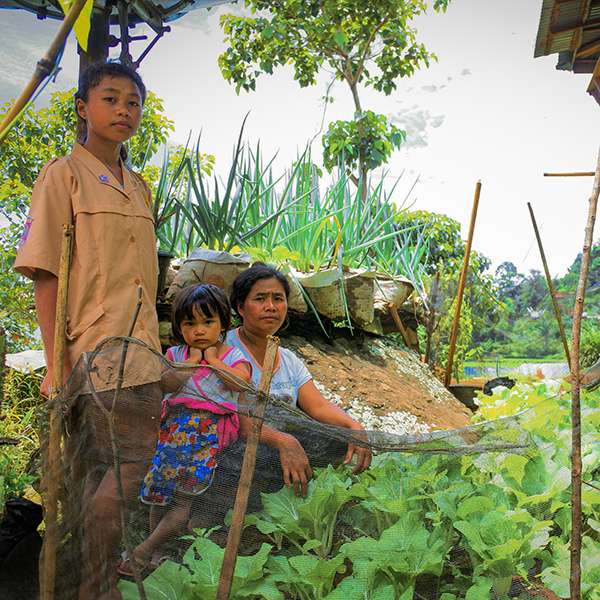
Dina and her children in their garden.

Small space, big impact: vegetable gardens in Indonesia

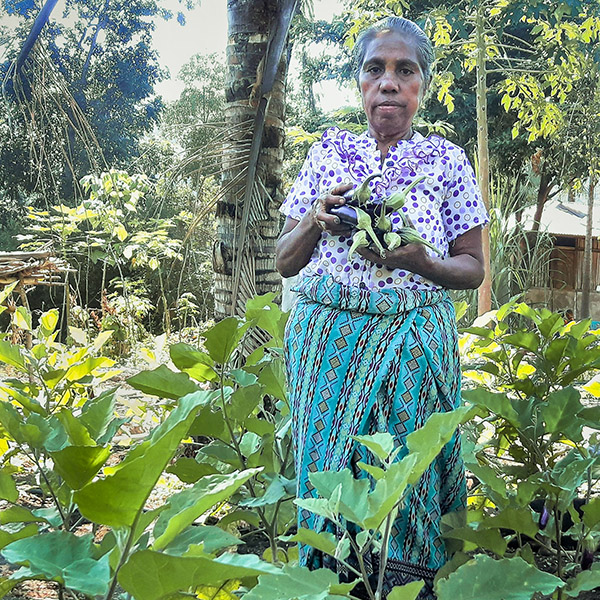
Dina Datu and her husband Lukas live in the mountains of northern South Sulawesi, Indonesia. They spend most of their time working in their family’s rice paddies: planting and harvesting for a share of profits. During the most recent harvest, Dina split her time between the family paddies and working on other people’s land for pay to add to family income.

Despite their hard work, Dina realized that she and her husband didn’t have enough to cover all of their family needs and school fees. Even the extra income she was making from working for others wasn’t enough.

When Dina heard about a CWS program called DREAM in her area, she got involved. Among other activities, the program helps families like hers start vegetable gardens. Dina decided to convert a small plot of land near her house into a vegetable garden. Alongside other participants, she learned how to make organic fertilizers and pesticides, to use water wisely and to plant a variety of vegetables–not just one or two kinds. All these small things, Dina learned, can add up to a lot – including fresh, nutritious vegetables and added income.

Under Dina’s watchful care, the vegetables didn’t take long to grow. “It was nice to have food right outside of our front door — even some extra we sold to our neighbors,” Dina said. The extra money from the vegetables surprised Dina, and now she wants to plant more … and more. With money from her initial veggie sales, Dina bought more seeds and planted them in all the available land around the house and even around the family’s rice paddies. This second vegetable crop is nearly ready to harvest, and Dina is happy with the outcome of her hard work. In talking with CWS team members about her progress, Dina said, “You showed me new ways to garden, which helped me set myself up for success. I hope other mothers in my community will follow me.”

CWS team members enjoy knowing women like Dina who use and succeed with our support. DREAM is now helping about 200 women learn to garden with new information and skills … and empowering them to change their families’ lives for the better.


Stories of Change


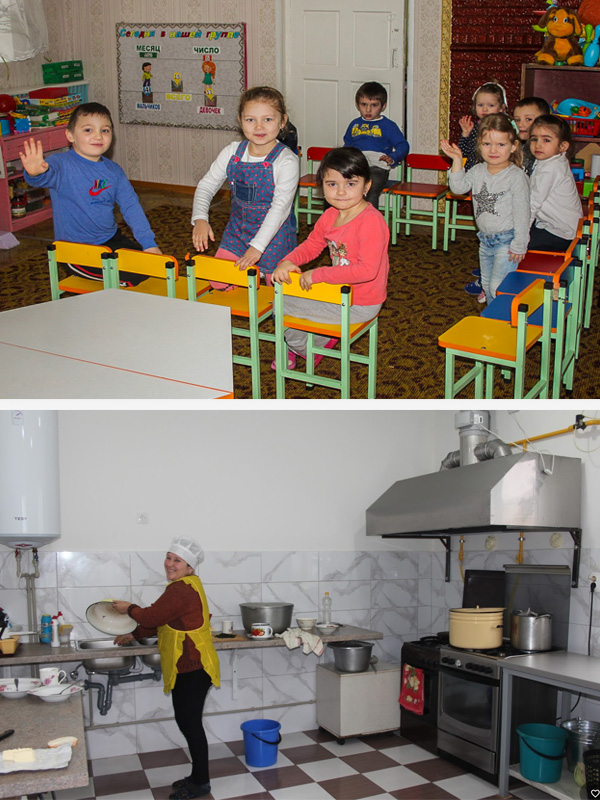
Students and staff at a preschool in the towns of Baroncea and Drochia now have hot water access.

Hot water for kindergartens in Moldova

Energy is expensive in Moldova. The nation doesn’t have fossil fuels of its own, so fuels like coal and natural gas are imported. That means that many of the things that we may take for granted, like electricity and hot water, are extremely expensive for families in rural Moldova.

We’re helping change this equation through our Renewable Energy Technologies program. We support the work of local organization Ormax, which is working to make solar-powered technology (among others) more widely available as an alternative to these expensive conventional energy sources. In particular, we’ve focused on installing solar-powered hot water systems at preschools. We’ve helped 10 schools add hot water systems. Some of the schools didn’t have any water heaters installed. Others had very old systems that were in need of repair, but the local authorities couldn’t afford the needed renovations.

Thanks to this program, this year alone about 420 students now have hot water in the school bathrooms to wash their hands. It’s also a major improvement for the school kitchens and cafeterias, which have hot water for cooking, drinking and washing dishes.


Stories of Change


Philip stands in front of two of his beehives.

Valuable livestock in Kenya: bees!

When you think of the livestock that families raise to earn income, you probably think of cows and goats. But do you think of bees?

For Philip Nadomo in West Pokot, Kenya, bees are a precious part of his family’s livestock. Since he first heard about beekeeping, he has understood how they can be a source of income for families like his. In the same way that goats produce milk and grow in number, bees produce honey to eat or sell and increase their numbers as they take over new hives.

We’ve teamed up with an organization called African Beekeepers Limited to support beekeeping families in this part of Kenya. We provide 150 hives to each community. Up to 30 young people sign up to be part of the beekeeping group and receive five hives each. (Each hive costs about $65, so it costs about $350 to provide a set of hives and the supplies to hang them to each beekeeper.) African Beekeepers Limited provides harvesting equipment, training and honey processing units. They also purchase honey from the participants, guaranteeing a way for them to make money.

Men and women alike are participating in program. Unlike raising other animals, caring for bees is not physically taxing and doesn’t require people to travel long distances from home, which makes it safer for women. It’s easy to get the hives down from the trees using a pulley system; participants no longer have to climb into the trees to gather honey.  For many women here, beekeeping is one of the few opportunities for them to add to their family’s earnings.

Beekeeping was already a common way of making a living in West Pokot before the CWS program. Unlike traditional hives, though, the hives in the CWS program have two chambers. The bottom chamber is built first. Once bees have colonized it, a second chamber is added on top. The queen cannot move from the bottom to the top chamber. This design means higher honey production from each hive. “We are very grateful that we received this kind of hives, and we are expecting a good harvest of honey,” Philip says.

By introducing new hive designs and a few other best practices from modern beekeeping, we can help families significantly increase their honey production. This is also a way for families to earn a living that doesn’t tax their fragile ecosystem. West Pokot County can be a harsh place to live, with long droughts and scarce resources. Many families face food insecurity, and poverty is on the rise. Beekeeping, though, doesn’t put much strain on the environment. And the fact that families are making more money to cover household expenses means that they will be more resilient through future shortages.

Philip is new to the program, and four of his five fives are already colonized. “I’m still young, and this is my first group,” he says. “What we’ve been telling each other is to take good care of the hives because they will give us a lot of profit and benefits.” Philip already has goats, but he is planning on using the income from his honey sales to buy a cow.