Stories of Change


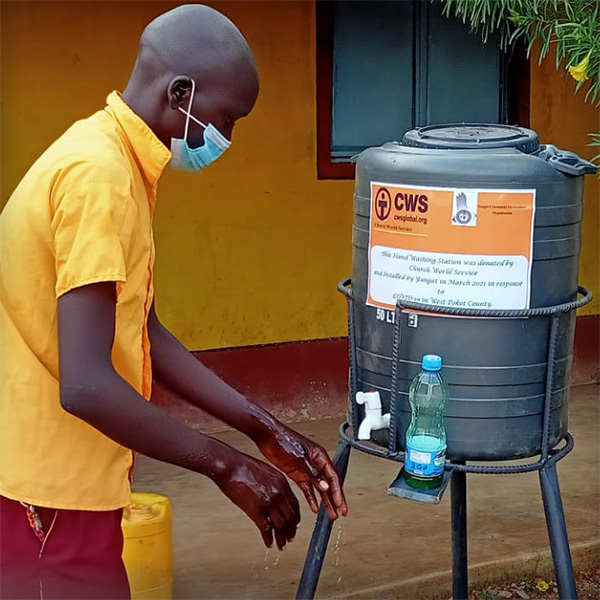
A student in West Pokot County, Kenya, uses a handwashing station funded by CWS to help communities prevent the spread of COVID-19.

Students in rural Kenya are on a path to greatness

“We are very grateful to CWS and its partners for the great transformation happening at our school,” says Francis Loseron, the chairperson of Chepakul School in rural western Kenya. “The reason I say this is because the girls’ biggest need [a dormitory] has been met; as a result, they will be happy, healthy and ready to learn. It’s a sad state that so many of our public schools are in similar high-poverty situations, but it’s also a testament to the power of our community here. We assigned ourselves different roles during the construction. Mr. Samson Kameri, the school treasurer, and I saw to it that parents came out in large numbers to support the construction projects. Also, we had a shortage of toilets at the school. With the [CWS and partner] support, we are now confident that the school’s sanitation has been improved and the school now has enough toilets.”

Every child should have the chance to go to school and get an education. What happens, though, if that school isn’t equipped to help them learn? What if it is too far away, and the long walk to and from school is dangerous for girls? What if the school doesn’t have enough bathrooms, or running water? What happens if parents don’t realize how many doors education can open for their children? And, as we’ve seen recently, what happens when a pandemic closes school doors for months?

All of these “what ifs” are real challenges facing many of our neighbors worldwide. Here at CWS, we know that we can overcome them when we work together. That’s why our team in Kenya is working with communities in West Pokot County, where Loseron lives. Hand in hand with students, parents and communities, we are knocking down these challenges. We’re constructing dormitories so that girls don’t have to face dangerous journeys every day. We’re installing water pumps, tanks and toilets to improve hygiene and sanitation. We’re talking to parents about the importance of education. Finally, as schools reopen after long pandemic-driven closures, we’re helping teachers and school leadership welcome them back.

Selina is an eighth grade student at the same school, Chepakul. “CWS not only made it possible for us to have a dormitory at our school,” she said, “but also helped improve water systems and provide life skills and mentorship programs for us.”

Selina also told us how CWS helped as the school reopened. “Early in 2021, 10 students dropped out due to problems from the coronavirus. Some of them were either preparing to get married or engaging in work like bodaboda [motorcycle taxis],” she said. In West Pokot, it is not uncommon for teenage girls to be married to older men for economic reasons. “CWS helped our teachers and parents bring them back to school,” Selina said.

She has a message for you, too: “We see ourselves being great people in the future, and we are so proud and grateful for our supporters for reaching out to us.”

Liman Agnes is the deputy head teacher at nearby Ngengechwo primary school. “The girls’ dormitory built by CWS at Ngengechwo triggered the West Pokot county government to construct a boys’ dormitory,” she said. “Because of this, boys here have no reason to miss school…student enrollment has doubled, and we attribute this to efforts by CWS in our school and community. Parents are more positive than before, and we are working with the leaders to ensure that students, particularly girls, are supported to stay in school.”

Liman told us about how the pandemic had impacted her school. “Our students were lagging behind, having lost almost a year of school during the COVID lockdown. Their counterparts in Nairobi and other big cities were still learning because they have internet connections at home and can afford computers. We are grateful to CWS for helping our teachers to facilitate catch-up learning sessions when the schools were reopened,” she said. “They trained teachers, supplied materials and shared information with our parents about COVID prevention.”

In the neighboring community of Kapsentoi, Totok Lolinganya is the father of Sikuku and Patience, who have just finished high school and eighth grade. “I am deeply humbled because I am one of the lucky parents whose children had a chance to benefit from CWS programs in Kapsentoi,” Totok said. “The most important project was providing counseling to our girls. They have also given me the resolve to take Patience to secondary school, since I now know that there is hope for our girls–as opposed to my tribe’s attitude that girls are a source of wealth in the form of dowry when they get married. My two educated daughters will be great. They will not only change the status of my family, but they are already becoming great role models to their fellow girls, including families who believe that marriage is everything.”

Girls across West Pokot County–and their families and school communities–are blazing trails right through the challenges that they used to face. We’re so proud to stand beside them as they do.
Stories of Change


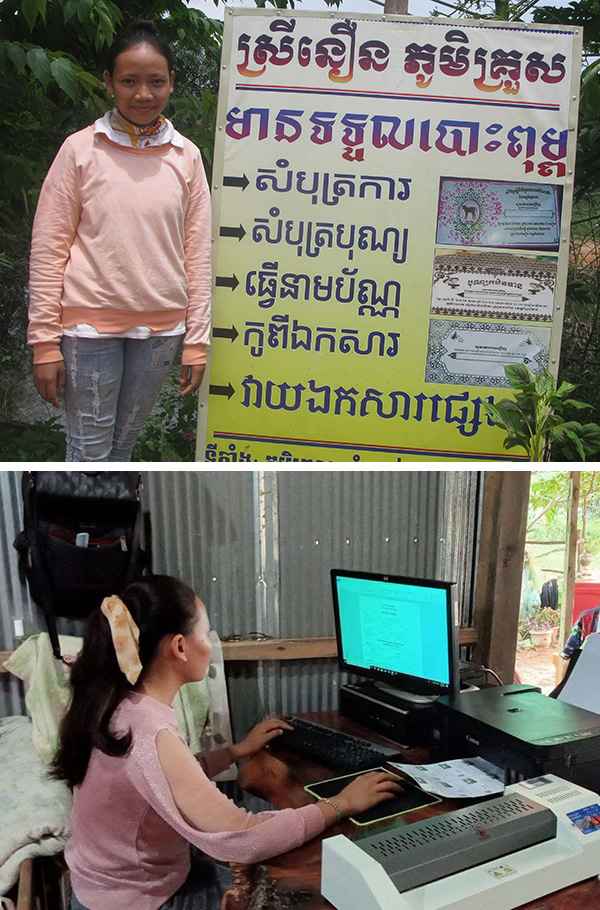
Top: Sreynoeun stands next to the sign that advertises her business and its services. Bottom: Sreynoeun sits at her computer in her business.

Sreynoeun Builds Her Dream Career in Cambodia

Oeun Sreynoeun, 17, lives with her parents and six siblings in rural western Cambodia. Her family doesn’t own any land, except for the small parcel that their house sits on. As a result, the family of nine relied solely on Sreynoeun’s father’s income–he migrated to Thailand and works as a day laborer.

Unfortunately, this one source of income often wasn’t enough. The family often struggled to have enough to eat. Sreynoeun dropped out of school last year after she finished ninth grade. Her family couldn’t afford school supplies or the transportation costs of Sreynoeun going to a high school far from home.

Then Sreynoeun met our local partner, Rural Development Association. “I dreamed of learning a skill and having my own business so that I can earn money to support my family and make it possible for my younger brothers and sisters to continue studying,” she said. The RDA team helped Sreynoeun join the CWS-supported Promoting Better Lives program. In February 2020, she joined a five-month vocational training course on computer and printing skills. She was a quick learner and thrived in her classes.

With the skills she learned and a business startup grant through the Promoting Better Lives program, Sreynoeun launched her own business. Now she runs a typing and printing service shop in her community.

“I am so happy and proud of myself,” Sreynoeun says. “I never thought that I would have an opportunity to make my dream come true, and I never expected to have this opportunity. I have skills and a career, so I have hope for a better future.”

She added, “I am even more proud of myself because I can be a manager. I manage my own business and earn a stable income so that I can provide my family with a better life.” When it comes to CWS and RDA, she said, “I can’t thank you enough for all the support, since I have my dream skill and business. I am confident that I will be able to support my family and my younger brothers and sister to continue studying. Our lives will be much better, and my father will no longer need to migrate to Thailand to work.”


Stories of Change


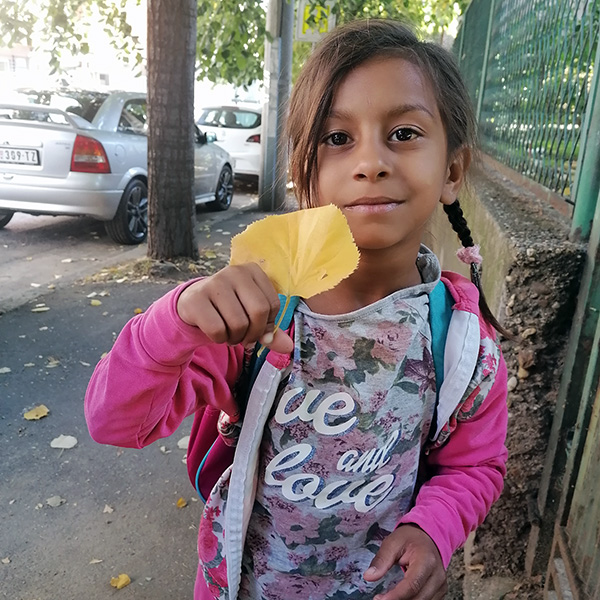
Remzija. Photo courtesy Protection through Education program team.

Teaming up for Remzija’s Education

Remzija is a first-grade student in Belgrade, Serbia. She and her family are part of Belgrade’s Roma community. Unfortunately, generations of poverty and discrimination have forced Roma families like hers to live on the margins of society. Remzija lives in devastating conditions in an informal settlement. She has struggled in school, too.

Like many Roma children, Remzija doesn’t speak Serbian fluently. She struggled to make friends at school, since she couldn’t communicate easily with her classmates. Then her mom was late to pick her up a couple of times, and Remzija started to get scared. She thought a day might come when her mom didn’t show up at all, so she started refusing to go to school. It turns out that Remzija’s mom didn’t know how to tell time using a watch or clock. (For generations, most Roma girls haven’t been able to finish school. That means that Roman women often haven’t had the opportunity to learn skills like reading, writing and telling time.) Her mom also got confused by all of the changing schedules as a result of the COVID-19 pandemic and the school’s hybrid learning model.

Thankfully, CWS’s partner was there to help both Remzija and her mom. Our Protection through Education program focuses on preschool and first grade Roma children. We know that when these kids have the chance to go to school and pursue an education, they are less likely to end up living or working on the streets. We also know that we need to engage a child’s whole family to truly make a difference.

Our program team offered to help Remzija get back on track with her education. They met with her every week to help her overcome the anxiety she was feeling. They also worked with her mom to help her tell time. Neighbors stepped in to help, too, and offered to remind Remzija’s mom when it was time to pick her up from school. Thankfully, Remzija’s teacher was also patient and understanding about the situation.

Additionally, as part of the Protection through Education program, Remzija’s family accessed hygiene and school supplies; clothes and footwear for Remzija and her siblings; and help with applying for government assistance. At one point, Remzija’s younger sister was sick and needed to see a cardiologist, so her family turned to the Protection through Education team. The program’s medical worker scheduled her exam and even went with her to the health center.

We’re happy to report that Remzija is thriving today. She goes to school, and her teacher says that she is making good progress. Thank you for helping to wrap her family in love so that this little girl can pursue the education she deserves!


Stories of Change


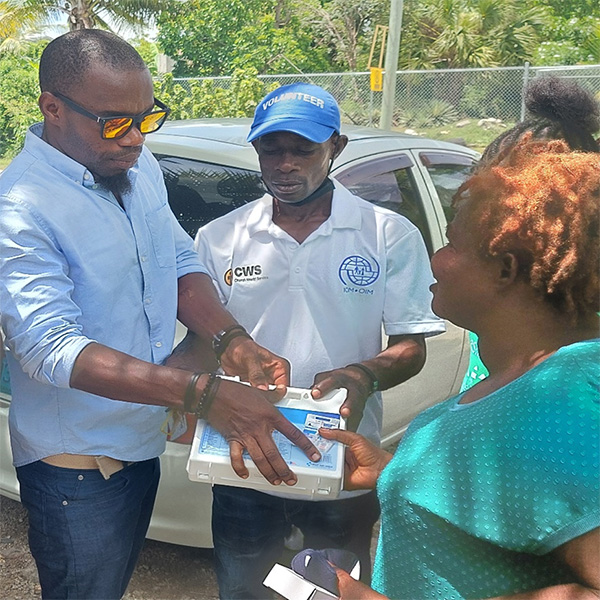
Volunteers show community members the elements of a First Aid kit. Photo courtesy of IOM Bahamas.

Haitian Migrant Communities in The Bahamas Focus on Disaster Preparedness

When disaster strikes, people who live in poor neighborhoods often suffer the most. Homes in these communities are often built with low-quality supplies. Hurricanes, for example, are more likely to damage or destroy them. If that happens, their residents have a harder time paying for repairs. Sometimes garbage services sometimes don’t reach informal settlements. Trash builds up in public areas, including big items like refrigerators. This is a health hazard on the best day; during a disaster, it can be deadly.

Now add migration to the mix. People who are living without documentation are even more vulnerable. They are less likely to trust authorities or ask for help after a disaster. They may not speak the primary language in the country where they live, which makes it much harder to get help or access relief services. Often, people are afraid to speak up, especially if they live in a society that continually pushes them to the margins.

This is what happened when Hurricane Dorian hit The Bahamas in 2019. Many Haitian migrants or people of Haitian descent live in The Bahamas. They are much more likely than their Bahamian neighbors to be up against the factors that we’ve talked about: poor living conditions, discrimination, fewer resources. When Dorian hit, these Haitian communities were among the people who suffered the most. That’s why CWS has partnered with the International Organization for Migration and several community-based organizations to focus our response on Haitian migrants.

Phase I of our recovery focused on helping more than fifty people recover documents needed to regularize their status. We also focused on ensuring that Haitian migrant communities were included in larger relief efforts. Starting in October 2020, we shifted to Phase II. During this phase, we started to look ahead to future disasters. Our goal was to help Haitian migrant communities be more resilient when the next storm comes.

We teamed up with four community-based organizations that work with Haitian migrants living in informal settlements. More than 40 volunteers from these organizations joined a series of training sessions. With each one, they gained skills and expertise to share with eight communities with more than 800 families. Training sessions focused on:
– Community mapping: identifying hazards and choosing supply locations and evacuation routes
– Drafting emergency plans
– First Aid, including CPR: each volunteer received a two-year first aid certification card
– Mental health and counseling
– Preventing violence against women and girls, which usually spikes in situations of extreme stress, like after a disaster
– Fire safety and prevention
– How to include migrants in disaster risk management

We also distributed critical supplies that will come in handy during a disaster. These included battery-powered radios, portable phone chargers, fire extinguishers, generators and First Aid kits.

Now, dozens of people are equipped to lead their communities in the face of disaster. They are already at work holding information sessions in their neighborhoods. They are handing out flyers and creating emergency plans. Some worked with the community-based organizations to secure contracts with garbage removal services. Then they organized a massive community clean-up initiative.

“Two great things I learned were CPR and disaster training,” one volunteer told us. “I learned how to prepare for a disaster, how I can help my family and the whole community prepare…the thing I enjoyed most was the CPR–I learned how to save someone else’s life.”

“I enjoyed the course on disaster management because it was so informative and practical,” said another volunteer. A third promised, “I will use what I have learned to better my life and the lives of those around me.”

All said, more than 900 people have participated in this program. We are grateful to the Evangelical Lutheran Church in America for their support of this work.


Stories of Change


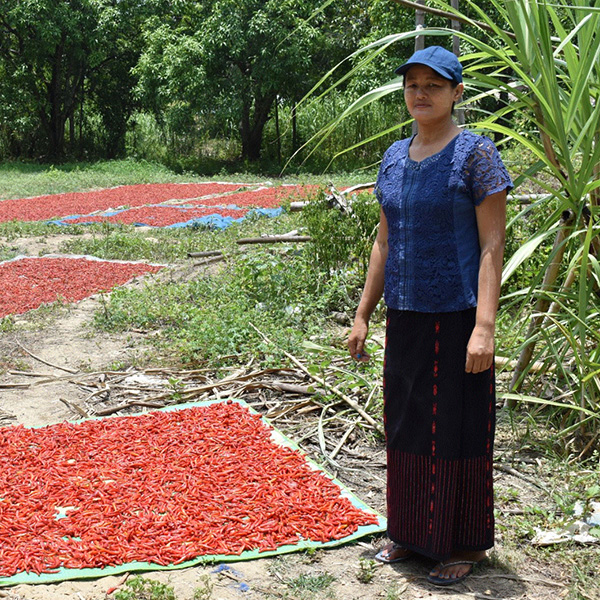
Daw Cho Mar Win with some of her chili harvests.

Two sisters in Myanmar team up with CWS to earn 50% higher profits

“For us, we have no choice except for agriculture,” says Daw Cho Mar Win. She lives in Myanmar’s Ayeyarwady river delta. Despite being less than 60 miles from Yangon, families in the Ayeyarwady delta rely mostly on farming, fishing or hourly wage jobs on small construction projects.

“In our community, we must work harder during the winter and summer to save money for living expenses in the rainy season,” Daw Cho Mar Oo explains. The rainy season is June to September, when the river often floods and earning a living can be a challenge.

Daw Cho Mar Win, in particular, earns a living alongside her sister, Daw Cho Mar Oo. They proudly own three acres of land, where they grow chili peppers. They sell to wholesale exporters, who buy from small family farms like theirs and export the produce to China. Eventually, the sisters’ chilis end up in sauces or seasoning packets for instant noodles.

The sisters prepare their land in August. They plant chili pepper seedlings in September for harvesting four months later. A hired crew of about nine laborers help during the harvest period, which lasts about 20 days. One acre of land produces about 5,400 pounds of peppers which earn the sisters 400,000 Kyats ($219) net profit. In the past, they planted two acres of chilis and earned $438 per year.

For a long time, the sisters have wanted to expand their chili production. They wanted to plant their third acre of land but didn’t have the savings to buy supplies. Thankfully, CWS was there to help them accomplish their goal.

CWS has worked with villages like Daw Cho Mar Win and Daw Cho Mar Oo’s for more than three years. A big part of our work together focuses on food security and livelihoods. One part of this work is to establish Village Savings and Loan Associations. These are community clubs where neighbors pool their money and borrowed from the group funds at a low interest rate. Each of the 15 members of the sisters’ group contributes 2,000 Kyat ($1.10) per month. Members can borrow loans of 150,000 Kyats ($82) and pay it back over three months at a 5% interest rate. By comparison, private moneylenders in the area often charge interest rates of 10% or more.

Daw Cho Mar Win used one of these loans to buy the supplies she and her sister needed to plant a third acre of chilis. “The VSLA program is very effective for people like us who can’t save big amounts of ash and can’t borrow from lenders who charge high rates,” Daw Cho Mar Win says.

After expanding to three acres of chili pepper fields, the sisters earned a total 1,200,000 Kyats ($658) net profit. With one loan, they were able to increase their profits by 50%!


Stories of Change


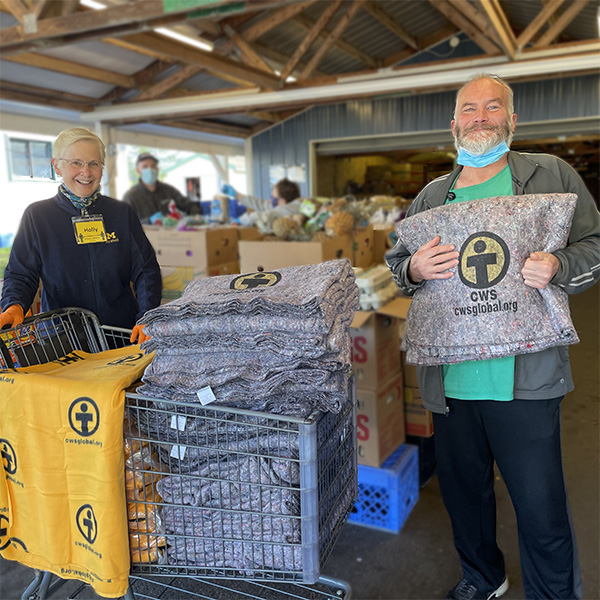
Holly (left) and Brian (right) at the Concern for Our Neighbor Food Bank in Washington.

Warmth for our Neighbors in Washington

“I got one of the CWS Blankets in early 2020. I use it in the middle of the night if I’m a little cold. I have a cat who loves it, too. I’m happy to get another one today because it makes a good bed spread. It’s super warm and easy to manage—you can throw it in the washer.” -Brian

Concern for Neighbors Food Bank in Mountlake Terrace, Washington, has ordered CWS Blankets for their clients twice now. You can read about their first distribution, in January 2020, here: “What CWS Blankets Mean to our Neighbors in Washington State.” In September 2021 they once again offered CWS Blankets to their clients during their usual Tuesday morning food distribution. 

Holly Buchanan is a volunteer with Concern for Neighbors, and she organized both blanket distributions. She is also a CWS Sustaining Partner. Here’s what she had to say about this latest order:

For more than two decades our food bank has supplied fresh food and staples to neighbors in need. These last two years have been especially challenging. Many people lost their jobs and had to make do with less. These CWS blankets are very comforting for our clients, as the nights in the Pacific Northwest can be very damp and chilly from September through June. Some of our clients struggle to pay their utility bills. As we passed out the blankets today, I noticed that is was often the seniors who seemed very eager for warm blankets. One woman who got a wool CWS blanket a couple of years ago said that it has been a big help to her autistic grandson—she thought he needed a weighted blanket for his comfort but he wraps himself in his wool blanket like a burrito and is perfectly happy. She took a lighter weight fleece one today for use while watching TV. The unhoused neighbors the food bank supports appreciate having something cozy and new. Today a client took a wool blanket for his friend who “lives in his car trunk.” One of our regular clients asked for a wool blanket to on the floor to give her baby a clean, soft place to play. One man with a big family asked for and was given three blankets. Imagine what a difference that will make to his family as they settle in for the night!

In addition to our work onsite at the food bank, my husband and I carry in our car bags food from the food bank–pop-top cans of chili and chicken, chocolate bars, fruit cups, masks and bottled water. We give these to people standing on street corners with their cardboard signs asking for help. When we pass someone in need, we pull into the next driveway and then walk back to give them the bag. Some of these people, like Tyson, we see often. He and a couple of friends lost their jobs and live outside for now. They are always grateful for food, but this week they were very, very happy to get CWS wool blankets. Once August passes the nights around here start getting really cold. These blankets are very heavy and thick and the wool repels water—so helpful for outdoor use.

We are so grateful that our neighbors will be sleeping cozy with their CWS blankets. Many thanks to generous CWS donors for making this blanket distribution possible!


Stories of Change


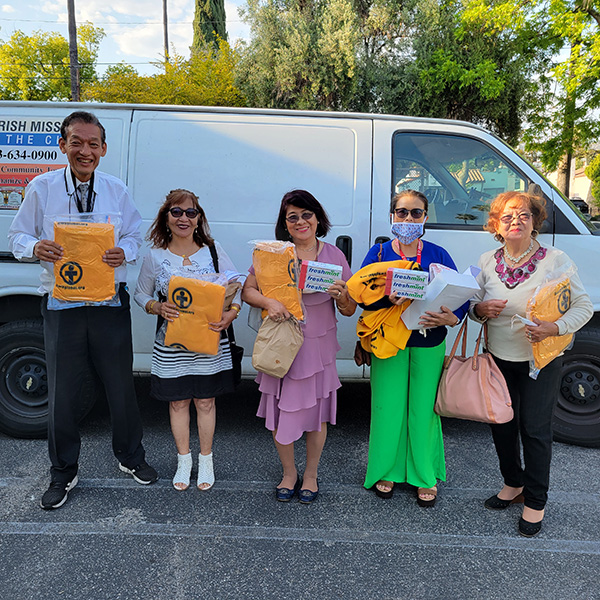
Pastor Timothy and congregational volunteers with CWS Blankets and Hygiene Kits. Photo courtesy IATIA Cherish Mission

Hope on Hope Street

Each Sunday, the 3,000 members of Glory Church of Jesus Christ would gather in their large worship space near downtown Los Angeles, an area noteworthy for its massive encampments of people experiencing homelessness. This was no less true of nearby streets by the church, where hundreds had set up camp on the ironically named Hope Street.

Glory Church of Jesus Christ offers services in Korean. They didn’t have a particular outreach program for the unhoused people around the church, who generally come from different cultural and language backgrounds as the church members. That is, until the senior pastor heard Jesus speak to him in prayer, saying, “Your church is like the rich man who ignores Lazarus begging on his doorstep.” This was a wake-up call, and after telling his congregation about this message, assistant Pastor Timothy Park volunteered to lead a new ministry for their neighbors experiencing homelessness.

Today, IATIA Cherish Mission has been providing food, connecting people to services and leading worship and bible study for 80-100 people per week.

Your support meant that we could send a shipment of CWS Blankets and Hygiene Kits that Pastor Timothy and his team could distribute to their neighbors facing homelessness. Even in sunny southern California, these blankets provide warmth during chilly nights or padding for someone sleeping on a sidewalk. Hygiene supplies are critically important in helping people protect their health and dignity. We also know that these supplies are a physical manifestation of a larger message: You are not alone. You are loved. Even though they may never get to meet you or even know your name, there’s a whole group of people out there who are on your side. And that’s a reason to have hope.

As Pastor Timothy told us, “The blankets aren’t just going out to people. We are using them to make connections with people. They are a way to connect with people one on one.”

For Pastor Timothy and the other volunteers at IATIA Cherish Mission, there’s also another type of hope that they are sharing with neighbors who are interested: “Hope is not everything on earth, so we try to provide hope in heaven, in Christ. The idea is that they have a heavenly home. We try to give them assurance.”

Thanks to your generous contribution to CWS Blankets and Kits, Hope Street is a little bit more of a hopeful place.


Stories of Change


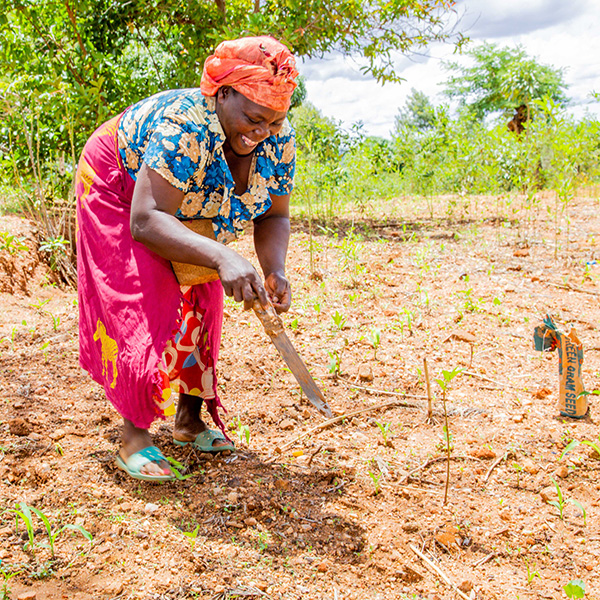
A program participant in Kitui County plants green gram seeds that she received through the CWS response.

Hope and recovery for 800 Kenyan families after the desert locust emergency

In 2020, swarms of desert locusts resembling dark storm clouds descended ravenously on the East and greater horn of Africa. They roved through the region and flattened farms and pasture lands posing an unprecedented threat to the food security of millions of people and their livestock in already vulnerable areas.

Farmers could do nothing but watch with dismay as the huge swarms of marauding insects ate their crops.

In Kenya, locusts infested more than 70,000 hectares (about 173,000 acres) of land, including crops, fodder and pasture. This put many families’ livelihoods at risk. 

The desert locust is considered the most destructive migratory pest in the world. It is highly mobile and feeds on large quantities of any kind of green vegetation, including crops, pasture, and fodder. According to experts, it was the worst desert locust invasion in over 25 years in Ethiopia and Somalia and the worst observed in over 70 years in Kenya.

The invasion came at a time when the government and humanitarian actors were battling the COVID-19 pandemic and the devastating economic and social disruption it caused. More time, energy and resources were diverted for COVID-19 preparedness, prevention and response.

CWS responded quickly through an ACT Alliance Desert Locust Regional appeal. Our team worked to prevent a significant decline in food security and to help farmers and families safeguard their livelihoods in affected areas affected. A total of 800 households received support in form of early recovery seeds and training of drought-tolerant crop production.

“When the locusts invaded our farms, they ate everything. CWS brought us seeds which we hope will help us recover from the loss,” said Kalii Mukumbu, a farmer in Kitui County.

This work was carried out in collaboration with the ACK Diocese of Kitui as well as the Kitui County Ministry of Agriculture, Water & Livestock. Following a rapid assessment in the affected area, our team distributed three varieties of crop seeds: green grams, beans and cowpea, which are well suited for the agro-ecological zone.

Thanks to Week of Compassion for their support of this response. 


Stories of Change


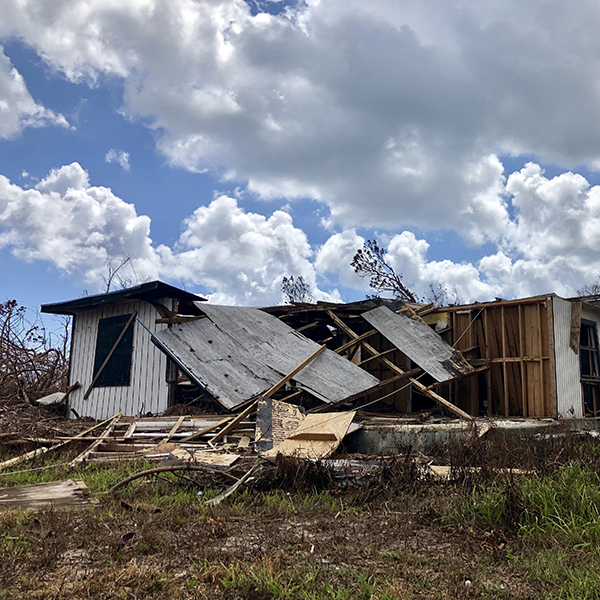
Damage from Hurricane Dorian in the Bahamas.

When the Storm Takes Your Legal Identity, Too

Hurricane Dorian slammed into The Bahamas as a Category 5 major hurricane in September 2019. It was the most powerful hurricane to hit The Bahamas since record keeping began. It was also a very slow storm, moving as slowly as one mile per hour. For nearly three days it continued its relentless onslaught, leaving widespread destruction in its wake.

“I lost my 22-year-old sister. The house and everything are gone,” said one participant of the CWS-supported recovery program. “I lost my home and all our documents,” said another.

The issue of lost documents was a critical one for many Haitian migrants and Bahamians of Haitian origin. People need government-issued documents like birth certificates and passports as part of their immigration process and when applying for citizenship. After Dorian, many people didn’t know how to get new documents, or they couldn’t afford them.

Our team learned of this challenge during our assessments in the weeks and months after the storm. So we reached out to the United Nations International Organization for Migration, known as IOM, to explore possible solutions.

We launched a pilot program with IOM in 2020 to help with redocumentation. This would help participants get the legal documents that they badly needed, and it would help both IOM and CWS learn more about the challenges that Haitian migrants face in getting legal status in The Bahamas to inform long-term programming.

The program officially launched in March 2020, just as the COVID-19 pandemic turned the world upside down. After a few delays, the program got underway. By July, information was circulating within migrant communities, churches and local media that CWS and IOM could help with redocumentation. A three-person independent committee, made up of women from within the Haitian community, reviewed applications for assistance and selected participants based on their need and vulnerabilities. By the end of the pilot program, we had helped dozens of people get a total of 366 different documents including birth certificates, marriage certificates and school diplomas. Most of the program participants were women and children.

Shana Zaporte was on the IOM team who helped people access the documents. “I was familiar with the issue of redocumentation because I used to work translating from English to Haitian Creole and also because I am part of the first generation of children born in the Bahamas to Haitian migrant parents,” Shana says. “I totally understand why they need support.”

Shana and her IOM colleagues worked one case at a time, one document at a time. An application for Bahamian citizenship requires an average of 11 supporting documents. In one case that Shana’s team worked with, the person needed 18. “One of the cases that impacted me the most was a young girl, aged 17, who lost her father and home in the island of Abaco. She had to relocate with her three siblings to Nassau. Her mother would call me every day and would say in Creole (she didn’t speak any English), ‘Thank you! Thank you!’ Three of the children were supported by the project and applied for citizenship,” Shana recalls.

For the families who participated in the program, it was one less thing to worry about as they faced the long road to recovery. It meant less stress and more hope.

The pilot program has also helped IOM to better understand the challenges that Haitian migrants in The Bahamas face in obtaining legal status. This key UN agency is now better equipped to partner with the Bahamian government to find medium- and long-term solutions that will improve the quality of life of Haitian migrants. IOM also built and expanded relationships and collaboration with faith communities, community leaders, migrant advocates and the Bahamian society at large. With a stronger social fabric, the Bahamian society is now that much more resilient in the face of future disasters.

Thanks to Presbyterian World Service and Development, an agency of the Presbyterian Church of Canada,  for their support of this program.


Stories of Change


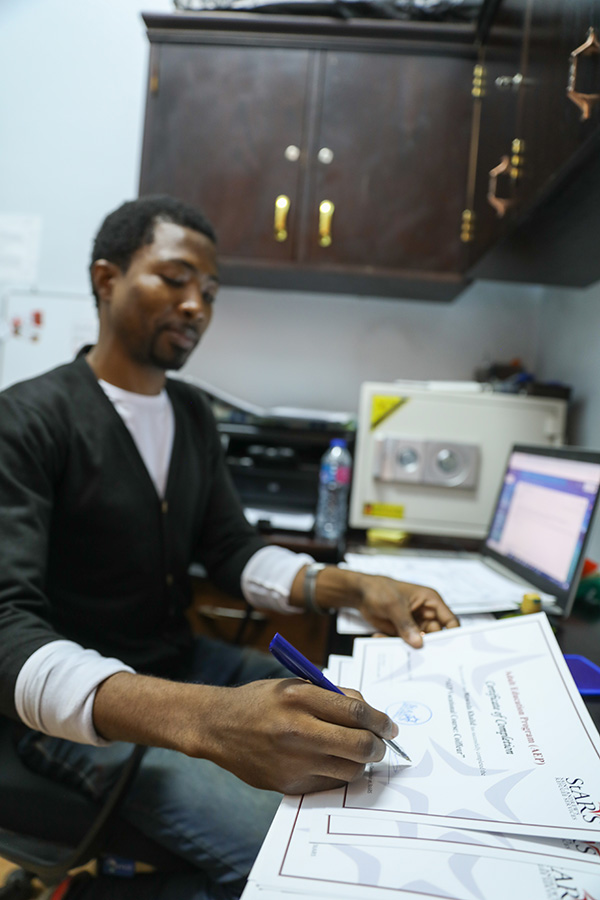
Ahmed works at his desk at StARS.

“There’s still hope in this world, despite everything.”

Ahmed* is the youngest program coordinator on staff at St. Andrew’s Refugee Services, CWS’s local partner in Cairo. A refugee from Nigeria, Ahmed graduated from the Adult Education Program himself a few years ago. We sat down with Ahmed in late 2019 to hear his story and what St. Andrew’s, known as StARS, means to him.

What country where you born in, and why did you leave?

I was born in Nigeria. The reason why I left was the problem of Boko Haram. I was in high school. Both of my parents were teachers. This made me the epitome of what Boko Haram considered to be infidels. My mother was so worried about me because Boko Haram was after people like me—young people who could be easily brainwashed. For girls, they could take them as their “wives,” as they call them. But for me as a boy, they could brainwash me and arm me to go and fight. Otherwise, I’m a traitor and would be killed. My mom wanted to get me out of the country by any means possible.

Boko Haram attacked our houses many times. We had to run from house to house. This had been going on for a long time. Then we ran to another state. And from there, we found the father of one of my classmates. When my mom told him about my story and that I was in desperate need of help to move me anywhere, he said he was a frequent flyer with an Egyptian airline. He could take me to Egypt. He arranged for my passport and everything. Here I am in Egypt, far away from Boko Haram. I am one of the lucky ones who made it. I hope others will have the same opportunity or they will find a nice place where they can feel safe.

How did you first hear about StARS?

I was at home one day. I had been battling this identity crisis, if you want to call it that. I was debating with myself to take a dangerous journey to cross water and go somewhere, because I felt that staying in Egypt wasn’t an option for me. I didn’t know what to do. Then one day my roommate came back, and he brought a book. And he said, “Look at this. I know you have been asking for an English program.” I asked where it was, and he told me about StARS. “There is a center where you see lots of refugees. Also, they run English classes,” he told me. I said, “Oh my goodness. Tomorrow you will take me there.” From that moment, I would come to StARS every day. Eventually, one day the Adult Education Program coordinator told me, “you are accepted as a student now.”

Since you became a student, what positions have you had at StARS?

After I graduated from the Adult Education Program, I came back as a volunteer, then as a part-time teacher, then as a senior teacher. Now I’m the one leading the program; the coordinator of the Adult Education Program.

What is the Adult Education Program?

The Adult Education Program is a program designed for adult refugees who come to Egypt. Unfortunately, some of them didn’t go to school in their home countries or haven’t had any opportunities to expand their education. Usually the classes start at 3 o’clock, and they go until 8. Because it’s adult education, many of the students work, so the mornings aren’t a good time for them. We also offer vocational classes that are designed to help women with their livelihoods. It’s difficult for refugees in Egypt to survive without any training. So we offer classes in henna design as well as handicrafts, sewing and hair styling. Some of our students have started their own businesses. Right now all the classes are for women, but we are hoping to add classes for men. They have been asking for classes in plumbing, tailoring and other things.

Could you tell us about a success story from the program?

A lady from Yemen came to us empty handed. She didn’t know what to do, so we advised her to join our hair styling program. She did, and now she is running her own shop in her community. It’s incredible. She has even hired two people who are working for her now.

Why do you think it’s important that the vast majority of StARS staff are refugees?

I’ll be honest with you – if it wasn’t for StARS, I would have left this country a long time ago by any means possible. For me, StARS is like finding an oasis in the middle of the desert. We have other centers helping refugees in Egypt, but StARS is a place where you come and feel like “this really belongs to me.” I’ve heard from other refugees too that when you set foot in StARS, you feel totally safe and at home. Every refugee who comes to StARS is treated fairly and with tolerance. We see everyone has human beings. Every day is a learning day here. I call it the marketplace of ideas. Our small United Nations. Everyone who comes here is fully aware of your situation. People who understand you before they even talk to you. I hope that every refugee, wherever they are, they will find a haven like StARS.

You arrived in Cairo alone as a 16-year-old. What advice would you give now to someone in that situation?

I would tell them to never lose hope. There’s still hope in this world, despite everything. We live to see another day. I would tell them to not lose hope no matter how hard the situation looks. There are places like this. There are people who are hoping to help you. It’s just a matter of time before you come across them. I like to joke when people ask me how old I am that I am 8 years old. I started counting my years from the moment I discovered StARS.

*Name changed to protect identity.