Stories of Change


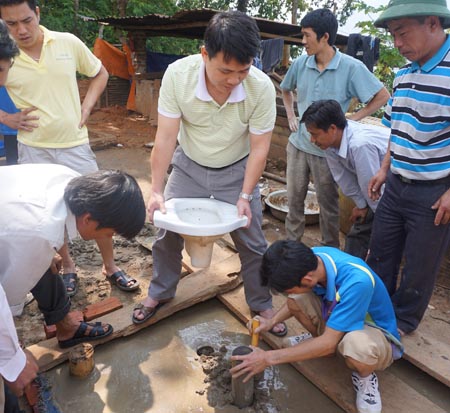
CWS staff work with community members to build a sanitary latrine. Photo: CWS


One in three people worldwide lack access to a toilet.

Source: Water.org

Sanitary Latrines in Ka Lang Commune

In remote and mountainous villages in northwest Vietnam, where many ethnic minority groups live, most people do not know about – and so do not practice – behaviors that those in more developed communities consider good personal and household hygiene. In particular, open defecation near water sources is a common practice, and it is not widely known that this is a health risk to families and whole communities.

CWS works with communities to address this issue in Muong Te district, and in early 2015 we expanded the program into Ka Lang commune in the frontier region bordering China. When the program started, the people of Ka Lang had no information about sanitary latrines, and there were no latrines. CWS worked with community leaders through the Community-Led Total Sanitation model, where community leadership receives specific training and expertise that they share with the community at large. CWS and village leaders went through a self-appraisal process and developed a sanitation profile. Through training sessions, village mapping, workshops and other activities, awareness began to spread.

Chu Mu Ca is Vice Chairman of the People’s Committee in Ka Lang commune. He has recently shared enthusiastic thanks for the hygiene and sanitation improvements that have been accomplished through partnership with CWS. His enthusiasm and dedication inspired many villagers, who are of the Ha Nhi ethnic minority, to change unhealthy habits and use well-built latrines. These latrines will improve health and wellness over time.


Stories of Change


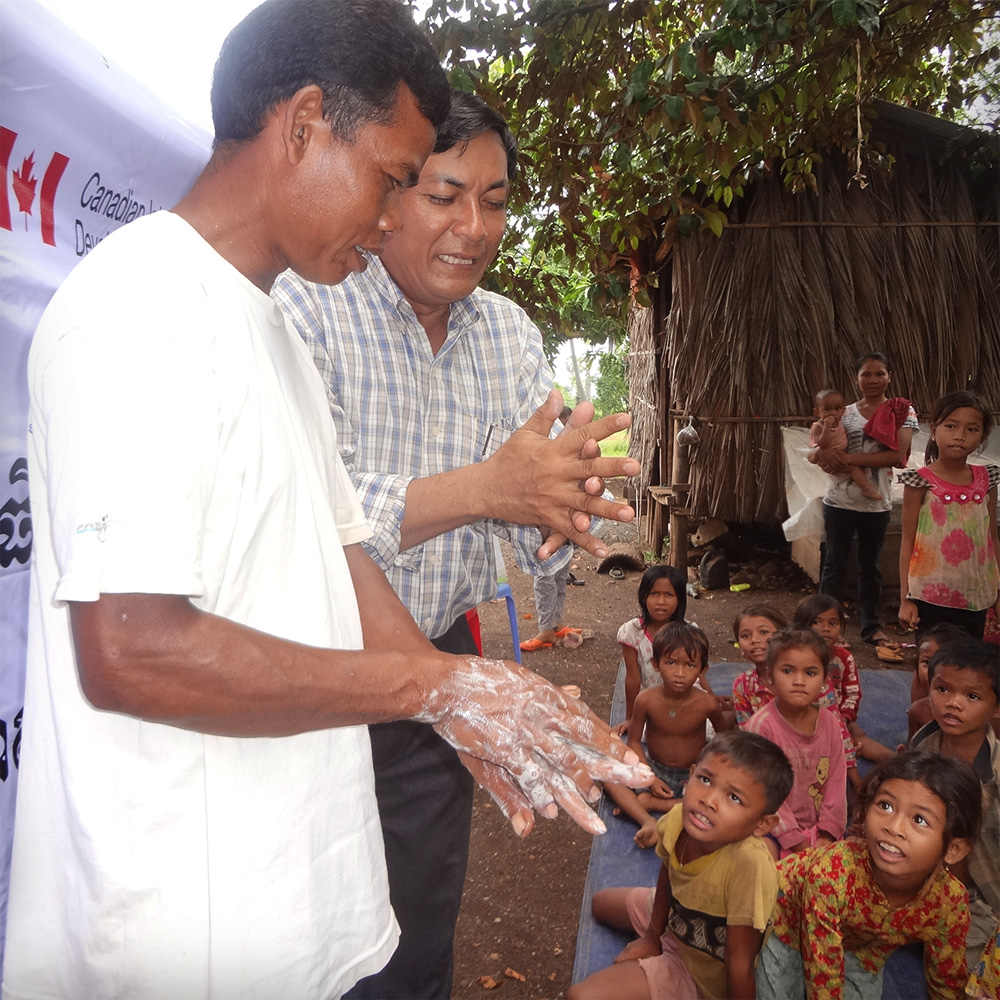
Hor Thet (in white t-shirt) demonstrates proper handwashing during an awareness-raising session in his community. Photo: CWS


One in three people worldwide lack access to a toilet.

Source: Water.org

Leading by example in Cambodia: sanitary latrines

Hor Thet is the Village Chief of Anlong Vaeng village in central Cambodia. By his estimate, about 90 percent of the families in the community, including his own, defecated in the fields around their homes until recently. Thet participated in a CWS-hosted workshop on Community Health Promotion, where he learned more about sanitation and latrines.

After joining the workshop, Thet said, “I felt sure that we needed sanitary latrines and better behavior to stop some illnesses in our village. So, when we learned how to build a simple latrine, I decided to build one for my family. I shared my knowledge with others and encouraged them to do the same”.

Thet has assumed a leadership role in regards to sanitation in the village, showing community members how they can improve the environmental sanitation through village walks, group discussions and reflection. He asked them to estimate the amount of human wastes people discharge daily and multiply by the number of people in the village. Then the community members realized how their water sources could be contaminated.

Thet has seen great progress in his community, and he expects it to continue. In his words, “I am so proud to see that within three months, 25 more families have built and used their own latrines. When the people see the importance of latrines and their neighbors use latrines, they want to have one of their own. I am hoping that within one year all families in my village will have and use sanitary latrines.”


Stories of Change


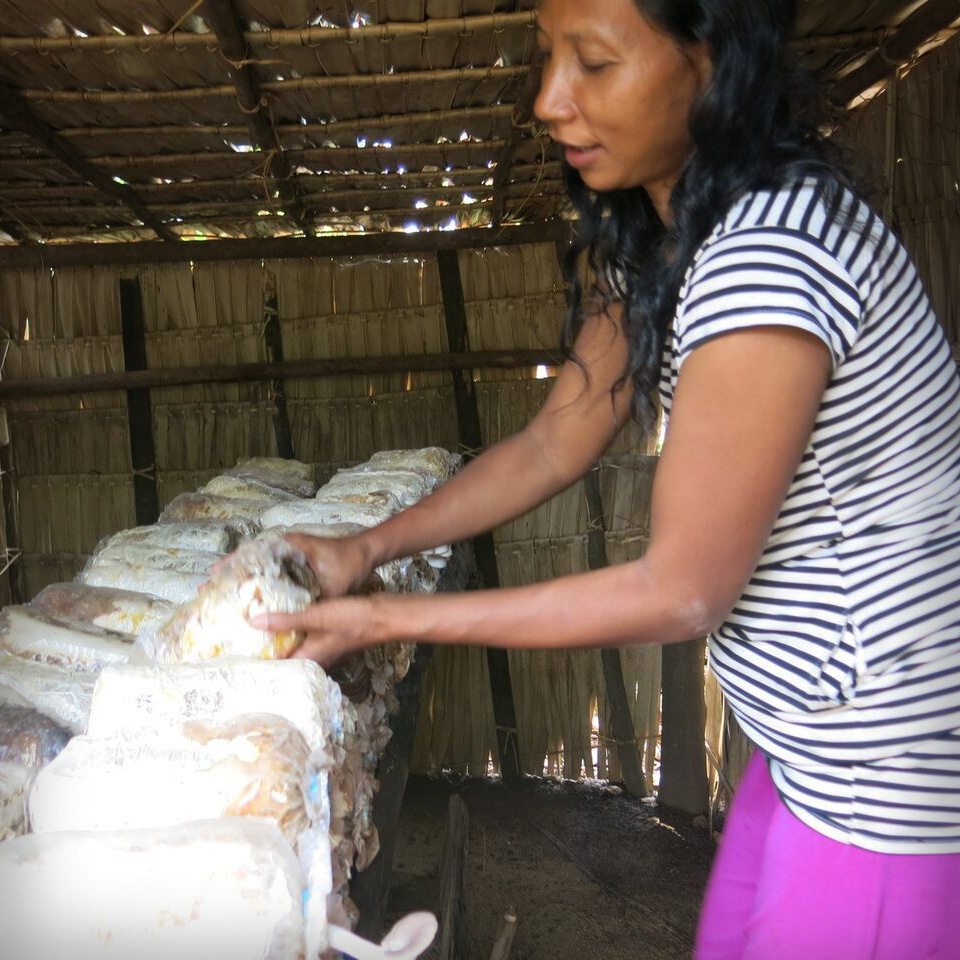
Yuk Vy looks after the mushrooms in her mushroom shed. Photo: CWS


As of 2014, the average Gross National Income in Cambodia was $1,020 annually, or $19.62 weekly.

Source: World Bank

Four children’s educations, thanks to mushrooms!

Yuk Vy lives in Prey Roleap village in central Cambodia with her husband and seven children, who range in age from one to 19 years old.

The family are rice farmers. In the past, Vy worked as as wage laborer in nearby villages after each rice harvest in order to help support her family.  She had to leave her children in the care of a neighbor during the day, and when she returned home she felt too tired to do housework and take proper care of her children.

In order to help herself and her family out of this situation, Vy decided to join a CWS-hosted workshop to learn about oyster mushroom growing. After the workshop she received 60 bags of mushroom spores to cultivate at home so she could be near her children.

Vy has been able to harvest an average of 15 pounds of mushrooms each week. Her family consumes many of these mushrooms, but she is also able to sell some to earn $3 – $4 US a few times each week. Even though this is not enough to cover all the family’s needs, it allows the family to send four of their children to school.

Since the oyster mushroom growing business has been so beneficial to the family, Vy plans to expand it during this rainy season with the help from her husband and children, who help her watering the mushrooms before they go to work or school.


Stories of Change


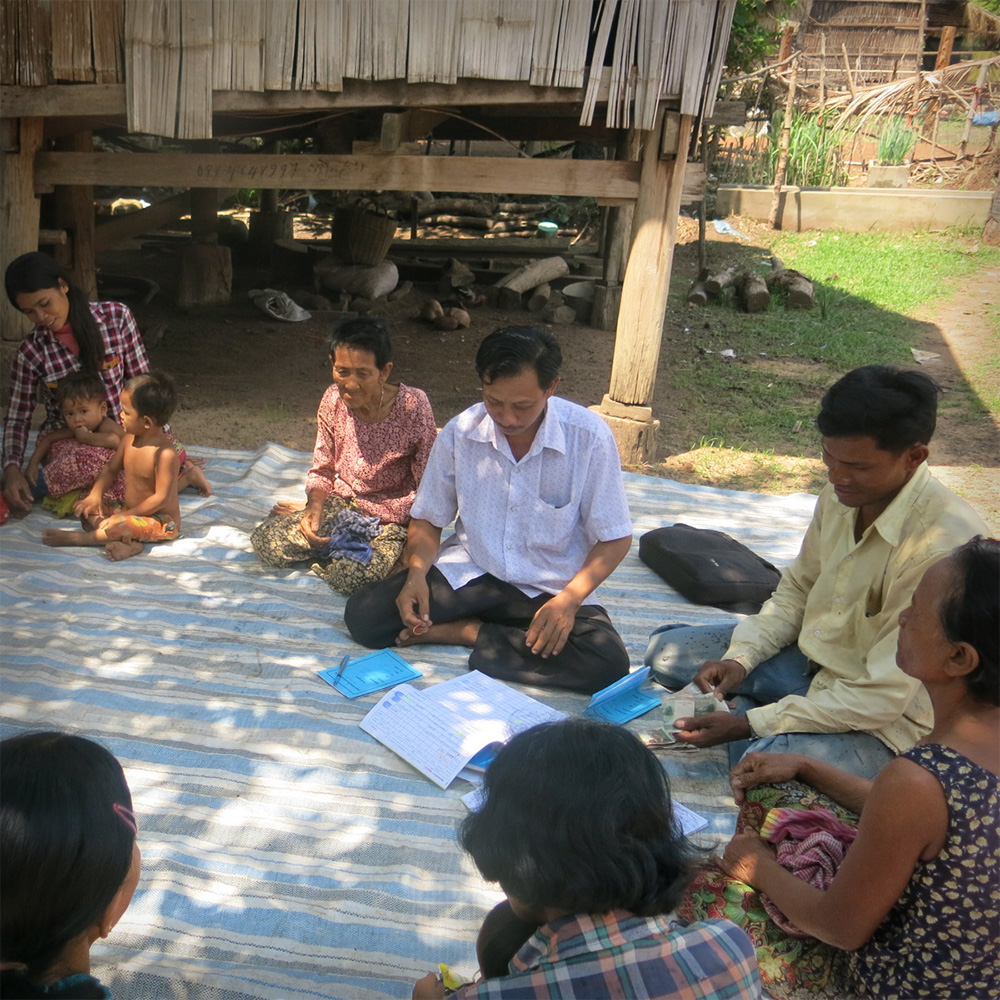
Soung Dorn (in white shirt) facilitates the monthly meeting of the savings and loan group and is recording member savings. Photo: CWS


In five months, 125 people in Rung joined savings and loans groups.

Source: CWS

Building communities by reducing financial risk

When the families in the central Cambodian village of Rung need cash, they can choose between moneylenders or local microfinance institutions as the source of their loan. Most people dislike both options because the loan terms are quite onerous, and they feel it is too risky to use their scarce assets such as a cow or small plot of land as collateral.

To address this challenge, CWS works with communities to start savings and lending groups that can lend small amounts of money to members with their mutual trust as collateral.

With the encouragement of Soung Dorn, a member of Rung’s Village Development Committee, the first group was formed by 15 women and men in August of 2015. That group is named Sambou Krabao Chrum. Its vision is to reduce the dependency of families on private lenders while making low interest loans available for members in case of emergencies and for income-generating activities.

As a founder of the first group, Dorn actively shared the group concept and the benefit of saving with his community members. This has convinced more families to join in the saving group. Now, the Sambou Krabao Chrum group has had 30 members and four other saving groups have been formed!

Between the five savings groups, there are 125 members who have saved a total capital of 11,055,000 Riels ($2,764 US). The members, who are mostly women, save 5,000 Riels ($1.25 US) monthly. The 2.5 percent interest earned each year will be divided into three parts: 10 percent for administration, 30 percent for group capital and social work, and 60 percent for group members. The long term plan of the groups is to eliminate the need to obtain loans from moneylenders or microfinance institutions and to become the village bank.


Stories of Change


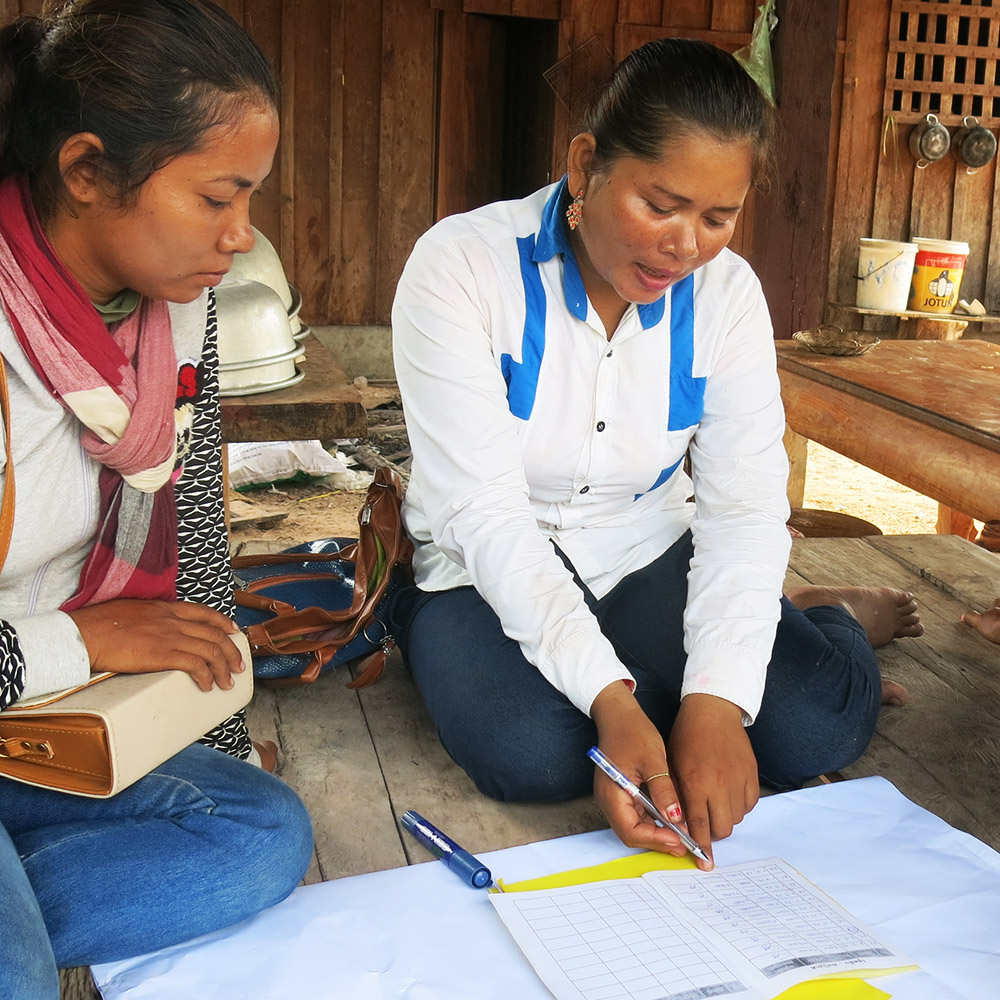
Saron Nith (right) reviews finances with a member of the Robonh Samaky group. Photo: CWS


There are 757 million people worldwide - 63% of whom are women - who are illiterate.

Source: UNESCO

A dedicated woman. A stronger community.

Saron Nith is 35 years old, and until recently she could not read or write. She lives in Robonh village in Cambodia, where she is part of a Village Development Committee and is an active health volunteer. She has mobilized the community to improve the condition of the community’s road, and she encourages families to drink treated water from bio-sand filters and build latrines. She has consistently raised awareness among women about the importance of mother and child health and nutrition, cooking nutritious food and education community members on hygiene and sanitation.

As a VDC member, Saron saw cases where illiterate people were being cheated. This motivated her to learn to read and write the Khmer language. She completed a literacy class in only seven months.

Saron is also a founding member of her community’s savings group, called Robonh Samaky. This savings group was started by ten women in August 2014 with support and training from CWS. Initially, members saved 3,000 Riels (0.75 USD) per member per month, and in the second year they increased that to 5,000 Riels (1.25 USD). The group lends money to members to help build businesses or fund other projects, and repayment occurs with a manageable interest rate. Now, the group has 900,000 Riels (225 USD). The goal is to improve the living conditions of all group members in the next three to five years and then begin to assist other community members who are in need.

Now that Saron is able to read and write, she is able to assist both the VDC and savings group by recording meeting notes. She was chosen by her peers to be Chief of the savings group, and in that role she has been invited to share her knowledge and experiences managing her savings group with local authorities and other groups in nearby communities. At home, she helps her children with homework and serves as an example of lifelong learning in her community.


Stories of Change


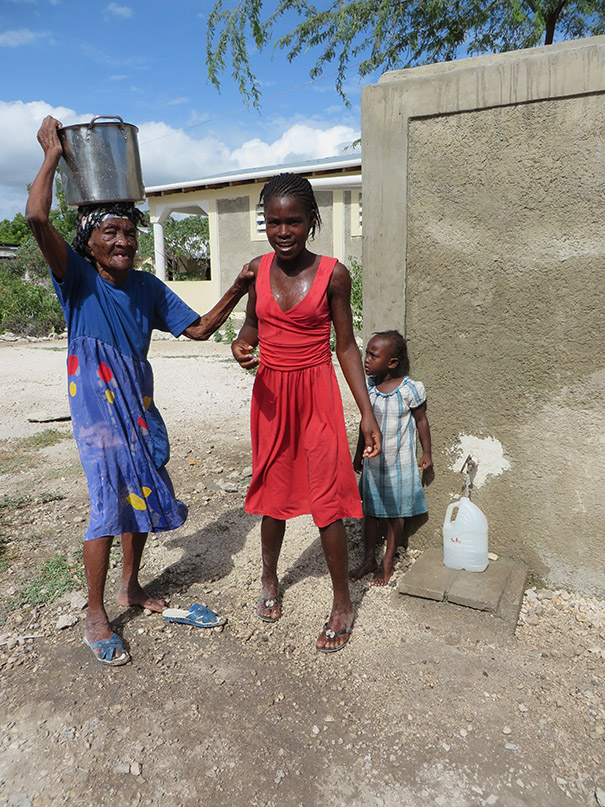
Residents get water from a cistern in Boen, Haiti. Photo: Margot DeGreef / CWS


CWS and partners have built two wells, two pumps and six cisterns to help improve access to clean water in the communities of Boen and Ganthier, Haiti.

“This water saves us”

Water is life. It is the first necessity for all human beings on a daily basis. It is also essential for the success of agriculture. In the communities of Ganthier and Boen, Haiti, people mostly depend on rain to water their crops. CWS and Dominican partner SSID started programs in these communities after the earthquake of January 12, 2010, a program that transformed from material aid to construction of new houses and community development, including food security.

Since 2014, two wells have been drilled and two pumps installed while six water cisterns were constructed to increase access to water. The cisterns are connected to tin roofs of surrounding houses, thus facilitating rainwater catchment. This year, another two wells will be drilled and six more cisterns constructed. Some of the cisterns supply water through water points at different locations in the community.

The pumps and cisterns are used by community members, currently about 150 families, and are managed by local water committees that are responsible for the cleaning, maintenance and repairs of the pumps and cisterns, filling up the cisterns, and collecting financial contributions from the users of the cisterns that represent an important community good.

Etienne Delimene is one of the users of the cistern in Ganthier/Bosquet and considers the cistern very useful, providing close access to water whenever needed. “Sometimes you can’t go to the source,” she says, “so when it is here it serves us better. We buy a bucket for eight gourdes ($0.14 US) and use the water to do laundry, cook food, etc.” Etienne says the cistern is useful, “because there is fighting at the source. When children go to the source they can’t fill up their buckets, so when I get water from the cistern here that helps me to cook food, etc.”

Avosa Antoine used to get water from a pump in the community. When the pump didn’t work, she had to walk to Kafou Ti Mache, which is quite a walk. In addition, there usually is a long line of people, so she had to wait for an hour until others had filled up their buckets. “Now I am doing laundry here, I come with my bucket to the cistern and can come get water every time I need it, by the bucket. Without the cistern I couldn’t do laundry the same day I fetched water, because it took a lot of time. Now I can manage water better and can even get it in the evening if I want to. It is as if I have water at my house.” To ensure the cistern is kept in good condition, the users clean the cistern and contribute monthly to pay for maintenance related expenses.

For the community members of Boen, “this water saves us.” They have close access to clean water now and no longer need to go to Kafou Ti Mache or even all the way to Source Zabeth, where they have to pay a truck to get water. They are happy with the cistern, which serves them with water to cook, do laundry, bathe, etc. They can drink it if they treat it. As water is getting more and more scarce, and the dry season is lasting longer, access to water gets more crucial. The cisterns and wells facilitate close access to good quality water for domestic use and hopefully in the future also for agricultural use.


Stories of Change


Som Bee and her granddaughter now have access to clean water for cooking, drinking and gardening. Photo: CWS


1 in 10 people worldwide lack access to safe water.

Source: Water.org

Clean water across generations

I am Som Bee, 60, and I live with my seven-year-old granddaughter in Trapeang Tuk village in Cambodia. Today I am remembering support from CWS that really helped me change my life.

Some time ago I had the chance to join others in my village for an effort that CWS supported to help us have access to safe, clean water year round for cooking, drinking and gardening, and also to share information to help me improve my knowledge about safe drinking water and its storage. I also had a chance to learn about better hygiene to improve my health and my granddaughter’s and about better vegetable growing techniques for more yield and better nutrition.  

Before our work with CWS, my neighbors and I used unclean water from a shallow hand-dug well. Besides the water being unsafe, we faced water shortage in the dry season when the well dried up. Now the situation has changed and we all have safe, clean water from a ring well in our village, which is just about 35 yards from my home. And, best of all, because I learned about the importance of also filtering our drinking and cooking water, my granddaughter and I seldom have diarrhea like we always did before. This is because we use water from the biosand filter CWS gave to our neighbor after we learned how to keep it clean and useful.

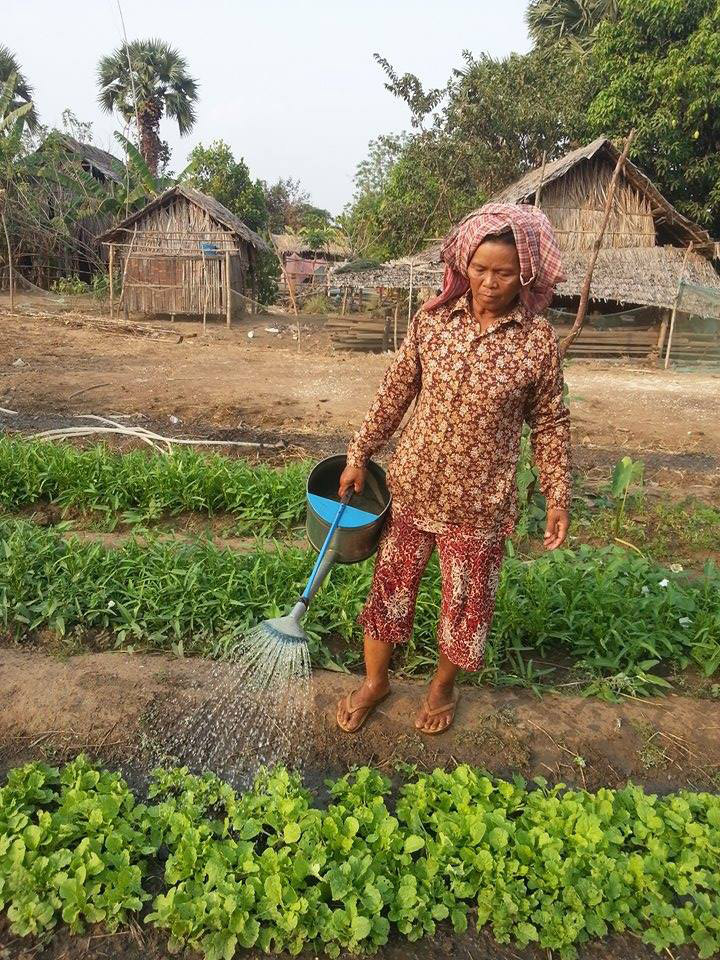
With more water at hand I also started a garden of tomatoes, pumpkins, spinach, gourds, cucumbers and mushrooms. My granddaughter and I now have vegetables for eating and selling, and in the last six months, I earned about 200,000 Riel (USD 50) which I used to buy rice, some groceries and more vegetables seeds and tools.

The biggest way that partnering with CWS has helped me is that I no longer have to travel to work for others as a wage laborer, and I can spend time working happily in my vegetable garden and being near my granddaughter.  

Program Description

Since July 2011 CWS, together with our US funding partner and in partnership with Bread for the World Germany and the Finnish Evangelical Mission the Village Based Community Development initiative has supported water, sanitation and hygiene in 16 villages in the central Cambodia province Kampong Thom. The project was designed, and succeeded in many ways, to enhance families’ and communities’ capacity to define their development directions and priorities, which included access to improved water source and safe drinking water.

Trapeang Tuk is one of 16 villages that had difficulty in accessing water, especially during the dry season from March to June. Most people depended on hand dug wells for water to drink, cook, bathe and garden.

To help people respond to this challenge, which is pervasive in much of rural Cambodia, CWS partnered with the community and donors to build a high quality concrete well and to share household biosand water filters with project participants who agreed to share their labor, to gather local materials to build the well and also to make nominal cash contributions of less than one US dollar each to toward construction and filter costs. The well digging and finishing, including a protective wood and bamboo roof was led by the Village Development Committee and completed with a collective effort. To complement these material inputs, project participants have the opportunity to improve their knowledge about the importance of clean water, proper sanitation and good hygiene so children, especially, can avoid preventable water-related illness. In addition to the VDC members, the Village Health Supporting Groups were formed so their members could facilitate WASH education and training activities and to ensure ongoing maintenance of water supplies in their villages.


Stories of Change


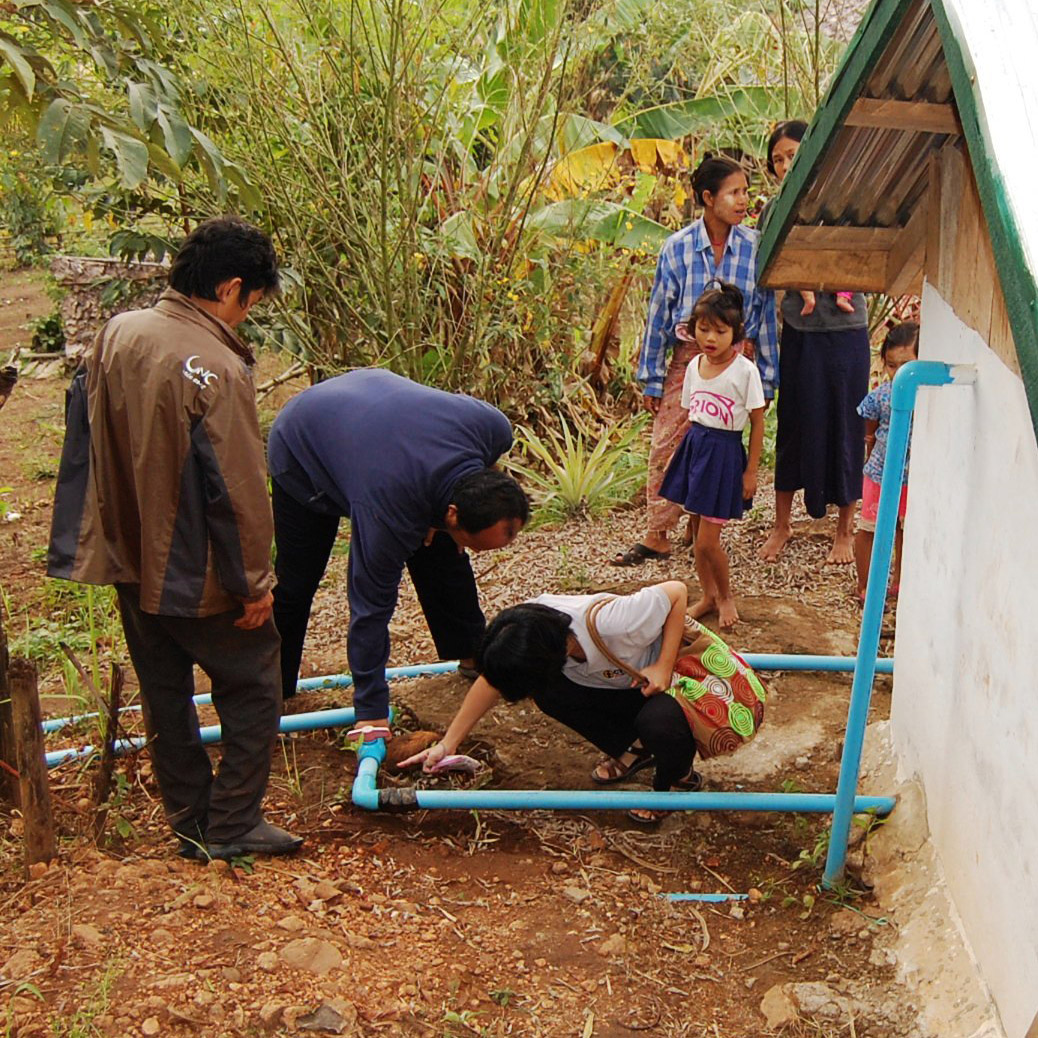
CWS staff and community members inspect a gravity-flow water supply system in Kayin State, Myanmar. Photo: CWS


Women and children spend 125 million hours each day collecting water.

Source: water.org

A sustainable clean water infrastructure in Myanmar

I used to collect water for my home use in five-gallon containers at the stream that is a 30 minute walk from my house. I did this even when I was pregnant and just after I delivered my baby. It was hard, especially since that much water weighs so much (44 pounds), but no one else could do it; this was my job.

Of course I worried about contamination in the water from houses upstream and from animal waste. I knew these caused illness in my family; someone always had diarrhea.

Now, with our new water system, I connect my hose to the shared faucet that is just 22 yards away and I have safe water any time for cooking, drinking, washing clothes and bathing. I am very happy because I can save so much time and I no longer have the exhausting task of collecting water from so far away.

– Naw Thu, Hpayarthonesu sub-township, Kayin State

About the Program

During the past two years, CWS has joined with The Japan Platform to support communities to build gravity-flow water supply systems in 7 villages in far southeast Kayin State near the Thai border.

Despite awareness that refugees and internally displaced persons are expected to return to this area in significant numbers in the near future, there is almost no basic infrastructure, including no electricity or water supply. Furthermore, many other people are migrating from nearby communities to work, especially as migrant laborers in Thailand, which is accessible from the project area and where the population is growing rapidly.

To help address an essential need, this CWS-led project aims to increase access to safe water year round. Also, for sustainability the project team shares information that creates awareness and builds knowledge about the value of clean and safe water and also leads skill-building sessions so communities can maintain their water supply systems independently in the future.

So far, water that is now more readily available from the new systems is used for cooking, drinking, bathing, laundry and, for some families, growing vegetables. Having a nearby water supply is also helping children to improve their knowledge and behavior for better personal hygiene. Of particular importance is the way the project has lessened the burden of women and children’s arduous task of collecting water from distant hillside streams, a key indicator of success.


Stories of Change


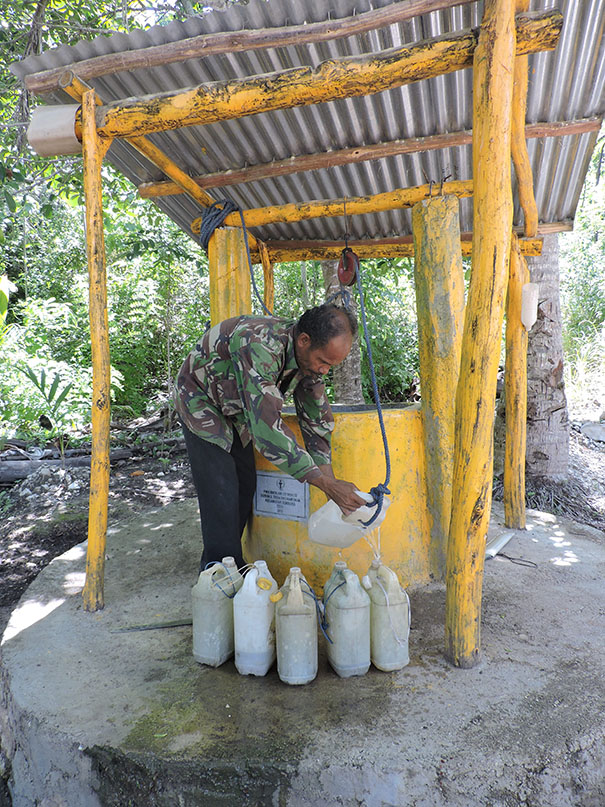
Yusuf Tenis at his community's protected well. Photo: CWS


In Enonabuasa village, 90 percent of families can now use an improved water source, compared to 49 percent a year earlier.

Protected wells, healthier families

Mr. Yusuf Tenis, his wife and four children live in Fatutek hamlet on Timor island at the end of the Indonesian archipelago.  The only water source for Yusuf’s family, 32 other families and, in the long dry season, their livestock too, used to be a one-meter deep hole in the ground that regularly filled up with dirt, leaves and animal waste.  This was the community water source for all uses: drinking, cooking, washing dishes and clothes and bathing.

Not surprising, the Tenis children and most other children and many adults in Fatutek suffered from frequent diarrhea and skin conditions caused by dirty water.

As community partners in the Timor Zero Hunger initiative, with support from CWS members and our key funding partner, UMCOR, Yusuf joined others from Fatutek to build a protected well:  several concrete rings stacked on top of each other as a casing raised the well above ground level, and a simple roof stops bird and animal waste, and leaves and loose dirt, from contaminating the water.

From this improved water source the Tenis family and another 150 villagers now have access to better quality drinking water as well as clean water for their homes and personal hygiene.

Diarrhea and skin infections among children have lessened, and there is now enough water for Mr. Tenis and his family to have a home garden, where they grow nutritious vegetables to improve their diets and wellbeing.  

About the Program

In Enonabuasa village on Timor island at the remote southeast end of the Indonesian archipelago, access to water is difficult, particularly during the long dry season from May to October.  Often people rely on rivers, unprotected wells and other unsafe sources for water to drink, cook with and otherwise supply their homes and gardens. The strong 2015-2016 El Nino is making the current dry season particularly long, exacerbating the situation.

To help people better meet their needs for safe water, a CWS water project was started in Enonabuasa through community-led mobilization, which started with water resource mapping. Focus group discussions with women and men considered the types and conditions of existing water resources and the technical feasibility of different safe water infrastructures, and then they agreed on priority needs and solution.

The preferred solution was for cement lined, raised wells that are protected from runoff water and covered so bird and animal waste cannot contaminate the water, and animals themselves cannot fall into the wells. Another agreed solution was for protected springs that shield running water from runoff and other contamination with a brick, stone or concrete ‘spring box’ at the water source so it flows directly out of the box and into a pipe or cistern, without being exposed to contaminants.

Once solutions were agreed upon, community members formed teams for planning, construction and monitoring/maintenance, and then everyone joined information and education/training sessions to support high quality building, ongoing operation and maintenance for the improved water sources. In addition to providing information and training, CWS supplied materials not locally available, like PVC pipe, while community members contributed most materials, including rock and sand, and their labor.

In 2015 with technical support and advice from CWS field staff made possible by our funding partnership with UMCOR, the people of Enonabuasa formed six water committees to ensure operation and maintenance of water supply facilities; identified eight springs and six wells to be protected and improved; dug six new protected wells and built other small-scale infrastructure, such as cisterns and public taps, for eight springs. Now, 90 percent of the village’s 224 households (1,000-plus people) can use an improved water source [as defined by the WHO/UNICEF], compared to just 49 percent a year earlier.  And, like the Tenis family in Fatutek hamlet, many families have a healthier home.

Stories of Change


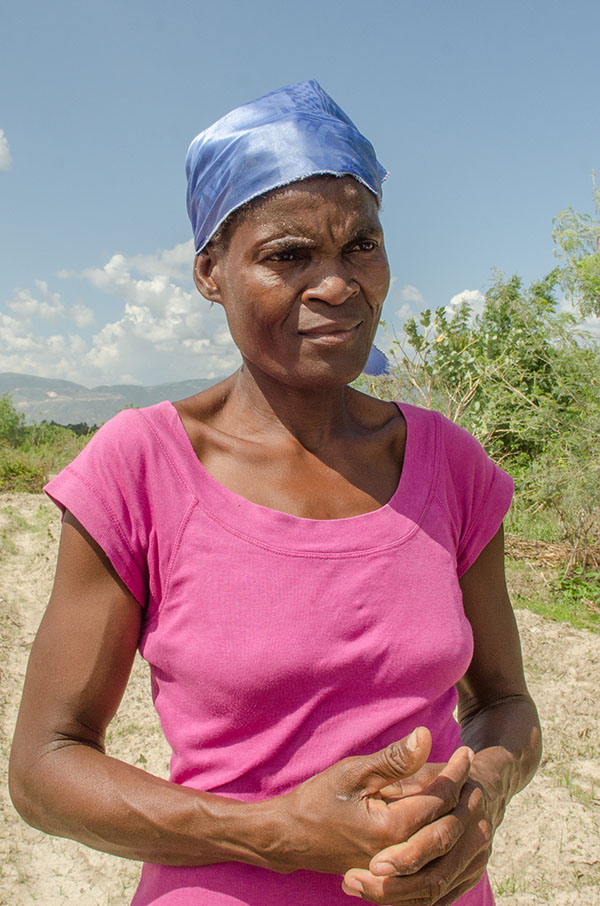
Marie Snouth Juste. Photo: Daniel Alder / ACT Alliance


CWS and other ACT Alliance members have repaired and rebuilt 202 houses in Ganthier and Boen since January 12, 2010.

Rebuilding homes and supporting strong women in Haiti

Since the earthquake of January 12, 2010, CWS, local partner SSID and other ACT Alliance members have been working in communities of Ganthier and Boen, West Haiti, starting with material aid and transforming into an integrated community development program with construction of houses, agricultural support (seeds, animals, technical accompaniment, access to water), microcredit and capacity training.

Many of the households are female headed. Viergenie Louiné is a single mother of eight children. At the time of the earthquake she lived in Port-au-Prince, but when her rental house got destroyed, Louiné came to Ganthier, seeking a place to live in the camp despite not knowing anyone in the area. About the support from SSID, CWS and other ACT Alliance members, Viergenie Louiné says: “They gave us food, water, clothes, bedding, and they helped us to leave the camp. With the money they gave us to leave the camp, I started a business. I sell coconuts and chayote. With the profits I made, I purchased a small plot of land.”

Thanks to Louiné’s good management of her resources and her capacity to increase her business, she qualified as a beneficiary of a house, once she had purchased a plot of land. Beneficiaries actively participate in the construction process of the house, both with a financial and in-kind contribution, digging the foundation, carrying materials, fetching water, preparing meals for the labourers, etc. Viergenie Louiné is now the proud owner of a two-bedroom house. “I couldn’t have built this house,” she says. “I look at it and think it can’t be mine. We live well now.”

Marie Snouth Juste is another exceptional and strong woman. She is one of the main farmers in Boen, often to be found on her land, growing and tending to her crops. A courageous woman who has planted many pounds of beans, sorghum, and corn. Marie Snouth Juste has seven children: three girls and four boys. Her hard agricultural work and harvests of her crops allowed her to raise, feed and educate her children after she lost her first husband.