Stories of Change


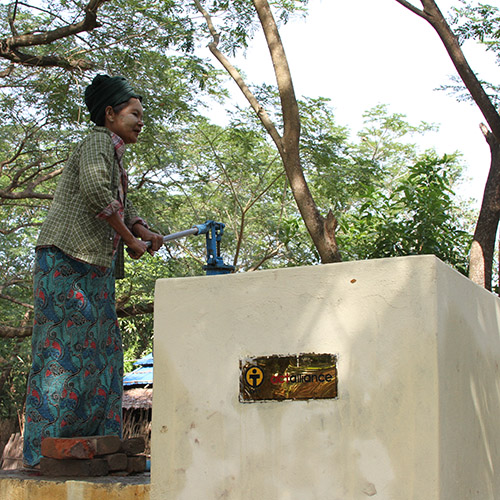
A resident of Inn Ma Su village uses one of the newly elevated hand pumps. Photo: Andrew Gifford / CWS

Elevated hand pumps mean year-round clean water access in Myanmar

In the heart of Inn Ma Su village, there is a huge, sturdy tree in the middle of a large clearing. There’s a sign on the tree that makes very little sense for many months of the year. It asks that you drive boats slowly in the vicinity.

During the rainy season, though, the importance of that sign becomes clear. Flooding isn’t a question during the rainy season in this small riverside town. It’s a way of life.

In the Ayeyarwady Region of southwest Myanmar, the massive river system is critically important. It is a highway for both transportation and information sharing that allows remote villages to communicate and travel year round to reach public services, like clinics, as well as work and other opportunities in larger towns.

One thing the river is not, though, is potable. River water is not safe for drinking. It is contaminated by many things, including runoff from latrines.

When the Ayeyarwady River flooded early last year, donor support meant that CWS and partners could bring household water filters to affected villages to help ensure that families had clean, safe water while they waited for the flooding to recede from around their hand pump well.

In the fall of 2016, however, our CWS team and partners worked with the people of Inn Ma Su to create a more permanent source of safe water. Together, and with donor support, we built concrete platforms with stairs for four hand pumps. Each platform also has a small water tank. Water is pumped into the tank and then can be used to easily fill buckets using the spout in the side of the platform.

Before the platforms, the community’s hand pumps were at ground level, similar to this one in a nearby village. That meant that they were often flooded and unusable in the rainy season, and they were almost always muddy.

Now, even in the dry season, the new platforms ensure cleaner, dryer areas around the pumps. And in the rainy season, they guarantee access to safe, clean water – even when getting to the platforms means using a boat.

Interestingly, many of the hand pumps are on private land, but it is customary for families to allow free access to their yards so their neighbors can also collect water from the pump. During the dry season, three or four households use a hand pump daily. In the rainy season, though, as fewer hand pumps are accessible, more families will rely on the now-elevated pump.

Apart from the wells CWS and Week of Compassion donors have just helped improve, the challenges facing Inn Ma Su are numerous. The nearest school is a 30-minute walk away, which is long enough in the dry season. In the rainy season, many students stop attending school due to flooded fields, muddy footpaths and a dangerously weak bridge. Also, the villagers want to prioritize finishing their work on a new monastery which, critically, doubles as a village shelter in the event of cyclones or other natural disasters.

With improvements to the four hand-pump wells now done, the partnership between Inn Ma Su and CWS is not over, and we are proud to reach this milestone of ensuring better access to potable water.
Stories of Change


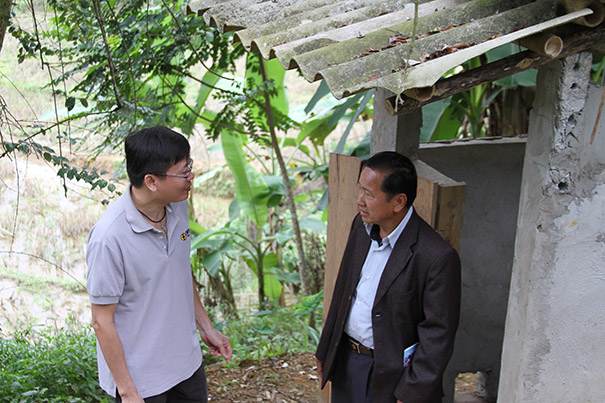
Vi Ngoc Tu (right) talks to CWS's Vietnam Country Representative in front of his family's latrine. Photo: Andrew Gifford / CWS


20 million people in Vietnam do not have access to improved sanitation.

Building latrines, ending open defecation in Vietnam

Latrines.

If you always have access to a toilet, you may not think it’s a big deal. For the 35 percent of the world’s people who don’t have indoor toilets or outdoor latrines, though, it’s a huge deal.

This is certainly true in Vietnam, where 20 million people do not have access to sanitary latrines. Of those, six million don’t have any kind of latrine and have to use fields or streams as toilets. That means that the number of people just in Vietnam who don’t have sanitary latrines is roughly equal to the combined populations of New York City, Los Angeles, Chicago, Houston and Philadelphia, the largest five cities in the United States. All these people. Without toilets. Every day.

Vietnam’s ethnic minority communities – which are generally poorer than others in the country and are often culturally or geographically isolated – are less likely than others to have any kind of latrines. In these communities, nearly one person in three doesn’t use a toilet or latrine, and there are a variety of different reasons for this. Even if families understand the harm of open defecation and want to build latrines, poverty often stops them. Other priorities, like food and fuel, take precedence.

CWS has been working with communities in Vietnam for more than 60 years and, for our team today, the problem of open defecation is one we work seriously to address. Without safe, sanitary latrines, it’s really easy for human waste to end up in people’s food and water.

Let’s think this through.

If you use a field as a toilet, your waste is out in the open where flies and other insects can get to it and then transmit harmful germs to you, your food or your family. If you decide to use a stream instead, you’ve introduced human waste directly into a water source that is used for bathing, for watering vegetables and, often, for drinking.

Either way, that waste is still reaching people directly.

Clearly, ingesting human waste residue is harmful and the resulting illness can lead to people having to take time off work to recover or even needing to spend time and money to visit a clinic and, maybe, take medicine. Across Vietnam, because of open defecation alone, avoidable illnesses have a major economic impact. Each year, it is estimated that Vietnam loses $780 million in worker productivity and needless healthcare spending as a result of the persistence of open defecation.

This is why getting people to use safe, sanitary latrines is a top priority for CWS in Vietnam. Our approach is called Community-Led Total Sanitation, or CLTS. Through this model, CWS provides technical assistance to community leaders on how to build and properly use sanitary latrines, and our team also shares information about the health impacts and associated costs of open defecation. We also share stories and best practices learned from other communities with which we have partnered. Community leaders then return to their villages to share what they have learned and to motivate their friends and neighbors to build latrines.

Once a village is interested in investing in latrines, a CWS technician works with them to build a first latrine so everyone can know how a latrine is properly built and how it works. Then families can build latrines on their own, choosing from a number of different designs. Families also then have the skills to repair latrines when needed.

The CLTS model has paid off. This past year, CWS helped build more than 1,300 latrines in Vietnam, with 17 villages being certified as Open Defecation Free as a result, including one commune made up of 13 villages.

Ultimately, in a single year, more than 7,000 people have sanitary latrines with the help of CWS.

One of the villages that participated in CLTS this year is Poc, which is in Thanh Hoa province, about a five hour drive southeast of Hanoi.

Vi Ngoc Tu, the village leader and a member of Vietnam’s Thai ethnic minority, attended a CLTS training workshop in June in a town about an hour from the village, where he joined leaders from other villages as well as a representative from the district health center. Among other things, Mr. Tu came to understand, once he took the time to think about it seriously, how open defecation can ultimately lead to people ingesting human waste. He decided to take action for his village.

After the workshop, Mr. Tu became one of five community members who helped mobilize and motivate each of the 53 families in the villages to build sanitary latrines for the sake of their own and the whole community’s health. It took a few weeks to visit every family and rally support, but in August the first latrine was built in Poc.

In just four months, the community built 53 latrines – one for each family. Most are dry latrines with two chambers. Leftover kitchen ash is sprinkled into the chamber after each use to speed up waste fermentation. When one chamber is full, it is sealed off for six months. After that time, the waste has fermented and can be used for organic fertilizer. It is no longer dangerous if consumed.

Today, the people of Poc say that since they built their latrines, no one from the village has had to go to the hospital or clinic because of diarrhea or related issues.

Besides reducing common health risks, like diarrhea, using sanitary latrines is known to reduce poverty. Healthy adults can work, and families can save the money that would have had to be spent on medicine and clinic visits. Together, we can support communities in Vietnam and around the world as they improve their sanitation.


Stories of Change


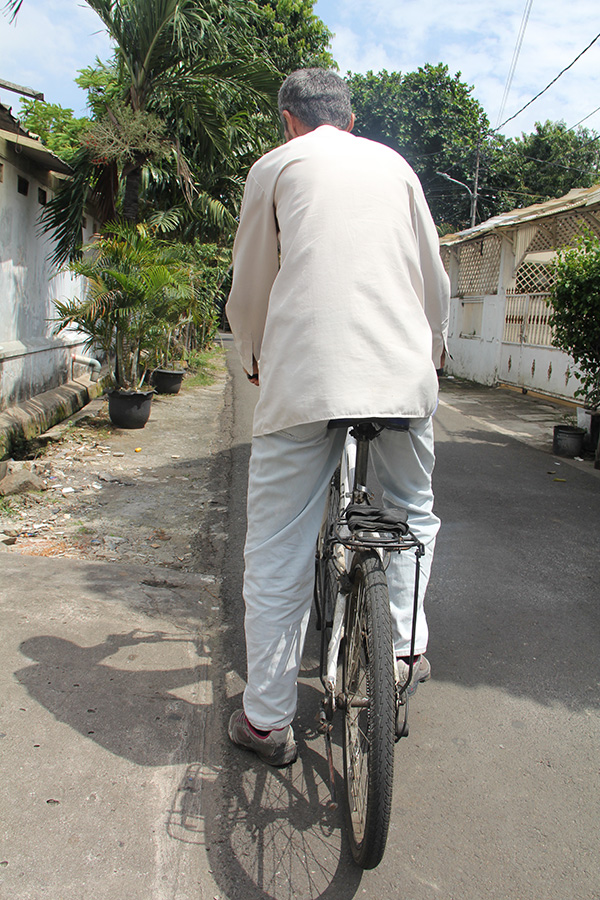
Muhammad on his bicycle in Jakarta. Photo: CWS


CWS helps to support hundreds of refugees and asylum seekers in Jakarta, including nearly 100 unaccompanied and separated children.

For refugees in Jakarta, English means independence

Muhammad* and his bicycle are a familiar sight around the CWS-UNHCR Refugee Center in Jakarta. Twice a week for the last two years the 56-year old has been attending English and computer classes at the Center – though most of his classmates are not older than 20. To save what little money he has, Muhammad rides his bike, about 45 minutes each way in crazy Jakarta traffic, to attend class.

Muhammad is from Ghazni Province in Afghanistan, where men associated with the Taliban insurgency are a constant menace that has left countless families devastated and separated from each other. In 2011 Muhammad was kidnapped by insurgents and held for several months before a guard helped him escape, after which he move to Helmand province for work with an American construction company. Sadly, but not surprisingly, death threats followed Muhammad in his new job and he decided that he had leave his homeland, just as two of his three sons had already done. One of his sons went to Iran and one to Turkey after their older brother, a truck driver, disappeared somewhere along the Herat and Kabul highway many years ago. Leaving his wife, daughters-in-law and four grandchildren behind to be supported mostly by a relative who lives in Pakistan, Muhammad arrived in Indonesia in 2012. He first settled outside Jakarta, but soon moved into the city to stay with Afghan friends who had been in Indonesia for some time and who helped him seek support from CWS and the UNHCR.

When he arrived in Indonesia, Muhammad spoke no English and had never used a computer. The language challenge made daily life, including visits to the health clinic, difficult. Muhammad found that he needed a friend to join and to translate, and he quickly felt uncomfortable having to rely on others. Some friends helped him freely, but others asked to be compensated with food, drinks and bus fare that Muhammad could not really afford. So Muhammad decided to learn English, which he knows will help him in the future if he is granted asylum in an English-speaking country, which is his hope. And, he knew that English could help him in Jakarta, too, since many clinic workers and others speak it at least a bit.

Proudly, Muhammad is making progress and he can go to the clinic or shopping on his own. Laughingly, he says, “Now I can ask for directions when I get lost with my bike!”

As for learning how to use a computer, which requires another “language” he did not know before, Muhammad has now become “fluent” enough to join Facebook and, amazingly, he can be in touch with friends and family back in Afghanistan – all the while building new knowledge and skills that he is sure will help him no matter what comes next.

*name changed to preserve anonymity 


Stories of Change


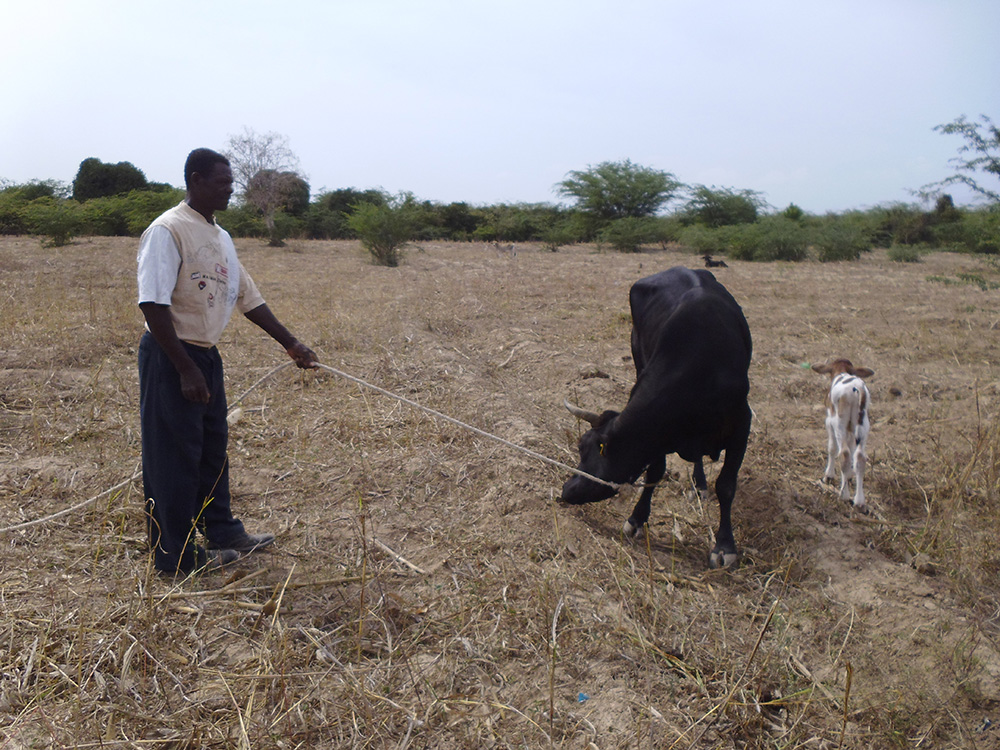
Decius Dorcelus with the mother cow and her calf. Photo: Samuel Paul / SSID


CWS and partners have distributed cows to 15 families in Boen and Ganthier, Haiti.

One animal changes many lives

As part of a CWS and ACT Alliance food security program in Boen and Ganthier, Haiti, some farmers receive goats or cows.

For these families in Haiti, a cow is a big investment and is often too expensive for the family to afford on their own. But cows are also a great source of extra income and better nutrition. Adding milk to a family’s diet means extra nutrition, and new calves that are born can be sold for additional income.

Decius Dorcelus was one of the farmers who received a cow. He and his wife, Mariterne Delima, are the parents of 11 children who live in Bosquet, which is part of the town of Ganthier. Decius had experience with taking care of cows before this program, but he wasn’t able to afford one on his own.

Decius was selected to receive a cow through the program, but like all recipients, the gift was conditional. He has to take good care of the animal, and once the mother cow had a calf, he would return the cow so that the same gift could be given to another family. The calf would be his.

Sure enough, Decius is living up to his word. He tells us, “I grow a lot of crops and with the remainders such as the straw of the corn and sorghum or sweet potatoes I take good care of my cow. My cow now has a calf and I milk the cow. Not every day, because I let the calf drink enough as well so that it can become strong.”

The cow is already making a difference for the whole family’s diets. Decius gets a gallon of milk when he milks the cow, and he makes sure his children are drinking milk. He reminded us, “The milk is good for children and also for adults because it gives us lots of vitamins.”

With the new calf, the impact of having a cow will continue for many years. In Decius’s words, “I had been working for a long time but it was difficult for me to buy a cow with my own money, but now I have a cow thanks to the program. That makes me very happy. I hope the program continues to help many other people in the community to also have a cow. Thank you very much.”


Stories of Change


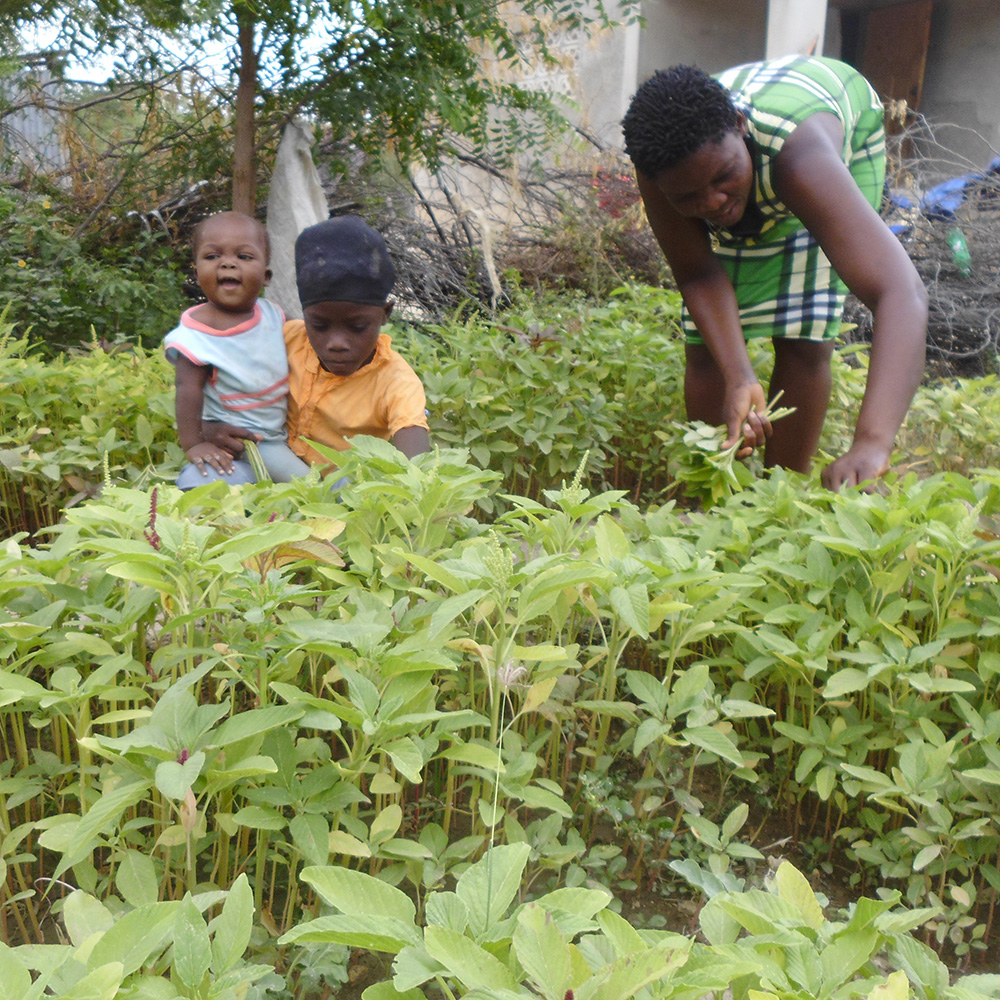
Ilene Leonard and her family in her garden. Photo: Samuel Paul / SSID


CWS and partners distributed more than 1,300 pounds of seeds to farmers in Boen and Ganthier, Haiti, in the second half of 2016.

Vegetable seeds: better nutrition and extra income in Haiti!

Shortly after the devastating Haiti earthquake in January 2010, CWS staff were driving into Port-au-Prince. They noticed families who had been displaced by the earthquake camped in informal settlements by the side of the road. After spending several hours talking to the families and assessing the situation, a new program was born. Since the quake, CWS and ACT Alliance partner SSID have been helping these families get back on their feet. This has meant partnering with families to build their new homes as well as programs to make food and water more accessible.

As part of this program, vegetable seeds were distributed in the second half of 2016 to 49 farmers in the region, and 58 farmers received technical assistance from an agronomist. Ilène Leonard is one of the farmers who received vegetable seeds. She is the mother of six children and lives in Balan, which is part of Ganthier.

In her words, “I am used to having a kitchen garden, even before this program started in Balan, but I have made it bigger now and I plant new things that I didn’t use to plant. I plant spinach, peppers, oregano, papaya and pigeon peas.”

Ilène participated in CWS-supported training sessions, where she learned some new ways to plant her vegetables or get higher yields. For example, she now uses tires to plant papaya, which is an excellent way to use a small space for vegetable production.

Her expanded vegetable garden means food for the family and a bit of extra income from selling the vegetables. She tells us, “I plant vegetables in the yard of my house so that I can get food to eat and to feed my children and also to sell a part to make some money to pay for school fees, uniforms, etc. What I like in this small garden is that it is a pot that I can tap daily; it helps me a lot. Thanks to this garden, if I need to buy food in the store on credit to give the children, I can get it on credit because everybody sees I have a garden that will provide me with some money.”

Ilène also shares the bounty from her garden with neighbors, and she told us that she hopes that more families will start gardens so they can also have more vegetables.


Stories of Change


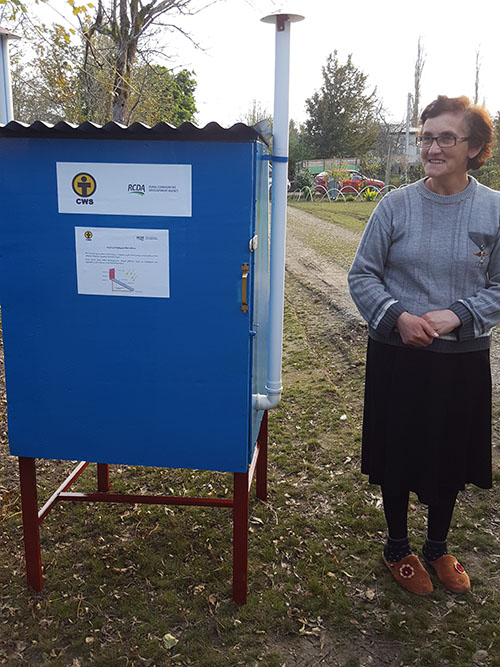
Marina Cirdava stands near the family's solar fruit dryer. Photo: Steve Weaver / CWS


CWS works with 550 families across Georgia to adopt the use of Renewable Energy Technologies.

Source: Renewable energy technologies: a win-win in Georgia

Lifting the heavy energy burden in Georgia

Conventional wisdom in the United States is that you shouldn’t pay more than about a third of your income on rent. For rural families in the nation of Georgia, it isn’t rent that is using up a third of income. It’s energy.

For these families trying to cover basic needs with meager incomes, paying for electricity and firewood is a heavy burden.

It’s not only a tough situation for families’ finances. It’s also hard on the environment. According to the head of CWS’s partner Agency, Rural Community Development Agency, wood is being extracted from Georgia’s forests at four times the sustainable rate. Deforestation is leading to landslides, erosion and a release of carbon dioxide, exacerbating climate change.

In the face of these challenges, CWS and RCDA are partnering with families like the Cirdavas in the village of Khoorga in the Khobi municipality of western Georgia to increase the use of renewable energy technologies in households. Three generations of the Cirdava family live together, including grandparents Marina and Malxazi, parents Zalina and Alika and children Tamuna, Tiniko and Saba.

The Cirdavas are a model family. Literally. They have worked with CWS and RCDA to install a series of renewable energy technologies into their house, which serves as a model for their community. These technologies include:

– A fuel efficient stove: The family was spending about $240 each year on firewood. (Keep in mind that in Georgia, the average household income is only about $3,000 annually.) According to Zalina, the new stove uses only 1/6 of the firewood as the old one, meaning that the cost for firewood has dropped to $40 annually. The stove provides a heat source for the home and has a compartment for baking bread, which, as our staff found out, is delicious.

– A solar collector for hot water: The family used to use an electric hot water heater, which they no longer have a need for. That means that the solar collector is saving the five percent of household income that was previously spent on electricity for the electric heater.

– A solar fruit dryer: This provides a new income stream for the family, who can dry large amounts of fruit and vegetables gathered from their farm and then sell them.

– A briquette making device: This makes briquettes from farm bio-mass waste. The briquettes can then be used in place of firewood in the wood stove, further reducing the family’s expenses and environmental footprint.

– An eco toilet: Eco composting toilets return human waste as fertilizer that can be used on the farm.

All of these technologies have a place in the home and are in use, but Zalina says her favorites are the stove and hot water solar collector. Like all technologies in this program, the pieces in the Cirdava home were made by local crafts people using locally sourced materials.

One objective of the CWS Renewable Energy Technologies program is to profile these technologies for wider adoption and use. The Cirdavas tell us that friends and neighbors have expressed interest in having these technologies in their own homes. Wide scale adoption of these technologies will lessen the pressure on forests, reduce use of conventional energy, provide valuable savings and generate new income streams for rural families and will build new industries of renewable energy technologies.


Stories of Change


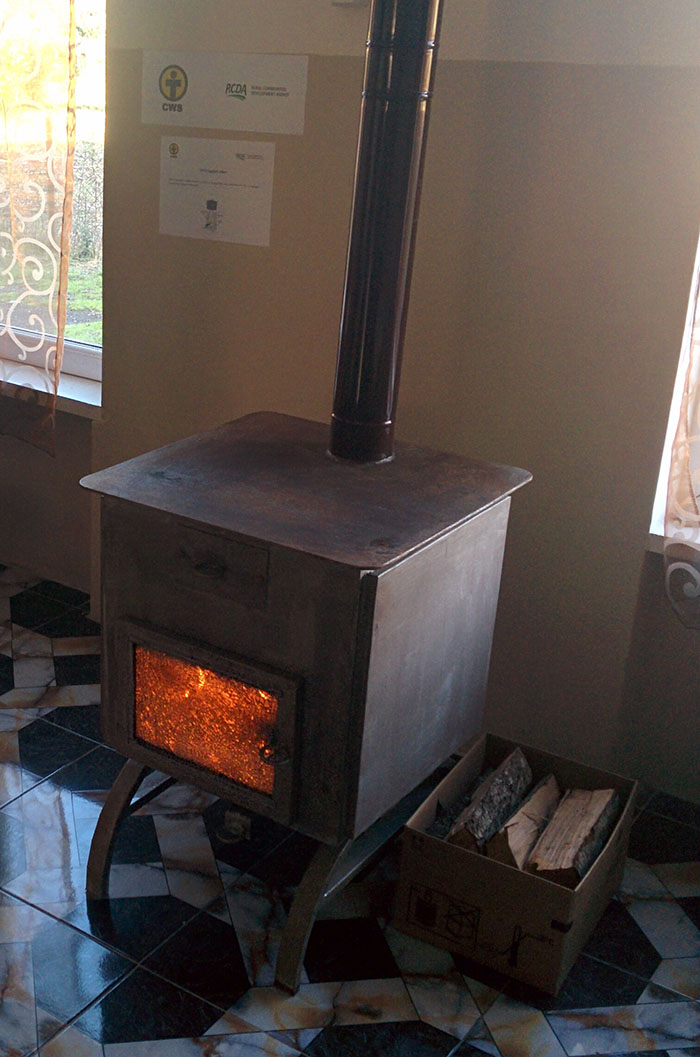
This is the new, efficient stove in the May 1 kindergarten in Pirveli Maisi, Khobi municipality, Georgia. It uses less wood than the older stoves and keeps the air healthier. Photo: Dragan Srekovic / CWS


CWS works with 550 families across Georgia to adopt the use of Renewable Energy Technologies

Source: "Renewable energy technologies: a win-win in Georgia"

Healthier students, healthier environment

Seventy students between two and six years old attend the kindergarten called May 1 in Pirveli Maisi village in the Khobi municipality of western Georgia. May 1 is one of the 29 kindergartens in Khobi. Like the others, May 1 struggles with issues with heating.

The kindergarten has been using inefficient stoves. Keeping the fires in the stoves going means that the school goes through a lot of firewood. If the air pressure is low or the wind blows the wrong way outside, the smoke from the stoves can fill the classroom. This leads to respiratory problems and other health concerns for both the students and staff.

Lela Kantaria is the Principal of the kindergarten. She attended a community gathering with CWS partner Rural Community Development Agency where she learned about a number of different technologies that are more sustainable. She asked for a fuel efficient stove to be installed in the kindergarten’s cafeteria.

The new stove was installed in September, and with the help of CWS and RCDA, all of the school’s stoves will soon be replaced with fuel efficient ones. That means new stoves for each of the three classrooms in addition to the one now in the cafeteria.

The new stoves can produce the same amount of heat with only half the wood! Having just the one stove has already meant an overall savings of 10 percent of the school’s wood consumption, and that will grow to 50 percent with the new stoves. Of course, it will also mean healthier students and healthier teachers!

Bonus: the new stoves are prettier than the old ones! They have glass windows, so now students can see and hear the fire crackling on cold days.

The market value of each stove is about $220 US. For less than $1,000, we can ensure that students at the May 1 kindergarten can focus on their education without worrying about their health.

Click here to learn more about the Renewable Energy Technologies program in Georgia.


Stories of Change


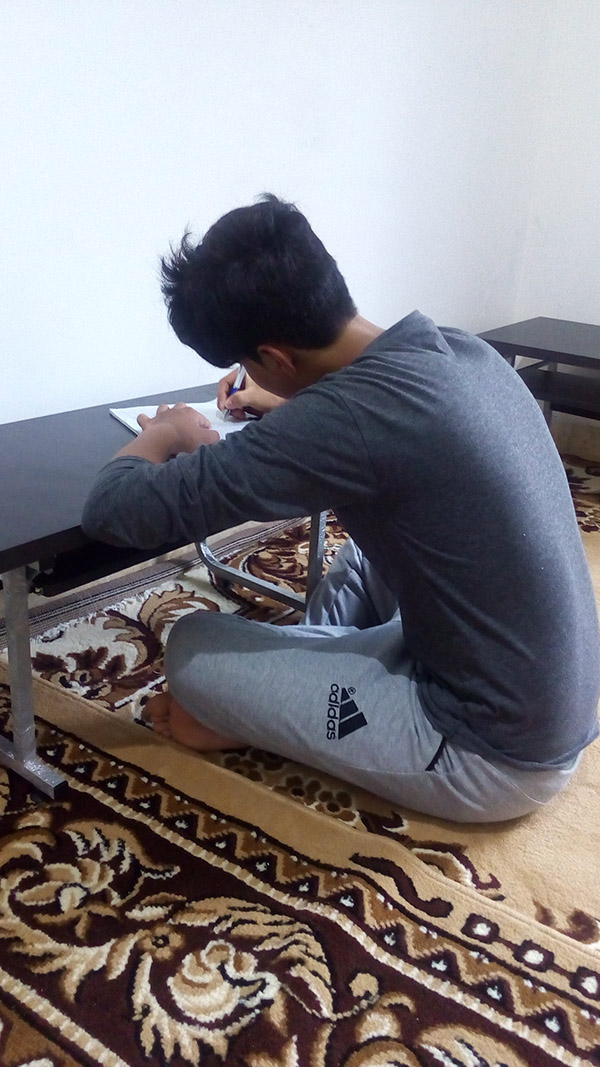
Maysam* in his new home in Jakarta. Photo: CWS


CWS supports about 500 refugees and asylum seekers in Jakarta.

With CWS support, hope in the midst of sadness

Sixteen-year-old Maysam is among the 35 teenage boys living in a new CWS-supported group home for unaccompanied and separated refugee children in Jakarta, Indonesia. Originally from a small town in Ghazni Province in southeastern Afghanistan, Maysam fled his home after a Taliban-affiliated group abducted his father, who was a shopkeeper.

“We had a good life. But one day, for a reason my family and I never understood, somebody put a bottle of wine in my father’s car; and, when men from the Taliban group found it, they accused my father of selling alcohol. They took him away and I haven’t heard from him since,” Maysam recalls.

Soon after the abduction, Maysam received a letter from someone claiming Taliban affiliation telling him to come to a meeting. Fearing for Maysam’s life, his grandfather decided to send him away in search of safety and, maybe, a better future.

Arriving alone in Indonesia by way of an established escape route to Malaysia, Maysam first lived Bogor, a town near Jakarta. After a year, financial support he had been receiving from his uncle stopped and Maysam found himself alone … and homeless.

“I was really alone and didn’t know what to do. I was afraid; I had no food and no friends. Then another refugee told me about UNHCR and how to register there as an asylum seeker,” he says.

Maysam now lives in a new group home that CWS supports in partnership with UNHCR, the UN Refugee Agency and U.S. Department of State: Bureau of Population, Refugees, and Migration. “I have a great feeling being here,” says Maysam. “With CWS support of food and shelter, and with many new friends, even though I am very sad to be separated from my family and homeland, my hope for the future is to be educated and to settle somewhere where I can live in peace.”

*name changed to protect his identity


Stories of Change


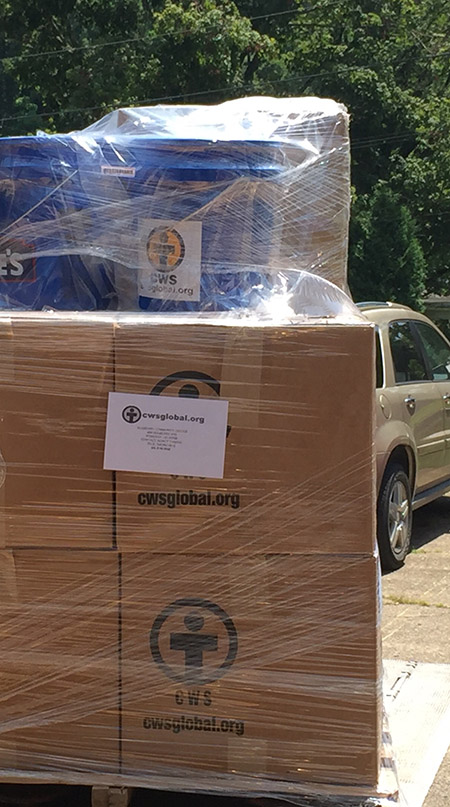
CWS Kits and Emergency Cleanup Buckets arrive in Pomeroy, Ohio. Photo: Matt Stevens / CWS


In the first half of 2016, CWS distributed 15,004 Hygiene Kits and 4,743 Emergency Cleanup Buckets in the United States.

Source: Jan-June 2016 CWS Kits and Blankets Report

CWS Cleanup Buckets & Kits provide hope in Ohio

Communities along the Ohio River often experience flooding during the spring and summer. Summer 2016 was no exception. Following heavy rains, the small town of Pomeroy, Ohio, once again was flooded. Basements of houses were flooded because of drainage problems. Several businesses around town temporally shut their doors. The Full Gospel Lighhouse Church was flooded due to their location at the bottom of a large hill.

Pomeroy is a generous community. Before the floods in their own community, they had shipped their last 13 cleanup buckets to their neighbors in West Virginia to help with the recovery efforts following flooding in that area. Now they didn’t have any supplies to start cleaning up in their own community.

Rev. David Maze, Chairman of the Festival of Sharing in Ohio, called Church World Service to request Cleanup Buckets for Pomeroy. For over 25 years, the Festival of Sharing in Ohio has assembled CWS Kits and shipped them to the Church of the Brethren Service in New Windsor, Maryland, to be used to respond to disasters.

“Many churches in this part of the state have been collecting kits for the Festival of Sharing for many years. It only seemed right that some of the cleanup buckets came right back here to Ohio,” said David.

Church World Service provided Cleanup Buckets to the Meigs Cooperative Parish in Pomeroy to assist with the cleanup efforts. The Meigs Co-op is sponsored by 23 congregations in Meigs County. They serve free lunches three days a week and offer summer reading programs for children, a community food pantry, a free laundromat and an emergency shelter with showers. They also teach family life skills and have a parish nurse.

Church World Service also provided School Kits for the Meigs Cooperative Parish to use for their Back to School Campaign. “We were able to provide 225 children with the supplies that they needed to start the new school year. That is the most children that we have ever been able to help at one time. We are thankful for the congregations that provided these school supplies for our children,” said Nancy Thoene, who oversees the programs at the Meigs Co-op.

In addition, Church World Service provided CWS Hygiene Kits that are distributed by the parish nurse and also at the food pantry for families in the community.

Dolores Will, a volunteer at the Meigs Co-op Ministry and a member of the New Beginnings United Methodist Church, was emotional when she heard that CWS was responding to the needs in her community. “Our church does so much to support the work of Church World Service. We are a small church, but we love CWS. We make kits for the Festival of Sharing each fall and we host a Blanket Sunday each February. It’s beautiful that you are giving back to our community. We really need the help,” she said.

In the words of Nancy Thoene, “We need to give people hope. We need to give them a hand up. Sometimes that’s all that needs to happen to make a difference in the lives of people.”


Stories of Change


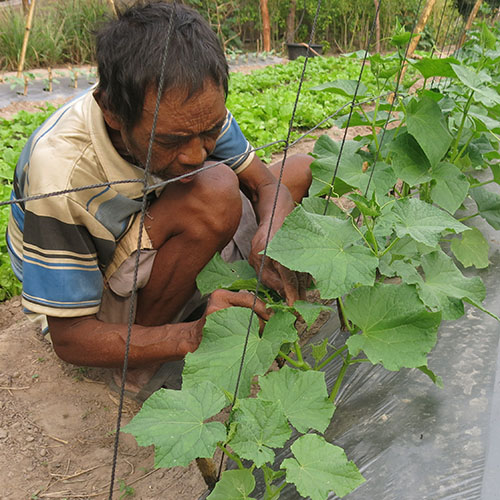
Sim growing vegetables using a drip technique. Photo: CWS


795 million people worldwide face hunger.

Source: World Food Programme

Seeds, tools, training and initiative: a recipe for success!

Chann Sim, 61, lives with his wife Ek Mon, 55, and their three children in Choam Ksant village in northern Cambodia. Sim owns a third of an acre of land for the family’s house and home gardening and another 2.5 acres where Sim plants rice. He can only plant once a year because of chronic drought. In the past, he used traditional, labor intensive methods and poor local seedlings that, unfortunately, did not produce enough food for his family.

Often the rice harvested would only last six months. In order to make up for the food shortage, Sim would go to the forest to collect wild fruit, mushrooms, bamboo shoots and wild cassava. This was incredibly risky, though, because there are still lingering landmines in the forest from decades ago. To meet his family’s food needs, Sim would also earn extra income as a wage laborer planting others’ cassava.

Some years ago, when CWS had the opportunity to partner with families in his village, Sim joined the food security project as a Household Partner. He received some vegetable seeds and farming tools . He also gained valuable knowledge and training on how to grow vegetables in the face of changing climates and about chicken- and catfish-raising and mushroom growing.

Through the years, Sim has taken the initiative to learn how to improve his farm. Using his new knowledge and changed farming practice, and with material help from CWS, Sim has turned his family’s life around. In addition to fish and poultry, Sim has expanded his home garden to include several kinds of gourds, chili, eggplant, long bean, papaya, cucumber and banana. Now, with help from his wife and grown daughters, he earns just a bit more than $1,000 in a year, and he has enough to feed his family from his own farm.

Sim is now sharing his knowledge and experiences related to farming management with others in his village. He recently said, “I am so thankful to CWS for the support; I have gained new knowledge and skills in diversified agriculture and I have been able to increase my production. I am confident to work on my farm; and I am glad I do not have to sell my labor. Ownership is better than working for others for a daily wage!”