Stories of Change


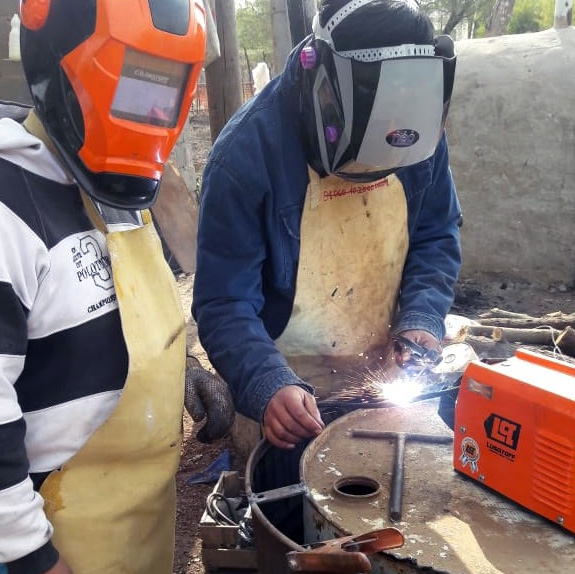
Metalworking at the workshop.

Welding a brighter future in a remote part of Argentina

Only about 150 families live in the Independencia neighborhood of Argentina’s remote La Banda municipality. Everyone here faces a number of challenges, but young people are particularly feeling the weight of unemployment and not having training courses or ways to build skills. That’s why a group of young people took matters into their own hands in 2017.

With help from some of their neighbors and the municipal government, they started a garden and a place to make and sell concrete blocks. The income from these activities support a metalworking workshop that offers work and training to young people.

But they didn’t stop there. In 2018, the group applied for a Communities in Action grant. CWS and our partner CREAS offer these grants to groups in Argentina and Bolivia like the one in Indepedencia. We look for programs that are helping women or youth as well as their larger community. Their proposal was accepted, and they received the grant of 50,000 Argentine pesos (just over $1,100).

The group members used the grant to purchase new equipment, increase the training that they offer and market their products. “We had a few tools, and with this grant we acquired some key elements to make our activities more productive,” says Janvier Villanueva, a 29-year-old workshop member. “We streamlined tasks and improved working conditions by buying protective equipment like masks and gloves.”

They used the money to help train other young people in the neighborhood, too. “We carried out four training sessions on metal mechanics and assembling blocks for schools in the area,” Janvier says. “We also trained women who are responsible for community kitchens and the secondary school on how to produce ecological ovens.”

Abigail, 24, is a mechanical metal technician and is studying social work. She’s one of three female members of the workshop and affirms how important the workshop is to the community. “The dynamics of the workshop mobilized the neighborhood,” she says. “Now they know us everywhere. Communities in Action was the impetus we needed to grow and improve. The guidance and economic support that this program gave us helped us a lot to direct the proposal.”

In July, the team had a tent to sell their products at a major artisan fair in a nearby city. “We feel privileged to participate in this fair,” says Jorge, another workshop member. “It is an important opportunity because we can offer our own products and make ourselves known.”

In addition to the workshop members, another four young people have received training at the workshop and gone on to find other works. Each one now has a salary, and they say that their time at the workshop helped prepare them for their careers.


Stories of Change


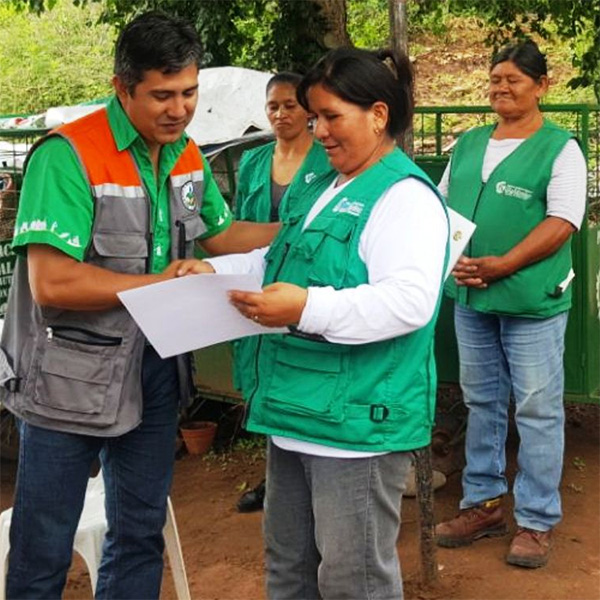
The women receive their Communities in Action grant.

Taking care of their families by cleaning up their neighborhoods

Fifteen women walk the streets of Villamontes, Bolivia, early in the morning. They spend about five hours each day collecting and separating recyclables from nine neighborhoods in the center of the municipality. Each month they collect about seven tons of plastic, glass and cardboard; that’s an average of more than 450 pounds per day. This program helps the women earn an income for their families.

One of them is Getrudis Plata Oliviera. She’s 46 and a single mother of four children. She was worried about how to support her family, and she was also concerned about the problem of garbage in Villamontes. Getrudis became the leader of the Chañat neighborhood board in 2013. She was among the women who formed a group dedicated to environmental education of residents and getting asphalt on streets. “In 2015, the mayor of Villamontes called the neighborhood councils to see who could do something to address the municipal waste,” Getrudis says. “This group of women organized ourselves to help.”

Getrudis and her team trained 60 women from Villamontes in solid waste recycling. “We saw that we were capable of making it a business,” Getrudis says. “Fifteen of these women continue to collect and separate waste, and now we are entrepreneurs for recycling in Villamontes.” The women convinced the municipality’s regional sub-government to lend them a baler to compress the plastics, and they also got a piece of land in Chañat three years ago for a collection center.

CWS teamed up with the women in 2017. The entrepreneurs applied for a Communities in Action grant, which CWS and our partner CREAS offer to groups like theirs that support families and benefit the common good. Their proposal asked for help improving and strengthening their collection center.

“The biggest problem we faced was the lack of security,” Getrudis says. “We had to take care of the wrapping machine and make sure that strangers did not come in and steal or make a mess of the collected waste. With the help of Communities in Action, we closed the old center, and now we have a safer place where we can work together in peace. This place is like our house—we spend a lot of time here cleaning and selecting waste.”

“We no longer have to take turns standing guard at night,” says vice president of the initiative Silvina Ramos. The women no longer have to worry that someone might get in and cause trouble, nor about one another’s safety and integrity.

CWS and CREAS recognized the innovative work that these women are doing, and we want to help encourage similar initiatives in other cities in the Bolivian Chaco. That’s why the women also got a Communities in Action grant in 2018. This grant is for improving the hygienic conditions in the collection center and for helping the women get a legally-recognized status for the center. This status will help them enter other programs and initiatives.

“Since we have started working, we have seen the amount of garbage in the streets get reduced by 80 percent,” says Getrudis. We are proud to support these women and this program, which helps them support their families and means a healthier, cleaner environment for all their neighbors.


Stories of Change


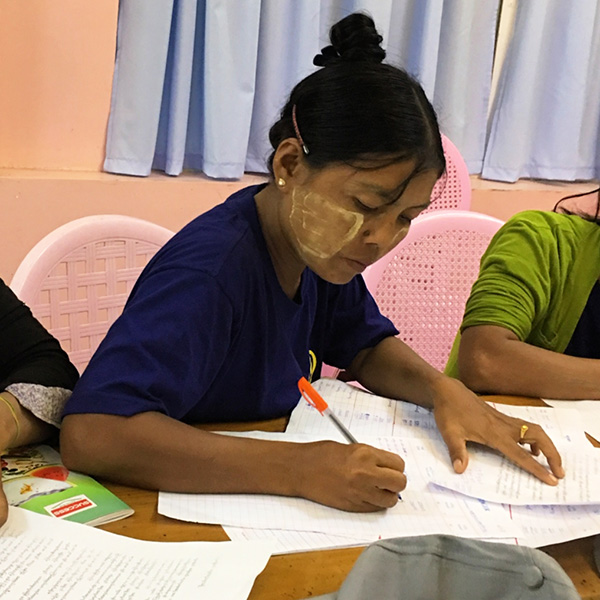
Ma Zaw says that the bookkeeping class that she took was most helpful in growing her family's small business.

“The path to the door of opportunity”

Ei Moor Zaw and family live in Sit Kone village, a few hours’ drive west of Yangon in Myanmar. Ma Zaw is 24 and has a 4-year-old son named Mg Hla Yaung Lin. Her husband, Pyone Min Paing, own 1.5 acres of corn fields. In the dry season, Ko Paing earns extra income as a skilled mason. Ma Zaw takes care of Mg Lin and works in the corn field. “Combined with Ko Paing’s wages, this gives us about 550 MMK in yearly income,” Ma Zaw explains. That’s about $330, “which is hardly enough to pay for our family’s basic needs, especially a healthy diet for Mg Lin.”

That’s why Ma Zaw joined a CWS nutrition education program. She joined every session in order to find ways to improve Mg Lin’s diet and health. Between the information sessions and talking to other moms, Ma Zaw learned a lot of new information and new ideas. Then she and the other graduates of the sessions received vegetable seeds and chickens. They could use what they learned to plant new gardens or expand their current vegetable gardens, meaning more food to eat and sell. The same thing was true of the chickens – they can sell eggs and chickens, or use them to add protein to their family’s diet. “So far I have used vegetables and chicken eggs at home to make more nutritious meals for my son,” Ma Zaw says.

After finishing the sessions about nutrition, Ma Zaw joined a self-help group. She and her neighbors work together to save money, which they loan out at affordable rates to members. Ma Zaw joined a class for women in her community about writing business proposals. She wrote and submitted a proposal to the group for a loan of $100. She received the grant, which she used to invest in her corn growing. She bought more seeds and fertilizer so that she could grow more corn and earn more money for her family. Within just four months, she had made an extra $75 in profit!

One final way – for now – that Ma Zaw is teaming up with CWS is that she has become a Mother-Leader. This means that she shares what she has learned and the tips and tricks she has picked up along the way with other moms who are in similar situations. “I appreciate CWS showing me the path to the door of opportunity,” Ma Zaw says. “It gives me confidence and hope to continue my work and share it with others.”


Stories of Change


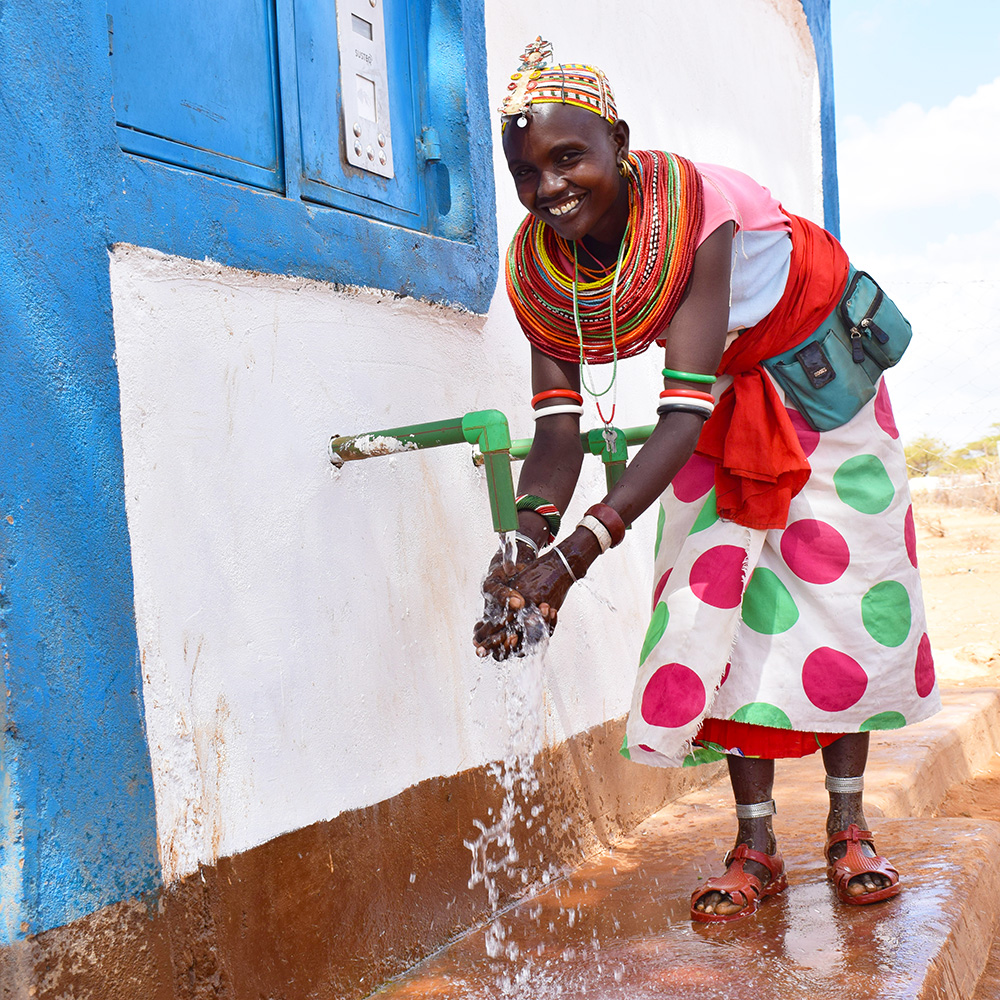
Pandasin Orguba, one of Namanu's neighbors, at the water kiosk in Merille.

Water for LIFE in an arid region of Kenya

Think about the running track at your local high school. One lap is about 400 meters. Imagine having to walk around that track 50 times (!!) every day in order to get clean water. Plus, if you want to wash your clothes, you need to carry your laundry for 50 laps, too.

Now imagine only having to walk a little more than one lap.

Didn’t you relax a little bit just thinking about it?

You just got a taste of the relief that Namanu Macharia and her neighbors have experienced thanks to a new water kiosk in their community. Namanu lives in Merille, in Kenya’s Marsabit County. Water scarcity is a huge problem here. Getting water is a crippling daily challenge, especially for the women and children who are responsible for walking long distances in search of streams and ponds. Even when they find the precious water sources, what they are bringing home is actually contaminated water. It can make their families sick. Between the sickness and the sheer time it took every day to find water, families here were caught in a vicious cycle of increasing hunger and poverty.

That’s why the CWS Water for Life program focused on Merille. We helped our partners and the community to drill a borehole well and install a water system. Here’s how it works:

The new borehole is about 400 feet deep. More than 2,200 gallons of water are pumped out every hour using solar power. The water goes through a tank and eventually into a water kiosk. Some of the water goes through a purification process, which is also powered by solar energy. The kiosk has two taps: one is for purified water for cooking and drinking, and one is for water that is not purified and can be used for washing clothes or for livestock.

Water kiosks function like small shops, where people pay a modest fee for clean water. That money covers the operating costs of the water system, guaranteeing that there will be resources to maintain and fix it as needed (and thus that it will be around for a long time to come!). Usually that means that someone works in the kiosk, but not this time. This system is powered by an ATM machine that dispenses water. People load “water tokens” onto debit cards, and then they can get water whenever they want to.

Namanu is one of about 2,850 people who benefit from having the water kiosk in their community. In addition to families’s homes, the water kiosk serves two schools, a health center and the local livestock market. More than 4,800 people rely on that health center, and you can imagine how critical it is for a health center to have clean water.

Namanu gets her water in five-gallon containers. She rolls them home, which is now only a third of a mile from the water kiosk (she was walking 12 miles per day before). “I can leave my food cooking, fetch water and be back on time,” she says. “The water kiosk is a brilliant idea because it is self-service, and there’s no need to have an attendant at the kiosk.”

The new water system in Merille is a huge step forward in the fight against hunger and poverty in the area. For Namanu and thousands of her neighbors, it means freedom and peace of mind. It means that they can spend their time on things besides searching for water. And it means that the comfort of knowing that their family won’t get sick from the water they do bring home.


Stories of Change


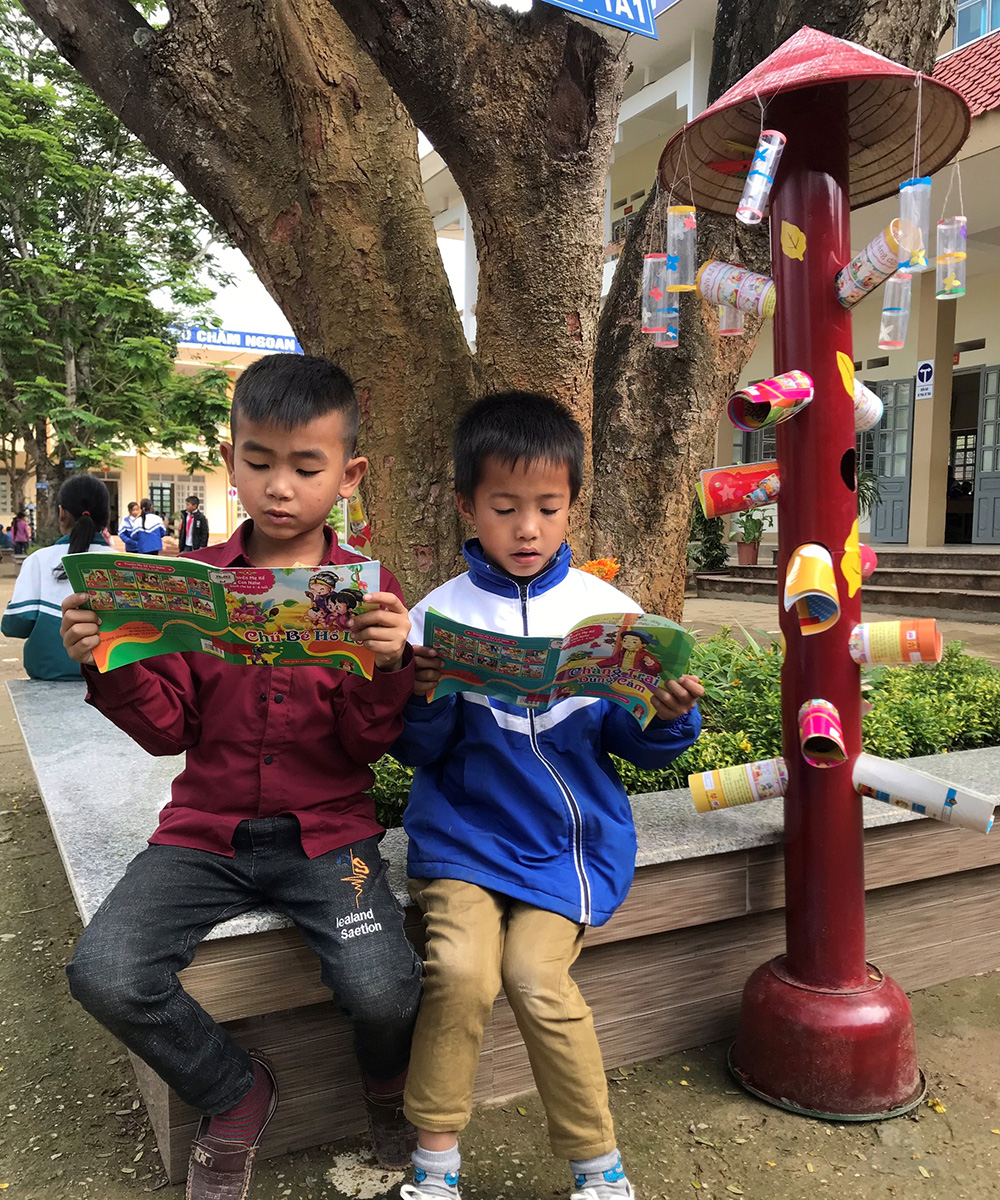
Students reading at an outdoor library in Vietnam.

A new library makes reading more fun in Vietnam

With just under 300 students, Muong Kim #1 is one of the larger primary schools in its commune in Vietnam. So when I visited the school about 18 months ago, I was interested in seeing the library. To my disappointment, I was taken to a tiny room stuffed with books and supplies. It was more of a storage closet than a library. Plus, I found out that no reading activities were being organized for the students.

After that visit, my colleagues and I suggested that the faculty of Muong Kim #1 consider an outdoor library. Lots of people asked, “An outdoor library? What does that look like?”

Well, if you were to visit Muong Kim #1 today, you would see storybooks placed neatly on small, colorful shelves under the canopy of the school yard trees. Students are sitting here and there around the yard. They’re reading.

One student, Hoang Mai Chi, told us, “I was one of the 10 students who joined the student group to help our teacher, who is also the librarian. My duty is to take books from library room in the building each school day and place them on the shelves for my friends to read. Then, I return the books to the library store room at the end of the day. I see that my schoolmates like reading in the yard because it has nice breezes and is more comfortable than being in a stuffy room.”

Thanks to the success of the open-air library and our team’s other work to promote child-friendly libraries, the district’s Department of Education has decided to create a new indoor library at the school! It is much larger than the store room that I saw 18 months ago. It has lots of books, and games, too!

“I like playing a traditional game, Ô ăn quan [Mandarin Square Capturing] and reading comic books,” the student on duty as a library aid told me. Hoang Mai Chi told me that she likes guiding young students to find books, reading the books aloud to younger students who aren’t at the needed reading level yet for that story, and helping the library teacher continue to make the library more beautiful. “I also hope our library will have more games and new books,” she adds.

Our team is so proud of all the ways we’ve been able to promote reading both for learning and for fun in Vietnam!

Story told by Nguyen Thi Hai Yen, CWS Vietnam Program Officer.


Stories of Change


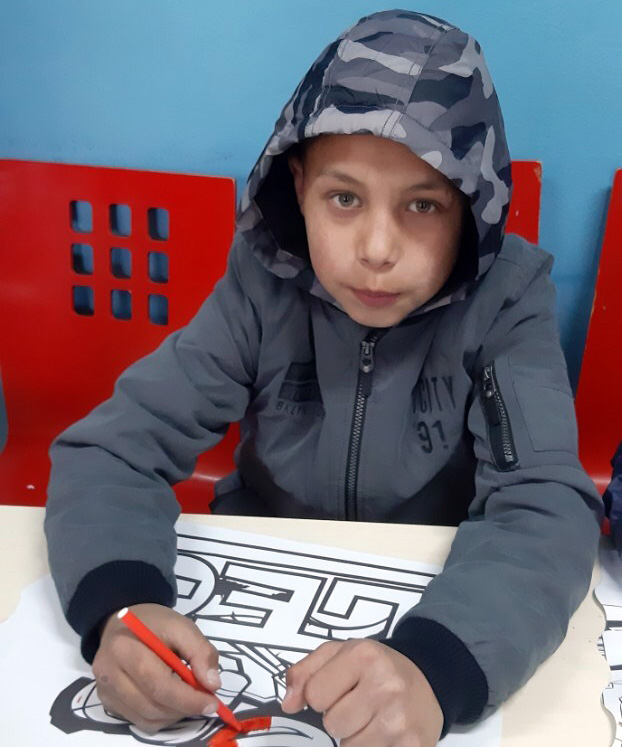
Haserat Beriša. Photo courtesy Center for Youth Integration.

Love overcame fear for Haserat’s family

During a recent visit to an informal Roma settlement in Belgrade, we stopped in to see the Beriša family. They’ve invited us to their modest home and want to show us how they’ve cleaned and decorated it to welcome home their son Haserat, who is coming out of the hospital. Everybody’s in a great mood and very excited about his return home.

For the Berišas and their neighbors, going to the hospital was unacceptable and scary only a couple of months ago. Now it had become a regular activity. Here’s what happened:

After many years of trying to organize a full medical exam and scheduling a heart surgery for the boy, we’re finally only one step away from our goal. There were many obstacles during this process, like incomplete medical documentation and ups and downs in his parent’s motivation to accept this surgery.

Now it is all behind us. The willpower for living and recovery was stronger than the fear of a fatal outcome from the surgery.

CWS supports two Drop-In Shelters for Roma children like Hasaret. The shelters are a safe place where children can play, study, eat, bathe and get clean clothes. The shelter teams also help the children’s families access social services like schools and healthcare. A professional team of shelter staff did all that they could to make this surgery possible and to create a better tomorrow.

In cooperation with the nurse and medical team, the outreach team has organized all the necessary exams before Hasaret’s surgery. They scheduled his admission to the hospital. A teacher and a psychologist have talked to Hasaret’s parents about further plans and needed appointments for a successful surgery and healing. His parents’ motivation was falling as they learned more about the risks and details of the surgery. However, the medical staff were so supportive from the beginning to the end. They kept in close contact with Haserat’s parents every day to keep them informed and comfort them about the process.

Haserat’s surgery was a success. He had to stay in the hospital for awhile to recover. During his hospital stay, the shelter team provided hygiene products and clean clothing for Haserat and arranging visits from his family. Over time, his parents were able to arrange their own visits. They became motivated to help Haserat realize how important his recovery in the hospital was.

Love and care overcame the fear of the unknown that had loomed large. It wouldn’t have happened without the team’s thorough and urgent work.

After all of that, the best moment was when Haserat’s mom sad, “I can find peace now knowing he is healthy.”


Stories of Change


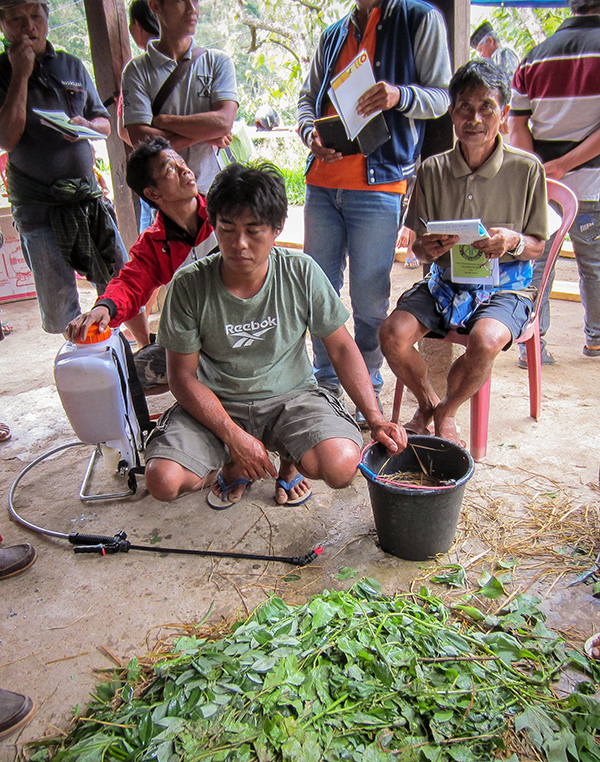
Buttutasik, seated, joins a workshop about making organic fertilizer.

Climate change is real: helping Indonesian farmers understand and adapt to climate change

“The weather is unpredictable now,” says Buttutasik, a farmer in his 50s in Bau village in South Sulawesi, Indonesia.

“This leaves us feeling confused: some of us continue planting our seeds, knowing we are risking crop failure from weather change and pestilence; others of us are reluctant to plant at all for fear of losing our crops,” he noted. Buttutasik is the chair of the Harapan Lembang Bau farmers’ group in his community. “What we need the most is information about the changing weather patterns, and [modern] weather forecasts to guide our decisions on whether to plant or not. We never had such information – until we joined DREAM,” he says.

Buttutasik is right to highlight unpredictable weather changes in Indonesia. In fact, erratic weather has put farmers nationwide in a difficult position. Our team keeps hearing from farmers that they are no longer able to understand and predict weather patterns using local wisdom. That led CWS and a local partner, Pusbinlat Motivator – a DREAM team of sorts – to launch an initiative to help farmers access information and technology to help them understand the effects of climate change and changing weather patterns.

Importantly, DREAM is helping them adapt. In explaining how the project is working for him and his group, Buttutasik says, “I joined the land conservation training workshop, where we learned how to observe weather patterns properly; how to use information from agricultural extension workers effectively, and how to use modern gauges to measure rainfall. All this information can help us plan for the next planting season, including what crops to grow.”

“We also learned how to make and use organic fertilizer and an organic pest control mix to help maximize crop quality and replace chemical pesticides,” he added.

As the group chairman, Buttutasik is responsible for 24 members; as such, he says he grateful to join DREAM education and training activities adding, “Even though I am already 54 years old, I am not too old to learn new things and help improve [my own and my group members’ lives]. We hope that we can improve our living standards with our new knowledge; that we can become part of a community that maintains and preserves our land and water; and that we can raise awareness in our own community, Bau, about the benefits of organic fertilizers and pesticides.”

This initiative is made possible in part by generous support from Act for Peace.


Stories of Change


Sher Ka Myee in her shop.

Rethinking rations for refugees along the Thailand-Myanmar border

Sher Ka Myee’s shop looks like many grocery shops or convenience stores around the world. She sells lots of different foods, including eggs, oil, chicken, pork, fish, vegetables and several types of rice. She sells bottled water and other drinks, as well household items like shampoo and soap.

She has owned this shop for a decade now, but recently there have been some big changes in how she does business.

Sher Ka Myee’s shop is inside Ban Don Yang Refugee Camp in Thailand. Ban Don Yang is home to about 2,000 refugees from Myanmar, most of whom fled their homes in Myanmar in the late 1990s amidst violence and internal conflict. It is the smallest of the nine camps along the Thailand-Myanmar border, where more than 85,000 refugees live.

The big change for Sher Ka Myee’s shop has to do with the way that the people in the camp get their food. Until recently, Ban Don Yang had a physical ration system. Each person waited in line each month to receive a set amount of basic foodstuffs – rice, cooking oil and pulses – from a large warehouse.

Now, more and more refugee camps around the world are switching to a debit system that uses shops like Sher Ka Myee’s to replace the warehouse ration system. Ban Don Yang made the switch a couple of months ago, and the other camps along the border are also transitioning.

Since the change, rather than receiving food rations each month, people now get a debit card with a certain amount of credit on it to use in a couple of shops in the camp. The credit covers as many as 30 food items in the shop, so it gives people something they haven’t had in a long time: choice about what THEY want to eat. Maybe they want to eat chicken this week, and pork next week. Everyone can do that now – not just the people who could previously afford to buy meat in addition to their rations. Or they can switch between different types of rice, or have more vegetables one week than the next.

Sher Ka Myee had her shop long before the debit card system took effect, but now she’s one of a couple of official ration retailers in Ban Don Yang. She says that people are buying more meat now, including chicken, pork and fish. Another of the shop owners said that when the debit card system took effect, she sold out in one day. People were used to getting all of their rations at once, so they did the same thing in her shop – they stocked up on the first day that they had their credit. Over time, people realized that they could come back to the shop whenever they want, so they didn’t have to buy everything in a day. That’s another way that the new debit card system gives people more choice; in addition of a choice of what to buy, they can also choose when to shop.

The refugees living in Ban Don Yang have lost so much: their homes, the land where they lived and farmed, and, in many ways, their freedom. This debit card system is one way to help restore some of that lost freedom and allow people to take control of an important part of their lives: what they eat.

We are proud to support The Border Consortium, which is the main provider of food, cooking fuel, shelter and many other forms of support to refugees in all nine camps along the Thailand-Myanmar border.


Stories of Change


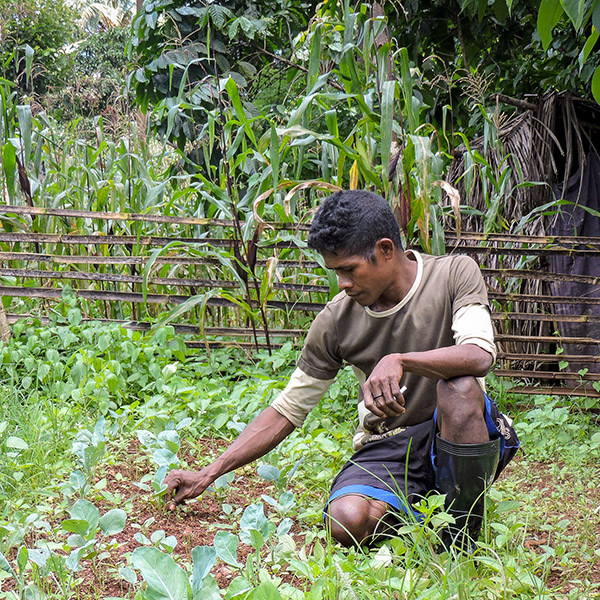
Paulinho weeds his group's garden.

A new partnership grows in Timor-Leste

Like most of his neighbors, Paulinho Martinez makes a living by farming and raising animals. Traditionally, he has raised his animals in the rainy season and focused on farming in the dry season. “In the past, the May to November dry season has been my time to hustle,” he says. “I would start selling the animals I raised during the rainy season, and I started planting the vegetables I knew would get a good price at market.”

Since it was the dry season, it wasn’t a time when the rain would keep Paulinho’s crops watered. “I had to haul the water to irrigate the vegetables from quite far away,” he says.

When the CWS Timor Zero Hunger program came to his community recently, Paulinho seized the opportunity to improve the way he farms. “I have learned so much from CWS staff about more modern farming techniques than I have used in the past, including why and how to plant a more diverse crop, and working with plants during the rainy season,” he says. As part of the program, Paulinho is now leading two Farmer Groups. He and his neighbors have teamed up to start communal gardens, experimenting with growing new types of vegetables in new ways.

“I am grateful for the experience to lead these groups; it is a big responsibility for me,” Paulinho says. “I am glad I get to share this information with others. I want to do well for my community; but, sometimes, when we face problems, it is hard for me not to get stressed about it.”

When we asked him what types of problems the group is facing, he took our team into one group’s communal garden. At the moment it’s lush with rainy season produce: tomatoes, bitter gourd, morning glory, corn and pumpkins. But over by the edge of the garden, Paulinho stops and points out the problem. It’s a row of half-dead vegetable seedlings. It was supposed to be a row of healthy Asian cabbage.

As Paulinho looks solemnly at the cabbage, he explains, “This was our first time planting Asian cabbage, and we are sad it didn’t grow. But we have figured out that it didn’t grow because of the land.” He grabs a stick and starts turning the soil around one seedling to show that it is now thick mud. For this vegetable to grow, “the land must hold moisture; but, in this plot, the water doesn’t absorb well. So, we have decided to wait until dry season to add compost to improve the soil and plant the remaining seeds and expect some success.”

As we chatted with him near the garden, Paulinho told our team that the Farmers Group didn’t plant all of the seeds that they received from CWS. There’s a real strategy here, and it reflects the fact that CWS is the first outside support many villages in this area have received. The group is cautious and manages their resources carefully. “We didn’t plant all of our new seeds because we wanted to test the new varieties along with some new farming practices,” he explains. The group doesn’t want to completely rely on outside help. Paulinho says, “We remembered that we know how to stand on our own. And, we thought it was important for us to save some seeds, which we did.” Now, in addition to planting the Asian cabbage seeds in better soil next year, the group wants to learn how to save seeds from the vegetables they already grow. Their plan will help them continue to get by, and maybe even better than that – with a little help from some friends.


Stories of Change


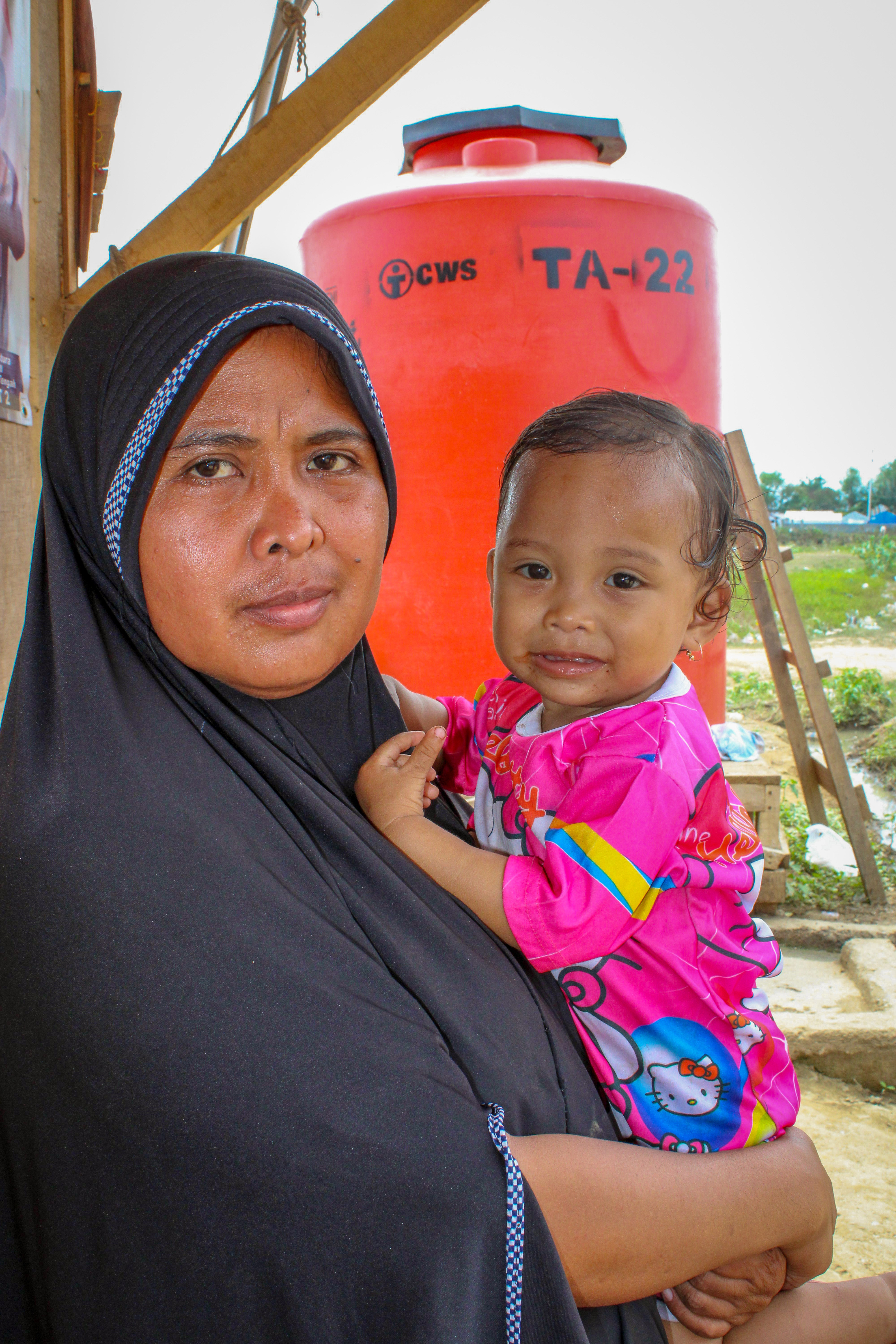
Agustin and her daughter in front of the CWS water tank that they use.

For a community to recover, women must be heard.

When a powerful disaster happens, many of it’s horrific effects are visible. When the 7.4-magnitude earthquake and tsunami struck Palu, Indonesia late last year, a lot of the damage was obvious. Roads warped, and houses collapsed as the ground shook and split.

Some of the effects are a lot more subtle. One of these is how much harder things can get for women in particular when they find themselves living in temporary camps.

In communities where women are primarily responsible for housework and caring for children, losing houses and infrastructure like water and sanitation systems makes things that much harder. It takes more work to keep families relatively safe and healthy. This is a burden that mostly falls on women. And when people end up scattered in tents and plastic tarps tied to the sides of buildings, a lot of the social network and person-to-person support systems are frayed. Women tend to stick closer to home and become more reliant on their husbands and sons for information and assistance. This adds extra stress to a situation that is already very stressful.

Because of this tough reality, our emergency response team has been intentional about making sure women are heard. We work alongside other organizations and the government to include women in decision-making about issues that affect everyone, like water and sanitation. Agustin is one of these women. She promotes women’s and girls’ perspectives and is now the community coordinator for the temporary shelter area where she lives.

“As community coordinator, I monitor the shelter area and make sure to meet with everyone, talk with them about their ideas and concerns, and make sure they feel that the shelter area is safe,” Agustin says. “I also meet with people to help make sure that our rights are protected. Right now, we are working with the government to try and get compensation for our damaged houses. I really like my work as a community coordinator, but some-times I feel bad for the people I work with. For example, when people have specific needs that I try to get local government workers to help with, but I can’t succeed in getting the help, I feel I am not doing my job well.”

There’s another important aspect to working with people like Agustin: including the voices of people affected by the disaster means that we can help provide the types of support that are truly needed. Agustin is one of more than 110,000 people who lost their homes in the earthquake and tsunami, so she knows first-hand what affected families are going through. She’s going through them, too. And she can ask people exactly what they need.

Through the perseverance of women like Agustin, we can meet basic needs and uphold essential rights. “By working as a community coordinator, I can help my neighbors raise their voices, so our basic needs are met,” she says. When the basics are taken care of, and people get back on their feet, everyone can start concentrating on other things. For example, Agustin is now helping people find jobs.

As Agustin and other community leaders continue their individual work, CWS continues to distribute about 62,000 gallons of water each day to more than 10,000 people using our fleet of 12 tanker trucks to reach 53 locations. People from over 2,800 families come to collect water as well as information about how to ensure its safety for cooking and drinking. In addition, we’ve built 22 four-stall public bathrooms in two districts and continue to provide emergency shelter kits and household items to those with continuing needs.