Stories of Change


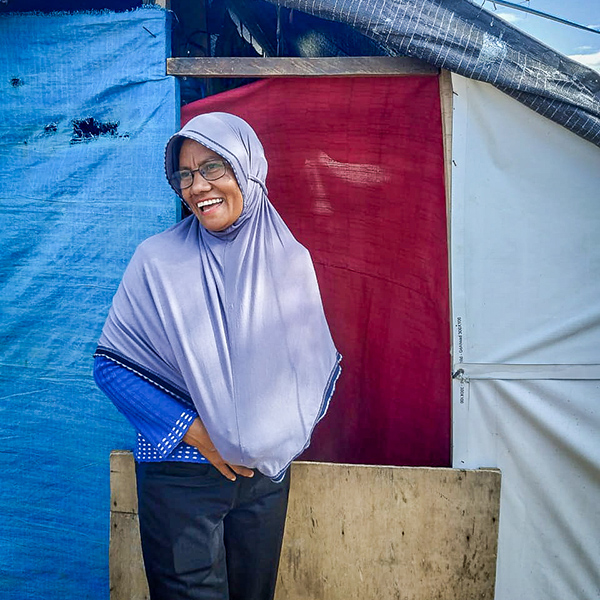
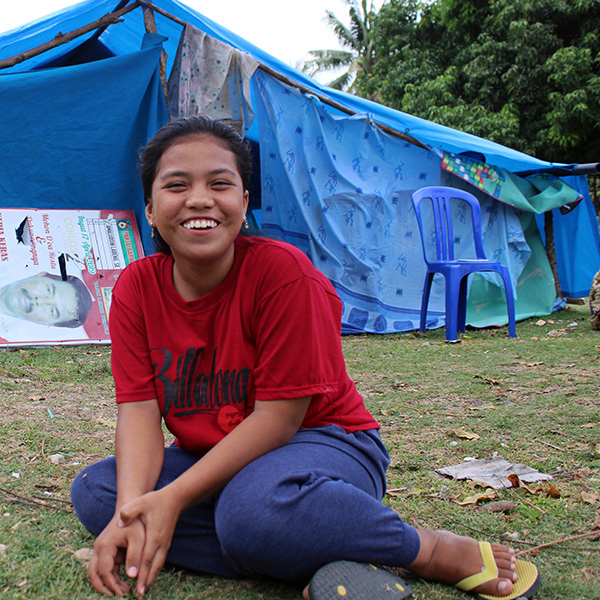
Tanti sits in front of her family's shelter.

The weight of water

“I remember hugging my mom and running from our house when the earthquake hit,” says 16-year-old Rahmayanti. Tanti, as her friends call her, lives in Central Sulawesi, Indonesia. That day last September changed her life–and the lives of hundreds of thousands of her neighbors.

Tanti says the the hours and days after the earthquake (and resulting tsunamis) went by in a jumble of actions, reactions and emotions. One thing she does remember, though, is that her town’s water system was destroyed. “My aunt had a well in the village down the hill, but it dried up because so many people were using it,” she says.

So, with no water, Tanti began a grueling daily ritual that is all too familiar to many women and girls around the world. Rising before the sun each morning, she would walk about a kilometer to the closest water source. Then she would trudge back to her family’s makeshift shelter with two five-liter jerry cans of water in her hands. That was more than 20 pounds that she had to carry. Once or twice more later in the day, she would repeat the process to make sure that her family had enough water for drinking, cooking and bathing.

Water delivery has been one of the primary ways that CWS has stepped in to help families like Tanti’s in Central Sulawesi. More than six months after the disasters, clean water access remains one of the biggest needs for displaced or even resettled families. CWS delivers waters to dozens of sites each day, including to a spot much nearer to Tanti’s shelter. “I’m really happy,” she says. “Now, I only have to walk 10 meters to get water. Things have gotten easier, and I can wake up a little later and not feel too tired at school in the morning.”

Tanti used to spend a long time getting water each day. Now she fills her time by helping her mom sell fish in a nearby market. And in the afternoons, she has more time to study and relax a bit. Her life is still completely upended, but we’re grateful that we could help her find this small bit of relief. Our team is prepared to continue to supporting Tanti’s community and others in the region who are trying to rebuild their lives. When water is readily available, it lifts a weight off people’s shoulders so that they can focus on other parts of rebuilding.
Stories of Change


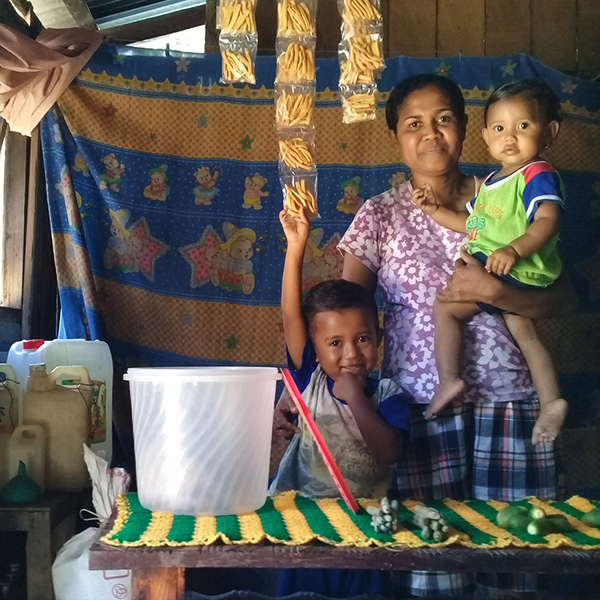
Erni and her children in her kiosk.

A role model among us in Indonesia

There are a lot of amazing people in the CWS global family. Mama Erni Liunokas is one of them.

Erni is a small business owner in rural Indonesia. She’s also a wife, a mom of two young children and a role model for her peers and neighbors. Erni opened her sales kiosk in 2015. She wanted to earn extra income for her family, so she started selling produce from her garden along with staples like rice, kerosene and mobile phone credit. Her goods were popular, and she began earning $3.50-$5 each day.

This was amazing progress for her family, and then things got even better in 2018. Last year, Erni joined the CWS Berdaya program in her community. She teamed up with a her neighbors to form a savings and loans group–one of 26 groups that CWS supports in Indonesia. This gave Erni the chance to take out low-interest loans that she could use to build her business even more. (Fact: 83 percent of the loans that these groups make are in support of women-led businesses like Erni’s.)

Erni also got some new ideas through the Berdaya program that she put into practice. “I have learned so much to help my business as well as my life,” she says. “For my business, I have learned how to process local foods in new ways. This has helped me find economic value in vegetables and greens that I thought had no food value at all.” Armed with this new information, loans and her willingness to innovate, Erni has diversified what she sells in her kiosk. “My business has bloomed this past year because I could borrow money from our group to invest in and grow my business,” she says.

Today, Erni makes an average of $7/day at her kiosk – double what she was making some days in the past. She can use some of her profits to continue to expand the business; for example, she recently bought a cake pan and can now sell cakes alongside her other goods.

Erni’s neighbors are taking notice of her success. She has inspired other women to start their own businesses. Many of her group mates have said that she’s a role model among them. And, as our team knows, she’s one of many inspirational women who are working hard every day to make sure their families can live in a world where there is enough for all.


Stories of Change


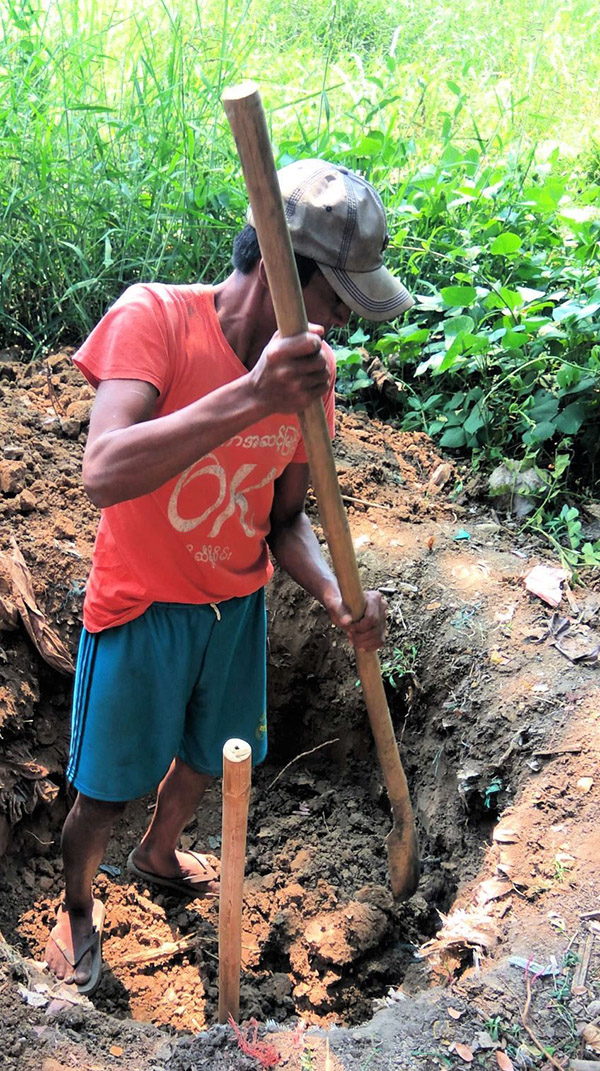
U Moe at work.

Doing well by doing good – a mason’s story in Myanmar

U Aung Kyaw Moe works several different jobs to make ends meet. Sometimes he works as a mason or a carpenter. Other times he works as a hair stylist! U Moe lives in Myanmar’s Ayeyarwady River delta, and he earns between $2 and $7 each day depending on the type of work he does.

In May of 2018, U Moe took the opportunity to join a short-term masonry training program that CWS organized. The workshop focused on building latrines in challenging environments, such as places that flood each year. After the week-long training course, which was led by an expert from the Centre for Affordable Water and Sanitation Technology, U Moe knew that his skills had improved considerably. This was a chance for him to earn more money, since he could now work on jobs that needed specialized skills and training.

Like the other participants, U Moe went into the workshop without knowing some of the key latrine design and placement principles. For example, a latrine should be at least 10 meters (32+ feet) away from home or school drinking water sources. Plus, the bottom of the latrine’s pit should be at least a meter higher than underground water sources.

Since the workshop, U Moe has been paid to build 26 latrines in two villages. He has used what he learned about improved design to bring quality sanitation to challenging environments like the one he and his neighbors live in. “The better-designed latrines we are now helping communities build are quite good, since they are built using five concrete rings. The old ones only used three rings, or bamboo slats around the pit and no concrete,” he explains. “Also, the new latrines’ rings rise higher than the water level during flooding.”

These two improvements alone make latrines “more durable than the type we made in the past when we dug the pit, did not line it properly, and built it at ground level,” U Moe observes. The latrines that families used to build were, in fact, quite poor. When there was flooding, the water filled the pits and raw sewage leaked out. When a family built a latrine without concrete rings, flood waters eroded the pits and collapsed the latrine. “Now, since the new latrine model is designed for areas prone to flooding, our environment is now cleaner and safer. We have to worry less about water-related illnesses,” U Moe says.

For U Moe and his neighbors, his training is a win-win. He built a new latrine for his family, meaning that they have a cleaner and safer environment. He is also helping his neighbors access better sanitation; all while earning more money thanks to these higher-paying jobs. The need for more flood-proof latrines in the area extends well beyond the 26 he has already built, so his job prospects are bright as he helps take on the challenge.


Stories of Change


Azar at his desk at Forbes Magazine.

After fleeing for his safety, a prestigious internship for a young refugee in Jakarta

Azar* was born in the mountains of central Afghanistan. He always considered his village to be a safe place to live, but when he was nearing the end of primary school, that all changed. A group identifying with the Taliban infiltrated his village. Azar’s family, who weren’t sympathetic to the group, fled for their safety. “In September 2018, I took a bus to Kabul, where I applied for a passport,” he says. “One short week later, I was able to leave for India. Then I traveled by a familiar people-smuggling route to Malaysia by air, then through Indonesia by land to Jakarta.”

“I didn’t know exactly where I was going when I got on the plane in Kabul, and I didn’t know exactly what I would do when I got to my journey’s end,” Azar remembers. His smugglers knew, though, and dropped him off at the UNHCR office in Jakarta to register as an asylum-seeker. Because he was a boy traveling alone, the UNCHR connected Azar to CWS almost immediately. We run five group homes for about 175 child refugees and asylum-seekers in Jakarta. These are safe spaces where children can rest, heal and figure out their next steps.

Once he got settled into his dorm room, Azar got started learning new things. He signed up for most of the classes that we offer: Indonesian, English, hair cutting and computer skills. That’s where he found his calling: coding. It wasn’t exactly in line with his dream of becoming an artist, but he loved it. He found that he could sketch and make digital drawings. He did so well that one of his teachers offered him an internship at Forbes magazine!

“I got an email about the internship from Forbes. But I did not know how prestigious the magazine is”, says Azar. “I had never heard of this magazine, so I asked the Social Workers about it, and they explained how special this opportunity was.”

The Forbes office is in the heart of one of Jakarta’s bustling commercial areas, and Azar says he was intimidated at first. “I looked so different! I was a young kid in a polo shirt and slacks, and everyone else was wearing suits,” he recalls. Once he got into his office, though, he settled in and started his first assignment. He sketched the portrait of one of Forbes Indonesia’s co-owners that he was assigned, and then transformed it using Adobe Illustrator. Just like he had learned in the group home.

Now that he has proved his skills, Azar primarily helps other employees. “I am usually given a picture to edit, which I know how to do pretty well,” he says. “So, even though this is all new to me, I am learning by doing–something I never dreamed of as a child in Afghanistan.”

The CWS team is so proud of Azar and how well he’s doing in his internship. We’re grateful that we can offer classes and recreation activities for children and teenagers so that they can feel a bit more settled.

*We’ve changed the name and blurred the photo to protect the identity of this refugee child. 


Stories of Change


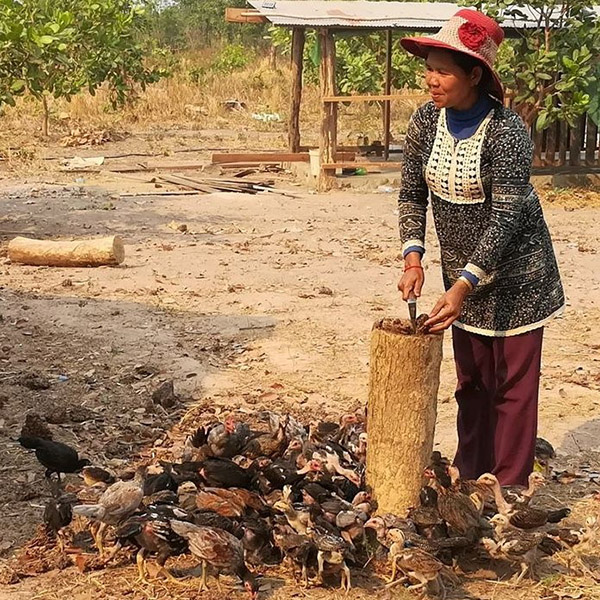
Kimlean cares for some of her chickens.

From six chickens to more than 200

We first met Len Kimlean two years ago. She lives with her husband, Saing Phally, and their two sons in a village in northern Cambodia. During that first meeting, we learned that Kimlean’s family was extremely poor. Sometimes, they didn’t have enough food to eat. They had two sons, who were 28 and 12 years old at the time. The 12-year-old couldn’t go to school because his family couldn’t afford to pay the fees or buy him a uniform. Things were tough, and only getting worse.

That’s why Kimlean joined a CWS program about raising chickens. She learned how to care for her flock so that they would survive and thrive. Plus, she received five hens and a rooster to get started. That’s about a $50 investment that CWS made in Kimlean and her family’s future.

And it was worth every penny.

Kimlean has been incredibly successful, expanding her flock to more than 200 chickens. In 2018, Kimlean earned nearly $700 (2.8 million Cambodian riel) selling chickens. She is working on securing a contract with a local merchant to sell about 40 pounds of chicken each week for $1.80/pound.

What a difference these two years have made! Gone are the days of not having enough to eat. Her younger son is back in school and is on track to complete high school. Kimlean paid back an old loan and is now investing some of her earnings back into her business. She also bought a few pigs, to add even more diversity to her family’s diet and income.

A small investment in a hardworking family has changed several lives forever. We are so proud to team up with our hardworking neighbors in Cambodia and around the world to make our vision a reality. Together, we can make sure that there is enough for all.


Stories of Change


Juarni works in Sigi District, Indonesia as a Village Subfield Officer.

In a camp for displaced families, Juarni is helping her neighbors protect their health

Before the deadly earthquake and tsunami struck in September, Juarni was a health post worker who loved her job. Like so many of her neighbors, her life changed that day. Months later, Juarni and her family were still in a camp for displaced people and were working day in and day out to cope with their new reality.

In the early days of the crisis, as people settled into life in the camp, Juarni noticed something. There were a lot of unhealthy conditions in the camp. “Before CWS started delivering water or latrines were built, things were very unhealthy,” she says. “We had to find water and places to defecate. Many children had diarrhea and other illnesses because they were drinking unsafe water, and families had let hygiene fall by the wayside.”

In those days, families had to cope with countless different challenges. Hygiene was just one of them.

Things have changed a lot since those early days. CWS asked Juarni to join a group of health promotion volunteers who work with camp residents to improve their hygiene practices. Though her new work is different than her old position as a health post worker. But Juarni says she is happy to know that she can still help her community protect its health. To work in the camp setting, which is quite different from her village, Juarni and the others joined a training before starting their health promotion work. During the training, she shared her experience and learned new ways to motivate people to live as hygienically as possible in the camp. All Juarni’s co-workers are women, which is common because women traditionally take care of family wellness. The challenge in the camps, as Juarni told CWS staff early on, is that people’s displacement to living in such inferior circumstances means the volunteers often must work hard to manage the camp’s collective sanitation and hygiene situation.

To help with this, Juarni and other volunteers visit the camps to find and help solve sanitation problems and talk to mothers about best practices to maintain hygiene. Juarni’s persistence and leadership is valuable. She said, “I get so happy when I visit a camp for a second or third time and the mothers tell me stories about their successes, including that their families are now using the communal latrines and that their children are back to the habit of washing their hands before they eat.”

CWS continues to support Juarni and other health workers while they continue helping their neighbors stay healthy. In addition, CWS continues daily distribution of tens of thousands of gallons of water in to spots where over 10,000 people come to get clean water and information about making it safe for cooking and drinking. Other relief and recovery work includes more latrine-building and next-level transitional shelters.


Stories of Change


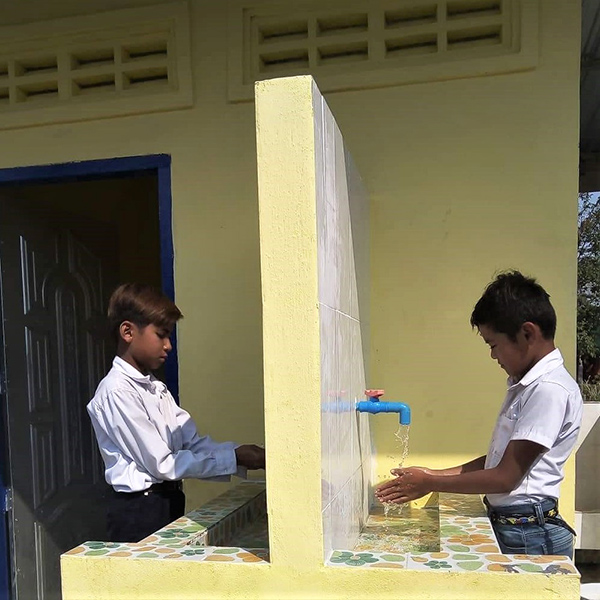
Students use their new hand washing stations.

Building hand washing stations for students in Cambodia

Children all over the world learn that it’s important to wash your hands after you use the bathroom or before you eat a meal. But what happens when there aren’t sinks at school?

This used to be a problem at Rumdoah Srae Primary School in Cambodia. We recently teamed up with parents, teachers and school leadership to build hand-washing stations for students. School principal In Len told us that before this partnership, it was tough for students to have good hygiene. After all, they didn’t have water! Plus, we helped lead information sessions for students about sanitation and hygiene.

“Since CWS supported the material improvements and helped us organize sanitation and hygiene education, the students now wash their hands properly and regularly,” says Len. “Now students have better hygiene and sanitation in the school compound is much better.”

Once the school had water access, we worked with the teachers to help start a vegetable garden for the students. This, Len said, brings the students together in their free time and builds a kind of “solidarity among them. Their parents and teachers are grateful and thank CWS for supporting – and inspiring – them.” He continued, “Seeing the results from the CWS help, they have raised money to add to the school’s maintenance budget to pay for four more hand-washing stands for the children.”

In a different part of Cambodia, our local partner Association for Development and Our Villager’s Rights teamed up with Boeng Popul Primary school for a similar project. Based on conversations with the school director about what the most pressing needs are, we supported the construction of a two-room sanitary bathroom. It has two hand-washing stations for students, too. This means that all 138 students and their six teachers can have better sanitation.

Once the latrines were finished, and the students had joined the basic sanitation and hygiene lesson, school director Slonh Oeun was happy to tell ADOVIR staff how his students now understand the importance of using a sanitary latrine and washing their hand properly afterwards. Oeun added, “I am especially happy for the girl students because the new latrines give them privacy. Before, when everyone used the open space around the school, it was especially difficult for the girls.” Oeun also noted the environmental sanitation disaster the school used to have. And, of course, he is grateful that such a serious and embarrassing situation is now change. Echoing the director’s comments, village leader Vorn Thouk, said simply, “The parents and I are very happy and grateful for the support and for our children’s better school conditions.”


Stories of Change


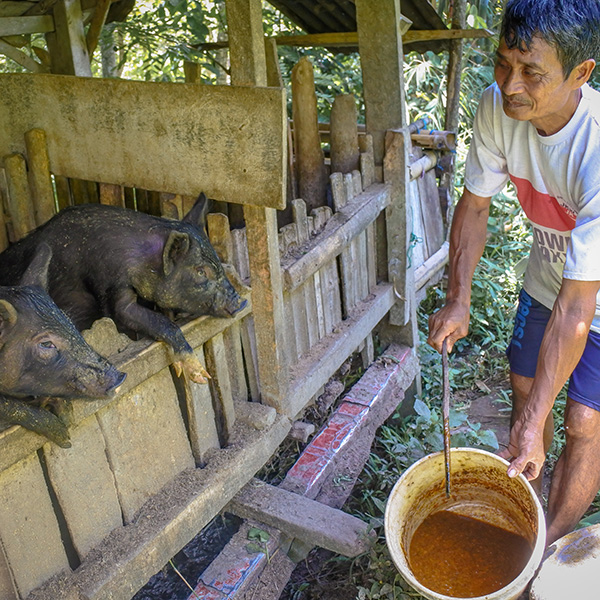
Buttu Tasik feeding his pig supplements.

Healthier pigs, more secure families in Indonesia

Like many of his neighbors in Indonesia, Buttu Tasik raises pigs and farms to make a living. He lives with his wife and four children in a village in South Sulawesi. And like many of his neighbors, he is concerned about the toll climate change is taking on his farm. “Changes in the weather here are quite extreme,” he says. “We have not yet been able to cope with the unpredictability of the weather and its impact on our planting schedule. This leads to financial insecurity.”

Shifting climates mean that Tasik and his neighbors aren’t sure that they are planting at the right time, and it can mean poor harvests. That’s why it’s so important that they have multiple sources of income and aren’t totally reliant on farming. “By raising pigs to sell, we have money to help us meet our daily needs while waiting for better harvests,” he says.

Tasik is the chair of the farmers group in his community. He started the group as part of the CWS Disaster Risk Reduction through Enhanced Adaptive Measures–or simply, DREAM–program. DREAM is designed to help farming families handle natural disasters better. One of the best ways to make sure that you will still be able to earn an income after a disaster is to diversify the ways in which you make money. Another is to learn new farming techniques that can help reduce the impact of climate change.

CWS and a partner recently hosted a workshop about making food supplements for livestock. Tasik attended and wasted no time putting what he learned into practice. He mixed papaya, brown sugar, betel nut, turmeric and lemongrass to create a nutrient-rich paste for his pigs. He added some water like he learned in the workshop and then left it all to ferment for 45 days. to which he added water before leaving the mixture to ferment for 45 days. “The mixture is fragrant, so I also want to eat it,” he joked when he showed the mixture to some CWS team members.

“Now, I mix two tablespoons of the supplement into each feeding. After just two months, my seven pigs are growing a bit faster compared to previous years,” he observes.

Tasik was the first in his group to test out the mixture, and he likes the supplement because it uses ingredients he has on his farm or can easily find in the village. Plus, as a bonus, he began to notice that after a couple of weeks of using the supplement, the pig manure didn’t smell.

After seeing Tasik’s success, several other farmers in his group wanted to follow his lead. “When I saw others using the supplement, and once we had enough manure that didn’t smell bad, we started using the manure as fertilizer,” one said. “We were hesitant to do this before because we didn’t want to disturb our neighbors with the smell.”

Stories like this are exactly why we have the DREAM project. Farmers have opportunities to access information. Armed with this knowledge, they create simple, maintainable systems to help increase their productivity and strengthen their livelihoods. This means coping with the impact of climate change on their crops.


Stories of Change


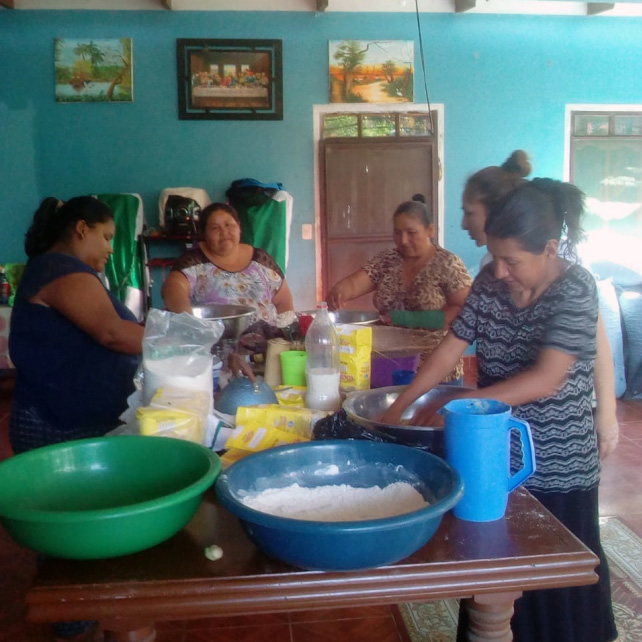
Women from Flowering Lapachito work on preparing food together.

“When we excel, we encourage other women.”

Five years ago, the women of the Lapachal neighborhood in Yacuiba, Bolivia, took matters into their own hands. Their families were struggling in this isolated part of the Bolivian Chaco region. “The neighborhood is very far from the city center,” explains Paola Portal. “Sources of employment are scarce, so women must leave their daughters and sons to go look for work. We do not have good nutrition, which causes malnutrition and leads to diseases in children, pregnant women and adults.”

Paola is the president of the “Flowering Lapachito” group. Twenty women formed this group five years ago in order to improve the quality of their families’ lives. In 2017, the Center for the Integral Development of Women helped the group to attend a Communities in Action meeting. CWS and partner CREAS provide grants through Communities in Action to groups like Flowering Lapachito.

Flowering Lapachito applied for a grant for their “Women Entrepreneurs in Economics” program. “We asked for help to train us on preparing and selling regional and national dishes so that we can improve our economic situations without leaving our families,” Paola says. “We also asked to know our rights better so that we would have more freedom in managing our businesses.” They were awarded the grant.

The women of Lapachito bought equipment to prepare food and received training on cultivating small-scale vegetable gardens. Paola says that by growing the vegetables, they are feeding their families better. Plus, they use them to prepare typical dishes that they sell at a farmers’ market every other Sunday. “With the profit we buy more seeds and we harvest more. We are contributing to our families and to the community that buys our products,” she says.

In this part of Bolivia, there were seven femicides–when a woman or girl is killed because of her gender–in 2018. Women do not have the same status as men, which is why the grant also provided for a partnership between Flowering Lapachito and the Center for the Integral Development of Women, or CEDIM. “We were able to work on women’s self-esteem and address issues like gender roles, democratizing domestic roles and valuing their work,” says CEDIM director Primitiva Martínez.

“There are women in the group whose husbands do not let them go out to sell, and they are forbidden to go to trainings and meetings,” says Paola. “We are holding meetings to bring women who are not yet in the group for this reason. With this project, we learned that there are laws that give us the same freedoms [as men] to carry out these activities. Now several women have been motivated to cook for the markets, and we encourage them to start selling.”

“We have managed to change the women’s mentality, and put it on the table that they should have the same opportunities as men as well as access to public resources for their productive undertakings,” Primitiva says.

The women of Flowering Lapachito have big plans. They want to invite women from other neighborhoods to the farmers’ markets. Plus, they are planning on constructing their own headquarters to store their equipment and have bakery products available for sale. In Paola’s words, “Then we can look for contracts with schools to offer breakfasts, catering, lunches, etc. We will continue to need help; we want to learn more about how to sell, get to know the market and encourage other women to stop being afraid. When we excel, we encourage other women.”


Stories of Change


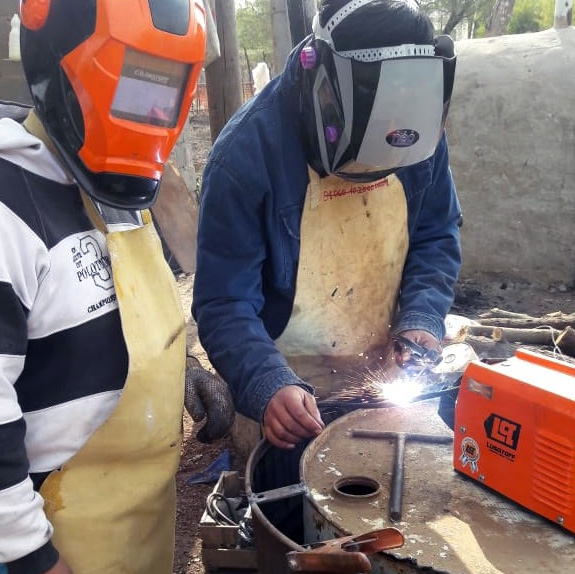
Metalworking at the workshop.

Welding a brighter future in a remote part of Argentina

Only about 150 families live in the Independencia neighborhood of Argentina’s remote La Banda municipality. Everyone here faces a number of challenges, but young people are particularly feeling the weight of unemployment and not having training courses or ways to build skills. That’s why a group of young people took matters into their own hands in 2017.

With help from some of their neighbors and the municipal government, they started a garden and a place to make and sell concrete blocks. The income from these activities support a metalworking workshop that offers work and training to young people.

But they didn’t stop there. In 2018, the group applied for a Communities in Action grant. CWS and our partner CREAS offer these grants to groups in Argentina and Bolivia like the one in Indepedencia. We look for programs that are helping women or youth as well as their larger community. Their proposal was accepted, and they received the grant of 50,000 Argentine pesos (just over $1,100).

The group members used the grant to purchase new equipment, increase the training that they offer and market their products. “We had a few tools, and with this grant we acquired some key elements to make our activities more productive,” says Janvier Villanueva, a 29-year-old workshop member. “We streamlined tasks and improved working conditions by buying protective equipment like masks and gloves.”

They used the money to help train other young people in the neighborhood, too. “We carried out four training sessions on metal mechanics and assembling blocks for schools in the area,” Janvier says. “We also trained women who are responsible for community kitchens and the secondary school on how to produce ecological ovens.”

Abigail, 24, is a mechanical metal technician and is studying social work. She’s one of three female members of the workshop and affirms how important the workshop is to the community. “The dynamics of the workshop mobilized the neighborhood,” she says. “Now they know us everywhere. Communities in Action was the impetus we needed to grow and improve. The guidance and economic support that this program gave us helped us a lot to direct the proposal.”

In July, the team had a tent to sell their products at a major artisan fair in a nearby city. “We feel privileged to participate in this fair,” says Jorge, another workshop member. “It is an important opportunity because we can offer our own products and make ourselves known.”

In addition to the workshop members, another four young people have received training at the workshop and gone on to find other works. Each one now has a salary, and they say that their time at the workshop helped prepare them for their careers.