Stories of Change


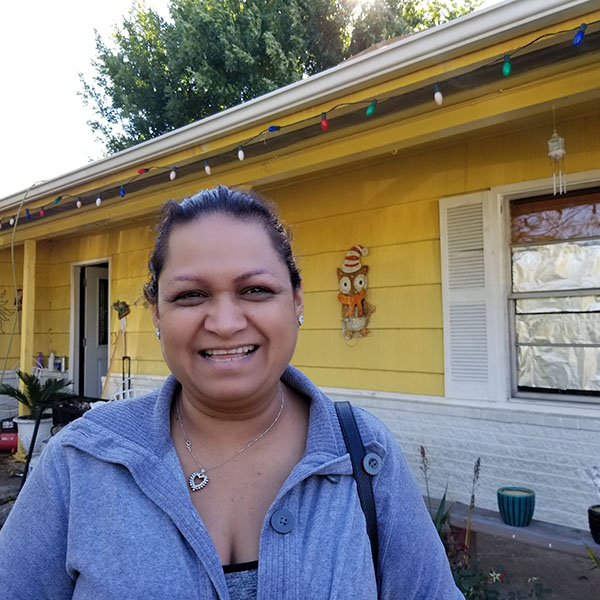
Veronica stands in front of her home while her roof was being repaired. CWS provided a grant to West Street Recovery that was used for the roof repair. Photo courtesy West Street Recovery.

A year after Tropical Storm Imelda, a new roof means peace of mind in Houston

I felt scared that I was going to lose everything. And when water started to come into one of my daughters’ rooms from both the roof and the floor, she started to cry.

I then began to fear for my family’s life. I had to run to other parts of the house to check other areas where the water was coming in. I felt like I was fighting for my life.

The saddest part was that I couldn’t do anything about the water coming in.

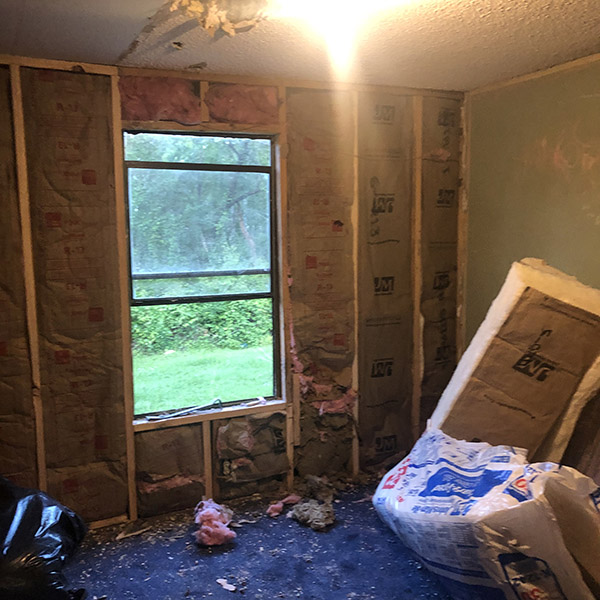
When Tropical Storm Imelda hit Houston in September 2019, every room of Veronica Medina’s house got 18-24 inches of water damage. Just two years after surviving the destruction of Hurricane Harvey, she was facing new devastation. “The living room carpet was all soaked and had to be changed,” she says. “In my kitchen the cabinets had to be changed, and the oven is still broken. The roof was damaged as well and was leaking consistently from one room every time a strong rain would come. There was also an emotional toll that will forever live with me.”

School had started a couple of weeks earlier, but Veronica’s children found themselves skipping school to help repair the damage. “I didn’t have a dry spot in the house to keep my family,” she recalls. She couldn’t cook. Some of the family’s mattresses were soaked and could no longer be used. “Imelda also destroyed the business where my husband was working,” Veronica notes. The business closed as a result of the damage it sustained in the storm.

Veronica is a member of West Street Recovery, which she joined after a meeting at her children’s school regarding the rights of undocumented community members following Hurricane Harvey. West Street Recovery works with low income families who are living with the aftermath of Hurricane Harvey, Tropical Storm Imelda and now COVID-19. They’ve teamed up with 300 families like Veronica’s since 2017. They are also a local partner in the CWS disaster response program in the United States.

CWS provided a grant to West Street Recovery that they are using to help Veronica finally repair her roof. It’s the latest component of the support that they’ve provided since Imelda hit. “West Street helped me with repairs directly after Imelda, with donations of rebuilding materials for my bathroom and [during] COVID-19. They included us when they were giving direct aid to undocumented citizens and they have helped me with materials. Most importantly, they have provided me with a sense of family that has been very hard for me to find in this country,” Veronica says.

“Through CWS, WSR is able to provide help to immigrant families struggling to recover from Imelda,” says Ben Hirsch, Co-Director of Organizing, Research and Development at West Street Recovery. “This helps us create dignified housing for families that have, due to legal and cultural barriers, been unable to access assistance from FEMA or major charities.”

Veronica’s new roof means more peace of mind for her family. “Now I am no longer worried about water entering my house through the roof. I am content and very grateful for this,” she says.

And that’s good news for the CWS family, which just got a little bigger. When we asked Veronica what she would say to the people who support West Street–that’s you!–she said, “that they are angels and it makes me believe that there are a lot of good people in the world still. West Street Recovery feels like family, and I have never found support like I find from West Street. So anyone that supports West Street Recovery I consider family as well.”

The feeling is mutual, Veronica. Welcome to the CWS family!

UPDATED Emergency Appeal: Hurricanes Eta and Iota in Central America


November 25, 2020

Appeal Code: 628M This Appeal is an update to our Emergency Appeal, issued on November 9. Situation Two weeks after Hurricane Eta’s destruction, Hurricane Iota hit many of the same communities across Central America. Both storms made landfall as Category 4 major hurricanes, and Iota slammed into Nicaragua’s Atlantic Coast just 15 miles south of where Eta struck. It brought …

Emergency Appeal: Hurricane Eta in Central America


November 9, 2020

Appeal Code: 628M This Appeal is an update to our Situation Report, issued on November 6. Situation Hurricane Eta hit Nicaragua as a Category 4 major hurricane on Tuesday, November 3. The storm went on to pound Honduras and Guatemala with torrential rain, causing landslides and widespread flooding. Rain continued for several days, stalling rescue operations and exacerbating the situation …

Situation Report: Hurricane Eta in Central America


November 6, 2020

Appeal Code: 628M Situation Hurricane Eta hit Nicaragua on Tuesday, November 3, as a Category 4 storm. The Washington Post reports, “Hurricane Eta slammed into Nicaragua with maximum sustained winds of 140 mph on Tuesday, but the monstrous hurricane was even stronger Monday evening, when satellite data suggested that the storm contained 190 mph winds near its core. If this …

Updated Situation Report: Hurricane Season 2020


September 3, 2020

Appeal Code: 628M September 16 update: Hurricane Sally made landfall in Alabama last night, bringing two feet of rain to some areas. We are working with our local partners to determine our response plan. We will respond to requests for CWS Kits, Emergency Cleanup Buckets and Blankets, and we anticipate focusing on long-term recovery needs as well. More information will …

Situation Report: Hurricane Season 2020


July 28, 2020

Appeal Code: 628M August 27 update: Last night, Hurricane Laura slammed into the U.S. Gulf Coast as a Category 4 storm with 150 mile-per-hour winds. We are working with our local partners in Texas and Louisiana to determine our response plan. CWS Hygiene Kits and Emergency Cleanup Buckets are already on their way to Texas for the relief effort, and …

Stories of Change


Damage from Hurricane Michael in the Canteros' house. The hurricane broke windows, doors and siding and caused extensive water damage.

After Hurricane Michael, speeding up the long-term recovery process

Hurricane Michael slammed in to the panhandle of Florida in October 2018. It was a Category 5, the strongest level of hurricane. A year and a half later, families are still recovering from the damage and destruction that the storm brought. CWS teamed up with the Panhandle Area Educational Consortium to help families with long-term recovery. We provided a grant for PAEC to use to support their clients who are also farm workers. They reached more than a dozen families, including the Cantero family. This is their story:

My name is G. Evelyn Cantero, and my husband is Jaír. We have three beautiful children: Analise just turned 10, Jonathan is 9 and Aizlynn is 8. My 79-year-old mom lives with us as well.

Jaír and I work in agriculture, and our home base is in Florida. We harvest anything from squash to eggplant to tomatoes. In July we migrate to the mountains of Asheville, NC to harvest tomatoes.

Being in agriculture, the weather is very important to us. That’s why I started paying very close attention to the cluster of storms that later would become Hurricane Michael. We knew that if it came our way, it would not only affect our lives but our work. As the hurricane approached, we put our evacuation plan in action and took whatever precaution we could to protect our home and ourselves. We rode out the hurricane in a hotel in Marianna and we saw firsthand what a storm of this magnitude could do.

The next day we drove home to scope out the damage. As we arrived at home, the first thing we noticed was the major damage to the siding. Once we stepped out of our vehicle, we assessed the outside damage. We had damage to the front porch and major damage to the back porch and siding. Upon entering the house, we found a broken living room window and a hole in the roof over the kitchen sink with lots of water damage to the wall and sink base. In the dining room was another hole in the roof, another broken window, water damage to the wall, a broken and damaged outside side door, and damage to the steps leading out the side door. In my mom’s room was another broken window and water damage to her back wall. The main bathroom had the worst damage; it had a huge hole in the roof and lots of water damage. In my children’s room was more damage to the roof and water damage from the bathroom that went into their room. In the master bedroom was another broken window and a leaking skylight in the master bath.

We thanked God that our home was still standing even though it suffered lots of damage.

Due to our home being an older mobile home we were not able to have insurance on it. Our only resource at that time was to apply for FEMA. When the FEMA adjuster came, he told us that our home had the most damaged he had seen thus far. The money they gave us was almost enough to fix our roof, but not all of it.

After we had the roof fixed, we decided that we would save up and fix the rest as soon as we could. Most of the fields we worked in were in Marianna, Florida. We knew that after the hurricane passed, we would be without work since our new season would not start until mid-April. Once April rolled around, we went back to work and slowly started to buy the outside siding. We were able to buy more than half, but then the weather and another major problem affected our family.

In May of 2019 my husband came home after work and did not look very well. He was complaining of a headache and feeling weak. I rushed him to the hospital, where he was quickly pumped with four liters of IV. He had had a heat stroke.

In the next few months, he would have six more ER visits for the same thing. I kept seeing a decline in his health. Finally we were able to qualify for Medicaid and he was finally able to see a doctor. His doctor quickly put him on several medications and sent him to a few specialists to rule out any long turn damage from the heat stroke. She also only allowed him to work until noon.

All of this caused major changes for us especially financially. We are so far behind on bills, but I prayed to one day catch up. My sister Lori sent me to Dr. Pouncey’s office [at the Panhandle Area Educational Consortium] one day to pick up Farm Share for her crew and our family. Just as I was about to leave, Dr. Pouncey asked if I knew of anyone who had hurricane damage and was not able to get it fixed.

I hesitated at first, but I told her we did. She told me to get her a list. The next steps happened so fast, but we were blessed with huge help to fix our home. Dr. Pouncey told me it was through the generosity of CWS.

With your help, we have been able to fix our kids’ room and our kitchen sink. We will also be able to fix our entire main restroom, two of the broken windows, the hole in the ceiling in the dining room and the dining room wall. We will also be able to fix the broken window in my mom’s room as well as the damaged wall. The side outside door is being replaced, and the steps will be fixed.

We are so grateful for all the help you have given our family. With this help you have put us closer to our goal of getting our home repaired. My children are so excited to be able to sleep in their repaired bedroom. They couldn’t stop smiling when they saw their room! We still have several other projects to do, but we will get them done in due time. Thank you so much we are truly grateful for all the help we have received. You have blessed us!

Thank you to everyone who supports our disaster response programs in the United States and around the world. You are walking alongside families like the Canteros on their road to recovery. 


Updated Situation Report: 2019 Hurricane Season


September 27, 2019

SITUATION Hurricane Dorian made landfall in the Bahamas on September 1 as a deadly Category 5 storm. It stalled and spent more than 36 hours over the nation with winds of 185-220 miles per hour. The storm produced 12-15 inches of rain and a storm surge of 18-23 feet above sea level. As of September 20, the official death toll …

Hurricane Florence: One Year Later


September 13, 2019

Historic Hurricane Florence made landfall in the Carolinas on September 14, 2018. In the following days, Florence became the wettest tropical cyclone to ever hit this region causing (according to NOAA) an estimated $24 million in damages and 53 deaths. In the early days after the hurricane’s landfall, CWS began sending kits and blankets to local agencies providing relief assistance …