After the 2021 earthquake devastated communities in Haiti, CWS partnered with local leaders to rebuild homes, schools and water systems with resilience at the core. Today, those same structures are providing shelter, safety and essential resources during Hurricane Melissa. While the storm damaged gardens, livestock and some infrastructure, the homes and cisterns built through community-led recovery efforts largely withstood the …
Finding Hope After Disaster Strikes
July 22, 2024
On July 7, 2024, Hurricane Beryl struck the Texas coast as a Category 1 hurricane, bringing heavy rains, high winds and widespread power outages that left over two million people in the dark. Flood warnings were posted along the coast, and high winds and water caused widespread damage and debris for millions. In the immediate aftermath of the storm, CWS …
Stories of Change
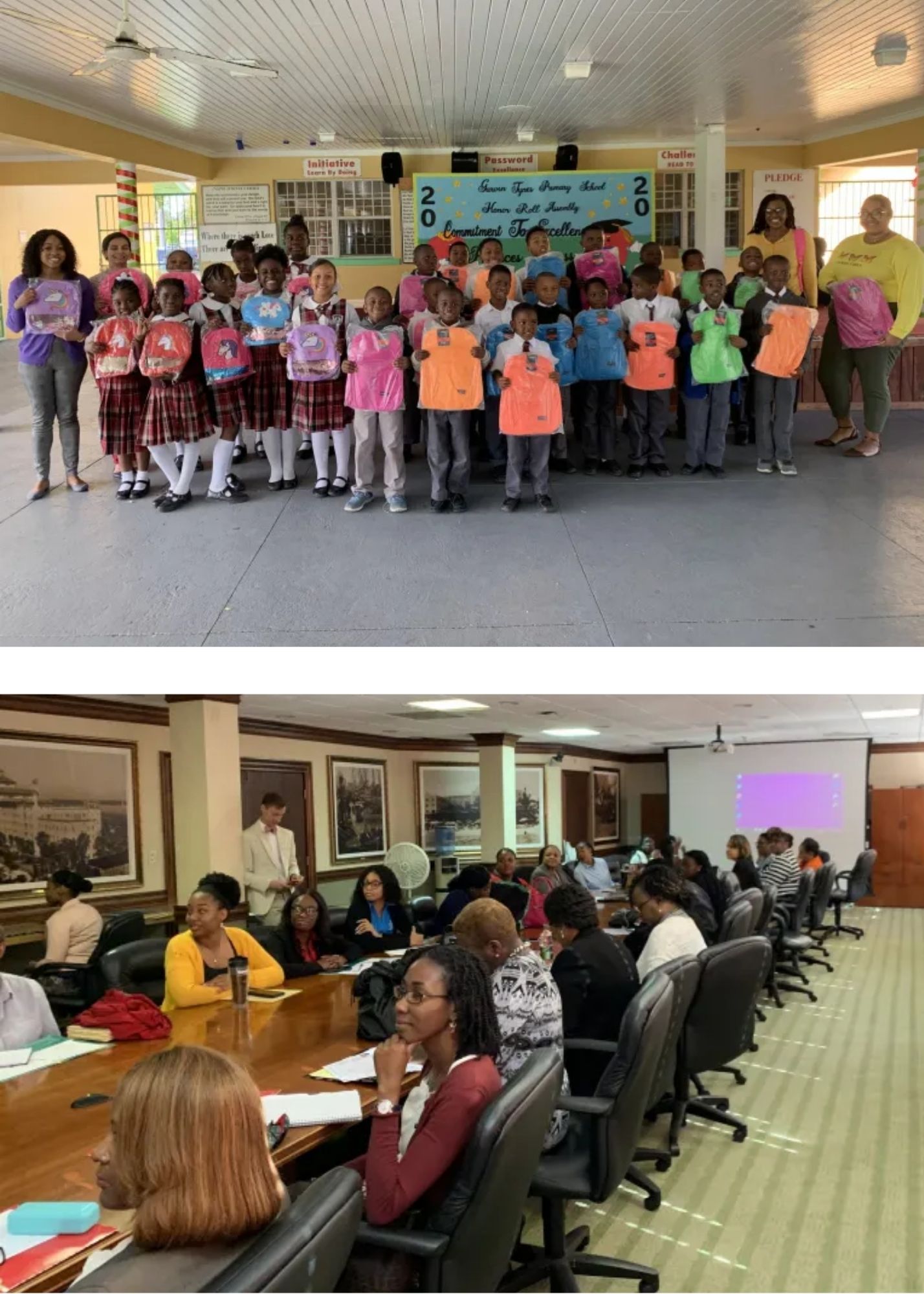
Top: students in Abaco with school supplies given by BPA. Bottom: School counselors in New providence discuss mental health and psychosocial services
The Bahamas Respond to Disaster Through Mental Health Support
After more than two years since Hurricane Dorian in 2019, The Bahamas are working to recover while also coping with the COVID-19 pandemic. To help these communities, the Bahamas Psychological Association (BPA) is partnering with CWS and the International Organization for Migration (IOM) to provide mental health support and disaster relief services. BPA is providing this support and resources to New Providence and the Abaco Islands.
These communities have had to confront both the pandemic and the aftermath of the hurricane. “It was challenging for them to face another situation when they were still grieving with the first,” said Kennita Saunders, the BPA’s communications coordinator. “It is crucial to help them understand what they have experienced, but the huge challenge is to break the stigma about mental health,” added Vernelle Swain, the Island Mental Health and Psychosocial Support Services Officer for Abaco.
The project is focusing heavily on community outreach. “We are getting the word out. Who we are, what our services are, and trying to identify the needs on the island,” Vernelle explained. BPA offers these communities educational resources, free individual and group sessions and helplines.
BPA is also the local implementing partner of the program Ensuring Vulnerable Migrants’ Access to Mental Health Support and Other Essential Disaster Management Services. CWS coordinates this program in partnership with the IOM and BPA. This year’s activities bring a new opportunity to share and support the migrant community. “We have to be patient to build trust and break the cultural barrier,” Vernelle said. Program activities include trainings, workshops and webinars. The webinars covered topics like psychological first aid, gender-based violence, self-care, community mapping and drafting emergency plans.
BPA’s goal is to support these communities and create new spaces for discussions on mental health. “We are now sitting at the table and talking about the protocols and procedures for mental health,” said Kennita. Through this holistic support, communities will have a stronger mental and structural capacity to respond to future disasters.
To learn more, read the full articles here: Dealing with Natural Disasters is a Continuous Learning Process and Raising Awareness of Mental Health in The Bahamas.
Stories of Change
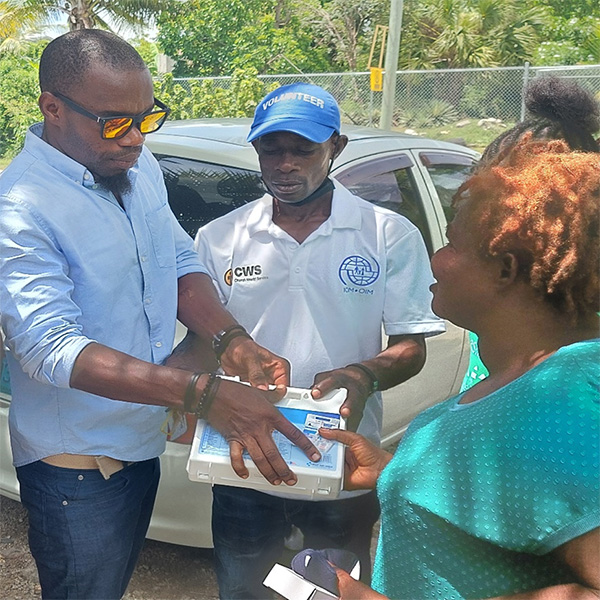
Volunteers show community members the elements of a First Aid kit. Photo courtesy of IOM Bahamas.
Haitian Migrant Communities in The Bahamas Focus on Disaster Preparedness
When disaster strikes, people who live in poor neighborhoods often suffer the most. Homes in these communities are often built with low-quality supplies. Hurricanes, for example, are more likely to damage or destroy them. If that happens, their residents have a harder time paying for repairs. Sometimes garbage services sometimes don’t reach informal settlements. Trash builds up in public areas, including big items like refrigerators. This is a health hazard on the best day; during a disaster, it can be deadly.
Now add migration to the mix. People who are living without documentation are even more vulnerable. They are less likely to trust authorities or ask for help after a disaster. They may not speak the primary language in the country where they live, which makes it much harder to get help or access relief services. Often, people are afraid to speak up, especially if they live in a society that continually pushes them to the margins.
This is what happened when Hurricane Dorian hit The Bahamas in 2019. Many Haitian migrants or people of Haitian descent live in The Bahamas. They are much more likely than their Bahamian neighbors to be up against the factors that we’ve talked about: poor living conditions, discrimination, fewer resources. When Dorian hit, these Haitian communities were among the people who suffered the most. That’s why CWS has partnered with the International Organization for Migration and several community-based organizations to focus our response on Haitian migrants.
Phase I of our recovery focused on helping more than fifty people recover documents needed to regularize their status. We also focused on ensuring that Haitian migrant communities were included in larger relief efforts. Starting in October 2020, we shifted to Phase II. During this phase, we started to look ahead to future disasters. Our goal was to help Haitian migrant communities be more resilient when the next storm comes.
We teamed up with four community-based organizations that work with Haitian migrants living in informal settlements. More than 40 volunteers from these organizations joined a series of training sessions. With each one, they gained skills and expertise to share with eight communities with more than 800 families. Training sessions focused on:
– Community mapping: identifying hazards and choosing supply locations and evacuation routes
– Drafting emergency plans
– First Aid, including CPR: each volunteer received a two-year first aid certification card
– Mental health and counseling
– Preventing violence against women and girls, which usually spikes in situations of extreme stress, like after a disaster
– Fire safety and prevention
– How to include migrants in disaster risk management
We also distributed critical supplies that will come in handy during a disaster. These included battery-powered radios, portable phone chargers, fire extinguishers, generators and First Aid kits.
Now, dozens of people are equipped to lead their communities in the face of disaster. They are already at work holding information sessions in their neighborhoods. They are handing out flyers and creating emergency plans. Some worked with the community-based organizations to secure contracts with garbage removal services. Then they organized a massive community clean-up initiative.
“Two great things I learned were CPR and disaster training,” one volunteer told us. “I learned how to prepare for a disaster, how I can help my family and the whole community prepare…the thing I enjoyed most was the CPR–I learned how to save someone else’s life.”
“I enjoyed the course on disaster management because it was so informative and practical,” said another volunteer. A third promised, “I will use what I have learned to better my life and the lives of those around me.”
All said, more than 900 people have participated in this program. We are grateful to the Evangelical Lutheran Church in America for their support of this work.
Situation Report: Hurricane Ida
September 1, 2021
Appeal Code: 628N Situation Hurricane Ida slammed into Louisiana on Sunday as a dangerous Category 4 storm with 150 mile per hour winds. The full extent of the storm’s damage is still unknown; rescue efforts are underway. Ida has been blamed for at least two deaths. It left more than a million people in Louisiana and Mississippi, including the entire …
Stories of Change
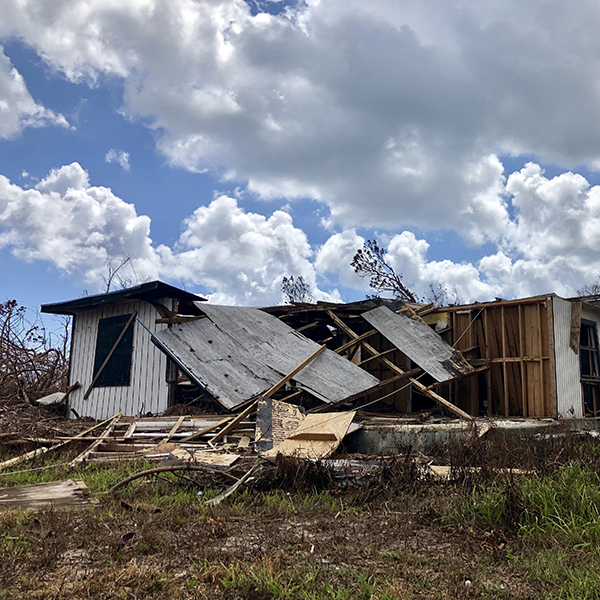
Damage from Hurricane Dorian in the Bahamas.
When the Storm Takes Your Legal Identity, Too
Hurricane Dorian slammed into The Bahamas as a Category 5 major hurricane in September 2019. It was the most powerful hurricane to hit The Bahamas since record keeping began. It was also a very slow storm, moving as slowly as one mile per hour. For nearly three days it continued its relentless onslaught, leaving widespread destruction in its wake.
“I lost my 22-year-old sister. The house and everything are gone,” said one participant of the CWS-supported recovery program. “I lost my home and all our documents,” said another.
The issue of lost documents was a critical one for many Haitian migrants and Bahamians of Haitian origin. People need government-issued documents like birth certificates and passports as part of their immigration process and when applying for citizenship. After Dorian, many people didn’t know how to get new documents, or they couldn’t afford them.
Our team learned of this challenge during our assessments in the weeks and months after the storm. So we reached out to the United Nations International Organization for Migration, known as IOM, to explore possible solutions.
We launched a pilot program with IOM in 2020 to help with redocumentation. This would help participants get the legal documents that they badly needed, and it would help both IOM and CWS learn more about the challenges that Haitian migrants face in getting legal status in The Bahamas to inform long-term programming.
The program officially launched in March 2020, just as the COVID-19 pandemic turned the world upside down. After a few delays, the program got underway. By July, information was circulating within migrant communities, churches and local media that CWS and IOM could help with redocumentation. A three-person independent committee, made up of women from within the Haitian community, reviewed applications for assistance and selected participants based on their need and vulnerabilities. By the end of the pilot program, we had helped dozens of people get a total of 366 different documents including birth certificates, marriage certificates and school diplomas. Most of the program participants were women and children.
Shana Zaporte was on the IOM team who helped people access the documents. “I was familiar with the issue of redocumentation because I used to work translating from English to Haitian Creole and also because I am part of the first generation of children born in the Bahamas to Haitian migrant parents,” Shana says. “I totally understand why they need support.”
Shana and her IOM colleagues worked one case at a time, one document at a time. An application for Bahamian citizenship requires an average of 11 supporting documents. In one case that Shana’s team worked with, the person needed 18. “One of the cases that impacted me the most was a young girl, aged 17, who lost her father and home in the island of Abaco. She had to relocate with her three siblings to Nassau. Her mother would call me every day and would say in Creole (she didn’t speak any English), ‘Thank you! Thank you!’ Three of the children were supported by the project and applied for citizenship,” Shana recalls.
For the families who participated in the program, it was one less thing to worry about as they faced the long road to recovery. It meant less stress and more hope.
The pilot program has also helped IOM to better understand the challenges that Haitian migrants in The Bahamas face in obtaining legal status. This key UN agency is now better equipped to partner with the Bahamian government to find medium- and long-term solutions that will improve the quality of life of Haitian migrants. IOM also built and expanded relationships and collaboration with faith communities, community leaders, migrant advocates and the Bahamian society at large. With a stronger social fabric, the Bahamian society is now that much more resilient in the face of future disasters.
Thanks to Presbyterian World Service and Development, an agency of the Presbyterian Church of Canada, for their support of this program.
Situation Report: 2021 Atlantic Hurricane Season
June 29, 2021
Appeal Code: 628N Situation The National Oceanic and Atmospheric Administration in the United States has forecasted another active Atlantic hurricane season. Its outlook is for 13-20 named storms; 6-10 hurricanes; and 3-5 major hurricanes. The first storm to make landfall, Tropical Storm Claudette, struck near New Orleans on Saturday, June 19. It killed at least 14 people. Tropical Storm Danny …
Situation Report: 2021 Hurricane Season
Appeal Code: 628N Situation The National Oceanic and Atmospheric Administration in the United States has forecasted another active Atlantic hurricane season. Its outlook is for 13-20 named storms; 6-10 hurricanes; and 3-5 major hurricanes. The first storm to make landfall, Tropical Storm Claudette, struck near New Orleans on Saturday, June 19. It killed at least 14 people. Tropical Storm Danny …
Stories of Change
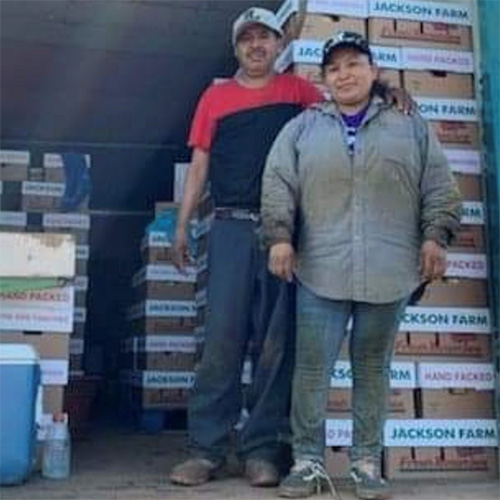
Meliton and Margarita Cruz have been migrant farmworkers for 25 years. In 2018 they returned to their small trailer home only to find it ruined by Hurricane Michael. With help from CWS partner Panhandle Area Education Consortium they were able to cope with the long-term recovery needs!
Long-term Recovery from Hurricane Michael in 2018
Yes – it has been almost 2½ years since Hurricane Michael, but we continue to see the long-term effects, especially on our most vulnerable populations.
The following is one such account:
The last 25 years have been met head-on with hard work, providing for family and determination to overcome the daily obstacles encountered by the very people who provide the food on our tables. This family is La Familia Cruz.
Meliton and Margarita made their way from Mexico, saving every penny they could and finally becoming legal permanent residents – a dream come true for them and their three children. Since then, they travel yearly from their home in Quincy, Florida to Immokalee, Collier County, Florida, to Tennessee, back to Immokalee and finally returning to Quincy – and all along the way picking the beautiful tomatoes we look forward to in our burgers, salads, sauces and much more! This has been their yearly routine for years.
This is not an easy life, and Hurricane Michael proved disheartening to them when it eventually affected the only home they have ever owned in Quincy, FL. They call it their “trailita” (“little trailer”), and they are very proud of this place they call home.
During their many journeys, they have experienced many other disheartening situations such as: being robbed at gunpoint of all their money and immigration papers just a block from the U.S. border, simply because they wanted to see their parents in Mexico; losing work due to crops devastated by weather, and now, facing the uncertainties and restrictions of COVID. Regardless, they have never given up and continue to work every day as much as they can.
Margarita said, “Every time we felt we were making it and getting ahead, something new happened.”
When Hurricane Michael hit their trailita, it was a water pipe that was one of the many needed repairs from this disaster that hit the Florida Panhandle area in 2018. Unfortunately when repairs were being assessed, the water pipe damage was missed and when they received a water bill for a little over $300 they were unable to pay due to an extremely limited income, even working every day of the week. They did not have the money, and Margarita came to share about her family’s dilemma with CWS local partner Panhandle Area Educational Consortium, which includes a Migrant Education Program among many of it’s outreach services in the north Florida area.
Thanks to the funds provided by CWS, PAEC was able to help the Cruz family pay their water bill and resume their access to this basic need: water! Running water, a critical factor in our daily lives.
Through the PAEC/CWS partnership and generosity, the Cruz family was given a “hand-up” towards improving their quality of life. The one thing I can assure you is that their faith continues to fuel their energy. Without a doubt they are grateful for your support!
There are ongoing long-term recovery needs among families affected by Hurricane Michael. Sadly, among immigrants like the Cruz family, the needs very often go unnoticed or unaddressed due to barriers to access services normally available to other Michael survivors. [With help from CWS,] organizations like PAEC help to bring their unmet needs to the table.
This story was written by Dr. Maria Pouncey, Administrator for Instructional Services with the Panhandle Area Education Consortium.
Hurricanes Eta and Iota in Nicaragua
January 13, 2021
In early November 2020, Hurricane Eta slammed into Nicaragua’s Atlantic coast. Two weeks later, Hurricane Iota struck the same communities. These back-to-back blows destroyed homes, crops, animals and livelihoods. CWS and our partners have worked with communities in the area for years. We support the food security and community development work of trusted local organization Accion Medica Cristiana, or AMC. …
- Page 1 of 2
- 1
- 2