
In all of CWS’ programs, there is an element that allows us to thrive: our partnerships. We recently took the time to appreciate one of these partnerships when our PCUSA friends and colleagues Ellen Smith, Regional Liaison for Central & Eastern Europe, and Luciano Kovacs, Middle East and Europe Area Coordinator, visited our programs in Bihac in Bosnia and Herzegovina …
Stories of Change
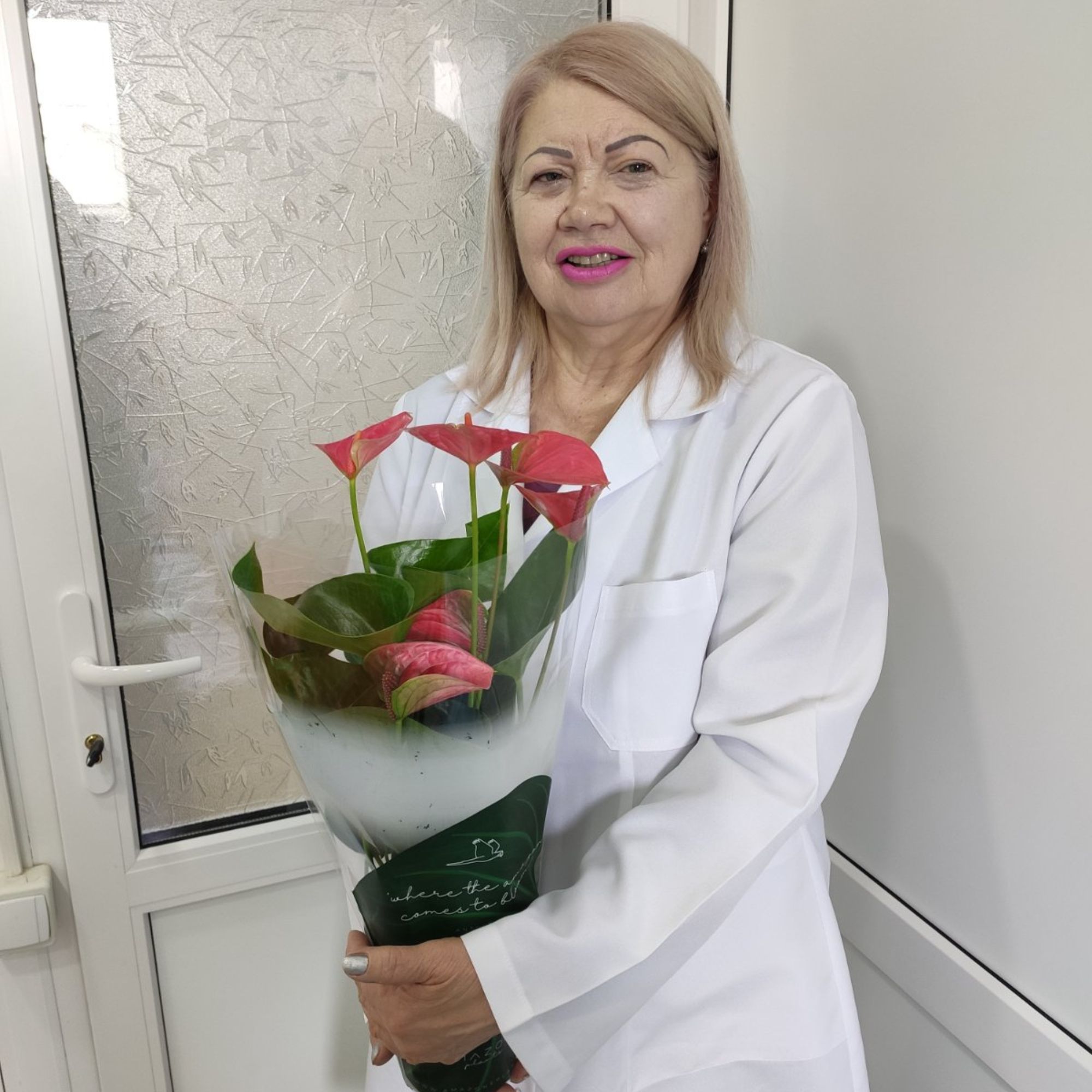
Lilia at work at Healthy City
“I Miss My Home Very Much”
Since March, 2022 Lilia Vitalievna Miasnikova has lived in Balti, Moldova where she receives support from CWS’ partner, *Zdorovii Gorod (Healthy City). Before life in Moldova, Lilia was a successful doctor in Ukraine. Her interest in medicine began when Lilia was just 11 years old as she accompanied her mom, a pediatrician, to her job. Following in the footsteps of her mother, Lilia pursued the highest medical degree and eventually became a neurologist. Unfortunately, in 2022, Lilia’s 41-year career and life as she knew it came to abrupt halt when Russia invaded Ukraine. Here is Lilia telling her story:
We knew that the hostilities would begin. We were warned about the danger but no one believed it. At 5 a.m. on February 24, the bombing of Kulbakino airport began. We have a very big airport in Nikolaev, and it all started there. That day, ATMs ran out of money and gas stations ran out of gas. Traffic formed at the borders very quickly and it was impossible to break through to any borders. Most people drove through Palanca to Moldova. It was unbearable to stay in Ukraine where there were constant air raid alerts. When we went down to the bomb shelter there were a lot of people and the rooms were not safe—there was moisture, mold and fungus on the walls and only one exit. If it collapsed, it would be a mass grave. Many men drank there. There was not enough air and as soon as the alarm ended, I ran up six flights of stairs home because the elevator had not worked since the first day of the war. As soon as you lie down to have rest, the alarm comes again and you need to go back to the shelter. After a while I had no energy left to go there. It was better to leave. There were only 2-3 people in our house. All the youth went to Poland and we decided to flee to Moldova.
From Nikolaev, we traveled for free to Odessa. We took a minibus to Chisinau, and from there by taxi to Balti. We chose Balti, because we knew that there were a lot of people who speak Russian here, and we were afraid of the language barrier. I came with my daughter and two grandchildren. They lived in Balti for a couple of months and then moved to Italy. My daughter knows English well and found a job online, and one of my grandchildren has already attracted the attention of local coaches as a talented athlete. I stayed here alone. Many people left Nikolaev. A lot of them are in Moldova, because they still hope to come back home, when everything is over. Some fled to Canada and Norway, but the reviews from there are not good, and the best option is to stay in Moldova and Poland.
We were very impressed by how actively they are helping the refugees here. Even in Ukraine there was no support like this. At the border we saw the responsiveness of the Moldovans. Refugees without COVID vaccinations were allowed through and offered to receive the vaccine either there or locally in Moldova. We were lucky with housing. We found an apartment in Balti, which the owner rented to us for half the market price. We came here in winter and had left everything. Refugees like us were literally dressed by the locals. They came up to us on the street and asked, “Do you have an old coat?” and almost everyone brought out warm clothes for us.
Almost immediately I was offered a job when they found out that I am a doctor. Work has become a good rehabilitation for me. It can even be seen as a miracle. Now I am working as a neurologist and accepting refugee patients in Zdorovii Gorod. The most important thing in the current situation is to keep yourself doing something so that your brain does not constantly analyze what cannot be comprehended. Logic does not work here, only emotions and they always get in the way. Many people say that it is good that children do not see corpses and blood. When we came here, those moments just appeared in photos of children in Mariupol dying from dehydration.
All my ideas about Moldova were from school books, that this is a sunny country where everyone dances and sings. However, it turned out that living here for people is hard, they have to work a lot, but everybody treats us with understanding and the people are very sincere. In my opinion, there is nothing like this anywhere. I really liked Moldovan cuisine, especially placinti, with all the fillings. The fruits are very good, apricots are pure magnesium. Strawberries are tasty and sweet. I tried all the grape varieties and understood what kishmish is. And the water here is also good. I started cooking so much that I had enough for several days. I had never cooked like this before. In general I did not pay so much attention to the kitchen as I do now since I could buy pre-made food. In Moldova it is expensive to buy food though, so without cooking it is hard to live.
In Balti, we are trying to walk more. This helps to get rid of negative thoughts and emotions, you need to “walk” them so that they do not accumulate inside. We stopped watching TV. Those who were left without homes—from Kharkiv and Kiev, they could not watch the news and talk about war. For those who lost children and husbands, it is harder. The only thing that can help them is medication. I know some nurses, their children were 18-19 years old, they all died when the state administration was blown up. Even though they go to work, they are shadows. Nothing livens them. Just a black scarf and the constant question, why is she alive?
But we read more here. There are very good bookstores in Moldova, a lot of professional literature, children’s and didactic. The most important thing for us Ukrainians is employment. I really like that in Moldova for doctors, they do a lot of seminars and take them to Chisinau, where interesting speakers from Romania and USA speak. I’m constantly gaining new acquaintances and new knowledge. It helps to keep track of these new resources and when everything is fine, I will return back to Nikolaev.
I miss my home very much.
*CWS partners with the local Moldovan organization, Zdrovii Gorod (Healthy City), to support Ukrainian refugees by providing comprehensive services including food and non-food items, social inclusion, and psychosocial support.
To learn more and support CWS’ work with Ukrainian refugees in Moldova, click here.
Stories of Change
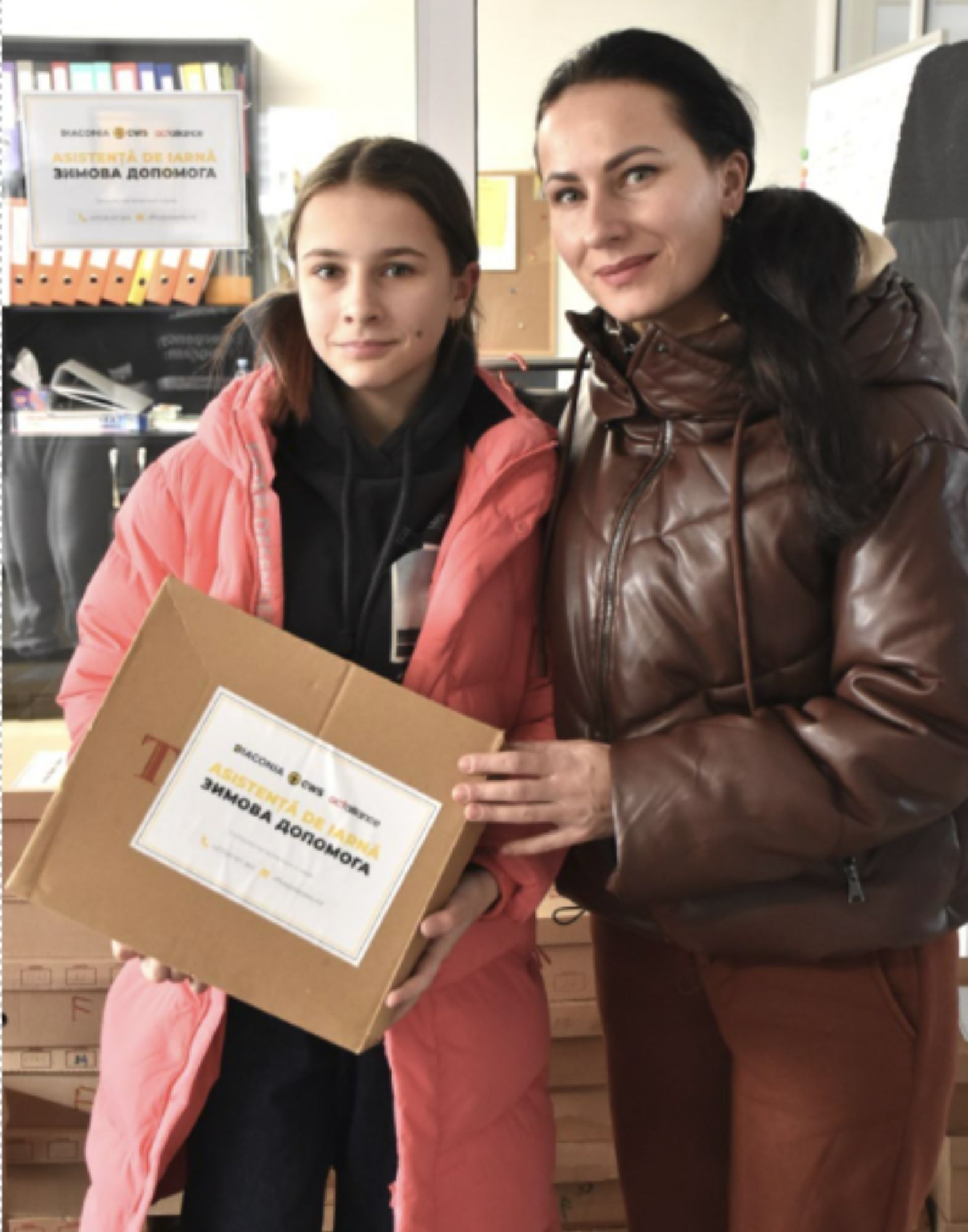
Olga and her daughter, Carina, receiving a donation box at Diaconia
Rediscovering Peace
The life that Olga and her family had in Ukraine was the type of life that many dream of. She had a loving husband and two healthy and happy children. Her daughter, Carina, was a talented ballerina and on her way to becoming trilingual at just nine years old. Her three-year-old son, Gleb, loved his family and was especially close with his father. None of them could have foreseen what would come in the next months.
The war in Ukraine came fast and shattered the family’s dreams. It arrived with a boom when a bomb exploded right by the apartment the family was in. In just half an hour following the explosion, Olga said goodbye to her husband and fled the country with her children, leaving behind the life they had always loved.
The family arrived in the neighboring country, Moldova, where they were generously hosted by a family of farmers. “Some people who were strangers to us sheltered us and offered us a place in their house. Together with my children, I helped take care of the animals, gathered wood for the fire and helped in the house as much as I could. We weren’t thinking about comfort, the important thing was for us to be safe.”
Although they had found physical safety, the trauma and horrors of the war lingered in their minds. Young Gleb shut himself off to this new life and refused to speak for four months. Unable to understand why his father did not come with them, Gleb also refused to communicate with his father. Carina responded to the trauma by growing up far too quickly and becoming a reliable source of support for her mother.
Despite these struggles, Olga refused to give up. Through CWS’ winterization project in partnership with local organization Diaconia, Olga was able to receive essential supplies. She also began a hairdressing course to be able to get a job and enrolled her children in school.
Through these small steps, Olga and her children are slowly healing and recreating a life that makes them feel happy and safe. “It is so valuable and important to know that we are not alone, there are people who support and help us,” Olga stated. “We thank you from the bottom of our hearts for the care you give us. Now that the temperatures are very low, winter footwear is a basic necessity. Thanks to you, and your donors, we now have less to worry about.”
Although peace in Ukraine is a subject of uncertainty, Olga and her family are discovering that peace can be found in the support and care they have received in their new home.
This story is possible thanks to CWS’ membership in ACT Alliance, a global coalition of churches and agencies engaged in development, humanitarian assistance and advocacy. Thanks to the support of ACT Alliance, CWS is able to support individuals like Olga, all around the world.
You can learn more support CWS’ work with Ukrainian refugees in Moldova, here.
Stories of Change
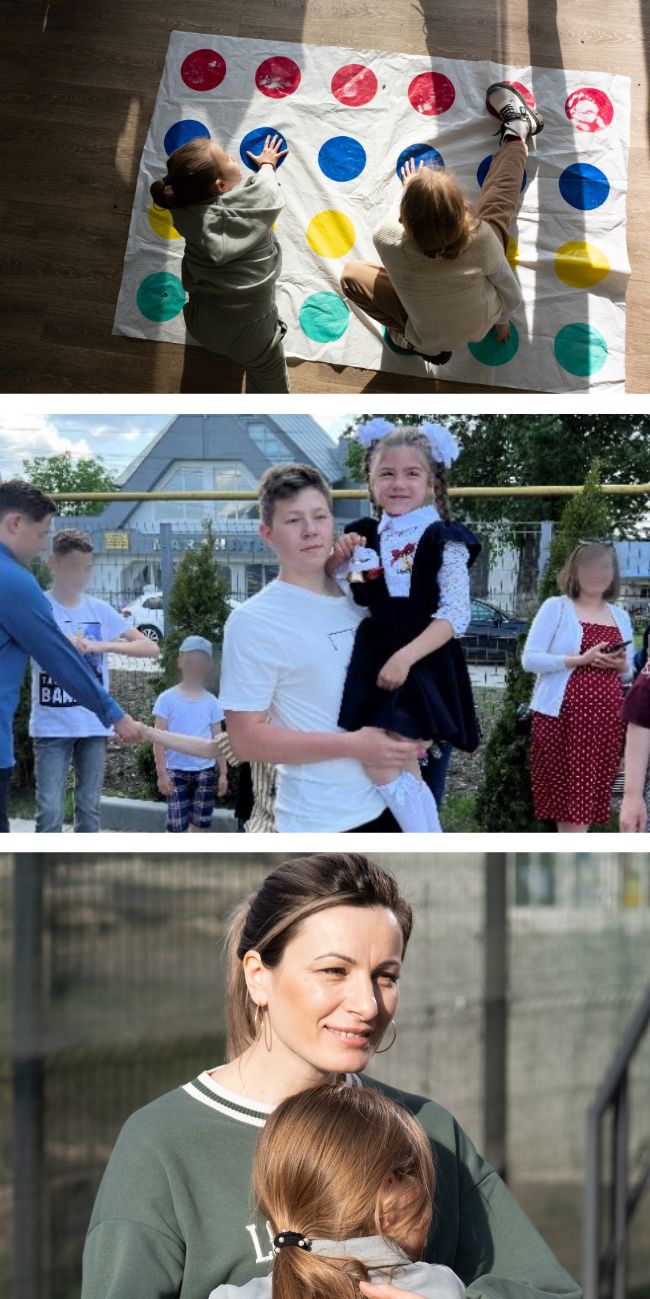
Top: children playing at Anastasis, Middle: Michail and his sister, Bottom: Liliana Lungu who runs Anastasis educational center. (Top and Bottom photo courtesy of ACT Alliance).
Michail Creates his Own Path
Like many Ukrainian children, 16-year-old Michail was forced to grow up too soon when Russia invaded his home in Kherson, Ukraine. Michail, his younger sister and his mom fled to the neighboring country of Moldova, but Michail’s father was forced to remain in Russian-occupied Kherson.
In his new home, Michail stepped up and took the role of his mother’s “right hand man.” He helps with shopping, paying bills and taking care of his younger sister. Although Michail has the maturity and responsibilities of many adults, he is still just a teenager. He likes to draw, play sports, dance, listen to music and hangout with friends. All these activities, however, are near impossible to do in the 60-square-foot room of the Balti Weather Station that Michail and his family currently live in.
Due to these living conditions and Michail’s need for a better space, the *Anastasis Educational Center in Balti has become a second home for Michail. Here, he can engage in all the activities that he loves and continue his online schooling. The staff at the Center shared that Michail is often the first person to arrive and last to leave the center every day.
Michail’s mother has also received fundamental support through the Center. The Center’s psychologists have helped her overcome her depression, and she has successfully completed two professional courses. She now works as a masseuse and cosmetologist in Balti. Michail has also grown through the support of the Center and recently completed his final year of high school. He is now focused on continuing his education in Moldova, and his goal is to study psychology at a local University in Balti.
Through the Anastasis Educational Center, Michail and his family are receiving the support they need to rebuild their lives in Moldova. Along with the staff at the center, CWS is committed to ensuring that families like Michail’s know they are not alone and feel safe and hopeful in their new community.
*The Anastasis Educational Center is run by our local partner, Diaconia, and aims to help Ukrainian refugees heal and rebuild their lives. At the center, program participants can receive psychological support, attend vocational classes, partake in fun activities and access computers to attend online school.
You can continue to support families like Michail’s by donating here.
Stories of Change
Ekaterina
Ekaterina Learns a New Skill
Healthy City is CWS’ local partner in Moldova that works to meet the basic needs of Ukrainian refugees while helping them establish a new life in Moldova. Through Healthy City, Ukrainian refugees were given the opportunity to attend vocational classes at the local academy, Tekwill. The following story is a testimony from one of these participants.
My name is Ekaterina, I am 46 years old. I have a degree in economic management in the industrial sector. I have a husband and a young son with a disability.
I am from Odessa. I love Odessa with all the fibers of my soul and never wanted to move out of it. However, when the war began, we realized that our house, which is on a high floor, is very poorly located. There are many military and dual-use facilities around, and this increases the risks during shelling.
Since my husband and I were responsible for two people with disabilities (my son and mother), in May 2022 we decided to leave for Moldova for a better environment and peaceful life, where they don’t shoot.
In 2022 my company, where I worked in the marketing and advertising department, had to cut costs in order to pay at least those employees who remained in Ukraine. Because of this, I ended up on leave without pay.
I joined the course offered by Tekwill Academy in Moldova in May 2023 after seeing an announcement for Ukrainian refugees from Healthy City (Zdorovii Gorod)*. My goal was to improve my knowledge in graphic design. During the war, I plan to expand my competencies and gain new experience as a freelancer in a foreign market, where there is a consistently high demand for work with graphics and video.
The nice thing is that after only 5 weeks of training, I was able to receive an order for rendering infographics and materials on Pinterest for an English-language site.
Of course, 2.5 months of courses is just the beginning. Rookie Syndrome is inevitable.
When fulfilling orders, I lack automatism and speed. I have to finish learning something on the fly. However, the quality of teaching at Tekwill inspires optimism and self-confidence.
Our teacher had rich experiences. He was responsive to questions, prompted practical ideas and sorted out mistakes. All of this was great motivation.
In the future, a systematic and deep knowledge of graphic programs will improve my ability to earn money remotely. This is especially true for life in Moldova, where there are objective difficulties with working in my specialty. Thanks to all the organizers and sponsors for this training! With pleasure and with great gratitude I will take part in any new course in the field
graphic design.
CWS is grateful for our partner, UMCOR, whose support allows Ukrainian refugees like Ekaterina to access new opportunities. To learn more and support CWS’ work with Ukrainian refugees in Moldova, click here.
Stories of Change
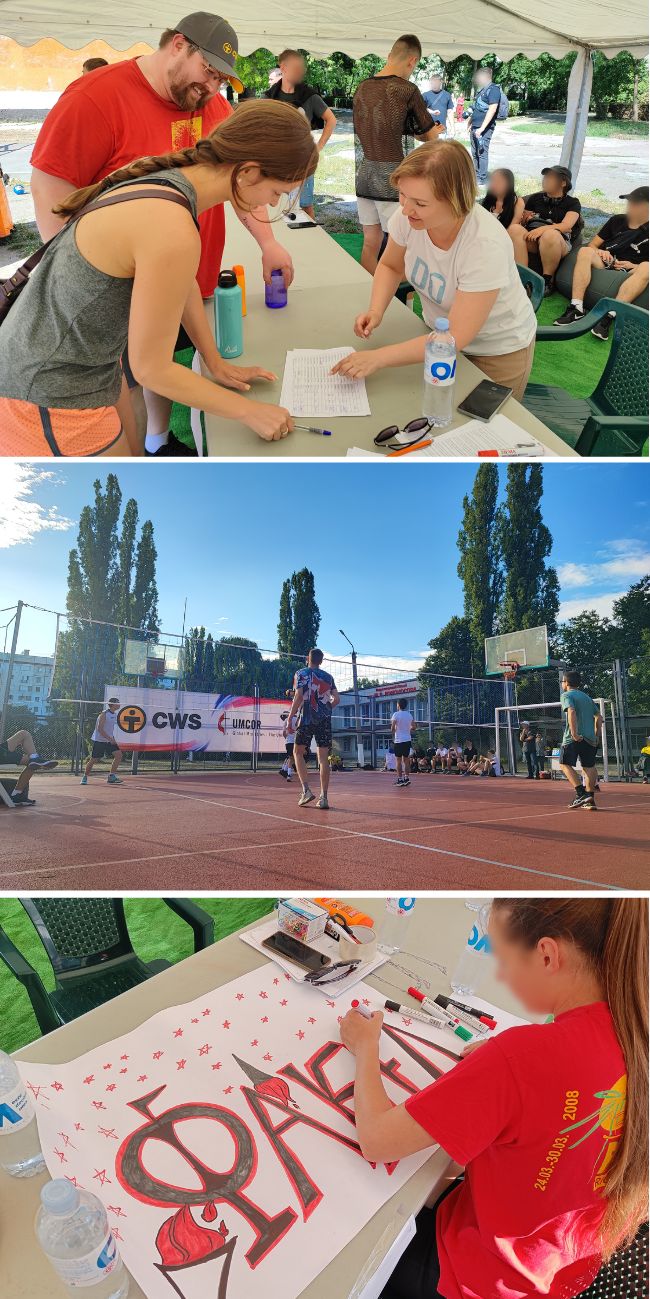
Top: Casey and Andrew checking into the event, Middle: Youth participate in tournament, Bottom: Young girl works on team sign
Celebrating Sportsmanship and Unity in Moldova
Summer is in full swing in Moldova, and amidst the warm breeze and bright sunshine, a fun and exciting event recently took place in the heart of the city. Through our local partner, Zdorovii Gorod (Healthy City), CWS supporteda volleyball tournament for local Moldovans and Ukrainian refugee youth who have recently made Moldova their home.
The day was buzzing with energy as teams of different age groups, 14 and under, 15-17 and 18+, gathered to show off their volleyball skills. The space was filled with excitement as players and fans created colorful posters to cheer on their teams.
CWS Moldova Humanitarian Response Team Leader, Andrew Blakely, and Protection Program Manager, Casey O’Neil teamed up with our friends and partners from Zdrovii Gorod to form the team, “Mighty Ducks”. While they may not have been quite so “mighty”, the team had a blast. “We were awful but it was a fabulous time!” Casey said.
The tournament continued into Saturday morning as teams battled for the winning title. Winners were awarded medals and trophies and all enjoyed snacks and ice cream, adding to the spirit of celebration and fun.
What made this tournament even more special was that it resulted in increased visibility of our programs. “Many people passing by stopped to ask what the event was about and to thank organizers for putting it together. This was exciting because the location was strategically selected to improve visibility for future events,” Casey explained. She added that the turnout of Ukrainian children was the largest ever, thanks to the collaboration with a local Refugee Accommodation Center to promote the event. Having positive representation from both Moldovan and Ukrainian youth is one of the goals of these tournaments. It creates an environment that promotes integration and social cohesion which in turns makes the Balti community stronger and safer for everyone.
At the conclusion of the event, only a few participants left with medals that titled them as “winners”. The true victory, however, was that of a community, coming together and celebrating the joy of unity, welcome and friendship.
CWS is grateful for our partner, UMCOR, whose support allows events like this one to happen. To learn more and support CWS’ work with Ukrainian refugees in Moldova, click here.
“They Treated Me Like a Human Being”
July 20, 2023
My name is Noor, and I’m 28 years old. I was born in Tunisia, where I lived with my father, mother and three sisters. Due to the economic situation, my mother, who is of French descent, wanted our family to move to France. However, my father refused, and when I was just 5 years old, my mother left home, returned …
Stories of Change
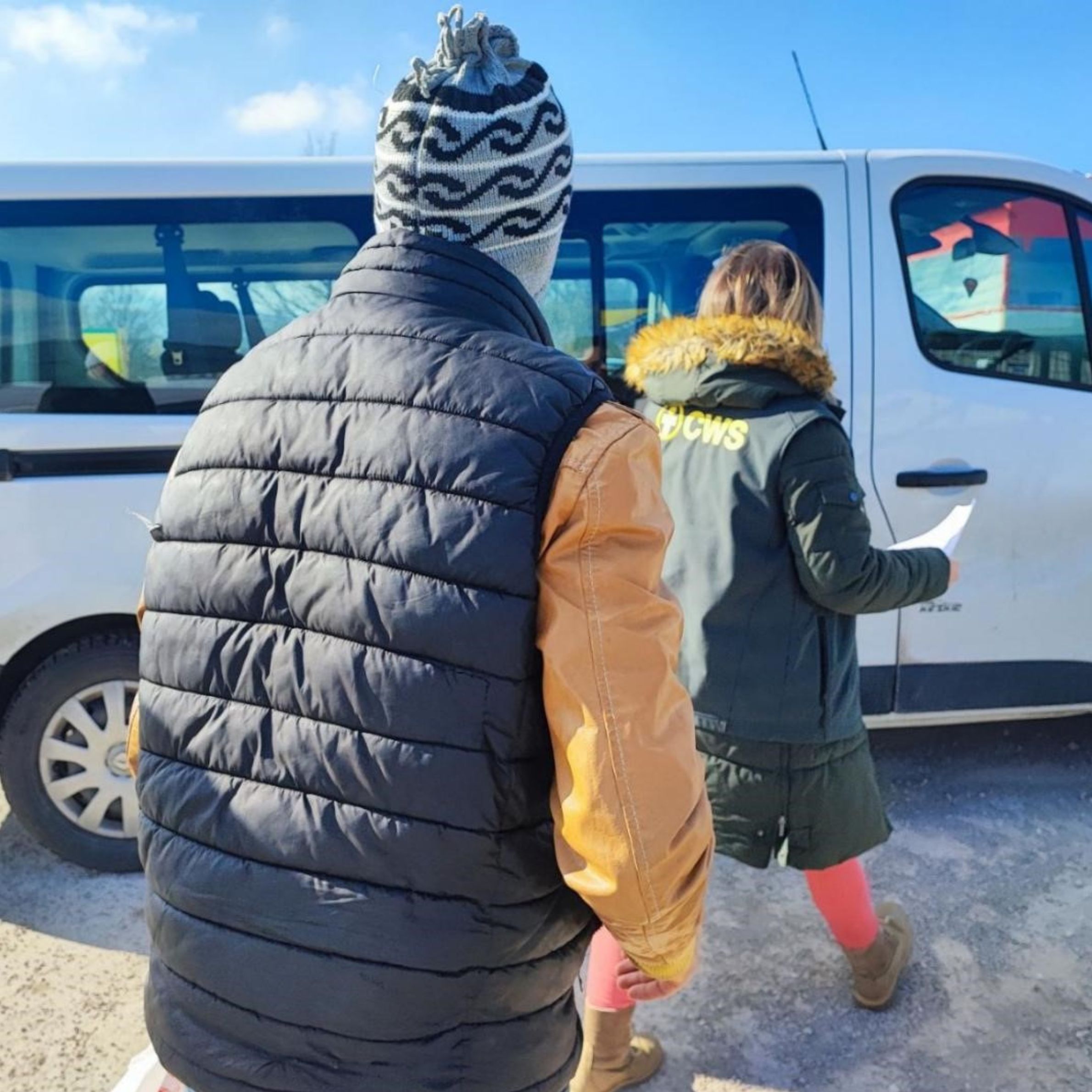
Lamia Topic and Kan
Kan’s Determination
Story by Lamia Topic
“He is a little shaken. Disturbed. Scared. He cried a little too,” the shift leader at the Lipa reception center described the emotions of the young boy standing before us. Kan, a slender and tall boy with light green eyes and a sorrowful gaze, introduced himself as we approached him. A CWS *legal guardian, along with her colleague, extended a warm welcome, while Kan, aged sixteen from Afghanistan, shared his name and background.
Kan’s story, like the countless others shared with the CWS mobile team every day, carried a familiar tone. Behind each story, however, lay a distinct face, a unique perspective and personal pain. Not all these stories were filled with sorrow; many had happy endings, just like Kan’s, but they are all equally significant. Every person’s story matters and every individual deserves to be heard and remembered by someone. These stories hold a special place in the hearts of the guardians, for they know that by truly listening to a child’s voice, they can understand how to offer help — not only to those who could express their needs but also to those who struggle to find the right words.
Despite his fear of the unknown and the challenging circumstances he faced, Kan and his light green eyes conveyed his trust in the guardians who reached out to him. Bosnia was a new place for him, and his journey had been tumultuous. After numerous failed attempts to cross the European Union border, fate led him to Bosnia, where he joined a group of countrymen on their way to Lipa. Since Lipa is primarily a facility for single adult men, the staff promptly alerted the CWS mobile team. Ensuring Kan’s safe transport to Borici, a reception center for families and unaccompanied children, is the responsibility of CWS guardians. During the journey, Kan seized the opportunity to share his story with the team.
After the fall of Afghanistan, Kan was forced to leave his homeland. While some of his family remained behind, others, including Kan, sought refuge in Sarajevo. Sadly, they were separated during their attempt to cross the border. What troubled Kan the most was not having a mobile phone, which prevented him from staying in touch with the group and his family in Afghanistan. His time in Bosnia and Herzegovina was short since his ultimate goal was to reach Germany, where two of his close friends had already settled.
“It’s not easy. Germany is a beautiful country, but the language is incredibly difficult. I will learn it. I’ve managed to learn English as well, not fluently, but enough to talk to people. I will go to school and find work. But I miss my family. You see, I’m the eldest brother,” Kan shared with a mixture of determination and longing. He also had questions about the accommodation and the city he found himself in, but what he truly wanted to know was whether there were other Afghan residents in Borici, as he had observed a significant Afghan community in Sarajevo. The guardians’ reassurance that Borici housed an Afghan community, particularly peers his age, illuminated Kan’s eyes, igniting a spark of warmth and hope.
Kan continued to recount his journey, the hardships he encountered, and the heart-wrenching moments of separation from his loved ones during the perilous border crossing. Encouraged by the guardians, he felt safe to express his emotions and fears. Upon reaching Borici, the CWS guardians shared all the necessary data and information with the Borici-based guardians, ensuring that Kan’s stay would be as comfortable as possible, with all his needs attended to.
Placing his left hand over his heart, Kan said once again with a gentle smile, “Thank you, and good luck. I hope we will meet again.”
Lamia Topic is a CWS Legal Guardian in Bosnia and Herzegovina. To learn more about our work in Eastern Europe, click here.
*Legal Guardians serve to represent and protect unaccompanied minors crossing through Bosnia and Herzegovina. CWS’s mobile team acts as frontline actors, conducting rapid risk assessments, offering immediate support, and connecting unaccompanied minors with vital child protection services and systems. You can learn more about our programs in Eastern Europe by clicking here.
Stories of Change
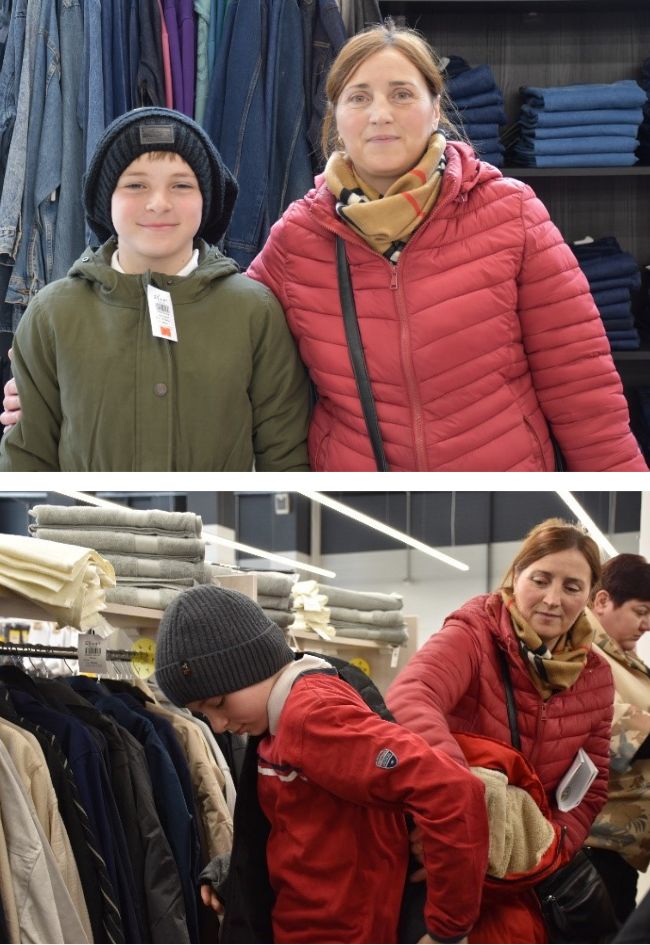
Aliona and Ionel at the CWS supported distribution center
The Warmth and Love of a Foster Mom
Aliona, a Ukrainian foster mom, has a huge heart. A heart she has opened to spread love and warmth to three foster children and two biological children.
When we met Aliona she was gathering winter clothing for all her children at the CWS-supported donation distribution center. This caring act is just one of many that Aliona does for all of her children each day.
Despite the major financial responsibility it is to foster children, Aliona and her husband, Pentru, are certain of the important work they are doing. She told us, “It wasn’t easy at all, but when I learned the life story of these children, I said to myself, ‘I want and I will be able to give them the warmth and love they didn’t get from their biological parents’”. Her foster children love their foster parents and call Aliona and Pentru “Mother” and “Father”.
Twelve-year-old Ionel is one of the family’s foster children. When he was a young boy he was abandoned by his father and neglected by his mother who struggled with alcoholism. Ever since he became Aliona’s foster son, his life improved significantly. He told us, “We love our mother Aliona very much. Thanks to her, we are always dressed, clean and very happy. I really want to make a lot of money when I grow up and buy Mom and Dad a new car and a new house.”
Ionel enjoys helping out with household responsibilities and his favorites are when he gets to help his foster dad, Pethru, with the garden and car repairs. He hopes to one day become a mechanical engineer but his greatest dream reflects the selflessness and kindness of his foster mother. “I hope I will be able to help other abandoned children in the future. Maybe, I will even build a modern center for children where there will be no place for sadness and pain.”
The family has received support through donations and vouchers that can be used for food, hygiene products and clothes. Aliona said, “Thank you for the $50 voucher for food, hygiene items and winter clothes that Ionel chose today. All this allows us to save money and use it to pay for utility costs which have increased too much lately”. She added, “We will celebrate today with the whole family and I will buy the children some sweets so they feel like it’s a real celebration.”
Today, we want to celebrate Aliona. Her dedication to her children is a noble display of the warmth, strength and selflessness mothers like her embody.
When we asked for support for our Ukrainian neighbors, the CWS global community took action and helped make an impact on the lives of families like Aliona’s. To continue supporting Ukrainians in Moldova, you can donate here.
Stories of Change
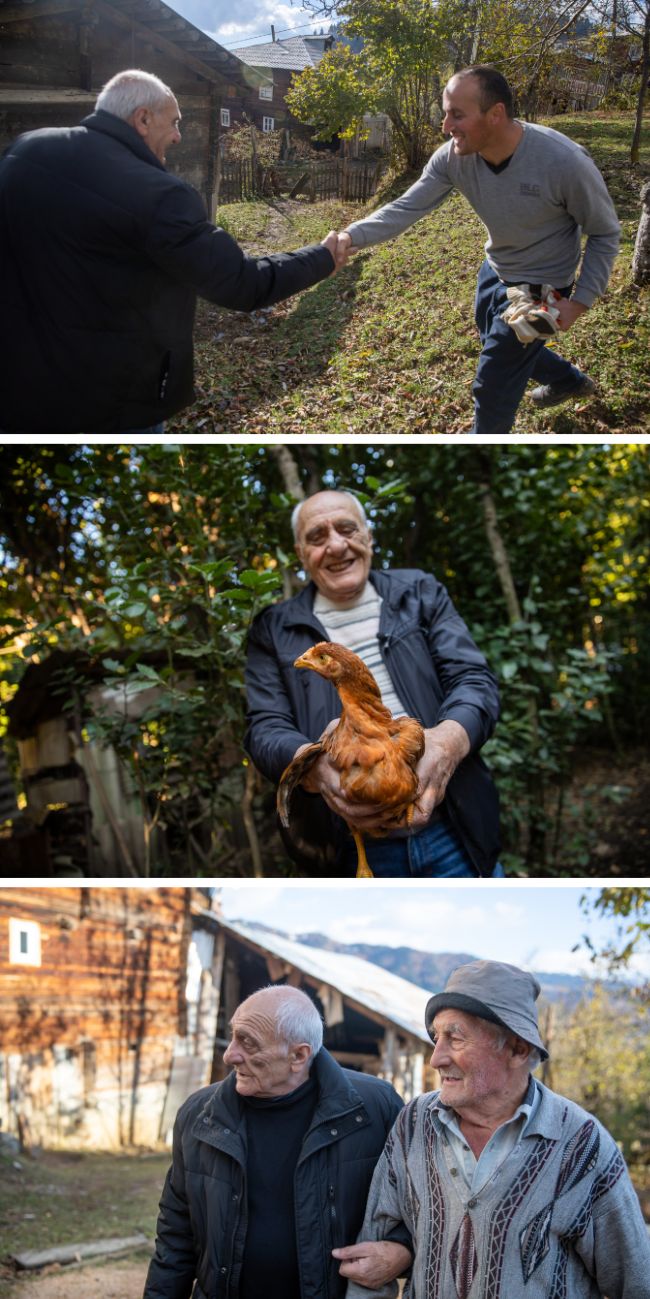
Top: Rostom and Jemal (beekeping program participant), Middle: Rostom and chicken from giving machine, Bottom: Rostom and renewable energy technology program participant
The Unstoppable Rostom Gamisonia
The meaning of life is something we all question at some point, but to our colleague and partner, Rostom Gamisonia, the answer is clear:
“This is the meaning of my life: To do and to help people get out of their sufferings and to share what we have. We have a great poet, Shota Rustaveli, who says, ‘What you give is yours, what you hide is lost.’ We come into this world to share what we have…. This is the meaning of life: giving. If you give, you receive. What do I receive? Spiritual health and the power to make changes in my own life.”
Giving to others has always been a familiar theme in Rostom’s life who first came to Western Georgia as a refugee from the self-declared state of Abkhazia. “I had to leave my home and move to Western Georgia. There, not only did I have to look after my family, but also all my community members who were living with no food, no shelter, no access to resources,” Rostom explained. He added, “It’s difficult for me to be fed when I know someone else is hungry.”
In the village he grew up in, Rostom developed a deep respect for nature and the forest that surrounded his home. He recalls that his grandmother would collect plants and berries from the forest to create medicines and stated, “Everything in the forest became a precious thing for me.”
As he got older, Rostom would often gather a group of friends to go into the forest to clean up any trash they could find. He soon realized that the responsibility to care for the environment and those affected by it was massive. With this in mind, in 1997 Rostom and his friends established the Rural Communities Development Agency.
Since its creation, RCDA has worked to protect the environment while helping rural communities combat issues like energy poverty, eco-migration and climate change. In every community we visited with our RCDA partners, Rostom displayed profound care and friendship with the community members. It was not uncommon to see him linked arm in arm with them and in every home we entered, we were welcomed with profound gratitude and kindness.
Over the years, Rostom’s commitment to his work has grown along with the noticeable effects of climate change. He said, “Look around. Look at nature and how the forests are degraded, how the frost is increasing, how the winds are blowing, how the plants are less. Stop for a little and look around.”
Rostom believes that educating people on climate change is just as important as combatting it. “We want people to know and feel that they are part of the environment and the nature around them,” he said. To achieve this, RCDA has developed school curriculums and summer camps to teach children, “how to live in harmony with nature.”
Since I first met Rostom during our program visit in Georgia, there has been one question that I’ve been meaning to ask him: how do you do it? From fighting climate change to rallying worldwide support to developing meaningful relationships with everyone he serves, it’s easy to understand why Rostom limits his sleep to only four hours a night.
When I asked him, he told me, “I get my energy from nature but the greatest energy I and my team receive is from the gratitude of the people. This makes me want to continue.” He explained, “The show we talk about when we say ‘the show must go on’ is our lives. You should never stop. This is the most important thing, you should always believe in tomorrow. ” Rostom will not be stopping any time soon and neither will we.
Rostom Gamisonia is the director of the Rural Communities Development Agency which is CWS’ local partner in the Republic of Georgia. You can help us support local organizations like RCDA by donating here.
—
Mariana Gama is CWS’ Program Communications Specialist.