Stories of Change


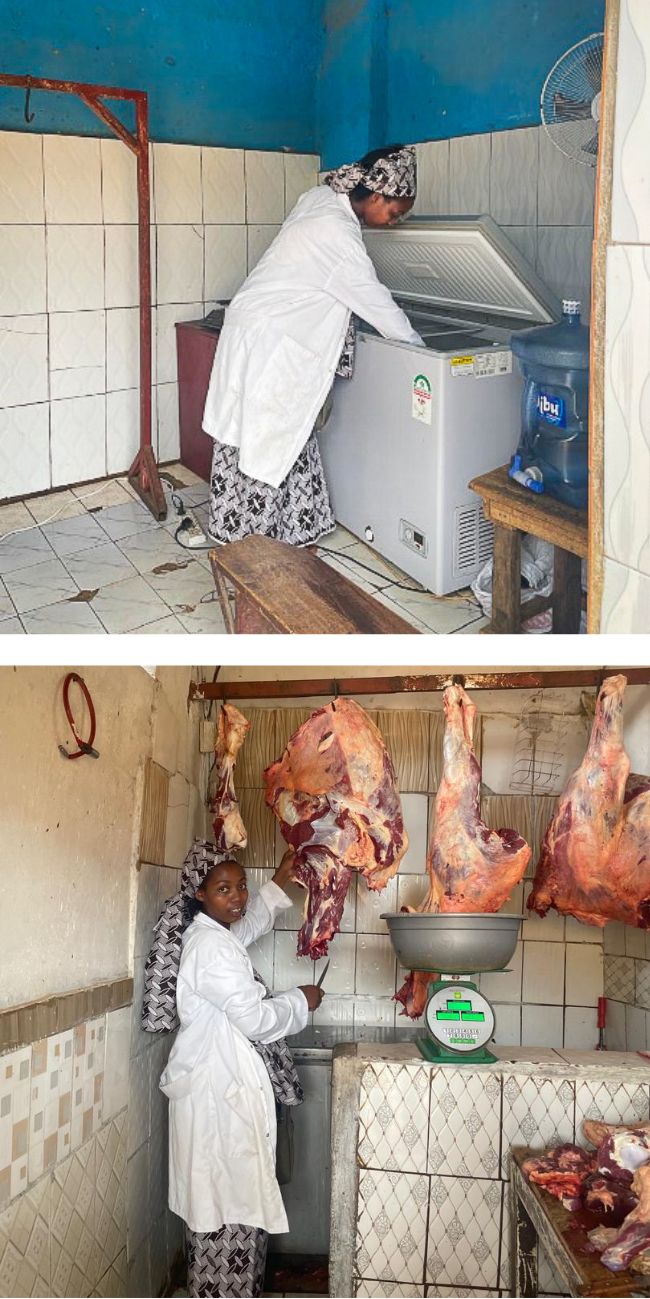
Top and Bottom: Evelyne works in her business.

From Refugee to Entrepreneur: Evelyne’s Story of Resilience and Growth

Through support from CWS’s Igniting Innovation Project, in partnership with YWCA Rwanda, Evelyne Ntakirutimana’s business grew dramatically. A refugee entrepreneur in Mahama Camp, Rwanda, Evelyne’s journey shows how targeted investment and training can spark long‑term economic transformation for refugee families and communities.

A Refugee‑Led Business Creating New Opportunity

Evelyne Ntakirutimana demonstrates the powerful impact that can emerge when refugee entrepreneurs receive dignified economic opportunities paired with practical skills support. Evelyne runs a butchery business in Mahama Camp in Rwanda. Through the CWS Igniting Innovation Project, in partnership with YWCA Rwanda, she gained access to capital, training and a formal business space that allowed her to move from day‑to‑day survival to building a thriving enterprise.

When Evelyne first began her business, she operated with only 150,000 RWF per month (104 USD). Limited capital meant she could not buy enough meat or invest in cold storage. Without refrigeration, she often relied on informal and unreliable storage arrangements, which caused losses and reduced her already thin profit margins. Like many refugee entrepreneurs, she faced the cycle of having too few assets to grow but too little revenue to save or invest.

The Igniting Innovation Project provided an initial grant of 700,000 RWF (485 USD), which Evelyne used to purchase a refrigerator and secure formal business premises. This step marked a major turning point. Cold storage allowed her to maintain larger quantities of inventory, and a formal space gave her visibility with local authorities and freed her from operating in constant insecurity. Through a second grant of 300,000 RWF (208 USD), combined with 350,000 RWF (243 USD) she saved through her community savings group, Evelyne was able to buy her first full cow and begin planning for long‑term business growth.

Building Employment and Strengthening Her Family’s Future

Formalizing her business gave Evelyne the confidence to participate more in the local economy. During a project training on financial management and marketing, she recognized that the meals being served indicated demand for meat supply. She approached the organizers and secured a contract to provide meat for future activities—recognizing opportunities for growth and building her confidence in promoting her business through the local community.

Evelyne now employs two young men from the camp who previously had no stable income but now each earn 60,000 RWF (42 USD) per month. She also withholds half of their wages as structured savings that the employees can later use to start their own businesses. Although this approach is unusual, her employees appreciate that they’re able to build capital they would otherwise struggle to save. The model has strengthened Evelyne’s business while supporting the development of future entrepreneurs, giving back to both her community and neighbors.

The success of Evelyne’s business has allowed her family to purchase land and begin planning for a future home. She has enrolled her two children in private school, prioritizing their long‑term opportunities. Evelyne describes how her understanding of money has shifted. In the past, she often felt unsure how to use even small amounts of leftover income. Today she approaches her finances with confidence and sees every investment as a step toward growth.

Looking Ahead: A Bright Future for Evelyne

In the future, Evelyne hopes to hire two additional employees, open a second business location and eventually raise livestock to supply her own butchery. In camps like Mahama, where economic opportunities are limited, each new job has meaningful impact.

As a formal business owner, she contributes tax revenue to the local municipality. Most importantly, she has gained a sense of agency. She identifies opportunities, mobilizes community savings and invests in both her business and her children’s education.

Her story shows that with the right support, refugee entrepreneurs can build strong, sustainable businesses that benefit entire communities. 

To learn more about our work in Africa, click here.

Following Tragic Killing of Alex Pretti at the Hands of Federal Officers, CWS mourns with Minneapolis, Demands Change and Accountability 


January 25, 2026

Washington, D.C.—Church World Service expresses its horror and grief in response to the shooting and killing of Alex Jeffrey Pretti by federal immigration enforcement officers on Saturday morning in Minneapolis. Pretti was an American citizen and Minnesotan who worked as a registered nurse in the Minneapolis Veterans Affairs Health Care System. Pretti was shot and killed just 17 days after the killing of fellow …

“It All Begins With Water”: How Sustainable Access Sparks Community Transformation in West Pokot


Lenny Blue | January 23, 2026

In the communities of West Pokot, Kenya, lasting transformation starts with one essential resource: water. Through long-term partnership and community-led development, CWS supports families as they move from water access to sanitation to thriving livelihoods. From Water Access to Community Health When we think about transformation in a community, it’s easy to notice the visible things first—gardens full of greens, chickens clucking …

When the Earth Shook: A Family’s Story of Survival and Compassion in Afghanistan


January 20, 2026

When a devastating earthquake struck Afghanistan’s Kunar Province on August 21, 2025, families lost homes livelihoods and loved ones within minutes. With no food or shelter, survivors like Nizamuddin relied on rapid support from Community World Service Asia, a local partner of CWS, to make it through the first critical days. A Peaceful Life Shattered in Seconds Kunar Province is …

CWS Begins 2026 by Welcoming New Members to Board of Directors 


January 14, 2026

Karen Manczko, Luis Guardia, and Susannah Cunningham Join the CWS Board   New York City—Church World Service today announced that it has welcomed three new members to its Board of Directors, Karen Manczko, Director of Institutional Relationships at Wespath Institutional Investments and Wespath Benefits and Investments; Luis Guardia, Chief Financial Officer for the National Association of Counties and founder of Guardia Investors; …

CWS Responds to New Operation Reopening Cases of Resettled Refugees 


January 13, 2026

Washington, D.C.—Church World Service today expressed its deep concern over the Trump administration’s detaining of resettled refugees as part of a wider effort to review and potentially revoke their legal status. On January 9, U.S. Citizenship and Immigration Services (USCIS) announced the launch of Operation “Post-Admission Refugee Reverification and Integrity Strengthening” or “PARRIS,” targeting resettled refugees who have fled violence and …

Clean Water, New Beginnings: How Community Wells Are Changing Lives in Cambodia


January 12, 2026

Two new community wells in Battambang Province, Cambodia, are providing safe, reliable water to 23 households—transforming daily life by reducing health risks, saving time and improving opportunities for women and children. Across rural communities, the lack of safe water is more than an inconvenience—it is a barrier to health, education and opportunity. When water sources dry up or become unsafe, …

Stories of Change


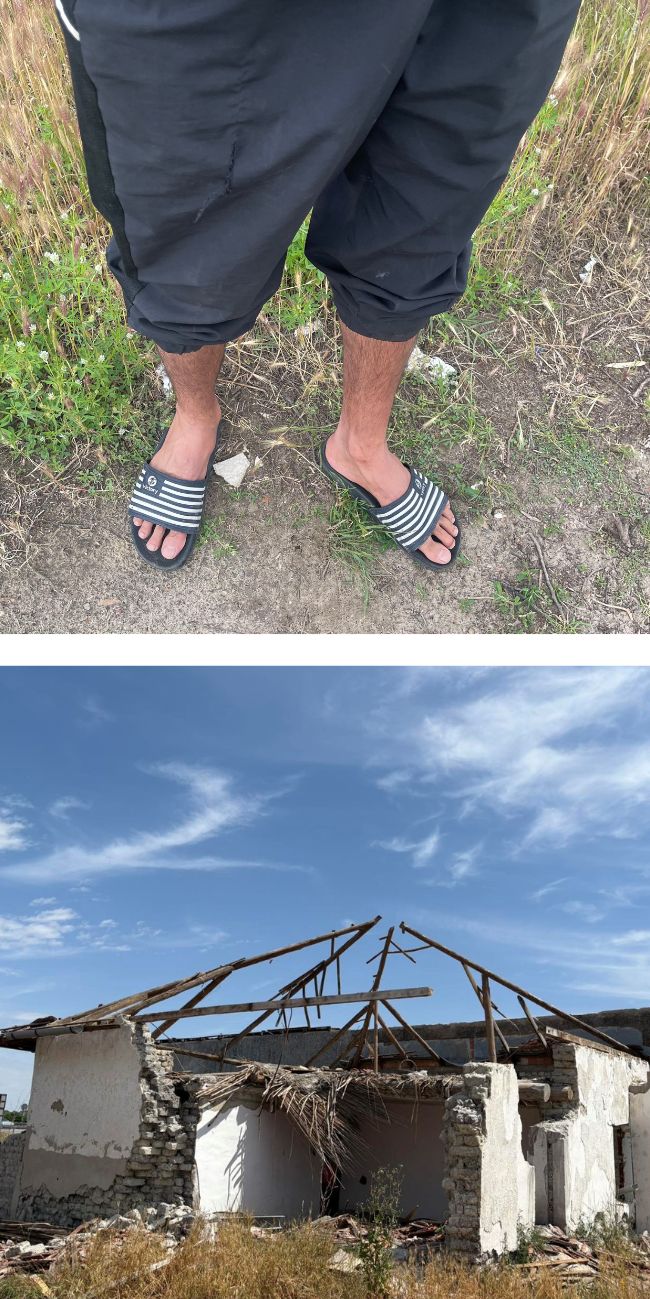
Top: Yusuf Bottom: An old farmhouse where Yusuf found shelter

Finding Safety: How One Afghan Teen Escaped Exploitation and Found Support in Serbia

After two years of hardship and exploitation, 17-year-old Yusuf arrived in Serbia exhausted and unsure of his next steps. With support from InfoPark, CWS ‘s local partner, he found safety and a path forward. 

A Journey Marked by Fear and Uncertainty 

Yusuf*, a 17-year-old from Afghanistan, arrived in northern Serbia in late 2025 after a harrowing two-year journey. Following the Taliban’s rise to power, life in Afghanistan became unbearable. He first fled to Türkiye, where he worked in a factory, and later decided to continue traveling—without a clear destination, but with hope for something better. 

His first attempt to cross the Türkiye-Bulgaria border was traumatic. Smugglers rushed the group across a razor-wire fence using a ladder and blanket, shouting commands as they moved. Yusuf described the experience as feeling “out of his body.” It was his first direct encounter with smugglers, and he quickly learned that disobedience could mean being left alone in the forest. 

Harsh Conditions and Constant Risk 

The journey to Serbia took five days, with little food and constant fear. Near the border, Bulgarian police intercepted the group—without the smugglers—and took them to a reception center. After collecting their information, money and some documents, the group was returned to the Turkish border. With no authorities present, they made their way to a nearby town where smugglers were waiting. 

In a second attempt, Yusuf and 17 others traveled in a van with the seats removed, keeping their heads down to avoid detection. Near Belgrade, the group was split into smaller units. Yusuf ended up in a squat with a few others, where conditions were dire: sleeping outdoors, no beds or bathing for six days, limited food and repeated failed attempts to cross northern Serbia. 

A Turning Point in Belgrade 

During regular outreach, InfoPark’s mobile team identified Yusuf and conducted a thorough protection interview, recognizing his fragile psychological and physical state. The team offered him and his peers accommodation in a state-run center—a surprise, as they had been told smugglers charged 300 euros for such access. 

Yusuf was also given detailed information about available services, legal options regardless of status, the asylum process and integration opportunities for unaccompanied minors. Grateful and relieved, he accepted the referral to a minors’ accommodation center managed by the Commissariat for Refugees and Migration. 

The Power of Information and Support 

Thanks to accurate information and direct support from InfoPark, Yusuf was able to make informed decisions about his future. With a safe place to stay and access to essential services, he could begin to recover and plan his next steps. His story shows how reliable information and compassionate outreach can protect vulnerable minors and counter the harmful influence of smugglers. 

*For the protection of the individual mentioned in this story, a pseudonym has been used. 

In partnership with InfoPark, CWS provides emergency aid—including food vouchers, hygiene kits and medical supplies—to refugees and migrants in Serbia, while also offering short-term shelter, mental health support and safe spaces for those most at risk. 

This project is possible thanks to the generosity of UMCOR. To learn more about our work in Eastern Europe, click here. 


Stories of Change


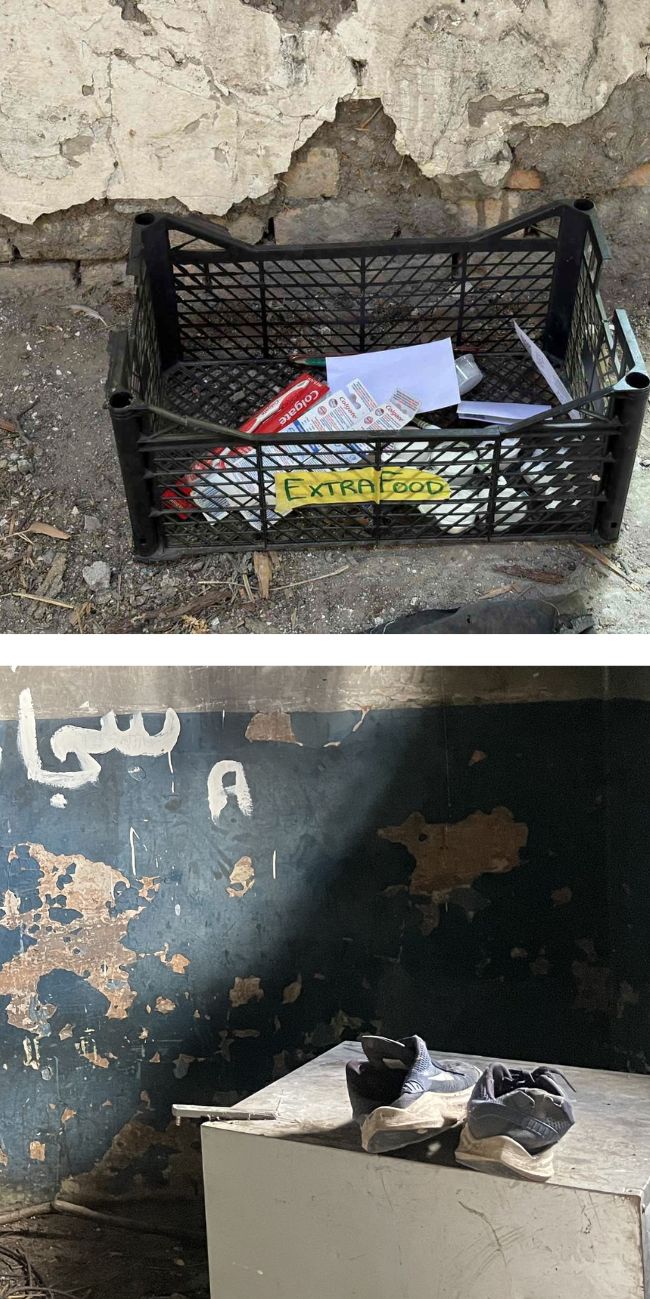
Top: Non-food items provided by InfoPark Bottom: A fresh pair of shoes for Farid

A Step Forward: One Young Man’s Journey Through the Balkans

After weeks of walking from Türkiye to Serbia, 21-year-old Farid arrived exhausted and injured—but determined to reach safety. With support from InfoPark, CWS’s local partner, he received critical aid that helped him continue his journey with dignity. 

A Long Road from Afghanistan 

Farid*, a 21-year-old from Afghanistan, arrived in Serbia in June 2025 after nearly a month of travel on foot. He had crossed from Türkiye through Bulgaria with a group of ten compatriots, hoping to reach Norway, where he has relatives. His journey was marked by hardship, resilience and a quiet determination to find safety. 

Farid grew up in a poor household. His father died when he was very young, and though his extended family offered some support, resources were scarce. Three years ago, Farid left Afghanistan for Türkiye via Iran, working in a junkyard and sending money home. Eventually, he and a few friends decided to attempt the Balkan route on foot, relying on GPS and advice from others to avoid smugglers, and they faced strenuous walking, poor hygiene and injuries along the way. 

A Moment of Relief in Obrenovac 

By the time Farid reached Serbia, his shoes were completely worn through, and he had no money to replace them. During a routine outreach visit, InfoPark’s mobile team identified him and conducted a protection interview. They immediately prioritized his urgent needs, offering psychosocial support, non-food items and medical care. 

Fortunately, the outreach team had his shoe size available in their car. The simple act of receiving new shoes lifted Farid’s spirits. His injuries were treated, and he received supplies for continued care. Despite receiving an offer for accommodations at the reception center, Farid declined, choosing instead to continue toward the Bosnia and Herzegovina border that evening—still focused on reaching his destination. 

Filling the Gaps Along the Balkan Route 

In partnership with CWS, InfoPark provides essential support to people on the move—many of whom remain invisible to formal systems. From food vouchers and hygiene kits to medical supplies and legal aid, these services are often the only lifeline for migrants and refugees navigating the Balkan route. 

For Farid and countless others, even small interventions—like a pair of shoes—can make a profound difference in their safety, health and dignity. 

*For the protection of the individual mentioned in this story, a pseudonym has been used. 

In partnership with InfoPark, CWS provides emergency aid—including food vouchers, hygiene kits and medical supplies—to refugees and migrants in Serbia, while also offering short-term shelter, mental health support and safe spaces for those most at risk. 

This project is possible thanks to the generosity of UMCOR. To learn more about our work in Eastern Europe, click here. 


Stories of Change


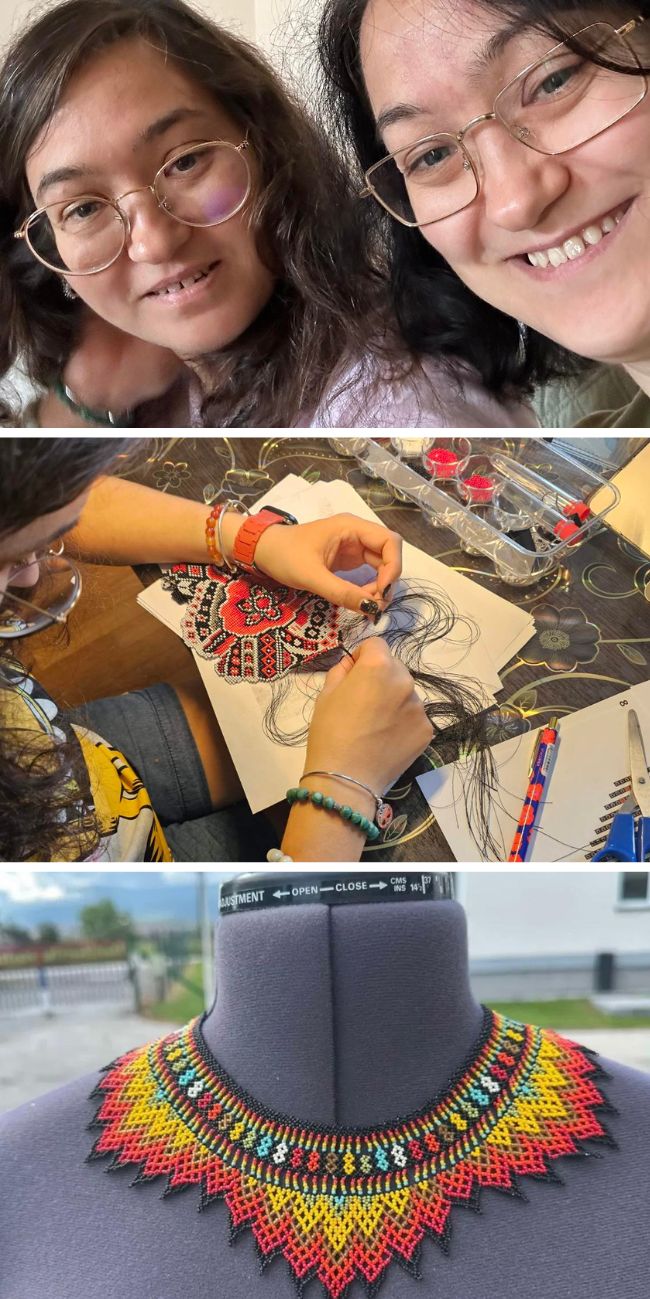
Top: Tetiana (left) and Valeriia (right) Middle: Tetiana at work Bottom: Necklace made by the sisters

From Displacement to Independence: Twin Sisters Rebuild Their Lives in Serbia

After fleeing war in Ukraine, Tetiana and Valeriia found safety and purpose in Serbia. With creativity, determination and support from CWS and local partners, they’ve transitioned from asylum center residents to independent artisans building a new life. 

A Journey Toward Safety and Stability 

Tetiana and Valeriia, twin sisters from Ukraine, arrived in Serbia in June 2022 after leaving their homes in search of safety from the war. From the beginning, they demonstrated remarkable resilience, independence and creativity as they began rebuilding their lives far from home. 

While living at the Asylum Center in Vranje, the sisters continued their remote work and quickly became active in community life. They discovered a passion for handcrafted jewelry and decorative items, using Czech and Japanese beads to create intricate necklaces, bracelets and ornaments. Their artistry soon reached beyond the center walls, as they showcased their work at local fairs—sharing their culture and connecting with the broader community. 

Finding Purpose Through Craft and Community 

With support from the Belgrade Center for Human Rights, CWS’s local partner, Tetiana and Valeriia received short-term housing assistance while searching for an apartment. Inspired by their close bond with Elvira’s family—fellow asylum seekers—they chose the city as their new home. 

The sisters are now living independently and have settled into their new home. Since moving, they have continued to expand their new lives: continuing with their online work, enrolling in a language school and learning Serbian.  

Their journey from displacement to independence reflects the power of community, creativity and determination—and the promise of a future they are shaping together. 

In partnership with the Belgrade Center for Human Rights, CWS provides legal aid, case management and protection services to help refugees and migrants in Serbia access their rights, navigate asylum processes and rebuild their lives with dignity. 

This project is possible thanks to the generosity of UMCOR. To learn more about our work in Eastern Europe, click here.