Despite persistent legal and social inequities, women everywhere are rising to build stronger, fairer communities. Their voices, leadership and determination are driving meaningful change—on International Women’s Day and every day. The Barriers Women Confront Worldwide Women around the world continue to face systemic barriers that prevent them from accessing equal rights and opportunities. Globally, ten percent of women live in extreme poverty, and as …
Stories of Change
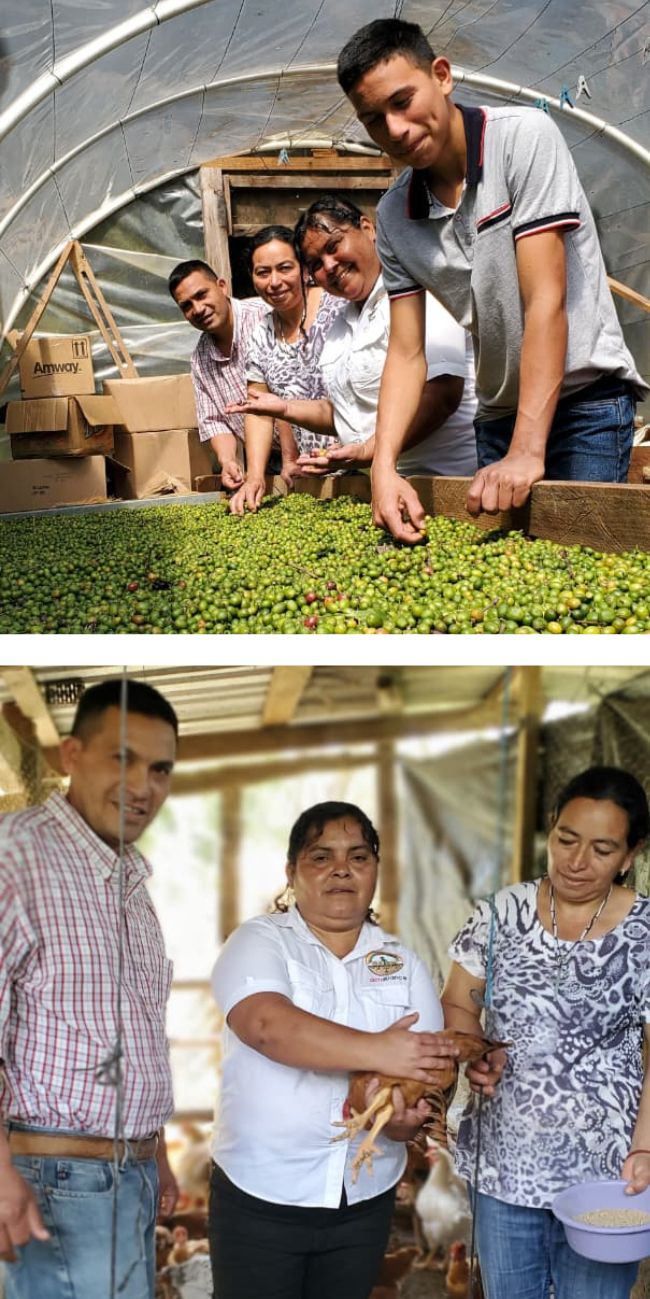
Above: Pedro's family participates in activities with Orfelina, CASM's agricultural technician
Where a Familia Plants a Future: Growing Stability Through Faith and Hard Work
Through the CWS-supported Produce Verde project, one family is transforming their livelihood, strengthening their unity and inspiring their community through sustainable farming practices.
As the first morning light creeps over the horizon, the Maldonado family’s routine is already underway. Their day begins with prayer, followed by a shared breakfast before they step into the fields and corrals that sustain their livelihood. What grows here is more than coffee, crops and livestock—it is stability, confidence and the shared vision of a family working toward a future rooted in faith, hard work and opportunity.
A Turning Point in a Time of Crisis
Several years ago, Pedro and his family’s lives were put to the test when the pandemic struck Honduras. Work became uncertain, prices rose and accessing food grew increasingly difficult. The situation became so severe that his wife Edis considered migrating to the United States to earn additional income, but their family could not imagine being separated.
Instead, they decided to stay in Honduras—to remain together and to hold firmly to their faith. Soon after, an opportunity arrived to join Produce Verde, a food security project led by Comisión de Acción Social Menonita (CASM) with support from Church World Service and Growing Hope Globally.
This program marked a turning point in their lives. They received animals, training and tools that helped transform their home into a productive, thriving farm.
Growth, Learning and Shared Leadership
Two years later, the changes are visible in every corner. Where there were once only a few animals, there are now organized enclosures for laying hens, broilers and young chicks. Edis now confidently leads the poultry project. She began with just 15 chickens, but today she cares for up to 100 chicks and receives steady orders from the community. “Thanks to my husband, who encouraged me and told me, ‘Don’t be afraid to invest.’”
The biodigester installed on the farm allows them to produce gas from waste, reduce costs and make better use of limited resources. A solar dryer has improved coffee processing, and organic fertilizer techniques have strengthened the soil. They even make use of every byproduct: tomato, carrot and lemon peels are used to naturally deworm their animals without chemicals.
Planting Stability Together
Each improvement reflects learning, effort and perseverance. Yet Pedro insists the greatest change is not immediately visible—it lies in how the family now works together. Before, he felt he had to carry every responsibility alone. Today, each family member has a role and a purpose. His wife manages the animals, his children support composting and coffee production and decisions are made collectively. This shared effort has not only improved their household economy, but it has also brought peace of mind and joy.
This entire process is deeply connected to their faith. Even though their days begin before dawn and stretch late into the evening, Edis explains, “We always make time for God.” Pedro summarizes their approach simply: “We are being stewards of creation, and when we implement practices like these, we are contributing to the environment.”
Their impact extends beyond their home. Through the Produce Verde project, Pedro gained not only technical support but also a new vision for the future—one that inspires other families. Neighbors now come to observe, ask questions and learn from the Maldonados’ experience. By sharing his knowledge, Pedro has stepped into a leadership role within his community.
Moving Forward, Step by Step
When Pedro speaks about the future, he does not mention final goals or completed successes. Instead, he talks about the process. “I don’t say we have achieved it. I say we are achieving it, because the plan is to keep moving forward. Realizing that we can develop family projects is very important.”
Edis dreams of a larger, fully integrated farm, with the home at its center and enough space to expand their work and share their knowledge with others. Pedro listens to that dream with a calm smile and describes himself in simple terms: “I am where I am today because I have been a bold dreamer and choose to believe and act on the conviction that it is possible.”
The Produce Verde project is implemented by our local partner, Comisión de Acción Social Menonita (CASM), with the support of CWS and Growing Hope Globally.
Learn more about CWS’s work in Honduras here.
The Woman Behind Every Iftar: A Ramadan Reflection
Yathrip Abdelgadir | March 5, 2026
In her blog, Yathrip honors the quiet, daily acts of care that mothers provide—especially during Ramadan, when fasting requires both spiritual focus and physical endurance. It celebrates the love, labor and cultural preservation expressed through food, and uplifts the everyday leadership of women on International Women’s Day. The Unseen Work Behind Every Iftar During the month of Ramadan, our home …
Women Rising in Arid Lands: Resilience, Leadership and the Fight for Gender Justice
February 25, 2026
CWS’s recent gender analysis in arid and semi-arid lands in Kenya shows that climate pressures are deepening existing gender inequalities, while also revealing that women’s leadership is central to building resilient households and communities. Women and girls in arid and semi-arid lands in Kenya are experiencing some of the harshest effects of climate change. As drought deepens and rainfall becomes unpredictable, families face growing threats to food security and …
Church World Service Strongly Condemns Plan to Arrest and Detain Resettled Refugees
February 19, 2026
Washington, D.C. – Church World Service unequivocally condemns the Trump administration’s most recent memo that could subject up to 100,000 resettled refugees to arrests and detention. Coming on the heels of the horrific and unlawful arrests of refugees under Operation PARRIS in Minnesota, this new guidance outlines plans for the arrest and custodial “inspection” of refugees who have lived in the U.S. …
This Ash Wednesday, CWS and Covenant Partners Rise Up for Refuge
February 18, 2026
In early 2025, as the new U.S. administration moved to close off legal immigration pathways and prepare for mass detention and deportation of refugees and immigrants, CWS and our Covenant Partners watched with growing alarm. In response, we united under the Ash Wednesday Ecumenical Declaration: Defending Refuge—a bold, public commitment by faith communities nationwide to stand against policies that endanger refugees and immigrants. In the months that …
CWS Mourns a Life Lived for the Betterment of Others with the Passing of Reverend Jesse Jackson
February 17, 2026
Washington, D.C.—Church World Service today joins with the nation in mourning at the passing of Reverend Jesse Jackson. A man of faith, civil rights icon, and advocate for the underserved, Reverend Jackson leaves behind a world better than he found it. In response to Reverend Jackson’s passing, Rick Santos, president and CEO of Church World Service, issued the following statement: …
Stories of Change
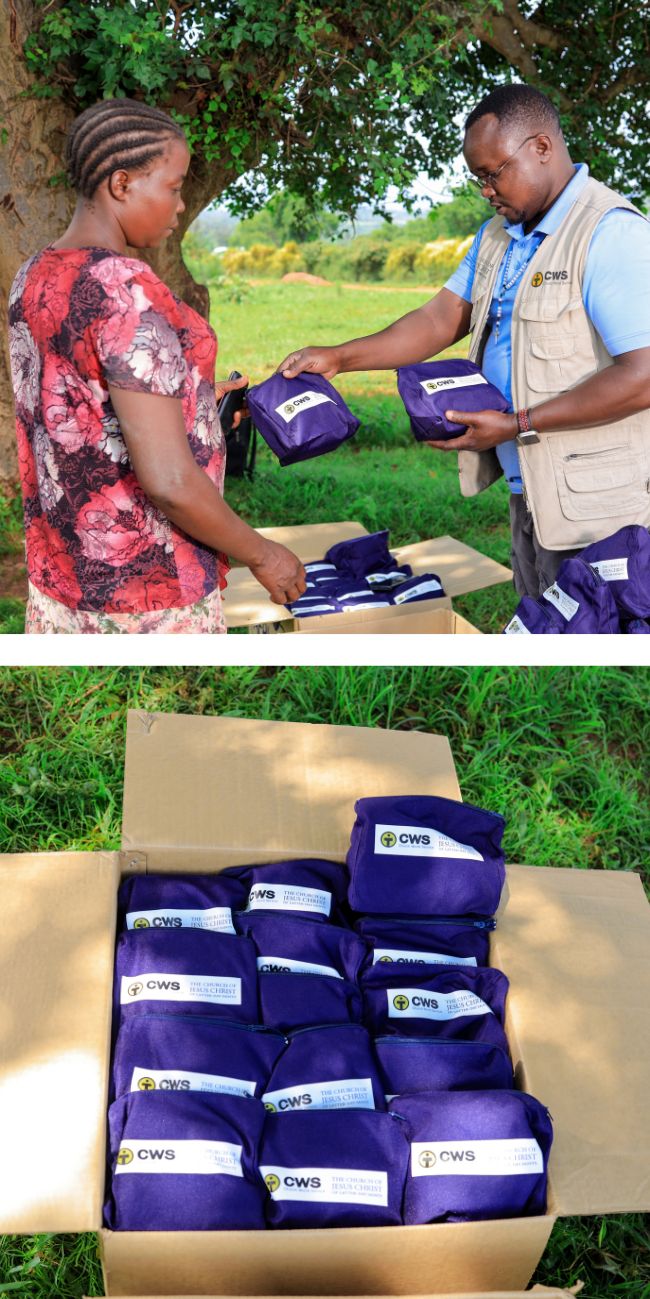
CWS staff distribute menstrual hygiene products to individuals in Nakivale refugee settlement in Uganda
Dignity Restored: How Menstrual Health Is Transforming Girls’ Lives in Nakivale
CWS’s WASH Emergency Response Project in Nakivale Refugee Settlement is restoring dignity and opportunity for women and girls by providing reusable menstrual hygiene kits, training and improved sanitation facilities. For girls like Amina, this support means renewed confidence, uninterrupted education and a powerful reclaiming of agency in displacement.
Building Dignity and Strengthening Girls’ Education
When Amina first arrived at the Nakivale Refugee Settlement in Uganda, her greatest concern wasn’t shelter or food—it was survival. Like thousands of young women and girls fleeing the Democratic Republic of Congo, she faced an unspoken but urgent challenge: managing her menstruation with almost no resources, privacy or support.
Before the CWS Water, Sanitation and Hygiene (WASH) project began, girls like Amina routinely missed up to five days of school every month. With no access to proper menstrual hygiene supplies, many relied on torn cloth, leaves or nothing at all. The shame and fear of embarrassment kept them from school, community gatherings and even the camp’s water points. Untreated infections were common, and the emotional toll was heavy.
Teachers noticed that even when girls did attend school during their periods, they struggled to focus, often distracted by discomfort and worry. What remained largely unspoken was the deeper impact the belief that their bodies were burdens, that their education mattered less and that their dignity was negotiable.
Launching a Holistic Response
In July 2025, CWS launched the WASH Emergency Response Project, recognizing that true dignity requires more than clean water and latrines. The project committed to providing 2,500 upgraded reusable menstrual hygiene kits to women and girls in Nakivale. But distribution was only one part of the solution. Each kit came with training on hygiene practices, proper usage and, most importantly, open conversation about menstruation as a natural, manageable part of life.
Amina remembers receiving her kit vividly. A community facilitator explained each component clearly and confidently—without euphemisms, embarrassment or shame. For Amina, it was the first time menstruation had been discussed with dignity.
A Transformative Impact
After receiving her reusable kit, Amina’s school attendance jumped from 60% to 100%. She no longer lost five days of learning every month. Her confidence returned, her grades improved and she rejoined group discussions, raising her hand without hesitation. She felt visible again—not as a problem to be managed, but as a student with potential.
Across the settlement, something shifted. Girls began talking about menstruation openly. Mothers and daughters shared knowledge without shame. Community health workers incorporated menstrual management into regular health sessions. Menstruation, once a source of silence, became a topic grounded in wellness and empowerment.
Amina’s experience was echoed throughout the community. Fatuma, age 16, once considered leaving school. After receiving her kit, she stayed and now trains other girls, becoming a peer educator respected in her community. Helen, a mother of three, said the kit made her feel seen again. “In the camp, we forget ourselves,” she shared. “We survive. But this project said to me: your body matters. Your comfort matters. Your dignity matters.”
Teachers also noticed dramatic improvements. “Girls are present now—and they’re present fully,” one teacher explained. “They’re not managing pain and worry and shame at the same time. They can just be students.”
Building an Integrated Approach to Sanitation
The menstrual kit distribution was paired with broader WASH improvements, including upgrades to 1,360 latrines with safe sanitation, new handwashing systems and water storage tanks and hygiene education that reached 80% of newly settled refugees. This integrated approach meant girls now had clean, private facilities to change their kits and practice safe hygiene. Menstrual management became part of a larger ecosystem that supported health, dignity and self-reliance.
The most meaningful outcome wasn’t only improved attendance or cleaner facilities—it was the normalization of menstruation. Amina has since become a mentor for younger girls in her neighborhood, discussing their bodies with confidence rather than fear. Moments once driven by shame turned into opportunities for connection and empowerment.
In a refugee context where people have lost everything—their homes, their countries, their security—the ability to manage menstruation with dignity represented something deeper: a small but unmistakable reclamation of agency, identity and humanity.
The menstrual kits were never just products. They represented a commitment to honoring women’s full humanity, protecting their futures and ensuring their education and dignity remain non-negotiable.
To learn more about our work in Uganda, click here.
A Year of Impact: How Compassion Became a Lifeline for Families in Crisis
February 11, 2026
When disasters struck communities across the United States this past year—from wildfires to flooding—CWS was there to help families navigate every phase of recovery. Thanks to supporters like you, people like Sarah found safety, stability and hope when they needed it most. From wildfires and historic floodings to winter storms and hurricanes, communities across the United States were left reeling …
Stories of Change
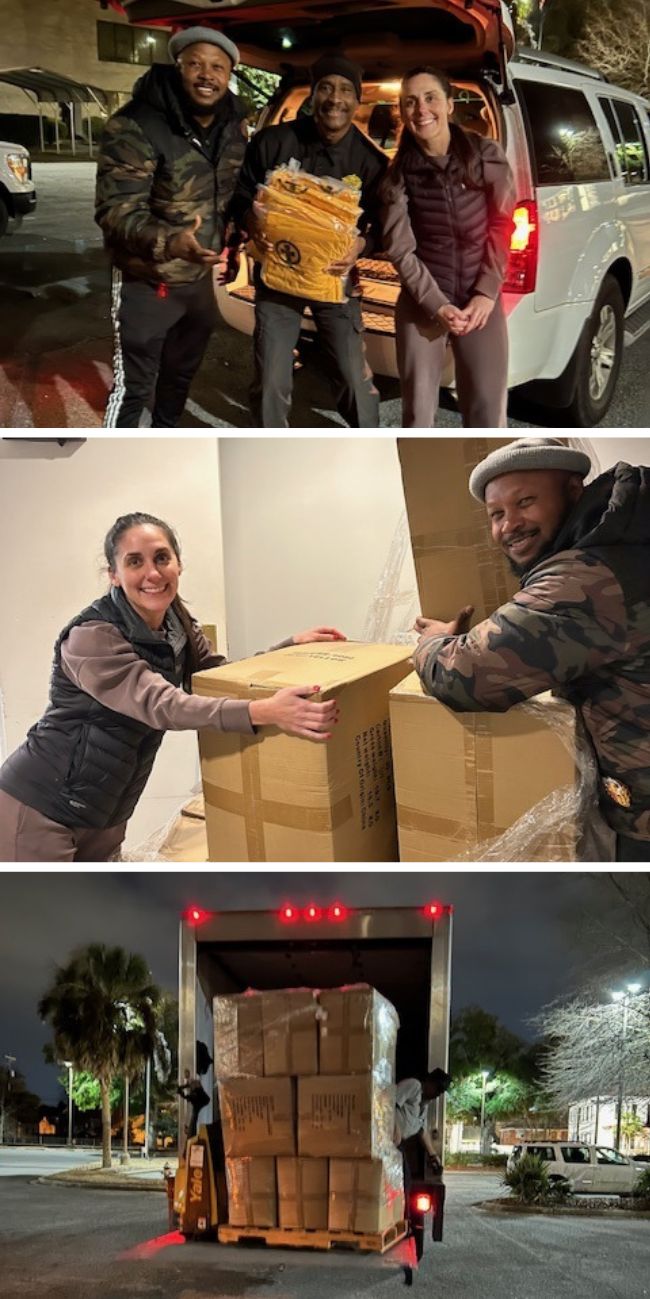
Above: CWS Blankets are delivered in South Carolina
Warmth in the Storm: How Community Support Is Helping South Carolina Recover
In the aftermath of Winter Storm Fern, CWS is providing warmth, safety and stability to families across South Carolina. From distributing emergency blankets to offering temporary housing, we are meeting urgent needs while preparing to send additional blankets and kits to six more locations. Together with our supporters, we’re ensuring that neighbors impacted by the storm are met with compassion, comfort and hope.
Delivering Comfort and Dignity After Winter Storm Fern
In the wake of Winter Storm Fern, communities across South Carolina have been grappling with freezing temperatures, power outages and the emotional toll that comes with sudden displacement. But thanks to the generosity of our supporters, hope is arriving—one blanket, one kit, one safe place at a time.
Last week, CWS delivered emergency blankets to neighbors directly impacted by the storm. These CWS Blankets carry more than warmth. They offer dignity, comfort and a powerful reminder that no one faces hardship alone.
As recovery efforts continue, our team is also providing temporary housing for families who need a safe place to stay as they rebuild stability in the aftermath of the storm.
“When the storm struck, our Emergency Preparedness, Response and Recovery (EPPR) team mobilized immediately to support communities across the region,” said Zachary Wolgemuth, CWS Director of EPRR. “Through swift coordination, we were able to deliver critical supplies and provide nearly 100 nights of temporary housing for individuals who were displaced.”
Expanding Aid to Six More Communities in Need
And the support doesn’t end there. In the coming days, we will be sending an additional 1,920 Blankets, 600 Kids Kits and 2,000 Hygiene Kits to six more locations across South Carolina, expanding our reach to ensure that more families have the essentials they need.
“Because of the generosity of donors and congregations, CWS Blankets and CWS Kits were ready when winter storms hit—and continue to be shared in the days that follow. Your compassion makes it possible to respond quickly and meet ongoing needs, helping neighbors stay warm and cared for during some of the coldest days of the season,” shared Matthew Stevens, CWS Director of Congregational Campaigns.
Every blanket, every kit and every shelter placement reflects the compassion of a community that shows up when it matters most.
Together, we’re creating warmth, safety and hope—right when our neighbors need it most.
To contribute to our CWS Blankets program, click here. Consider making a contribution to our Emergency Response Fund to support neighbors near and far when disasters strike.