
CWS Furloughs Staff to Maintain Capacity to Serve Vulnerable Clients Washington, D.C.— CWS today expressed deep concern and alarm over the administration’s recent actions severely limiting the ability of the organization to continue to provide life-saving humanitarian assistance to refugees and other vulnerable families. Since January 20th, the Trump Administration has taken action after action–including severely limiting access to federal …
Refugees, Asylum Seekers and Migrants: What’s The Difference?
More than 120 million people around the world have been forced to flee their homes in search of safe, new lives. Every day, thousands are forced to make this difficult decision, leaving behind their belongings, memories and, oftentimes, loved ones, all for the hope of a better future. There are many reasons people choose to make this decision. Millions are …
“Travel Cancelled”: A Poem Reflection of Recent Executive Orders
As of January 22, 2025, the Trump administration has suspended the U.S. Refugee Admissions Program (USRAP) until further notice, leaving thousands of refugees—including minors separated from their parents—without a pathway to safety. Originally from Syria, Alissa* has a deep connection to the resettlement experience. “CWS was the only organization that supported me on day one of arrival,” she said. “I …
Hope Amid Destruction: How the Wildfire Resource Hub Supports Displaced Families
CWS continues to play a crucial role in California’s wildfire recovery by helping establish the Wildfire Resource Hub, which provides a wide array of services, from emergency aid to long-term recovery support. With a focus on both immediate relief and emotional care, the Hub serves as a vital resource for those affected by the fires. A Vital Support Hub for …
Revoking Temporary Protected Status for Venezuelans in U.S. Communities will have Dire Effects on Families, the Economy
February 3, 2025
Washington, D.C.—Church World Service today expressed its deep concern over the Trump administration’s revocation of Temporary Protected Status (TPS) for 300,000 Venezuelans living in the United States. The decision will have dire consequences for Venezuelans who have built lives, filled essential jobs, started businesses, and contributed to our communities. Once the termination is finalized, Venezuelans who received legal TPS status …
Stories of Change
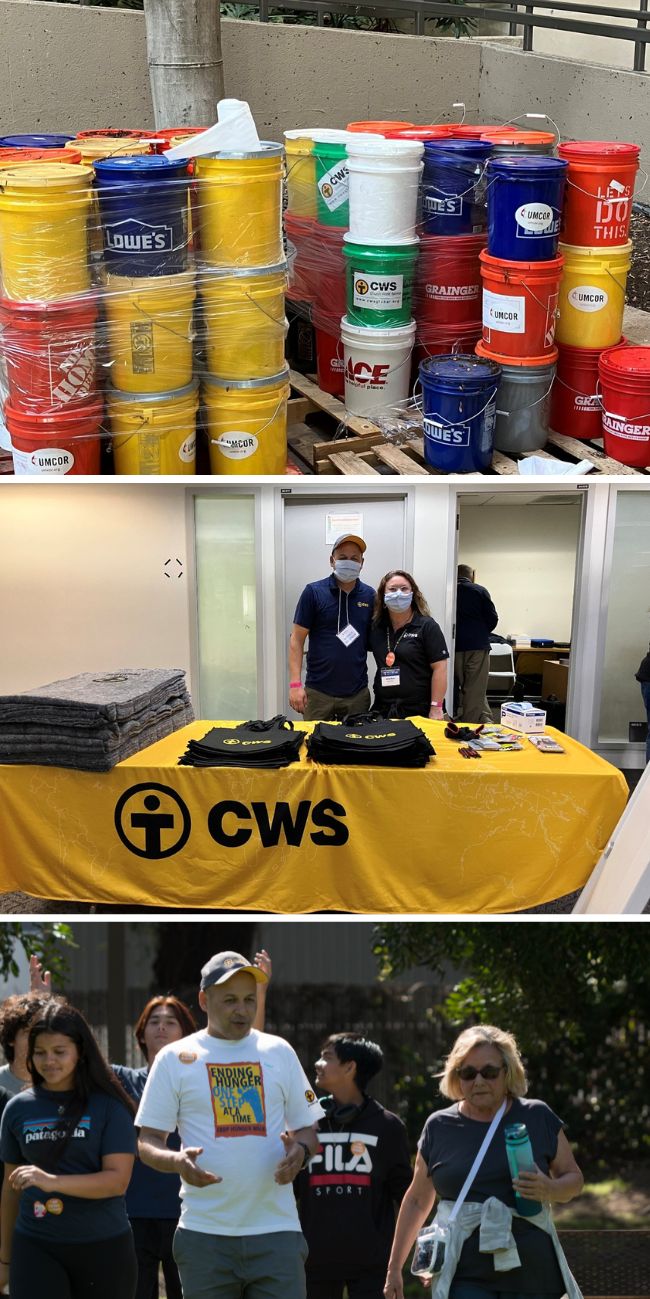
Top and Bottom: Amir Khan and Melissa Reece, EPRR Senior Officer at recent resource hub for California wildfires; Bottom: Amir at the Camarillo CROP walk
Creating Refuge Amidst the California Wildfires
Amir Khan, CWS’ Community Engagement Specialist, shares his experience of helping two young Afghan women navigate a harrowing night during the Los Angeles wildfires. This story highlights the challenges refugees face in disaster preparedness and underscores the importance of culturally competent support, as demonstrated by CWS’ inclusive disaster response initiatives.
“You’re safe now.” These are the words that Community Engagement Specialist, Amir Khan, told the two young Afghan women when he picked them up from the airport in Los Angeles. As a former refugee himself, Amir understood the weight of these words, especially for these two women who had just fled a Taliban-controlled Afghanistan where their rights and safety were at stake. Amir didn’t expect that shortly after, he would repeat these same words to these two women but in very different circumstances.
Amir Shares His Story from This Harrowing Day
“It was close to midnight on January 7, 2025, at 11:55 PM, when I received a call that would set the tone for the rest of my night. The voice on the other end of the line was shaky, filled with fear and uncertainty. Two young Afghan girls, who currently reside in my previous apartment in Lincoln Heights, Los Angeles, were calling for help. They had just heard news of evacuations and strong winds amidst the fire devastation. Though they were far from the flames, the situation—coupled with the language barrier and their inability to drive—left them panicked and in tears.
As I sat there, shaking, memories of my own past flashed before me. I remember how helpless I felt when our home in Afghanistan was burned by the Taliban in late 1998, the ashes of everything we had left behind. I couldn’t think of anything else except that I needed to help them.
‘Get ready,’ I told them. ‘I’ll come to pick you up and bring you to Victorville. You can stay at our home for as long as you need.’ My wife and I have always felt a sense of responsibility for these girls. Their older sister is a close friend of my wife, and we first met them in late 2023. Back then, they had just arrived in the U.S., having worked for the Afghan government. The trauma of their abrupt displacement was evident. They were hesitant, even afraid, to live on their own.
In those early days, we offered them our bedroom, while my wife, kids and I slept in the living room. We wanted to provide them with a sense of safety and comfort in a new, unfamiliar country. Over time, they began adjusting, but the scars of their journey lingered. This latest crisis brought all those fears rushing back. It also reminded me of the importance of being prepared for disasters, whether fires, earthquakes or other emergencies.
Driving through the night to pick them up, I thought about their journey and the challenges they’d faced. As refugees and newcomers, they’ve had to navigate not only a new language and culture but also the emotional weight of leaving everything behind. My wife and I have tried to ease their transition, understanding firsthand the struggles of starting anew in a foreign land.
When I arrived at their apartment, their relief was palpable. They hurriedly packed their belongings, and I reassured them that they would be safe with us. By the time we reached Victorville, it was well into the early hours of the morning. We prepared our home to accommodate them, just as we had done before. Their gratitude was heartfelt, but I couldn’t help but feel that it was simply the right thing to do.”
CWS’ Inclusive Approach to Disaster Response
While recalling this story, Amir explained how resettlement in the U.S. is like arriving in “a new world” where so many things are still unknown. He recalled that in 2019 he experienced an earthquake near his home in Los Angeles which caught him and his family by complete surprise. He added, “Most refugees, especially with the new administration, feel like they are not part of the community. They always feel like they are second-class citizens.” This results in a disconnect between newcomers and the resources and information they need to be safe in their new homes.
CWS’ Emergency Preparedness Response and Recovery (EPRR) team works to bridge this gap by taking on a culturally competent and inclusive approach to disaster response work. This can look like creating translated educational materials, partnering with local organizations to identify needs and sharing knowledge about refugee communities to bridge gaps throughout the disaster preparedness and response period. Amir shared that through the support of the EPRR team, he was able to share materials with the California Afghan community following the recent wildfires.
Amir Reflects on the Power of Community
Reflecting on wildfires and the support he was able to provide Amir concluded, “This experience reminded me of the importance of community and support. For refugees and new immigrants, even small acts of kindness can mean the difference between despair and hope. These young women are still learning English and adapting to life here, but with every challenge, they show incredible resilience. My wife and I are committed to being there for them, offering not just a place to stay but also a sense of belonging.
As the fires continued to rage and the winds howled outside, our home became a sanctuary for these girls. In times of crisis, we all need someone to lean on. For me, it’s a privilege to be that person for them, to offer a helping hand when it’s most needed. It’s a reminder that, even amidst uncertainty, compassion and solidarity can light the way forward.”
To support individuals affected by recent wildfires, please consider donating to our California Wildfires Relief Fund. You can learn more about CWS’ Emergency Preparedness, Response and Recovery work here. You can also support the Pasadena CROP Walk which will contribute 50% of its funds back to the Pasadena community by donating here.
Stories of Change
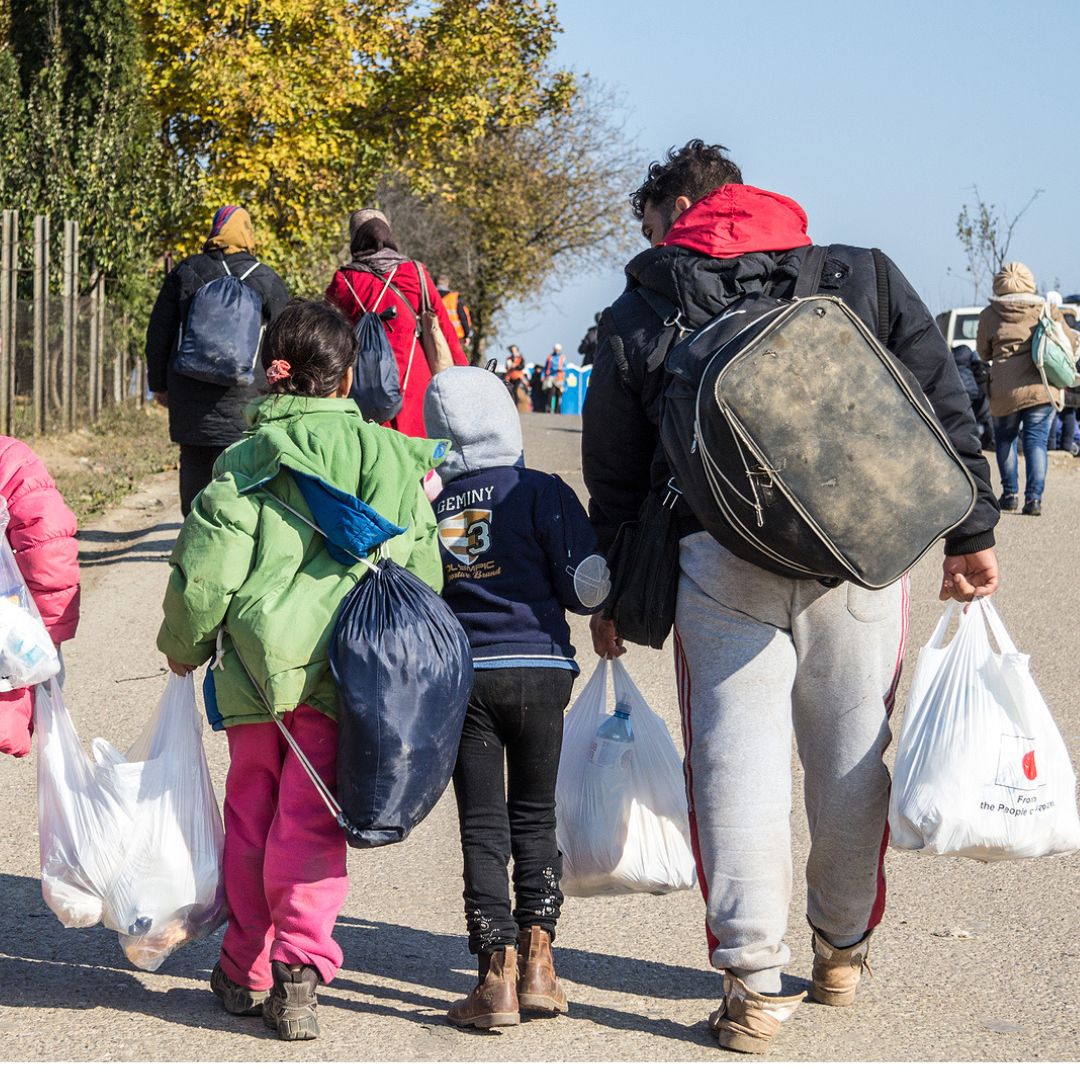
Image of a family from Afghanistan in search of safety
A Family’s Fight for Safety After U.S. Refugee Ban
After fleeing Afghanistan in 2021 due to their work with the U.S. military, Fatima and Omar were eventually resettled in North Carolina, where they have built a new life. However, their joy is overshadowed by fear for their family members still trapped abroad, facing extreme hardship and danger as they await a stalled resettlement process.
Trigger Warning: This story includes graphic depictions of violence.
Fatima and Omar *were evacuated from Kabul in August 2021 as the Taliban retook control of Afghanistan. After two months in Qatar, three months on a military base in New Jersey, and another three months in a hotel in Silver Spring, Maryland, they were finally resettled in North Carolina in May 2022. The couple fled their home country because they had worked alongside the U.S. military in Afghanistan.
Shortly after arriving in Durham, Fatima gave birth to their first child. Last year, she began working as a paralegal, supporting other refugees navigating the immigration system. After two and a half years in the Triangle, Omar says, “We feel safe. But the only thing we are not comfortable with is our family.”
When the Taliban took over, Omar’s brother, who had worked with the U.S. embassy, did not make it onto an evacuation flight. He and his family fled Afghanistan on their own, seeking safety in another Middle Eastern country. They had been moving smoothly through the refugee resettlement process there, waiting for their final travel notification—until the executive order halting all refugee admissions was issued.
Omar explains, “[My brother] cannot go back to Afghanistan. If he returns, they will kill him.” But the country where they sought refuge is no longer extending their visas. Now, they live in constant fear of police and deportation. They rarely leave their home and struggle to access food and medicine. Their children are unable to attend school.
“I’m in a situation where we are not able to do anything for them,” Omar says. “They have four children and are living in one bedroom—six people in one room. The kids can’t go to school. Even my youngest nephew, when he talks to me, sounds depressed. He keeps saying, ‘I want to get to the U.S.’ He’s always on the phone, worrying about the future, instead of playing like a kid should.”
“[My brother] is a hard worker and will be a great addition to this country. He just needs shelter.”
Two months ago, Fatima’s cousin, who had served in the Afghan military, was brutally killed by the Taliban. Now, Fatima and Omar fear their family members waiting overseas may face the same fate if the resettlement process does not reopen.
To learn more about the work of CWS Durham, click here.
Note: stock image and pseudonyms have been used to protect the identity of the individuals in this story
From Tanzania to Tennessee: Reflecting on a Family’s Resettlement Journey in Light of New Executive Orders
Mariana Gama | January 30, 2025
After fleeing violence in Congo, Hoga and his family endured decades of uncertainty in Tanzania’s Nyarugusu Refugee Camp. Twenty years later, they were finally granted refuge in Tennessee and faced the daunting transition to a new life, filled with both hope and anticipation. Now, the same resettlement pathway that gave them a future is under suspension, leaving thousands of refugees …
Take Action: Tell Congress & the White House that you OPPOSE Trump’s Indefinite Refugee Ban and Executive Actions Targeting Newcomers
January 28, 2025
Upon taking office on January 20, President Trump signed a sweeping series of executive actions that reversed decades of precedent for welcome, going much further than he did in his first term to target programs supporting refugees and others who are fleeing persecution and violence. In the days since, many of these actions have been operationalized and are causing significant …
Halt of Foreign Assistance Funding is an Abdication of American Leadership and Values
January 25, 2025
Washington, D.C.—CWS today expressed alarm and disappointment in response to the abrupt and sweeping freeze of funding for U.S. foreign assistance, which will cause immediate harm to millions of people who are served by these vital programs around the world. This includes funding for critical services provided to refugees resettled to the United States, as well as humanitarian assistance for …