Stories of Change


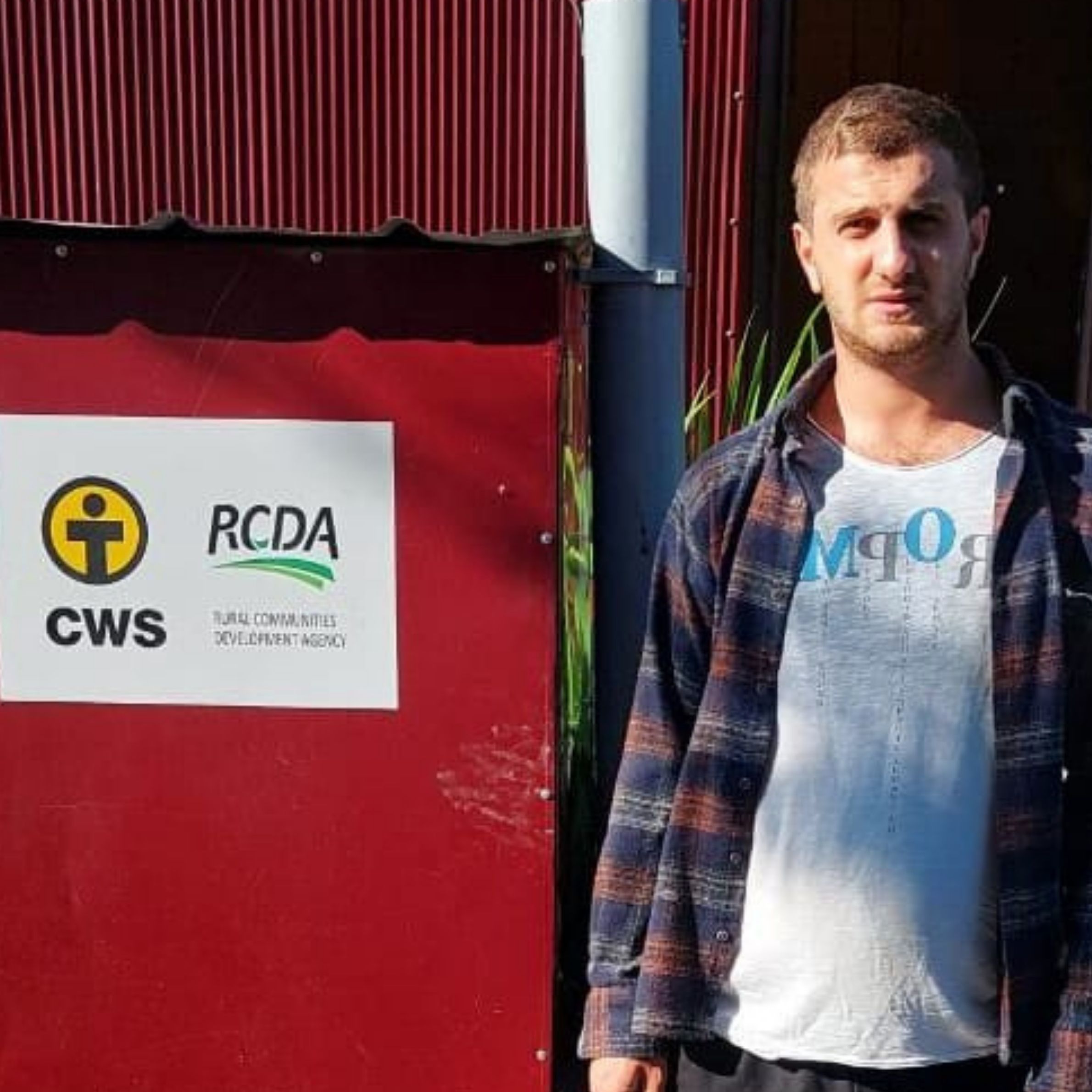
Nukri standing next to a solar dryer for fruit and vegetables that he learned how to construct

“The Light at the End of the Tunnel”

Like many young adults, when Nukri Adadze turned 21, he began to question what he would do with his life. However, Nukri, who lives in a small town in the Republic of Georgia named Ghorjomi, struggled with the many challenges his town was facing. Due to the effects of climate change, Ghorjomi is highly prone to natural disasters such as frequent landslides, hail, floods and mountain torrents. As a result, employment opportunities have diminished and many bright young residents, like Nurki, have had to migrate to cities where they often end up in low-paying jobs. 

In addition to these barriers, families in the community carry a heavy burden when it comes to affording energy needed for heating and cooking. In fact, about 30% of household incomes in Ghorjomi are spent on energy. Faced with these seemingly insurmountable challenges, Nukri planned on leaving the town in search of employment opportunities. He explained, “I didn’t know what to do with my studies or how to support my family going through these hardships.” 

Nukri’s plan, however, took a detour when he began attending seminars and training sessions hosted by our local partner. Through our “Building Resilience” program, Nukri learned about sustainable uses for natural resources, how to construct solar dryers for fruits and vegetables and how to make fuel briquettes from agricultural and forest residues. In addition, his family received a solar dryer for fruits and vegetables, which allows them to generate their own income. They also received a fuel-efficient stove, which has allowed them to spend less money on generating energy in their home. Nukri’s mother, Tamar, remarked, “now, my children and I collect fruit and berries which we dry and sell. It is a very good opportunity to gain additional income. I am very much convinced that with this support my family can finally overcome the vicious cycle of poverty.” 

Equipped with new skills and knowledge, Nukri is ready to start working towards a brighter future for himself and his family. He told us, “thanks to this program and your support, I am convinced of my own strength to change things for the better and lead my life with dignity. It feels like the light at the end of the tunnel has appeared.”  Filled with knowledge and gratitude, Nukri now shares what he has learned with other members of his community, and leads training sessions to teach others the skills he learned. Tamar, who sees Nukri’s day-to-day leadership, shared, “I am so proud of my son Nukri who has become such a respectable member of the community.”

With his newfound confidence and hope, Nukri now imagines new opportunities for himself and his neighbors. His dream is to start a youth-run business in Ghorjomi that would produce fuel briquettes out of residue to replace firewood and decrease deforestation. Through his motivation and optimism, Nukri is now leading his community to the same “light at the end of the tunnel” which he has found. 


Stories of Change


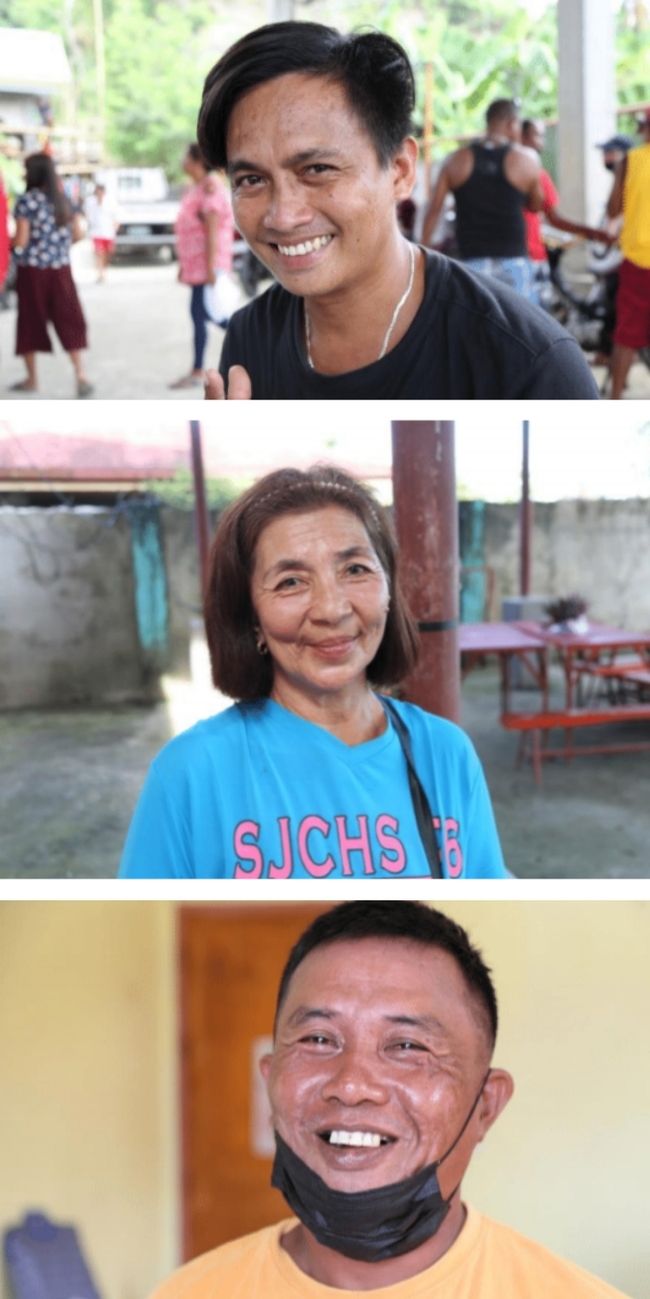
Top: Ryan Ray, Middle: Feliana Chao, Bottom: Noel Sebucao

A Time of Relief, Recovery and Resilience

When Typhoon Rai hit the Philippines in December 2021, survivors’ lives were flipped upside down. The effects of the disaster were catastrophic for thousands who lost family members, their homes, food, belongings and source of income. To support those affected we teamed up with the Center for Disaster Preparedness Foundation and developed a long-term response. The program was funded by the Japan Platform and has been operating since early February.

The first step towards recovery began with cash grants that families could use to repair their damaged houses. Along with his 10-year-old daughter and pregnant wife, Ryan Ray survived the disaster because he realized the severity of the typhoon and acted fast. He shared, “the devastation of Super Typhoon Haien, which hit the same island of Leyte in 2013, came to mind. I hurriedly took my wife and daughter and evacuated to my uncle’s house on high ground.” Unfortunately, the family’s house did not survive, and Ryan and his family have been living in a small hut they built with palm leaves and materials they gathered from the rubble. With CWS’ help, however, they are eager to begin rebuilding their home. “With the birth of our new child on the horizon, we are grateful for the support of CWS to help us repair the house,” Ryan said. 

In the same town as Ryan, town official Feliana Chao was patrolling the streets and urging residents to evacuate as the typhoon approached. As she did this, however, she worried about her son, who lived nearby and struggles with mental illness. Following the disaster, she learned that although neighbors tried to urge her son to leave his home, he refused and was injured as a result. Both Feliana’s and her son’s homes were entirely destroyed by the typhoon, so both have been sheltering with Feliana’s other adult children. Feliana worries about the burden she is creating for her other children and adds, “as a parent, I am concerned about my son and want to live with him so that I will not be late to escape when another similar typhoon hits.” Feliana plans on leaving with her son and building a new home together. She said, “CWS’s support will be a great help in building a safe home for my son and me to live in together.” 

For other members of the community, the disaster hit more than just their homes. Noel Sebucao, who also lost his home, shared, “my livestock had been wiped out… my two children, who are now entering puberty, also seem to be unable to get on with their schoolwork.” For Elena, escaping her home was extremely difficult due to a leg injury she suffered six years ago which still prevents her from walking properly. Following the disaster, she recounted, “when I returned to my house the next morning, it was covered in mud. I lost all of my household goods and house overnight.” The support she received from CWS gave her much-needed relief. “I thought it would be more and more difficult to rebuild, but then I received support from CWS Japan. Thank you very much.” 

For survivors like Noel, Elena, Ryan and Feliana, the journey toward recovery does not end with rebuilding a safer home. Through our program, we are working with community leaders to provide victims with mental health and psychosocial support to aid in the survivors’ healing. To prevent the spread of diseases, we are also improving access to water and sanitation for affected people through the establishment of water points and education on best hygiene practices. Lastly, we are also working to develop resilience by developing disaster management plans to prepare the community in the case of another disaster. Through this project, our goal is to not only provide relief for those affected but to build a stronger community that will be ready to endure any future disasters. 


Stories of Change


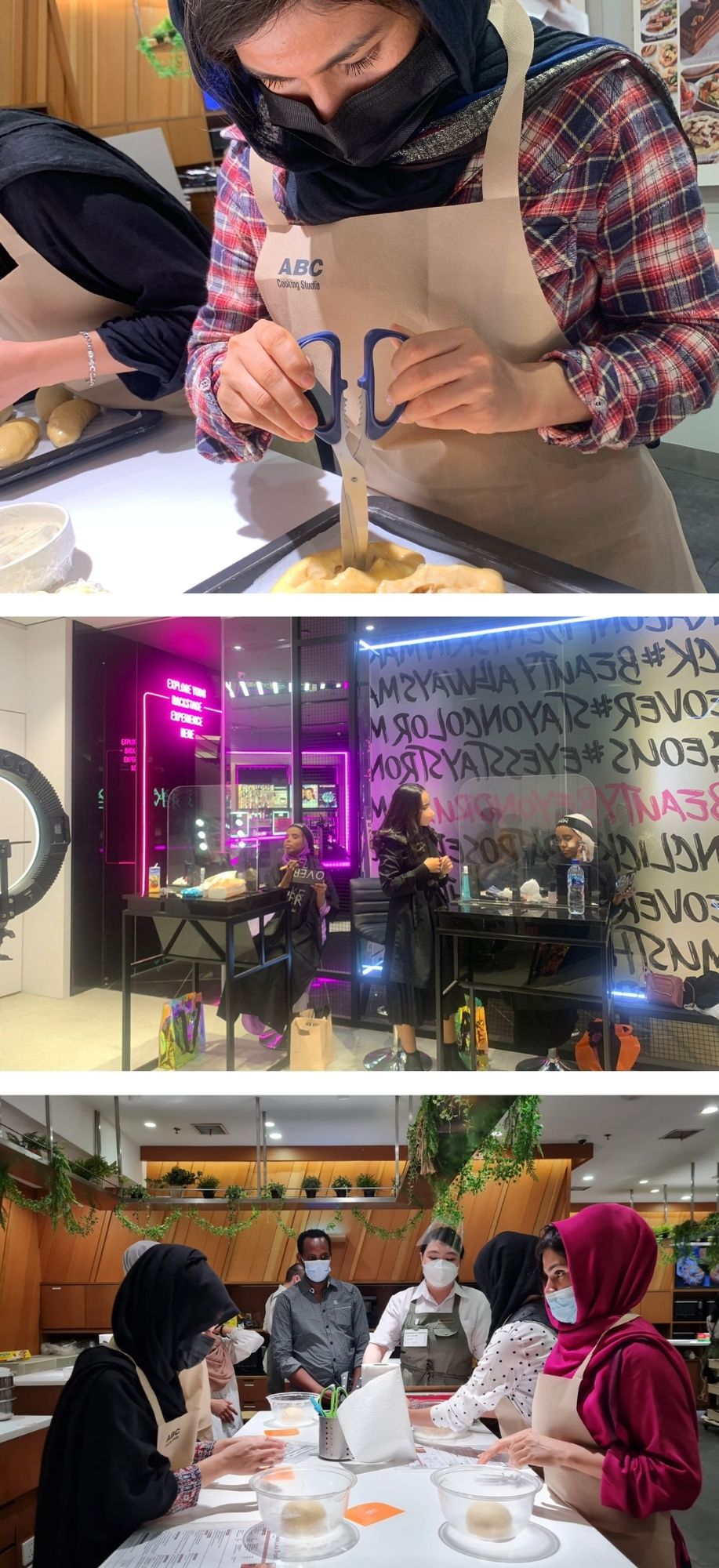
Top: program participant learning how to bake. Middle: program participants in cosmetology class, Bottom: program participants learning to cook

New Skills Bring New Opportunities

When refugees are forced to flee their countries, they have to leave behind both what used to be and what could have been. This is especially true for young refugees, who lose the opportunity to explore their interests, learn new skills and pursue their dreams. Young refugees, who often flee alone, instead have to focus on survival as they navigate their new and challenging reality. 

Through our program, “Protecting Urban Refugees through Empowerment”, also known as PURE, in Jakarta, Indonesia, we team up with these youth as they rebuild their lives.  We help these young program participants to build a sense of community, and we offer classes and vocational training that teach valuable skills and help them towards building a career. Program Officer PURE, Defi Satriyani, explains, “classes are important since they teach students life skills. The student could use this skill later in their lives, not only for their own use but also to earn income and support themselves. The opportunity for refugees to earn income has not been easy or equal compared to other groups. Therefore, creating access to vocational training becomes important.”

Recently, the residents at the home had the opportunity to attend cooking classes and cosmetology classes. These classes, which were the first in-person classes held since the start of the pandemic, were filled with excited and chatty teenagers and young adults. In the cooking class, young Abdul was particularly excited. He surprised himself with how quickly he was able to learn in the class and commented that perhaps he could become a chef in the future. Along with his peers, Abdul not only learned how to cook and bake, but he also was able to explore other cultures. 

Alia, who attended the cosmetology class, had a similar experience. She learned how to do various styles of make-up, from daily looks to wedding looks. Following the class, she surprised a social worker who told Alia she was amazed by how healthy and beautiful she looked. Alia’s young daughter beamed next to her and shared that her mother had been practicing her make-up skills daily and said, “It helps her relax and be happy.” For Alia, attending make-up classes gave her a new skill but also gave her a tool that made her feel happy and confident. 

These classes are an opportunity for young refugees, like Alia and Abdul, to grow and regain the experiences and lessons they may have missed out on. As they learn valuable and useful skills, students are able to become more confident and discover their potential.  Through these classes, we are helping young refugees become independent and hopeful as they work towards a brighter future. 

Note: Pseudonyms have been used in this story to protect the safety and identity of minors 


Stories of Change


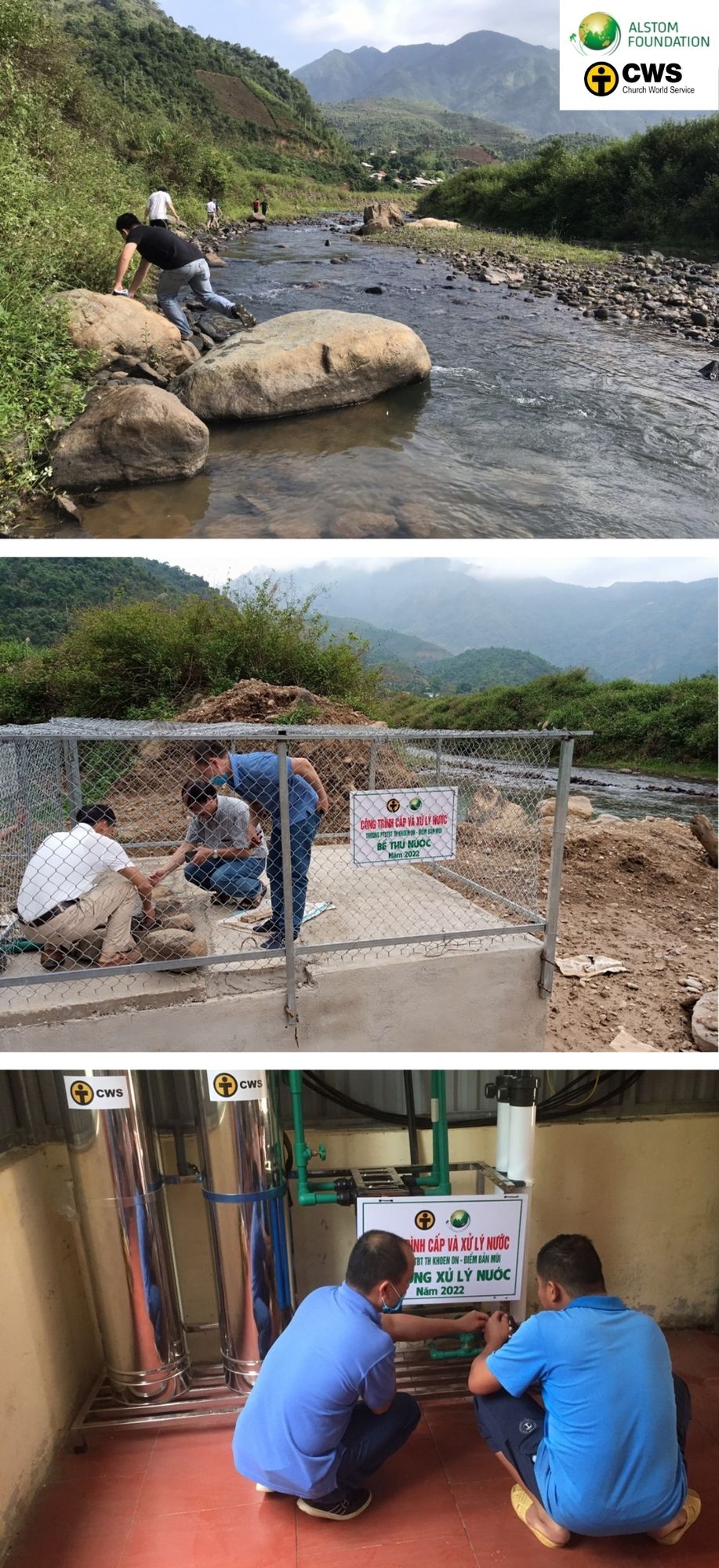
Top: CWS and teachers analyzing school’s water access. Middle: CWS staff and builder checking the pumping station of the water system. Bottom: CWS staff teaches teacher how to use water filter system

Safe Access to Water Transforms School in Vietnam

The primary satellite boarding school in the Ban Mui village in Vietnam is a place of learning, laughter and growth for over 230 young children. Most of the boarding students are from Thai, Dao or H’Mong ethnic minority groups. The school is a path for children to grow and discover a brighter future.

While working to develop this path for its students, however, the school struggled with a major obstacle: water access. Since the boarding school was built on a large hill, anyone who wanted to access water had to walk down to a nearby stream. Teachers had to take time out of their day to walk the children to the stream where they could bathe.

Not only was this stream far away from the school, but it also didn’t have enough water for all the students to bathe frequently. This resulted in widespread scabies amongst the students and teachers. Scabies is a highly contagious skin disease that can result from poor hygiene and causes intense itching in affected areas. In 2021 the school reported that 30% of children at the school suffered from scabies.

This complication made it difficult for teachers to teach and for children to learn. To address this, CWS partnered with the Alstom Foundation, the school teachers and the Head of the District Education Department to perform a site analysis of the school’s water access. The information we gathered from this analysis was then used to develop a system to supply clean water to the school. Now, the school community has filtered water that they use for drinking, showering, bathing, cooking and flushing toilets.

This new development is a dream come true for the school community. Teachers can now educate students without distractions, and it’s a clean and hygienic place for boarding students to live. The school would like to express its most sincere gratitude to the Alstom Foundation. Their meaningful and timely support has allowed children to learn better while living healthier and happier lives.


Stories of Change


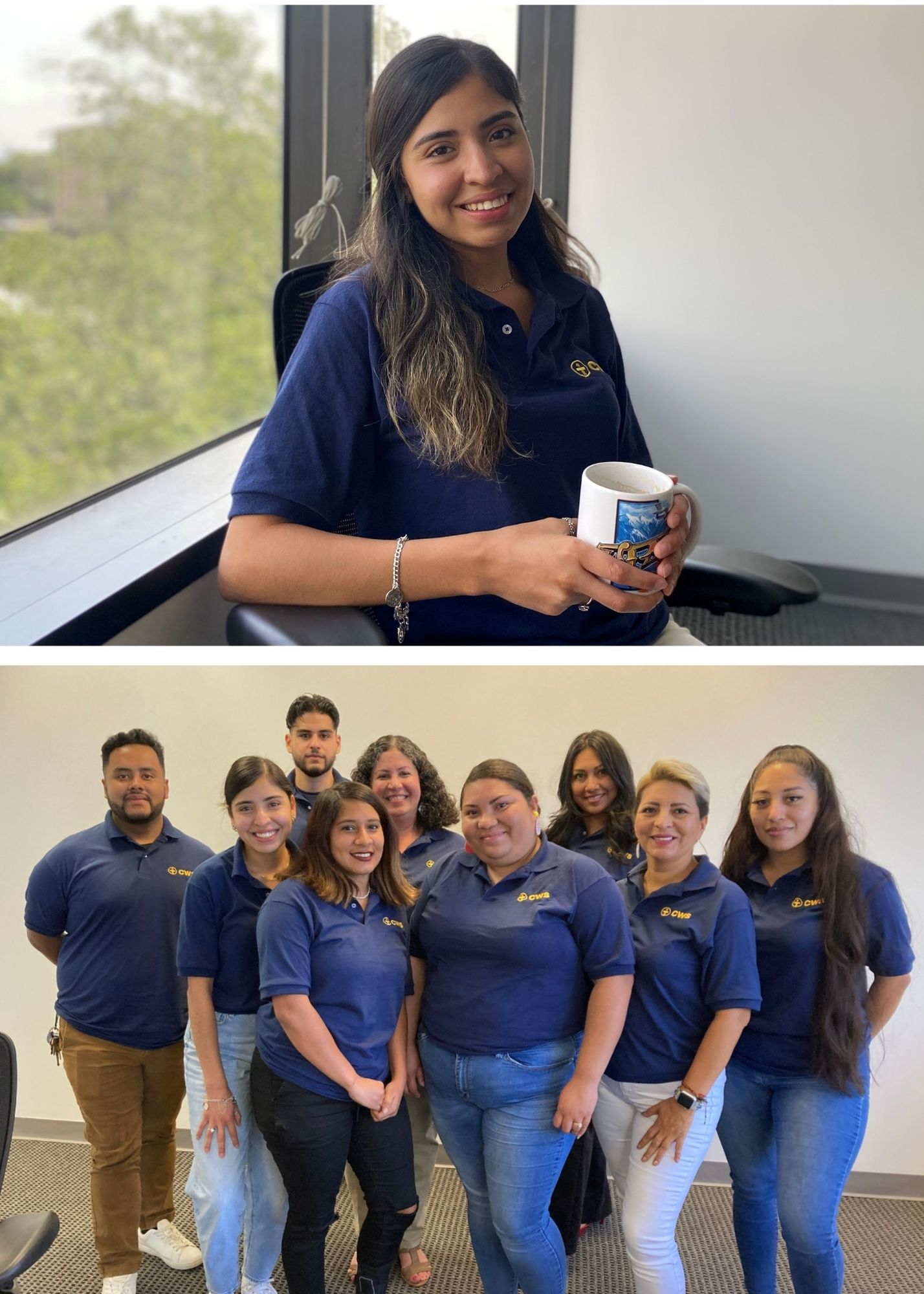
Top: Anahi sitting in CWS Houston office, Bottom: CWS Houston Home Study and Post Release Services team

“My Work Fulfills Me”

Every morning, Anahi Bravo likes to take some time to journal to set the tone for the day. Anahi, who is bright and full of positive energy, uses this time to prepare for the very important work she has ahead. Anahi is a Home Study and Post-Release Services Caseworker for Unaccompanied Children here at CWS in Houston, Texas. Along with hundreds of other staff, Anahi is part of CWS’ core. Her work and her passion are what drives the work that we do in the United States and worldwide.

When we spoke to Anahi, one thing that we could feel very distinctly was her passion and excitement for her work. As a first-generation Mexican American, Anahi explained that the work she does hits close to home. She shared, “I have always been interested in working with refugee/immigrant communities. I am the daughter of immigrants and have always seen the struggle and lack of support in this community. I knew I wanted to do something to help other families.” Anahi added that she feels “humbled” by her work and shared, “my work reminds me that my parents and family members went through similar obstacles as my clients, and I want to help them overcome these obstacles. Everything that I accomplish is part of my parents’ accomplishments as well.”

Anahi described the environment at work as supportive, engaging and motivating. She told us she always looks forward to Wednesdays because that’s when she has her weekly team meetings. She elaborated, “that’s when I get to socialize with my team members and see them in the office. We check up on each other and usually ask ‘how is everybody doing? How’s everything going?’.” Outside of team meetings, Anahi told us that she feels very supported by her team and enjoys working with people who are also motivated and passionate about their work.

Our case workers at CWS are extremely important because, to our clients, they represent kindness, hope and compassion as they get accustomed to their new home. For this reason, we are thankful for staff like Anahi who have a genuine desire to care for our clients and give them the highest quality of support. Anahi, who works specifically with minors and children, told us, “the children are what motivate me. Knowing that they sacrificed so much to get here and have a better life, reminds me that I have a purpose. It reminds me that I am meant to be here to provide them with the help and guidance that they need. It honestly fulfills me.” Anahi shared that one of the clients who has inspired her the most is a young boy who has no family with him in Texas. She said, “it inspires me that this little boy has so many goals he wants to reach. And although he may feel lonely, he still maintains a positive attitude.”

Like the clients she serves, Anahi also has big goals and dreams for her own future. “My goal is to travel and help vulnerable communities. I would like to visit children in shelters at the border. It always surprises me what happens at the border and I would like to go there and experience it firsthand. I would also like to be in a role where I can continue to advocate for immigrants and refugees,” Anahi said.

Anahi’s goals are driven by the same things that drive her in her current role: passion, motivation and a love for others. She recognizes the value of her work and stated, “our work is extremely important because these families and children come to our country to start fresh. Many are not aware of the resources that are out there and how to obtain them. Put yourself in their shoes and imagine you and your family coming to the U.S. not knowing who or where to go. Imagine that and how you would struggle. This is your chance to help us help those who are going through this, by supporting us and this organization so that we can provide them with resources and assistance.”

To join Anahi and the rest of our staff who have dedicated themselves to helping our most vulnerable neighbors, donate here.


Stories of Change


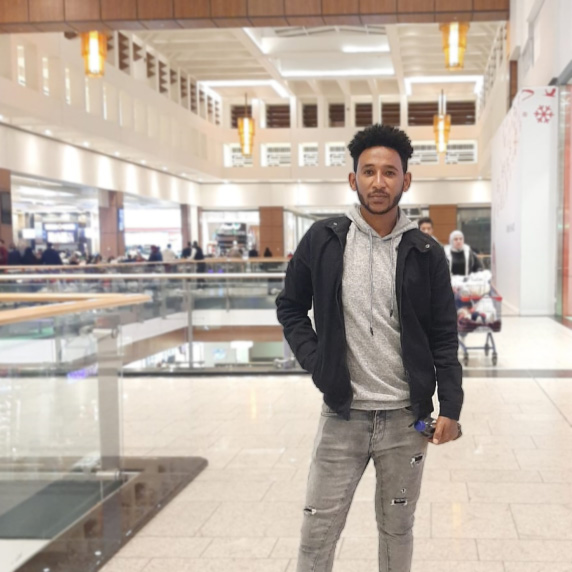
Haben. Courtesy photo.

From Education to a Career: A Young Refugee Seizes an Opportunity in Cairo

CWS is proud to partner with St. Andrew’s Refugee Services, or StARS, in Egypt. StARS is a refugee-led organization that helps refugees in Cairo find safe places to live, put food on the table, finish their educations, access medical or psychological care, pursue careers and navigate legal processes. In honor of World Refugee Day, meet Haben, a former StARS client who is now on their staff team.

“Life would have been very challenging if I had not known StARS,” Haben says.

They say the ones who succeed in life are the ones who encounter the most difficult situations. Being an unaccompanied refugee child in Egypt has never been easy. When you do not speak Arabic and face many challenges, it all stands in the way of starting a new life of safety and prosperity.

Haben has encountered these challenges alone before getting to know StARS as a client. Instead of assisting him once, the StARS team recommended that Haben get an opportunity to join the StARS Unaccompanied Youth Education program and become a student. Haben seized the opportunity to grow and develop for six months.

After completing his studies at StARS, Haben started working as a teacher assistant in the same program, supporting other children and youth follow the path towards self-development. That moment was life changing for Haben, as it helped him grow and improve his skills.

“Working at StARS diverse environment helps me overcome the language barrier and develop my skills like communication, computer, and administrative tasks. This opportunity has prepared me to engage and learn in my current role as a Community Outreach Trainee Officer. StARS is a home to many displaced people, a school to learn, a family to love, a place to meet different people, a workplace to get experience and income.”

All that refugees need is an opportunity to flourish and succeed in safe environments vital to sustain their lives and practice their rights.


Stories of Change


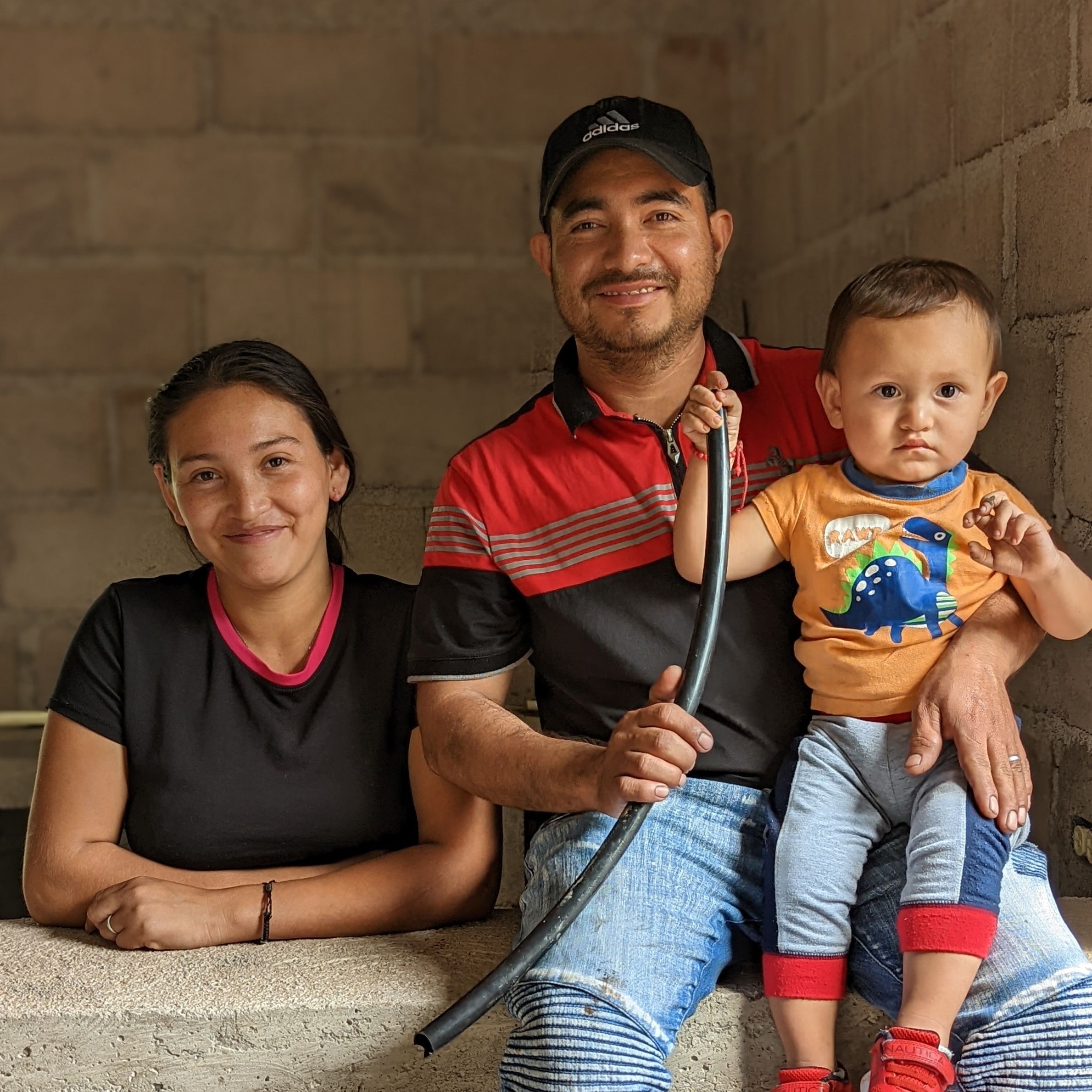
Jorge Luis, Leidy and their son Jorge David in their new home. Photo: Sean Hawkey

The Dream Leidy and Jorge Rebuilt

When Jorge Luis Sarmiento was a little boy, he was washed away by the large waves and debris that resulted from Hurricane Mitch. Five days after the disaster, Jorge was found seriously injured and totally deaf. Since then, Jorge has had to navigate the challenges that came from losing his hearing. His wife Leidy shared, “because he is deaf and nonverbal, sometimes it is very difficult for him to get a job. Currently, he works as a motorcycle taxi driver. There are days when we don’t have everything we need, but we thank God who provides us with the necessary means to survive. Little by little, we will move forward.” 

Despite the challenges that he has had to overcome, Jorge worked tirelessly throughout his life to achieve his dream of owning his own house and land on which he could grow his own food. Unfortunately, all he had worked for came crashing down on a dark day that brought him back to the horrendous week he experienced as a little boy.

Hurricanes Eta and Iota destroyed Jorge and Leidy’s home in Honduras in November 2020. “We lived peacefully, but with the hurricane, we lost everything we had,” said Leidy. Jorge and Leidy were among the 1,000 families in Honduras who lost their houses. “We were very sad. It cost us so much to own our house and in seconds everything fell down,” Leidy told us. 

The land where Leidy and Jorge lived was declared uninhabitable. It was harvest season, and all of their crops were lost in the hurricane. In that same area, 35 more families lost their homes. “Everyone nearby was family members. My mom, aunt, grandmother– everyone was left homeless,” said Jorge. Leidy remembers that Jorge cried when they had to leave their home. She recalls, “we were with my 20-day-old son. There was water running underneath the house and soon the water entered. The walls cracked, and the house was sinking. We were forced to leave. Then everything collapsed. All our belongings ended up on the street.”

Amongst the grief that the family felt after losing everything they owned, however, came a glimmer of hope. After a rapid needs assessment conducted by CWS local partners, Leidy and Jorge were identified as one of the 93 families in the area who were considered extremely vulnerable. Because of this, they were eligible to participate in CWS’ emergency response project in Honduras, which focused on three communities: Nuevo Celilac, Ceguaca and San Nicolás, all of which are in the in Santa Bárbara.department This project was led by CWS local partners Comisión de Acción Social Menonita and Proyecto Aldea Global.

The first phase of the project was carried out by the Mennonite Social Action Commission and included opening shelters for families, delivering food and hygiene kits and offering psychosocial support. In phase two, the focus shifted towards a major need in the community: rebuilding houses. This need was achieved through the Housing with Dignity project, with the funding of the Church of the Brethren, Latter-day Saint Charities and other individual donors.

Leidy and Jorge’s new house is being built on the land they were gifted by Jorge’s parents. It is already 90% complete and just needs windows and doors. Jorge actively participated in the construction of his home. He joined the workers and helped them with their daily tasks. “Sometimes, the workers would leave, but Jorge would continue building blocks because he was eager to see his house finished,” said Leidy. She told us that they dream of moving into their new house, starting a family business and working together to raise their son. While they eagerly await their new home, the couple is living in a rented house. Leidy said, “we thank God and everyone who is supporting us.”

By March 2022, the Mennonite Social Action Commission had already built 16 houses in the municipality of Nuevo Celilac. Proyecto Aldea Global built seven houses, two in the municipality of Ceguaca and five in the municipality of San Nicolás. So far, a total of 23 families (117 people) have participated. Currently, 70 new houses for 70 families (350 people) are being built.

Families like Jorge and Leidy now have water for personal hygiene, household cleaning and cooking. Before, many of these families did not have running water and had to travel long distances to obtain it. Now families can trust that they will have easy access to water and can build toilets that allow for cleaner and healthier homes. 

Following the construction of houses for the community, we will develop agricultural livelihood opportunities for the members of the community. These activities will include providing seeds, offering agricultural training sessions and teaching the community about building resilience. Our hope is to help families like the Sarmiento family rebuild their lives and be able to dream of a future in which their children do not have to fear the destruction a hurricane might bring. 


Stories of Change


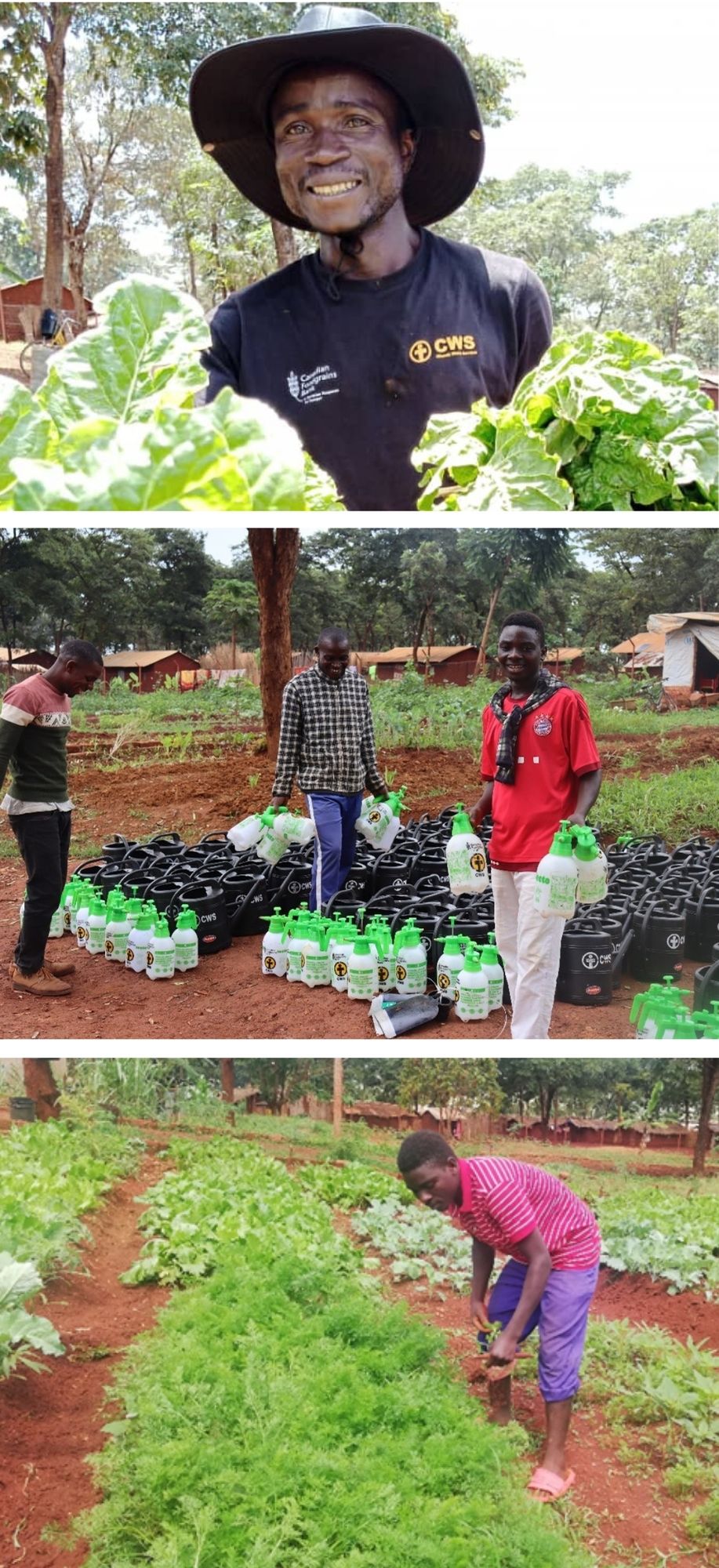
Top: Joseph holds cabbage he grew on the Vegetable farm. Middle: Joseph (right), and fellow program participants Wilondja and Simon. Bottom: Joseph removing grasses/weeds on his plot

Joseph Grows Alongside His Vegetables

When we give nature care and help it grow, we often end up growing with it. This philosophy can be seen at the vegetable farm at a refugee camp in Tanzania. In this vegetable garden, refugees learn about sustainable organic vegetable farming and combat food shortages in the camp. As the program participants grow with knowledge, the plants and vegetables they care for grow with them.

With the support of our partner, Canadian Food Grains Bank, our vegetable farming program provides training on vegetable production, nutrition and marketing techniques of farm products for refugees living at Nyarugusu Refugee Camp. So far we have reached 810 refugees and their households, totaling about 4,050 individuals.

Moize Munenwa Joseph, 22, spends most of his day under the sun, tending to the vegetable garden. Joseph, who came from Congo as a refugee, had little knowledge about sustainable farming before coming to Tanzania. He told us, “I never looked at agriculture as a very important activity. After I joined the CWS agricultural project, I came to realize that agriculture can be more useful and more helpful in supporting my family than the other work that I have been engaged in before. Through farming, I managed to harvest amaranths, Chinese cabbage and onions, some of which we have used at home and the rest we sold to my neighbors. I recently earned almost $6.50 from the sale of vegetables, which I used to buy stationery for my younger brother who is in school.”

Since joining the program, Joseph has participated in various agriculture training courses which have allowed him to discover better vegetable farming methods. He shares, “at home, we used to grow some vegetables but the insects were destroying the plants so we could not earn enough for the family. Thanks to CWS, however, soon after I joined this project, I was trained on Integrated Pest Management and other local methods, including farm cleanliness, to overcome pests and seed selection to improve the yield. This has greatly improved the yield on my farm.”

As an active and dedicated program participant, Joseph was selected as one of the program’s lead farmers and helps train and educate the other program participants. He stated, “I’m very happy that people trusted and selected me to be their lead farmer. Through this role, I get to know/understand people and address their needs whenever they arise. CWS has imparted me with different skills not only in leadership but also in group dynamics, gender-related issues and nutritional knowledge about how to prepare a balanced meal.”

Before joining the program, Joseph relied on intense and laborious jobs such as carrying luggage to help feed his family of eight. Now he is able to partake in an enjoyable activity that yields both food and a stable income. “With CWS I have found agricultural work to be very simple and does not require much energy. Through this activity, I can still take care of my family and ensure we consume healthy food,” he says. Joseph is an inspiration and a true leader in the community and continues to help others learn and grow through the Vegetable Farming Project.


A Friendly Space to Be a Kid


May 31, 2022

Scroll through the slides to see our Refugee Hub in action Our childhood years are a time for learning, growing, making friends and forming happy memories that will last us a lifetime. When war happens, however, all of this is disrupted. Children are forced to abandon their studies, their friends and the only life they have ever known. As their …

Stories of Change

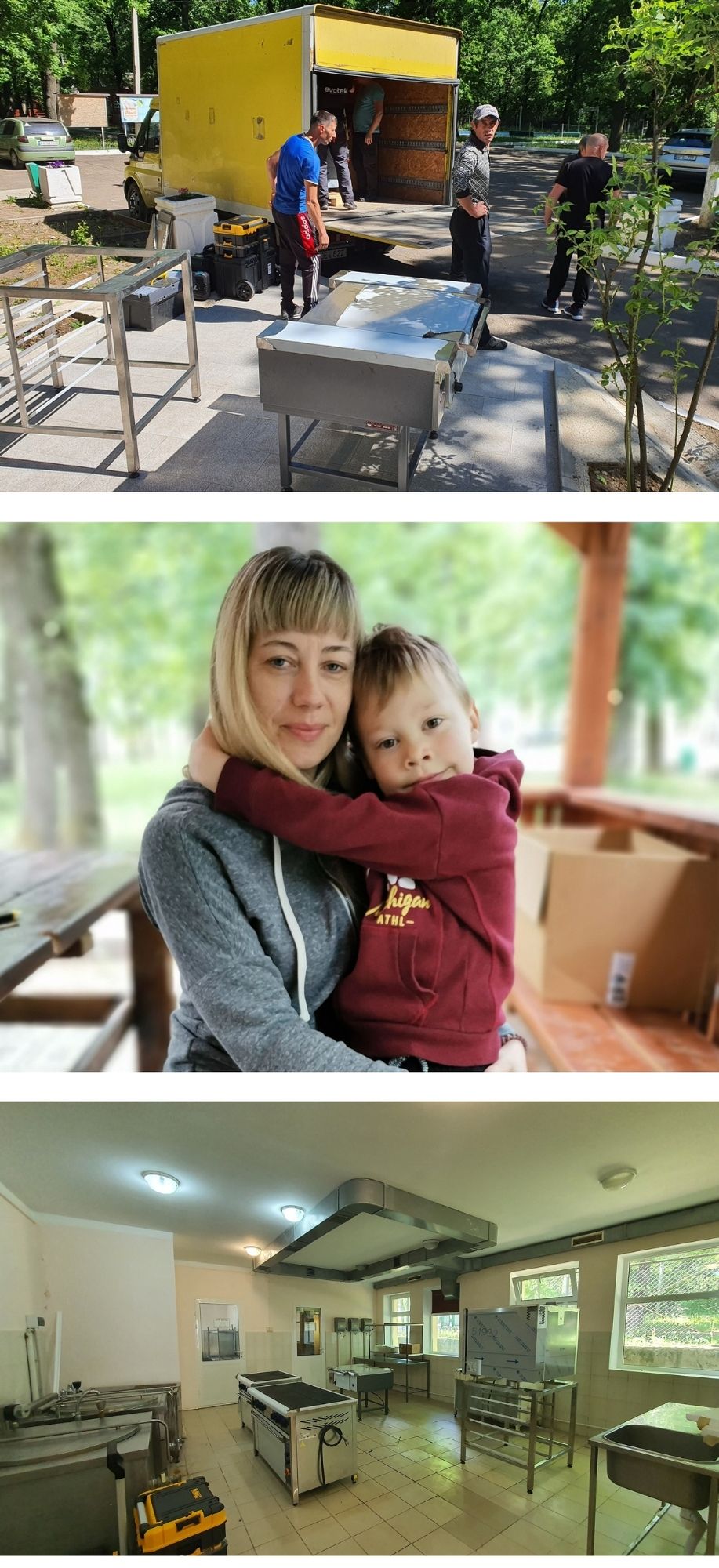
Top: Kitchen equipment is delivered at the shelter. Middle: Julia and her six-year-old son, Mysha. Bottom: new Kitchen area in the Refugee Accommodation Center

A Familiar Meal, a Sense of Home

During the darkest of times, a familiar meal can bring us back to a place of calm and happiness. For Julia, a familiar meal is just one of the many comforts she and her family were forced to leave behind in Ukraine. Like many other Ukrainian refugees, Julia had to abruptly drop everything and take her mother and two children to a nearby country for safety.

Julia and her family are currently residing in the Refugee Accommodation Center in Soroca, Moldova. While they are safe, they still live in fear and anguish thinking about their loved ones and the life they were forced to leave behind. For Julia, this includes her husband, who is now working in a relatively safe part of Ukraine in order to maintain an income for the family, her mother- and father-in-law and the small shoe business Julia ran in Kharkiv.

The shelter Julia and her family are residing in lacked kitchen equipment, which created challenges to food accessibility and nutrition. Due to this issue, many refugees have been avoiding the center and seeking refuge elsewhere. Currently, about 70-80 people reside in the shelter which has a capacity of about 300 people.

To combat this, CWS has donated $28,000 worth of kitchen equipment to the shelter. Not only will this new equipment alleviate some of the struggles the residents have to go through, but it will help develop community and a sense of home. “We are happy to participate in preparing the meals and creating a bit of atmosphere that reminds us of home,” Julia shared.

Beyond daily meals, Julia expressed excitement about the other fun things she can now cook for her two boys, Mysha and Kyrylo. With joy she tells us, “my younger son loves when I prepare sweets at home. I can’t wait to surprise him with some pancakes, preferably with Nutella or chocolate cream. My older son would love an omelet with sausages for breakfast. I don’t think he would ever get bored with a breakfast like that. You know, children are a great joy and a strong driver and motivation. I am happy that in this difficult situation for all of us I can have peace with them here.”

These simple joys are what many refugees use to fuel the strength that allows them to continue moving forward. At CWS, we are continuing our partnership with local organizations in Moldova to best understand how we can provide support. In the next coming months, we will be working to provide medical supplies, clothing, bedding and other donations to refugees residing in the community. Our hope is to support many more refugees like Julia and her family, so that they may also find moments of joy and comfort during these difficult times.

Learn more and join us in providing other Ukrainians like Julia and her kids with a sense of home by clicking here