
Ebocwa and Nadia in their home garden In 2018, due to ongoing conflict in the Democratic Republic of Congo, Ebocwa and his wife Nadia had to leave their home and flee to Tanzania where they would have to restart their lives in the Nyarugusu Refugee Camp. Life was immediately challenging and Ebocwa was soon forced to make a difficult decision …
Dance in the Community
March 22, 2024
Dance in the Community was more than just a series of steps and movements; the program, hosted by CWS Harrisonburg, became a platform for refugee and immigrant children to express themselves in a new environment, using the universal language of dance. Led by Suzanne, a James Madison University dance professor, Dance in the Community aimed to bridge cultural gaps and …
Stories of Change
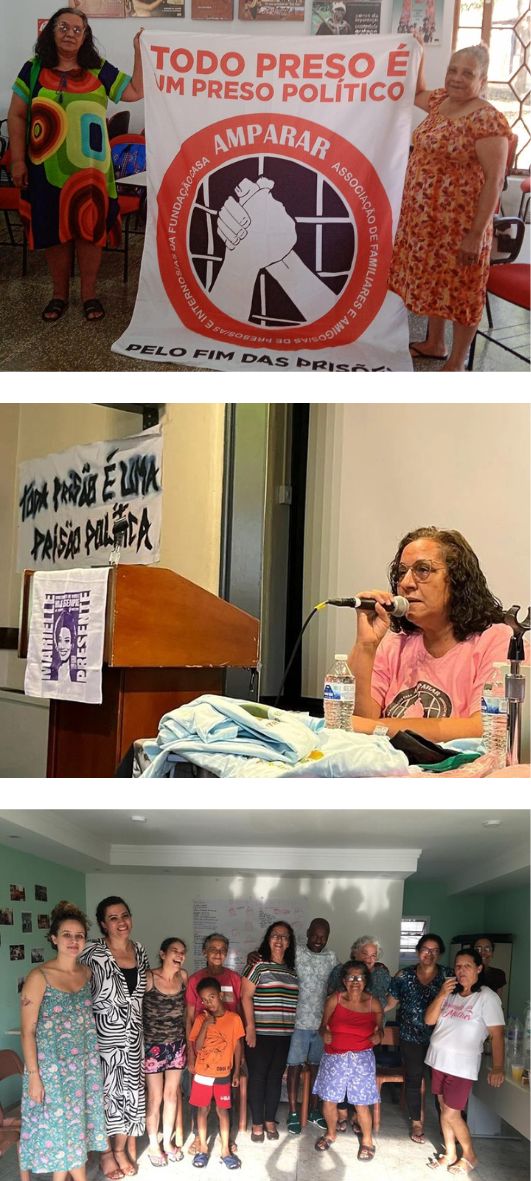
Photo Credit: AMPARAR
From Adversity to Advocacy: Railda’s Fight for Families Affected by Incarceration
“When a person commits a crime, a double sentence is paid. The person goes to jail and serves his sentence, but the other sentence is the one that his children and family members who are left suffering outside also pay. Then, when he comes out, the social stigma follows. And that sentence is perpetual.”
For more than 40 years, Railda lived a tranquil life on the outskirts of São Paulo, Brazil before her life dramatically changed overnight when her son was arrested and Railda found herself in a terrifying position for any parent: concerned for their child’s safety and protection.
Then, when Railda first visited her son in prison, she noticed bruises on his body and knew immediately that she needed to start fighting to assert her rights and the rights of her child.
“That’s where my whole process began. At that moment, I didn’t understand anything,” Railda said. “I began to talk to other families, to distribute handwritten papers in the prison lines with my information, so that other women and relatives would come into contact with me. We needed to change that whole reality and organize ourselves.”
Under Railda’s leadership, AMPARAR was born. Since 2004, AMPARAR has provided legal and social support to families of people deprived of liberty, walking alongside them during this process and all the uncertainty that comes with incarceration.
“They are people who are invisible to the public power and who do not receive any type of help,” says Railda. The organization has also provided her with psychosocial support and has continued to accompany her when she visits her son in prison. “It’s difficult for me too. Sometimes I think that I have no more strength, but a new case arrives, and I begin to provide support, and that even helps me get out of my own problem. That’s what my life is, being on my cell phone at all times to accompany the families.”
Since its founding, AMPARAR joined the International Network of Women’s Families of Persons Deprived of Liberty (RIMUF), which was founded in 2021 with support from CWS. Now, RIMUF has developed into a regional resource for issues related to gender justice and the rights of individuals who have been incarcerated.
“When you participate in these networks, you begin to have another vision, because you understand that these problems do not exist only in your country and you understand that the issue of incarceration is global. It is very important to be able to listen to and understand other perspectives regarding the topic,” she said.
Railda’s story is a testimony to the resilience and dedication of a mother who transformed adversity into a force to change the reality of families affected by prison in Brazil. At CWS, we are proud to accompany organizations like AMPARAR, led by women who teach us, inspire us and lead actions to generate positive changes in society.
CWS supports the work of Rimuf, the International Network of Women’s Families of Persons Deprived of Liberty. To learn more about the work of CWS in Latin America and the Caribbean, click here.
Penda Plants Seeds with Love
March 5, 2024
Scroll through the gallery above to see Penda in her garden In the Nyarugusu refugee camp in Tanzania lives a woman named after the Swahili word for love, Penda. With just one smile, we could see that Penda’s name fits her perfectly. Like many of the refugees in the camp, Penda fled the intense violence in her home country, Democratic …
Stories of Change
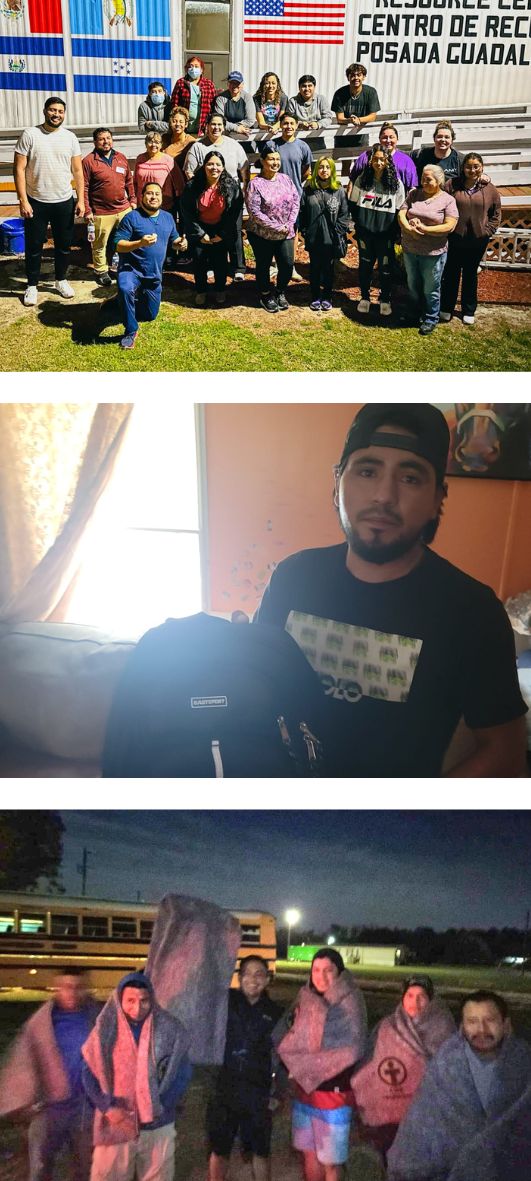
Top: NC FIELD staff Middle and Bottom: CWS Blanket and Welcome Backpack distribution
Caring for Those Who Take Care of Us
If you open your fridge and find any type of vegetation, there is a good chance it was produced by a migrant farmworker. These hard-working men and women make up about 73% of the nation’s agriculture workforce and quietly ensure that anyone living in the U.S. has fresh food to put on the table. While they take care of all of us, however, oftentimes there is no one taking care of them.
This is where our partnership with organizations like NC FIELD comes into play. NC FIELD’s mission is simple: to ensure that marginalized communities have equitable access to resources and that the communities they live in are inclusive. “In this area, the people who are in most need of services are migrant farmworkers because they have the lowest access to health and social services,” explained Amy Elkins, program coordinator for NC FIELD.
Amy, who has been around this community since she was a child, explained the harsh reality that these individuals live in. “They usually leave for work around 4:00 AM and then are back home around midnight to 1:00 AM. They sleep for a couple of hours, take a shower, eat and then they’re up again at 4:00 AM. It’s very long hours and very hard work.”
These work conditions are even harder when temperatures drop in North Carolina and families don’t have enough blankets to stay warm when they are home. To combat this, NC FIELD reached out to CWS to request some CWS Blankets. As soon as the farm workers arrived from a long day of work, NC FIELD staff was there to hand out CWS warm wool blankets. “They had just arrived and were freezing. They literally didn’t even have coats. They were so grateful and so happy,” Amy recounted. “Just look at their big smiles in the photos!”
In addition to the blankets, CWS also gave NC Field CWS School Kits to the children in these families. When you are working so many long hours and just trying to stay afloat, the last thing on your mind is a quick run to the store for school supplies. “They’re in survival mode,” Amy stated. “We also have a lot of single mothers so these supplies were a huge help.” She added, “It’s so heartwarming to be able to help because there is so much scarcity. When these kids are able to have these school bags and supplies and not have to struggle, it makes them happier.”
At the end of the day, without organizations like NC FIELD and the volunteers who help create and organize our Kits and Blankets, the needs of some of our hardest-working neighbors would not be met. As Amy said, “They are putting food on our tables, but they don’t have access to basic human rights.” We are proud to work with organizations like NC FIELD to meet the needs of the most vulnerable communities and ensure they have warmth and care.
Click here to learn more about how you can get involved in our Kits and Blankets program.
Stories of Change
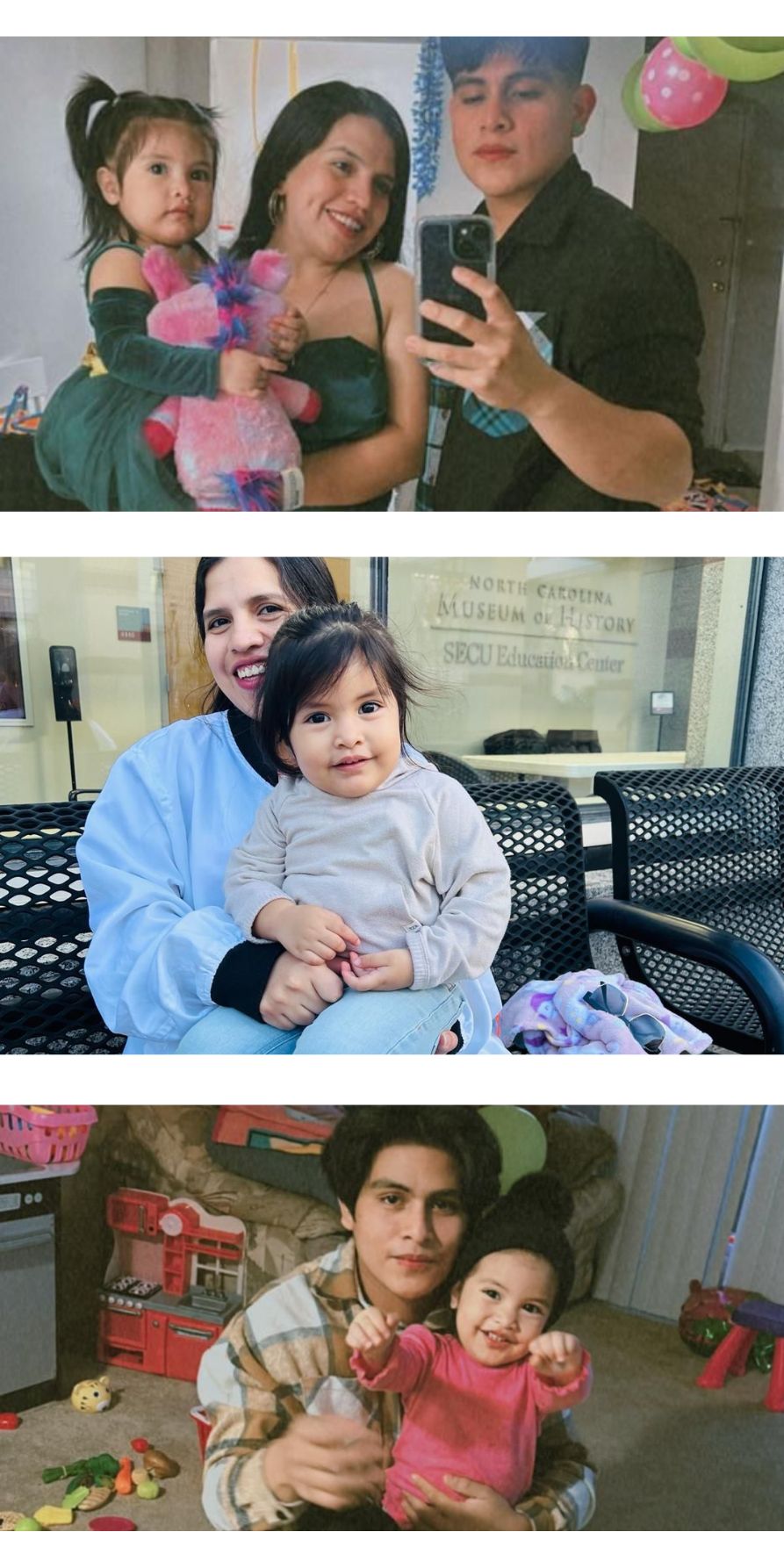
The Story of a Couple Who Defied All Odds to Create a Beautiful Family Together
The Story of a Couple Who Defied All Odds to Create a Beautiful Family Together
Their journey began in 2017 when Mynor and two of his siblings resettled in North Carolina, taking advantage of the Central American Minor (CAM) family reunification program to join their stepmother and father. CWS Durham assisted Mynor’s stepmother with the petitioning process and provided vital resettlement services upon their arrival.
Meanwhile, Mynor’s future wife, Nancy, was relocated to Minnesota through the same program. But the story of their meeting pre-dates their arrival in the U.S. This fateful encounter occurred at the U.S. embassy in El Salvador during pre-settlement processing. Though they didn’t exchange words that day, their connection would soon transcend physical boundaries through the digital realm of Facebook, more than a year later.
Initial doubts from their families were soon overshadowed by the power of love. Despite concerns about distance and an age difference (Nancy being older), they embarked on a long-distance relationship that culminated in Nancy’s relocation to North Carolina six years ago.
Their early days together were marked by adversity, sharing a cramped room with an inflatable mattress and relying on taxis for transportation. Nancy found herself longing for the snow of her former home.
However, their bond grew stronger, and fortune soon favored them. They acquired their own car and moved into a more spacious apartment.
Their next challenge was parenthood, which initially seemed impossible. Medical professionals advised Nancy that conceiving wasn’t feasible. Undeterred, they persevered. With the aid of a healer and a touch of magic, Nancy conceived, and they joyfully welcomed their baby girl into the world two years ago.
In 2022, they celebrated their union, and last month, with the assistance of Church World Service Durham’s immigration legal services, they became U.S. citizens. Their next endeavor? Purchasing their first family home.
To learn more about the work of CWS Durham, visit their website.
Stories of Change
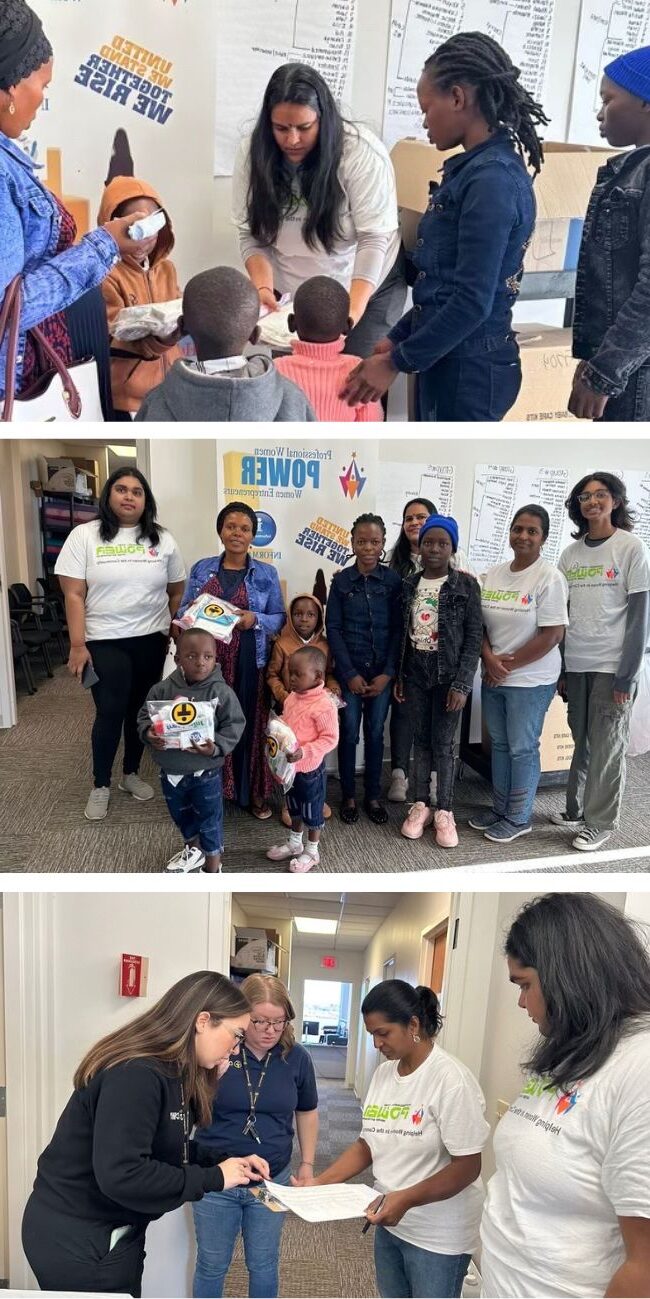
Dental Care Day at Church World Service Harrisburg
Dental Care Day at Church World Service Harrisburg
A few weeks ago, over 125 of our newly arrived neighbors visited Church World Service Harrisburg office to see a team of dentists assembled by one of our community partners, Power Women. After each client saw the dentist, they were provided with a hygiene kit. Our clients were deeply thankful for the opportunity to see a dentist and receive a hygiene kit.
“Since starting as the Health Navigator (HN) for CWS Harrisburg in July, I have had the privilege of working with each of our newly arrived neighbors. Working as the Health Navigator, I quickly learned that many of our clients arrive having not seen a dentist in years, and others have never seen a dentist in their lifetime,” said CWS Harrisburg’s Health Navigator, Kara Emrich.
“When Durre (CWS Harrisburg’s Associate Director of Resettlement & Engagement) burst through my door exclaiming someone wanted to help us put on a dental clinic, I could not have been more thrilled to start planning it. Over the next few weeks, staff and volunteers reached out to volunteer their Saturday morning to help pull off this massive operation.”
“CWS is so blessed to have generous congregations and donors that provide these blankets and kits. Each year, they share their love for our neighbors through this simple act of kindness. And we’re so grateful for their compassion towards others,” said Matthew Stevens, Director of Congregational Campaigns, CWS.
To learn more about CWS Harrisburg, visit their website.
Empowering Newcomers: CWS Lancaster’s Youth Mentoring Program
February 6, 2024
CWS Lancaster launched the Youth Mentoring Program last year, a vital support system for newcomers aged 15-24. This innovative program provides essential guidance to individuals as they navigate the complexities of their new lives. Each participant is paired with a committed volunteer mentor, creating a one-to-one connection to assist them in achieving various goals, including academics, vocations, physical well-being and …
Stories of Change
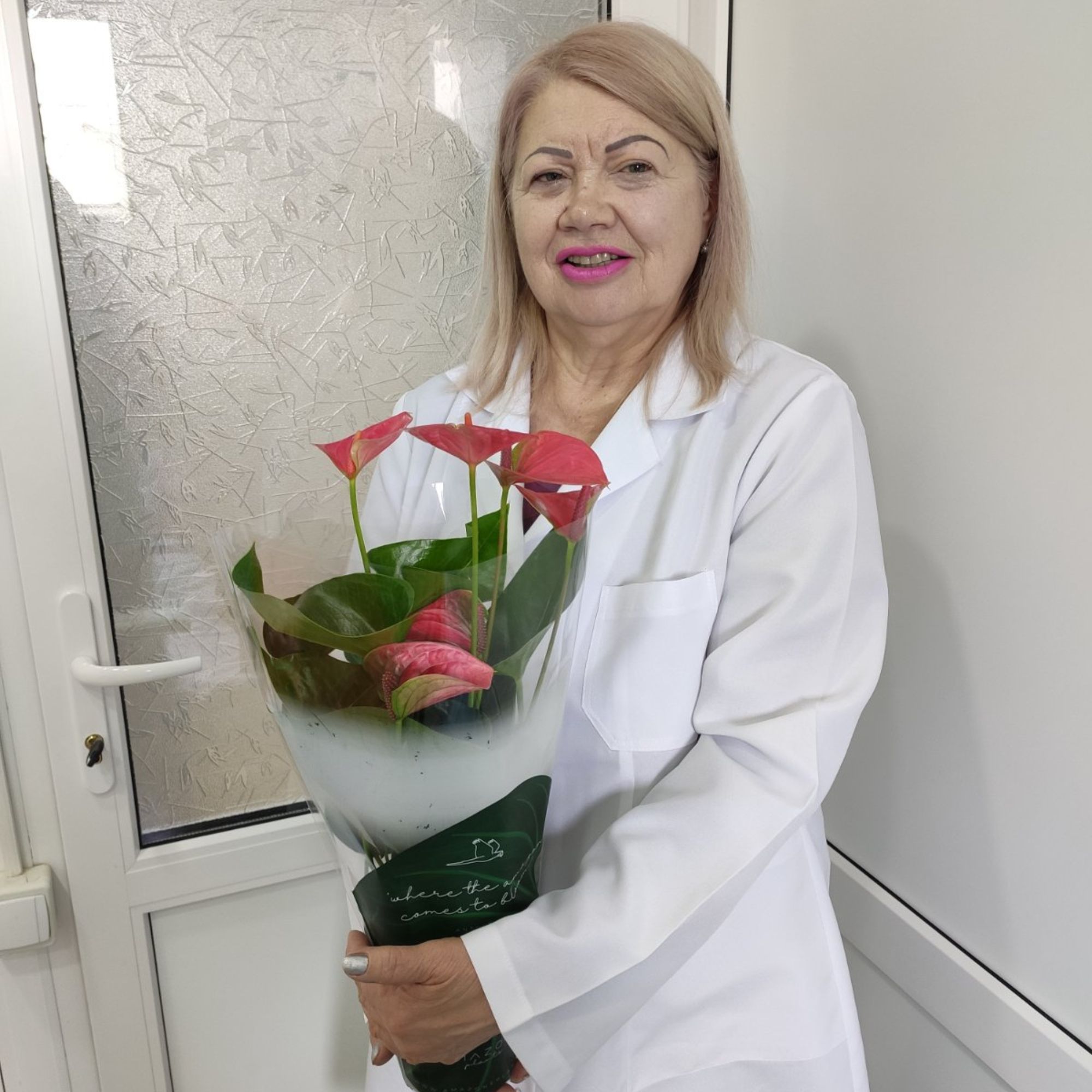
Lilia at work at Healthy City
“I Miss My Home Very Much”
Since March, 2022 Lilia Vitalievna Miasnikova has lived in Balti, Moldova where she receives support from CWS’ partner, *Zdorovii Gorod (Healthy City). Before life in Moldova, Lilia was a successful doctor in Ukraine. Her interest in medicine began when Lilia was just 11 years old as she accompanied her mom, a pediatrician, to her job. Following in the footsteps of her mother, Lilia pursued the highest medical degree and eventually became a neurologist. Unfortunately, in 2022, Lilia’s 41-year career and life as she knew it came to abrupt halt when Russia invaded Ukraine. Here is Lilia telling her story:
We knew that the hostilities would begin. We were warned about the danger but no one believed it. At 5 a.m. on February 24, the bombing of Kulbakino airport began. We have a very big airport in Nikolaev, and it all started there. That day, ATMs ran out of money and gas stations ran out of gas. Traffic formed at the borders very quickly and it was impossible to break through to any borders. Most people drove through Palanca to Moldova. It was unbearable to stay in Ukraine where there were constant air raid alerts. When we went down to the bomb shelter there were a lot of people and the rooms were not safe—there was moisture, mold and fungus on the walls and only one exit. If it collapsed, it would be a mass grave. Many men drank there. There was not enough air and as soon as the alarm ended, I ran up six flights of stairs home because the elevator had not worked since the first day of the war. As soon as you lie down to have rest, the alarm comes again and you need to go back to the shelter. After a while I had no energy left to go there. It was better to leave. There were only 2-3 people in our house. All the youth went to Poland and we decided to flee to Moldova.
From Nikolaev, we traveled for free to Odessa. We took a minibus to Chisinau, and from there by taxi to Balti. We chose Balti, because we knew that there were a lot of people who speak Russian here, and we were afraid of the language barrier. I came with my daughter and two grandchildren. They lived in Balti for a couple of months and then moved to Italy. My daughter knows English well and found a job online, and one of my grandchildren has already attracted the attention of local coaches as a talented athlete. I stayed here alone. Many people left Nikolaev. A lot of them are in Moldova, because they still hope to come back home, when everything is over. Some fled to Canada and Norway, but the reviews from there are not good, and the best option is to stay in Moldova and Poland.
We were very impressed by how actively they are helping the refugees here. Even in Ukraine there was no support like this. At the border we saw the responsiveness of the Moldovans. Refugees without COVID vaccinations were allowed through and offered to receive the vaccine either there or locally in Moldova. We were lucky with housing. We found an apartment in Balti, which the owner rented to us for half the market price. We came here in winter and had left everything. Refugees like us were literally dressed by the locals. They came up to us on the street and asked, “Do you have an old coat?” and almost everyone brought out warm clothes for us.
Almost immediately I was offered a job when they found out that I am a doctor. Work has become a good rehabilitation for me. It can even be seen as a miracle. Now I am working as a neurologist and accepting refugee patients in Zdorovii Gorod. The most important thing in the current situation is to keep yourself doing something so that your brain does not constantly analyze what cannot be comprehended. Logic does not work here, only emotions and they always get in the way. Many people say that it is good that children do not see corpses and blood. When we came here, those moments just appeared in photos of children in Mariupol dying from dehydration.
All my ideas about Moldova were from school books, that this is a sunny country where everyone dances and sings. However, it turned out that living here for people is hard, they have to work a lot, but everybody treats us with understanding and the people are very sincere. In my opinion, there is nothing like this anywhere. I really liked Moldovan cuisine, especially placinti, with all the fillings. The fruits are very good, apricots are pure magnesium. Strawberries are tasty and sweet. I tried all the grape varieties and understood what kishmish is. And the water here is also good. I started cooking so much that I had enough for several days. I had never cooked like this before. In general I did not pay so much attention to the kitchen as I do now since I could buy pre-made food. In Moldova it is expensive to buy food though, so without cooking it is hard to live.
In Balti, we are trying to walk more. This helps to get rid of negative thoughts and emotions, you need to “walk” them so that they do not accumulate inside. We stopped watching TV. Those who were left without homes—from Kharkiv and Kiev, they could not watch the news and talk about war. For those who lost children and husbands, it is harder. The only thing that can help them is medication. I know some nurses, their children were 18-19 years old, they all died when the state administration was blown up. Even though they go to work, they are shadows. Nothing livens them. Just a black scarf and the constant question, why is she alive?
But we read more here. There are very good bookstores in Moldova, a lot of professional literature, children’s and didactic. The most important thing for us Ukrainians is employment. I really like that in Moldova for doctors, they do a lot of seminars and take them to Chisinau, where interesting speakers from Romania and USA speak. I’m constantly gaining new acquaintances and new knowledge. It helps to keep track of these new resources and when everything is fine, I will return back to Nikolaev.
I miss my home very much.
*CWS partners with the local Moldovan organization, Zdrovii Gorod (Healthy City), to support Ukrainian refugees by providing comprehensive services including food and non-food items, social inclusion, and psychosocial support.
To learn more and support CWS’ work with Ukrainian refugees in Moldova, click here.
Stories of Change
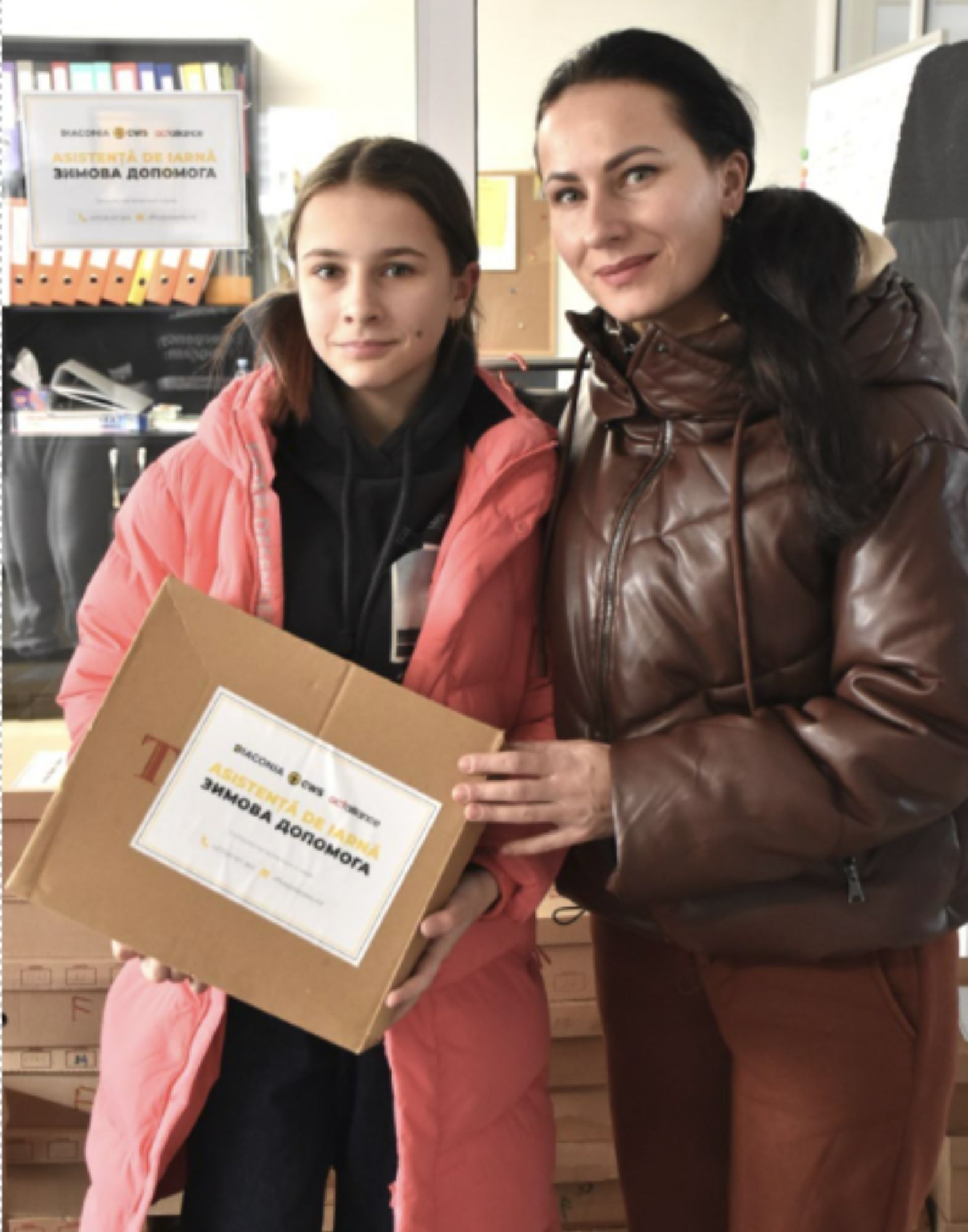
Olga and her daughter, Carina, receiving a donation box at Diaconia
Rediscovering Peace
The life that Olga and her family had in Ukraine was the type of life that many dream of. She had a loving husband and two healthy and happy children. Her daughter, Carina, was a talented ballerina and on her way to becoming trilingual at just nine years old. Her three-year-old son, Gleb, loved his family and was especially close with his father. None of them could have foreseen what would come in the next months.
The war in Ukraine came fast and shattered the family’s dreams. It arrived with a boom when a bomb exploded right by the apartment the family was in. In just half an hour following the explosion, Olga said goodbye to her husband and fled the country with her children, leaving behind the life they had always loved.
The family arrived in the neighboring country, Moldova, where they were generously hosted by a family of farmers. “Some people who were strangers to us sheltered us and offered us a place in their house. Together with my children, I helped take care of the animals, gathered wood for the fire and helped in the house as much as I could. We weren’t thinking about comfort, the important thing was for us to be safe.”
Although they had found physical safety, the trauma and horrors of the war lingered in their minds. Young Gleb shut himself off to this new life and refused to speak for four months. Unable to understand why his father did not come with them, Gleb also refused to communicate with his father. Carina responded to the trauma by growing up far too quickly and becoming a reliable source of support for her mother.
Despite these struggles, Olga refused to give up. Through CWS’ winterization project in partnership with local organization Diaconia, Olga was able to receive essential supplies. She also began a hairdressing course to be able to get a job and enrolled her children in school.
Through these small steps, Olga and her children are slowly healing and recreating a life that makes them feel happy and safe. “It is so valuable and important to know that we are not alone, there are people who support and help us,” Olga stated. “We thank you from the bottom of our hearts for the care you give us. Now that the temperatures are very low, winter footwear is a basic necessity. Thanks to you, and your donors, we now have less to worry about.”
Although peace in Ukraine is a subject of uncertainty, Olga and her family are discovering that peace can be found in the support and care they have received in their new home.
This story is possible thanks to CWS’ membership in ACT Alliance, a global coalition of churches and agencies engaged in development, humanitarian assistance and advocacy. Thanks to the support of ACT Alliance, CWS is able to support individuals like Olga, all around the world.
You can learn more support CWS’ work with Ukrainian refugees in Moldova, here.