Stories of Change


Razaz (top) and Jameela (bottom) teach young refugee women new skills in Henna and Makeup Art

Persevering Through Passions: Jameela and Razaz

Beyond every refugee are stories, passions and hobbies that make them unique. Each newcomer brings to their host country new valuable skills that, when given the chance, can help make our lives a little brighter. This is true for Jameela and Razaz who live in our PURE* Group Home for Youth seeking asylum in Indonesia.

On paper, one might assume the two young women are from completely different worlds. Jameela is from Iraq and Razaz is from Sudan. When you look closely, however, you’ll find that the two women have one very big thing in common: they are driven by their passions.

Jameela is a self-taught make-up artist and talented student. On Saturdays, when she is not working on her schoolwork, she volunteers at the Refugee Talent Project, where she teaches other young refugee women and girls makeup techniques. By doing this, Jameela is not only helping other women develop new skills, but she is empowering them by revealing how talented and capable they are.

Like Jameela, Razaz developed her own passion and artistic talent, henna, at a young age. At the CWS group home, she felt compelled to share her talent with her peers and established her own henna class for the residents. She shared, “I enjoy sharing my skills. It makes me happy. I enjoy seeing my students improve their skills by the week. One of my students at [the] group home initially didn’t know how to draw henna at all. Now she can do it by herself.”

For both Razaz and Jameela, the title “refugee” has never stopped them from pursuing their passions while uplifting others. As Razaz stated, “Being a refugee shouldn’t be a barrier for you to learn new skills, as I believe that all women are strong and resilient enough to break those barriers.” With each brush stroke, these women are taking down barriers and painting new opportunities for all they encounter.

*PURE, which stands for “Protecting Urban Refugees through Empowerment” is a CWS-run program in Jakarta, Indonesia that helps unaccompanied refugee youth and asylum seekers navigate life in their new home. The program provides shelter and community and offers classes and vocational training to teach the youth life skills and help them develop a stable livelihood.

You can learn more about our work in Indonesia by clicking here.


One Man, 1,000 Trees


May 8, 2024

Claude and the CWS Plant Nursery he manages *Warning: this story mentions violent incidents which may be difficult to read.* Over two decades ago, CWS program participant Claude came face-to-face with death. Like many of his fellow Congolese, this close encounter was unexpected and came as a result of the civil war that erupted in the Democratic Republic of Congo …

Kakuma Camp: The Place Called Nowhere


Tonda Pirtle | April 11, 2024

Scroll through images above to see photos of Tonda’s recent visit to Kakuma Kakuma, in Swahili, means “nowhere.” But for over 250,000 refugees, this place is not just a spot on the map of Kenya; it is a sanctuary, it’s a temporary home. My journey to Kakuma Refugee Camp unfolded stories that were as heart-wrenching as they were inspiring. Today, …

Stories of Change


Top: McPherson Welcomers at a church gathering; middle: McPherson team preparing for new arrivals; bottom: McPherson welcomers members playing with a newly arrived Ukrainian minor

Bonds of Welcome: How McPherson Embraced Ukrainian Refugees

In the heart of McPherson, Kansas, a community of just over 14,000 residents, a dedicated group of individuals has come together with a singular mission: to sponsor and support Ukrainian families seeking refuge and opportunity in their town. Nancy Magnall and Tina Burkholder, two remarkable members of the McPherson Welcomers, spoke to Church World Service about their sponsorship experiences through CWS’ Neighbor Network and the impact they’ve had on their community.

Nancy, along with her retired husband, made the move to McPherson seven years ago from Iowa, driven by a desire to be closer to family. With a background in working with foster parents for fifteen years, Nancy brought a wealth of experience and compassion to the table. Tina, a native of western Kansas, has spent nine years as a first-grade teacher in Nebraska where many of her students were immigrants and refugees that reflected the rich diversity of the world. “There is something about working with people from other countries,” Tina reflects. “Their children as well as their parents, it’s just something I really took to like a fish to water.”

Their journey began in August 2022, following the Russian invasion of Ukraine. Nancy stumbled upon an article about the “Uniting for Ukraine” initiative and, together with Tina, who was already part of their church’s outreach team, felt compelled to take action. “Do you guys think we can do this?” Nancy posed the question to their church community, and the response was immediate. A diverse group, including retired educators, missionaries, medical professionals and attorneys, banded together to form a sponsorship team. Through Welcome.US, they were matched with a Ukrainian family, marking the beginning of a transformative journey.

Armed with training and resources from Welcome.US and organizations like Refugee Welcome Collective, Church World Service and International Rescue Committee, Nancy and Tina’s group navigated the complexities of sponsorship with confidence. “These organizations made it so easy for us,” Nancy remarks. “From obtaining fact sheets, training materials; all the resources were invaluable for our path forward. We’ve learned so much that helped us in the process of sponsorship.”

The first Ukrainian family, a family of four, arrived in December 2022 and were greeted with open arms by Nancy and Tina at the airport. The group rallied together, providing support every step of the way. Over the course of the following year, they sponsored a total of nine individuals, with two more families of four expected to arrive in the near future.

Their partnership with Church World Service and the International Rescue Committee proved instrumental, providing remote support and access to match grants for the Ukrainian families. From English lessons to driver’s education classes, medical appointments to cultural excursions, the group’s dedication knows no bounds. Nancy shared, “We are thinking down the road, and our group may do Welcome Corps. I think we are ready to sponsor other nationalities”

Nancy and Tina have a message for those considering sponsorship: “Connections are important,” Tina emphasizes. “Take advantage of the resources like CWS and Welcome.US offer, and don’t be afraid to ask for help.” They’ve even taken their message beyond their own church, presenting to other denominations to inspire similar acts of compassion and community-building.

Now, McPherson boasts its own vibrant Ukrainian community, with newly arrived residents putting down roots and contributing to the fabric of the town. Many of the adult Ukrainians find employment at Pfizer, further strengthening ties between the newcomers and their adopted home. The bond between the sponsor group and the Ukrainian families was celebrated on Ukrainian Independence Day, a joyous occasion filled with food, fellowship and a shared sense of belonging.

As Nancy aptly puts it, “We have our own little Ukrainian community in this town. A remote place in Kansas, we are thrilled to see the communities of Ukrainians growing and thriving in our own McPherson town. They put down their roots here.”

To learn more about CWS’ Neighbor Network and how your group can help welcome a refugee newcomer, click here.


Stories of Change


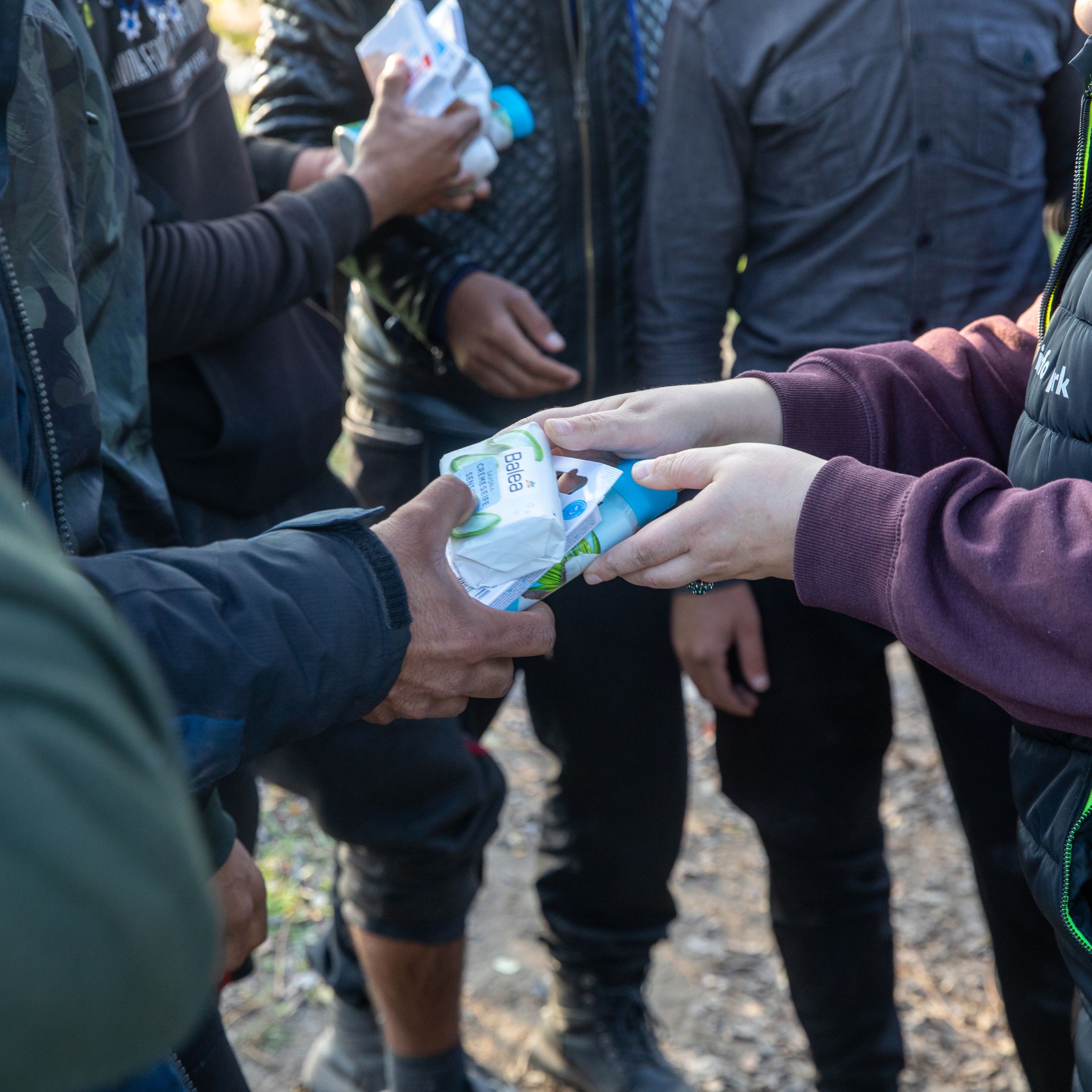
Bahar hands supplies to refugees and asylum seekers at refugee camp in Serbia

Bahar’s Determination for Change

Ever since she was a young girl, Bahar was aware of the inequalities that existed in her life in Iran. The older she got, the more prevalent the discrepancies became between her and her male peers. Bahar, however, came from an open-minded family and was constantly encouraged by her mother to fight for her rights and never settle. She went to university, traveled to different cities, met different people, and got a master’s degree in architecture. By most standards, Bahar was as ready and qualified as any to become a successful young professional.

Nonetheless, Bahar began to notice conversations circulating among her friends and extended family who asked why she was leaving their town, why she needed an education, or why she wasn’t married. Unfortunately, the reality facing Bahar was inevitable: no matter how capable and qualified she became, Bahar would not be given the same freedom or rights as her male counterparts. With her parents’ support, she decided that it was best for her to leave and find a place where she could live a full and safe life.

At age 30, Bahar decided to travel to Europe and eventually ended up in Serbia. The asylum application process was trying for Bahar. She experienced medical difficulties, and some of the shelters she stayed in were dirty or felt unsafe for her as a woman. She remembered one occasion after returning from the hospital in which all of her belongings had been stolen. She told us, “I put all my life into 50 pounds and when I came back to the camp, I had lost all of it.”

While she still was coping with her sickness, Bahar decided to go into town to receive medical support from local non-profits. This is when she first discovered CWS’ local partner InfoPark. Located at the heart of Belgrade, InfoPark is an information hub where refugees and asylum seekers can be connected to resources and receive consultation from legal experts. While at the center, Bahar was impacted by the number of people seeking help. She learned that a lot of the children visiting the center spoke Persian and Dari, like her, and were struggling with school. Without hesitation, Bahar decided she would become a volunteer at the center.

Bahar recalls that after letting the children know she would help them with their homework, 10 of them showed up on the first day. The children were eager to learn, and Bahar was eager to help. She told us, “when I was helping the children with their homework, I never felt tired.” Thanks to Bahar and InfoPark, the children not only got support in school but were given a sense of community and something to look forward to every week. Bahar shared, “every Saturday I met them here. We would have breakfast, listen to music and then I would help them with their homework. They would always ask me, ‘why can’t you come every day?’ I’m still in touch with all of them”.

The director of InfoPark, Gordon, noticed the impact Bahar was making and invited her to join their team full-time. Bahar shared that from the first time she came to InfoPark, Gordon has always looked after her. She told us, “sometimes I think, he’s not just my director, he is part of my family now.”

As a staff member at InfoPark, Bahar especially loves that she is able to support young girls and women. Her eyes filled with tears when she told us about a women’s day they hosted for refugee mothers at the center. She shared, “we invited 25 women to bring their children here to be taken care of by volunteers. We then took these women to various museums and to a restaurant. It may have been the first time they ever got to do something like this.”

In Iran, Bahar’s mom constantly encouraged her to never give up and to follow her dreams. Since arriving in Europe, she has remained determined to achieve the life she knows she deserves. Through her work with InfoPark, not only is she pursuing a life that gives her joy, but she is encouraging other refugee women and children to do the same.


Stories of Change


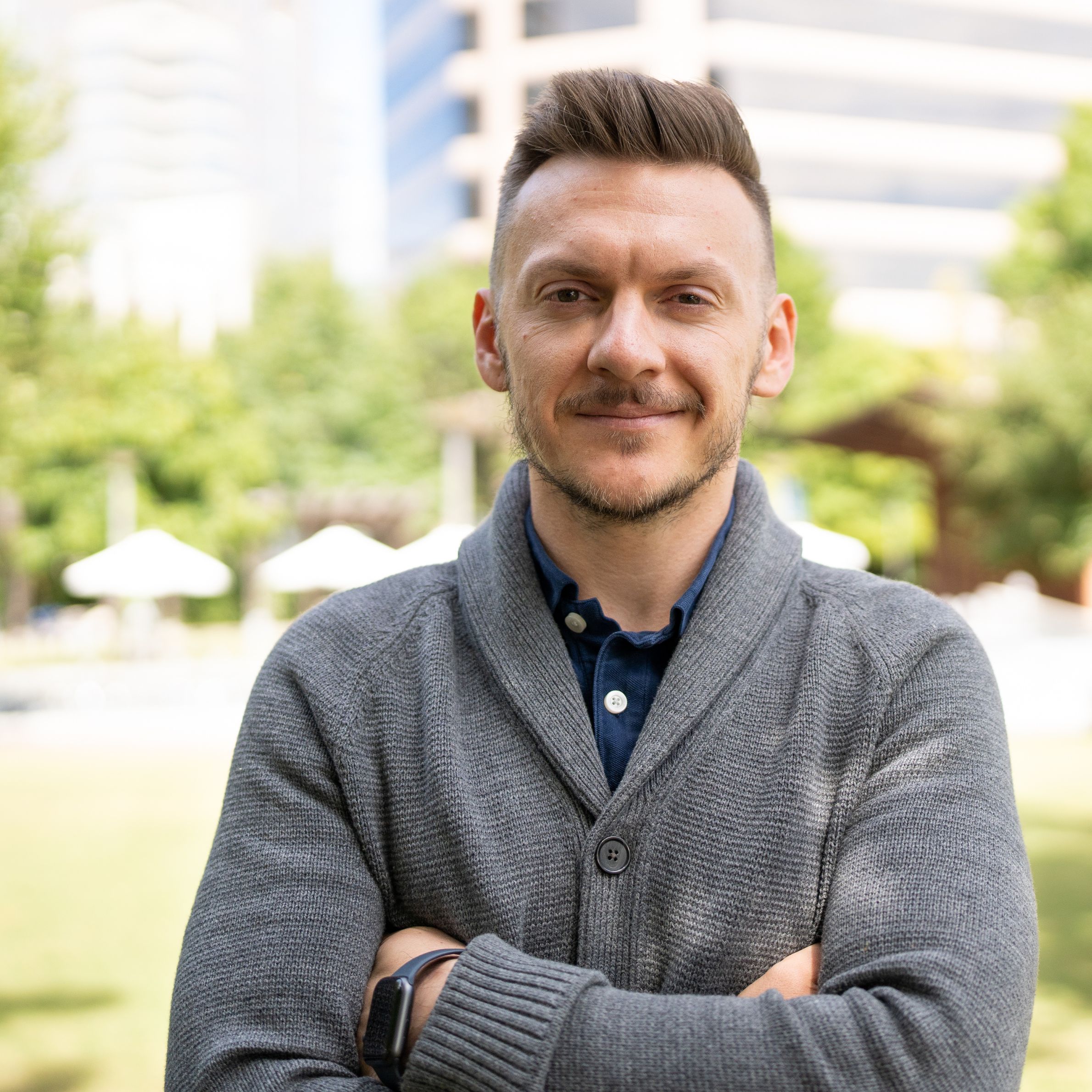
Oleg. Courtesy photo.

From Dance Teacher to Caregiver: Oleg’s Journey to Help Ukrainian War Refugees

In December 2016, Oleg, a professional dancer, visited Greensboro, North Carolina, to teach dance at local schools. After five years of working in the U.S., Oleg built a new life here with kids and a wife. Then the devastating war broke out in Ukraine. Feeling the need to help his fellow citizens who were fleeing the conflict, Oleg left his teaching job. He joined Church World Service as a case manager in September 2022.

In his new role, Oleg was responsible for managing 22 different cases, including 37 individuals and families with small children, married couples and young adults. Despite the challenges they faced, the Ukrainians were positive and grateful for their new lives in the United States. Oleg recalls, “It was not long before they appreciated having access to electricity and running water.” The journey to the U.S. was difficult, taking courage and several weeks to complete. In the U.S., the refugees are now adapting to their new surroundings by learning about the tax system, improving their English, and focusing on building a new life.

Oleg reflects, “It’s hard to believe that a year has passed since the invasion of Ukraine.” He has family members–including his parents, two brothers and grandparents–and many friends still living in Ukraine and facing the dangers of war every day. “Every time I speak to my brother, he is on the move, trying to stay safe,” says Oleg.

For those in Ukraine, the war continues to impact their daily lives. However, for many people outside of the country, the conflict has fallen off the news cycle. But for those who are directly affected, like Oleg’s family, every sunset and sunrise bring uncertainty. “The difference between those in Ukraine and us is that we can turn off the TV, but they continue to suffer. They never know if they will wake up the next day safely. The fact that even apartments are targeted makes it even more frightening,” adds Oleg.


Click here to support our programs to welcome Ukrainians in the United States, Moldova and around the world.


Stories of Change


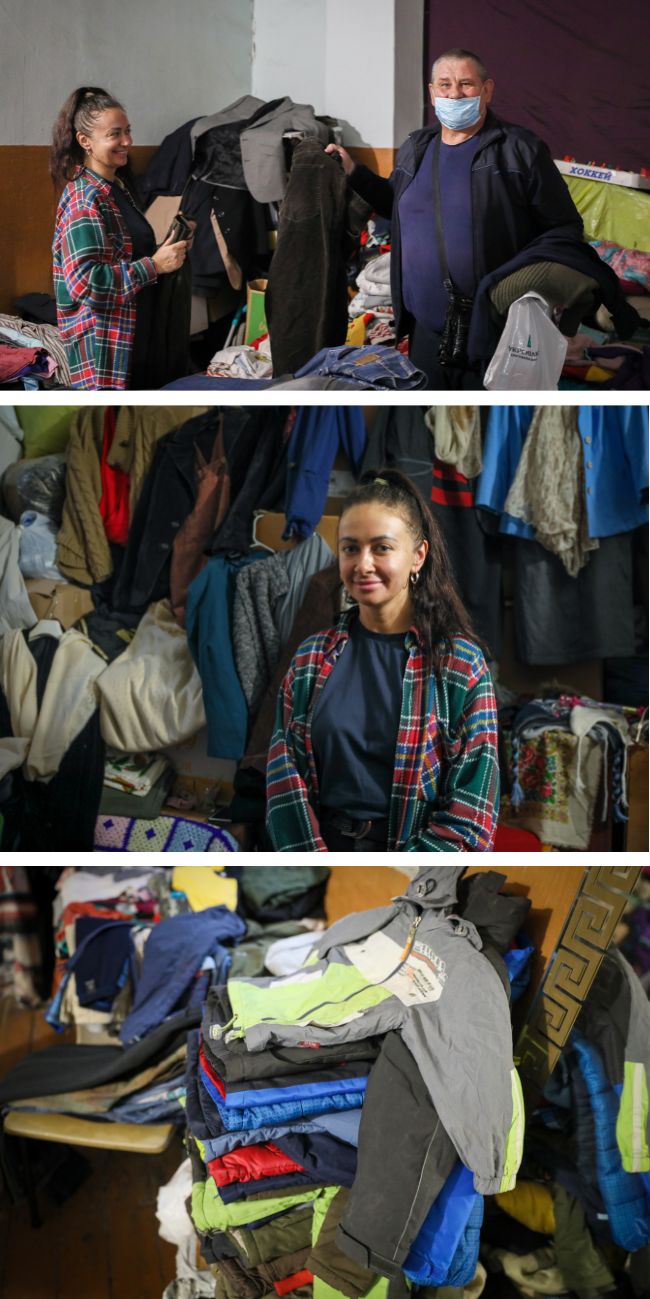
Top: Natalia handing out winter clothing, Middle: Natalia at distribution center, Bottom: Winter clothing ready to be handed out

A Safe Home and a Warm Hug

If you had just 20 minutes to pack a small bag and leave the rest behind, possibly for forever, what would you pack? For Natalia, who fled Ukraine earlier this year, the answer to this question was: documents, necessary items for her son, her son’s favorite toy, books and some snacks. The limited belongings Ukrainians like Natalia have fled with reveal how sudden, shocking and frightening it is to be forced out of one’s own country.

When Russia invaded Ukraine in late February, Natalia had to make the quick decision to flee or stay in her country. As explosions boomed near her home, and her 10-year-old son cried with fear, Natalia quickly knew what had to be done. She explained, “in that moment I realized that the most important thing was my son and that we had to leave. So we took the car and we left.”

Natalia kept a calm and strong composure as she and her son fled to nearby Moldova. As they approached the border and reality set in, however, Natalia allowed herself to shed a tear. Fortunately, in Moldova Natalia discovered a welcoming community that she describes as “a warm hug.” She shared, “when we drove into Moldova and people saw our license plate from Ukraine, they stopped and asked ‘do you need any help?’ ‘Do you need medicine?’ ‘Do you need psychological help?’, ’ Do you have a place to stay?’”.

After a few months in Moldova, Natalia’s tears of sorrow turned into tears of joy and gratitude. Thanks to the support of the community and local organizations, Natalia and her son have been able to create a peaceful life for themselves. Natalia shared, “in this city, my son and I feel safe. He is smiling, he’s singing, he’s drawing, he’s going to school online. I am also teaching school online to Ukrainian children.”

Filled with gratitude and a desire to give back, Natalia decided to become a volunteer at a CWS-supported distribution center in Balti, where she helps distribute food and clothing to refugees. Natalia explained that as we approach winter, distributing warm clothes is extra important to prevent people from getting sick. She elaborated that, “a lot of people are still coming here from Ukraine and they are very stressed and disoriented. We know what they are going through, we understand them and we want to help.” At the distribution center, Natalia also likes to talk to other refugees and share her own tips, knowledge and as she told us, “the same warmth I received here”. She stated, “the formula for helping is that you accept the help, and then you are able to help someone else. That’s what I’m doing.”

Despite the war, Natalia remains hopeful and dreams of the day she will be able to return to Ukraine. In a week, she will be reunited with her parents who will be coming to live with her and her son in Moldova. She told us her father is excited to see his grandson and said, “to be one family in one place will be the moment we finally feel totally safe.” Through our continued effort in Moldova, and volunteers like Natalia, we hope to help other refugees find the same safety and warmth that Natalia and her family have found.

As Ukrainians continue to arrive in Moldova, be the source of warmth and support they need by clicking here

Significant support for this project was provided by a grant from UMCOR.


Stories of Change


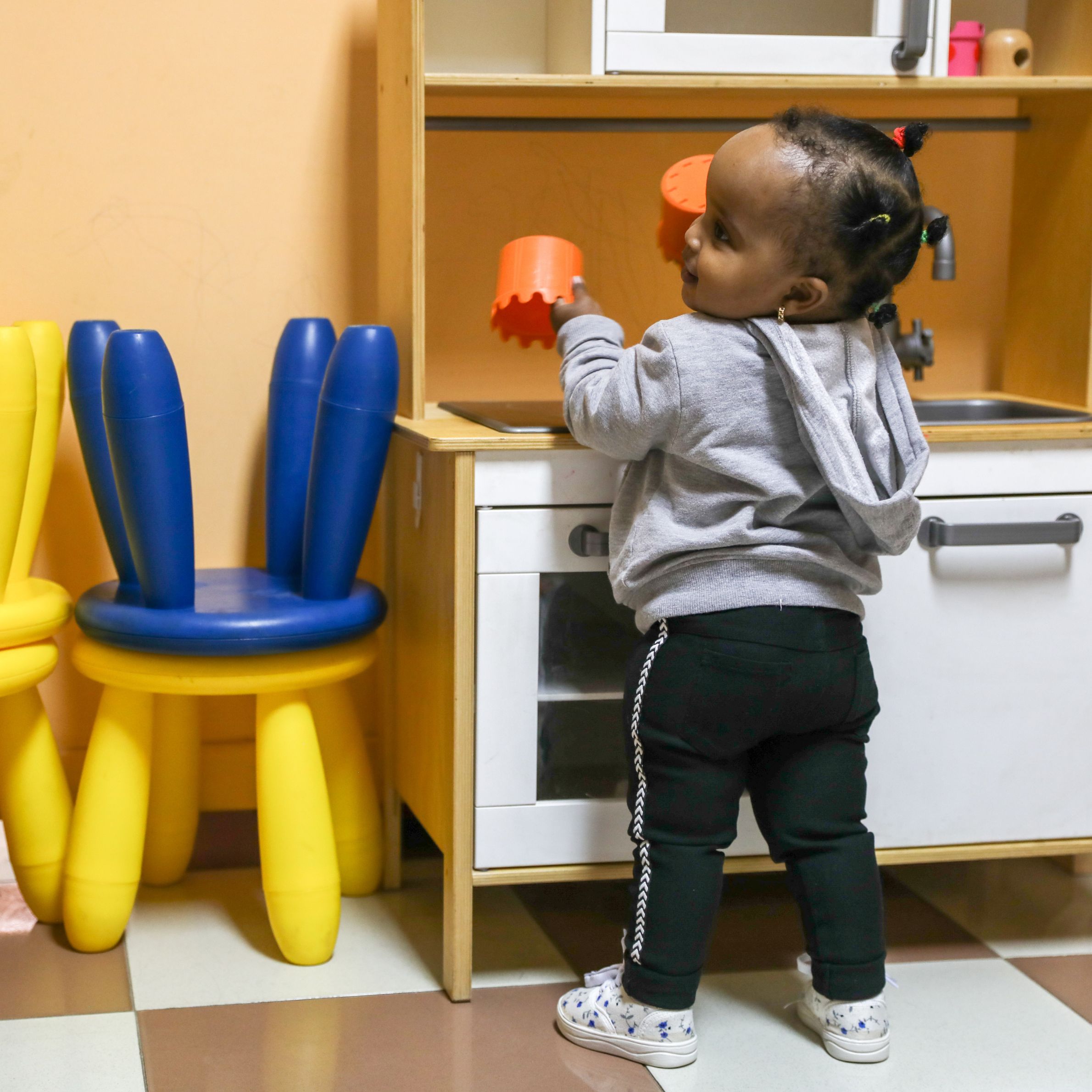
a child plays at the StARS Naimo childcare center

Fatima Discovers her Greatest Potential

Becoming a mother at a young age, by choice or by force, is challenging on its own. For refugee women, this challenge can feel extra difficult because they have to face it in a country that is not their own. Young and single refugee mothers face significant challenges: they are often ostracized by their own communities and struggle to find support to provide and care for their children. Due to their young ages, income-generating opportunities are very limited.

Fatima became a mother when she was just 16 years old. She came to CWS’s partner in Cairo, St. Andrew’s Refugee Services–known as StARS–to ask for financial assistance so she could meet her and her child’s basic needs. In the end, she discovered much more. Fatima received psychological services and learned new skills to better care for and bond with her child. She started attending classes through the StARS Unaccompanied Youth Bridging Program for young mothers so that she could eventually generate her own income. Fatima found a safe, welcoming space in the StARS Naimo Center. She shared, “at first, I did not know how to breastfeed and care for my little boy. I used to get tired and cry a lot, but StARS provided me with skills and training on such topics, which I now pass on to other young mothers.”

While attending classes on a regular basis, Fatima leaves her 5-month-old baby boy in the loving hands of the StARS nursery staff. The nursery takes care of babies and children up to 5 years old. They engage them in different activities according to their age groups, while the children’s mothers attend classes, group activities and appointments without having to worry about their children. Fatima shared, “[StARS Naimo Center] saved my life and my child’s. The daycare staff took care of him while I was studying. They also taught me how to take care of him. My feeling of safety is great as I am assured that my child plays happily there.”

At Naimo, Fatima received psychological and material support, including food assistance and baby supplies for her child. She told us, “this support made me realize that I want to help other mothers too. Working at StARS now is helping me open up to different cultures and learn languages while growing in my experience. I also interview and support other young mothers through training. My experiences with them have made us all grow together in a safe environment that helps us integrate and adapt to our situations while working to improve them.”

Now, Fatima is excited and feels empowered to pursue her goals and dreams. She is passionate about computer studies and has been able to learn new skills through the youth bridging program. She said, “[With the right opportunity] I believe that every mother is a leader, so I am learning and dreaming of becoming a pediatrician so that I can help all the children in refugee communities.” At StARS, a helping hand is available to anyone who needs it and the team will always help participants like Fatima reach their greatest potential


Stories of Change


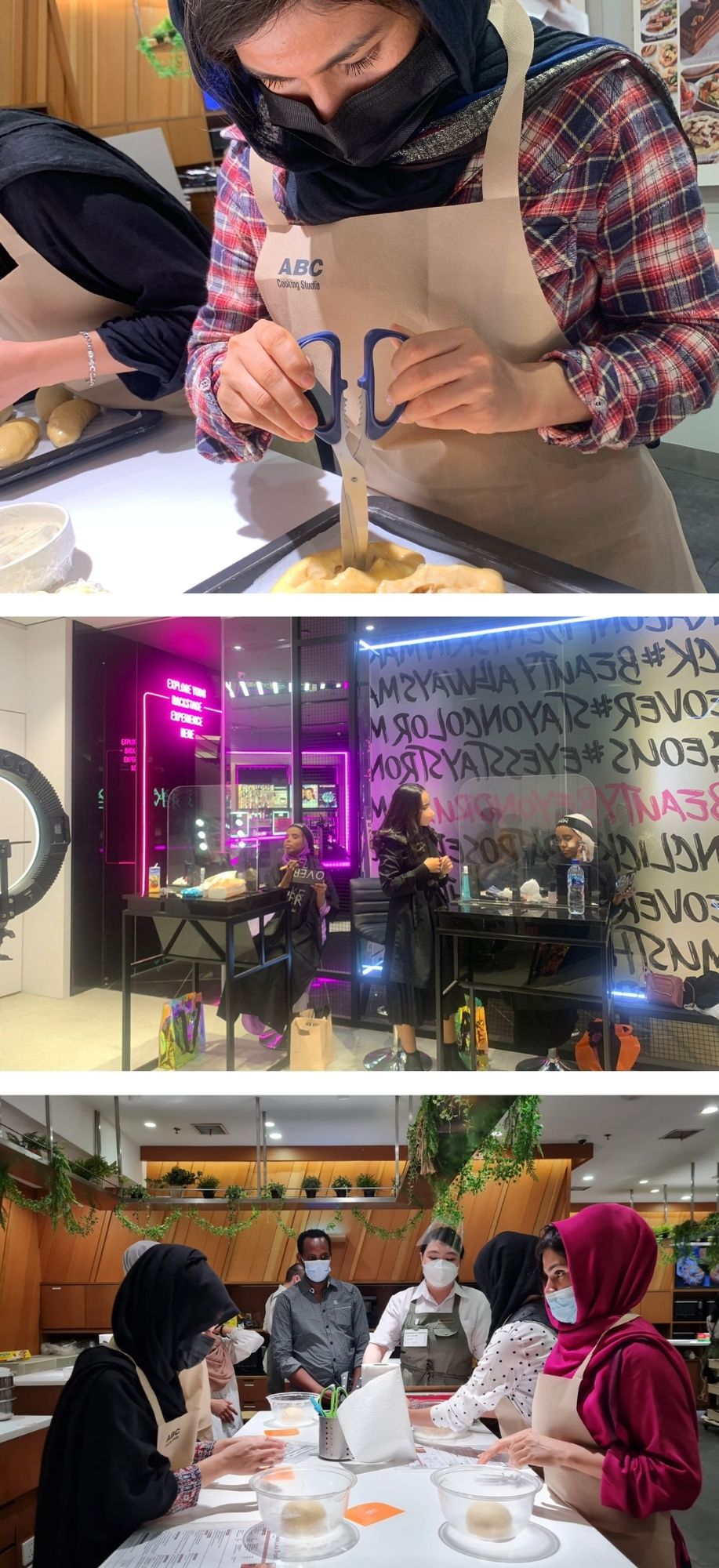
Top: program participant learning how to bake. Middle: program participants in cosmetology class, Bottom: program participants learning to cook

New Skills Bring New Opportunities

When refugees are forced to flee their countries, they have to leave behind both what used to be and what could have been. This is especially true for young refugees, who lose the opportunity to explore their interests, learn new skills and pursue their dreams. Young refugees, who often flee alone, instead have to focus on survival as they navigate their new and challenging reality. 

Through our program, “Protecting Urban Refugees through Empowerment”, also known as PURE, in Jakarta, Indonesia, we team up with these youth as they rebuild their lives.  We help these young program participants to build a sense of community, and we offer classes and vocational training that teach valuable skills and help them towards building a career. Program Officer PURE, Defi Satriyani, explains, “classes are important since they teach students life skills. The student could use this skill later in their lives, not only for their own use but also to earn income and support themselves. The opportunity for refugees to earn income has not been easy or equal compared to other groups. Therefore, creating access to vocational training becomes important.”

Recently, the residents at the home had the opportunity to attend cooking classes and cosmetology classes. These classes, which were the first in-person classes held since the start of the pandemic, were filled with excited and chatty teenagers and young adults. In the cooking class, young Abdul was particularly excited. He surprised himself with how quickly he was able to learn in the class and commented that perhaps he could become a chef in the future. Along with his peers, Abdul not only learned how to cook and bake, but he also was able to explore other cultures. 

Alia, who attended the cosmetology class, had a similar experience. She learned how to do various styles of make-up, from daily looks to wedding looks. Following the class, she surprised a social worker who told Alia she was amazed by how healthy and beautiful she looked. Alia’s young daughter beamed next to her and shared that her mother had been practicing her make-up skills daily and said, “It helps her relax and be happy.” For Alia, attending make-up classes gave her a new skill but also gave her a tool that made her feel happy and confident. 

These classes are an opportunity for young refugees, like Alia and Abdul, to grow and regain the experiences and lessons they may have missed out on. As they learn valuable and useful skills, students are able to become more confident and discover their potential.  Through these classes, we are helping young refugees become independent and hopeful as they work towards a brighter future. 

Note: Pseudonyms have been used in this story to protect the safety and identity of minors