Stories of Change


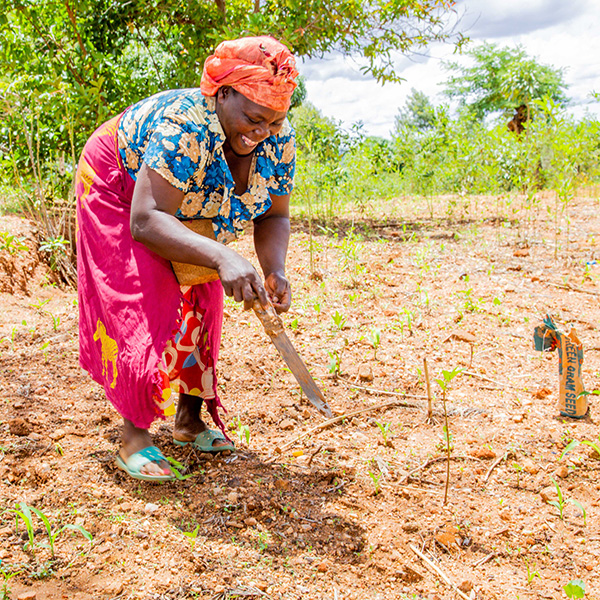
A program participant in Kitui County plants green gram seeds that she received through the CWS response.

Hope and recovery for 800 Kenyan families after the desert locust emergency

In 2020, swarms of desert locusts resembling dark storm clouds descended ravenously on the East and greater horn of Africa. They roved through the region and flattened farms and pasture lands posing an unprecedented threat to the food security of millions of people and their livestock in already vulnerable areas.

Farmers could do nothing but watch with dismay as the huge swarms of marauding insects ate their crops.

In Kenya, locusts infested more than 70,000 hectares (about 173,000 acres) of land, including crops, fodder and pasture. This put many families’ livelihoods at risk. 

The desert locust is considered the most destructive migratory pest in the world. It is highly mobile and feeds on large quantities of any kind of green vegetation, including crops, pasture, and fodder. According to experts, it was the worst desert locust invasion in over 25 years in Ethiopia and Somalia and the worst observed in over 70 years in Kenya.

The invasion came at a time when the government and humanitarian actors were battling the COVID-19 pandemic and the devastating economic and social disruption it caused. More time, energy and resources were diverted for COVID-19 preparedness, prevention and response.

CWS responded quickly through an ACT Alliance Desert Locust Regional appeal. Our team worked to prevent a significant decline in food security and to help farmers and families safeguard their livelihoods in affected areas affected. A total of 800 households received support in form of early recovery seeds and training of drought-tolerant crop production.

“When the locusts invaded our farms, they ate everything. CWS brought us seeds which we hope will help us recover from the loss,” said Kalii Mukumbu, a farmer in Kitui County.

This work was carried out in collaboration with the ACK Diocese of Kitui as well as the Kitui County Ministry of Agriculture, Water & Livestock. Following a rapid assessment in the affected area, our team distributed three varieties of crop seeds: green grams, beans and cowpea, which are well suited for the agro-ecological zone.

Thanks to Week of Compassion for their support of this response. 

Stories of Change


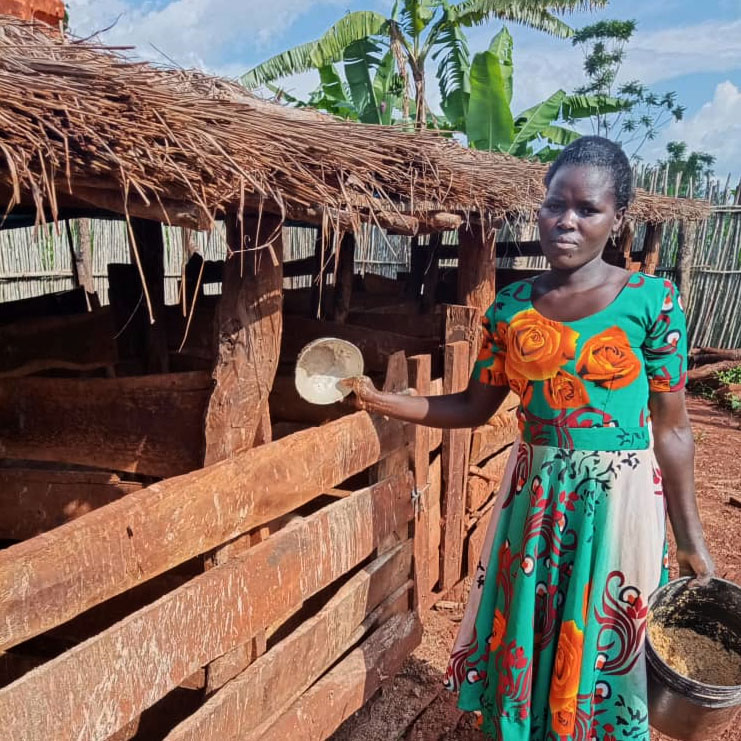
Anastasia stands in front of the pen where she keeps her pig.

Happiness and hope for Anastasia’s family in Tanzania

Anastasia Malembeka has relied on farming and selling fruit and vegetables to earn a living. She has always wanted to start a livestock business, but she didn’t have the startup capital. She also didn’t know what the best type of animal would be to raise in order to provide for her family. 

Things changed in 2020, when CWS introduced a new part of our work in the region of Tanzania where Anastasia lives. With the support of Latter-day Saint Charities, CWS offered families like Anastasia the resources and information they needed to start raising pigs. Before the program, Anastasia thought it would be a challenge to raise pigs. Nevertheless, she signed up and has seen success.

“Now I know how to rear a pig in most effective way,” Anastasia says. “I can prepare pig feed using the feed formula that was taught to us by CWS, I can easily manage my piggery unit by myself and I can even identify common pig diseases and furthermore prevent them.”

“I am thankful to CWS because through this project, I have fulfilled my dream of livestock rearing, which will in turn diversify my family source of income. This project has also provided a platform for farmers to meet and discuss challenges faced and how to solve them accordingly. This has been helpful since it gives us an opportunity to learn and encourage one another,” she continued. “The lead farmer has been very helpful to us by providing technical advice and further support whenever needed.”

“My sow is now growing healthy, and I expecting her to be ‘in heat’ anytime–something we are all looking forward to as a family, and we are very  prepared for that,” she says. “At the moment my family and I are very happy because we believe that this project will enable us to increase our family income.”


Stories of Change


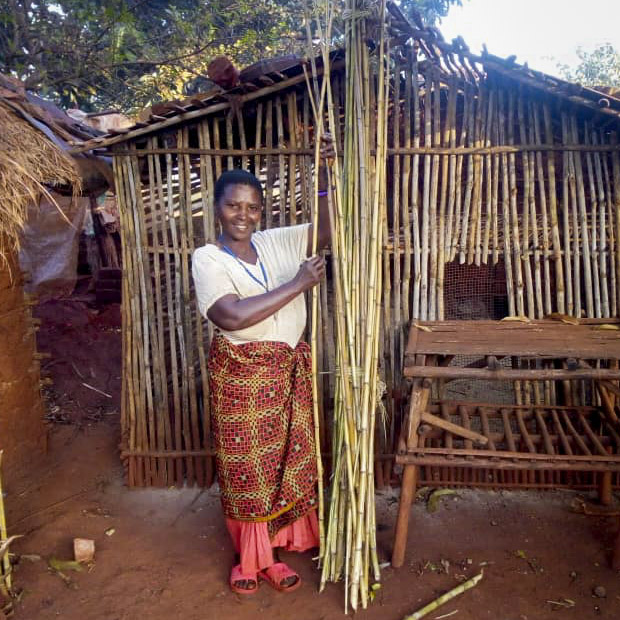
Losina stands in front of her new chicken coop, which will soon be home to her new chicken-raising business.

Replacing Losina’s discouragement with hope

At the beginning of this year, Losina Evarist Elias was discouraged. Her family was struggling to afford three meals a day. They didn’t have enough money to meet their basic needs, and didn’t even have enough clothing for all nine people in her household.

Their plot of land wasn’t yielding enough, and the wages that they earned from seasonal labor couldn’t cover all of their needs. Losina had tried to raise chickens before as a way to earn an income for her family, but her flocks kept dying in large numbers. She had a feeling that raising chickens just wasn’t a way that anyone could make enough money to care for a family. 

We’re thrilled to say that Losina has changed her mind. In March, she joined a CWS program that is helping more than 1,000 farmers in Kasulu district, Tanzania, raise either chickens or pigs. She went to classes and attended workshops on a range of topics relating to raising chickens. Little by little, her discouragement was replaced with hope. 

“I always believed that building a chicken shelter was expensive and would consume a lot of my money,” Losina says. During the program, though, she learned how to construct a chicken coop using locally-available resources. Then she put what she learned into action. “I collected bamboo not far from here to build the shelter, and used old, rusty metal sheets for the roof,” she explains. Now she has a chicken coop to protect her flock.

The larger issue, of course, was the diseases that had wiped out her flocks before. Newcastle, fowl pox, botulism and others kill chickens quickly and in large numbers. Losina and her husband had felt helpless to stop outbreaks before when they started. “Chickens were dying in large numbers because of diseases, and I didn’t know what to do,” she explains. “Now I learned how to vaccinate chickens and prevent chicken diseases.” 

Armed with this new information, and about to receive three chickens to get her started, Losina is willing to try again. And this time she expects a much different result.  “I am grateful to CWS for bringing this project to us as we had the opportunity to learn. Through the training, I will be able to produce in surplus and that will help us to solve several challenges facing my family,” she says.


Stories of Change


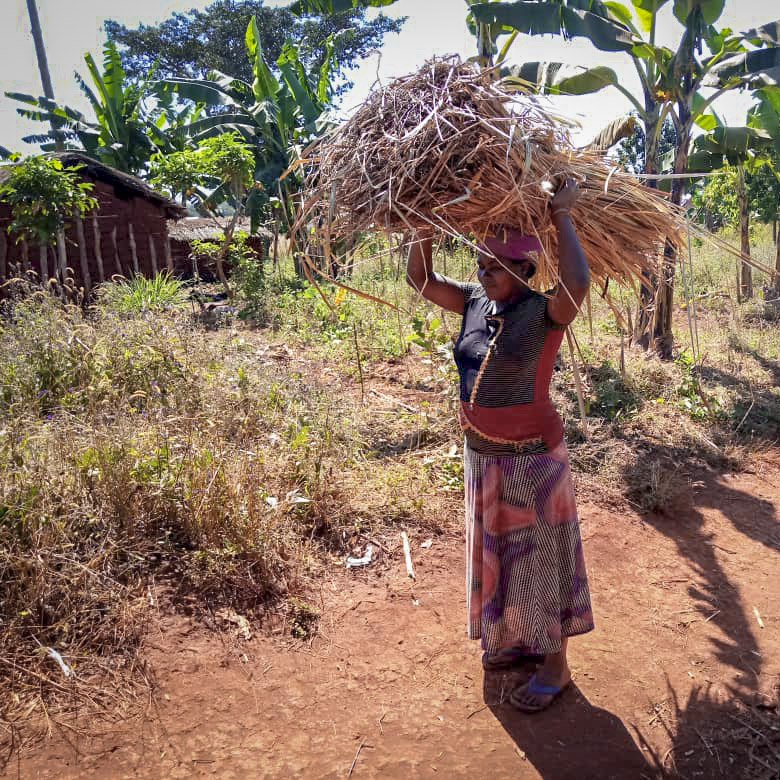
Sylvia carries roofing for her new pig shelter. Soon, she will receive a pig and start her business.

With your help, Sylvia is about to launch her business

Sylvia Salvatory knows that for rural families, a pig is a lot more than just a pet. It’s an investment in a brighter future. 

Pigs are a good source of meat, and they produce a relatively high number of offspring. Piglets can be sold in local markets for good prices, which is valuable income that families can use to meet other household needs. 

Sylvia knew all of this, and she wanted to raise pigs to help earn money for her family. She lives with her husband and five children in Tanzania’s Kasulu district. Like most families in the area, Sylvia’s relies on farming to put food on the table. Unfortunately, they didn’t earn enough through farming to afford to buy a pig. A three-month-old piglet costs about 60,000 Tanzanian Shillings ($22 US), which is money that they just don’t have.

Now, though, Sylvia’s dream is happening. She joined a CWS program in the area that is helping more than 1,000 farmers raise either pigs or chickens. She is focusing on pig production. She has participated in workshops about building a shelter for her pig and keeping it healthy. Her shelter is nearly finished, and soon she will receive her pig and officially start her business. 

“I am grateful to CWS for allowing me to join the program,” she says. “I am now ready to receive the pig. I sincerely request that CWS continues to support us and our community so that we can eliminate the poverty level in our family and community as well.”

Sylvia is a great example of something we see so often in our programs: the families and communities we work with know how to address the challenges that they are facing, but they don’t have the resources or information that they need to do it. Sylvia knew about how a pig would help her move her family out of poverty, but she didn’t have the resources for the initial purchase. Thank you to everyone who supported farmers like Sylvia through Giving Machines last Christmas, since you are investing in Sylvia’s business and hundreds like it. 


Stories of Change


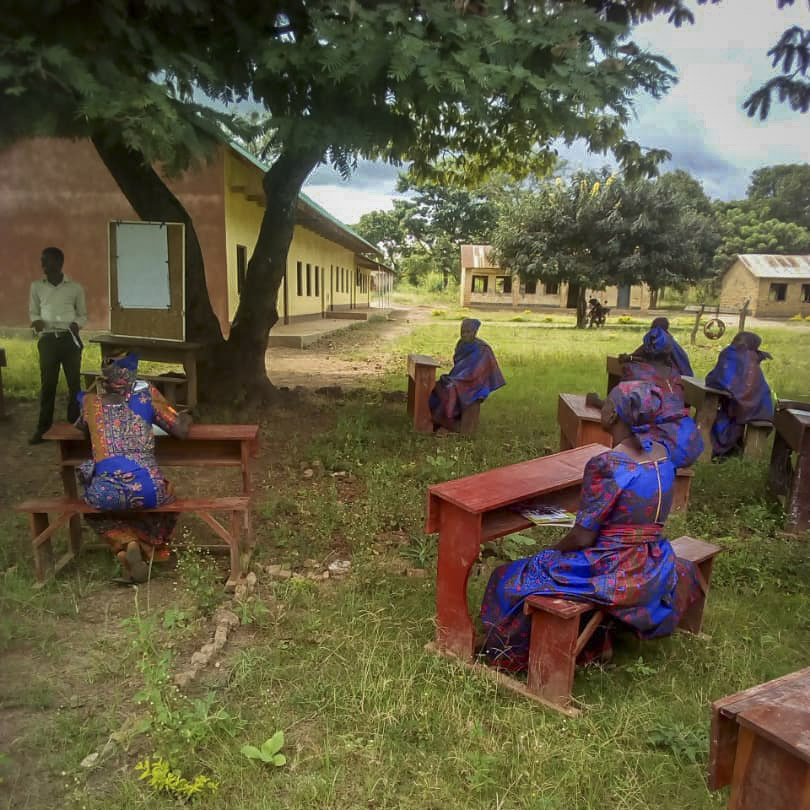
Melania, left, participates in a socially-distanced workshop about raising chickens.

A stronger start for Melania to raise chickens

Melania Marko Majoro has raised chickens for years, but she has never been successful in doing it. She lives with her husband and six children in Tanzania’s Kasulu district. Her family are farmers, producing only enough food for them to eat. 

When done correctly, raising chickens is a valuable extra livelihood for families. They can add eggs and meat to their diets. If they have enough, they can also sell eggs or baby chicks in local markets to earn income. So for three years, Melania has tried to raise chickens to supplement her family’s farming. Unfortunately, she never succeeded. Her flock would be killed by predators or disease, and she was never able to successfully take even a single bird to market. “I have been keeping chickens for three years, but disease kills them all,” she said. “I didn’t know what to do to prevent them from death.”

Now Melania is getting another chance. But this time is different: she is finally getting the information and training she needs to keep her flock healthy. She’s one of over 1,000 farmers in the area participating in a CWS livestock program. She has joined workshops about making chicken coops out of locally-available materials. This structure will keep her chickens safe from predators. She has also learned about preventing disease transmission and keeping her flock healthy. Soon she will receive  three chickens, which for her are a fresh start. 

“I am now improving my ability to raise chickens, I understand how to build a better chicken shelter and prevent them from diseases through vaccines and local methods,” Melania says. “I expect success though this improvement, and now I will start with three chickens that will be provided by CWS to establish a poultry farm to support my family.” She and her husband will work together to make their new endeavor a success.