Stories of Change


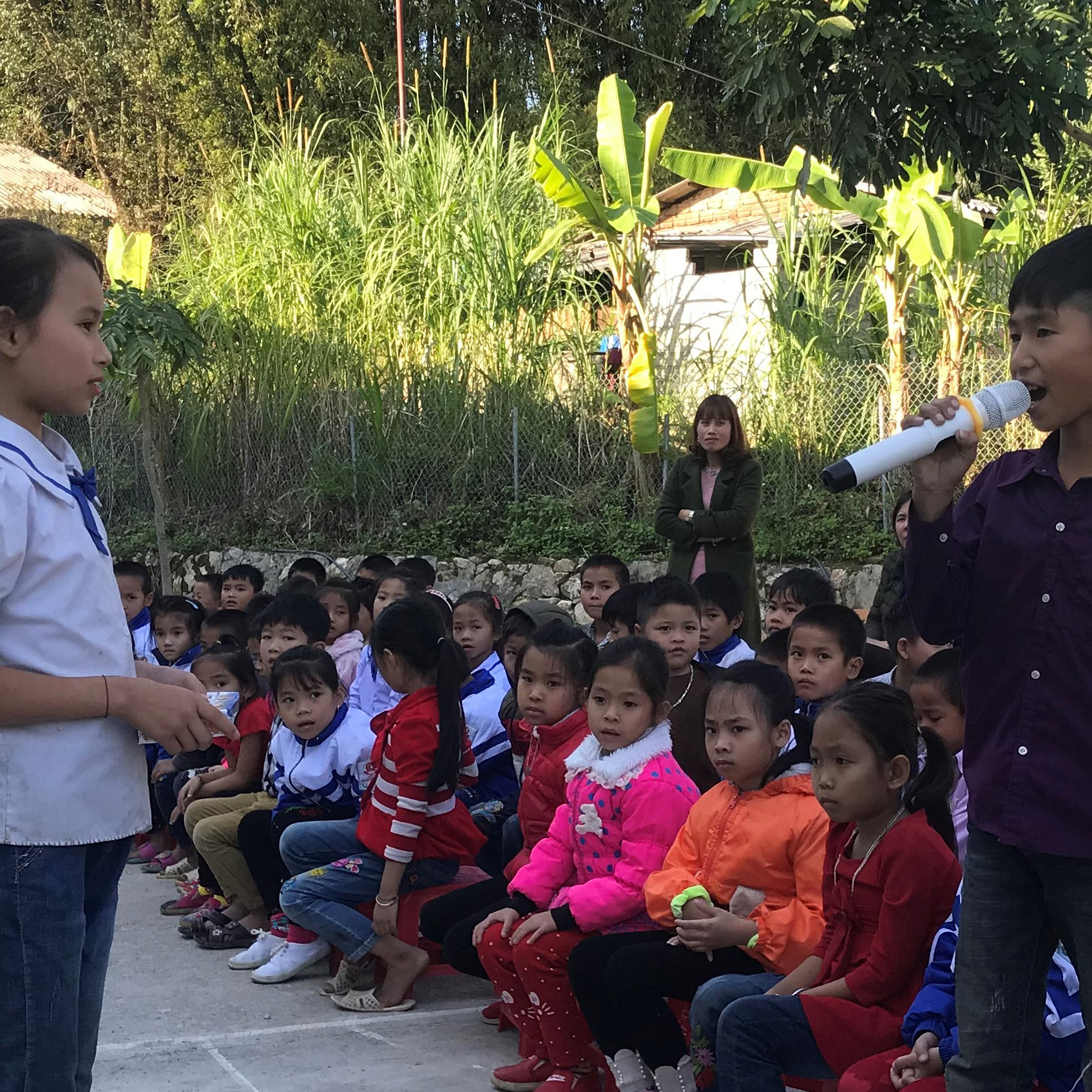
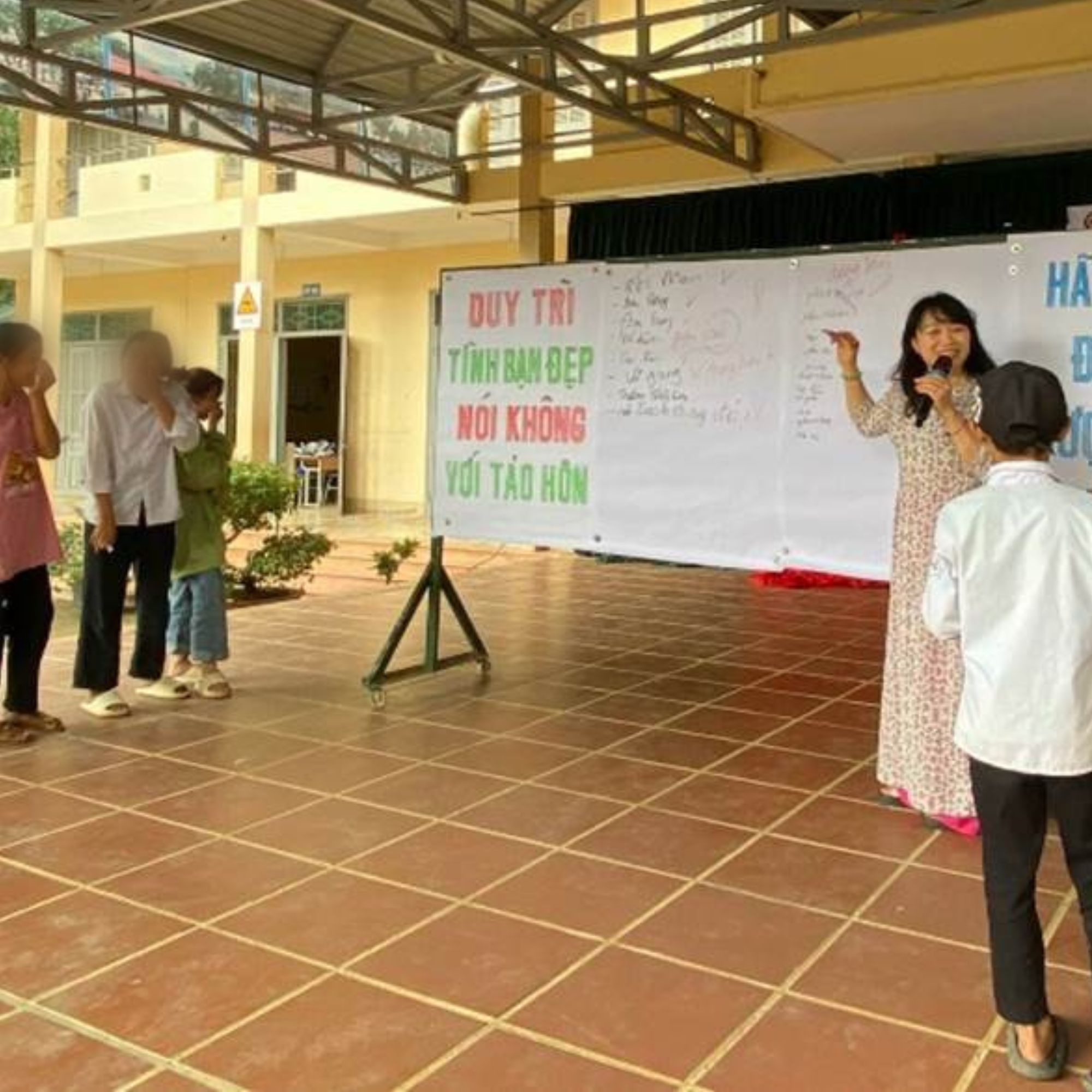
Students at CWS event

Ngoc Steps on the Stage of Knowledge

Sometimes, not having the answers can lead you to an important learning experience. This is what 14-year-old Lo Thanh Ngoc learned recently when she attended a CWS educational event on reproductive health and child marriage prevention at her school in Vietnam.

Like many of her peers, Ngoc was shy and had never set foot on a stage. However, during a warm-up game, she and some of her friends accidentally broke the rules, leading them to an unexpected opportunity. According to the game’s protocol, rule-breakers were invited to join the lead teacher on stage. Ngoc and her friends were hesitant but summoned up the courage to participate in a game called “Mysterious Gift Box,” designed to challenge their knowledge.

The first question was, “What is child marriage and what are its consequences?” Ngoc shook her head and said, “I don’t know.” Her whole group of friends tried to help but no one had the right answer.

The question that followed was simple but offered Ngoc some clarity. “How old is your mother this year?” the teacher asked. After a moment of thought, Ngoc responded, “My mother is turning 30 this year.” As she calculated her mother’s age, Ngoc had an enlightening realization: her mother had given birth to her when she was just 16 years old. This realization brought tears to Ngoc’s eyes and those of her friends, but it also brought a gentle smile to Ngoc’s face. She whispered softly, “Now I understand; in my village, people still marry so early.”

After the game, Ngoc’s shyness turned into excitement as she shared, “I’ve never been on stage because I’m afraid I won’t be able to answer questions. Thank you to the teacher for helping me with the answers. I hope to have more games like this, so we can gain more knowledge for ourselves.”

The teacher who had been leading the event, Ms. Nguyen Thi Thuong, shared her own reflections: “I have realized one thing which is not to be greedy for knowledge and instead understand students’ abilities and ask appropriate questions that students can answer and will help them feel confident and bold.”

By seeking knowledge with humility and honest questions, the teachers and children of this school are working together to ensure young generations make the best decisions possible for a safe and happy life.

To learn more about CWS’ work in Vietnam, visit our website.


Stories of Change


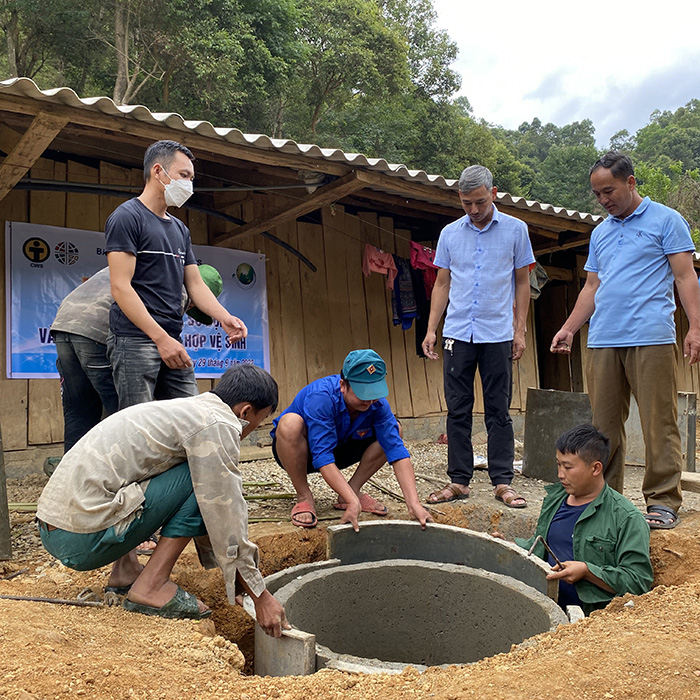
Participants in a hands-on, technical training in Hua Chit learn how to build a sanitary latrine.

Building Sanitary Latrines in Hua Chit Village, Vietnam

In the village of Hua Chit, high in the mountains of Ta Hua commune in Vietnam, 46 families live without access to sanitary latrines. The small village is home to 211 people, all of whom are part of the H’Mong ethnic minority group. Due to the limited access of sanitation facilities, many families would relieve themselves near the local stream or behind their homes, which posed health risks for the community.

“People in the village have had a long habit of defecating outside—near the stream or in the forest, on the upland field or behind the bushes near their house,” Mr. Khang A. Lau, Hua Chit’s general secretary, told us.

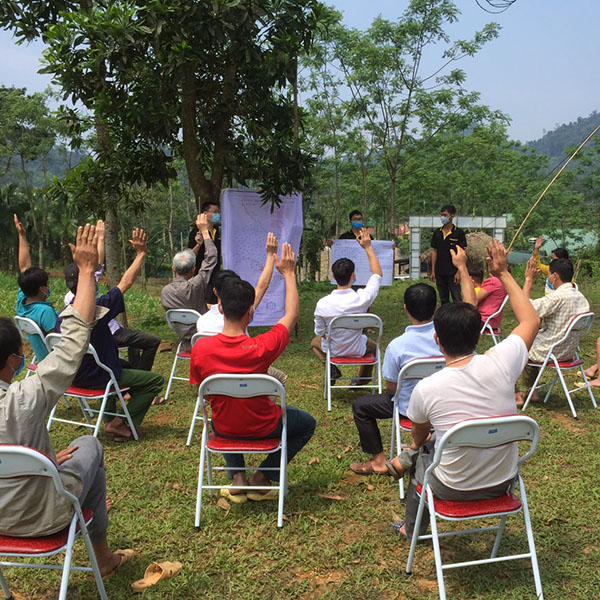
CWS hosted a Community-Led Total Sanitation event for local families to discuss the process of building sanitary latrines and health risks of open defecation. Participants were invited to join a technical hands-on training, where they learned how to make concrete rings for the foundation and use local materials, like bamboo and wooden planks, to reduce building costs.

“I didn’t think building sanitary latrines would be so simple and cheap,” said Mr. Lau. “It costs about 1.3 million VND [$60] for construction materials to make concrete rings and the roof. Thanks to the training, we will be able to build latrines ourselves without depending on outside workers. In addition, it is now convenient for villagers when they want to build a sanitary latrine.”

Since participating in the CWS-supported training, Hua Chit has 16 new latrines, and its community members have already set a goal for every family to have their own sanitary latrines by early next year.

We’re proud to walk alongside our neighbors in Hua Chit as they take steps towards healthier futures.


Stories of Change


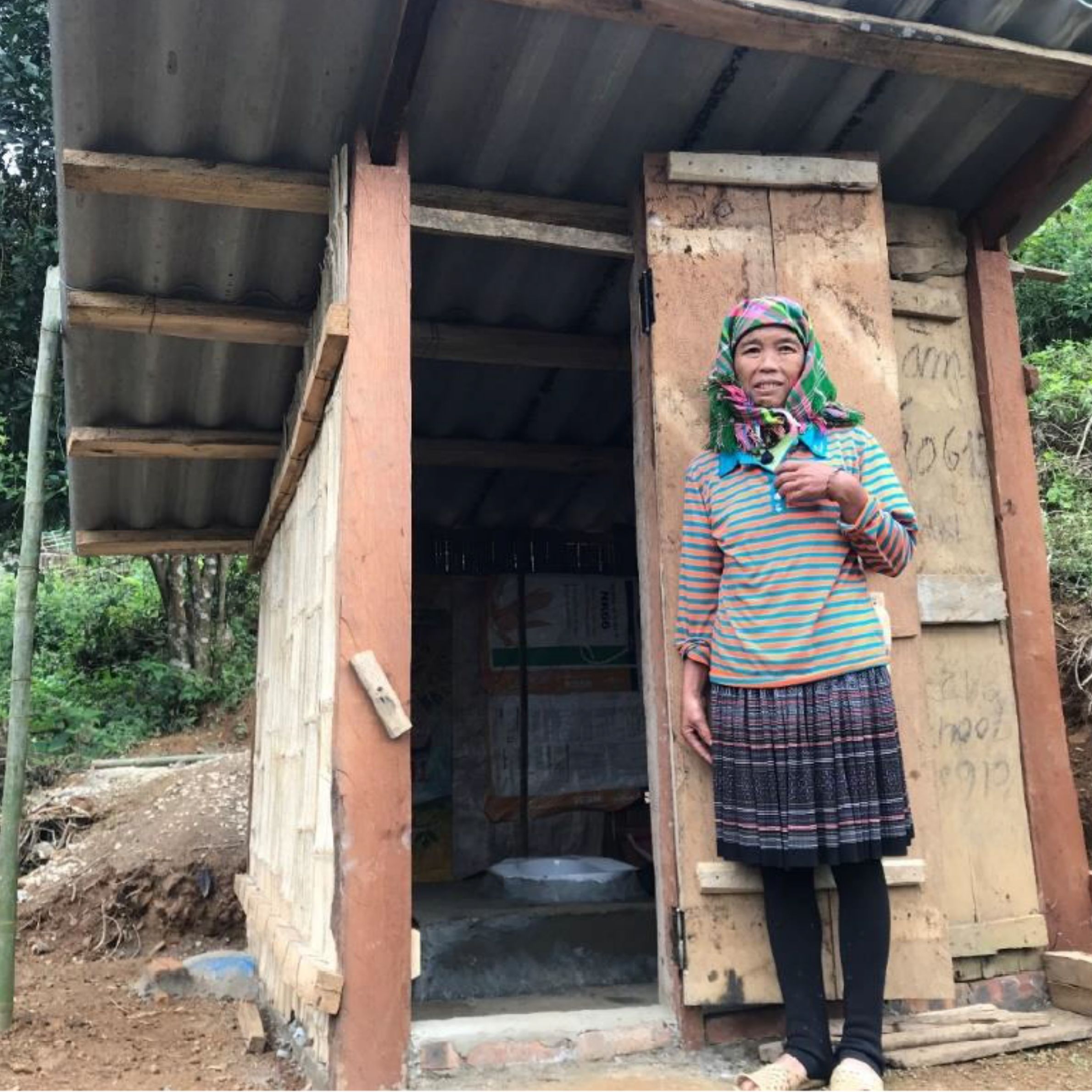
Ms. Ly Thi Dau stands in front of the latrine she built

Mrs. Dau’s Commitment Towards a Safer and Healthier Home

High up in the Vietnamese mountains is a village called Noong Ma, which is home to 43 hardworking families. These families are all part of the Kho Mu and H’Mong ethnic minority groups. Like many other minorities in rural communities, the people in Noong Ma face a number of challenges. Heads of households often travel far distances to find work, and community members face severe health risks due to a lack of hygiene and sanitation facilities. These issues are worsened as many families do not have their own latrines, which means people have to relive themselves in the forests and or streams.

CWS knew that the first step needed was open conversations with the members of the community. Through a series of community awareness sessions, community members learned about the risks of open defecation and the diseases that arise when latrines are not used. These sessions were taught in the native language of the community and helped the members understand the benefits of using and owning a latrine.

One of the eager participants at these community awareness sessions was Mrs. Ly Thi Dau, a 47-year-old H’Mong woman. Mrs. Dau lives with her husband, their two sons, her daughter-in-law and her grandson. After attending the sessions she shared, “now I understand the need to build a sanitary latrine and why my grandson has had stunted growth. It’s because he is infected with worms and couldn’t grow well.” After learning that open defecation likely caused her grandson’s health problems, Mrs. Dau told CWS she talked to her husband about building a latrine. While her husband was on board, neither of them knew how to build a latrine. They were also afraid that if they hired someone to build it for them, it would be very expensive. Many other people in the village shared this same concern.

In response, in October 2021, CWS organized a training session to teach the members of the community how to build their own latrines. Along with many of her neighbors, Mrs. Dau enthusiastically participated in the training. This training was led by CWS and their partners from the District Health Center and Commune Health Station. Together, the group built a sample sanitary latrine to learn how to build one of their own. “The training is easy to understand. I joined in digging the septic tank, and installing the mold to make the tank and the squat pan. Now I can do it myself,” said Mrs. Dau with excitement. She told us that immediately after the training, she and her husband agreed to build their own latrine. To Mrs. Dau and her family’s relief, the calculated cost was much lower than expected.

In order to build latrines in the most efficient manner, Mrs. Dau had the clever idea to reach out to five more families who had attended the training. The families included the Ly A Daos, Ly A Khays, Ly A Giangs, Vang A Phuas, and Sung Thi Tras. Together, the group collaborated by saving money, splitting the shipping cost of the materials and sharing the laborers they hired to assist them.

With their knowledge and commitment to improving the health and safety of their village, the group became a powerhouse. Officials of the People’s Committee and Commune Health Station provided the group supervision to ensure the latrines were built properly. Through hard work and dedication, the six families completed building their latrines by November 2021.

Mrs. Dau shared that before, “most of the village did not have latrines, so it was very difficult when there was a need for defecation. When it rained, the road was slippery, and it smelled bad.” She explained that “it was easy to run into others which made me feel very shy. Now that I have a latrine, my life is much better.” Mrs. Dau’s desire and commitment to a better life for her and her family is recognizable in her commitment to building her own latrine.

In its commitment to helping other families with this same goal, CWS reached out to the families in the other residential areas in the village. In these areas, training and the building of latrines were done in groups to ensure efficiency and collaboration, as Mrs. Dau’s team had. Little by little, each family has started building their own latrines and working toward an open-defecation-free village. Together, the people in Noong Ma are building a safer and cleaner village for generations to come.


Stories of Change


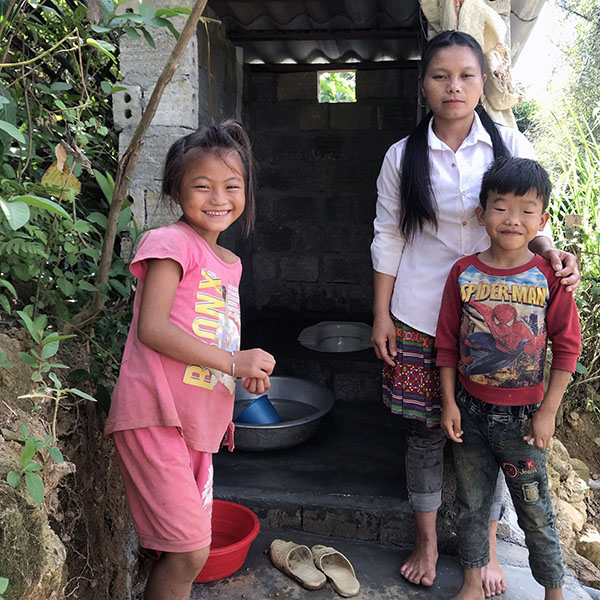
So and her children with the family's new sanitary latrine.

Building Latrines in Nam Vai Village Vietnam

In the village of Nam Vai, high in the mountains of Phuc Than commune in Vietnam, 80 families from the Mong ethnic minority group live with minimal access to water and sanitation. As of June 2021 only 10 families in the village had latrines, with most villagers relieving themselves daily along streams and forest edges.

Trang Thi So, 27, and her family never had a latrine. She and her husband Van A Lu often used the stream bank as a bathroom. Their three children, ages 10, 9 and 5, went to the bushes near their house.

In July, CWS hosted a community-led total sanitation start-up in the village. So attended the activation session and realized the importance of building sanitary latrines. 

“In the past, not many families in the village had latrines. Most of us defecated freely, so we felt normal. Through attending the session, I realized that we were doing it badly, not only unhygienic for the community but also for my own family. So, I signed up to build a sanitary latrine for my family right in the event,” said So.

In August CWS hosted a technical training to guide the villagers on how to build a low-cost sanitary latrine that suits well with family economic conditions, customs and habits of the people in Nam Vai village. Lu actively participated and was nominated by the people to build latrines for the village.

Thanks to Lu’s work, in partnership with CWS, So’s family now has a sanitary latrine. When asked why he didn’t build latrine before, Lu said that he didn’t realize why he had to build latrine, didn’t have technical skills and thought it would cost a lot of money. Now with technical instructions and a mold provided by the project, it is quick and simple to do. He told us that the latrine materials cost him only 2 million Vietnamese Dong, or about $88 USD, to buy bricks, sand, stone, a squat toilet and water pipe. He and he villagers provided the labor to dig holes, make concrete rings, and build the walls themselves.

So confided: “We had not built a latrine because almost no one in the village did it, and I just wandered around. It was very difficult in rainy days because of slippery paths and bad smell. In dry season, it was very embarrassing because there is no vegetation to cover, it is easy to see each other and shy when doing open defecation. Now I have a latrine, my life is much better.”

According to Lu, about a month after the CWS project, the village’s six-person team built 60 underground tanks, and 10 families made the upper part themselves to complete the latrines. During this time people in the village are busy harvesting rice, but after the harvesting they will focus on finishing the latrines.

Nam Vai village now has a plan to have 100% families build latrines to achieve open-defecation free status by December 2021.

Collected by Tran Van Thang, CWS Field Officer; Written by Nguyen Van Ty, WASH Program Officer


“Today I have 11 eggs!”


Ngo Quoc Dung | March 5, 2021

”I was on my way to the market and met Vui, who is the head of the hen raising group in my village. She told me some visitors were waiting for me at home. I rushed back home and wondered who the guests were.” Cam Thi Thao is a Thai woman living in Phuc Than commune in Vietnam. Thao and …

Stories of Change

A meeting in Cao Binh to discuss the new water system.

Fair water access promotes peace in Cao Binh, Vietnam

Most of the people who live in Cao Binh village are from the Tay ethnic group, Vietnam’s largest ethnic minority. The name of their village comes from its location in the mountains of northwest Vietnam: “Cao” means “high” and “Binh” means “flat.” So, it’s the flat area on a high mountain.

Cao Binh’s residents use a small stream about a mile from the village center as their drinking water. The stream’s flow changes seasonally, so families often face water shortages. This is especially true in the dry season from December to March.

Not surprisingly, facing so many water shortages means that people don’t care much about water quality. They are only able to focus on quantity. 

As a result, there was often tension and conflict among neighbors over water, especially during shortages. And, since families haven’t traditionally shared water among themselves, things could get pretty bad. Better-off households had money to build simple pipelines to tap upstream water, which left poorer families with little or no water downstream. 

With the financial support of the CWS family, CWS staff joined community leaders early this year to find a way to address the problem. Together, we conducted what’s called a “community needs assessment” and surveyed households about their water needs and usage. With findings in hand, Cao Binh’s official leader Mr. Thang met with Women’s Union members, school leaders, other villagers and People’s Committee leaders. And, with our team, they brainstormed, discussed and planned a solution to their water crisis.

In two community meetings, everyone had a chance to share ideas. Then, a consensus emerged: a gravity-fed pipe system was the best way forward. A total of 43 families registered to join a new Water Users’ Group. Importantly, they also agreed to contribute their labor to dig trenches and transport materials. Additionally, each family agreed to pay 300,000 Vietnamese dong ($13) to buy a water meter and small pipe to connect the main pipe to their house.

An operation and maintenance team was also formed. Everyone agreed on a three-person team. Then, water use fees were agreed for operations and maintenance costs. Each family agreed to pay 1,000 dong (about 4 cents) per cubic meter of water used for the first 20 cubic meters, and 2,000 dong if they used more water. After these agreements, CWS helped the team create a water use and fee collection record system to ensure transparency.

Recently, Mr. Thang told our team, “People are now satisfied with the water supply system. It is well designed and, as planned, easy to use and maintain. With meters, people are more responsible in using water. Also, homes at the end of the pipeline now have enough water. And village solidarity is improved and conflicts over water no longer happen.”


Stories of Change


The student-led awareness-raising event about preventing human trafficking.

Students are taking the lead on sharing information to prevent human trafficking in Vietnam

Human trafficking is a risk in rural Vietnam, just like it is in many parts of southeast Asia. Criminal networks are strong and pervasive, as are poverty and vulnerability.

With support from the Evangelical Lutheran Church in America, our team in Vietnam partners with ethnic minority communities in northern Vietnam. We focus on a myriad of challenges, especially ones that affect children. Human trafficking is one of these challenges. 

Our team has helped students learn to talk to one another about the risks and warning signs of human trafficking. “In the past, only teachers gave lectures and presentations. Since you, ‘Teacher Thang’ [as she called our CWS colleague], came and taught us, we learned how to share information among ourselves and our friends. This is a very important topic for us, so we want other students to know. When we first started to learn how to communicate with confidence, all of us were afraid or shy to stand and talk to our school mates,” says Ha Ngoc Linh, a 5th grader at Muong Kim commune Primary School. 

Linh is a member of a group called the Communications Interest Group, which focuses on leading conversations with other students. “When you came to teach us, we learned how to lead awareness-raising discussions with other students,” she says. 

Linh, who is the oldest of three sisters in an ethnic Thai family, worked with the other students in the after-school communications interest group to organize an information session about human trafficking risks and prevention. The students organized the session themselves, from the beginning to end. Their knowledge of the topic, and their confidence in sharing information with their peers, was impressive.

Because peer education is a new concept at her school, Linh says that some students “were laughing and trying to embarrass us.” But it was only the listeners who were uneasy. “Now that we are more confident, we look forward to leading more activities like this,” Linh says. 


Stories of Change


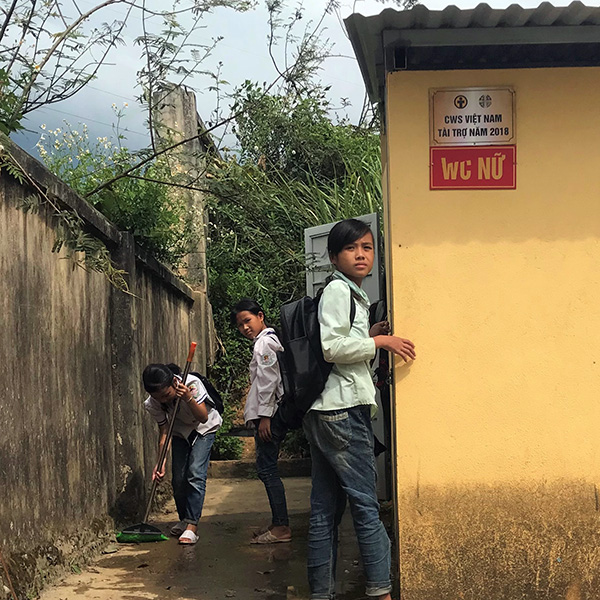
Students keep the area in and around the new bathrooms at Phuc Than Secondary School clean.

New toilets for 800 students in Vietnam

Van Thi Tan is a 15-year-old ninth grader at Phuc Than Secondary School in Vietnam. This is her fourth year at the school, but the first time that she and her fellow students have had clean, sanitary bathrooms to use. For years, Tan and the 800 other students shared a single toilet room. It was old, it was dirty, and it smelled awful. Girls would squeeze into the old stalls while holding their noses. Boys didn’t go into the bathroom unless they had to–they opted to go outside instead.

The contrast between the school’s high quality classrooms and the awful bathroom was stark. Sadly, this is a common situation for schools in remote or rural areas across Vietnam. The education department prioritizes classrooms and learning spaces. Schools follow the budget priorities that the government sets. So unless CWS or another organization helps build bathrooms, many poor schools simply don’t have them. 

To help address this situation, our team in Vietnam has helped renovate or build new bathrooms at three kindergartens and secondary schools in Phuc Than communes. “The old toilet is repaired and improved,” Tan says. “Now, every day we take turns cleaning our 24 new toilets to keep them clean and fresh. We thank CWS for giving us this change.” 

Our aim is to help more students, especially girls, to have safe and clean toilets. Thanks to generous CWS donors, many more Vietnamese students now have this improvement in their lives.

Story submitted by Mai Thi Quynh Giao, CWS Vietnam Finance & Administration Manager.


Stories of Change


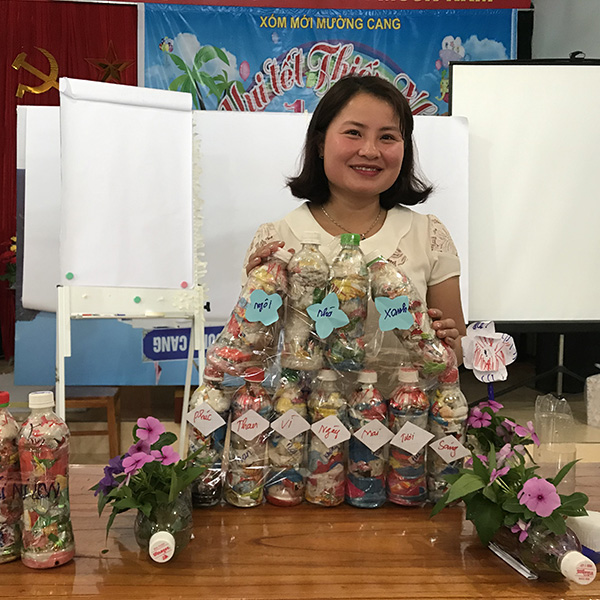
Bien with some of the completed eco-bricks.

A business owner helps reduce plastic bag use in her community in Vietnam

“Using plastic bags is so convenient!”

“Everyone uses plastic, so if I change, it’s nothing.”

“Why would I stop using plastic bags?”

These and many similar comments are ones that my colleague Dung and I usually receive when we ask people’s opinions about reducing their use of single use plastics, especially plastic bags.

The convenience of using plastics bags and other plastics is spreading from cities and towns to remote villages in Vietnam’s rural areas, where CWS works. Plastic bags are everywhere. And, once they are used – one time only – they are discarded on village roads and walking paths, in mountain streams and in farming fields. Or, worse, people burn them without knowing how dangerous burning plastic is for everyone’s health and the environment.

This is why CWS has started working with families and communities to learn better waste management, with particular focus on ending the use of one-time use plastics, especially bags. So far, our star pupil, so to say, is from Nam Sang village. Lo Thi Bien is a successful shop owner. Bien sells a lot of candy, bottled water and soft drinks that, unfortunately, generate a lot of plastic waste.

Until now, Bien has gathered up the waste her customers leave behind and burned it in her yard. And, until she joined our information-sharing session recently, she had no idea her fire created dioxin, which can cause respiratory disease and even cancer.

But she knows now, and she is changing her ways.

Immediately, Bien said she would stop burning plastic waste. And, from another thing she learned from the CWS team, she says, “I’m now very interested in making eco-bricks from plastic waste. It’s quite simple and easy. I will gather plastic bottles and bags, and candy and food wrappers, to make bricks at my home first. I will then teach and encourage others. When we have many bricks, we will use them to make benches and fences for our community culture house.” Bien also told us that she I will now use banana leaves to wrap foods for customers when she can – just as her grandparents did. And, in making her corner of the village safer for people’s health, she will save money in the bargain by not buying plastic bags!

This story was written by Nguyen Van Ty, CWS Vietnam Water, Sanitation and Hygiene Officer.