Stories of Change


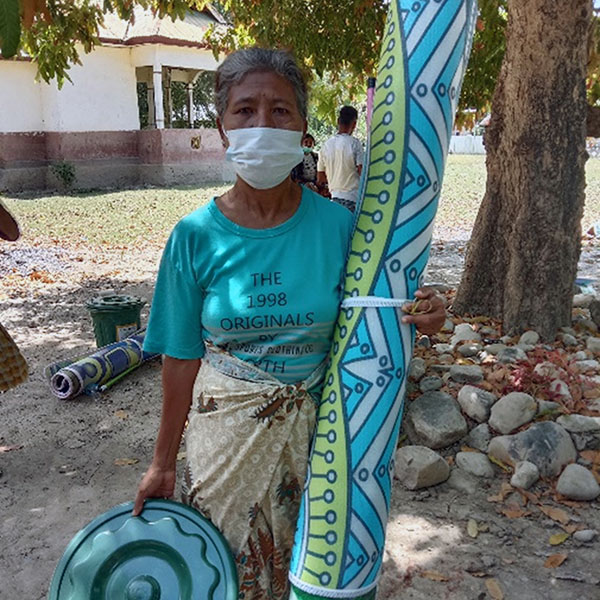
Maria Magdalena Hoar Fahik is from another of the families who received supplies from CWS to recover following Cyclone Seroja. She is pictured here with supplies from CWS.

Helpful supplies when they were needed most

When Cyclone Seroja slammed into Timor-Leste and Indonesia in April 2021, it caused devastating flash flooding and landslides. Nearly half a million people were affected, including a death toll of 179 and 11,406 people who were displaced due to damaged or destroyed homes. Elisabeth Hoar and her 7-year-old granddaughter, Agnes, were among those who were forced from their homes. Agnes’s parents are migrant workers on another island in Indonesia, so it’s just Agnes and Elisabeth at home. 

Elisabeth and Agnes live in Forekmodok village in Indonesia, near the Benenain River. When Cyclone Seroja hit, the river overflowed its banks. The resulting flash flooding swept through Forekmodok, badly damaging it and then spreading to neighboring villages. 

When the flooding hit, Elisabeth took Agnes and fled to a neighbor’s home on higher ground. In their haste, they left all of their belongings at home. For a week, they lived off the generosity of their neighbors for food and water while their own home was submerged in mud. Unfortunately, their garden–which had been ready for harvest–was also badly damaged. 

Elisabeth says that on the third day after the flooding, a lot of help arrived. The district government, churches, community groups and organizations like CWS came to help families as they recovered. First, Elisabeth received emergency food help from a Catholic church: 11 pounds of rice and some kitchen utensils. The second group that brought relief, she says, was CWS. Our team provided her with a package of household supplies. Elisabeth and Agnes made up one of the 680 families who received these packages–nearly 3,000 people in total. 

The kit that Elisabeth received had lots of supplies to help her bridge the gap until she and Agnes could return home. It included blankets, mats, bath soap, laundry soap, toothbrushes, toothpaste, shampoo, a tarpaulin, buckets, masks, hand sanitizer, nail clippers, a comb, brooms and dish clothes. “I feel happy because this assistance can help me and my grandchild fulfill the needs of items that we want to buy,” Elisabeth said. “I no longer need to buy blankets, bath soap and other supplies, so we can save money to use to meet other necessities of life such as food. So, we get double help: useful supplies and saving our money.” 

Having lived through the devastation of the flash flooding, Elisabeth says she has learned a lot in case it happens again. “The assistance I received from CWS seemed to give me advice that if next year there is another flood, I will try to save my household items before evacuating. That way, when the flooding comes, not everything will be washed away and there are things that can be saved. Hopefully flash floods like this don’t happen again,” she said.

When Elisabeth, Agnes and their neighbors had a need, the CWS family was there with practical, useful supplies. We are grateful for all of our donors who supported this response. 


Stories of Change


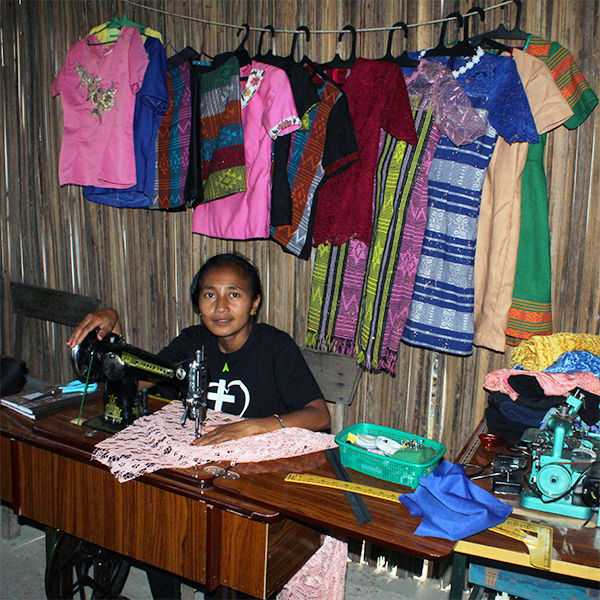
Yola in her new tailoring business.

Lessons from Yola: Don’t let your Limitations stop your Dreams

Yolanda Atri Neng Sae, who goes by Yola, is an only child. She lives with her parents in West Timor, Indonesia. Unfortunately, Yola has faced a lot of challenges in her life. When she was little, she was sick a lot. Her parents struggled financially, barely making a living by farming. They couldn’t afford to pay both medical bills and school-related costs for Yola. When Yola was sick, the idea of getting her to school more than a mile from their house was too much.

As a result, Yola didn’t start first grade until she was 9 years old. She started late, but she didn’t give up. At 21, Yola finished high school and got her diploma.

Then, though, Yola faced a situation that many young people worldwide find themselves in: living with their parents while trying to start a career. Yola’s parents couldn’t afford to send her to college, but her options were limited with only her high school diploma. Soon she found herself unemployed, helping her parents with household chores while not earning any money.

Luckily, Yola’s natural determination came through again. She continued to be active in community groups and programs. The local government took notice of her fighting spirit and chose her to be a member of the management of a Village-Owned Enterprise and a volunteer with the local health center. (Village-Owned Enterprises are programs developed by the Indonesian government to promote businesses and entrepreneurship using locally-available resources.) In October 2020, Yola and some other young women joined a CWS program called Berdaya, which means “empowerment” in Indonesian. Among other activities, the Berdaya program helps women start or expand businesses and find new ways of earning a living. 

Yola started attending information classes with the Berdaya team. She learned life skills like managing household finances and also started on a track to being a business owner. Yola has always had a talent for sewing, so she decided to turn this into a career. CWS helped her find an apprenticeship with a tailor in the district capital, which she completed successfully. Armed with her new skills and training, and with a sewing machine that CWS helped her buy, Yola made her debut as a tailor in her village.

“I feel so happy because now I receive orders every day,” Yola says of her new business. “By sewing pants, skirts, shirts, blouses and dresses, which are ordered by people in this village and neighboring ones, I can earn between 150,000 and 450,000 Rupiah [$10-$32] each month.” 

Now, Yola has a regular monthly income. She uses it to meet her personal needs and to help her parents. 


Stories of Change


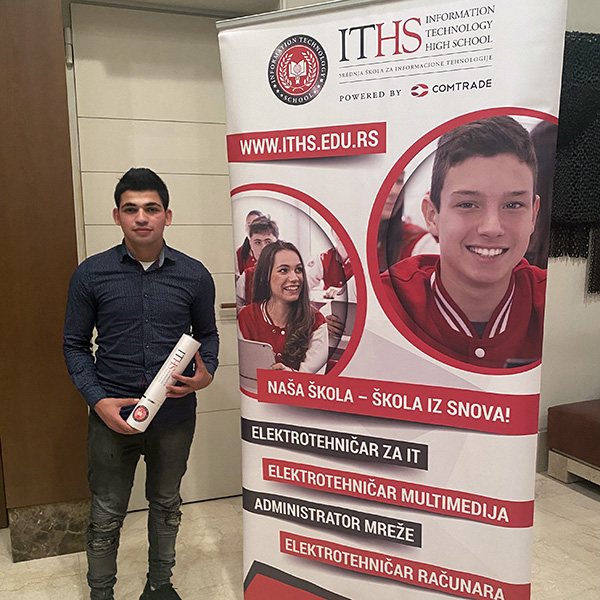
Bosko at his high school graduation.

Bosko’s journey to university in Belgrade

We got to know Bosko when he was 10. As a typical street-involved child in Belgrade, Serbia, he spent most of his time at intersections, begging or selling small items like paper tissues. Although he was formally enrolled in school, he attended it rarely.

It took a year for the outreach team from CWS-supported drop-in shelters to motivate him to come to the shelter. CWS supports two shelters in Belgrade where street-involved children can get a hot meal, take a shower, pick out new clothes, read, study and relax. Bosko was neglected and didn’t have basic hygiene habits. He was distrustful towards other people, insecure and frightened. Program staff coordinated with his school and Center for Social Welfare and together they concluded it would be best for him to visit the shelter regularly. This daily contact allows professionals working in the shelter to help him adopt good models of behavior and develop practices that help him understand the importance of education and attend school regularly.

Very soon the staff noticed the progress he was making – socializing with other kids, participating in almost all activities organized in the shelter, and also becoming a positive role model for other children. He took part in various activities such as choir, English language classes, football and programming video games and animations.

When he was 14, Bosko was offered a full scholarship for a private high school specializing in IT. The school recognized his potential during workshops they organized for some kids from the shelter and decided to give him that opportunity. This was not only a big step for Bosko, but also for his family and community. He continued visiting the shelter from time to time even after he officially aged out from the program. The staff and children, who look up to him as a role model, were always happy to see him. Bosko always praised the support he received in the shelters, noting that his involvement with the shelter helped him to realize the importance of education, become aware of his own potential and enroll into high school, where he made a lot of new friends.

Because of his dedication and hard work, the school offered him the chance to continue with his education in their IT College and awarded him with another full scholarship. This amazing success represents Bosko breaking the vicious circle of generational poverty among Belgrade’s Roma families, like Bosko’s, especially when you consider that only 1% of Serbia’s Roma population enrolls in university.

“I celebrate the day that I met the Drop-in Shelter outreach team on the streets of Belgrade because the shelter helped me realize my own potential and enroll in high school,” Bosko says.


Stories of Change


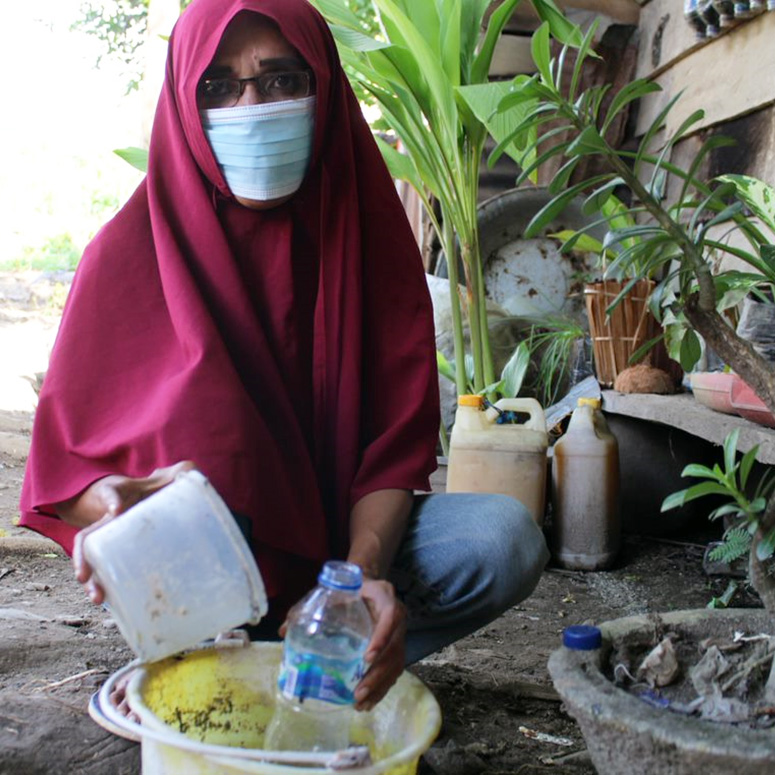
Juharni also grows some vegetables at her home for her family to eat.

Working together to mitigate the toll of climate change in Indonesia

Most families in North Pakuli village in Indonesia make a living through agriculture. They primarily grow rice, but important secondary crops include corn, cocoa and coconut. There are two main rice harvests each year, and the other crops are harvested based on their respective growing seasons. 

This way of life has been under threat since September 2018. A massive earthquake and tsunami struck Central Sulawesi, which is where North Pakuli is located. These disasters buried a lot of the community’s land under sand, rendering it unusable for farming. On top of that, there have been a series of floods since the earthquake. These floods damage even more agricultural land. Crop yields were down again in the last rice harvest of 2020. As farming families struggle to cope with these acute challenges, they are also facing the looming threat of climate change. Weather conditions have become erratic, and the rainy and dry seasons are unpredictable. Pests and diseases are thriving and attacking rice crops.

In the last three years, many families have lost their way of life. Now they are looking for other ways to earn an income. 

Juharni and her husband Kasman are among them. As recently as five years ago, Juharni’s income from farming was enough to provide for her family. Today, this isn’t true. That’s why Juharni jumped at the chance to join a CWS program in her community that focuses on building resilient livelihoods as a way to adapt to climate change. She decided to join two groups in the program: a women’s savings group and a farmers group.

“I am interested in joining the women’s saving group because there are many benefits for me,” Juharni explained. Each member of the new group contributes a little bit each month into a shared fund. Then they can take out loans from the group at a reasonable interest rate to build businesses or get through emergencies. If they have a bad harvest, for example, they can use a loan from the group to buy seeds for their next harvest or to put food on the table in the meantime. “I can share knowledge with other members, and motivate them. The result in the form of money may not exist yet, but this is one of the efforts to overcome the economic problems of farmers who are often uncertain about their harvests,” she said. 

Juharni also joined CWS-hosted workshops on organic fertilize and organic pesticides. She says she was happy to participate. “I can get the ingredients easily, and making my own organic fertilizers and pesticides helps me cut costs,” she explained. 

As our world grapples with the ever-increasing cost of climate change, it is more important than ever that farmers like Juharni have the skills and resources they need to adapt. We’re proud to team up with her and her neighbors as they build resilience!


Stories of Change


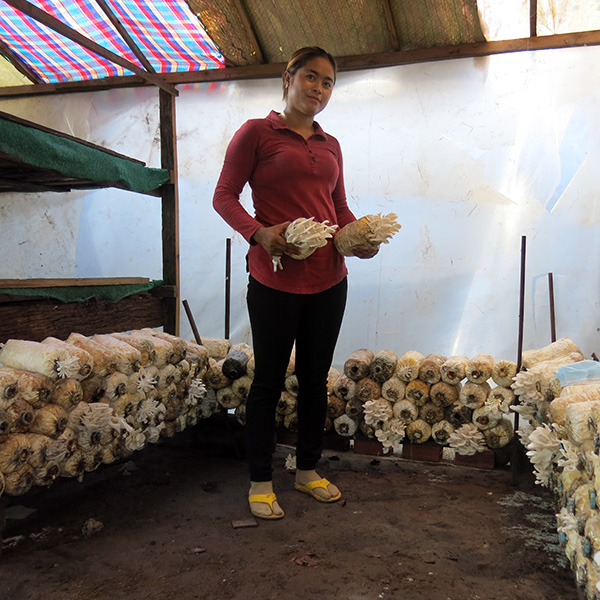
Hoeun with her mushrooms.

A new mushroom business means more hope for a family in Cambodia

For a long time, Choam Houn and her husband Soung Sophai struggled financially. They relied on farming to feed and provide for their three children. No matter how hard they worked, though, the challenges and bills kept coming. Sometimes they couldn’t afford to put food on the table or meet basic expenses. They also couldn’t afford to send their kids to school.

Our team in Cambodia saw the family struggling. That’s why we invited them to join our Promoting Better Lives program to see how we could help. In late 2020, Houn joined a workshop about growing mushrooms. These are a great option for families like hers because mushrooms can grow in a small space and don’t require much water. Families can eat their harvests or sell them for money that they can use to meet other needs. 

So, that’s exactly what Houn did. “I have learned the skills, received mushroom spores and started growing them,” she says. “Within two weeks, I could harvest between 2 and 3 kilograms [4-7 pounds] per day. I have mushrooms for my family to eat, and I can also earn some income by selling the remaining to my neighbors and at the local market. Because of my mushrooms, I can earn an additional income of $5 to $7.50 each day.”

Houn is off to a great start, and she’s making plans for how to invest her earnings to grow her business. “I can save $250 from selling mushrooms from a month-long harvesting cycle,” she explains. “I plan to use $100 of this to buy more mushroom spores to continue growing. The rest is for family emergencies and other expenses.”

 Imagine the hope and relief that Houn must be feeling as her new venture takes off. It’s also giving her children the chance to go to school! Houn says, “I am so thankful for the knowledge and all the support–I now have enough money to support my children to go to school and have some savings in case of an emergency or to buy rice seeds or mushroom spores to continue growing them.” 


Stories of Change


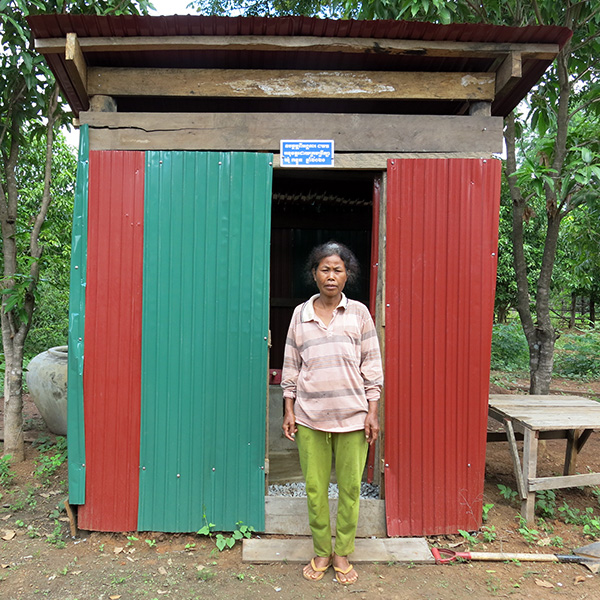
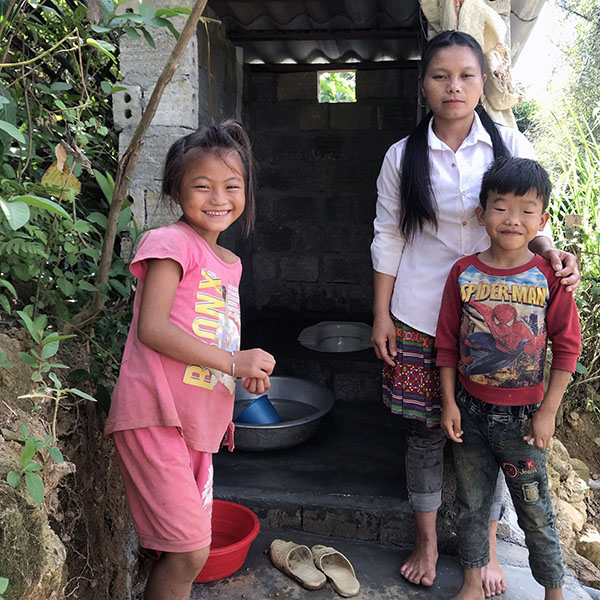
Nen in front of her family's new latrine.

Bathrooms, better health and easier financial burdens in Cambodia

Kong Nen works hard to provide for her family. She’s a widow raising three sons between the ages of 5 and 15 years old. Because she doesn’t own any land, Nen works as a day laborer in her community in northern Cambodia. Unfortunately, it often hasn’t been enough.

Nen’s oldest son dropped out of school to help support his mom and siblings. Like his mom, he works as a day laborer. Together, they can earn about $7 per day. Nen’s younger sons never had the opportunity to go to school–the family couldn’t afford uniforms, transportation, supplies and other school fees. 

The CWS team in Cambodia got to know Nen earlier this year. She told us about her family’s struggles, and we knew we could help. We know from working with thousands of other families that there is often a strong link between sanitation and household finances. If families aren’t able to protect their health with infrastructure like clean water systems or sanitary latrines, they will inevitably spend more money on health clinic visits and medicine. The more money that goes to treating water-borne or other preventable illness, the less there is available for other expenses…including education.

We invited Nen to join a community information session on water, sanitation and hygiene. She learned about water treatment options, personal hygiene and environmental sanitation. She learned about the health hazards of using fields and streams as bathrooms, which is what Nen and her sons had been doing because they couldn’t afford to build a bathroom. After the education session, CWS also provided support so that Nen could afford to build that new bathroom. 

“My family is poor, so we could never afford to have our own sanitary latrine,” Nen told us. “I am so happy for the support to have one now. It is so convenient for us to have and use our own toilet; before, my family and I used the open field, which meant that the surrounding environment wasn’t good and the area smelled bad.” 

She added that, “we now see that the latrine is really important for us. Now we are living in a clean environment, we understand and practice good hygiene, and as a result our health is now much better. We rarely get sick, so we don’t spend much on health treatment, unlike before, which significantly helps to reduce our financial burden. So, thank you so much to CWS for the support.” 


Stories of Change


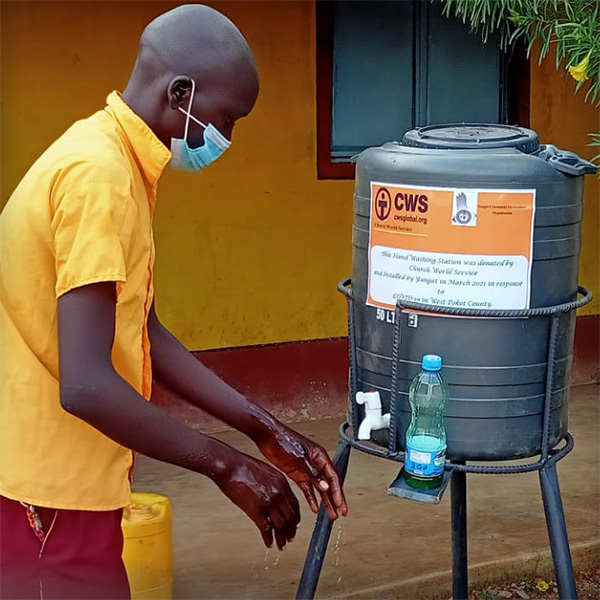
A student in West Pokot County, Kenya, uses a handwashing station funded by CWS to help communities prevent the spread of COVID-19.

Students in rural Kenya are on a path to greatness

“We are very grateful to CWS and its partners for the great transformation happening at our school,” says Francis Loseron, the chairperson of Chepakul School in rural western Kenya. “The reason I say this is because the girls’ biggest need [a dormitory] has been met; as a result, they will be happy, healthy and ready to learn. It’s a sad state that so many of our public schools are in similar high-poverty situations, but it’s also a testament to the power of our community here. We assigned ourselves different roles during the construction. Mr. Samson Kameri, the school treasurer, and I saw to it that parents came out in large numbers to support the construction projects. Also, we had a shortage of toilets at the school. With the [CWS and partner] support, we are now confident that the school’s sanitation has been improved and the school now has enough toilets.”

Every child should have the chance to go to school and get an education. What happens, though, if that school isn’t equipped to help them learn? What if it is too far away, and the long walk to and from school is dangerous for girls? What if the school doesn’t have enough bathrooms, or running water? What happens if parents don’t realize how many doors education can open for their children? And, as we’ve seen recently, what happens when a pandemic closes school doors for months?

All of these “what ifs” are real challenges facing many of our neighbors worldwide. Here at CWS, we know that we can overcome them when we work together. That’s why our team in Kenya is working with communities in West Pokot County, where Loseron lives. Hand in hand with students, parents and communities, we are knocking down these challenges. We’re constructing dormitories so that girls don’t have to face dangerous journeys every day. We’re installing water pumps, tanks and toilets to improve hygiene and sanitation. We’re talking to parents about the importance of education. Finally, as schools reopen after long pandemic-driven closures, we’re helping teachers and school leadership welcome them back.

Selina is an eighth grade student at the same school, Chepakul. “CWS not only made it possible for us to have a dormitory at our school,” she said, “but also helped improve water systems and provide life skills and mentorship programs for us.”

Selina also told us how CWS helped as the school reopened. “Early in 2021, 10 students dropped out due to problems from the coronavirus. Some of them were either preparing to get married or engaging in work like bodaboda [motorcycle taxis],” she said. In West Pokot, it is not uncommon for teenage girls to be married to older men for economic reasons. “CWS helped our teachers and parents bring them back to school,” Selina said.

She has a message for you, too: “We see ourselves being great people in the future, and we are so proud and grateful for our supporters for reaching out to us.”

Liman Agnes is the deputy head teacher at nearby Ngengechwo primary school. “The girls’ dormitory built by CWS at Ngengechwo triggered the West Pokot county government to construct a boys’ dormitory,” she said. “Because of this, boys here have no reason to miss school…student enrollment has doubled, and we attribute this to efforts by CWS in our school and community. Parents are more positive than before, and we are working with the leaders to ensure that students, particularly girls, are supported to stay in school.”

Liman told us about how the pandemic had impacted her school. “Our students were lagging behind, having lost almost a year of school during the COVID lockdown. Their counterparts in Nairobi and other big cities were still learning because they have internet connections at home and can afford computers. We are grateful to CWS for helping our teachers to facilitate catch-up learning sessions when the schools were reopened,” she said. “They trained teachers, supplied materials and shared information with our parents about COVID prevention.”

In the neighboring community of Kapsentoi, Totok Lolinganya is the father of Sikuku and Patience, who have just finished high school and eighth grade. “I am deeply humbled because I am one of the lucky parents whose children had a chance to benefit from CWS programs in Kapsentoi,” Totok said. “The most important project was providing counseling to our girls. They have also given me the resolve to take Patience to secondary school, since I now know that there is hope for our girls–as opposed to my tribe’s attitude that girls are a source of wealth in the form of dowry when they get married. My two educated daughters will be great. They will not only change the status of my family, but they are already becoming great role models to their fellow girls, including families who believe that marriage is everything.”

Girls across West Pokot County–and their families and school communities–are blazing trails right through the challenges that they used to face. We’re so proud to stand beside them as they do.


Stories of Change


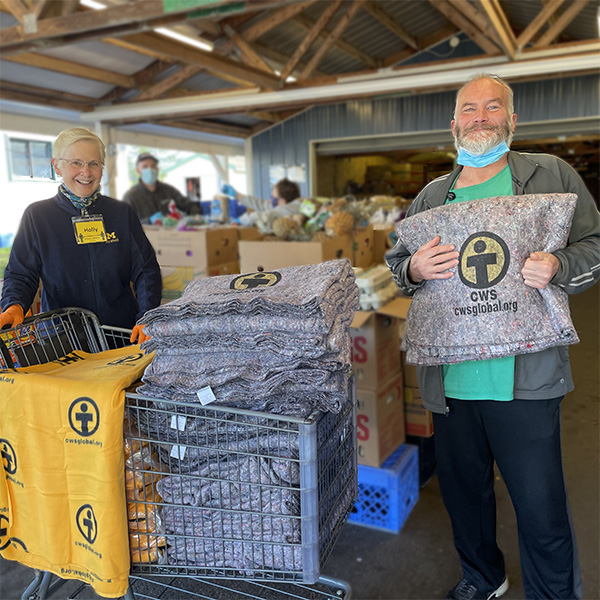
Holly (left) and Brian (right) at the Concern for Our Neighbor Food Bank in Washington.

Warmth for our Neighbors in Washington

“I got one of the CWS Blankets in early 2020. I use it in the middle of the night if I’m a little cold. I have a cat who loves it, too. I’m happy to get another one today because it makes a good bed spread. It’s super warm and easy to manage—you can throw it in the washer.” -Brian

Concern for Neighbors Food Bank in Mountlake Terrace, Washington, has ordered CWS Blankets for their clients twice now. You can read about their first distribution, in January 2020, here: “What CWS Blankets Mean to our Neighbors in Washington State.” In September 2021 they once again offered CWS Blankets to their clients during their usual Tuesday morning food distribution. 

Holly Buchanan is a volunteer with Concern for Neighbors, and she organized both blanket distributions. She is also a CWS Sustaining Partner. Here’s what she had to say about this latest order:

For more than two decades our food bank has supplied fresh food and staples to neighbors in need. These last two years have been especially challenging. Many people lost their jobs and had to make do with less. These CWS blankets are very comforting for our clients, as the nights in the Pacific Northwest can be very damp and chilly from September through June. Some of our clients struggle to pay their utility bills. As we passed out the blankets today, I noticed that is was often the seniors who seemed very eager for warm blankets. One woman who got a wool CWS blanket a couple of years ago said that it has been a big help to her autistic grandson—she thought he needed a weighted blanket for his comfort but he wraps himself in his wool blanket like a burrito and is perfectly happy. She took a lighter weight fleece one today for use while watching TV. The unhoused neighbors the food bank supports appreciate having something cozy and new. Today a client took a wool blanket for his friend who “lives in his car trunk.” One of our regular clients asked for a wool blanket to on the floor to give her baby a clean, soft place to play. One man with a big family asked for and was given three blankets. Imagine what a difference that will make to his family as they settle in for the night!

In addition to our work onsite at the food bank, my husband and I carry in our car bags food from the food bank–pop-top cans of chili and chicken, chocolate bars, fruit cups, masks and bottled water. We give these to people standing on street corners with their cardboard signs asking for help. When we pass someone in need, we pull into the next driveway and then walk back to give them the bag. Some of these people, like Tyson, we see often. He and a couple of friends lost their jobs and live outside for now. They are always grateful for food, but this week they were very, very happy to get CWS wool blankets. Once August passes the nights around here start getting really cold. These blankets are very heavy and thick and the wool repels water—so helpful for outdoor use.

We are so grateful that our neighbors will be sleeping cozy with their CWS blankets. Many thanks to generous CWS donors for making this blanket distribution possible!


Stories of Change


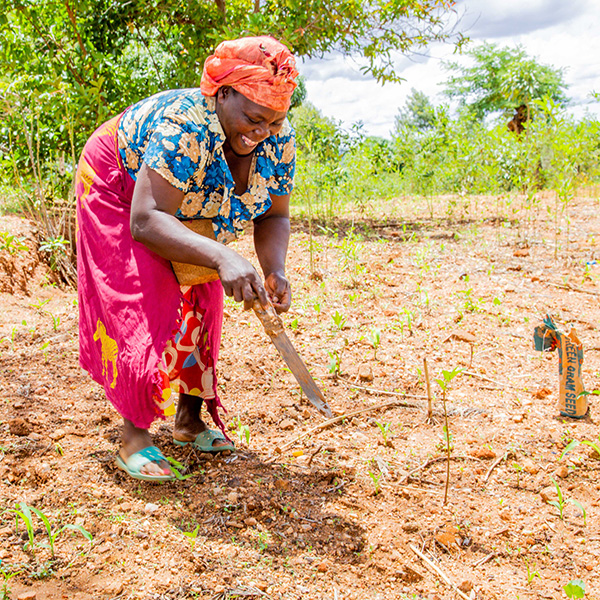
A program participant in Kitui County plants green gram seeds that she received through the CWS response.

Hope and recovery for 800 Kenyan families after the desert locust emergency

In 2020, swarms of desert locusts resembling dark storm clouds descended ravenously on the East and greater horn of Africa. They roved through the region and flattened farms and pasture lands posing an unprecedented threat to the food security of millions of people and their livestock in already vulnerable areas.

Farmers could do nothing but watch with dismay as the huge swarms of marauding insects ate their crops.

In Kenya, locusts infested more than 70,000 hectares (about 173,000 acres) of land, including crops, fodder and pasture. This put many families’ livelihoods at risk. 

The desert locust is considered the most destructive migratory pest in the world. It is highly mobile and feeds on large quantities of any kind of green vegetation, including crops, pasture, and fodder. According to experts, it was the worst desert locust invasion in over 25 years in Ethiopia and Somalia and the worst observed in over 70 years in Kenya.

The invasion came at a time when the government and humanitarian actors were battling the COVID-19 pandemic and the devastating economic and social disruption it caused. More time, energy and resources were diverted for COVID-19 preparedness, prevention and response.

CWS responded quickly through an ACT Alliance Desert Locust Regional appeal. Our team worked to prevent a significant decline in food security and to help farmers and families safeguard their livelihoods in affected areas affected. A total of 800 households received support in form of early recovery seeds and training of drought-tolerant crop production.

“When the locusts invaded our farms, they ate everything. CWS brought us seeds which we hope will help us recover from the loss,” said Kalii Mukumbu, a farmer in Kitui County.

This work was carried out in collaboration with the ACK Diocese of Kitui as well as the Kitui County Ministry of Agriculture, Water & Livestock. Following a rapid assessment in the affected area, our team distributed three varieties of crop seeds: green grams, beans and cowpea, which are well suited for the agro-ecological zone.

Thanks to Week of Compassion for their support of this response. 


Stories of Change


Damage from Hurricane Dorian in the Bahamas.

When the Storm Takes Your Legal Identity, Too

Hurricane Dorian slammed into The Bahamas as a Category 5 major hurricane in September 2019. It was the most powerful hurricane to hit The Bahamas since record keeping began. It was also a very slow storm, moving as slowly as one mile per hour. For nearly three days it continued its relentless onslaught, leaving widespread destruction in its wake.

“I lost my 22-year-old sister. The house and everything are gone,” said one participant of the CWS-supported recovery program. “I lost my home and all our documents,” said another.

The issue of lost documents was a critical one for many Haitian migrants and Bahamians of Haitian origin. People need government-issued documents like birth certificates and passports as part of their immigration process and when applying for citizenship. After Dorian, many people didn’t know how to get new documents, or they couldn’t afford them.

Our team learned of this challenge during our assessments in the weeks and months after the storm. So we reached out to the United Nations International Organization for Migration, known as IOM, to explore possible solutions.

We launched a pilot program with IOM in 2020 to help with redocumentation. This would help participants get the legal documents that they badly needed, and it would help both IOM and CWS learn more about the challenges that Haitian migrants face in getting legal status in The Bahamas to inform long-term programming.

The program officially launched in March 2020, just as the COVID-19 pandemic turned the world upside down. After a few delays, the program got underway. By July, information was circulating within migrant communities, churches and local media that CWS and IOM could help with redocumentation. A three-person independent committee, made up of women from within the Haitian community, reviewed applications for assistance and selected participants based on their need and vulnerabilities. By the end of the pilot program, we had helped dozens of people get a total of 366 different documents including birth certificates, marriage certificates and school diplomas. Most of the program participants were women and children.

Shana Zaporte was on the IOM team who helped people access the documents. “I was familiar with the issue of redocumentation because I used to work translating from English to Haitian Creole and also because I am part of the first generation of children born in the Bahamas to Haitian migrant parents,” Shana says. “I totally understand why they need support.”

Shana and her IOM colleagues worked one case at a time, one document at a time. An application for Bahamian citizenship requires an average of 11 supporting documents. In one case that Shana’s team worked with, the person needed 18. “One of the cases that impacted me the most was a young girl, aged 17, who lost her father and home in the island of Abaco. She had to relocate with her three siblings to Nassau. Her mother would call me every day and would say in Creole (she didn’t speak any English), ‘Thank you! Thank you!’ Three of the children were supported by the project and applied for citizenship,” Shana recalls.

For the families who participated in the program, it was one less thing to worry about as they faced the long road to recovery. It meant less stress and more hope.

The pilot program has also helped IOM to better understand the challenges that Haitian migrants in The Bahamas face in obtaining legal status. This key UN agency is now better equipped to partner with the Bahamian government to find medium- and long-term solutions that will improve the quality of life of Haitian migrants. IOM also built and expanded relationships and collaboration with faith communities, community leaders, migrant advocates and the Bahamian society at large. With a stronger social fabric, the Bahamian society is now that much more resilient in the face of future disasters.

Thanks to Presbyterian World Service and Development, an agency of the Presbyterian Church of Canada,  for their support of this program.