Stories of Change


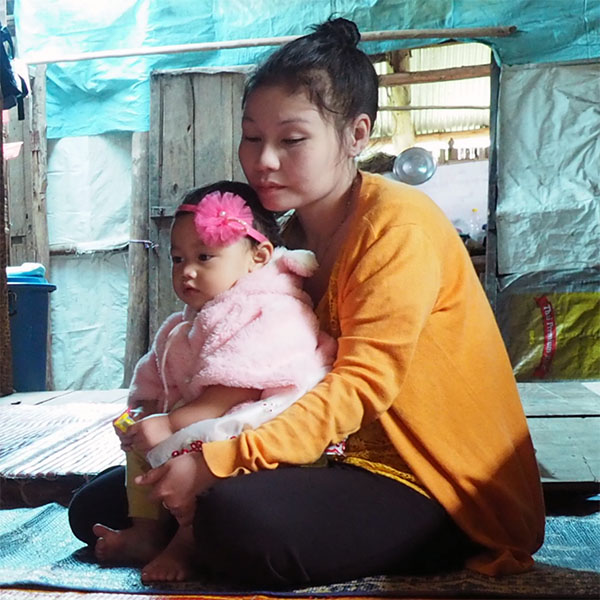
Naw Paw Lue Lu and her daughter.

A Focus on Early Nutrition For Refugees in Thailand

Naw Paw Lue Lu and her husband are raising two children in Umpiem Mai camp in Thailand, which is home to refugee families from Myanmar. Their son is 6 years old, and their daughter is 18 months old. Naw Paw Lue Lu hasn’t had access to information or parenting classes, so she mostly followed the example of her older relatives and neighbors. Unfortunately, that meant that her son didn’t have a nutritious diet. She didn’t know about exclusive breastfeeding, when to start supplementing her breastfeeding or how to diversify his diet. As a result, she only fed her son rice, oil and salt.

During her pregnancy with her daughter, Naw Paw Lue Lu learned more from the health and nutrition staff in the camp. She got the information she need to develop healthy habits during her pregnancy. She understood how to keep herself and her baby healthy. When her daughter was born, Naw Paw Lue Lu knew the benefits of breastfeeding her exclusively for the first six months, and how breastfeeding benefits both moms and babies. Then when her daughter was six months old, Naw Paw Lue Lu joined the “Healthy Babies, Bright Futures” program. It’s implemented by The Border Consortium with support from CWS.

In addition to continued nutrition education support, Naw Paw Lue Lu began to attend cooking demonstrations. She learned about BabyBRIGHT, which is a complementary baby food. She saw how to cook with it and understood its benefits.

Naw Paw Lue Lu recalls worrying about her daughter in her first few months, wondering if her little one was growing as much as other children the same age. But as she began to implement more and more of what she was learning in the infant and young child feeding program, her worries eased. She could see her daughter growing well. She could clearly see the difference between her two children as infants. This was due, in part, to adding BabyBRIGHT to their routine. It’s also, she admits, because she was able to spend more time with her new baby (she had been a teacher when her son was very young).

Naw Paw Lue Lu says that she better understands how to feed both her children a nutritious and diverse diet. She spends time creating new menus for her daughter that include BabyBRIGHT and vegetables from her garden. And she sees how having the nutrition program is helpful for her whole community, especially families with young children.


Stories of Change


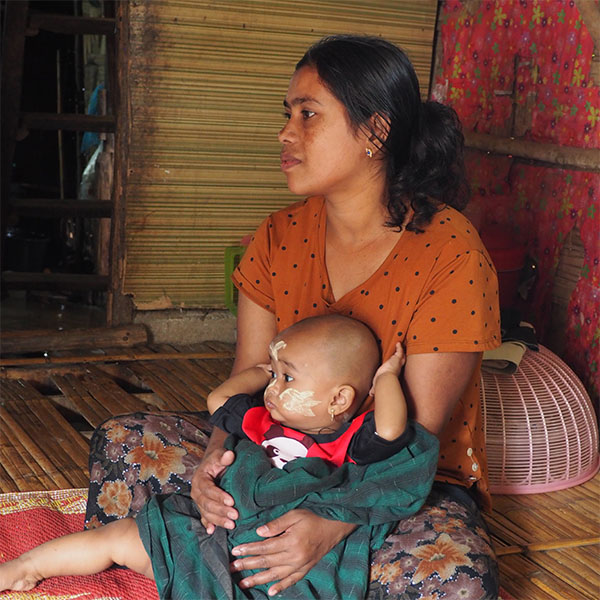
Ramazabee and her daughter.

Nutrition Education for Refugees in Thailand

Thirteen people live in Ramazabee’s household in Umpiem Mai, a camp in Thailand for refugees from Myanmar. Among the 13 are her three children–two sons and her 8-month-old daughter.

Remazabee says that she used to not fully understand how to care for her young children properly. She watched what others around her were doing and tried to do the same, but she didn’t have experts to talk to. When she was pregnant with her daughter, however, she joined the “Healthy Babies, Bright Futures” offered through CWS partner The Border Consortium.

Through this program, Ramazabee joined nutrition education sessions led by health and nutrition specialists. When her daughter turned six months old, Ramazabee joined an infant and young child feeding program. She accessed extra nutrition information and education from other refugees who now serve as Food Security and Nutrition Specialists in the camp. From them, Ramazabee learned the importance of eating nutritious foods and how to feed her children well according to their age. She learned how to use BabyBRIGHT, a complementary baby food. Then she received a monthly portion as incentive to stay engaged. During group cooking demonstrations, Ramazabee better understood the important nutrients in it that can be found in other foods in the camp. So, with BabyBRIGHT and locally sourced nutritious food, her daughter and is healthy and growing well — as confirmed during monthly Growth Monitoring appointments.

During a visit with staff from The Border Consortium, Ramazabee’s brother joined the conversation and said he recognized that his niece is quite happy and seems healthier than her older brother had been as a young child. He especially noted that she is not often sick.

Ramazabee expressed her happiness with young child feeding program activities, which inspire her to take care of her daughter every day.


Stories of Change


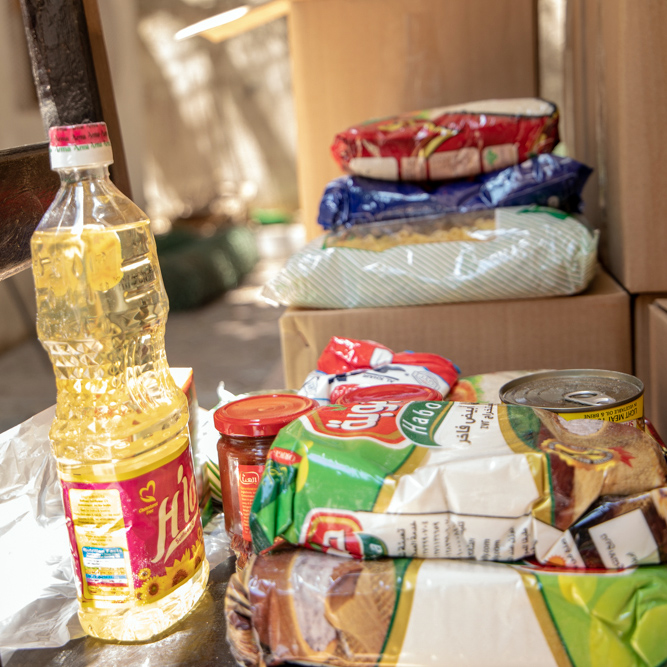
Boxes of food are stacked outside a StARS office, waiting for distribution to refugee who will use them to put food on the table during the pandemic. Photo courtesy StARS.

Food Boxes Help Refugees in Cairo Put Meals on the Table During the Pandemic

Trigger warning: The stories below include content that will be hard to read, including sexual violence.

Aisha is a single mother of a 5-year-old and a 7-year-old. An Eritrean refugee, she came to Cairo to find safety and work so that she could support her children. Then the COVID-19 pandemic hit. Like many refugee women, Aisha lost her job as a cleaner. Rent was still due. Her children still needed to eat. Without her income, Aisha started to get desperate. That’s when she heard about CWS’s partner in Cairo, St. Andrew’s Refugee Services, from some other Eritrean refugees.

When she came to StARS, Aisha’s rent was two months overdue. Her family was out of food. She was seeking any kind of help. After assessing her situation, StARS stepped in to help. They provided her with cash support to pay her rent, and three months of food boxes. “Your assistance helped me to stabilize my life. I am very thankful for StARS’ help! I felt safe and supported at this phase of my life,” she told her caseworker.

This was exactly the support Aisha needed to make it through a rough period. She found work in late September.

Sadly, thousands of refugees in Cairo are in similarly dark times. Before the pandemic, more than 80% of Egypt’s refugees were already living in poverty. Now, wages are drying up. So many refugees who were barely scraping by are slipping into homelessness, hunger and extreme poverty.

With support from CWS, StARS is providing cash that refugees can use to buy food or pay bills, plus boxes of food and hygiene supplies. Refugees will use this assistance to survive until they are able to get back on their feet.

Ahmed came to Cairo as an unaccompanied refugee child from Sudan. Now a young man, he’s enrolled in an accelerated program at StARS for young people who missed out on some or all of school. StARS is providing Ahmed with a monthly food box so that the little money he has can go to cover other basic needs. Without this food support, Ahmed would have to drop out of school and likely be forced to take a risky or unstable job. Plus, Ahmed has diabetes, so it’s critically important that he have regular access to nutritious foods. With the food boxes from StARS, Ahmed is able to continue his education and focus on his future.

Mary arrived in Cairo at the height of the pandemic a few months ago. Like so many of the refugees coming into Cairo, Mary is a child who is on her own, without family to help her. Because of office closures during the pandemic, Mary hasn’t been able to register with the UNHCR yet. That means she isn’t eligible for a lot of the support that other refugees can access. Because her needs were dire and urgent, StARS immediately began to support her with food boxes. This has protected her from hunger during her first months in Cairo. The StARS team also helped her with financial support, care and housing.

And finally, there’s Fatma. She’s only 16 years old, but soon she will be a mother. She was raped in her home country of Eritrea. Her life was immediately at risk from an uncle, who wanted to kill her to preserve the family’s honor. Fatima’s parents have passed away, so she had no choice but to flee the country. She is now three months pregnant and living with another single mom and her children in Cairo. The food boxes from StARS help support Fatma with nutritious food during her pregnancy, and there’s enough food for the family she’s staying with, too.

During this unprecedented global emergency, StARS, CWS and all of our partners are working hard to meet changing and escalating needs. The team at StARS continues to focus on helping refugees find long-term stability through education, housing, counseling and legal services. But they must also meet the needs of the moment. These food boxes are a critical part of helping refugees survive and stay on a path that will eventually lead to brighter days.

Click here to donate to the CWS Coronavirus Response Fund.


A 4-H victory for two refugee teens in Virginia


September 30, 2020

Six years ago, local farmer Jim Mumaw and his daughters Holly and Katherine started mentoring a group of refugee youth including Robel and Mickey. The Mumaws taught them how to raise sheep and show them at the Rockingham County Fair. When Mickey’s family came to the United States as refugees from northern Ethiopia, they were looking for local places to …

Stories of Change

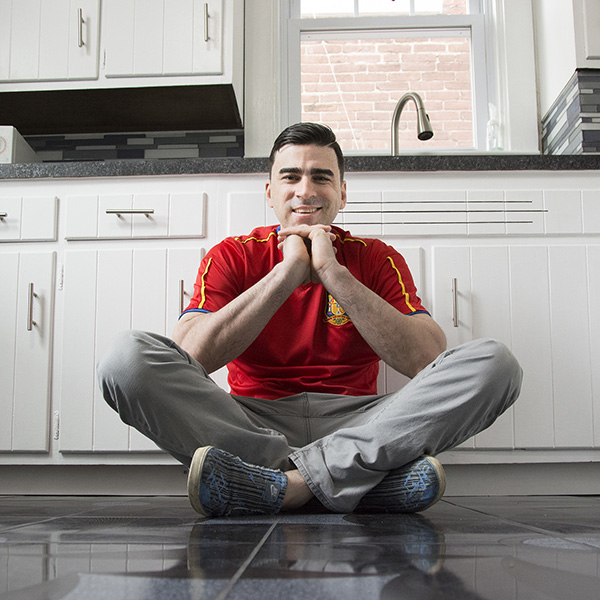
Leonardo. Photo: Kristin V. Rehder

Meet Leonardo, a Cuban refugee in the United States


I am from Cuba and I lived in Cuba for 30 years. I studied there and got an engineering degree. For my safety, I was given the chance to come to the United States. I received a lot of help from Church World Service. They introduced me to the Lancaster people and showed me how to apply for work. They helped me to improve my English. When I got my permit for work they helped to find me a job quickly. Recently, I applied for my citizenship and they [CWS] helped me with the application. I am an American citizen now!

Refugee people are just people who are trying to be happy– for their family, for their life. They just don’t have the opportunity because they are in countries of war or under corrupt government. People want to be in the United States because this is a great country that has given opportunity for all these years. I hope that this doesn’t change because I am one of these people that came here and am happy now. I have a really good life.

Leonardo is a Cuban refugee who CWS helped resettle in Lancaster, Pennsylvania.