Stories of Change


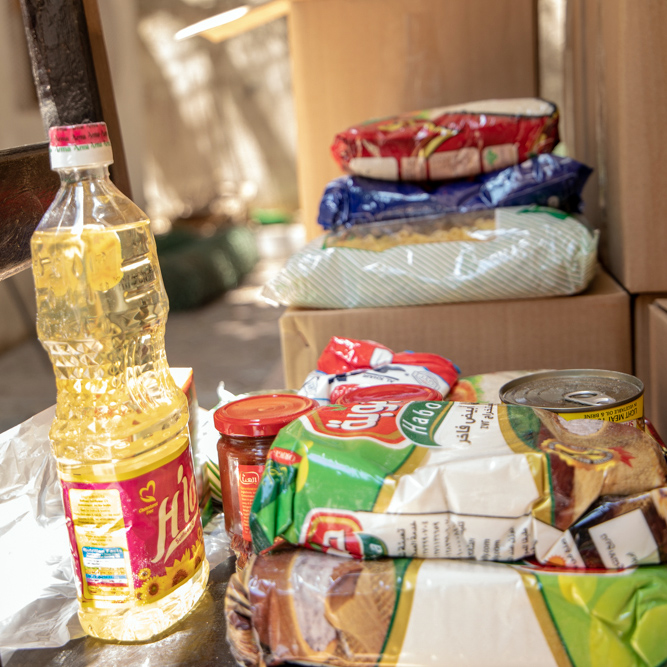
Boxes of food are stacked outside a StARS office, waiting for distribution to refugee who will use them to put food on the table during the pandemic. Photo courtesy StARS.

Food Boxes Help Refugees in Cairo Put Meals on the Table During the Pandemic

Trigger warning: The stories below include content that will be hard to read, including sexual violence.

Aisha is a single mother of a 5-year-old and a 7-year-old. An Eritrean refugee, she came to Cairo to find safety and work so that she could support her children. Then the COVID-19 pandemic hit. Like many refugee women, Aisha lost her job as a cleaner. Rent was still due. Her children still needed to eat. Without her income, Aisha started to get desperate. That’s when she heard about CWS’s partner in Cairo, St. Andrew’s Refugee Services, from some other Eritrean refugees.

When she came to StARS, Aisha’s rent was two months overdue. Her family was out of food. She was seeking any kind of help. After assessing her situation, StARS stepped in to help. They provided her with cash support to pay her rent, and three months of food boxes. “Your assistance helped me to stabilize my life. I am very thankful for StARS’ help! I felt safe and supported at this phase of my life,” she told her caseworker.

This was exactly the support Aisha needed to make it through a rough period. She found work in late September.

Sadly, thousands of refugees in Cairo are in similarly dark times. Before the pandemic, more than 80% of Egypt’s refugees were already living in poverty. Now, wages are drying up. So many refugees who were barely scraping by are slipping into homelessness, hunger and extreme poverty.

With support from CWS, StARS is providing cash that refugees can use to buy food or pay bills, plus boxes of food and hygiene supplies. Refugees will use this assistance to survive until they are able to get back on their feet.

Ahmed came to Cairo as an unaccompanied refugee child from Sudan. Now a young man, he’s enrolled in an accelerated program at StARS for young people who missed out on some or all of school. StARS is providing Ahmed with a monthly food box so that the little money he has can go to cover other basic needs. Without this food support, Ahmed would have to drop out of school and likely be forced to take a risky or unstable job. Plus, Ahmed has diabetes, so it’s critically important that he have regular access to nutritious foods. With the food boxes from StARS, Ahmed is able to continue his education and focus on his future.

Mary arrived in Cairo at the height of the pandemic a few months ago. Like so many of the refugees coming into Cairo, Mary is a child who is on her own, without family to help her. Because of office closures during the pandemic, Mary hasn’t been able to register with the UNHCR yet. That means she isn’t eligible for a lot of the support that other refugees can access. Because her needs were dire and urgent, StARS immediately began to support her with food boxes. This has protected her from hunger during her first months in Cairo. The StARS team also helped her with financial support, care and housing.

And finally, there’s Fatma. She’s only 16 years old, but soon she will be a mother. She was raped in her home country of Eritrea. Her life was immediately at risk from an uncle, who wanted to kill her to preserve the family’s honor. Fatima’s parents have passed away, so she had no choice but to flee the country. She is now three months pregnant and living with another single mom and her children in Cairo. The food boxes from StARS help support Fatma with nutritious food during her pregnancy, and there’s enough food for the family she’s staying with, too.

During this unprecedented global emergency, StARS, CWS and all of our partners are working hard to meet changing and escalating needs. The team at StARS continues to focus on helping refugees find long-term stability through education, housing, counseling and legal services. But they must also meet the needs of the moment. These food boxes are a critical part of helping refugees survive and stay on a path that will eventually lead to brighter days.

Click here to donate to the CWS Coronavirus Response Fund.

Stories of Change


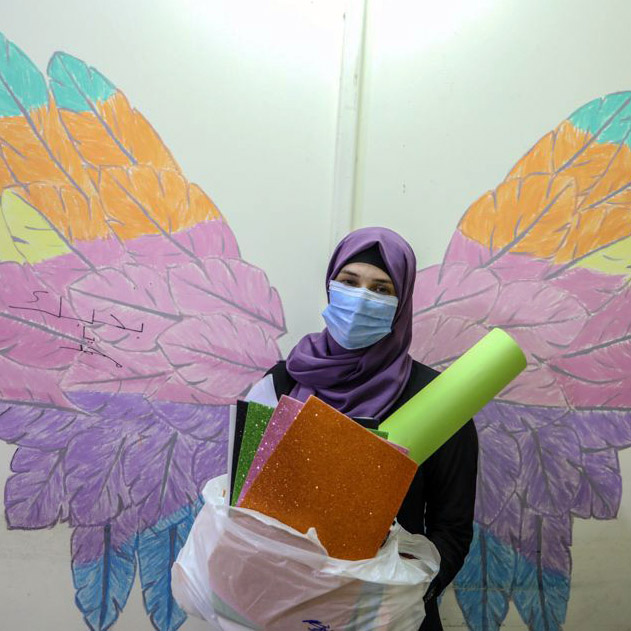
Lareen holds her family’s education package.

Glitter Foam and Slime: Finding Moments of Joy During a Pandemic

Click here to donate to the CWS Coronavirus Response Fund.
As schools have closed in communities all over the world, many parents are facing the same challenge: how do I keep my children engaged and learning when we’re all staying home?

And for those parents who are out work: how do I continue to provide for my family?

Lareen is in this situation. Originally from Yemen, she is a refugee in Egypt. She is a single mom to her three children, who are 6, 7 and 11 years old.

Before the coronavirus pandemic, Lareen was taking tailoring classes to improve her skills and further her career. But those classes stopped, along with all group gatherings. Her income has dried up, so Lareen has been reaching out to refugee service providers in Cairo for support.

Two of Lareen’s children are on the autism spectrum. They used to go to a center that specialized in education for children with autism to make sure that they were getting the care and interactions that they needed. Now, the center is closed, and the family is at home together. “Since the beginning of the lockdown, I have kept my children at home. We have been going through a lot, the anxiety and fear are paralyzing. My older son is not accepting this situation. He wants to go out to play and do outdoor activities, while my other two children’s progress is eroding,” she explains. “My children are suffering emotionally, and there is nothing I can do for them. I have no resources to buy anything for them to keep them engaged and I cannot leave them and go work. I barely manage to pay for life essentials. I might not [be able to] pay for the internet next month, which is the only thing that is keeping my children and me afloat. I try to find useful resources online, but still it’s not enough.”

Our partner in Cairo is St. Andrew’s Refugee Services, or StARS. StARS holds a support group for refugee mothers of children with special needs. It’s a place for moms to learn about resources available to them, share their experiences with people who understand what they are going through, and just feel seen. The groups have been suspended during the pandemic, but the StARS team is continuing to reach out to these moms to make sure they still feel supported.

The staff at StARS put together education packages for families, to help them cope with their time at home. The packages are full of craft supplies like paint, ingredients to make slime, glittery foam, scissors, coloring books and colored pencils. They also include snacks and information about COVID-19. When parents come to pick up their supplies, the StARS team checks in with them on handling the pandemic and what activities to do with the different materials.

“The package I received helped a lot, as my youngest child loves drawing. It helped us to sit together and make activities like making accessories. My children made me a beautiful bracelet with my name on it. Having the items in the package and its variety assisted me in engaging my children in something fun, which in return made my children’s concentration better.” Lareen says. “These activities made me closer to my children, and I appreciate [StARS Groups and Activities Senior Officer] Bushra and StARS for everything they have done.”

For decades, StARS has been a welcoming support network for Cairo’s refugee population. Clients can receive an array of support, from legal aid to medical, educational, counseling and other services. During this pandemic, the team has expanded parts of StARS programming to meet new, urgent needs. With support from CWS, StARS has distributed more than 2,000 packages of food and hygiene supplies to particularly vulnerable clients. They have also provided $20,000 in cash grants to clients to help them pay rent and meet their basic needs.

For families like Lareen’s who were already living in vulnerable situations, the impacts of the pandemic and resulting lockdowns can be extreme. But with your help, we can continue to provide moments of light and hope in the darkness, and we can help more families make it through this.

To donate to the CWS Coronavirus Response Fund, visit cwsglobal.org/coronavirus.


Stories of Change


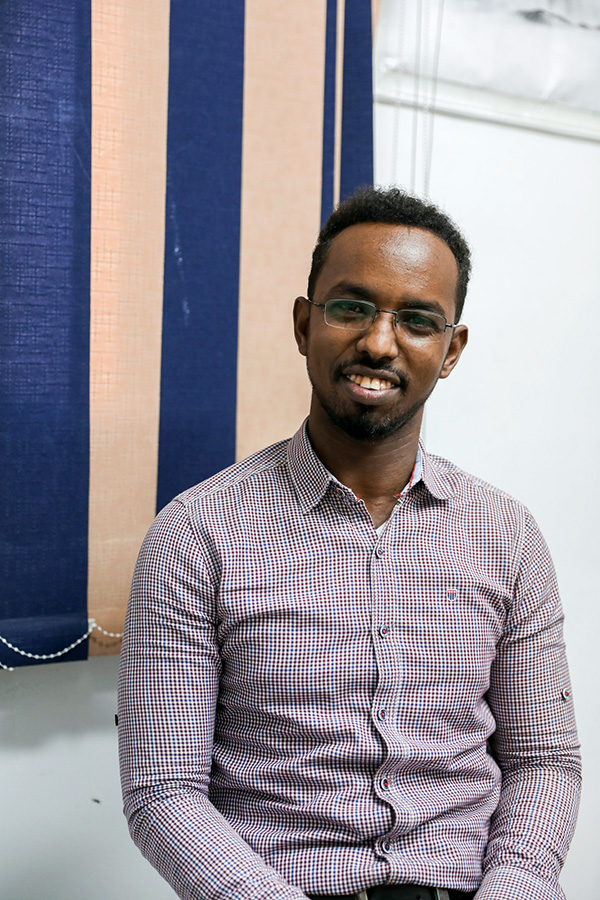
Abadir.

Refugees leading the way in Cairo

There are 25.9 million refugees in our world, according to the United Nations. That’s more than the population of Florida or New York, and nearly as large as Texas. All who have been forced to leave their home country. All hoping for a better, safer life.

They are doctors, accountants and entrepreneurs. Husbands and wives, parents and children. Millions and millions—more than half of all refugees—are children.

Refugees aren’t numbers. They’re people. And they’re people who have a passion for improving not only their lives, but the lives of everyone around them.

That’s the driving principle behind the Community Outreach Program at St. Andrew’s Refugee Services. St. Andrew’s, or StARS, is our partner in Cairo. They reach tens of thousands of refugees each year with education, medical, legal, counseling and housing programs. They can’t reach everyone on their own, though, which is why the Community Outreach Program focuses on strengthening local organizations in refugee communities.

Cairo is a massive, sprawling city. Within it are pockets of people from different backgrounds; for example, people from Somalia. These communities often establish grassroots organizations to build a school, establish a community center, or otherwise bridge gaps in the services available to their population. They are already delivering services when they begin to partner with StARS, but the team at StARS helps them be more effective and efficient. StARS offers organizational management training for leaders within these organizations, focusing on topics including data collection, project management, evaluating project success and proposal writing.

Refugees are leading these community-based organizations, and they’re leading StARS. Most StARS staff, including many members of senior leadership, are refugees. They understand the refugee experience in Cairo, because it’s the same reality that they face day in and day out.

Abadir is one of the StARS team members who focuses on supporting community-based organizations. He’s a refugee from Somalia who arrived in Cairo in 2012 when he was just 16 years old. His journey from Somalia to Cairo took two months that he describes as living in a horror movie. He was alone, having fled from his home and his family because the militant group al-Shabaab was hunting him. On his journey, he learned that you must trust strangers in order to survive, but you have to guard your trust and use it sparingly.

When he arrived in Cairo, Abadir turned to the Somali community for support. He spent a month living with other refugees who had been smuggled with him. He gathered as much information as he could about which organizations would help him. “Try to lift yourself up, and seek the right information, and you will get served by someone who can assist you,” he says. Eventually he got a caseworker in a refugee service provider. That caseworker noticed that Abadir spoke English well, and recommended that he take English classes at StARS. He enrolled, and thus his connection to StARS was born.

A handful of years later, StARS feels like home. He says, “Refugees can be the voice for refugees. That’s the thing that StARS is doing, when it comes to their hiring system or decision making – there are refugees. We as StARS are seeking more ways to enhance that for the future. That’s the thing that I really love, and I’m really encouraged to continue that. I would really love to be part of that, so that’s why I’m in.”

As Christopher Eades, the Executive Director of StARS, will tell you, refugees don’t just deserve a seat at the table. It is their table. They have the brilliance, the drive and the passion to address the challenges that they are facing. StARS and its community partners are simply giving them the space to be brilliant. And here at CWS, we’re proud to be part of that.

(On a related note, check out this blog about how the same principles are woven into our regional advocacy work in Latin America.)


Stories of Change


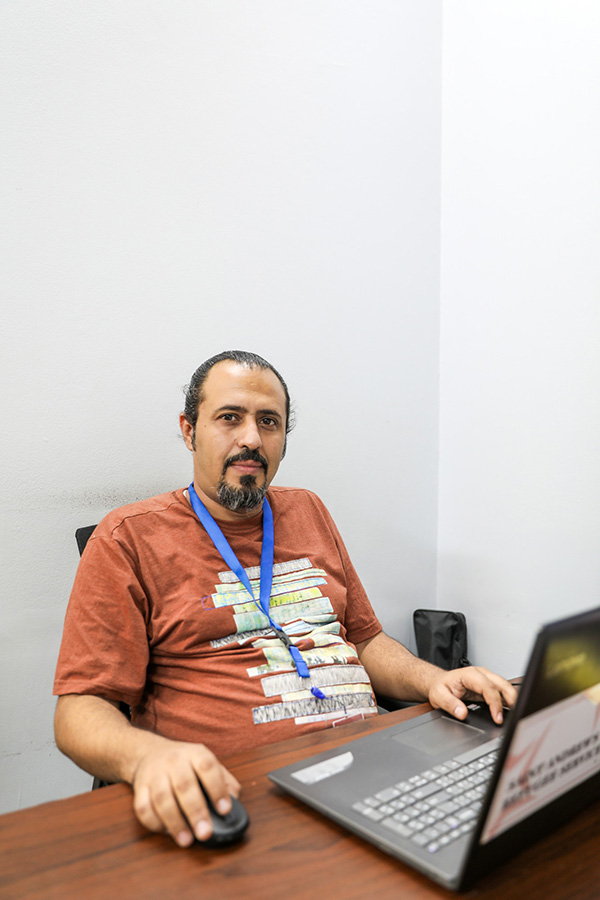
Wajdi in his office at StARS.

I fled war and corruption in Yemen. Here’s how CWS’s partner in Cairo has helped my family and me build a new life.

Told by Wajdi Mansour Al Mowafak, the Director of Finance at St. Andrew’s Refugee Services (or StARS) in Cairo. CWS supports StARS as they reach tens of thousands of refugees in Cairo each year with education, medical, legal, housing, vocational and other assistance.

Before the war, I was the audit manager for the Central Organization for Control and Auditing in Yemen’s capital city, Sana’a. I also had my own auditing firm where I had 10 people working with me.

Life was good. It was peaceful. I had my own home and my own car. Everything was very good.

Then the war started. My house was bombed by tanks in 2014. The government in the north couldn’t afford to pay salaries for government employees, so they stopped our salaries. We worked for a year without pay. Because of the war, many companies stopped requesting audit reports. I had to close my auditing firm, and life began to be really difficult without the firm or my government salary.

Then I was expected to audit the largest oil and gas company in Yemen. Oil companies are the most difficult to audit because most of the corruption is in this field. I discovered some corruption, and they requested that I not submit my report about it. When I thought about submitting this report, I thought about my co-workers. Two were killed because of auditing reports they submitted, and another had acid thrown on his face.

I was scared to submit the report, and I knew that I needed to leave the country. So I submitted it on a Friday evening and left at dawn the next day. I went to Aden, which is a city in the south of Yemen that still had an airport. There are only two countries that receive Yemeni refugees: Egypt and Jordan. It’s difficult to move to Jordan, so I chose Egypt.

In order to enter Egypt, I needed to have a medical reason. My father has Parkinson’s, so I brought him with me, along with my mother and sister. This also gave me a plausible reason for leaving that I could tell my employer. I left my family behind in Sana’a.

We took a bus from Sana’a to Aden, which took about 16 hours. We went through more than 100 checkpoints. At one of them, the guards told me to get off the bus when they learned that I worked for the Central Organization for Control and Auditing. They told me it meant that I was working for the regime in the south, and they told me, ‘Come down from the bus.’ But the other people on the bus, they said, ‘No, his father is sick. He can’t leave his father alone.’ Then the officer said, ‘Okay, but if your father wasn’t with you, I would take you to jail.’ All because I was working with the government.

We made it to Egypt in December 2016. It’s very difficult for non-Egyptians to find work here, especially for refugees. At first, I lived off my savings. Then I found a job with a company, but soon that company moved from Egypt to Dubai.

One day, I came across a Facebook post that said that StARS was hiring a finance officer. It was the first I had heard of StARS. I submitted my CV and cover letter, but I was surprised when they called me because I am a refugee. But they called me to come in and interview, and I got the job.

Meanwhile, my family was still in Yemen. They weren’t safe. When my office received my report, they tried to contact me about it. They threatened me, and they used my family to threaten me. I told them that I couldn’t come back. I said that my father was sick and that I needed to stay with him in Cairo while he got his medication.

After two years apart, my family came to join me in Cairo. Tickets from Yemen cost $1,200 each, and I have three children. I told my wife to sell some of our things to pay for the tickets. I told them that now that I had a job, we could all live here together.

I have been working for StARS for 15 months. Now I’m the Director of Finance and lead a team of six people. My son Mohammed is 15 years old now, and my daughters Alaa and Maria are 11 and 6. All three are students in the StARS school. They study science, math, Arabic, English…a whole variety of subjects.

StARS is a safe place. And when I want to see my children, I can just go down to the courtyard and see them. Sometimes they come into my office to get water or papers or something. And as students at the StARS school, they study with children from many nationalities and many religions. When you see the children here, they are all studying and playing together. It makes you wonder why as adults, as governments, we can’t act like these children do. They don’t think of religions between them. They don’t think of a variety of nationalities. They don’t think of discrimination. All of them play together. All of them laugh together.

StARS is a unique place here in Egypt. Most staff are refugees. So whenever someone supports or donates to StARS, they are directly supporting refugees. Even the funds that go towards paying staff salaries, they are going to refugees like me to help us live in this host country.

I miss Yemen a lot. I miss the weather, which is very beautiful. Yemen is very beautiful in general. My close family are all here in Cairo, but I miss my neighbors, my cousins and everyone back in Yemen. They are still suffering. I wish everyone knew how tough things have been there. The conflict has caused more than 300,000 people to die. Now disease is spreading. We have cholera. People are starving. Government workers don’t have salaries. The worst humanitarian crisis in the world is now in Yemen. People die from disease, from starvation and from war.

For a year after I came to Cairo, I was scared whenever I heard airplanes. In Yemen, every time we heard airplanes, we would hear and feel the bombs. When my children arrived in Cairo, it was the same thing. Every time they hear airplanes, they say, ‘Dad, they are bombing now.’

I am grateful, though, that my family is here now. My wife and children are safe. My salary from StARS meant that they could leave Yemen and be here with me, where I can see them every day. And StARS is an amazing place. It’s my first time working with so many nationalities and religions. No one asks you about it here. We just work together. We are one family, and it’s difficult to find that anywhere.

Watch a video about Wajdi here.