Stories of Change


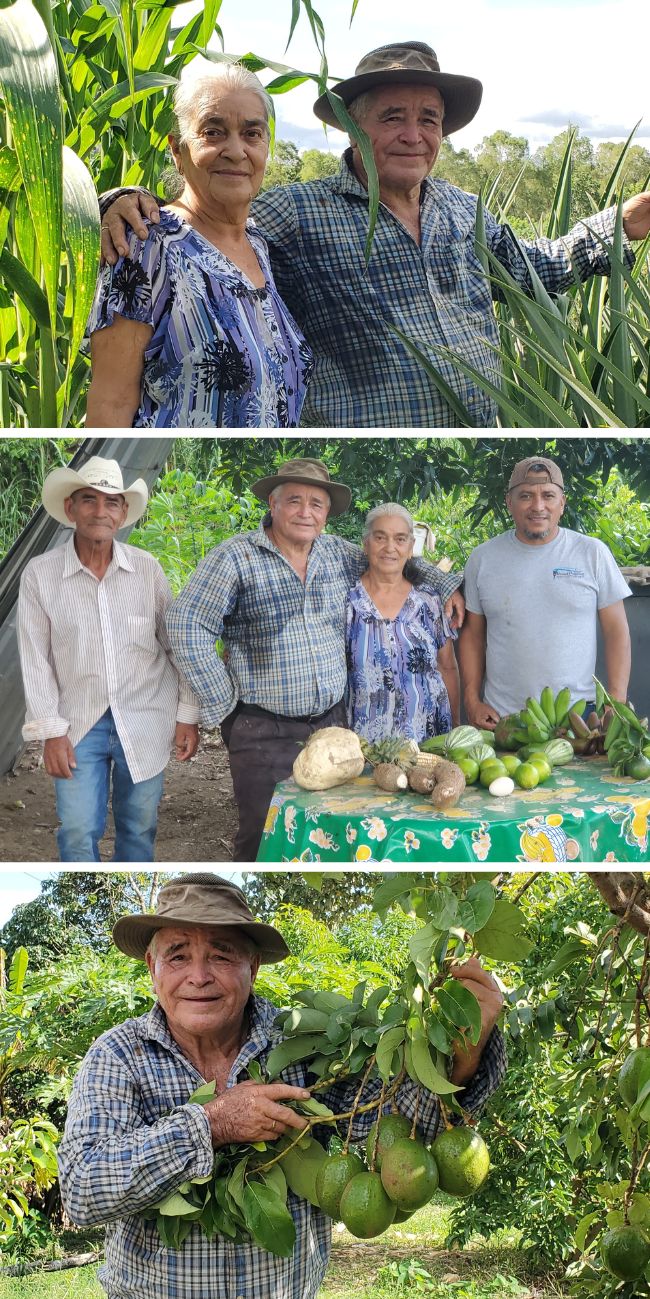
Top: Rigoberto and his wife, Ofelia Middle: Rigoberto, Ofelia and Marco Bottom: Rigoberto with one of his fruit trees

Cultivating Hope: Rigoberto’s Garden in Honduras

Rigoberto lives in the community of El Carrizal, in the department of Yoro, Honduras. With dedication and joy, he has transformed his small plot into a vibrant garden that nourishes his family and strengthens his connection to the land and his neighbors. 

Nourishment and Generosity: Rigoberto’s Approach to Farming

“What I love is harvesting and consuming what I grow, and sharing it,” Rigoberto says with a smile. “The church has taught us not to be selfish.” 

This philosophy guides his daily work alongside his wife Ofelia and their four children. He grows vegetables, such as tomatoes, peppers and leafy greens, and has begun experimenting with crops that thrive in his region, such as corn and beans. 

Through the Produce Verde project, implemented by Comisión de Acción Social Menonita (CASM) with support from Growing Hope Globally, Rigoberto has learned to make organic fertilizer, adopt new planting techniques and prepare nutritious meals with what he grows. His goal isn’t to make a lot of money, but to “have food for the family.” 

More Than Planting: Learning and Sharing 

The Produce Verde project focuses on nutritional food security and family farming, offering training in health and nutrition to rural families. For Rigoberto, this has meant not only improving his agricultural practices but also learning to prepare healthier meals. 

“The trainings are clear and practical. We’ve learned to make foliar fertilizers and compost, and to eat better. Now, we make juices instead of drinking soda,” Rigoberto shares, as Ofelia proudly displays a colorful variety of fruits on the table. 

Rigoberto is one of 81 households that have established productive plots with diverse crops such as banana, cassava, watermelon and vegetables. He also built a small farm for raising chickens, which contributes to his family’s protein intake and generates income from surplus eggs and meat. 

Learning Beyond the Harvest: Nutrition and Skills for Families

Marcos, another participant, highlights how the training has helped them value what they produce and understand the importance of nutrition. “It’s not just about growing food, it’s about learning new things. We’re very happy.”

In total, 152 people participated in workshops on organic fertilizer production, and 75 women joined community cooking sessions to learn how to prepare balanced meals using local ingredients. Together, this community is building a more resilient future. Their gardens are more than sources of food—they are spaces of learning, solidarity and hope. 

The Produce Verde project also promotes environmental conservation and climate adaptation. Families have adopted climate-smart practices like solar dryers and water harvesting systems, and 53 producers have implemented sustainable technologies to protect their crops and reduce costs. 

Rigoberto’s story is just one of many that reflect the spirit of the project: cultivating not only the land, but also knowledge, health and generosity.

The Produce Verde project is implemented by our local partner, Comisión de Acción Social Menonita (CASM), with the support of Growing Hope Globally. Click here to learn more about our work in Central America. 


From Earthquake to Hurricane: Resilience in Action for Communities in Haiti


November 13, 2025

After the 2021 earthquake devastated communities in Haiti, CWS partnered with local leaders to rebuild homes, schools and water systems with resilience at the core. Today, those same structures are providing shelter, safety and essential resources during Hurricane Melissa. While the storm damaged gardens, livestock and some infrastructure, the homes and cisterns built through community-led recovery efforts largely withstood the …

Youth Advocate for Safer Spaces: A Step Toward Dignity and Rights


October 9, 2025

On September 30, CWS Latin America and Caribbean commemorated the International Day of Children and Adolescents with Incarcerated Adult Relatives, highlighting a major milestone in the defense of their rights: the participation of youth representatives in a thematic hearing before the Inter-American Commission on Human Rights and the resulting Resolution 2/25, which recognizes the rights of children affected by incarceration. …

Stories of Change


Top: Mariza Galeano, Middle: Workshop and human rights, Bottom: Mariana Ayala

“Women in this community seem to have awakened from a long sleep”

Mariana Ayala is a mother, grandmother, organizer and leader of the women in her community, Sawhoyamaxa, home to Enxet people in the Gran Chaco region of Paraguay. She has attended all training and workshops organized by CWS’ local partner, Pastoral Social Diocesana Benjamin Aceval (PSDBA), in her community and today plays a key role in both, motivating women to attend workshops, meetings and assemblies and use the new knowledge at home, farms and communities.

Recently, Mariana and other experienced women leaders were asked to share their stories and lessons with individuals from neighboring communities where the women’s empowerment training was about to begin. The goal of the training is to strengthen the bonds between women within the same village, enhance women’s leadership and promote an exchange of knowledge and mutual empowerment.

In her remarks, Mariana said, “I am happy to share my testimony with the women living in these communities. I want to encourage you to fight for our rights because we have Law 904/81, which establishes the statute of Paraguayan indigenous communities on our side, and we must use it as our tool.”

Mariana, who witnessed the historic struggle of women for land, proudly recalled, “We managed to recover our ancestral lands thanks to the bravery of women. Surely, you know or have heard of my community, Sawhoyamaxa.” 

With heartfelt sincerity, she shared the reason for her sacrifice to be present that day: “I am an older woman now. I was very happy when I received last week the invitation to come here today. I immediately accepted. Last night, I barely slept until 2:00 AM, taking care of a sick person. Few people have the patience to care for the sick, but we must be patient with others. I almost didn’t come today, but here I am, happy to see you all. This is my first visit to Buena Vista, and I come with the spirit to encourage you all so that together we can advance in defending our rights and developing our communities.”

Mariana is one of many inspiring stories. Mariza Galeano, a mother, grandmother and a leader among the women of the Yakye Axa village also participated in the training process carried out by PSDBA over the years and in her remarks to the women of Villa Nueva she said, “I want to share how happy I am with the Pastoral Social. Thanks to the training and workshops, the women in my community seem to have awakened from a long sleep. Now, we know our rights, we want them to be respected, and we strive to ensure our rights are upheld. We attend community meetings, participate, raise our voices and request things for the community because women have a different perspective from men. We better understand the needs of the community.”

Mariana Ayala and Mariza Galeano represent the voices of women in their villages and have become beacons of hope and determination for all rural women fighting for a more just and equitable future.

This program is supported by our local partner, Pastoral Social Diocesana Benjamin Aceval (PSDBA), with the financial support of Growing Hope Globally. To learn more about our work in Latin America, click here


Stories of Change


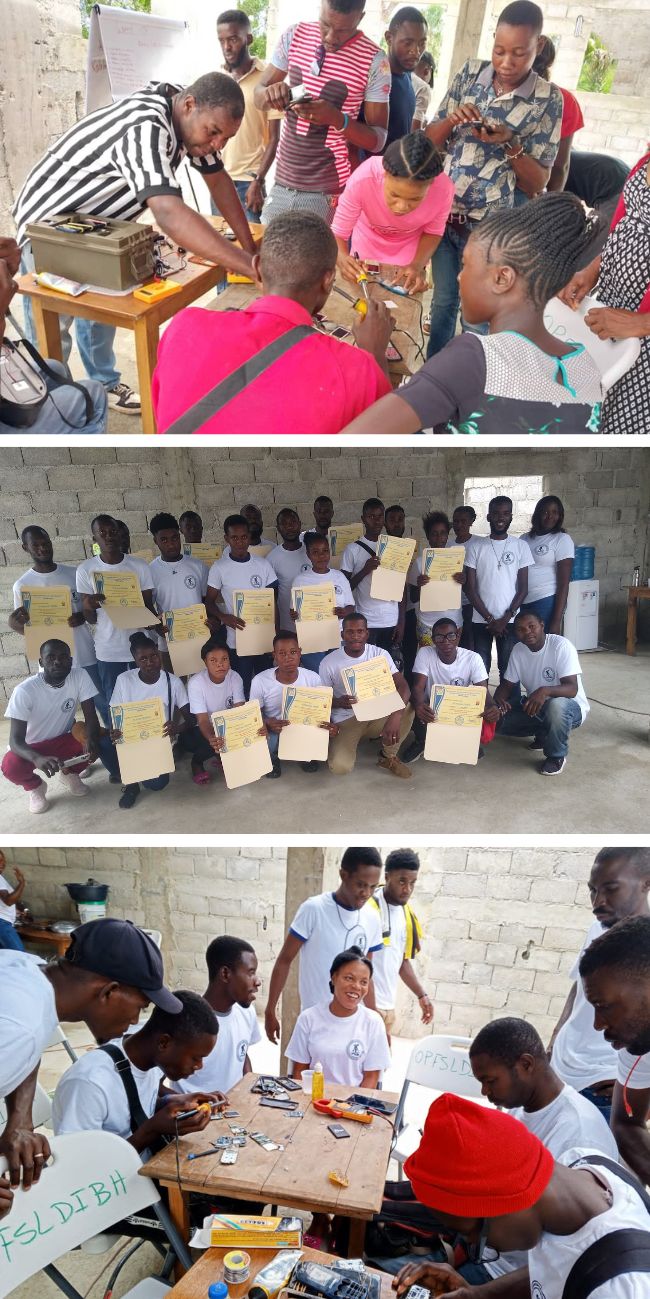
Program participants in phone repair trainings

“I encourage all youth to learn a profession”

For many, cell phones have become an almost essential part of our day-to-day lives allowing us to be more efficient, knowledgeable and connected. This is something that a group of young men and women in Baie-de-Henne, Haiti realized and decided to seize the opportunity to enhance their income and quality of life by repairing cell phones in their community.

Through a CWS partner program called *Building Resilience, 23 young people participated in a phone repair training focused on decoding techniques, mobile networks, firmware upgrades, SIM card unlocking and software and hardware repairs. 

Salem Oreus, a dad with two daughters, was one of the participants and shared, “I have been repairing phones since 2008. My skills were based on experience, trial and error, but without extensive knowledge. I also repair inverters, radios and televisions. The income from phone repairs helps me support my family and contribute to savings groups.” Thanks to the training, Salem knows how to handle more complex phone repairs. He learned to unlock SIM cards, upgrade firmware, remove IDs and create email accounts. He noted, “I now have a better understanding of networking and technology, and I can make better use of new materials in repairs and decoding.”

Another participant was 21-year-old Obender Palmy, who currently lives with his parents. Although he has always been passionate about technology, he could not afford higher education or specialized courses. He said, “I was interested in decoding phones but couldn’t find affordable learning opportunities. Thanks to the AEB club and OPFSLDIBH, I was selected to gain knowledge in this area. Now, I am proud to repair phones.” 

With his new skills, Obender opened a savings account and started a small business selling phone batteries, cables and other supplies and providing money transfer services by phone. “My work and the services I offer in the community increase my revenue, helping me achieve financial autonomy,” Obender explained. He also mentioned, “Due to limited investment in materials, I cannot provide more services, which risks losing clients because of the tools I lack.” Recognizing Obender’s potential, OPFSLDIBH staff visited him and two other selected participants to offer loans for purchasing additional tools and materials needed to expand their businesses.

Obender is dedicated to sharing his training experiences to inspire more youth to pursue education and vocational skills. “I am grateful to the OPFSLDIBH and CWS teams for this training, which will help me offer more services in the community and increase my income,” he expressed. Salem is also committed to helping other young people in the community to develop their skills and financial autonomy. “I encourage all youth to learn a profession,” he said.

Looking ahead, Obender and Salem aspire to advance their education in computer repair. They strongly advocate for youth education and vocational training, emphasizing that acquiring new skills and pursuing entrepreneurship can provide security and independence. Not only are they helping improve their own lives but also those of their peers and community members.

*The “Building Resilience” project is implemented by CWS’ local partner, Organisation des Planteurs de Fond Saint-Luc pour le Développement Intégré de Baie-de-Henne (OPFSLDIBH), with financial support from Growing Hope Globally.


Stories of Change


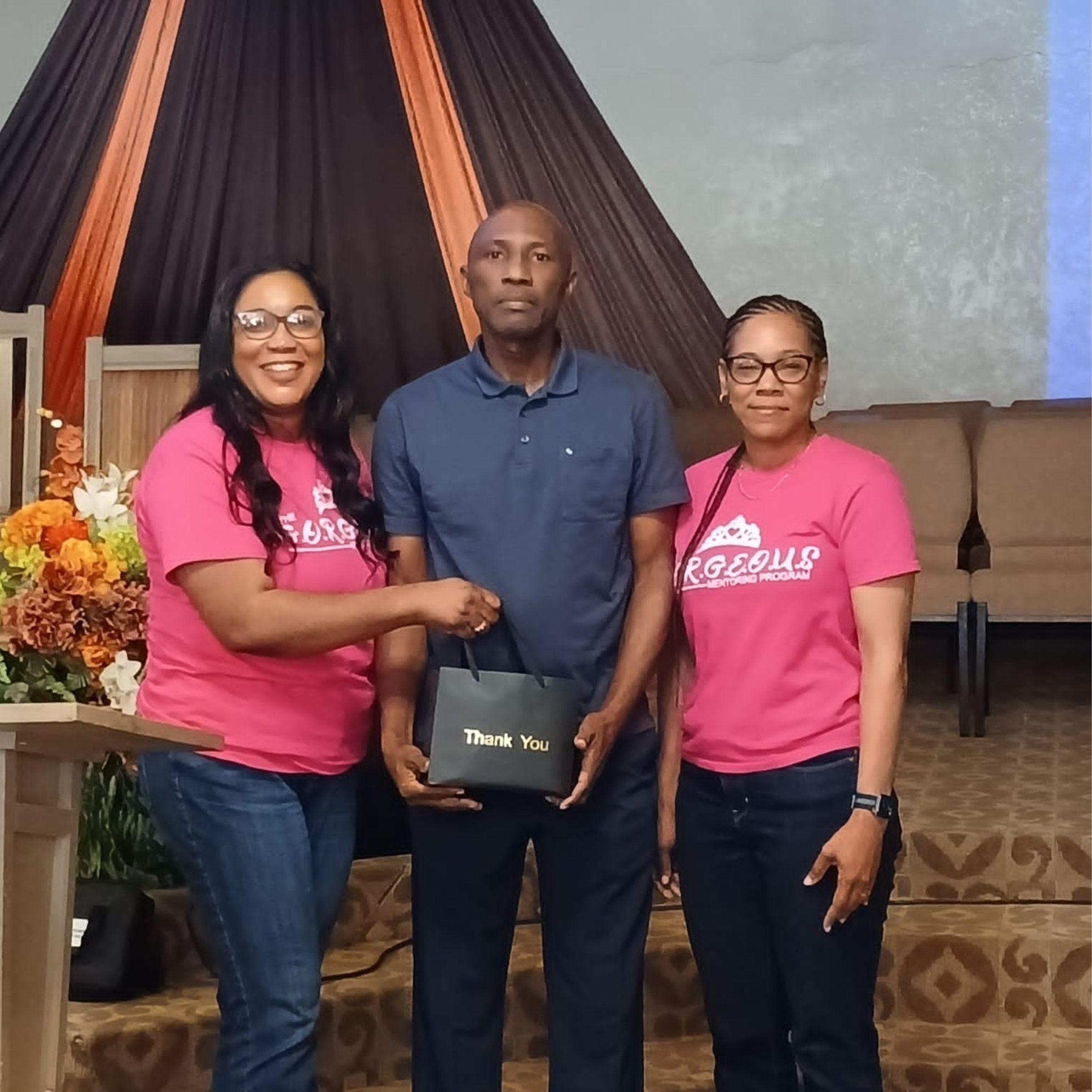
Dr. Swann receiving an award after presentation on mental health

From Grand Bahama to Abaco: A Journey of Healing and Hope

Before Hurricane Dorian, Dr. Gregory Swann’s life as a police and public safety psychologist on Grand Bahama Island revolved around collaboration with government agencies, including the Royal Bahamas Police Force. However, the emergencies caused by Hurricane Dorian led him on a transformative journey, expanding his role and perspective.

The Bahamas Psychological Association’s (BPA) Mental Health and Psychosocial Support (MHPSS) project (supported by CWS) presented an opportunity for his personal and professional growth. When deployed to the storm-ravaged island of Abaco, Dr. Swann’s mission extended beyond routine duties. Dr. Swann conducted wellness checks for first responders, survivors and the community at large which allowed him to engage with diverse groups, from adolescent boys and girls to uniformed officers and school staff in disaster-affected areas.

The project not only broadened his skill set but also paved the way for future contributions. Dr. Swann noted, “Taking advantage of the capacity-building opportunities of the project allowed me to certify myself so that in the future I could function as a trainer for delivering psychological first aid training.”

The most profound experiences awaited Dr. Swann in the heart of the Haitian population who migrated in the aftermath of Hurricane Dorian. Before the storm, his daily interactions did not extend significantly into the Haitian communities across the islands. The BPA MHPSS project changed that, unveiling the intricate challenges that shape the lives of migrants.

The vulnerability of the Haitian population, before the hurricane had even hit, magnified the impact it had on their lives. Eager to alleviate distress, Dr. Swann collaborated with the BPA team to form and coordinate a committee of pastors and leaders from Haitian churches in Abaco. Dr. Swann continued, “Through this committee, we distributed helpline numbers, conducted stress management presentations with the aid of a translator, distributed care packets and organized a mini health fair intervention for a segment of the community.”

This journey fueled Dr.Swann’s own sense of purpose, emphasizing the resilience and interconnectedness of communities in times of adversity. He reflected, “It feels like a drop of water in a bucket, but I remain hopeful that the formation of the Haitian church leadership committee will allow BPA to maintain continued services in this regard.”

The CWS Hurricane Dorian Long-Term Recovery Program in the Bahamas concluded in March 2024, supported by grants from Episcopal Relief and Development and Presbyterian Disaster Assistance.