
A simple game of Jenga helped one child open up about their experiences and seek healthy friendship. Every day, CWS celebrates the creative, patient work of building safety and hope for displaced children and their families. At CWS, we use creative tools like games and art to help children—especially those impacted by displacement—share their stories and make sense of their …
Season of Warmth: How CWS Helps Children Find Safety, Health and Hope
CWS is helping children and families build safer and brighter futures. As the weather turns colder, we reflect on how to build warmth—through support, protection and empowerment for children in the United States and around the world. You can feel the rhythm of daily life changing as autumn settles across much of the United States. The air cools, the pace …
Rooted in Resilience: Helping Children Learn, Heal and Belong
October 27, 2025
Every year, unaccompanied children seek safety in the United States, often after enduring dangerous journeys. They hope for healing and a safe childhood here, but there are many challenges that stand in the way. CWS is committed to ensuring these children have the care, protection and advocacy they need. Feeling Untethered in Childhood Children who have been separated from their …
Life After Arrival: Why Unaccompanied Children Still Need Protection
April 17, 2025
Every year, tens of thousands of unaccompanied children seek safety in the United States, often after enduring dangerous journeys. They hope for healing and a safe childhood here, but there are many challenges that stand in the way. During National Child Abuse Prevention Month and beyond, CWS is committed to ensuring these children have the care, protection and advocacy they …
Termination of Unaccompanied Children Programs Strips Vulnerable Kids of Legal Protection and Support
March 21, 2025
New York City – CWS today expressed alarm over the administration’s near-total termination of work on its Unaccompanied Children Program, halting legal services for unaccompanied immigrant children. The organization notes that this executive action immediately strips thousands of children–including infants and young children–from legal representation, forcing them to now navigate and somehow represent themselves in immigration court proceedings. “No child …
Stories of Change
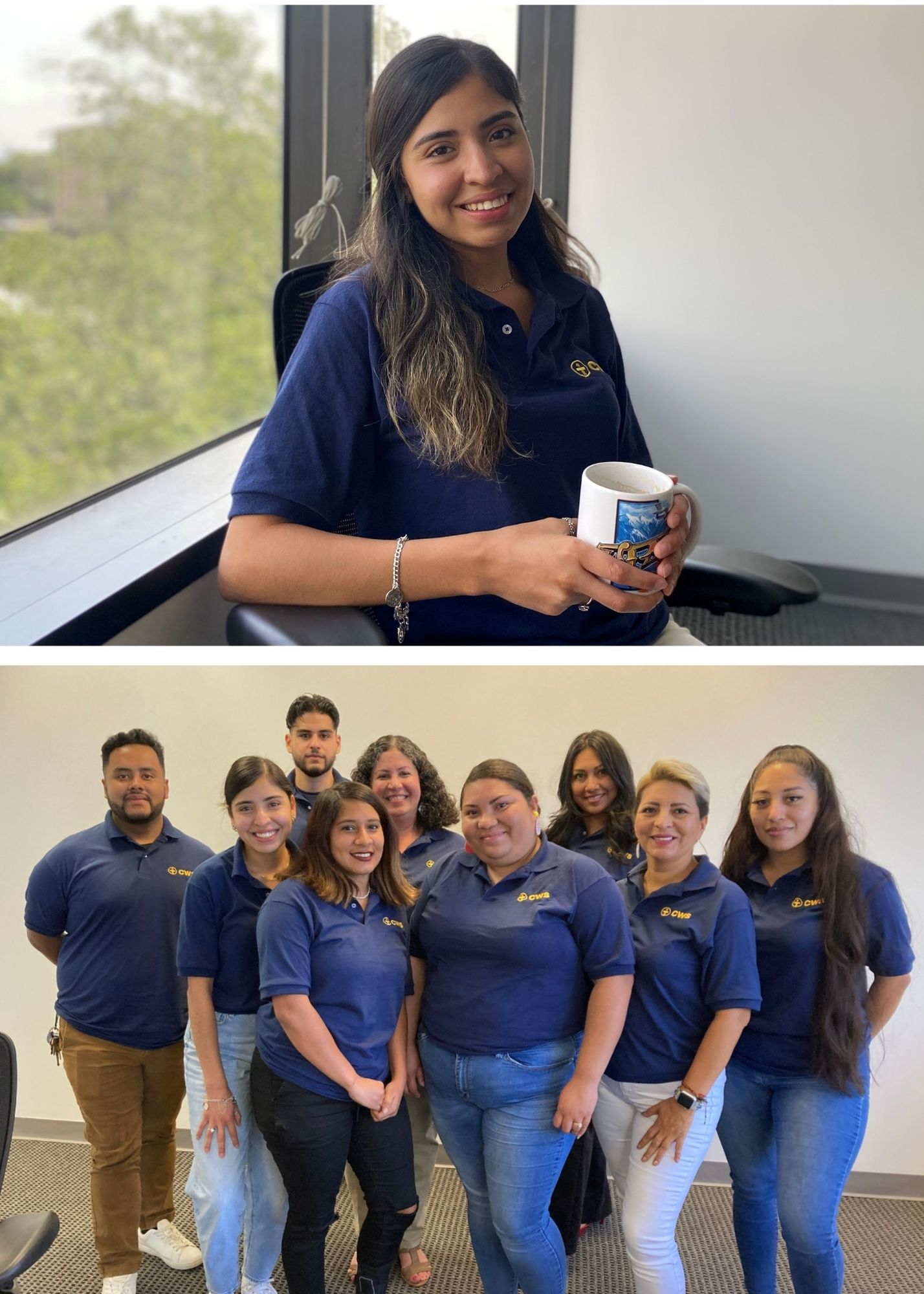
Top: Anahi sitting in CWS Houston office, Bottom: CWS Houston Home Study and Post Release Services team
“My Work Fulfills Me”
Every morning, Anahi Bravo likes to take some time to journal to set the tone for the day. Anahi, who is bright and full of positive energy, uses this time to prepare for the very important work she has ahead. Anahi is a Home Study and Post-Release Services Caseworker for Unaccompanied Children here at CWS in Houston, Texas. Along with hundreds of other staff, Anahi is part of CWS’ core. Her work and her passion are what drives the work that we do in the United States and worldwide.
When we spoke to Anahi, one thing that we could feel very distinctly was her passion and excitement for her work. As a first-generation Mexican American, Anahi explained that the work she does hits close to home. She shared, “I have always been interested in working with refugee/immigrant communities. I am the daughter of immigrants and have always seen the struggle and lack of support in this community. I knew I wanted to do something to help other families.” Anahi added that she feels “humbled” by her work and shared, “my work reminds me that my parents and family members went through similar obstacles as my clients, and I want to help them overcome these obstacles. Everything that I accomplish is part of my parents’ accomplishments as well.”
Anahi described the environment at work as supportive, engaging and motivating. She told us she always looks forward to Wednesdays because that’s when she has her weekly team meetings. She elaborated, “that’s when I get to socialize with my team members and see them in the office. We check up on each other and usually ask ‘how is everybody doing? How’s everything going?’.” Outside of team meetings, Anahi told us that she feels very supported by her team and enjoys working with people who are also motivated and passionate about their work.
Our case workers at CWS are extremely important because, to our clients, they represent kindness, hope and compassion as they get accustomed to their new home. For this reason, we are thankful for staff like Anahi who have a genuine desire to care for our clients and give them the highest quality of support. Anahi, who works specifically with minors and children, told us, “the children are what motivate me. Knowing that they sacrificed so much to get here and have a better life, reminds me that I have a purpose. It reminds me that I am meant to be here to provide them with the help and guidance that they need. It honestly fulfills me.” Anahi shared that one of the clients who has inspired her the most is a young boy who has no family with him in Texas. She said, “it inspires me that this little boy has so many goals he wants to reach. And although he may feel lonely, he still maintains a positive attitude.”
Like the clients she serves, Anahi also has big goals and dreams for her own future. “My goal is to travel and help vulnerable communities. I would like to visit children in shelters at the border. It always surprises me what happens at the border and I would like to go there and experience it firsthand. I would also like to be in a role where I can continue to advocate for immigrants and refugees,” Anahi said.
Anahi’s goals are driven by the same things that drive her in her current role: passion, motivation and a love for others. She recognizes the value of her work and stated, “our work is extremely important because these families and children come to our country to start fresh. Many are not aware of the resources that are out there and how to obtain them. Put yourself in their shoes and imagine you and your family coming to the U.S. not knowing who or where to go. Imagine that and how you would struggle. This is your chance to help us help those who are going through this, by supporting us and this organization so that we can provide them with resources and assistance.”
To join Anahi and the rest of our staff who have dedicated themselves to helping our most vulnerable neighbors, donate here.
Stories of Change
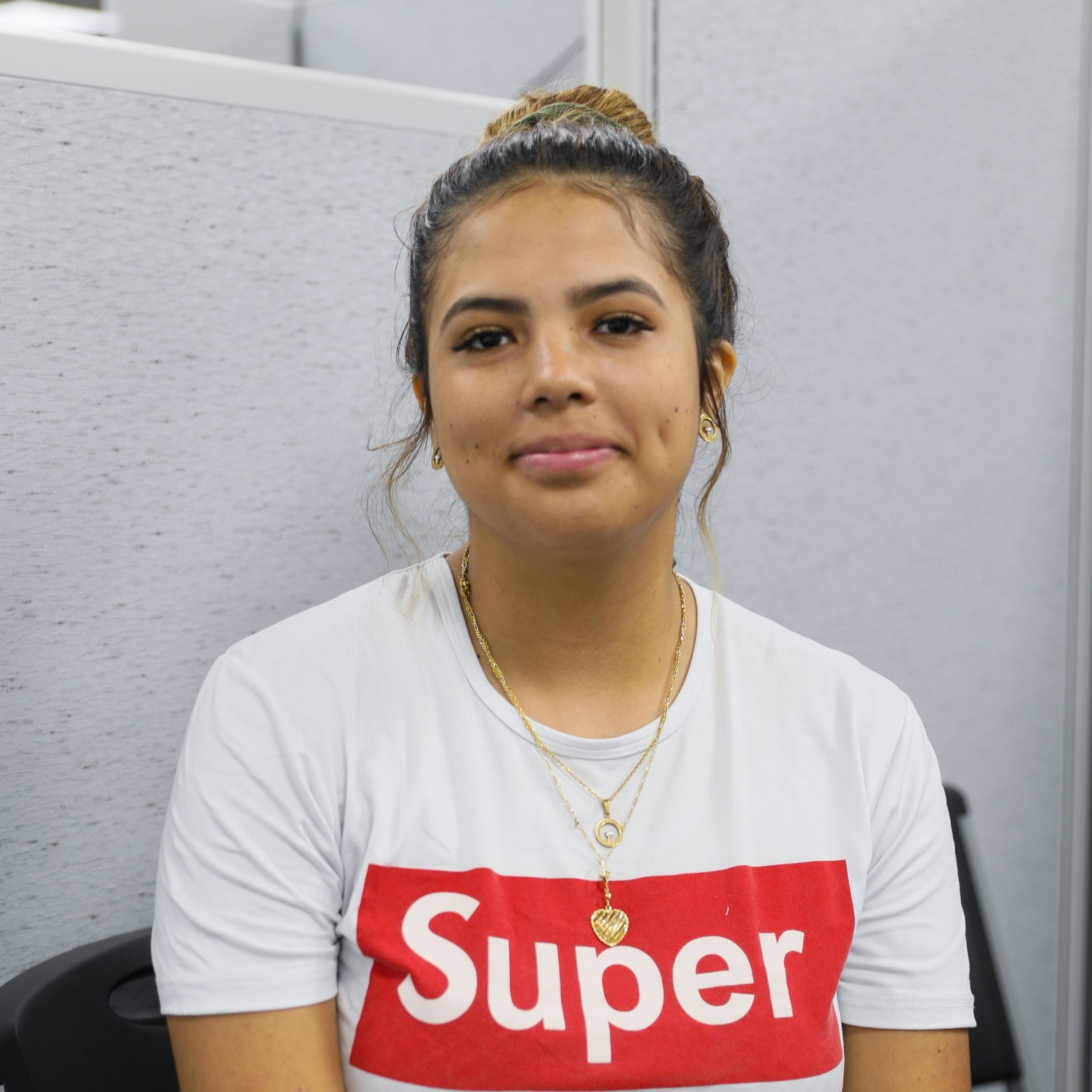
Ruth sits inside CWS office in Miami
Ruth’s Courageous Leap of Faith
Note before reading: This story includes references to pervasive sexual harassment
In many parts of the world, being a girl is a dangerous thing. Despite being minors, girls can experience constant sexual harassment that makes it impossible for them to live normal lives. Government corruption, gang violence and widespread poverty only worsen the situation for women in some countries. This was the case for Ruth, a 17-year-old who lived in the Honduran capital, Tegucigalpa.
“Life as a woman in Honduras is rough. You get harassed a lot. Wherever you go, you’ll experience a lot of harassment. You can’t even go out on the streets without getting catcalled by men,” Ruth told us. She explained that the harassment was so pervasive in Tegucigalpa that her mother wouldn’t even let her and her sister go out to get groceries. “You don’t feel safe,” she explained.
To make matters worse, Ruth’s family was being targeted by gang members that were trying to take over a house that her sister owned. The criminals would harass the family often and try to scare them into abandoning the home. Eventually, determined to give her daughters and grandchildren a better life, Ruth’s mother decided that they would leave Honduras.
Ruth, her mother, her sister and her sister’s young children all crossed into Guatemala and eventually into Mexico. The family resided in Juarez where, unfortunately, they still could not rest. “It was similar to Honduras, we were afraid to go out. I didn’t even like going out with my mom because I was afraid,” Ruth said. “I carried something heavy in my heart, trauma maybe, I don’t know.” Ruth’s past experiences in Honduras and the lack of safety in Juarez made her feel paralyzed. Regardless, she had no option left but to move forward.
After some time in Juarez, the family decided it was time to cross the border into the United States. In their first attempt to cross, only Ruth’s sister was allowed to pass since she had small children with her. Her sister made it to El Paso, where she began working and sending money to Ruth and her mother for food while they resided in Juarez.
Ruth and her mother eventually gathered their strength and decided it was time to try again. This time, however, when they got to the border, the guard told them only one of them could cross. For Ruth’s mother, the decision was clear. She told Ruth, “you go first. I’m afraid of the risks we are running here. If I have to go back to Honduras then I will go back, it doesn’t matter what happens to me.” Despite being a young girl who had never been separated from her mom, Ruth courageously took a leap of faith and crossed the border.
Ruth was received by some family members in Arizona, and her mother stayed in Mexico for another month before finally crossing the border and arriving in El Paso. This separation was difficult for Ruth who shared, “I had never been separated from [my mom], so I felt horrible.”
Finally, after seven months of being apart, Ruth and her mother reunited in Miami. Here, they were finally able to breathe. “When I arrived here I felt so much better, I felt so much peace,” said Ruth. While she was nervous at first, Ruth began to dip her toes into the water and accommodate herself to life in Miami. She explains that she started off with baby steps by going outside in the backyard of her home. Eventually, she felt safer, and when she went to school she “saw how different things were here, it wasn’t like Honduras I felt safe,” she remarked.
At school, Ruth was connected to CWS by a teacher and given a case manager. “Now, I have someone I can count on,” she said. “Whenever I talk with my case manager on the phone or Zoom, it really helps me because it gives me additional support and makes me feel better because I realize I’m only starting to settle since I’ve only been here a year.” Regardless of having arrived recently in Miami, Ruth is already beginning to imagine what her life can become here. She told us she dreams of becoming a lawyer and is currently studying to get her GED.
CWS is working hard to ensure Ruth can follow her dreams and that she never feels alone again. Ruth shared, “these programs really help because [people seeking asylums] come from a bad situation, a dangerous country. [They] come from discrimination, harassment and a bad life. When you arrive here and you find people and programs like this one, you feel better because you feel supported. I feel that I have more people here, other than my mom.” Through vocational training, social services support and one-on-one case management, CWS is helping Ruth make Miami a place she feels safe and can call home.
Stories of Change
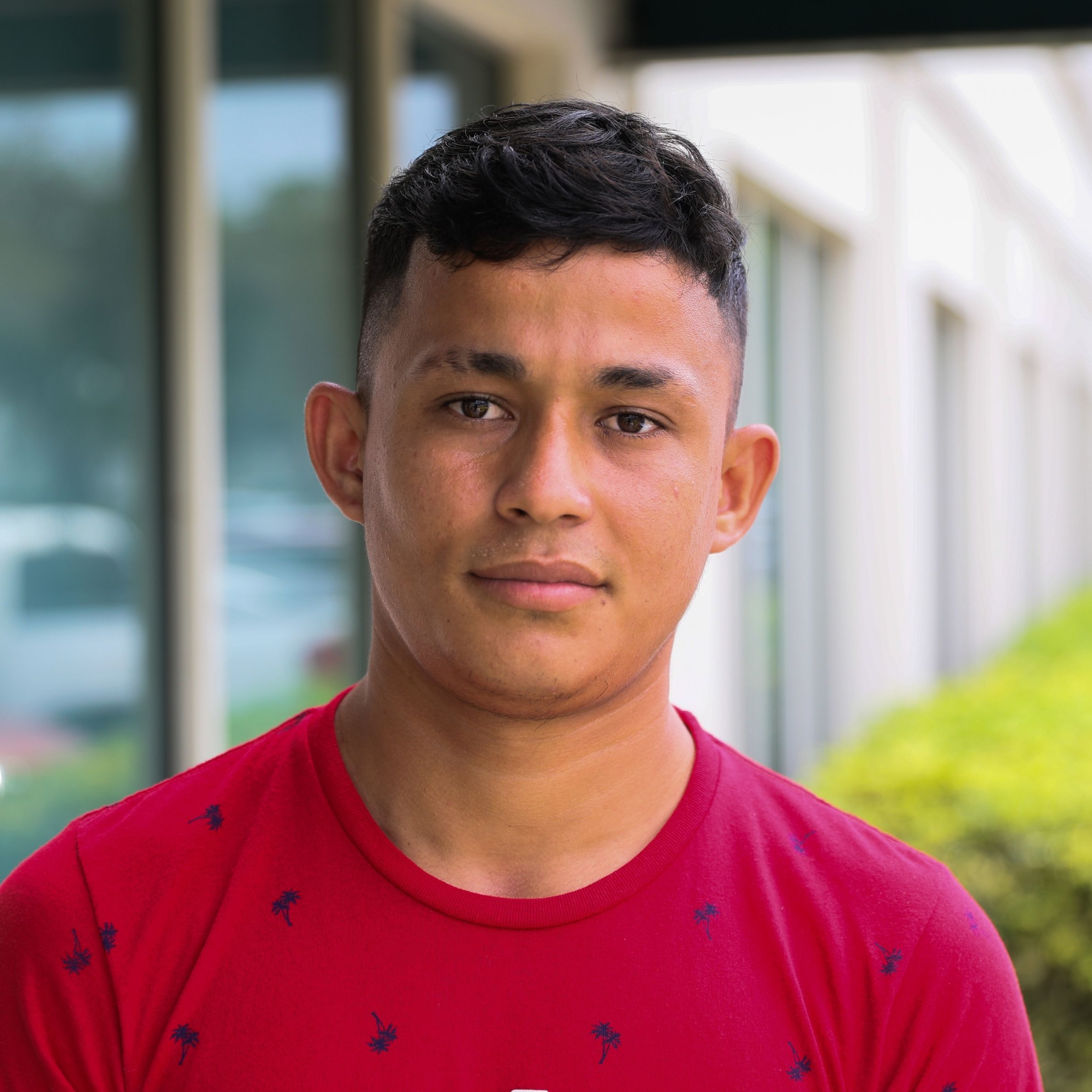
Selvin stands in front of CWS Office in Miami
Selvin’s Journey to a Safer Home
Note before reading: This story includes graphic gun violence.
In the rural area of Honduras, Selvin lived a relatively normal life. He went to school and began working when he was 8 years old in the countryside to help support his mom. Selvin did not complain, however. In fact, he enjoyed working. He shared, “I liked it a lot. What I really liked was milking cows. That’s what I liked most.”
When he was older, Selvin began helping out his mom by dropping his little brother off at school in the mornings before work. One morning he drove out on his motorcycle and took the path he always did, unaware that everything was about to change. After dropping off his little brother, he drove back under a bridge where two men suddenly jumped out and pulled him off his motorcycle. Selvin recounts, “they said ‘give me your money and phone’. Then, I don’t know what happened, maybe the guy’s finger slipped but he pulled the trigger. It was so loud I couldn’t hear. A whole section of my hand was shot off.” Alarmed by what he had done, the man gave Selvin his phone and money back and told him to call his mom. Selvin was in shock. He told us, “I never expected something like this to happen.”
Unfortunately, situations like this one were not uncommon in the town where Selvin lived. “Over there, you can be harmed for no real reason,” Selvin told us. Following the accident, he was in the hospital for over a month. After he left, it took him another five months to fully recover.
Selvin had always dreamed of going to the United States where life was safer. He had never met his dad, who lived in Miami, and he imagined going to live with him and creating a better life.
At age 17, he decided he would leave Honduras and head to the United States. “It was hard, yes, the journey here is pretty intense. You feel moments of terror, there are lots of difficult moments,” he said. After a long and dangerous journey, he made it to the border and stayed at the ORR Custody Center for 12 days. He explained it was a strange feeling for him to be at the center since he was not allowed to make any calls to his mom, dad or siblings. He also said, “It’s pretty rough being there. You don’t sleep because there are too many people and the beds are all side by side. It’s hard to sleep because people make a lot of noise.”
After being released from the center, Selvin was able to finally meet his dad in Miami. He enrolled in the CWS Programs and got assistance with his medical appointments, enrolled in English classes and started working towards getting his GED. “It feels a lot better here because here I have more hope,” he says. “I’m going to school. I want to have a career as a mechanic.”
In Miami, Selvin feels safer and is able to live his life without the dangers he experienced in Honduras. Many other young people leave their countries unaccompanied, due to dangers similar to the ones Selvin described. CWS is happy to welcome these young men and women and help them create a safer life where they can grow and thrive.
Stories of Change
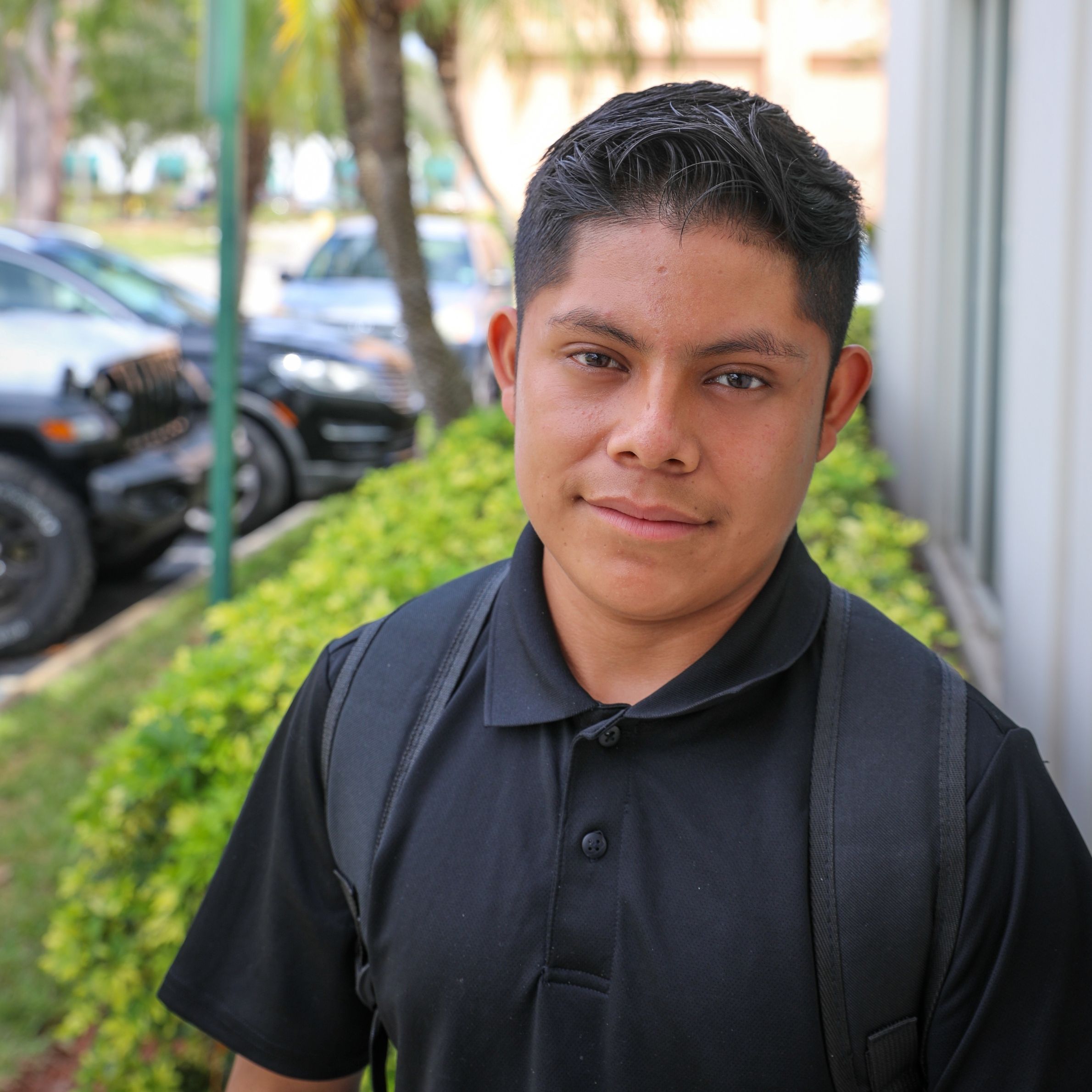
Pedro stands in front of CWS office in Miami
From Surviving to Living: Pedro Creates a New Life
In Guatemala, many indigenous people live in rural areas and experience various difficulties including lack of education and poverty. Since he was a child, Pedro experienced these difficulties firsthand. When he was just 12 years old, Pedro’s parents, who were unwell, abandoned him. “They left me at our home alone, so I started to work. Sometimes I found work and sometimes I didn’t. Some days I had one meal. Other days I had none. Sometimes there was work, but other times there wasn’t because there wasn’t much there.”
Life in Guatemala became about survival for Pedro. “I was just 16, just a kid. I wanted a better future and was really struggling to support myself.” Eventually, he decided he needed to leave, so he called his sister and asked her to bring him to live with her in Miami. Pedro crossed into Mexico and eventually into the United States, where he was held at the ORR Custody Center for about two months. Pedro had no complaints about his stay at the center since he was eager and focused on arriving in Miami.
When he was released, Pedro fearlessly boarded his first-ever plane and headed to Miami to reunite his sister and start a new life. When he arrived, things changed entirely for Pedro. In Guatemala, Pedro was all alone and only finished fourth grade. Here, he gets to go to school, make new friends and spend time with his sister. “I am happy here because I am with my sister. I feel happy with her, I get to go to school. I feel happy being here,” Pedro shared.
In addition to his sister and friends at school, Pedro has a case manager from CWS who is helping him establish a life in Miami and set goals. Pedro, whose native language is Ixil, also feels supported and comforted by the CWS staff. “When I arrived here, I didn’t know a lot of Spanish. I understood it but I struggled to speak it. People here [at CWS] helped me with that,” he said. He also shared that CWS has provided him with food and clothing donations and medical support.
In his new home, Pedro is excited about the many new opportunities ahead of him. He told us, “I want to move forward and keep studying so that I can have a career and move forward in life.” Pedro, who has a gentle and cheerful manner, shared that he hopes to become a nurse one day. For Pedro, life in Miami means that instead of focusing on surviving, he can start living life as a happy young man with dreams and aspirations. CWS is grateful to be part of Pedro’s journey and aims to provide him support and reassurance that he is not alone.