Stories of Change


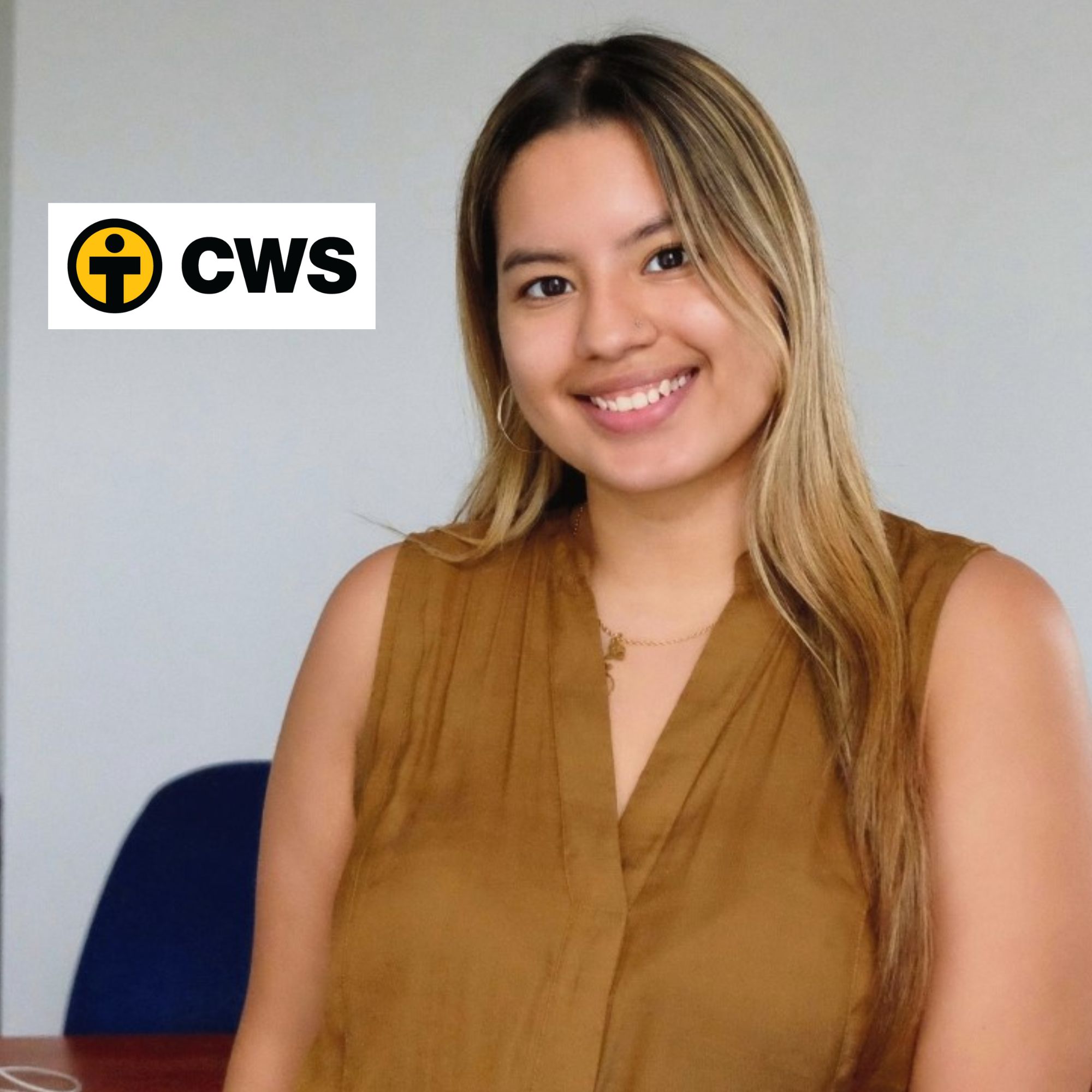
Andrea Flores at the CWS Houston office

“We Are the Light”: How Caseworker Andrea Flores Has Become a Light to Unaccompanied Children

This staff spotlight story features Andrea Flores, a caseworker in our Houston office for our Home Study and Post Release Services program. Andrea talks about her responsibilities in her role as well as her personal connection and passion for her work. 

The gentle warmth of CWS HSPRS Caseworker, Andrea Flores, is often the first sign of welcome a recently arrived child experiences. This warmth extends beyond Andrea’s sweet personality and into Andrea’s passion and motivation for her work with unaccompanied children. “I would like to be part of their new journey by providing comfort and support so they can remember that there are people who care about them no matter what,” Andrea shared. 

From Honduras to the United States: Andrea’s Journey to Helping Her Community

Originally from Honduras, Andrea was initially unsure about moving to the United States because she felt she could have a greater impact by serving her community in her own country. “I wanted to live in my country and work for my people, but my dad once told me, ‘If you want to help your people, it is not necessary to be in Honduras; you can be over there and help them.’ I ended up here in the United States helping my people, which is why I really value this job,” she stated. 

Connecting with Children Through Shared Culture

In her role, Andrea brings a unique perspective since she shares the same home country as many of the children she serves. She explained that because she knows the culture, she better understands why these children come to the United States and what type of information and support they need. “If these minors are from very poor communities, sometimes they only study until sixth grade. If they want to go to high school, they have to travel to another city which is a major cost with transportation and rent and is too much for these families. They are used to working. After sixth grade, everyone works in the poor communities so they’re used to it. That’s why here in the U.S. I have to remind them, ‘That’s not right, you need to go to school,’” Andrea told us, adding that many of these children also flee their country to escape gang violence. 

Becoming the “Light” for Unaccompanied Children 

Before arriving in the United States five years ago, Andrea didn’t know about organizations like CWS that support these vulnerable children. Now, Andrea sees these organizations as a crucial source for families and children to get access to the information they need to become successful members of their new communities. “We are the light, in a way,” she said. 

Since she began working at CWS, Andrea has been able to see many of her clients progress in their new homes. Some of her favorite moments have been when she receives videos from her clients of teachers giving them awards for good performance in school. These videos give Andrea hope that they are on the right path to a safe and fulfilling life in the United States.

When asked what message she would share with unaccompanied children seeking a new home in the United States, Andrea became emotional, saying, “Don’t worry. If you are here in the United States, there are people who really care about you.” Driven by her passion and desire to make an impact, Andrea is committed to making sure she is this person for the clients she serves every day. 

You can learn more about the CWS Houston office and how you can support our programs by clicking here.


Stories of Change


Disclaimer: for the safety and protection of the children in this story, a stock image has been used

A Family’s Courageous Journey

If your home was on fire and staying meant you would likely die, what would you do? If your children were there with you, would you keep them inside, or push them to leave? This hypothetical scenario is the reality for many families who have had to flee their country. It is also the reality for children like Isabella and Samantha whose parents, hoping to save them, sent them out of their home on their own. 

Isabella and Samantha were just 15 and 8 years old when they had to leave Guatemala. The events that led to this decision were many years in the making. Isabella and Samantha’s father, Ricardo, is from Nicaragua, but he had to flee when he was just 17 because of threats from gangs. In Guatemala, he met Lupita, and the couple gave birth to three children: Raul, Isabella and Samantha. Unfortunately, 16 years later, history repeated itself when Raul became a teenage boy and the gangs gave him only two options: join or be killed. Seeking a third option, the family decided that Raul would flee to the United States with his dad, where they would seek asylum. 

For two years, Lupita and her two daughters remained in Guatemala, hopeful that the rest of the family could return when it was safe to do so. This home that they loved so much and that Lupita remarked as “a beautiful land,” however, only became more and more dangerous for the family. Isabella began to experience threats from adults who threatened to kill her. The threats quickly became very real when one of the adults broke into the school to try harming Isabella, and the next day, Isabella was nearly run over by a car, driven by these adults. As Ricardo explained, “In Guatemala, they’re not just threats, they go through with it,” adding that these same people had taken the lives of others before. 

“I knew that if we stayed, it would have been a matter of life and death,” said Lupita. Since the family had not originally planned to leave their home, they only had enough money to send two people to safety. Without thinking twice, Lupita and Ricardo agreed to send their daughters. 

The family knew the risks that existed on the journey to the United States, but the danger at home was far greater and Isabella couldn’t even go to school anymore. The young girls traveled in a group of other children who were also trying to reach the border and spent each harrowing day walking or on a packed bus. Their journey took a turn when Isabella got gravely ill and had to rely on the other strangers in her group to get her help. “Isabella says that thank God she’s alive because with how sick she got, she felt like she was dying,” explained Ricardo. 

Through her own strength and determination, Isabella got better and was able to continue forward until she and Samantha finally reached the border. Here, they were processed as unaccompanied children and were connected to their dad, who had been anxiously awaiting their arrival. “It was an unforgettable moment,” Ricardo told us, holding back tears as he recalled the moment he finally reunited with his daughters. “I had gone two years without seeing them. They were so big. I almost didn’t recognize Samantha because when I had left she was so small.” He added that the four of them spent the rest of the day as a family, sharing, “We did the many things I had dreamed of doing with them during the years we were apart.”

Shortly after, Lupita began her own journey to reunite with her husband and children, sharing that she often traveled 2-3 days with no access to food or a restroom and packed “like sardines.” She reflected, “The trip was a long process and is something I don’t wish on anyone,” and confessed that many times she wondered if they had done the right thing by sending Isabella and Samantha on the same journey. These doubts disappeared the moment she received news that her girls had made it. They were safe. 

In Pennsylvania, the family became whole again, feeling an overwhelming gratitude that they were all alive and well. When they found out they were eligible to receive services through CWS, they couldn’t believe it. “Believe me, I never believed I would receive so much support. I’m so thankful to God because, for us, you are all like angels who have given us a hand. I’ve always believed in God and I believe that God has placed people on earth who are angels to others. I pray that this organization is blessed,” said Lupita. 

In partnership with their case manager, the family of five has been able to get back on their feet and have been reminded that they are deserving of care. Lupita remembers when their case manager helped enroll them at a low-cost health clinic she told her case manager, “I don’t exist here,” reminding her that she still didn’t have proper documentation. Her case manager assured her that this didn’t matter and that the whole family had the right to health care. Lupita thought her case manager had made a mistake until she saw her name listed along with the rest of her family members and she said, “Thank you! I never imagined that I would have human rights here.”

The family’s case manager has also supported the family by helping to enroll the girls in school, something that Lupita is extra excited about, sharing that she didn’t have the chance to go to school as a child because she grew up as a street child and orphan. She added that she didn’t learn to read or write until she was 14 years old and stated, “My greatest dream is that my children become great people and accomplish what I couldn’t.” Isabella, determined to provide safety in a way that she was unable to receive back home, has decided that she wants to become a police officer. Similarly, Samantha wants to become a doctor so that she can take care of people. 

In their new life, the family enjoys fishing together and feels grateful that they no longer have to worry about not having enough food or experiencing dangers like the ones they faced in Guatemala. Ricardo and Lupita, despite having little, gave everything they had to do what any parent would do for their child in their situation. From the ashes, they are rebuilding a life that is not just safe, but full of hope and overwhelming love for one another. 

*Note: pseudonyms have been used to protect the identity of the individuals in this story

To learn more about our Children Services program, click here


Stories of Change


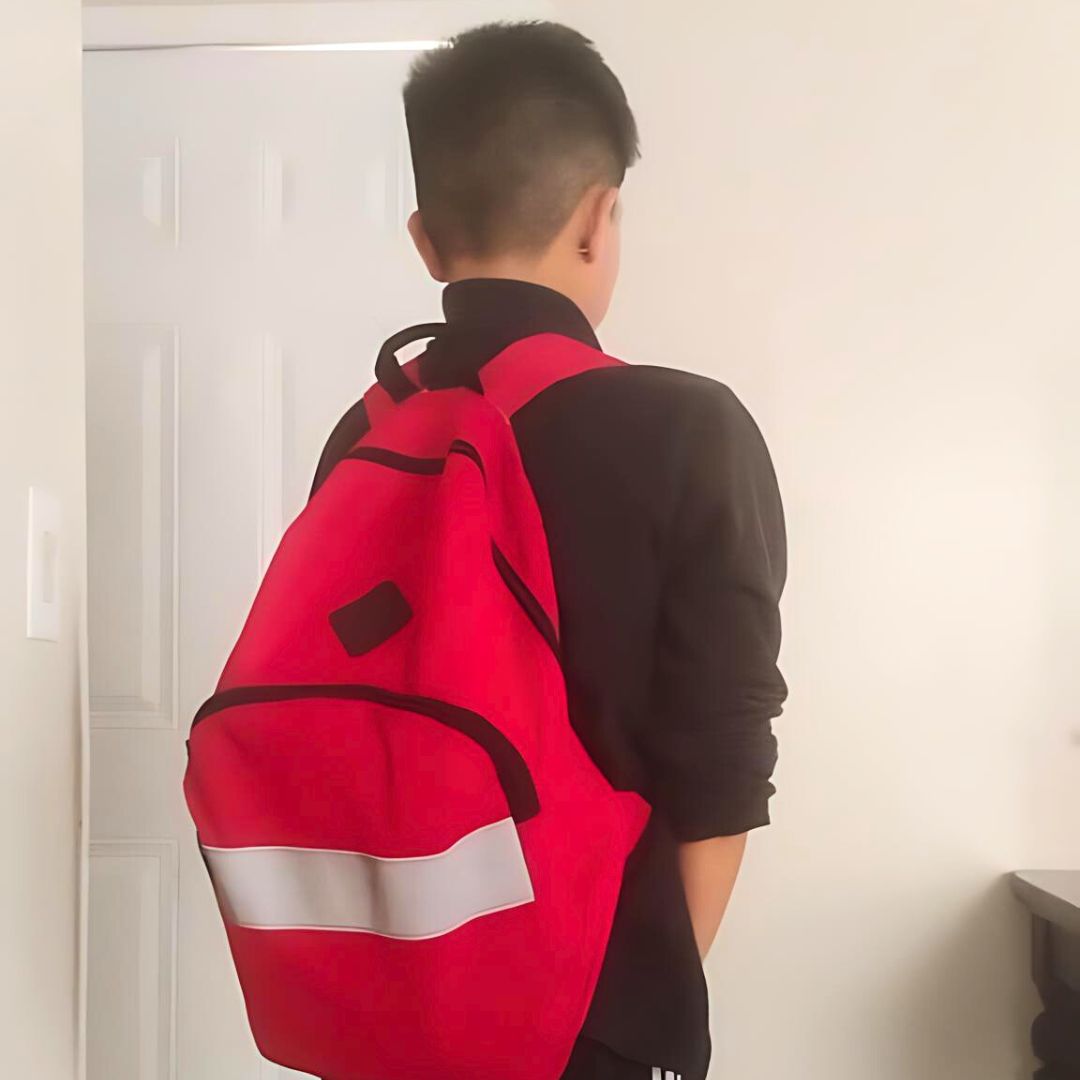
Mateo with his new backpack

“I left it all in the hands of God”

For as long as he can remember, 12-year-old Mateo’s family has been the grounding force in his life, always guiding him and providing unconditional love. In his home in Mexico, he was used to a full house, surrounded by his seven cousins, four younger siblings, mom, aunt, and uncle, which was especially important to him because his father has been in prison since Mateo was a baby. Never did Mateo expect that this family he loved with all his heart would be taken from him in a matter of minutes. 

The family’s life as they knew it began to change when Mateo’s uncle left for the United States to seek better opportunities to provide for his family. “I lasted almost two years without seeing my husband,” explains Elena, Mateo’s aunt. Elena and Mateo’s mom managed for these two years, but eventually, the distance was too difficult for Elena and her seven children, and she made the decision to reunite with her husband.

When Elena began to plan her journey to the United States, she and Mateo’s mother agreed it was an opportunity for Mateo to have a better life, away from their impoverished community that was sometimes stricken by violence. 

Despite his apparent maturity, Mateo was just a little boy, and leaving his mom behind was heartbreaking for both him and her. Thankfully, the plan was that his mom and siblings would join the rest of the family just a few months later, which meant that Mateo would only be separated from her for a short time. Elena began her journey with all eight children, including Mateo, who she considered one of her own children. “He is also my son,” she told us. “I treat them exactly the same.” 

The family’s travel consisted of long bus rides and stays at safe houses until they finally reached the border. As simple as it might sound, these days were no easy feat for Elena, who was solely responsible for the eight children ranging from ages 3 to 14. She recalls that many of those traveling with her were also women with children. When they arrived at the border, they were taken in by immigration officials, who took them to a detention center.

The detention center felt unbearable for Elena’s children, who were exhausted from many days of travel and cried out that they were tired and hungry and had to wait for many hours sharing only two aluminum blankets. After a few days, the family was released to another center in Arizona, where immigration officials processed their documents. It was here that Elena learned that without the proper documentation to confirm that Mateo was indeed related to her, he would have to go through the process of entering the United States as an unaccompanied child, a process that exists to ensure children who enter without legal guardians are protected from situations like trafficking or kidnappings. Elena was shocked but trusted that all would end up well and said, “I left it all in the hands of God.” 

At that moment, the foundation that had supported Mateo his entire life was pulled from under him, leaving him alone in a foreign country where he would have to rely on the kindness of strangers. The process of having Mateo reunited with his family took ‌two months. During this time, Elena and her children also struggled, experiencing homelessness for a week until they were able to reach the Texas city where her husband awaited them. She remembers phone calls with Mateo, in which he would ask, “When will you come to get me out of here?” and dreamed of the meals he would enjoy as soon as he left specifically some delicious Kentucky Fried Chicken.

Finally, Mateo was released to the family and his official sponsor, his uncle, who welcomed him into their new home with overwhelming joy. “I can be loud here!” Mateo exclaimed in his new home, where he excitedly played with his cousins and looked forward to watching his favorite shows on the TV. “He also got his favorite food!” said Elena with laughter. 

Although he remains separated from his mother and siblings, Mateo is still hopeful he will one day reunite with them and, for now, is happy to be with his family again and is focusing on learning English and going to school. Through the support of CWS’ Children’s Services program, the family has an assigned case manager who is helping them create the safest and friendliest home possible for Mateo. Their case manager has worked diligently to provide them with various donations, including clothing, food, furniture, backpacks, school supplies, educational books, car seats and other necessities. Beyond this tangible support, Elena and her husband have become a team with their case manager, who checks on the family frequently, ensuring that they have access to the right resources and are on a path to success. 

So far, Mateo is enjoying school and when we asked Elena if he’d made any new friends, she replied, “Oh boy, has he!” noting that he has all types of friends and is learning English quickly. She added gleefully, “He’s still a kid, but he feels like a man.” In his new home, Mateo can trust that he can go to school, feel safe, pursue his dreams, and be who he has always been: a kid. 

*Note: pseudonyms have been used to protect the identity of the individuals in this story

To learn more about our Children Services program, click here


Stories of Change


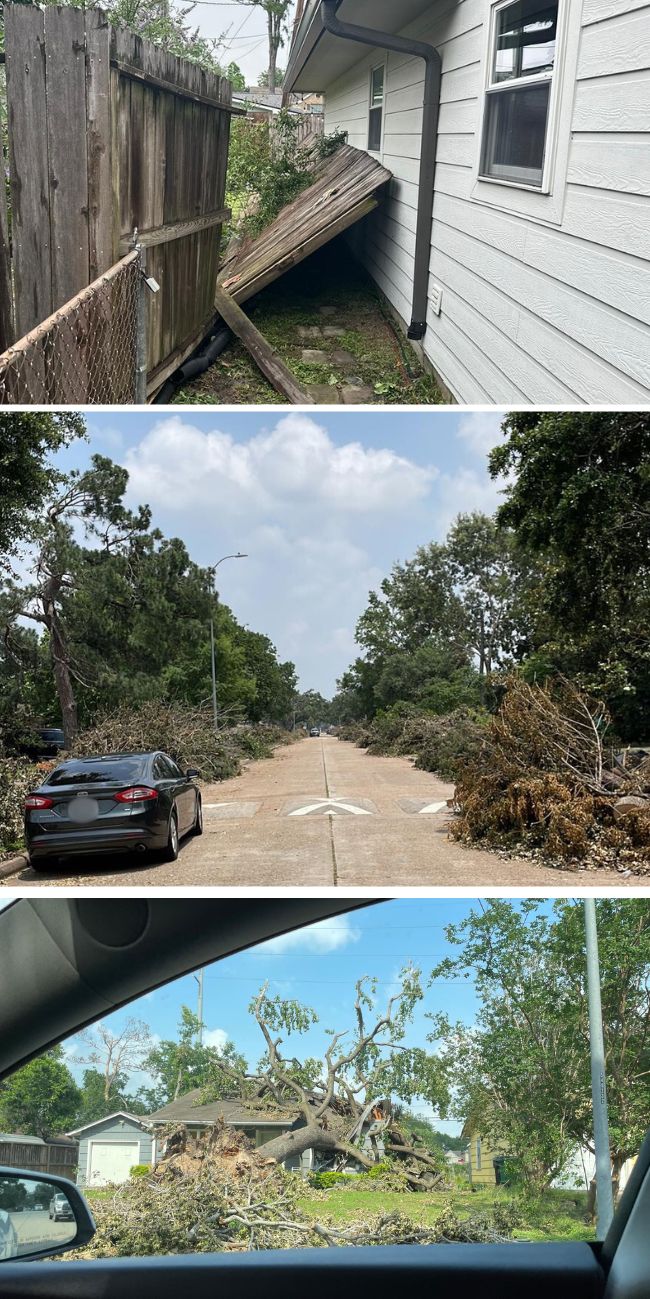
Aftermath of Houston following tornado (client's home is not shown in photos)

Finding Home in a Tornado

Anytime a child decides to leave their home and make the often treacherous journey to begin a safer life in the United States, they showcase bravery far beyond their age. What many of us don’t realize, however, is that their courage does not end there. We were reminded of this when we met Ana and Marta who recently braved something they never thought they would face: a tornado.

Six months ago, Ana, who is 16 years old, decided to leave her home in Guatemala to be reunited with her cousin and sponsor Marta in Texas. She dreamt of a place with greater opportunities where she could go to school and build a stable and happy life for herself. The journey to the U.S. was not easy as Ana had to cross Mexico by bus and by foot relying on herself alone to make it to the U.S. The challenges, however, were worth it. Ana arrived in Texas where she now lives with Marta, Marta’s husband and their baby. She is starting school this fall, which is an exciting next step in her new life.

This past May, Ana was at home while Marta went to pick up her husband from work; a routine that was usual for the family. This seemingly normal day soon took a turn when Marta received an alert on her phone telling her that there was a tornado nearby and to seek shelter immediately. This type of disaster was new to the family and they were unsure of what to do but did as they were advised and pulled over at a friend’s house. Marta then called Ana, who had begun to notice the loud winds and rain, and told her to hide in the bedroom until they returned.

When the storm passed, Marta and her husband hurried home to find an entirely different scene than the one she had left earlier. “Everything was flooded and we couldn’t get inside,” Marta recalled. “There were fallen cables everywhere and lots of trees had fallen.” As soon as they got inside, they found Ana, who, although scared by the whole experience, was safe.

The family’s house had thankfully suffered minimal damage but the dangers from the storm had only just begun. Like many others, the family completely lost power, which created new difficulties. “We had no air conditioning, and the temperatures didn’t drop at all after the rain so our house got very hot and we each started to get sick,” Marta explained. She added that her baby would sweat throughout the night and, on average, they were getting three hours of sleep which made them very concerned for their health and safety. To find some relief, the family resorted to sleeping in their car until they received some positive news from their CWS Case Manager, Andreina, who provides Post Release Services to children like Ana who came to the U.S. unaccompanied and recently reunited with a family member.

As soon as Andreina heard about the struggles the family was experiencing, she took action and reached out to her colleagues in the Housing Team and Emergency Preparedness, Response and Recovery Team who, thanks to a generous grant provided by Airbnb.org, were able to get a hotel room for the family. The change from their hot home and car to the fresh and clean hotel was drastic. “We were so happy. My baby even started to play when we got there but we were so tired that as soon as the sun went down, we all went to sleep since we had gone many nights already without sleeping.”

The family stayed at the hotel for about four days and returned to their home as soon as the power returned. “Honestly, thank you so much,” Marta said. “There were so many people who died because of the heat and because they stayed in their cars, and while it took some time for us adults to get better, my baby is now better so it was a great help.”

In every experience they have faced, Marta and Ana have shown that they are strong and resilient. Together and with the support of their community, they can overcome anything that comes their way.

CWS is thankful for the generosity of Airbnb.org whose support has allowed hundreds of our newest neighbors to receive temporary housing as they establish their new and permanent homes. Click the following links to learn more about our work in housing, disaster response and unaccompanied children. You can also support CWS’s response to domestic emergencies like the one faced by Ana and Marta by donating to our Emergency Response Fund.

*Note: pseudonyms and stock images have been used to protect the identity of the individuals in this story


My First Capitol Hill Experience


Sebastian Vidal | November 15, 2023

As a child, I had been to Washington, D.C. many times, always seeing the Capitol building from afar and never up close. I remember staring at it in all its grandeur and imagining all the powerful decision-making taking place behind closed doors. I never imagined I would step foot inside the building several years later. That all changed the morning …

Stories of Change
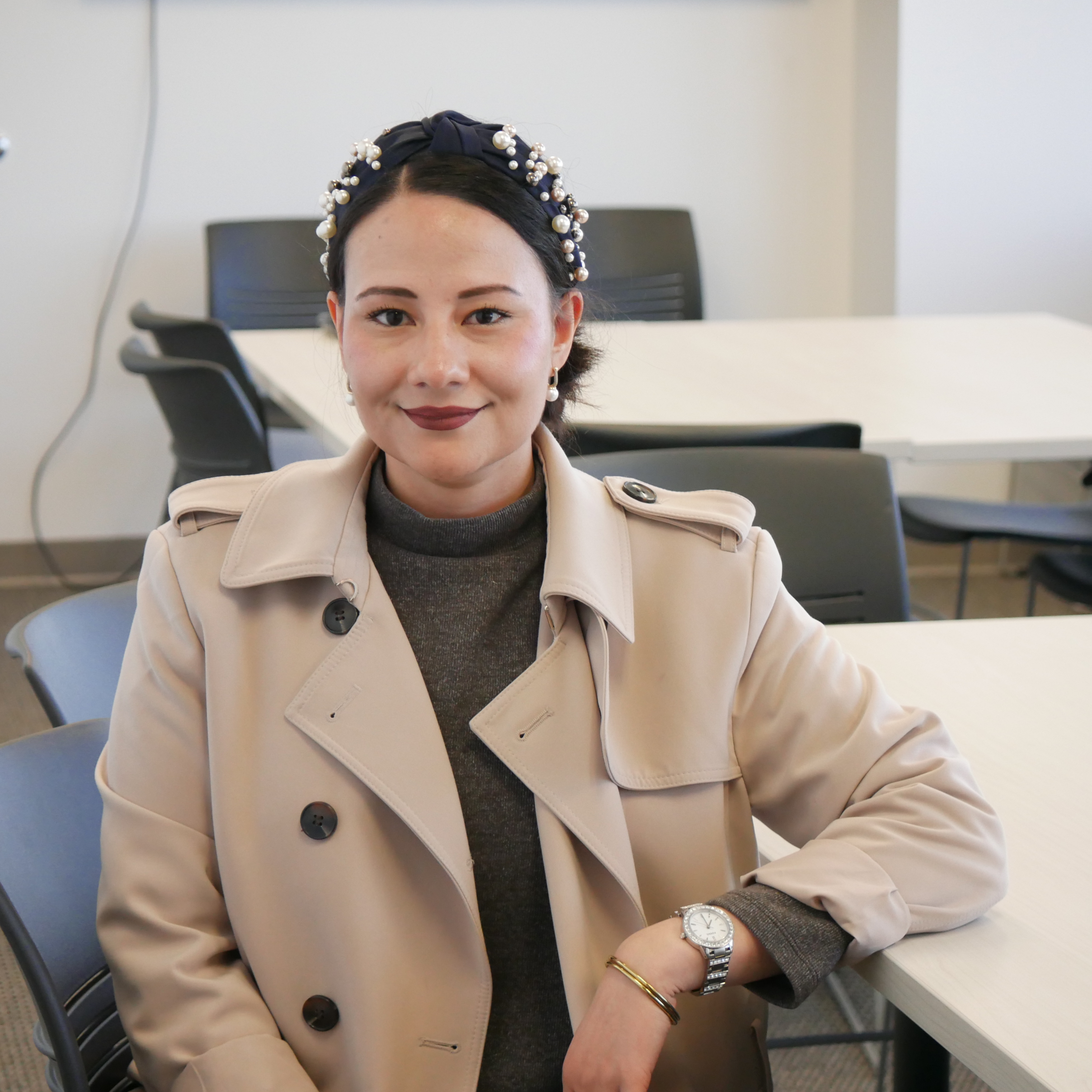

Dayana at the CWS Jersey City office

Helping Migrants Through Human Connection

Dayana Cobo is a passionate staff member of the CWS New York team. Her passion and drive have led her to become a caseworker with Church World Service, supporting unaccompanied minors. What initially drew Dayana to CWS was our broad mission. As she explains, “I really love CWS’ mission and the fact that they were focused on helping immigrants and refugees.” She was inspired to see CWS serve diverse groups displaced by global crises, including those from Ukraine, Haiti, Central America and Uzbekistan.

In her role as a caseworker, Dayana works to forge human connections with clients before diving into services. Each initial video visit begins with a personal touch, as Dayana takes the time to get to know her clients on a personal level. She engages in conversations about their journey, their concerns and their excitement about the new chapter they are embarking on. Dayana emphasizes, “Our role extends beyond merely providing assistance; it’s about creating a safe space and ensuring our clients’ mental well-being is as important as their physical needs.” This deliberate approach to building rapport lays the foundation for trust.

An early case that stood out came just months into the job when Dayana supported a migrant family from rural South Carolina who spoke Uzbek. This rare language presented immense communication barriers. Through persistence and creativity, leveraging Russian interpretation services and Google Translate, Dayana secured an Uzbek-speaking lawyer, adult education classes in Russian and health insurance. As she recalls, “Not only did I utilize Google Translate and other interpreter services and hotlines we have, but I also had the added challenge of overcoming language barriers while searching for resources in a rural area. Despite this additional difficulty, I successfully managed to find everything they needed.” Overcoming linguistic and geographic obstacles highlighted the magic in this work for her.

Dayana has learned a gentle approach is essential for earning clients’ trust. When sponsors are initially resistant, she proposes just checking in weekly. As she explains, “eventually they actually end up opening up” through this dance of providing support while respecting hesitancy. The biggest lesson for Dayana has been recognizing, “if they don’t want it, they will also show you.”

Having gotten her start in psychology, Dayana sees the interplay between mental and physical health. She educates clients that just as they prioritize yearly checkups, they should do the same for their mental well-being. However, most are resistant to opening up about these needs while focused on immediate survival. As Dayana notes, “That’s a very touchy and sensitive topic, especially with our clients.” Pushing too hard could mean losing them altogether. Dayana thus focuses on listening, validating and gently connecting them with resources.

Though Dayana admits this work can be emotionally taxing, you would never know it from her constantly uplifted spirit. Her clients’ appreciation validates she is living her calling. She remains committed to compassionately walking with each family on their path forward.

Dayana is guided by a Hilary Duff quote, “Never let the fear of striking out keep you from playing the game.” As a first-generation college graduate pursuing her purpose, this motto resonates deeply with her. She has learned progress requires perseverance. By boldly trying new directions, Dayana found her passion—helping migrants through human connection. She continues listening, uplifting and lighting the way for those needing support.

You can learn more about the work done by the HSPRS team by clicking here


CWS Begins New Chapter in Refugee Resettlement in Texas, Honoring Current and Future Clients in the Lone Star State


May 17, 2023

For Immediate Release: May 17, 2023 Contact: media@cwsglobal.org CWS Begins New Chapter in Refugee Resettlement in Texas, Honoring Current and Future Clients in the Lone Star State New York City.—Church World Service today announced that the organization will be ending its partnership with Refugee Services of Texas for U.S. government fiscal year 2024, including administering federal reception and placement services …

Emergency Appeal: Protecting Migrant Children


March 3, 2023

Appeal code: 6306 Situation On February 25, 2023, The New York Times published an exposé style report detailing the exploitation and abuse of migrant children across the United States. The report found that hundreds of immigrant children–many of whom are unaccompanied–are working in unsafe and unlawful conditions in at least 20 states across the United States. Over a dozen major …

Take Action: Tell President Biden and Congress to Welcome and Protect Unaccompanied Children


September 14, 2022

Now is the time for visionary action to restore and strengthen  policies that protect and welcome vulnerable unaccompanied children fleeing persecution, trafficking, abuse and violence. In 2020 and 2021 more than 100,000 unaccompanied children have sought refuge in the United States. It is imperative that our elected leaders both help ensure unaccompanied children are extended the care and protection they …

Stories of Change


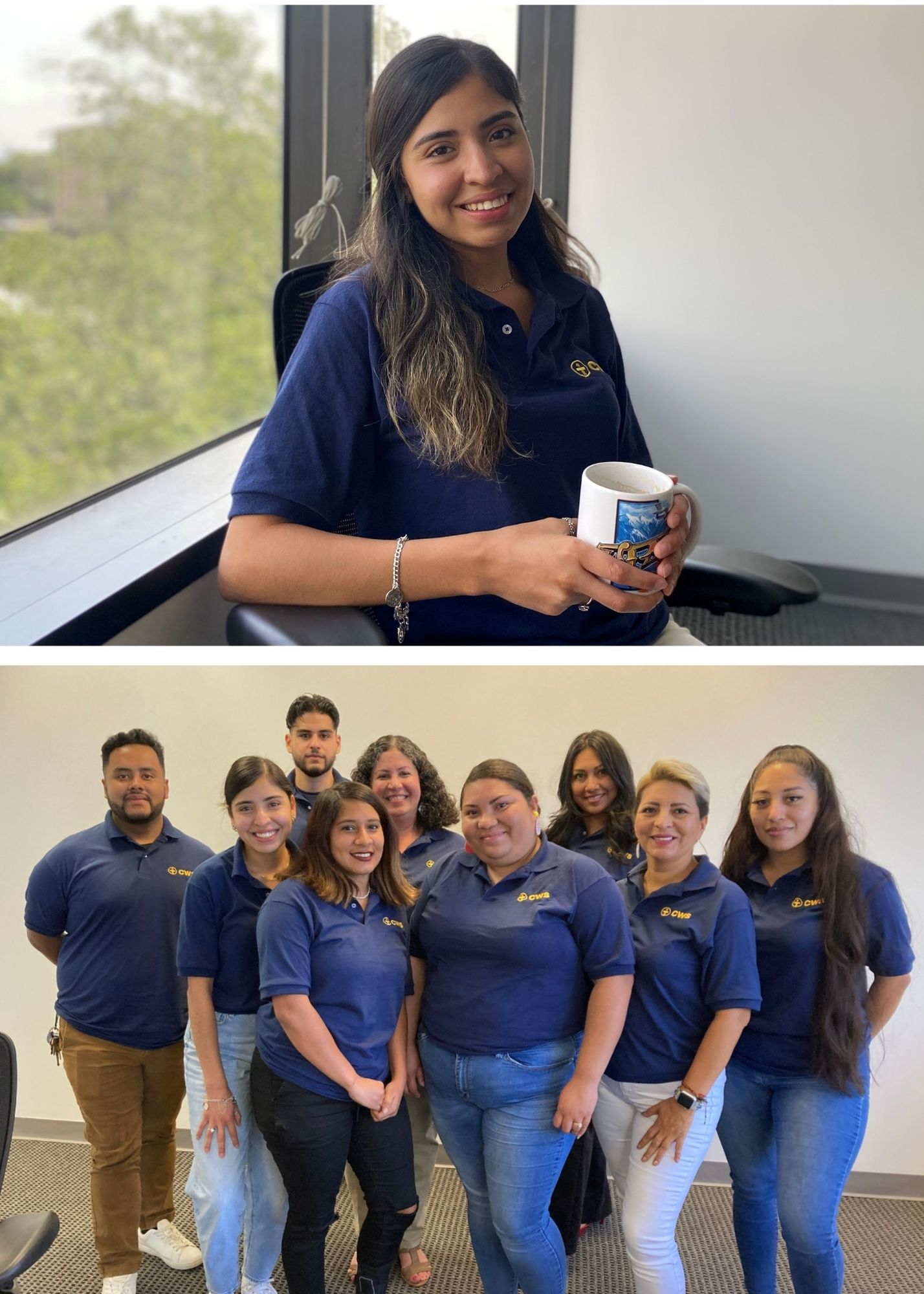
Top: Anahi sitting in CWS Houston office, Bottom: CWS Houston Home Study and Post Release Services team

“My Work Fulfills Me”

Every morning, Anahi Bravo likes to take some time to journal to set the tone for the day. Anahi, who is bright and full of positive energy, uses this time to prepare for the very important work she has ahead. Anahi is a Home Study and Post-Release Services Caseworker for Unaccompanied Children here at CWS in Houston, Texas. Along with hundreds of other staff, Anahi is part of CWS’ core. Her work and her passion are what drives the work that we do in the United States and worldwide.

When we spoke to Anahi, one thing that we could feel very distinctly was her passion and excitement for her work. As a first-generation Mexican American, Anahi explained that the work she does hits close to home. She shared, “I have always been interested in working with refugee/immigrant communities. I am the daughter of immigrants and have always seen the struggle and lack of support in this community. I knew I wanted to do something to help other families.” Anahi added that she feels “humbled” by her work and shared, “my work reminds me that my parents and family members went through similar obstacles as my clients, and I want to help them overcome these obstacles. Everything that I accomplish is part of my parents’ accomplishments as well.”

Anahi described the environment at work as supportive, engaging and motivating. She told us she always looks forward to Wednesdays because that’s when she has her weekly team meetings. She elaborated, “that’s when I get to socialize with my team members and see them in the office. We check up on each other and usually ask ‘how is everybody doing? How’s everything going?’.” Outside of team meetings, Anahi told us that she feels very supported by her team and enjoys working with people who are also motivated and passionate about their work.

Our case workers at CWS are extremely important because, to our clients, they represent kindness, hope and compassion as they get accustomed to their new home. For this reason, we are thankful for staff like Anahi who have a genuine desire to care for our clients and give them the highest quality of support. Anahi, who works specifically with minors and children, told us, “the children are what motivate me. Knowing that they sacrificed so much to get here and have a better life, reminds me that I have a purpose. It reminds me that I am meant to be here to provide them with the help and guidance that they need. It honestly fulfills me.” Anahi shared that one of the clients who has inspired her the most is a young boy who has no family with him in Texas. She said, “it inspires me that this little boy has so many goals he wants to reach. And although he may feel lonely, he still maintains a positive attitude.”

Like the clients she serves, Anahi also has big goals and dreams for her own future. “My goal is to travel and help vulnerable communities. I would like to visit children in shelters at the border. It always surprises me what happens at the border and I would like to go there and experience it firsthand. I would also like to be in a role where I can continue to advocate for immigrants and refugees,” Anahi said.

Anahi’s goals are driven by the same things that drive her in her current role: passion, motivation and a love for others. She recognizes the value of her work and stated, “our work is extremely important because these families and children come to our country to start fresh. Many are not aware of the resources that are out there and how to obtain them. Put yourself in their shoes and imagine you and your family coming to the U.S. not knowing who or where to go. Imagine that and how you would struggle. This is your chance to help us help those who are going through this, by supporting us and this organization so that we can provide them with resources and assistance.”

To join Anahi and the rest of our staff who have dedicated themselves to helping our most vulnerable neighbors, donate here.