In Indonesia, CWS Japan is building disaster-resilient communities along the Benanain River. Through the I-CREATE project, local leadership, technical expertise and climate adaptation strategies are helping communities prepare for and reduce the impact of disasters.
Facing Flood Risks in Malaka District
For communities along Indonesia’s Benanain River, flooding is not a one-time crisis. During the rainy season, floods are a daily reality, with rising water levels threatening access to safe drinking water, damaging homes and disrupting agricultural livelihoods that families depend on.
Recognizing the urgency of these challenges, CWS Japan launched the Enhancing Community Disaster Resilience through Strengthening Climate Change Adaptation Measures and Technical Support (I-CREATE) project in December 2024. The initiative focuses on strengthening early warning systems, improving flood mitigation infrastructure and supporting community-led solutions that can be sustained long after the project ends.
Over the past year, 13 villages in Malaka District have participated in hands-on disaster risk reduction workshops. Community members are identifying hazards in their own environments, mapping vulnerable areas and developing practical strategies to reduce risk before disaster strikes.
At the same time, CWS Japan is working alongside disaster prevention experts to conduct regular field assessments, studying river conditions, irrigation systems, topography and past flood damage. These insights ensure interventions are grounded in data, local knowledge and observed patterns, which are especially important for an area like Malaka District, which faces overlapping risks.
In addition to river flooding, coastal hazards such as tsunamis and inland water overflow can compound disaster impacts for local communities. Understanding how these risks interact is critical, particularly in densely populated areas and locations like schools.
Photos from the Field: Learning Alongside Communities
In August 2025, the CWS Japan team traveled to Malaka District to conduct in-sight research, working alongside local residents.
-
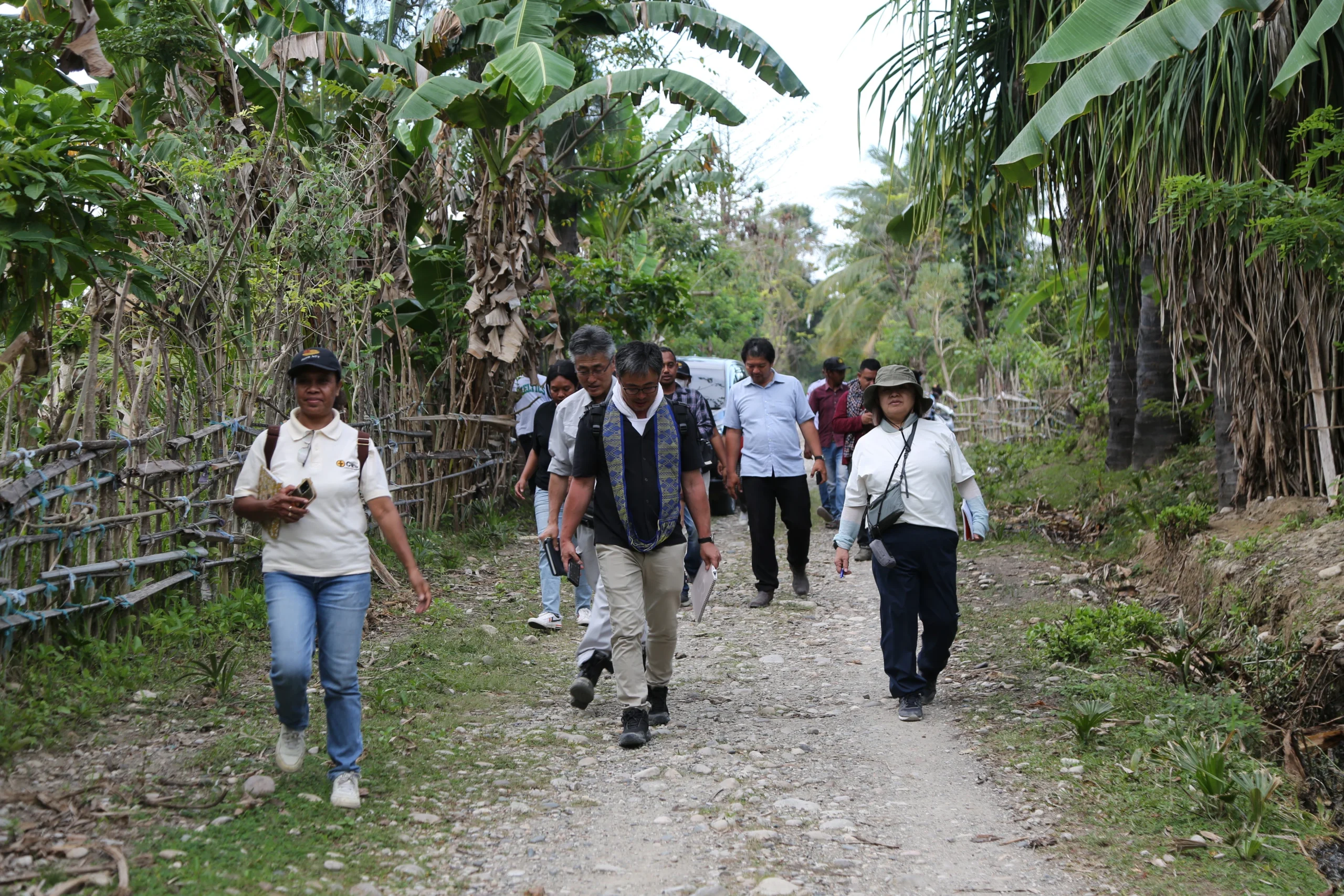
- During field research, staff walk alongside villagers, listening to firsthand experiences of flooding. Community members identified high-risk zones and explained how floodwaters move through their villages.
-

- Community members participated in practical surveying training held by CWS Japan staff, where they learned how to use simple tools like red and white poles to measure land elevation and assess vulnerability.
-
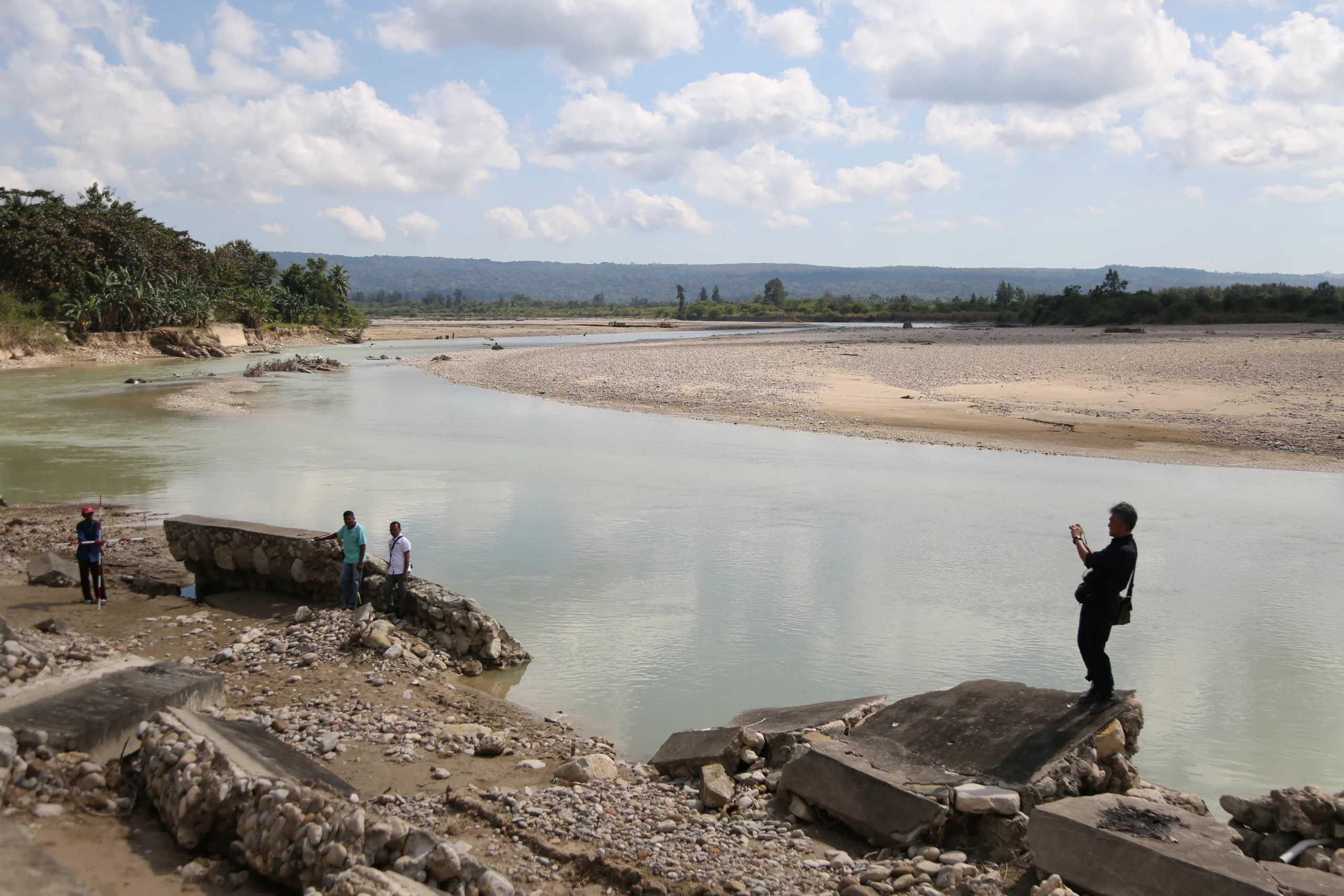
- Villagers reported a collapsed levee initially believed to have failed due to overflow. Further investigation revealed structural weaknesses caused by seepage through cracks, highlighting the importance of technical analysis alongside local insights.
-

- CWS Japan observed vegetation in waterways, explaining the growth is an early indicator of sediment buildup that can obstruct drainage and increase flood risk.
Field visits like these are essential in building relationships with local communities, placing their voices at the center of resilience planning.
“We walk with the villagers, listen to their voices and think together about how we can live safely,” shared CWS Japan Communications Officer Asuka Takahashi. “These small, cumulative efforts are what cultivate disaster-resilient communities.”
A Proven Framework: The Triple Nexus+ Approach
CWS Japan’s work is grounded in the Triple Nexus+ approach, which integrates humanitarian aid, development, peacebuilding and climate action into one cohesive strategy. This model ensures that interventions are not only effective in the short term but sustainable for the future by implementing the following methods:
- Local Leadership: Lasting resilience starts with communities themselves. By equipping local leaders and strengthening decision-making capacity, solutions are rooted in real needs and lived experience.
- Social Cohesion: Individual preparedness becomes far more powerful when communities act together. Building trust and collaboration transforms scattered efforts into a unified response system.
- Proactive Risk Management: Prepared communities don’t just react—they anticipate. Planning, training and mitigation reduce disaster impacts before they happen.
- Institutional Collaboration: Community efforts are amplified when linked with government systems and broader development plans, enabling interventions to last for years after the program has ended.
- Evidence-Based Accountability: Tracking progress, documenting lessons learned and sharing results builds transparency and trust, while enabling replication in other communities.
CWS Japan Executive Director Takeshi Komino explains, “When these five elements interact, a resilience movement is born. Strong leadership builds cohesion, collaboration drives proactive action and shared learning expands impact far beyond a single community.”
One year into the I-CREATE project, progress is clear: stronger community engagement, improved risk understanding and practical tools that empower people to protect their futures.
But resilience is not built in a single year. It requires continued investment, collaboration and innovation. By centering local leadership, integrating technical expertise and fostering partnerships at every level, CWS Japan is helping communities move from vulnerability to strength.
CWS Japan’s work is rooted in decades of global partnership. Following World War II, CWS was one of 11 agencies that provided millions of dollars of food and relief items to Japan. Decades later, after the East Japan Earthquake, tsunami and Fukushima disaster, CWS re-established its presence in Japan, committed to ensuring that such destruction would not happen elsewhere.
Today, CWS Japan serves as both an implementation partner and global resource hub, advocating for disaster risk reduction, mobilizing funds and sharing technical expertise across Asia. To learn more about the work of CWS Japan, visit their website (in Japanese) or click here.