
Situation: Over the weekend, extreme widespread storms, including more than 100 tornadoes, were reported across multiple states, including Nebraska, Oklahoma and Iowa. The storms caused widespread damage and power outages, and initial estimates indicate over 200 homes have been destroyed across these three states, with an additional 180 homes sustaining damage. Dozens of injuries and several deaths have also been …
Stories of Change
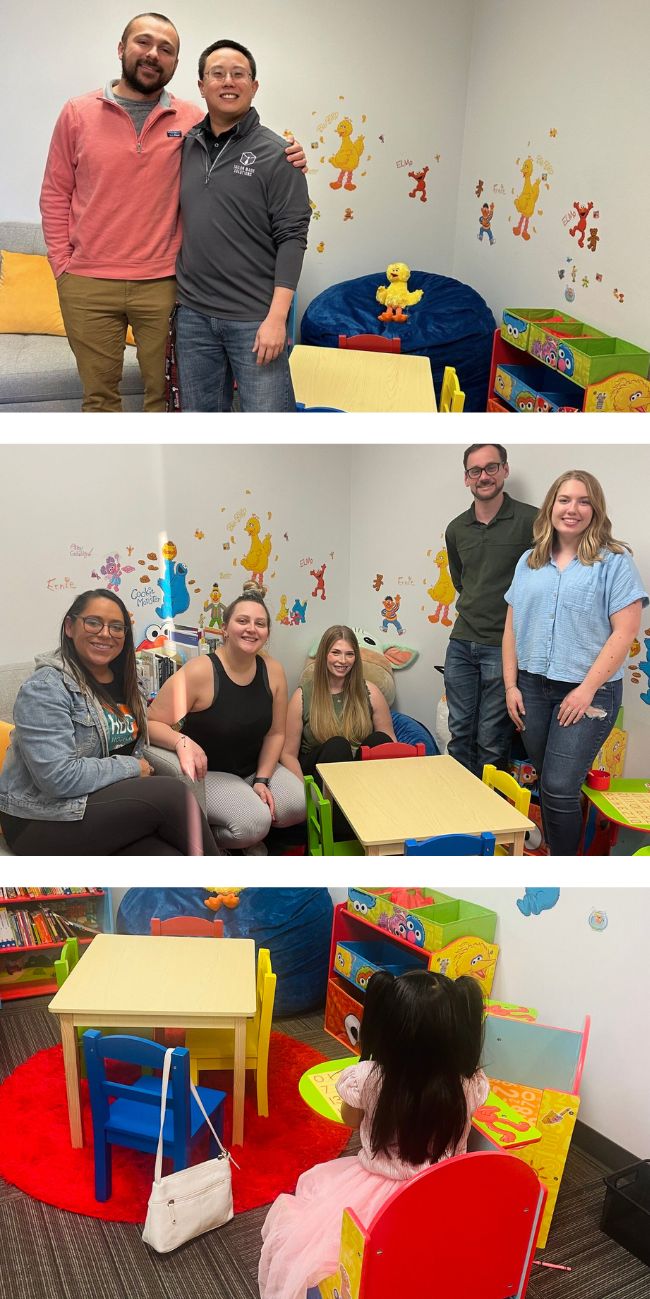
top: Wen Tan, MBA of Tailor Made Solutions and CWS Harrisburg Site Director Alex Swan middle: members of Harrisburg Young Professionals bottom: child in the Comfy-Cozy Corner
Comfy-Cozy Corners Spread Fun With Sesame Street
Children thrive when they feel safe, secure and have the chance to learn.
That’s why, in partnership with Sesame Street in Communities, CWS offices across the country are building Comfy-Cozy Corners—dedicated spaces where refugee children can engage in play, learning and fun activities alongside beloved Sesame Street characters.
In April 2024, CWS Harrisburg launched its own Comfy-Cozy Corner, a Sesame Street-decorated, supersized area for children to play and read. The response has been overwhelmingly positive, with enthusiastic support from community members, partners and, most importantly, the children themselves. One of the earliest visitors, a young princess immersed in Sesame Street stories, epitomized the joy and wonder these spaces inspire.
These Comfy-Cozy Corners provide a child-friendly zone for our youngest newcomers, offering a welcoming environment where they can play, read and learn while their parents or guardians engage with CWS staff to access essential services.
By alleviating stress and providing opportunities for connection and resource-sharing among families, these spaces play a crucial role in supporting the holistic well-being of newcomer children.
Over the next several months, CWS offices across the Northeast, including New York City, Jersey City, Georgetown, Rochester and Indianapolis, are building their own Comfy-Cozy Corners. With each new Cozy Corner, we reaffirm our commitment to nurturing the potential of refugee children and creating inclusive environments where they can thrive.
To learn more about the work of CWS Harrisburg, click here.
Stories of Change
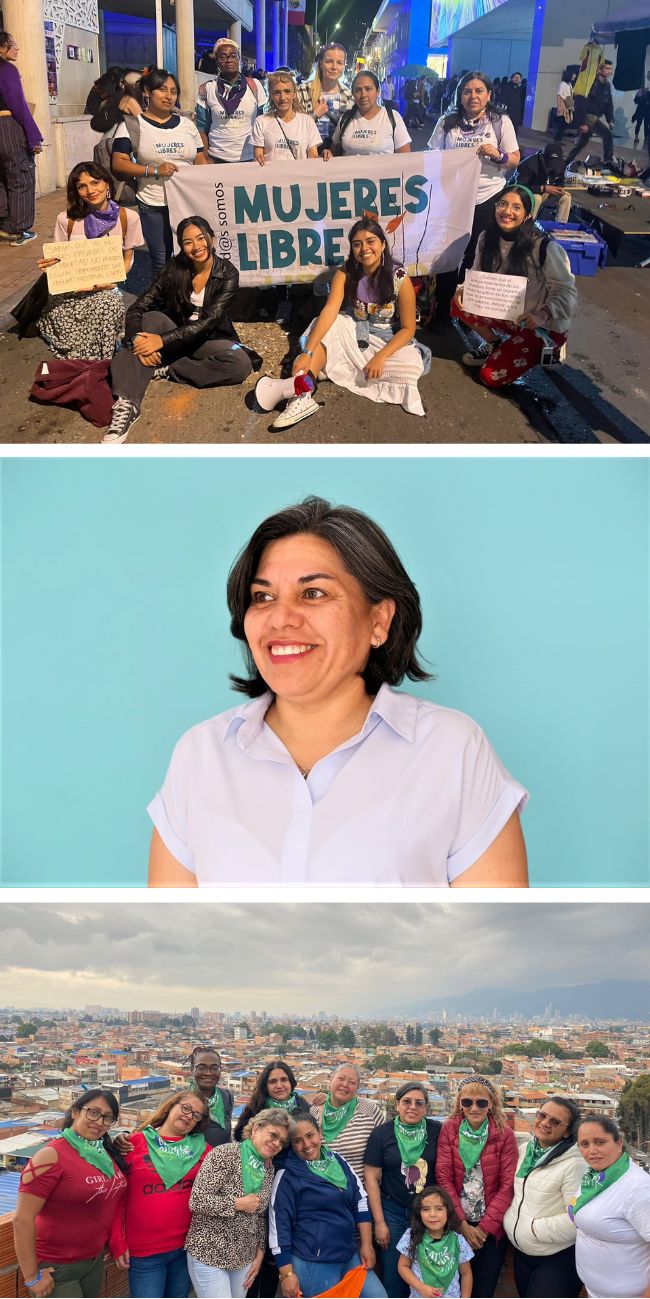
Top and Bottom: Members of "Mujeres Libres Colombia"
Empowerment and Freedom: Claudia’s Story
Claudia Cardona, changemaker and women’s advocate, has turned her life story into a platform for the voices of many incarcerated and formerly incarcerated women. Through her work and devotion, she has earned a place in national and regional debates, hearings and meetings on the subject. Behind Claudia’s work is a difficult past that has left her with many valuable lessons.
Like the women she fights for, Claudia herself was once incarcerated. During her time in prison, she was often an advocate for human rights protection, but since she was unaware of many rights and requests she could make, she usually limited her requests to food and hygiene products.
In 2017 when Claudia was released from prison, she joined the Commission for Monitoring the Unconstitutional State of Affairs of Colombia, and encountered something that left her stunned: the Bangkok Rules*. “I couldn’t believe it,” she stated; after nine years and three months in prison, she learned about this resource that would have helped her had she known about it much earlier.
Less than a year later, and with the knowledge she had been cultivating, Claudia and her colleagues founded Mujeres Libres Colombia. The organization champions the rights of incarcerated women and their families while offering vital assistance, such as psychological and legal support.
“Here, women found a place to vent because they couldn’t talk about this [their experiences and challenges] at home. Here we have a safe space for all,” comments Claudia. She added that when women leave prison, they face the challenge of rebuilding a disconnected family or finding out that their children have suffered abuse; all this while looking for work, trying to integrate into society and recovering psychologically.
While examining the rights of incarcerated women, Claudia also realized the need to protect what she cared most about: her daughter. Soon, Claudia’s daughter would not just become a motivator, but a fellow activist.
One of the moments that inspired Claudia’s daughter was when Claudia was invited to give a lecture in Chile and decided to bring her along. Due to immigration issues, Claudia was detained for 12 hours and ended up missing her flight but encouraged her daughter to continue the journey with a colleague who was authorized as her guardian.
Claudia’s daughter filled in for her mother at the lecture and shared her impactful reflections and memories, such as learning to cook through a phone call while Claudia was incarcerated. “She saw the opportunity in what I was doing to live her process and learn,” Claudia said. In the following years, her daughter became more involved in the activities of Mujeres Libres Colombia.
Since its creation, Mujeres Libres Colombia has been groundbreaking, affecting policies across the region and changing the lives of incarcerated women. For Claudia, however, her pride is found in the women who make up the organization; women who previously struggled to get words out to advocate for themselves, now speak loudly and proudly. She added that many of these women had never left their own cities and now travel and meet other women throughout Latin America.
Beyond the powerful changes she has made in the region, the true value of Claudia’s work is seen in her closest circle. Through her drive, she has forever impacted the lives of the women who now stand by her side and demand their rights be protected. And in an even smaller circle, Claudia’s daughter has been a change maker too; not only in fighting for her own rights but also making up for the time she spent without her mother and turning it into something powerful.
*The Bangkok Rules, formerly known as The United Nations Rules for the Treatment of Women Prisoners and Non-custodial Measures for Women Offenders, is a guidebook with 70 rules on the treatment and protection of female prisoners.
To learn more about our work in Latin America and the Carribean, click here.
Journey to a New Home
Vung Ksor | April 19, 2024
Arriving at the Charlotte Douglas International Airport on an early Monday morning in April 2024, I found myself facing a familiar scene: long lines of people waiting at the security checkpoint. Having traveled by air many times before, I knew exactly where to go. Following the signs, I made my way directly to gate C10, bound for Pennsylvania to visit …
Stories of Change
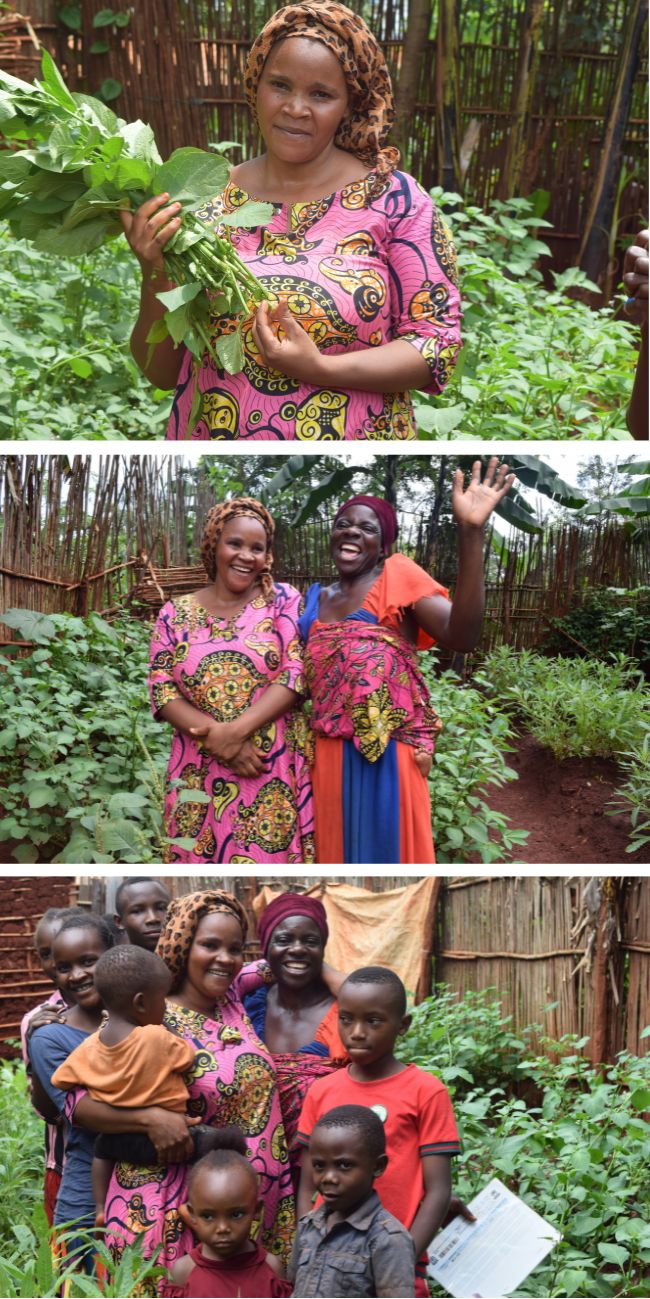
Top: Anne in her garden, Middle: Anne and Matumaini, Anne, Matuimani and Anne's children
Cultivating Hope and Equality
Encouraging and selfless are a couple of the words used to describe Matumaini Narcecine, a lead farmer at Nyarugusu refugee camp in Tanzania. Since joining the CWS-supported vegetable farming program two years ago, she has become a leader—passionate about uplifting others, especially women, in her community.
As a Burundian refugee, Matumaini has experienced gender inequality. “In our traditions, women they are not people who can find their own money,” she said.
She’s working to change those traditions. Matumaini earns her own money, supports her family and helps other women do the same. Her garden produces enough for her to feed her family and earn an income.
“I am very thankful for this project,” shared Matumaini. “Mothers are moving to a certain stage just because of this project. Women are following me so that I can also give them trainings so that they can get vegetables for themselves and their kids.”
Matumaini has learned about nutrition and implementing a healthy diet for her family of 11. She’s also developed gardening techniques and skills that help increase her harvest. Now, not only is she sharing her knowledge and skills with 15 farmers in the program, but she’s making sure to uplift women like Anne Chibinda, too.
“After meeting her in the church, she collected us group of women and started teaching us about the agriculture,” shared Anne, who is one of 12 women Matumaini has taken under her wing.
“She trained us about organic agriculture… how to make blocks, how to plant and how to use organic fertilizer, especially compost as another alternative instead of manure,” she said.
Matumaini has helped Anne grow a thriving vegetable garden. “After training us she did not end there. She continued encouraging us until we understood her, and that is when I saw that I should also have my own garden at my house,” he shared. With Matumaini as her teacher, Anne helps her husband support their 10 children.
Evident by their interaction, Matumaini has not only managed to empower women like Anne but also nurture new friendships along the way. “I’m very thankful [for her],” shared Anne. “She’s a very good teacher.”
Learn more about CWS’ work in Tanzania here.
Fighting for Women’s Right to Care for Loved Ones
Monica Arango | April 16, 2024
What does it mean to have the right to care for and be cared for? What are countries doing or failing to do to protect this fundamental right of individuals? These were some of the main points addressed by members of the International Network of Women Family Members of Persons Deprived of Liberty, known as RIMUF, along with allied organizations …
Stories of Change
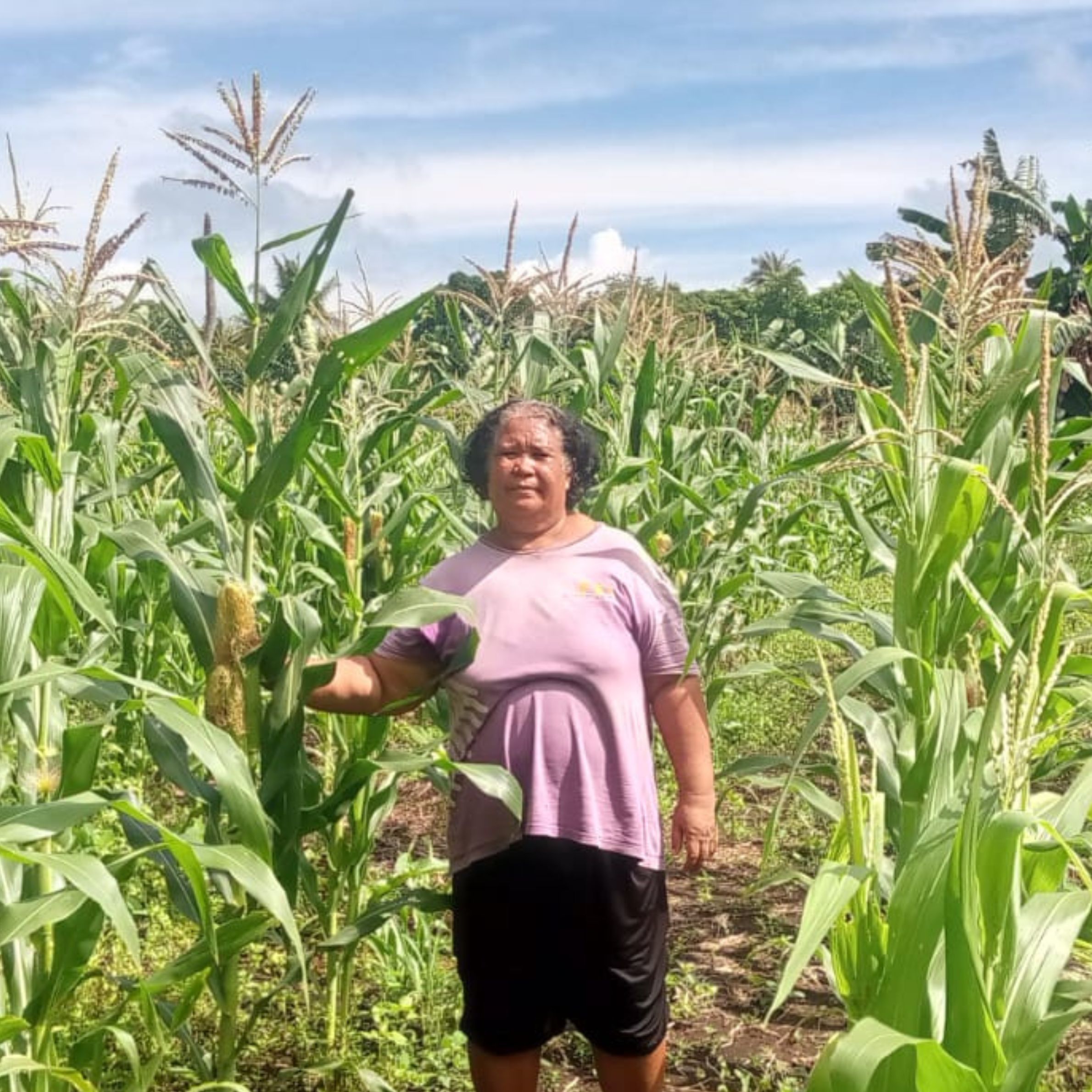
Mama Orpa in her corn field
Mama Orpa’s Resilience in a Drought
In a small village in Kupang, West Timor lives Mama Orpa, who spends her days in the hot sun weeding grass on her plot of land. Mama Orpa works alongside other farmers who work together to grow corn. One thing about Mama Orpa that has been consistent for many years is her resilience. At the same time, however, a new inconsistency has arisen: the changing environment.
Mama Orpa is not only a farmer in her local farm group but the treasurer as well. Despite the fear amongst her fellow farmers about a changing rain pattern, Mama Orpa clearly states that she is not afraid. Regardless, the effects of the delayed and erratic rain have been unavoidable. “Usually we are overwhelmed by the amount of seeds but now some seeds do not grow because there is not enough rain. Caterpillar pest attacks are also high,” she explained.
In her refusal to let fear consume her, Mama Orpa soon discovered a source of good fortune when she and her fellow farmers were invited to participate in CWS’ Timor Zero Hunger program. “We received training in corn cultivation, post-harvest processing and double-track planting patterns. As a result, the number of corn stands nearly doubled,” said Mama Orpa enthusiastically.
Another valuable skill Mama Orpa and her fellow farmers learned was how to make organic fertilizer and pesticides from local ingredients. This has helped them reduce production costs without reducing crop yields. She has also learned how to take scraps from the produce and turn them into food for her pig. “This program has really helped us,” she stated.
While showing off her corn plants that were vibrant green despite the rain scarcity, Mama Orma said, “I applied to my land what we have learned in this program and the results are like what we see together now.” Together we are seeing that Mama Orpa’s resilience and hard work have paid off.
To learn more about programs in West Timor, click here.
Border Shelters Welcome All with New Signage
April 15, 2024
Church World Service is excited to announce collaborative efforts between the Haitian Bridge Alliance, Woori Juntos and Aaliah Higareda, a Goshen College graphic design student, to develop multilingual signage for use by border shelters. The signage, which can be understood by literate guests in multiple languages, employs graphics for non-literate guests’ comprehension, and is available free to interested shelters and …
TAKE ACTION: Urge Congress to Support Unaccompanied Children and their Families in FY 2025 and Supplemental Funding Efforts
Late on March 22 – nearly halfway into this fiscal year – Congress finally passed an FY 2024 appropriations bill that will keep the government funded through September 30. The bill covered a number of key refugee accounts and policies, including the account that supports services for unaccompanied children under the Refugee and Entrant Assistance Account (REA), administered by the …
Stories of Change
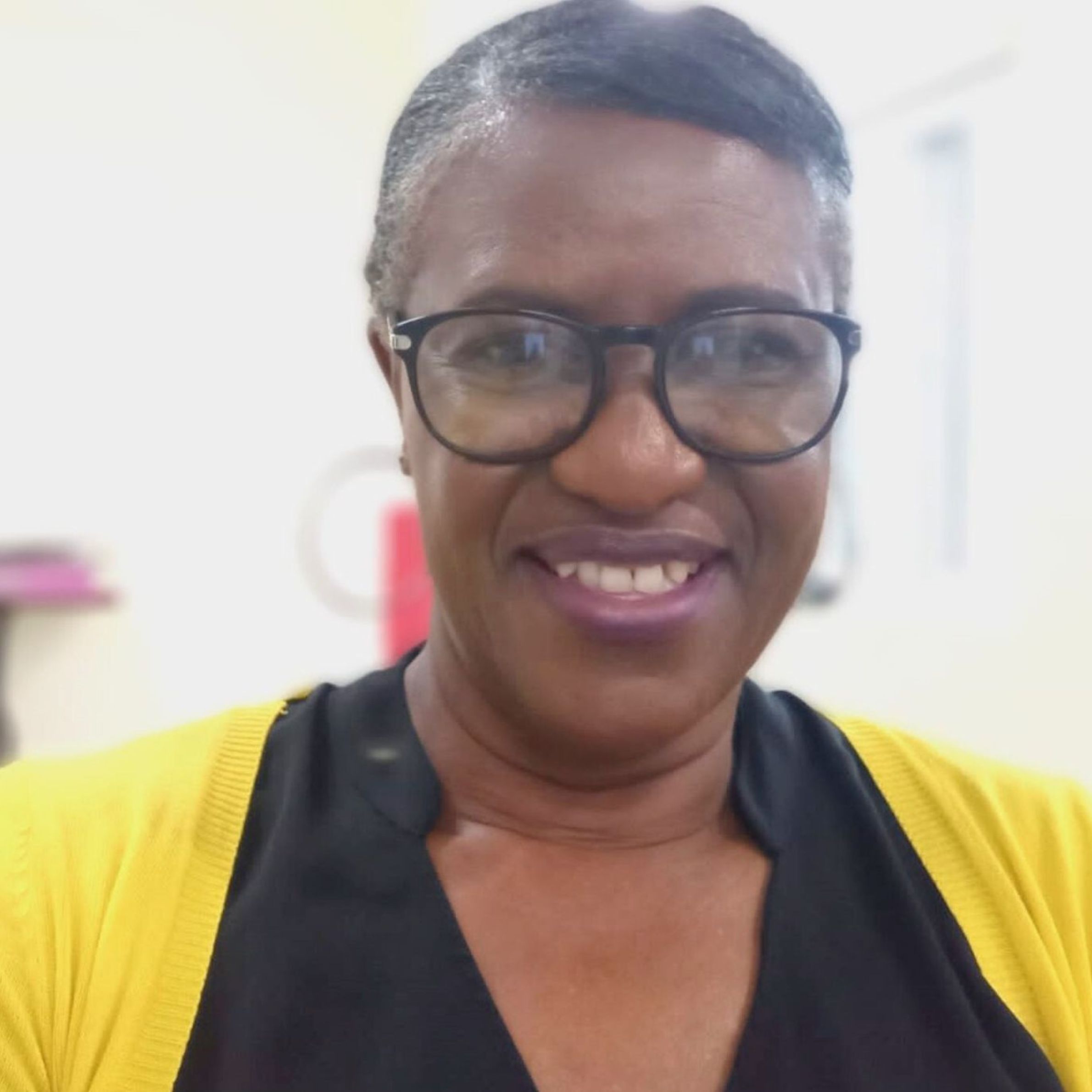
Dr. Delice Y. Lynch
Empathy in Action: A Journey of Community Outreach in The Bahamas
For as long as she can remember, Delice Y. Lynch’s life in the Bahamas has been marked by her passion for helping vulnerable populations. She shared, “Before my transformative experience with the Bahamas Psychological Association…, my efforts were focused on distributing food to those in need, especially during the challenging times of the Covid-19 lockdown.”
n the summer of 2023, she began a new role as a community educator at the BPA, working on the Mental Health and Psychosocial Support (MHPSS) project supported by CWS. Delice assumed this position during her after-work and weekend hours. As she explained, the project of took her “outside [herself]” pushing her beyond the confines of her usual routine. “Street by street, I shared vital information on managing stress in crisis situations, leaving helpline numbers for those who needed additional support,” Ms. Lynch said.
This grassroots approach proved invaluable, reaching individuals who normally would not attend mainstream educational programs, such as conferences and seminars. “In our society today, all over the world, but specifically in reference to the Bahamas and, in particular, New Providence, the street-to-street approach is essential for contacting that group of persons in a non-judgmental way.”
Ms. Lynch added, “It has impacted me in that I have become more empathetic with persons living in distressed situations. I understand more fully that “for the Grace of God I move forward.”
As part of the initiative, Ms. Lynch also participated in Psychological First Aid training, earning certification as a psychological first-aid provider. She also volunteered to be on call during national emergencies.
Ms. Lynch found herself using these skills on at least two separate occasions since her involvement in the project. “I’m happy that I had the skills to assist, thanks to the training received,” she said. The streets she walked, the stories she heard and the lives she encountered have collectively woven a narrative of compassion, resilience and the transformative power of human connection.
The CWS Hurricane Dorian Long-Term Recovery Program in the Bahamas concluded in March 2024, supported by grants from Episcopal Relief and Development and Presbyterian Disaster Assistance. Learn more about CWS’ work in Latin America and the Caribbean here.