
Washington, D.C.—In response to the vilification of Haitian newcomers over false reports of abuse of animals, Church World Service today called for a halt of demonization of new members of our community, and a repudiation of racist tropes that undermine not only those fleeing danger, but of our communities overall. “Haitian-Americans and newcomers should not be dehumanized nor ostracized. Our …
TAKE ACTION: Urge Congress to Support Displaced People We Promised to Protect
September 11, 2024
Right now, members of Congress are negotiating the federal budget for the upcoming fiscal year (FY 2025), which begins October 1st. Without decisive action from Congress, key programs and services for displaced people the United States has promised to protect will face dramatic cuts. With the looming November elections creating uncertainty about the office of the president and the composition …
Stories of Change
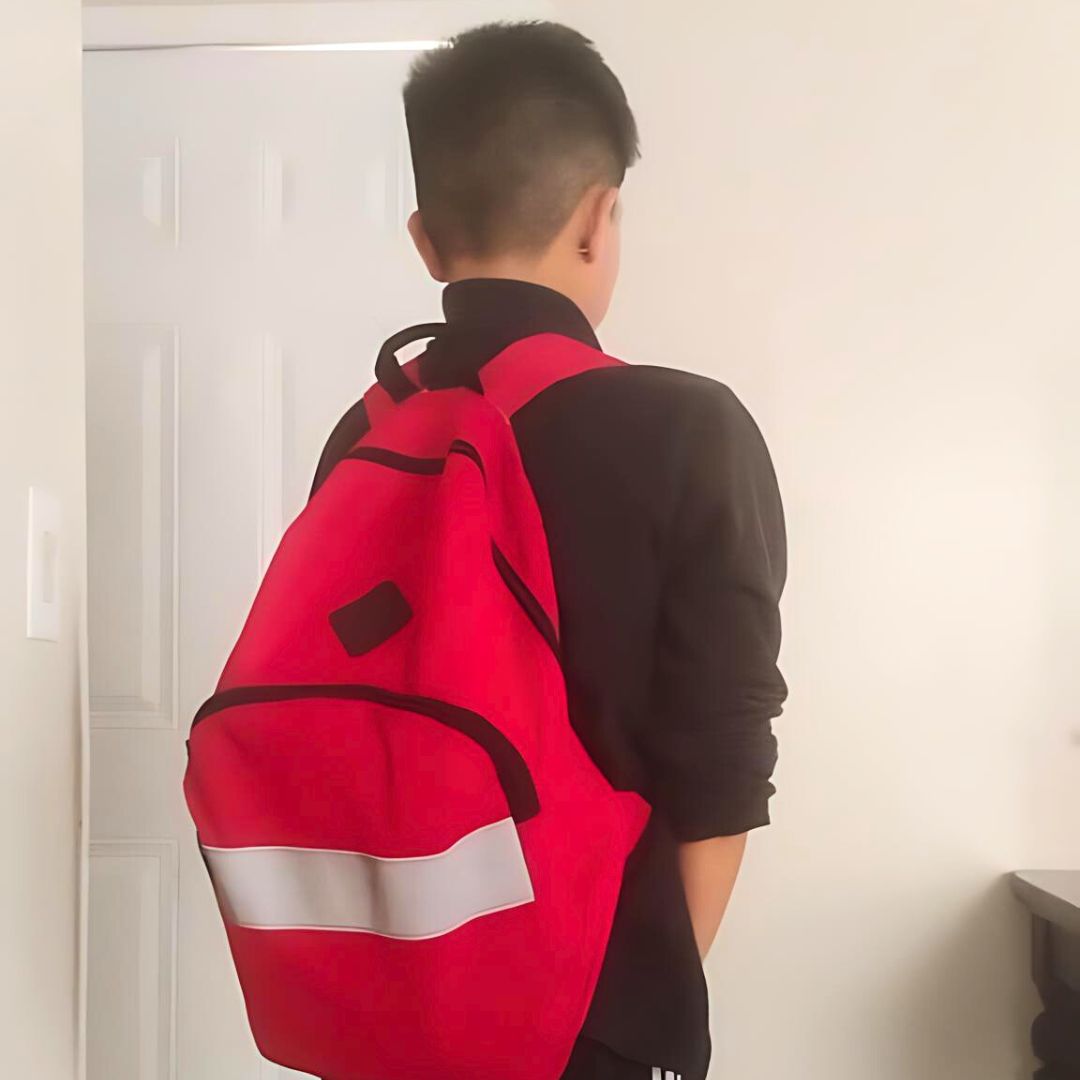
Mateo with his new backpack
“I left it all in the hands of God”
For as long as he can remember, 12-year-old Mateo’s family has been the grounding force in his life, always guiding him and providing unconditional love. In his home in Mexico, he was used to a full house, surrounded by his seven cousins, four younger siblings, mom, aunt, and uncle, which was especially important to him because his father has been in prison since Mateo was a baby. Never did Mateo expect that this family he loved with all his heart would be taken from him in a matter of minutes.
The family’s life as they knew it began to change when Mateo’s uncle left for the United States to seek better opportunities to provide for his family. “I lasted almost two years without seeing my husband,” explains Elena, Mateo’s aunt. Elena and Mateo’s mom managed for these two years, but eventually, the distance was too difficult for Elena and her seven children, and she made the decision to reunite with her husband.
When Elena began to plan her journey to the United States, she and Mateo’s mother agreed it was an opportunity for Mateo to have a better life, away from their impoverished community that was sometimes stricken by violence.
Despite his apparent maturity, Mateo was just a little boy, and leaving his mom behind was heartbreaking for both him and her. Thankfully, the plan was that his mom and siblings would join the rest of the family just a few months later, which meant that Mateo would only be separated from her for a short time. Elena began her journey with all eight children, including Mateo, who she considered one of her own children. “He is also my son,” she told us. “I treat them exactly the same.”
The family’s travel consisted of long bus rides and stays at safe houses until they finally reached the border. As simple as it might sound, these days were no easy feat for Elena, who was solely responsible for the eight children ranging from ages 3 to 14. She recalls that many of those traveling with her were also women with children. When they arrived at the border, they were taken in by immigration officials, who took them to a detention center.
The detention center felt unbearable for Elena’s children, who were exhausted from many days of travel and cried out that they were tired and hungry and had to wait for many hours sharing only two aluminum blankets. After a few days, the family was released to another center in Arizona, where immigration officials processed their documents. It was here that Elena learned that without the proper documentation to confirm that Mateo was indeed related to her, he would have to go through the process of entering the United States as an unaccompanied child, a process that exists to ensure children who enter without legal guardians are protected from situations like trafficking or kidnappings. Elena was shocked but trusted that all would end up well and said, “I left it all in the hands of God.”
At that moment, the foundation that had supported Mateo his entire life was pulled from under him, leaving him alone in a foreign country where he would have to rely on the kindness of strangers. The process of having Mateo reunited with his family took two months. During this time, Elena and her children also struggled, experiencing homelessness for a week until they were able to reach the Texas city where her husband awaited them. She remembers phone calls with Mateo, in which he would ask, “When will you come to get me out of here?” and dreamed of the meals he would enjoy as soon as he left specifically some delicious Kentucky Fried Chicken.
Finally, Mateo was released to the family and his official sponsor, his uncle, who welcomed him into their new home with overwhelming joy. “I can be loud here!” Mateo exclaimed in his new home, where he excitedly played with his cousins and looked forward to watching his favorite shows on the TV. “He also got his favorite food!” said Elena with laughter.
Although he remains separated from his mother and siblings, Mateo is still hopeful he will one day reunite with them and, for now, is happy to be with his family again and is focusing on learning English and going to school. Through the support of CWS’ Children’s Services program, the family has an assigned case manager who is helping them create the safest and friendliest home possible for Mateo. Their case manager has worked diligently to provide them with various donations, including clothing, food, furniture, backpacks, school supplies, educational books, car seats and other necessities. Beyond this tangible support, Elena and her husband have become a team with their case manager, who checks on the family frequently, ensuring that they have access to the right resources and are on a path to success.
So far, Mateo is enjoying school and when we asked Elena if he’d made any new friends, she replied, “Oh boy, has he!” noting that he has all types of friends and is learning English quickly. She added gleefully, “He’s still a kid, but he feels like a man.” In his new home, Mateo can trust that he can go to school, feel safe, pursue his dreams, and be who he has always been: a kid.
*Note: pseudonyms have been used to protect the identity of the individuals in this story
To learn more about our Children Services program, click here.
Stories of Change

Top: Mariza Galeano, Middle: Workshop and human rights, Bottom: Mariana Ayala
“Women in this community seem to have awakened from a long sleep”
Mariana Ayala is a mother, grandmother, organizer and leader of the women in her community, Sawhoyamaxa, home to Enxet people in the Gran Chaco region of Paraguay. She has attended all training and workshops organized by CWS’ local partner, Pastoral Social Diocesana Benjamin Aceval (PSDBA), in her community and today plays a key role in both, motivating women to attend workshops, meetings and assemblies and use the new knowledge at home, farms and communities.
Recently, Mariana and other experienced women leaders were asked to share their stories and lessons with individuals from neighboring communities where the women’s empowerment training was about to begin. The goal of the training is to strengthen the bonds between women within the same village, enhance women’s leadership and promote an exchange of knowledge and mutual empowerment.
In her remarks, Mariana said, “I am happy to share my testimony with the women living in these communities. I want to encourage you to fight for our rights because we have Law 904/81, which establishes the statute of Paraguayan indigenous communities on our side, and we must use it as our tool.”
Mariana, who witnessed the historic struggle of women for land, proudly recalled, “We managed to recover our ancestral lands thanks to the bravery of women. Surely, you know or have heard of my community, Sawhoyamaxa.”
With heartfelt sincerity, she shared the reason for her sacrifice to be present that day: “I am an older woman now. I was very happy when I received last week the invitation to come here today. I immediately accepted. Last night, I barely slept until 2:00 AM, taking care of a sick person. Few people have the patience to care for the sick, but we must be patient with others. I almost didn’t come today, but here I am, happy to see you all. This is my first visit to Buena Vista, and I come with the spirit to encourage you all so that together we can advance in defending our rights and developing our communities.”
Mariana is one of many inspiring stories. Mariza Galeano, a mother, grandmother and a leader among the women of the Yakye Axa village also participated in the training process carried out by PSDBA over the years and in her remarks to the women of Villa Nueva she said, “I want to share how happy I am with the Pastoral Social. Thanks to the training and workshops, the women in my community seem to have awakened from a long sleep. Now, we know our rights, we want them to be respected, and we strive to ensure our rights are upheld. We attend community meetings, participate, raise our voices and request things for the community because women have a different perspective from men. We better understand the needs of the community.”
Mariana Ayala and Mariza Galeano represent the voices of women in their villages and have become beacons of hope and determination for all rural women fighting for a more just and equitable future.
This program is supported by our local partner, Pastoral Social Diocesana Benjamin Aceval (PSDBA), with the financial support of Growing Hope Globally. To learn more about our work in Latin America, click here.
A Wedding Dress & 300 DVDs
Melissa Reece | September 5, 2024
My wedding dress and 300 DVDs. That is all I had when we evacuated our home. It’s what I had left of my belongings after our home and all of our possessions burned in the wildfire. On the Saturday morning of September 12, 2015, I watered my garden full of amazing vegetables that were almost ripe enough to harvest, while …
TAKE ACTION: Urge Congress to Heed the Call of Congregations and Faith Communities By Supporting Welcoming Policies
Congregations and people of faith have an important role in advancing pro-immigrant, pro-refugee policies. Join us in taking action to urge your elected officials to pursue legislation and funding rooted in collective concern for people fleeing persecution and violence. Our diverse faith traditions compel us to love our neighbor, accompany the vulnerable, and welcome the sojourner—regardless of place of birth, …
FY 2025 CWS Federal Housing Priorities for Refugees and Other Newcomers
September 4, 2024
Refugees, asylum seekers, immigrants, and other newcomers’ access to safe, stable, and affordable housing is essential to a foundation of healthy living. But today’s housing market reveals tough-rooted inequities and a dearth of housing support, development and market availability, and affordability for renters and homeowners in communities all across the country. The United States faces a current shortage of 7.3 …
Stories of Change

Top: Julius Gwagede, farmer; Middle: Village greeting CWS Staff in song and dance ; Bottom: Samuel Kanubo, lead farmer
Embracing Differences Changes Lives
Being greeted by free-flowing song, contagious dance and exuberant joy upon arriving at the remote Mwanga Village in Tanzania set the tone for what this incredibly hard-working group of farmers have built together.
In partnership with the Church of the Latter-Day Saints, CWS’ Giving Machines Program has empowered several chicken farming groups in the Kasulu region of Tanzania for about two years.
Zawadi Mammba, CWS Project Officer for Food Security and Livelihoods in Tanzania shared, “Upon implementation of this project, we see how it changes their lives; they are able to send their kids to school, have stabilization at the household level and increase incomes. They learn not to leave anyone behind.”
Attentiveness to inclusivity and loving your neighbor despite differences resounds among this group of 30 farmers —eight of the 30 members of this chicken farming community group are individuals with various disabilities.
The group, led by farmer Samuel Kanubo, welcomed us into their stories and were so proud of what they’ve accomplished with the proper tools and education, which have helped themselves, their families and their community. These farming groups work together to advise each other by sharing new skills and technologies, through the support of CWS staff and trainers.
“I am very thankful for all the chickens that we got from CWS,” Samuel said. “Before the project, we had a lot of challenges…The farming program got us out of famine. It was very difficult to feed our family before we started the chicken farming. After the program, the household income has increased, and we are able to sell chickens and pay school fees so that our kids can go to school.”
Samuel continued, “We just ask you to increase more projects, because this project has helped us so much.”
One of the farmers, Julius Gwagede, shared with us that, “They don’t treat me different—they embrace me.” Julius and his wife are blind, but their disability hasn’t hindered their ability to farm. The farming group and his children help him and his wife with their chicken farming, building community while creating stability for their household together.
It truly is a ripple effect with this CWS program, reaching even beyond food security and economic stability. It gives everyone a chance to create a better and more secure future, regardless of who they are.
Just $21 provides 5 chickens to a family in Africa. $21 changes the entire trajectory of a family’s life for the better. Join us in supporting these resilient individuals by giving now.
“An Old Dream Came Back to Life”
August 30, 2024
The following blog was written by a program participant of CWS’ local Moldovan partner, Healthy City. Healthy City, also known as Zdrovii Gorod, supports Ukrainian refugees by providing comprehensive services including food and non-food items, social inclusion and psychosocial support. My name is Sofia Belous. I am 37 years old and from Ukraine, Odesa region, Yuzhny. I am a mom …
“The friendships acquired here will remain for many years”
August 29, 2024
The following blog was written by a program participant of CWS’ local Moldovan partner, Healthy City. Healthy City, also known as Zdorovii Gorod, supports Ukrainian refugees by providing comprehensive services including food and non-food items, social inclusion, and psychosocial support. My name is Khatnyukov Igor. I am 66 years old, and I am from the city of Bilhorod-Dnistrovskyi, Odessa region. …