Israel’s Banning of UNRWA is Not Productive, Could Devastate Humanitarian Needs


October 29, 2024

Washington, D.C.—In response to yesterday’s announcement by the Israeli government  banning the nearly 8 decade old United Nations Relief and Works Agency for Palestine (UNRWA), Church World Service reaffirms the critical importance of this vital program that assists Palestinian communities living across the Middle East, including in Gaza and the West Bank. The move from Israel’s parliamentary body, the Knesset, …

Stories of Change


Disclaimer: for the safety and protection of the children in this story, a stock image has been used

A Family’s Courageous Journey

If your home was on fire and staying meant you would likely die, what would you do? If your children were there with you, would you keep them inside, or push them to leave? This hypothetical scenario is the reality for many families who have had to flee their country. It is also the reality for children like Isabella and Samantha whose parents, hoping to save them, sent them out of their home on their own. 

Isabella and Samantha were just 15 and 8 years old when they had to leave Guatemala. The events that led to this decision were many years in the making. Isabella and Samantha’s father, Ricardo, is from Nicaragua, but he had to flee when he was just 17 because of threats from gangs. In Guatemala, he met Lupita, and the couple gave birth to three children: Raul, Isabella and Samantha. Unfortunately, 16 years later, history repeated itself when Raul became a teenage boy and the gangs gave him only two options: join or be killed. Seeking a third option, the family decided that Raul would flee to the United States with his dad, where they would seek asylum. 

For two years, Lupita and her two daughters remained in Guatemala, hopeful that the rest of the family could return when it was safe to do so. This home that they loved so much and that Lupita remarked as “a beautiful land,” however, only became more and more dangerous for the family. Isabella began to experience threats from adults who threatened to kill her. The threats quickly became very real when one of the adults broke into the school to try harming Isabella, and the next day, Isabella was nearly run over by a car, driven by these adults. As Ricardo explained, “In Guatemala, they’re not just threats, they go through with it,” adding that these same people had taken the lives of others before. 

“I knew that if we stayed, it would have been a matter of life and death,” said Lupita. Since the family had not originally planned to leave their home, they only had enough money to send two people to safety. Without thinking twice, Lupita and Ricardo agreed to send their daughters. 

The family knew the risks that existed on the journey to the United States, but the danger at home was far greater and Isabella couldn’t even go to school anymore. The young girls traveled in a group of other children who were also trying to reach the border and spent each harrowing day walking or on a packed bus. Their journey took a turn when Isabella got gravely ill and had to rely on the other strangers in her group to get her help. “Isabella says that thank God she’s alive because with how sick she got, she felt like she was dying,” explained Ricardo. 

Through her own strength and determination, Isabella got better and was able to continue forward until she and Samantha finally reached the border. Here, they were processed as unaccompanied children and were connected to their dad, who had been anxiously awaiting their arrival. “It was an unforgettable moment,” Ricardo told us, holding back tears as he recalled the moment he finally reunited with his daughters. “I had gone two years without seeing them. They were so big. I almost didn’t recognize Samantha because when I had left she was so small.” He added that the four of them spent the rest of the day as a family, sharing, “We did the many things I had dreamed of doing with them during the years we were apart.”

Shortly after, Lupita began her own journey to reunite with her husband and children, sharing that she often traveled 2-3 days with no access to food or a restroom and packed “like sardines.” She reflected, “The trip was a long process and is something I don’t wish on anyone,” and confessed that many times she wondered if they had done the right thing by sending Isabella and Samantha on the same journey. These doubts disappeared the moment she received news that her girls had made it. They were safe. 

In Pennsylvania, the family became whole again, feeling an overwhelming gratitude that they were all alive and well. When they found out they were eligible to receive services through CWS, they couldn’t believe it. “Believe me, I never believed I would receive so much support. I’m so thankful to God because, for us, you are all like angels who have given us a hand. I’ve always believed in God and I believe that God has placed people on earth who are angels to others. I pray that this organization is blessed,” said Lupita. 

In partnership with their case manager, the family of five has been able to get back on their feet and have been reminded that they are deserving of care. Lupita remembers when their case manager helped enroll them at a low-cost health clinic she told her case manager, “I don’t exist here,” reminding her that she still didn’t have proper documentation. Her case manager assured her that this didn’t matter and that the whole family had the right to health care. Lupita thought her case manager had made a mistake until she saw her name listed along with the rest of her family members and she said, “Thank you! I never imagined that I would have human rights here.”

The family’s case manager has also supported the family by helping to enroll the girls in school, something that Lupita is extra excited about, sharing that she didn’t have the chance to go to school as a child because she grew up as a street child and orphan. She added that she didn’t learn to read or write until she was 14 years old and stated, “My greatest dream is that my children become great people and accomplish what I couldn’t.” Isabella, determined to provide safety in a way that she was unable to receive back home, has decided that she wants to become a police officer. Similarly, Samantha wants to become a doctor so that she can take care of people. 

In their new life, the family enjoys fishing together and feels grateful that they no longer have to worry about not having enough food or experiencing dangers like the ones they faced in Guatemala. Ricardo and Lupita, despite having little, gave everything they had to do what any parent would do for their child in their situation. From the ashes, they are rebuilding a life that is not just safe, but full of hope and overwhelming love for one another. 

*Note: pseudonyms have been used to protect the identity of the individuals in this story

To learn more about our Children Services program, click here


Church World Service Celebrates New Covenant Members


October 24, 2024

For Immediate Release: October 24, 2024 Church World Service Celebrates New Covenant Members 14 New Covenant Members Represent more than 9 Million People of Faith Across the U.S. and Canada New York City – Church World Service today announced that 14 leading U.S. churches and faith-based organizations have renewed their commitment to our joint work and mission by becoming Covenant …

Stories of Change


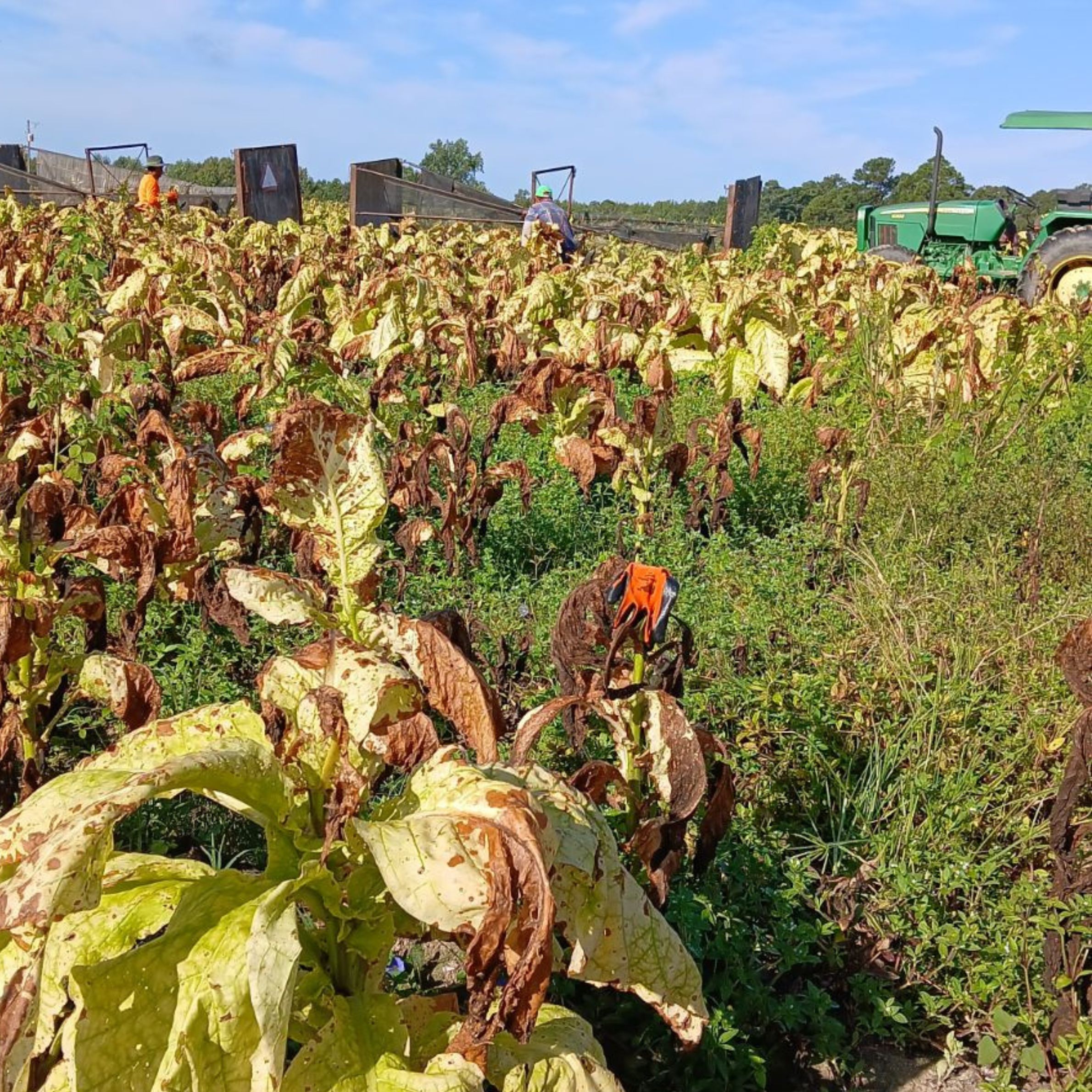
Photo taken by Vicente of the crops damaged by hurricane Debby

Harvesting Through the Storm

As natural disasters grow in frequency and intensity, the devastating effects of climate change are becoming impossible to overlook. While some may still manage to turn a blind eye, the most vulnerable among us often face the brunt of these impacts. This is certainly true for migrant workers who nurture the land and are also on the frontline when witnessing the harsh consequences of irreversible environmental damage. 

We recently spoke with Vicente, a migrant farmworker in North Carolina, to learn how Hurricane Debby impacted him. 

Vicente is originally from Mexico and comes to North Carolina for months at a time to harvest a variety of seasonal crops, including peppers and sweet potatoes. The months he spends in the U.S. are time away from his family who are Vicente’s biggest motivator to do this physically demanding type of labor. He explained that he was also a farmworker in Mexico but made barely enough to feed his family. When his oldest son decided to go to university to pursue an engineering degree, Vicente realized the only way to sustain his child’s dream was to become a seasonal farm worker in the United States.

Most days, Vicente works about 12-13 hours on the field. He shared, “It’s heavy work. It’s pretty hot out and we often work in 90-100-degree heat.” Despite these long hours, as he talked about his work, Vicente’s tone was completely devoid of any type of negativity. Instead, he expressed gratitude for his coworkers, his caring boss and the opportunity to have a job that allows him to take care of his loved ones back home. 

When Hurricane Debby hit this past summer, Vicente’s opportunity to work was suddenly stunted. The fields were flooded and many of the crops Vicente and his fellow workers had worked tirelessly to grow were destroyed. “I’ve been a farmworker for 12 seasons but this was the first time we really felt the hurricane. It really affected us,” Vicente said. Due to the flooding, the workers were unable to work for 15 days straight, totaling about 195 hours of lost work and income. Without this income, Vicente was unable to meet his basic needs and struggled to even have enough food. 

It was during this time that CWS connected with El Futuro es Nuestro, a local organization that fights to ensure that migrant farmworkers are protected and taken care of. Our Emergency Preparedness, Response and Recovery team works with local organizations after disasters like Hurricane Debby to analyze and respond to the needs of migrant communities who are often left behind in the aftermath. Through this collaboration, CWS was able to grant El Futuro es Nuestro $25,000 for the farmworkers affected by the hurricane. “Thank you so much for this help,” said Vicente, adding that the financial assistance came as a surprise and allowed him to be able to buy food for himself. 

In partnership with devoted local organizations, CWS is committed to ensuring that in times of crisis, everyone is protected and has food on their table. Especially those who work tirelessly to make sure there is enough food for all to eat. 

To support individuals affected by recent hurricanes, please consider donating to our disaster response fund. You can learn more about CWS’ Emergency Preparedness, Response and Recovery work by clicking here. 


Stories of Change


CWS Emergency Cleanup Buckets prepared for distribution

1,700 Buckets Bring Hope After Hurricanes

Imagine you’re living in an area reeling from the aftermath of a hurricane. You don’t have electricity or a way to contact loved ones. The food in your refrigerator has expired after a few short days, and you’re unsure where to go for the critical supplies your family needs. How would you navigate the uncertainty with limited resources and no phone to guide the way?

Living out their mission of “connecting God’s resources with human need,” Mission Central connects communities in the U.S. and around the world with essential resources like emergency supplies. In October, after Hurricanes Helene and Milton devastated the Southeast less than two weeks apart, Mission Central donated 1,717 CWS Emergency Cleanup Buckets to provide critical relief to disaster-stricken areas.

Through their work, Mission Central connects with volunteers in the area, who dedicate their time to supporting communities near and far in emergency situations. “We have a community that’s very supportive of these efforts,” Hope Harrison, Executive Director of Mission Central, shared. “We’re fortunate that people all over the place are willing to help and not only put their time into it, which is really important, but also put their money in to help those in need. It really tugs on heartstrings.”

Hope recalled one volunteer, whose family had lost their electricity and had no way of accessing food or services. The volunteer recommended them to Mission Central, which acts as a hub for families in the area who are facing uncertainty and in need of essential supplies. Hope shared, “We are a place people can go when they can’t access the supplies they need.”

In addition to disaster response, Mission Central has provided support for immigrant and refugee newcomers through CWS Harrisburg. “We have helped [CWS Harrisburg] over the years with cleaning supplies for immigrant families. They were just in last week looking for items, and I love that we can help on a broad scale and also engage in local communities and the needs that they have.”

CWS Emergency Cleanup Buckets support families reeling from disasters like Hurricanes Helene and Milton, and generous contributions from communities and partners like Mission Central helps to build hope and relief during a time of uncertainty.

CWS is grateful to our CWS Kits and Buckets supporters who make disaster response efforts like this possible. You can donate now to help us stay prepared and have essential supplies on-hand to distribute to families and communities that need them most.

You can learn more about the work of Mission Central and CWS’ response to Hurricanes Helene and Milton here.


Stories of Change


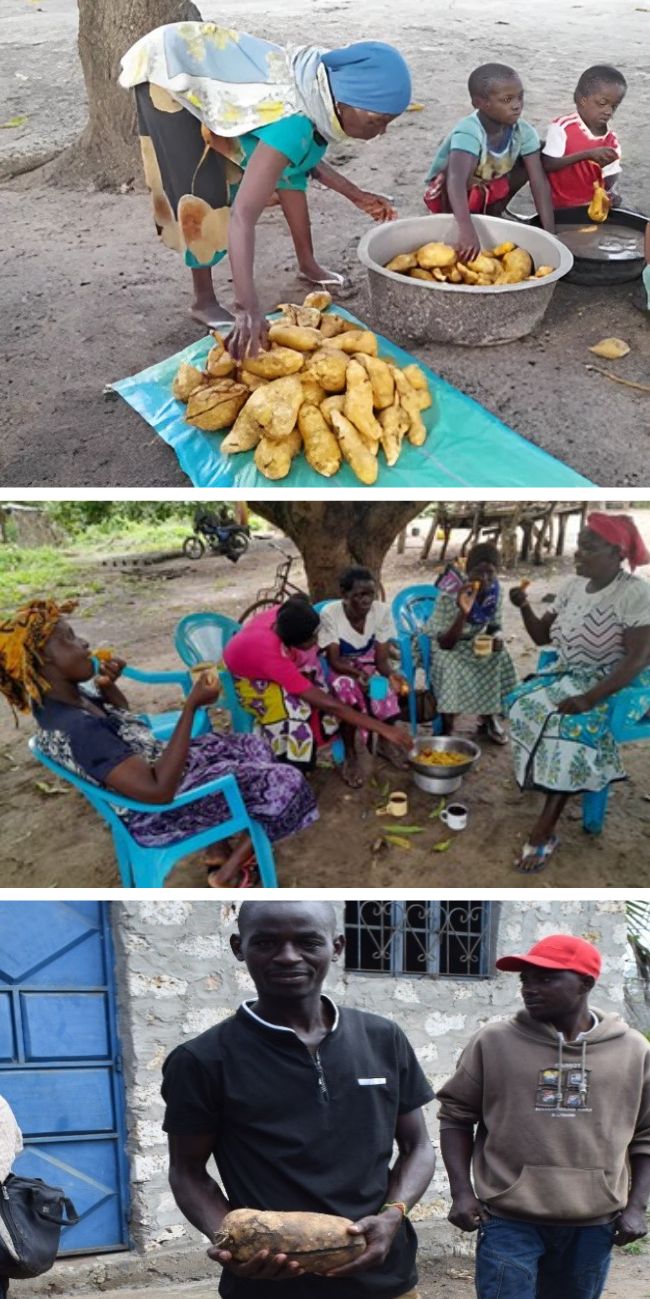
Top: A family preparing sweet potatoes for market ; Middle: Members of the Gatundu self-help group enjoy some sweet potatoes; Bottom: Charles showcases the size of sweet potatoes harvested from his farm

A Sweet Investment Brings Success

If you invest in one potato, can you double that investment? How about triple it? One of CWS’ program participants in Tanzania, Charles Dzombo, has the answer to this question. 

Charles is a program participant in CWS’ sweet potato project and was excited to share his story after receiving support from the food security program in 2023. He is a smallholder farmer, farming a range of plants like green grains, maize and mangoes, which he sells from his farm to provide for his family of seven. The returns Charles received from his farming are meager and can barely meet the ever-growing needs of his family, let alone himself. As the sole provider for his household, he uses the funds to purchase food, sustain household needs and pay school fees for his children and some extended relatives. After being informed of the CWS program supporting farmer groups to plant sweet potatoes, he was eager to see what the future would look like.

Since he had never farmed sweet potatoes in his life, Charles was an active learner during the crop production classes and constantly communicated with agricultural extension officers and CWS staff during the planting season. Excitedly, Charles shared photos of the growing vines as soon as they flourished, and when the rains threatened to flood the farm in the first month, he still shared his fears and hopes with CWS staff and sought advice. Subsequently, Charles was selected as a lead farmer for his location and self-help group. CWS invited him to additional training to support his fellow members with more knowledge and skills on sweet potato production and help scout for markets to sell their crops.  

Charles and other members of the self-help group were encouraged by the fact that sweet potato farming required lower financial input than other plants yet promised better returns. With this, additional farmers requested that their neighbors join and assist them, growing the number of participants from 16 to 25. Charles recounted how impressed he was that the maturity of the vines took two and half months to grow, a much shorter time than the four months that he expected. The bountiful harvest fed his family and left Charles stress-free. “Ever since I started harvesting my potatoes, my children have always had something for breakfast which satisfies them, and I am even happier I now [can] provide them more nutritious foods. When they go to school, they sometimes carry potatoes for lunch, or we use funds from the sale to prepare something else.’’ 

In addition, Charles and fellow self-help group members have established themselves as suppliers of sweet potatoes to their neighbors, including the teachers in the school where his children study, besides becoming core suppliers to main markets within their neighborhood. He stated that he believes their farming has improved the overall cost of sweet potatoes in the market, as both sellers and buyers benefit from fair prices. The group’s receptiveness to sweet potato farming led the group to invite an extension officer to train them on how to make dried and fried sweet potato crisps, use its flour to make bread and other ways to drive their harvest further.

Making a profit three times his investment, Charles was able to pay fees, have extra money to meet his household needs, maintain a stable food supply and even purchase a goat to diversify his investments. He thanks CWS for empowering them with the project, constantly working with them, and diversifying his communities’ resources. He finished by saying, “Now that I have tasted the goodness of planting sweet potatoes, I am now going to make it a priority. As we are speaking, I have prepared two additional sections of land to replant to ensure I can have a constant supply of sweet potatoes.’’

While his sweet potatoes have brought him success, the greatest success is found in Charles’ commitment to working with his neighbors to make their life a bit sweeter. 

We would like to thank our partners, the Canadian Foodgrains Bank and the Primate’s World Relief and Development Fund, as well as Global Affairs Canada for allowing this assistance to be possible. To learn more about this emergency response, click here. You can learn about our programs in Africa here.


Stories of Change


Ntaato Lepurote

Harvests of Hope

In the dry and parched lands of Laisamis in Marsabit County, Kenya, life appeared to depict sorrow and hopelessness. People were living one day at a time, reeling from drought and flash floods, confronting cattle rustling and banditry, facing poverty and early marriages, and struggling with illiteracy and political exclusion. For many years, residents of Korr/Ngurunit in Laisamis hung on thin lines of hope for a better tomorrow. 

“We had despaired and lost hope when drought wiped out our livestock. Men and boys migrated and stayed for many months, with reports of livestock deaths. Amidst the fear of cattle rustling, we constantly lived in fear of losing our men,” said program participant Ntaato Lepurote. “Our boys left school to accompany men in search of pasture and water. Indeed all hope was lost.”

Shortly after, however, the community was reminded that hope is never truly lost. “God remembered us when CWS came with food from Canada and for a whole year, we ate good food, a lot of food. Our hope was revived. When we thought it was over, they came to look for us again, to teach us how to produce the food,” she said with excitement.

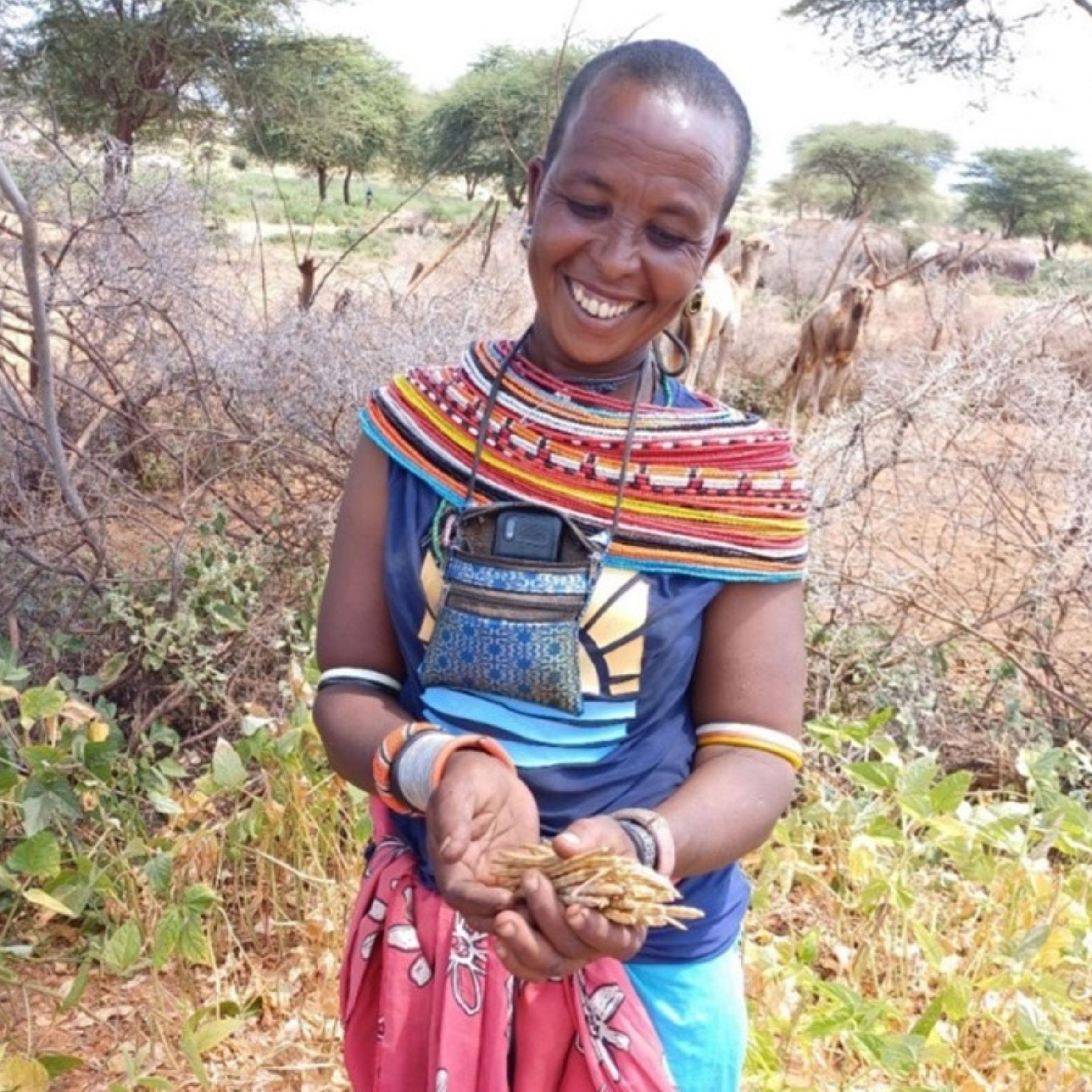
Ntaato is a member of the Naliapo Self-Help Group and is among the 330 participants of the early recovery program supported by Church World Service. Through training and input development, she was able to establish a vegetable garden as well as set up a small plot for the production of green grams and cowpeas. “I had never imagined in my life that I could grow food by myself!” she exclaimed, adding, “I don’t have to wait for relief food anymore.” 

 The harvest of green grams and cow peas from the small farms is a harvest of hope for many people in the Ngurunit location. The community never imagined that the solution to their greatest problem was right below their feet. 

This harvest of hope highlights the importance of investing in people and their potential to drive sustainable change. Through continued collaboration and dedication, we can pave the way for a brighter future for all, where communities thrive and individuals can realize their full potential.

We would like to thank our partners, Canadian Foodgrains Bank and the Primate’s World Relief and Development Fund, as well as Global Affairs Canada for allowing this assistance to be possible. To learn more about this emergency response, click here. You can learn about our programs in Africa here


Stories of Change


Southern Ohio Brethren Disaster Ministries Assembly Event

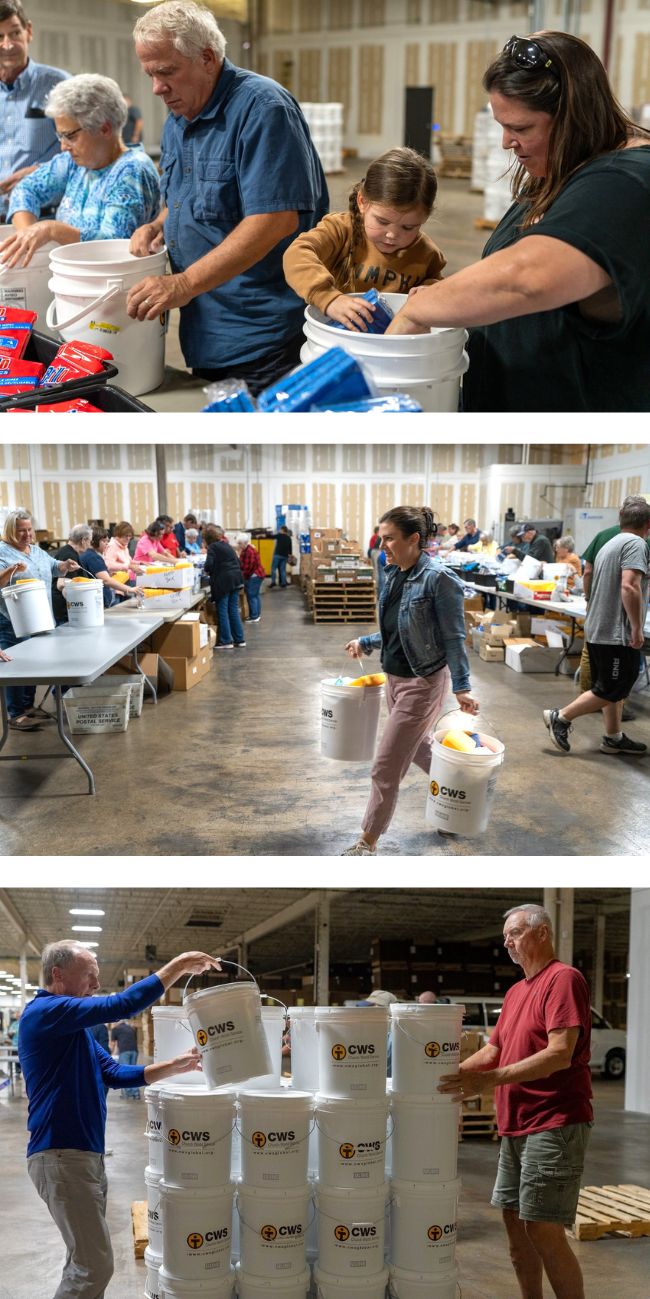
Hope in Action: 500 Cleanup Buckets for Hurricane Relief

Living out their mission of service, the Southern Ohio Brethren Disaster Ministries recently assembled 500 CWS Emergency Cleanup Buckets in a community effort that continues their long-standing tradition of supporting those affected by disasters. Inspired by the scripture “Serve one another in love” (Galatians 5:13), the group, led by Burt and Helen Wolf, works year-round to organize fundraisers and rally support from local congregations. Their efforts culminated in the assembly of 500 CWS Emergency Cleanup Buckets, which will soon be deployed to assist in the aftermath of Hurricane Milton. 

The CWS Cleanup Buckets, as well as the 1,149 CWS School Kits and 510 CWS Hygiene Kits the group has also assembled this year, will provide critical relief to disaster-stricken areas. Each kit contains needed supplies, but as Helen Wolf remarked, they are “actually filled with hope,” a sentiment echoed by the CWS Kits tagline: Filled with hope. Packed with love. “Through CWS, it’s an opportunity for people of all ages to have a way to serve,” Helen shared.

Following the hurricanes, CWS has provided 4,372 Emergency Cleanup Buckets, 8,720 Hygiene Kits, 5,890 Blankets, 1,205 Menstrual Hygiene Kits, 590 School Kits, and 72 Welcome Backpacks to communities in need. These items are critical for recovery, offering comfort and helping families rebuild their lives, but the current inventory of CWS Kits and Blankets is extremely low.

The Emergency Cleanup Buckets assembled by donors and volunteers will immediately support communities reeling from recent hurricanes. Zach Wolgemuth, CWS Director of Emergency Preparedness, Response and Recovery, highlighted the urgent need for these supplies. “Following Hurricane Helene, CWS was able to immediately provide Emergency Cleanup Buckets to help start the cleanup process in Florida and North Carolina. After sharing those buckets, our inventory was extremely low. The Emergency Cleanup Buckets assembled by the Southern Ohio Brethren Disaster Ministries will allow CWS to start responding to the aftermath of Hurricane Milton. This donation will be a blessing to so many people.” 

The volunteer effort in Eaton, which brought together 50 individuals to assemble the buckets in just over an hour, reflects the dedication and compassion of the Southern Ohio Brethren Disaster Ministries. Pat Via, founder of the volunteer group, encouraged other groups to join in the effort. “I want to encourage other groups and churches to assemble CWS Emergency Cleanup Buckets. This is a wonderful service project for people of all ages. It is a great feeling knowing that you are helping people who could use some extra love. You should join us!” 

Matthew Stevens, Director of Congregational Campaigns at Church World Service, praised the group’s dedication. “CWS can only respond immediately to an emergency because of the generosity of our donors and volunteers like the Brethren Disaster Ministries. Their dedication to serving our neighbors in need is so inspiring.” 

The Southern Ohio Brethren Disaster Ministries continue to exemplify faith in action, helping bring hope and relief to those in need. Through their work, they embody the love of Christ by sharing not just supplies, but a deep sense of compassion and hope with disaster survivors.

To get involved, visit the CWS Kits website. You can learn more about CWS’ response to Hurricanes Helene and Milton here.